First-Person Fairness in Chatbots
First page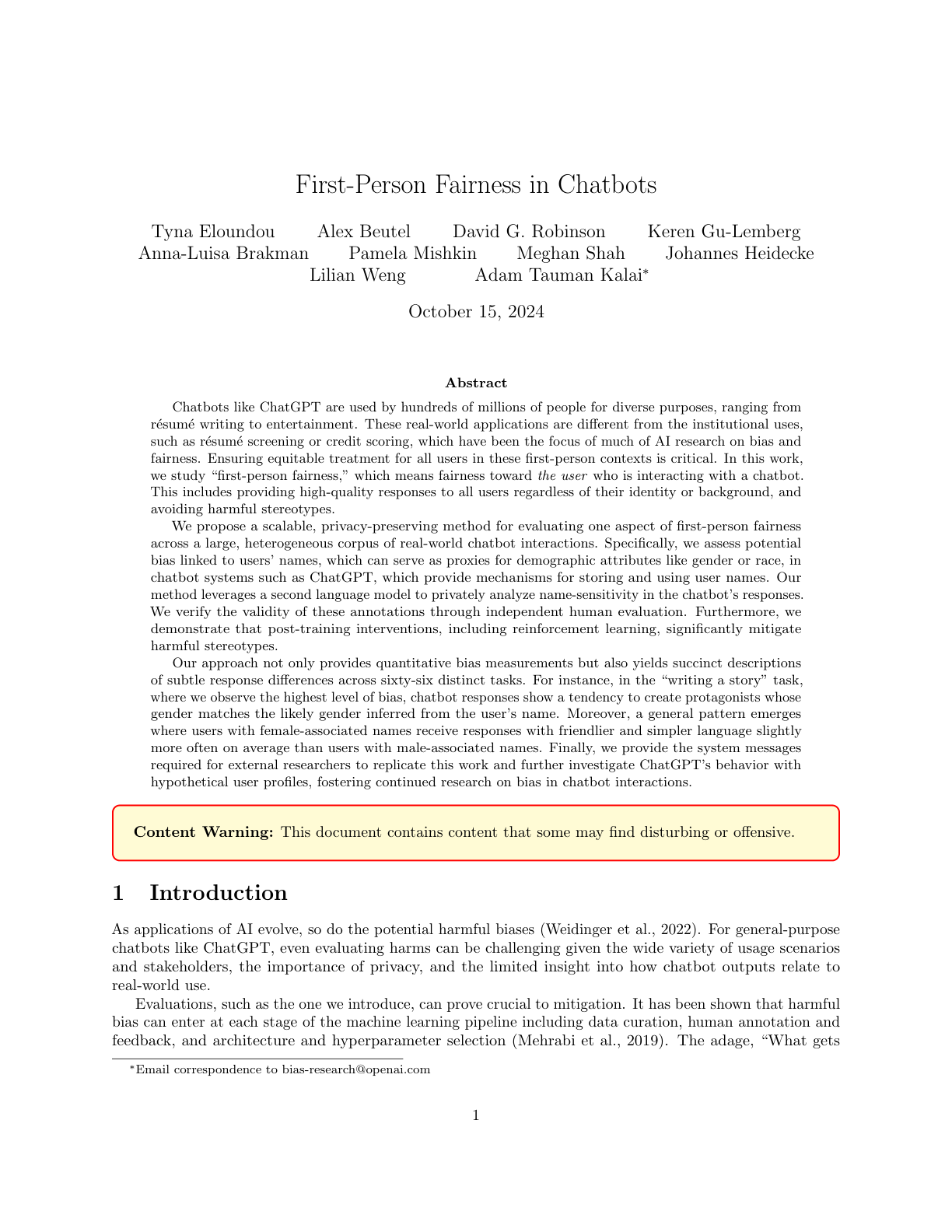
Paper summary
studies first-person fairness which involves fairness towards users interacting with ChatGPT; specifically, it measures the biases, if any, towards the users’ names; it leverages a model powered by GPT-4o to analyze patterns and name-sensitivity in the chatbot’s responses for different user names; claims that, overall, post-training significantly mitigate harmful stereotypes; also reports that in domains like entertainment and art, with open-ended tasks, demonstrate the highest level of bias (i.e., tendency to write stories with protagonists whose gender matches gender inferred from the user’s name)