SWE-EVO
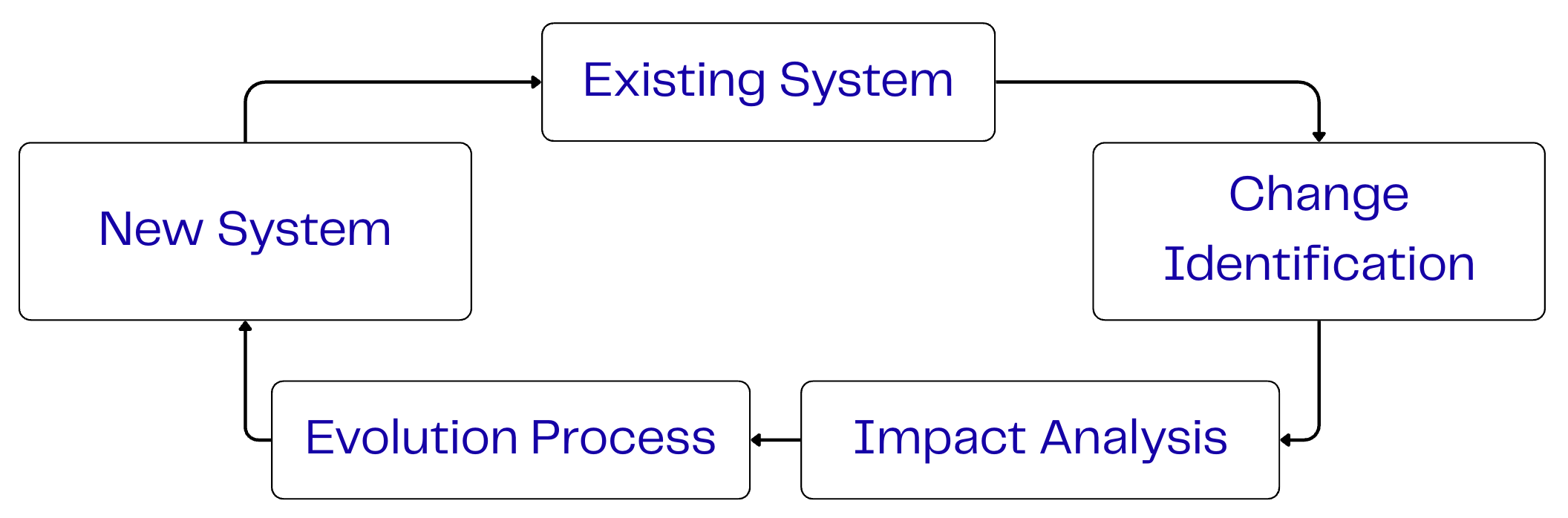
SWE-EVO introduces a benchmark for evaluating coding agents on long-horizon software evolution tasks that require multi-step modifications spanning an average of 21 files per task. The benchmark reveals significant limitations of current agents: GPT-5 with OpenHands achieves only 21% on SWE-EVO compared to 65% on SWE-Bench Verified, highlighting the gap between isolated bug fixes and realistic software development scenarios.
Ask this paper
Abstract
Existing benchmarks for AI coding agents focus on isolated, single-issue tasks such as fixing a bug or implementing a small feature. However, real-world software engineering is fundamentally a long-horizon endeavor: developers must interpret high-level requirements, plan coordinated changes across many files, and evolve codebases over multiple iterations while preserving existing functionality. We introduce SWE-EVO, a benchmark that evaluates agents on this long-horizon software evolution challenge. Constructed from release notes and version histories of seven mature open-source Python projects, SWE-EVO comprises 48 evolution tasks that require agents to implement multi-step modifications spanning an average of 21 files, validated against comprehensive test suites averaging 874 tests per instance. Experiments with state-of-the-art models reveal a striking capability gap: even GPT-5 with OpenHands achieves only a 21 percent resolution rate on SWE-EVO, compared to 65 percent on the single-issue SWE-Bench Verified. This demonstrates that current agents struggle with sustained, multi-file reasoning. We also propose Fix Rate, a fine-grained metric that captures partial progress toward solving these complex, long-horizon tasks.