On the Slow Death of Scaling
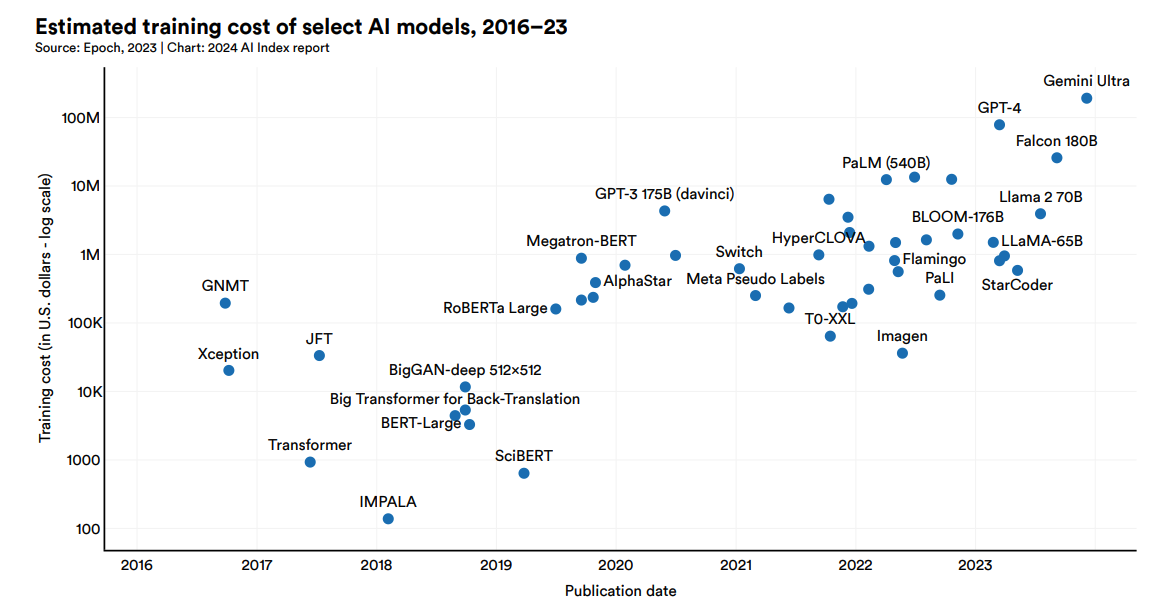
This essay by Sara Hooker challenges the decade-long assumption that scaling compute always leads to better AI performance. It argues that the relationship between training compute and performance is highly uncertain and rapidly changing, with smaller models now routinely outperforming much larger ones.
Recursive Language Models
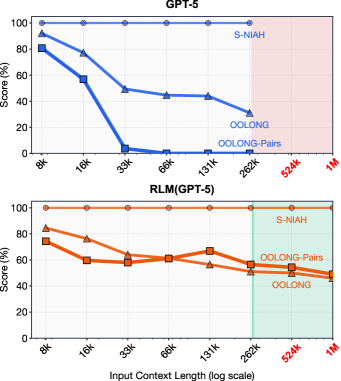
Recursive Language Models (RLMs) are a general inference strategy that allows LLMs to process arbitrarily long prompts by treating them as part of an external environment. Rather than feeding long contexts directly into the model, RLMs load the prompt as a variable in a Python REPL and let the LLM programmatically examine, decompose, and recursively call itself over snippets.
Adversarial Program Evolution with LLMs
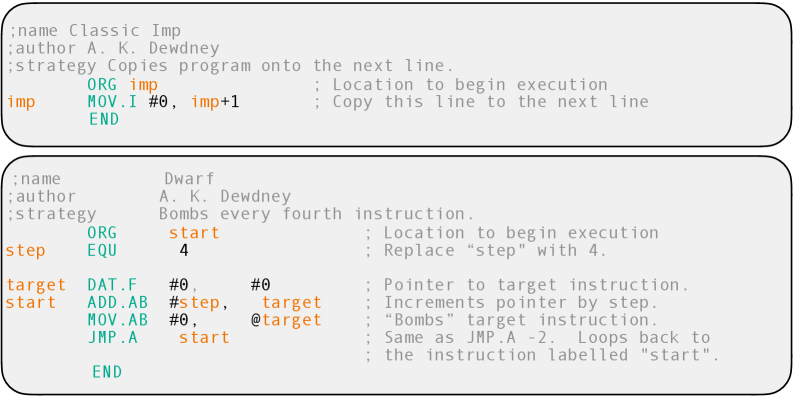
Digital Red Queen (DRQ) introduces an algorithm where LLMs evolve assembly-like programs called “warriors” that compete for control of a virtual machine in the game of Core War. Rather than optimizing toward static objectives, DRQ embraces “Red Queen” dynamics where goals continually shift based on competition, demonstrating how adversarial self-play can drive the evolution of increasingly sophisticated programs.
Nemotron-Cascade
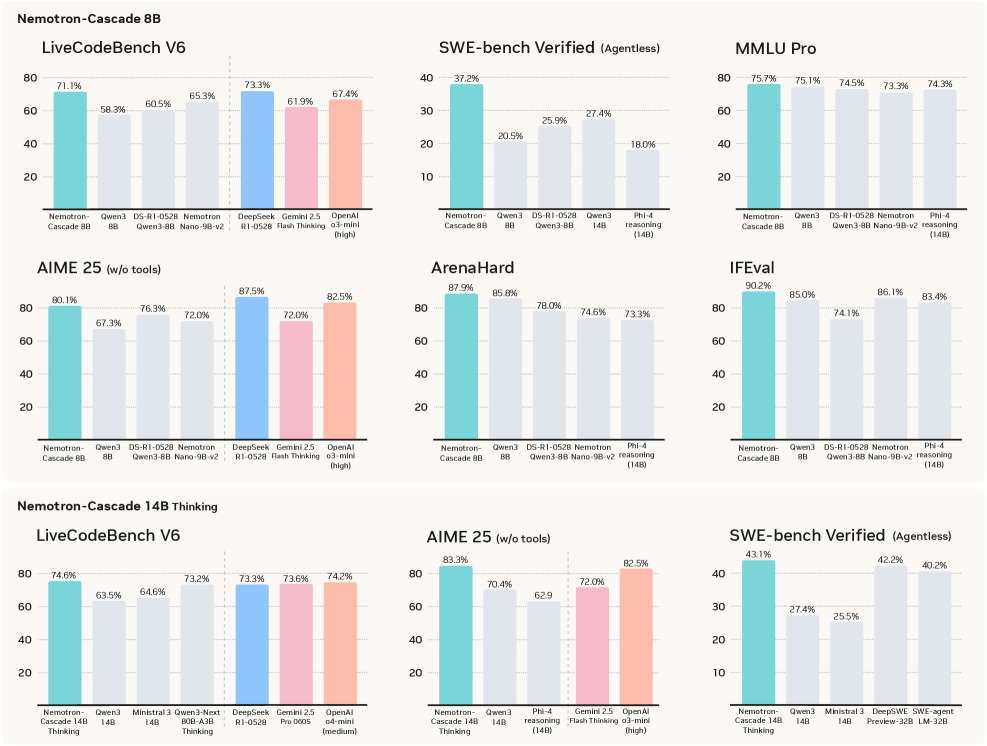
Nemotron-Cascade introduces cascaded domain-wise reinforcement learning (Cascade RL) to build general-purpose reasoning models capable of operating in both instruct and deep thinking modes. Rather than blending heterogeneous prompts from different domains, Cascade RL orchestrates sequential, domain-wise RL stages that reduce engineering complexity while delivering state-of-the-art performance.
GDPO
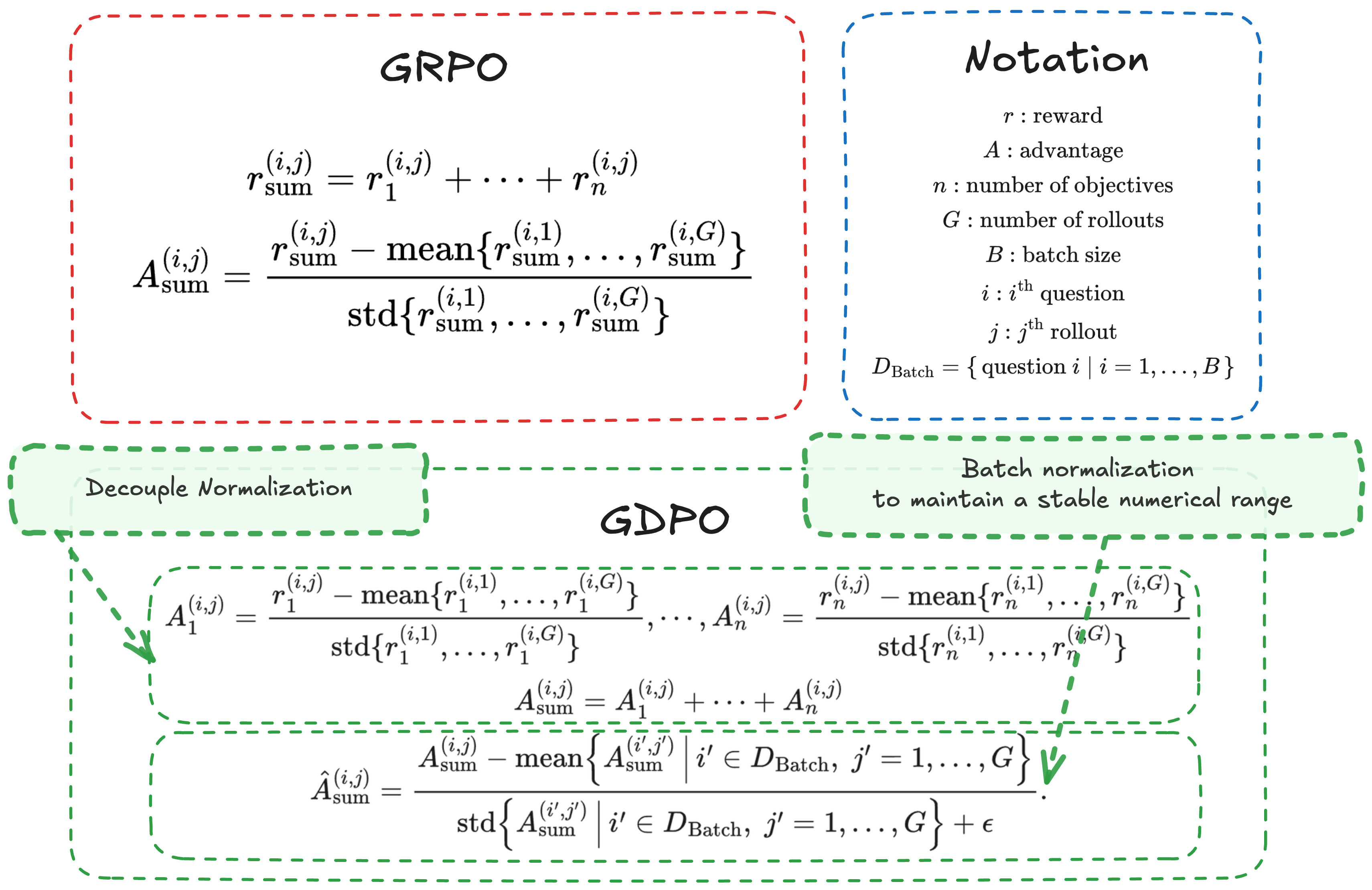
GDPO addresses a critical flaw in training language models with multiple competing objectives. The authors discover that when applying Group Relative Policy Optimization (GRPO) to multi-reward settings, normalizing distinct rollout reward combinations causes them to collapse into identical advantage values, degrading training signal quality and stability.
Training AI Co-Scientists Using Rubric Rewards
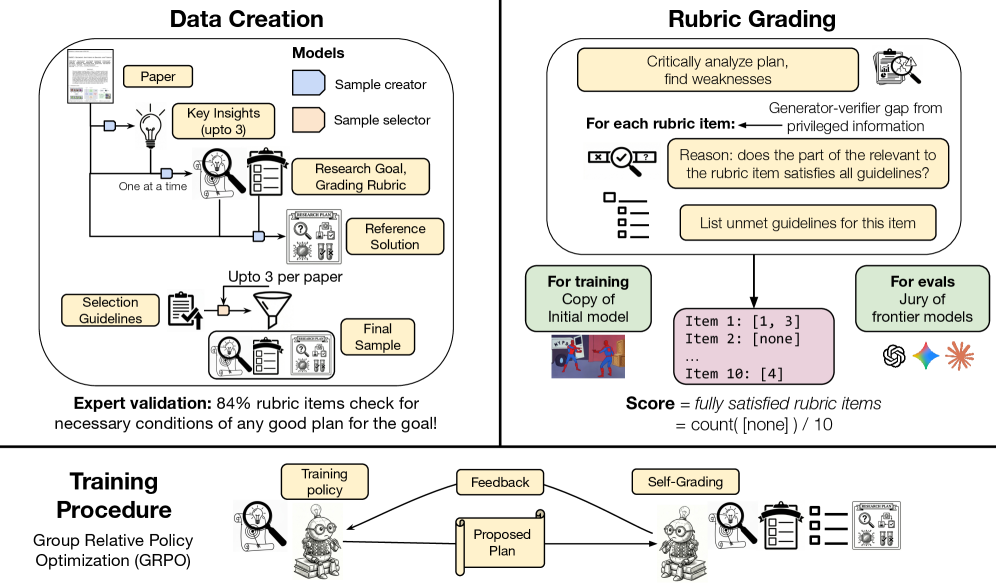
This paper from Meta Superintelligence Labs presents a scalable method to train language models to generate better research plans without expensive human supervision or real-world execution. The approach automatically extracts research goals and goal-specific grading rubrics from scientific papers, then uses reinforcement learning with self-grading to improve plan generation.
Confucius Code Agent
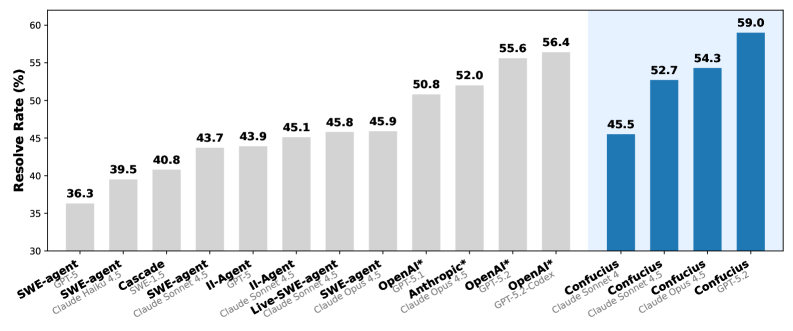
Confucius Code Agent (CCA) is a software engineering agent designed to operate on large-scale codebases. Built on the Confucius SDK, it introduces a three-axis design philosophy separating Agent Experience (AX), User Experience (UX), and Developer Experience (DX) to enable robust multi-step reasoning and modular tool use.
SciSciGPT
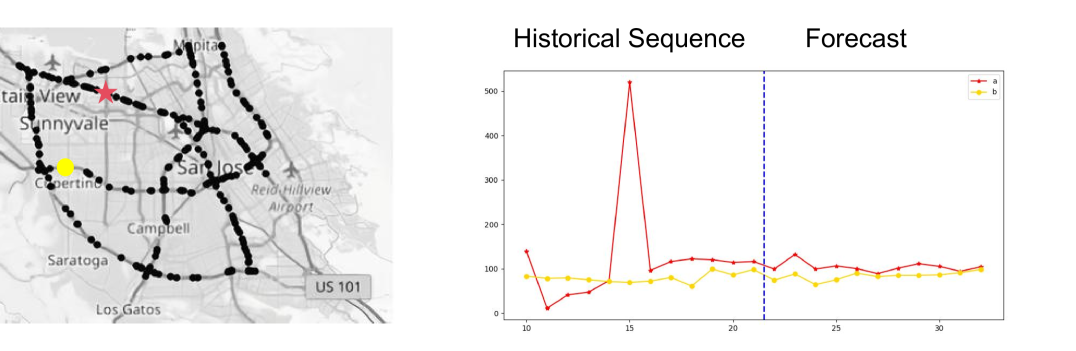
SciSciGPT is an open-source AI collaborator that uses the science of science domain as a testbed for LLM-powered research tools. Its multi-agent architecture with five specialized modules automates complex research workflows and completes tasks in about 10% of the time required by experienced researchers while producing higher-quality outputs.
SWE-EVO
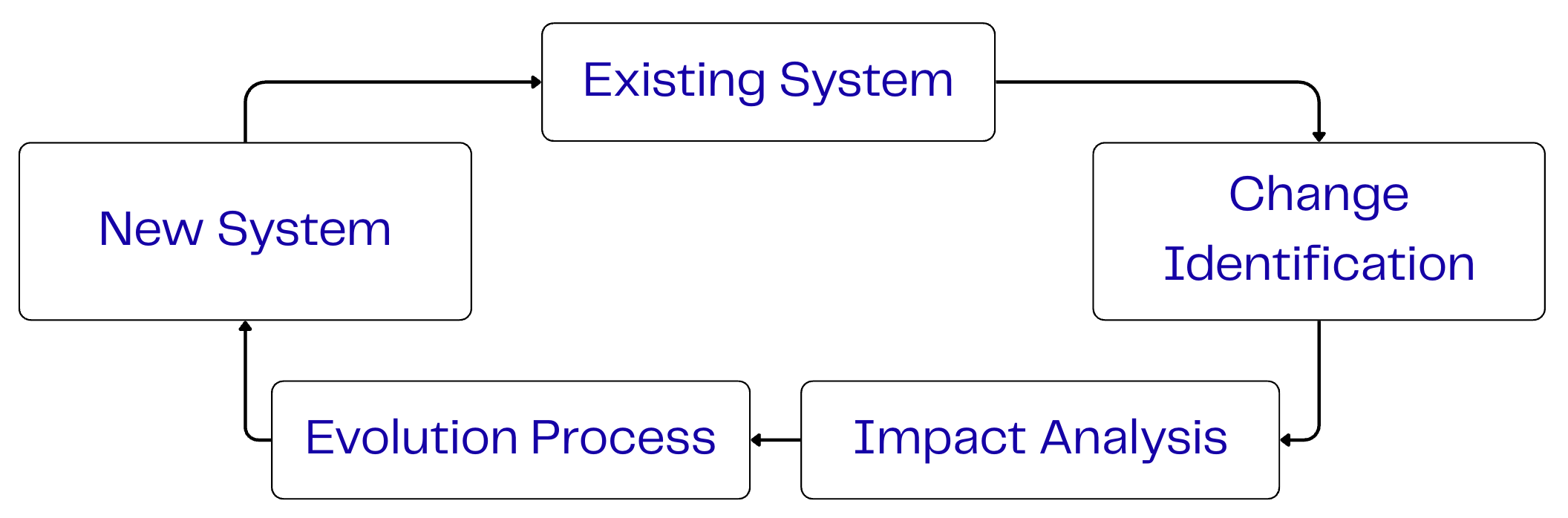
SWE-EVO introduces a benchmark for evaluating coding agents on long-horizon software evolution tasks that require multi-step modifications spanning an average of 21 files per task. The benchmark reveals significant limitations of current agents: GPT-5 with OpenHands achieves only 21% on SWE-EVO compared to 65% on SWE-Bench Verified, highlighting the gap between isolated bug fixes and realistic software development scenarios.
Deep Delta Learning
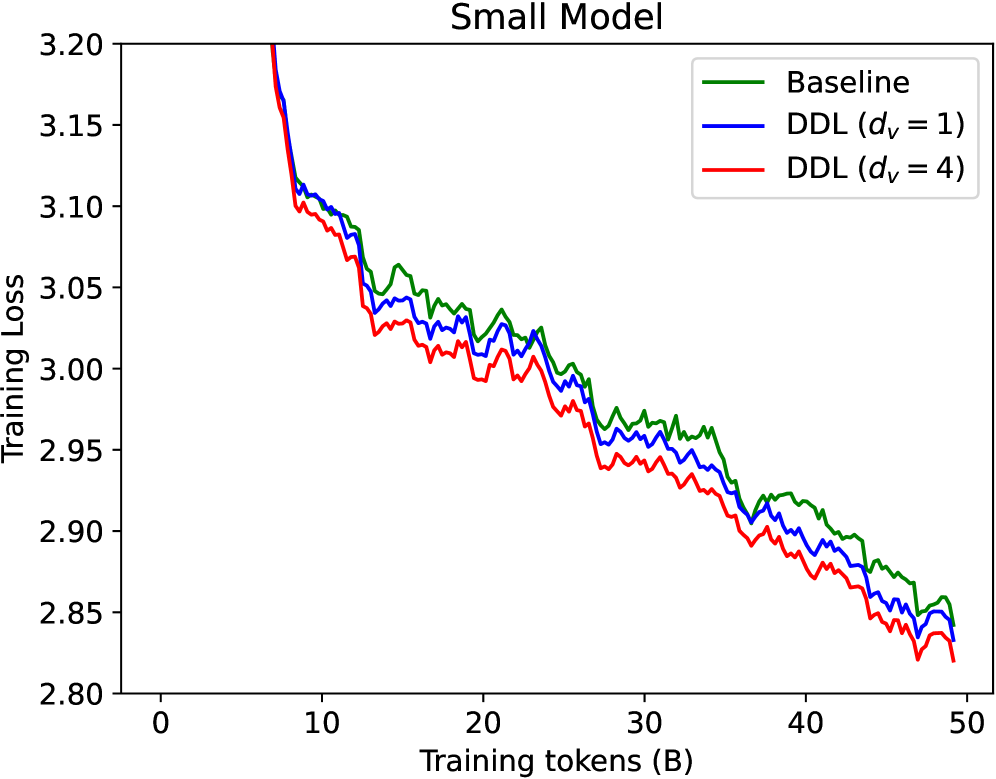
Deep Delta Learning introduces a novel “Delta Operator” that generalizes residual connections by modulating the identity shortcut with a learnable, data-dependent geometric transformation. This enables networks to dynamically interpolate between identity mapping, orthogonal projection, and geometric reflection, allowing selective forgetting of features rather than just accumulation.