NLLB
proposes a massive multilingual model that leverages transfer learning across 200 languages; it’s based on a sparsely Gated Mixture of Experts architecture and trained on data via an approach tailored for low-resource languages; evaluates on 40K translations and achieves an average of 44% improvement in translation quality.
Extracting Concepts from GPT-4
proposes a new scalable method based on sparse autoencoders to extract around 16 million interpretable patterns from GPT-4; the method demonstrates predictable scaling and is more efficient than previous techniques.
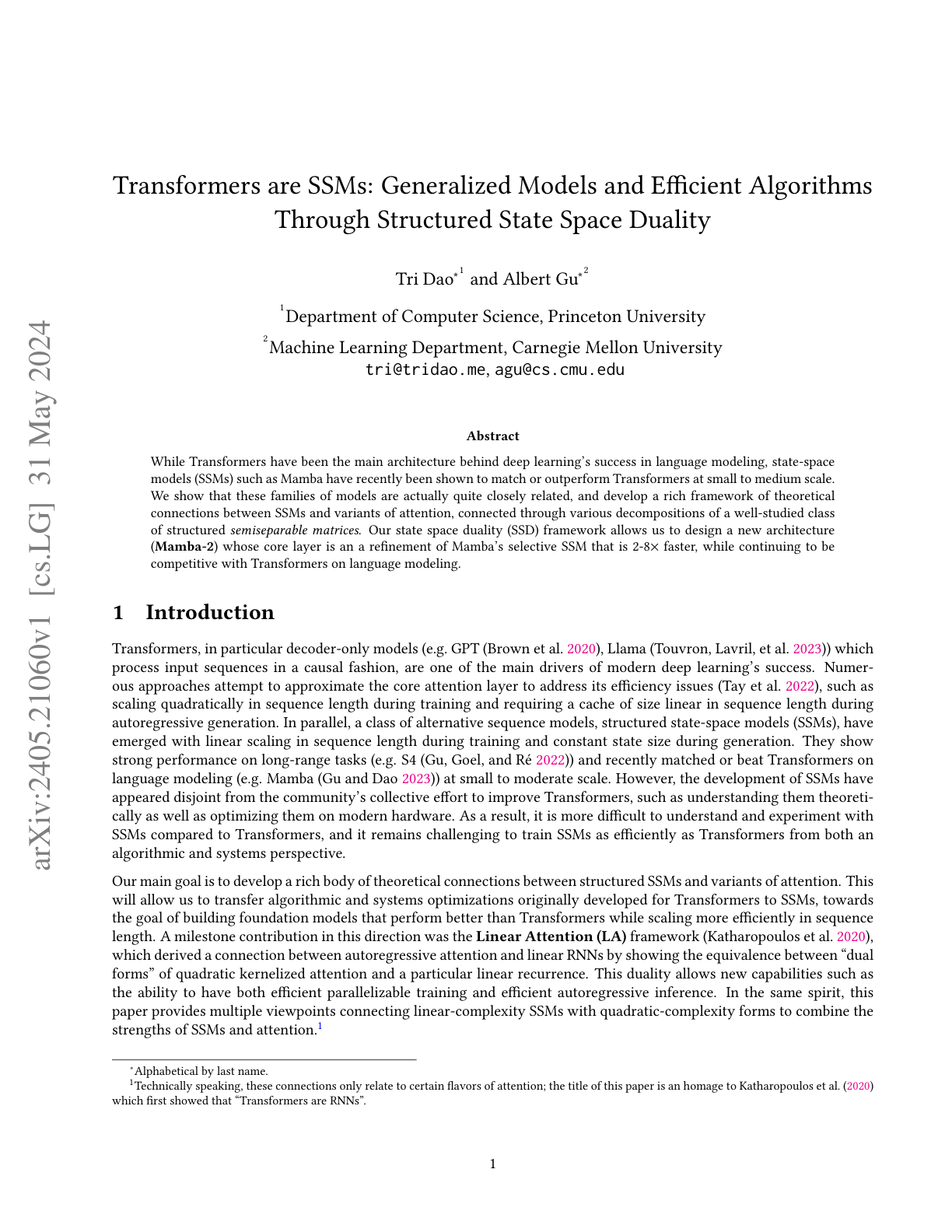
Mamba-2
a new architecture that combines state space models (SSMs) and structured attention; it uses 8x larger states and trains 50% faster; the new state space duality layer is more efficient and scalable compared to the approach used in Mamba; it also improves results on tasks that require large state capacity.
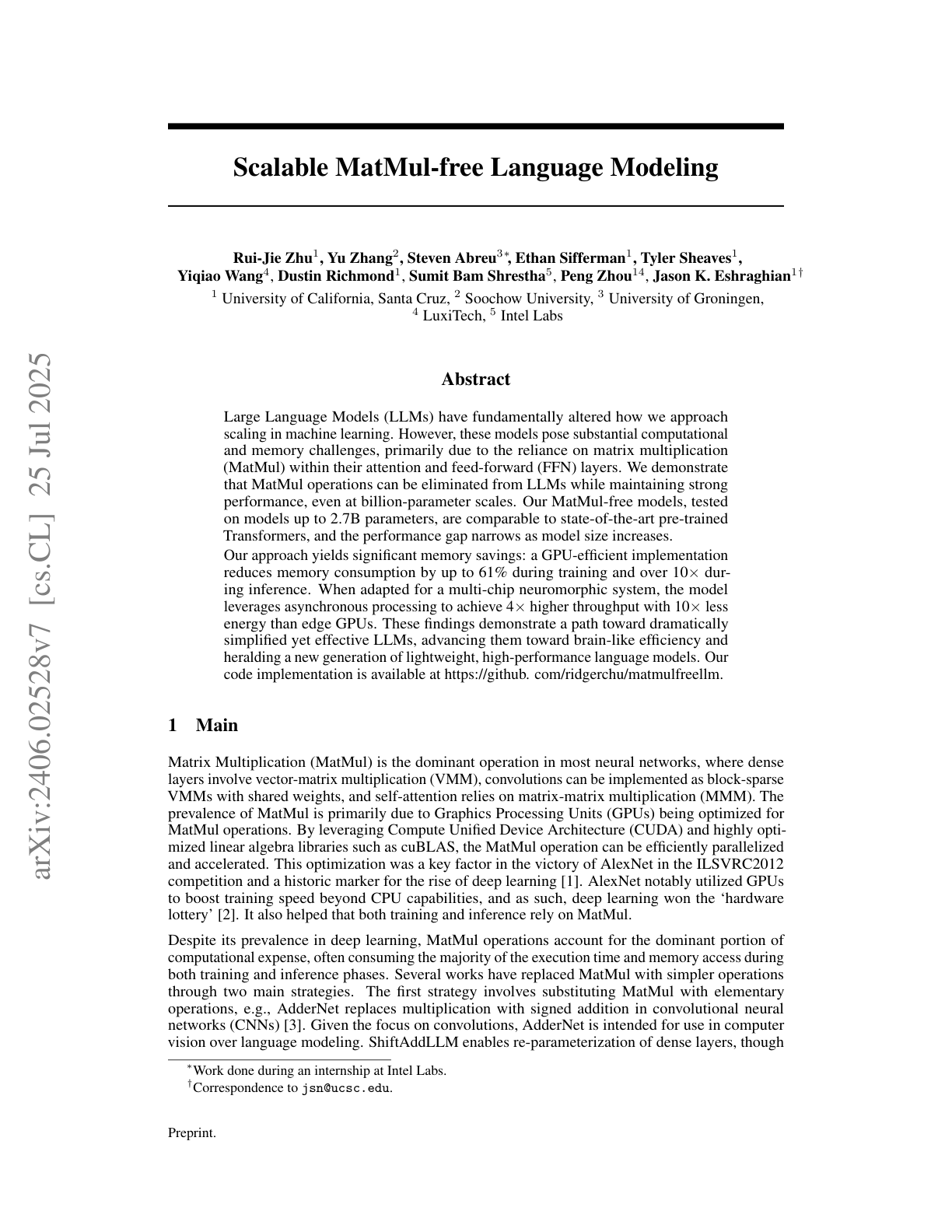
MatMul-free LLMs
proposes an implementation that eliminates matrix multiplication operations from LLMs while maintaining performance at billion-parameter scales; the performance between full precision Transformers and the MatMul-free models narrows as the model size increases; claims that by using an optimized kernel during inference, memory consumption is reduced by more than 10x.
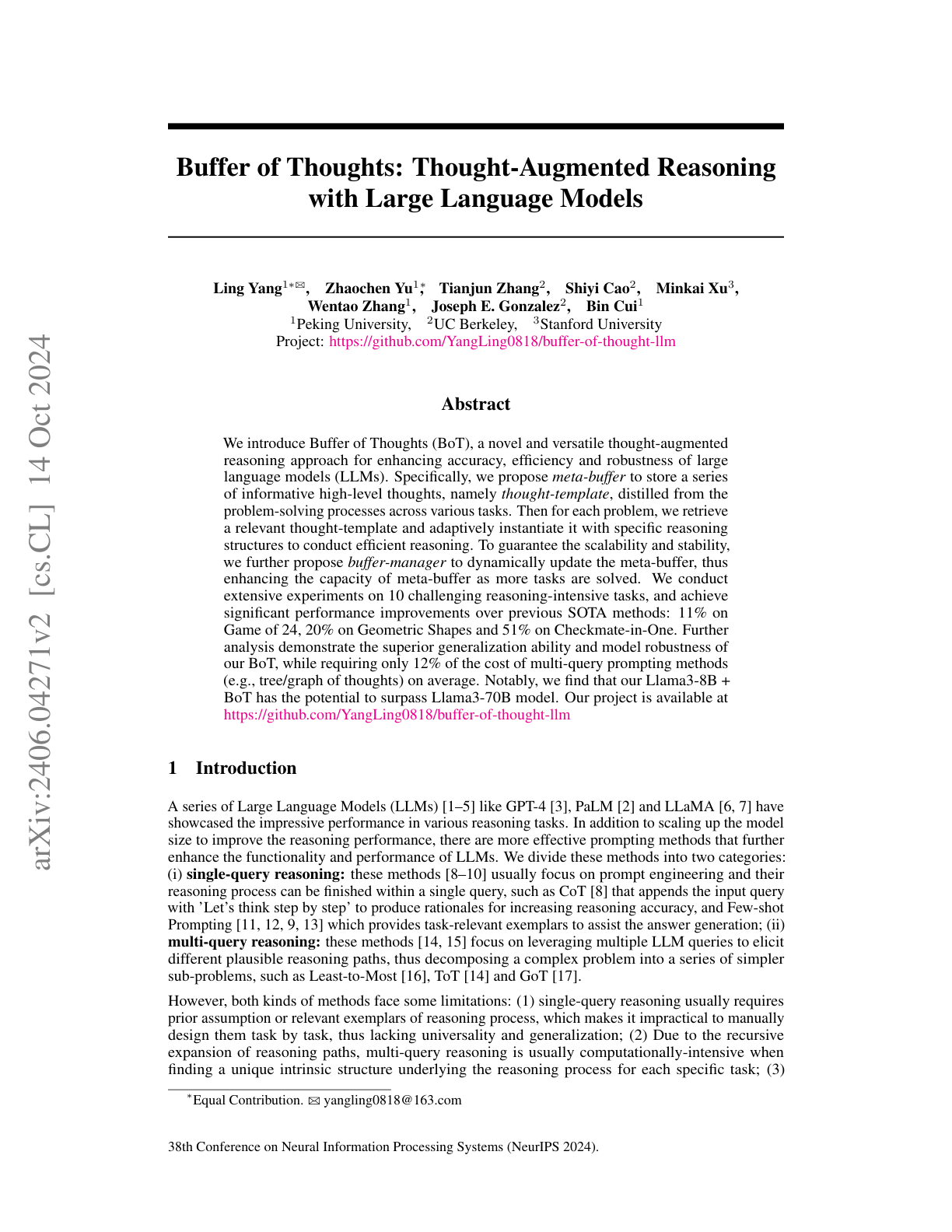
Buffer of Thoughts
presents a thought-augmented reasoning approach to enhance the accuracy, efficiency, and robustness of LLM-based reasoning; it leverages a meta-buffer containing high-level thoughts (thought templates) distilled from problem-solving processes; the relevant thought template is then retrieved and instantiated with task-specific reasoning structures for the thought-augmented reasoning process; it demonstrates SOTA performance on 10 challenging tasks while requiring 12% of the cost of multi-query prompting methods like Tree-of-Thoughts.
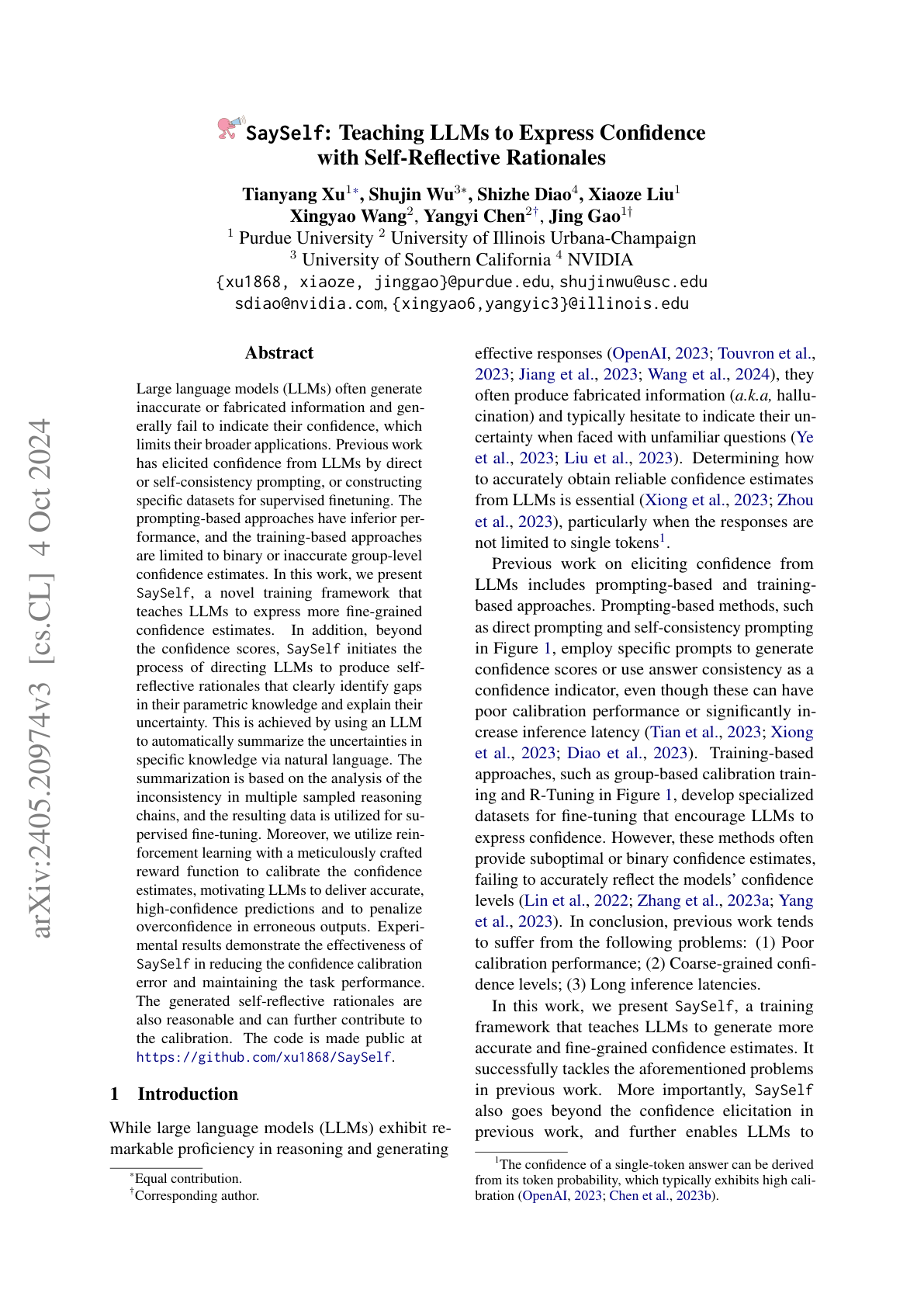
SaySelf
a training framework to teach LLMs to express more accurate fine-grained confidence estimates and self-reflective rationales; it performs supervised finetuning on a dataset that contains summaries of the difference between multiple reasoning chains; reinforcement learning is then applied to calibrate confidence estimates, encouraging the LLM to produce accurate, high-confidence predictions and penalize overconfidence in erroneous outputs.
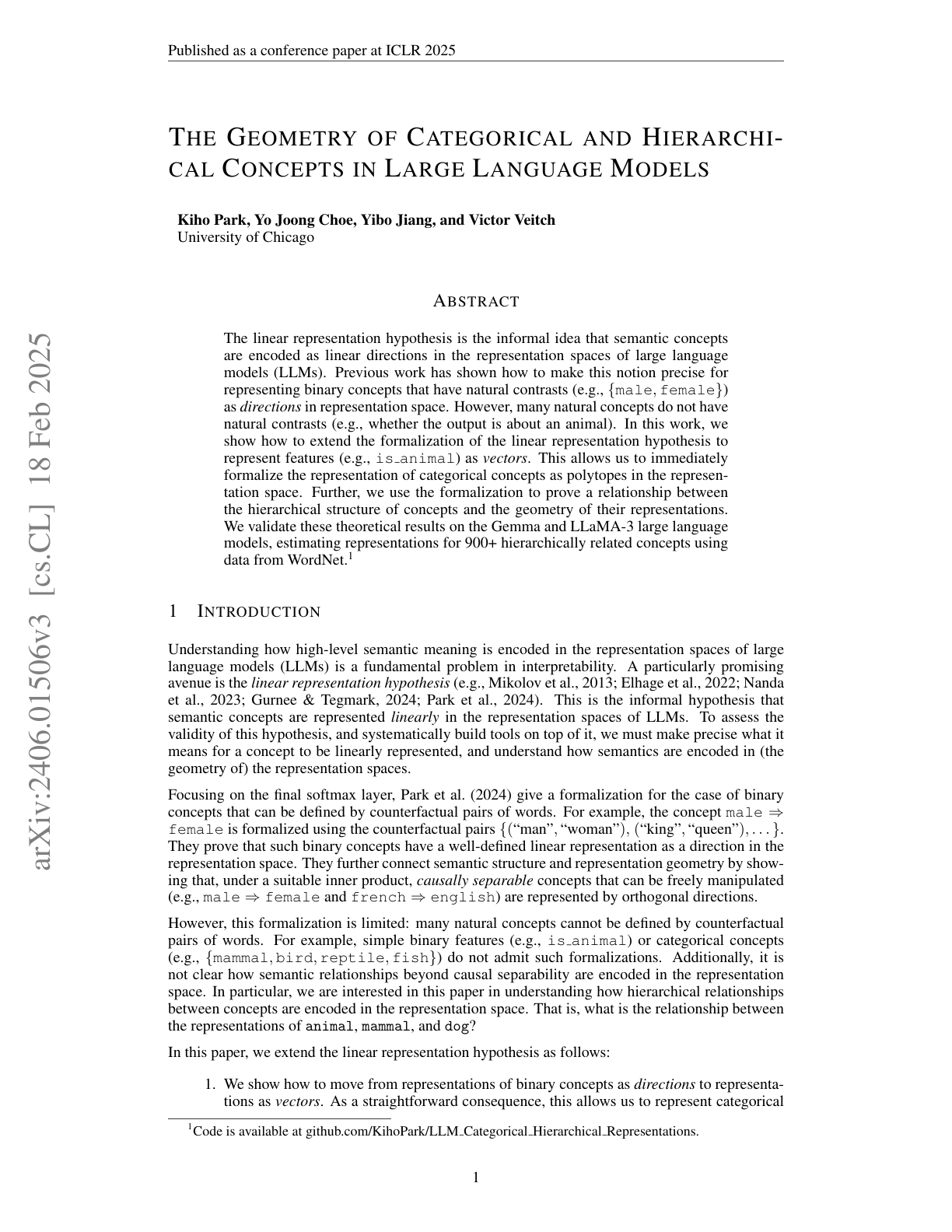
The Geometry of Concepts in LLMs
studies the geometry of categorical concepts and how the hierarchical relations between them are encoded in LLMs; finds that simple categorical concepts are represented as simplices by the LLMs and complex concepts are represented as polytopes constructed from direct sums of simplices, which reflect the hierarchical structure.
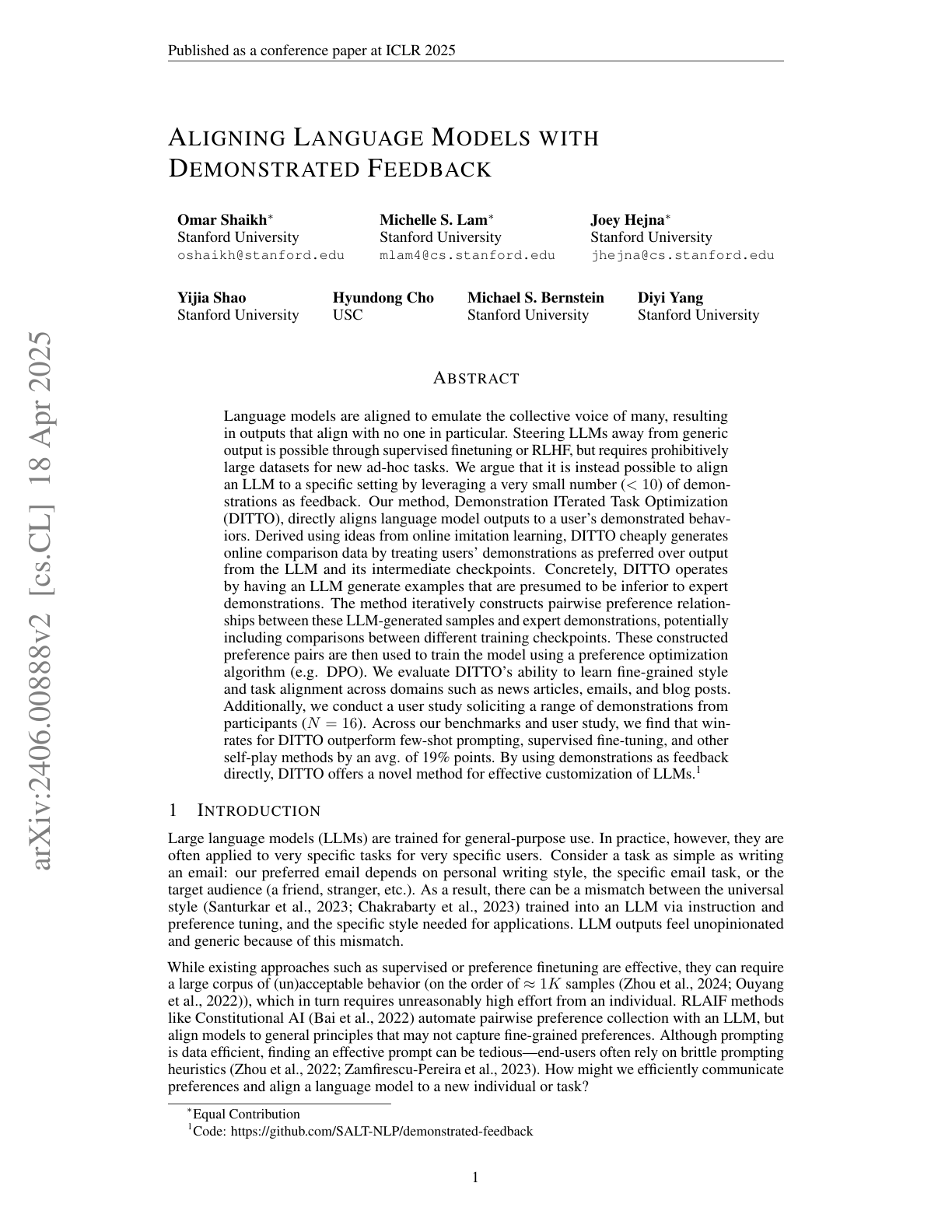
Aligning LLMs with Demonstrated Feedback
proposes a method to align LLMs to a specific setting via a very small number of demonstrations as feedback; it aligns LLM outputs to a user’s demonstrated behaviors and can learn fine-grained style and task alignment across domains; outperforms few-shot prompting, SFT, and self-play methods on the tested benchmarks.
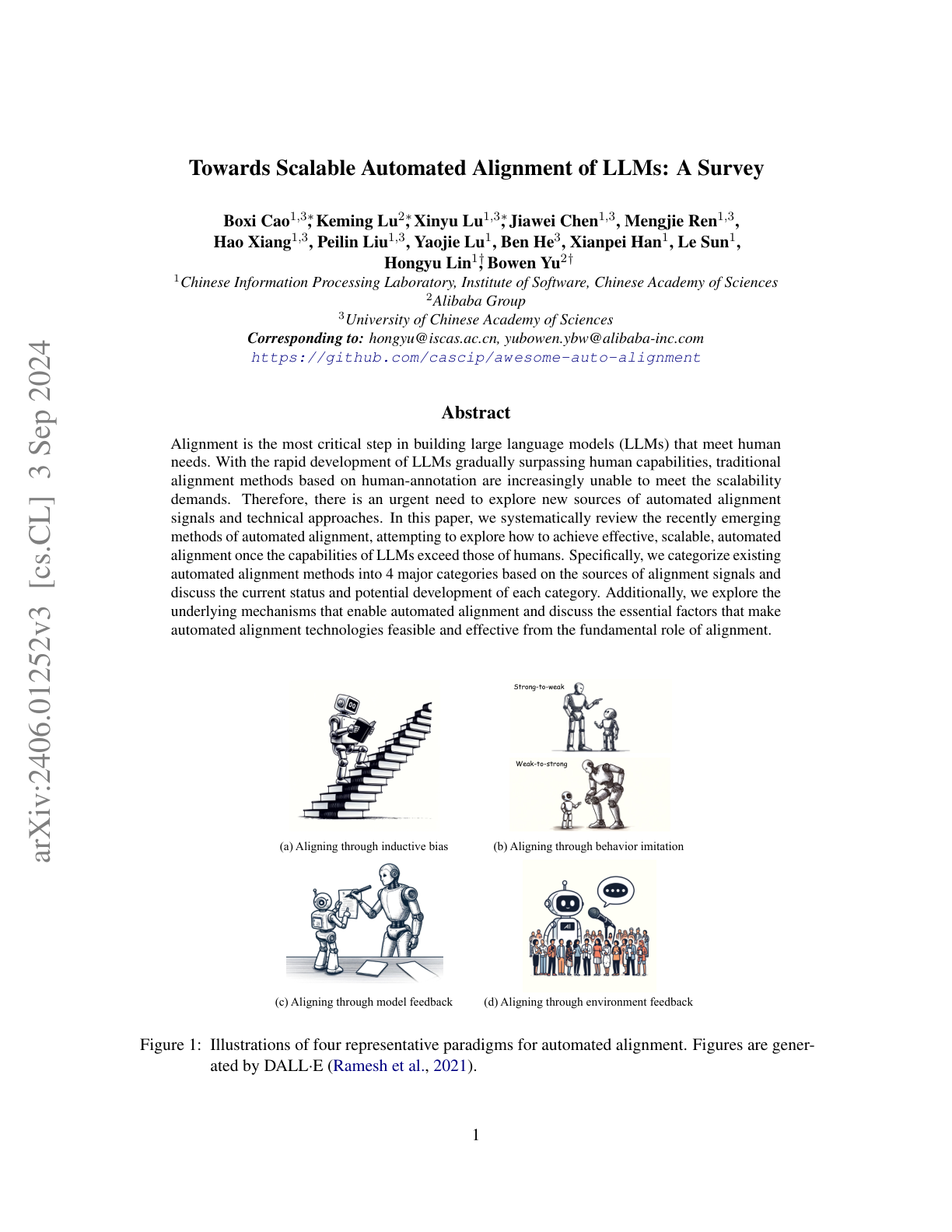
Towards Scalable Automated Alignment of LLMs
provides an overview of methods used for alignment of LLMs; explores the 4 following directions: 1) aligning through inductive bias, 2) aligning through behavior imitation, 3) aligning through model feedback, and 4) aligning through environment feedback.
AgentGym
a new framework featuring various environments and tasks for broad, real-time, and concurrent agent exploration; builds a generally capable LLM-based agent with self-evolution abilities and explores its potential beyond previously seen data across tasks and environments.