Contextual Position Encoding
proposes a new position encoding method, CoPE, to enable the position to be conditioned on context by incrementing position only on certain tokens; the position encoding is context-dependent and can represent different levels of position abstraction; the general position encoding method can attend to the i-th particular word, noun, or sentence; improves perplexity on language modeling and coding tasks.
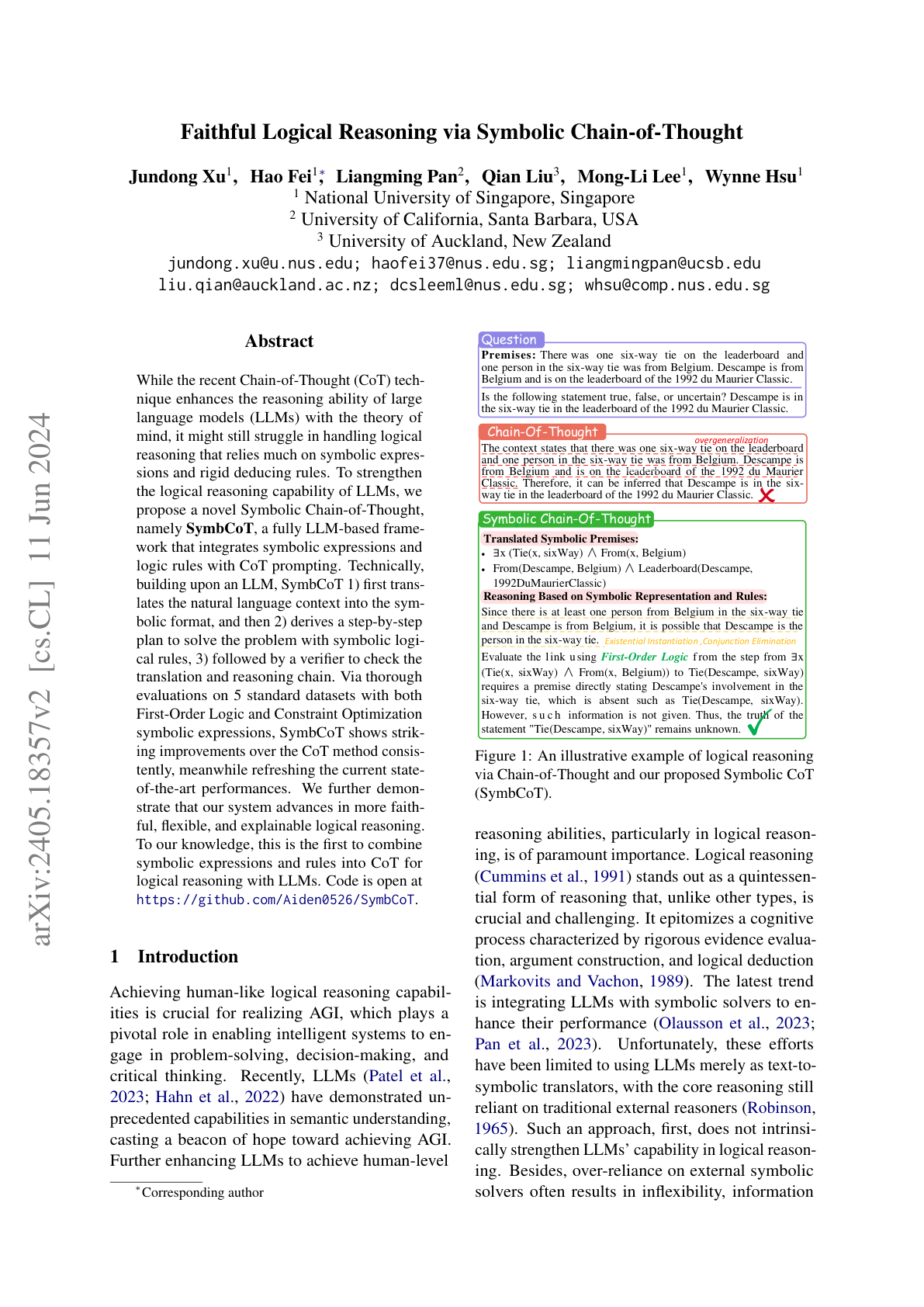
Symbolic Chain-of-Thought
proposes a method that improves the logical reasoning capabilities of LLMs by integrating symbolic expressions and logical rules with chain-of-thought (CoT) prompting; the prompting technique is called Symbolic Chain-of-Thought and it’s a fully LLM-based framework with the following key steps: 1) translates natural language context to symbolic format, 2) derives step-by-step plan to solve problems following symbolic logical rules, and 3) uses a verifier to check the translation and reasoning chain.
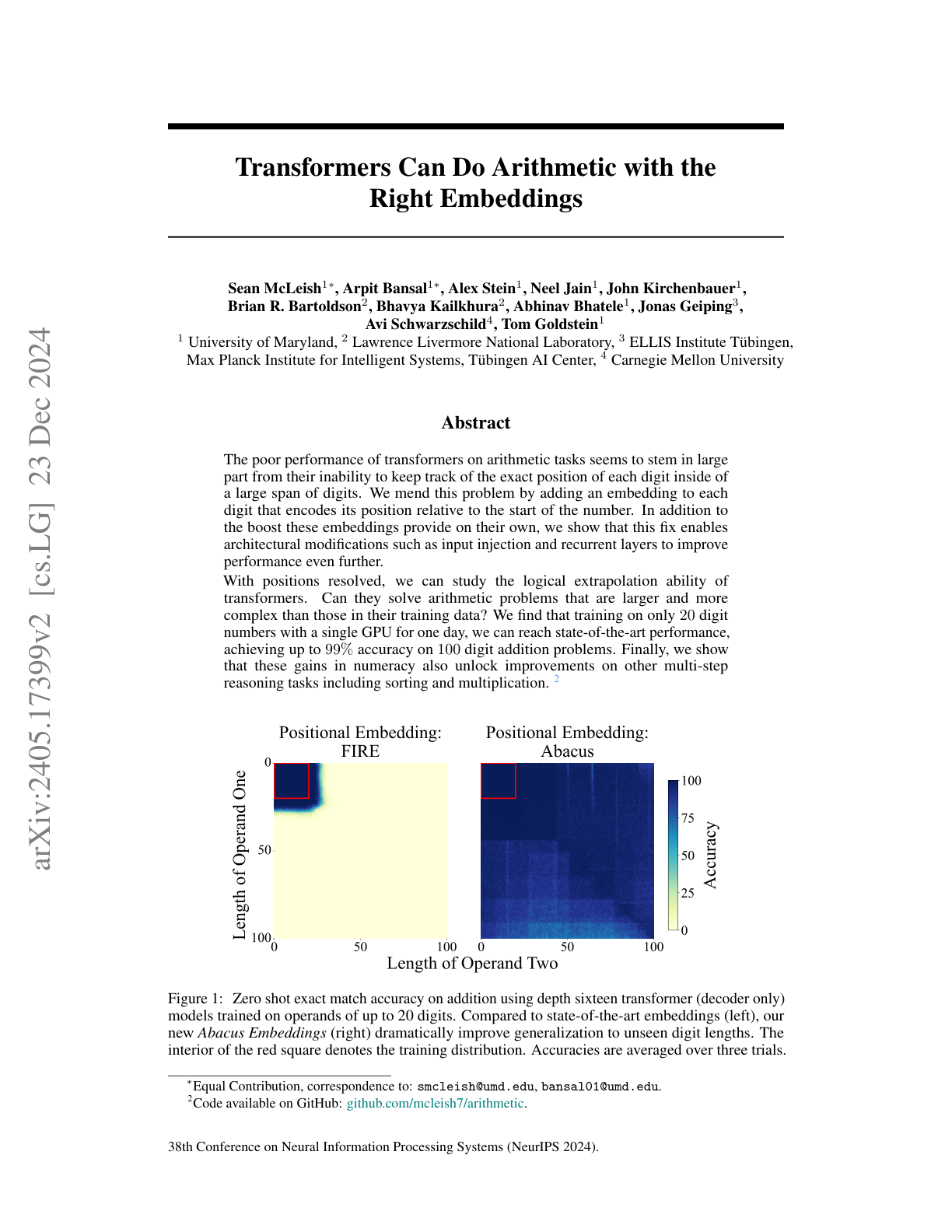
Abacus Embeddings
achieves 99% accuracy on 100-digit addition problems by training on only 20-digit numbers with a single GPU; the main challenge this work addresses is the inability of transformers to track the exact position of digits; they do this by adding an embedding to each digit that encodes its position relative to the start of the number; these gains also transfer to multi-step reasoning tasks that include sorting and multiplication.
Introduction to Vision-Language Modeling
presents an introduction to vision-language models along with key details of how they work and how to effectively train these models.
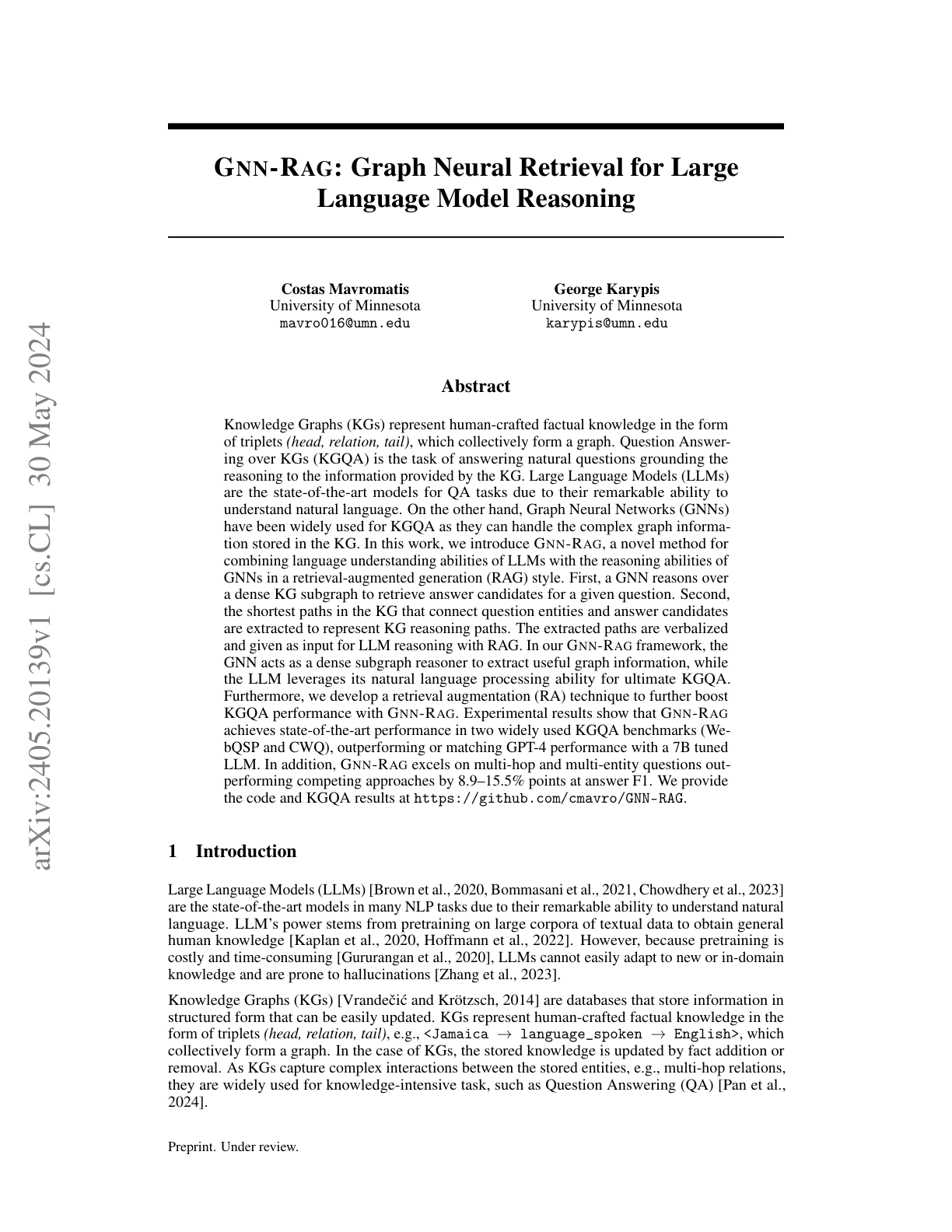
GNN-RAG
combines the language understanding abilities of LLMs with the reasoning abilities of GNNs in a RAG style; the GNN extracts useful and relevant graph information while the LLM takes the information and leverages its capabilities to perform question answering over knowledge graphs (KGQA); GNN-RAG improves vanilla LLMs on KGQA and outperforms or matches GPT-4 performance with a 7B tuned LLM.
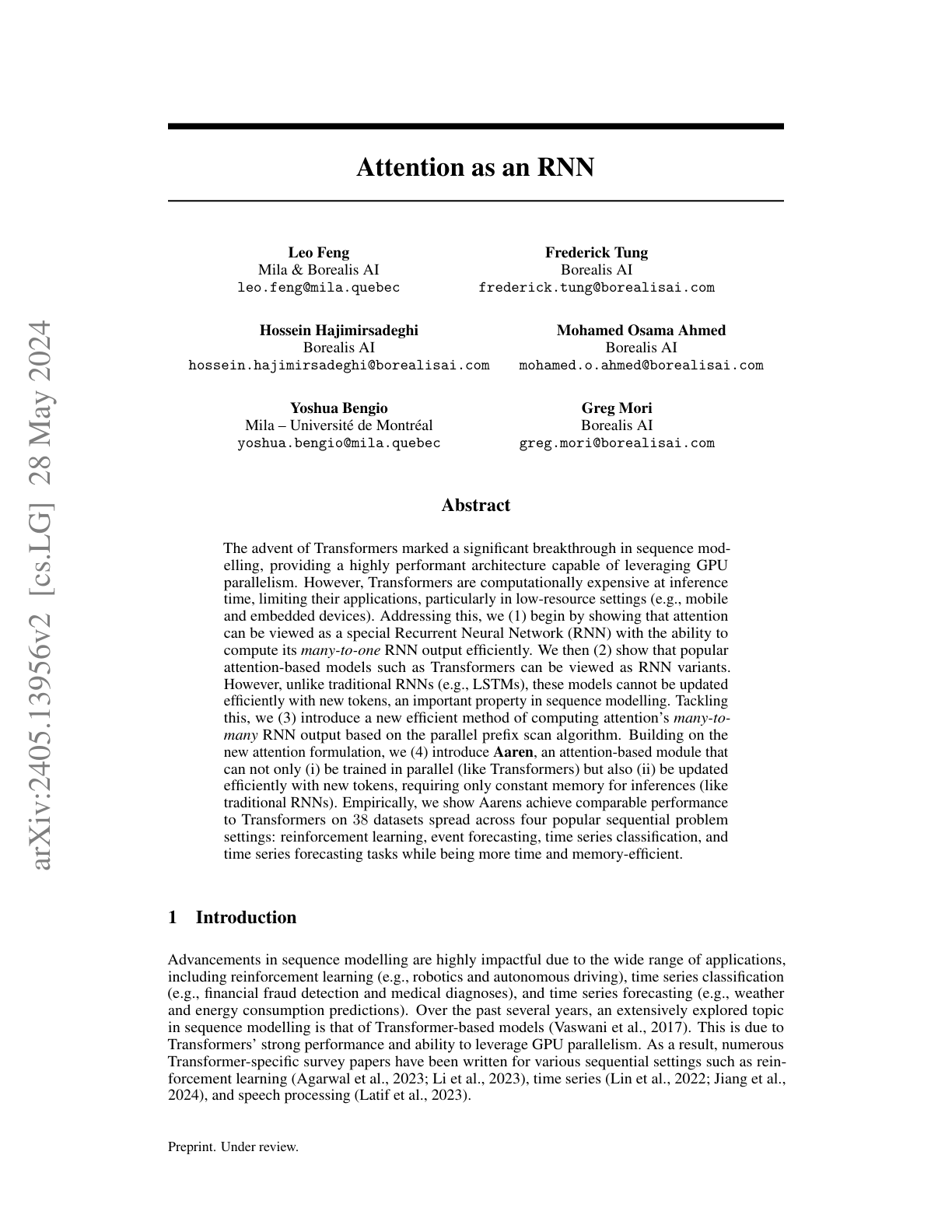
Attention as an RNN
presents a new attention mechanism that can be trained in parallel (like Transformers) and be updated efficiently with new tokens requiring constant memory usage for inferences (like RNNs); the attention formulation is based on the parallel prefix scan algorithm which enables efficient computation of attention’s many-to-many RNN output; achieves comparable performance to Transformers on 38 datasets while being more time and memory-efficient.
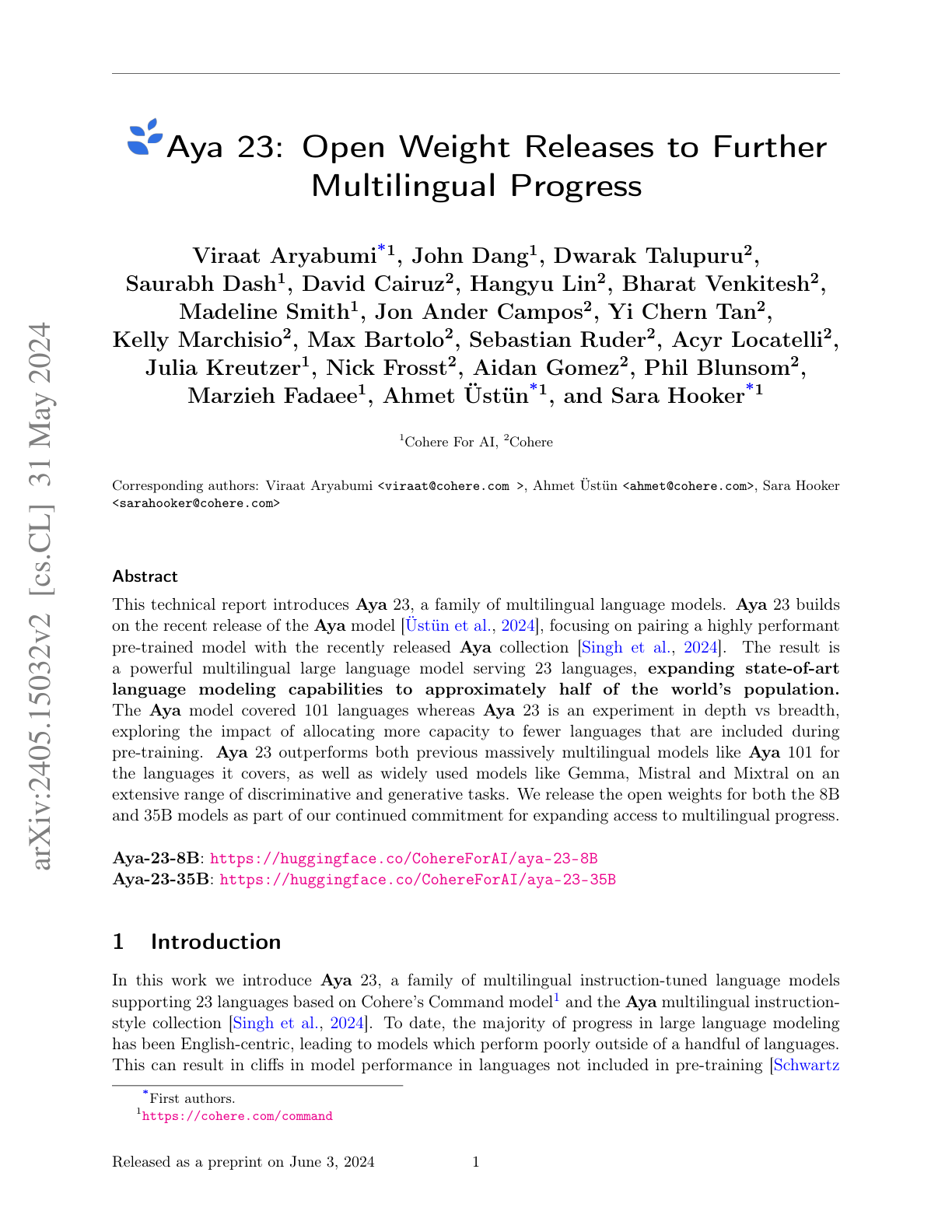
Aya23
a family of multilingual language models that can serve up to 23 languages; it intentionally focuses on fewer languages and allocates more capacity to these languages; shows that it can outperform other massive multimodal models on those specific languages.
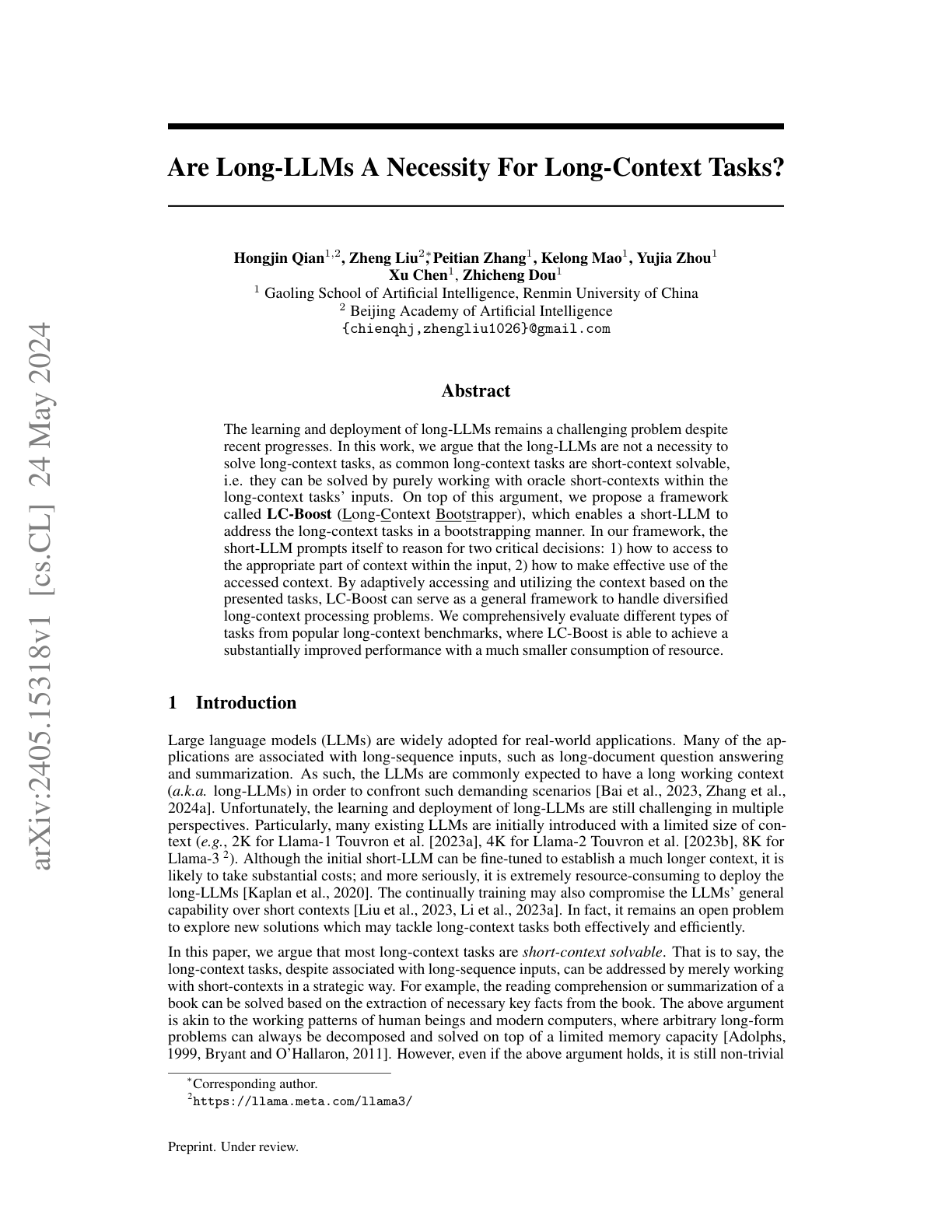
Are Long-LLMs A Necessity For Long-Context Tasks?
claims that long-LLMs are not a necessity to solve long-context tasks; proposes a reasoning framework to enable short-LLMs to address long-context tasks by adaptively accessing and utilizing the context based on the presented tasks; it decomposes the long context into short contexts and processes them using a decision-making process.
Financial Statement Analysis with LLMs
claims that LLMs can generate useful insights from its analysis of trends and financial ratios; shows that GPT-4 performs on par with narrowly specialized models; and achieves a profitable trading strategy based on GPT’s predictions.
SimPO
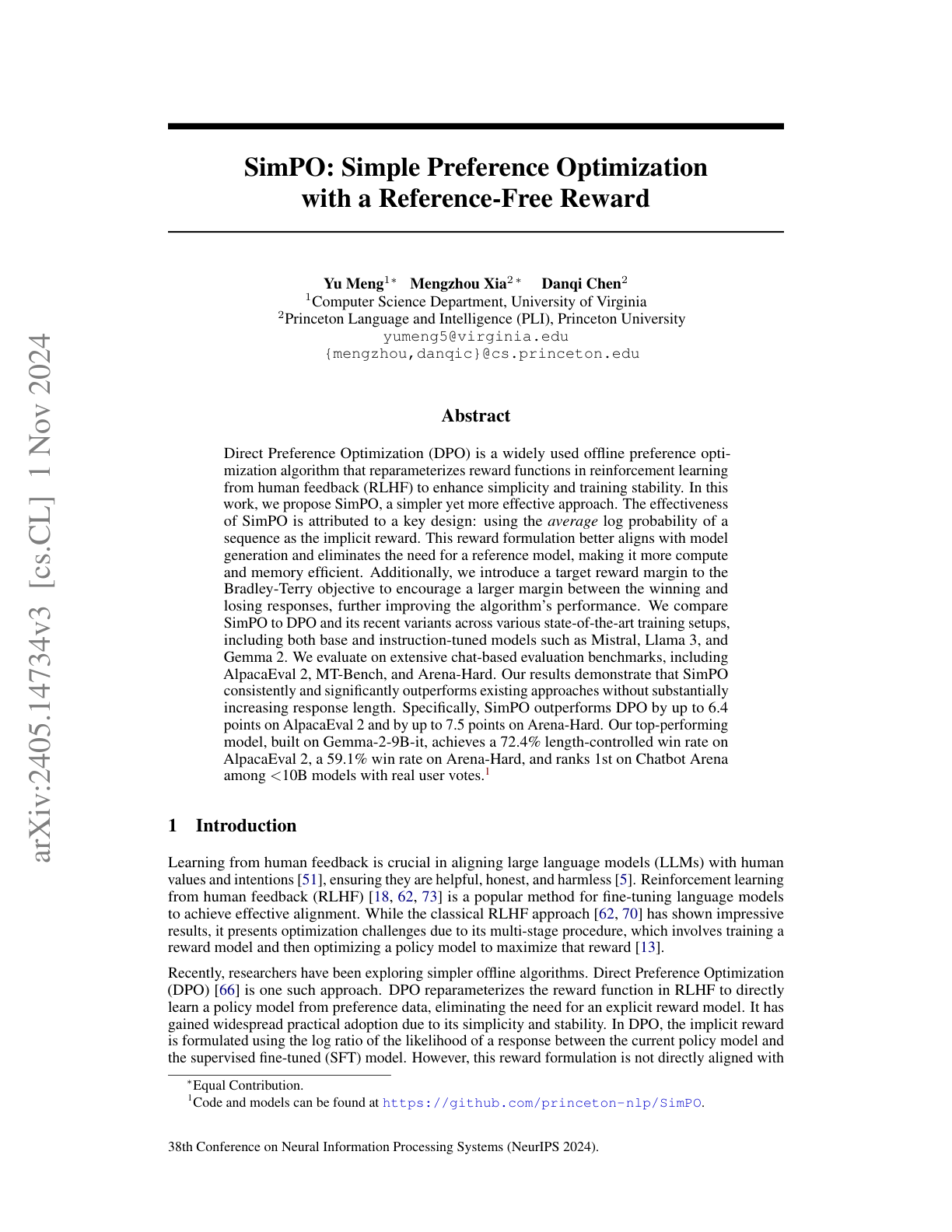
a simpler and more effective approach for preference optimization with a reference-free reward; uses the average log probability of a sequence as an implicit reward (i.e., no reference model required) which makes it more compute and memory efficient; demonstrates that it outperforms existing approaches like DPO and claims to produce the strongest 8B open-source model.