
Llama 3.1
a collection of LLMs that include 8B, 70B, and 405B parameters models; supports eight languages and extends the context window to 128K tokens; performs competitively and in some cases outperforms state-of-the-art models across capabilities like general knowledge, math reasoning, and tool use.

AlphaProof & Alpha Geometry 2
solved 4 out of 6 problems in this year’s IMO which is the equivalent of a silver-medal score; AlphaProof consists of a Gemini model that automatically translates natural language problem statements into formal statements (i.e., formalizer network); then a solver network searches for proofs/disproofs and progressively trains itself using AlphaZero to learn to solve even more complex problems; AlphaGeometry 2, a neuro symbolic hybrid system, proved the geometry problem; based on the Gemini model and trained from scratch on large amounts of synthetic data.
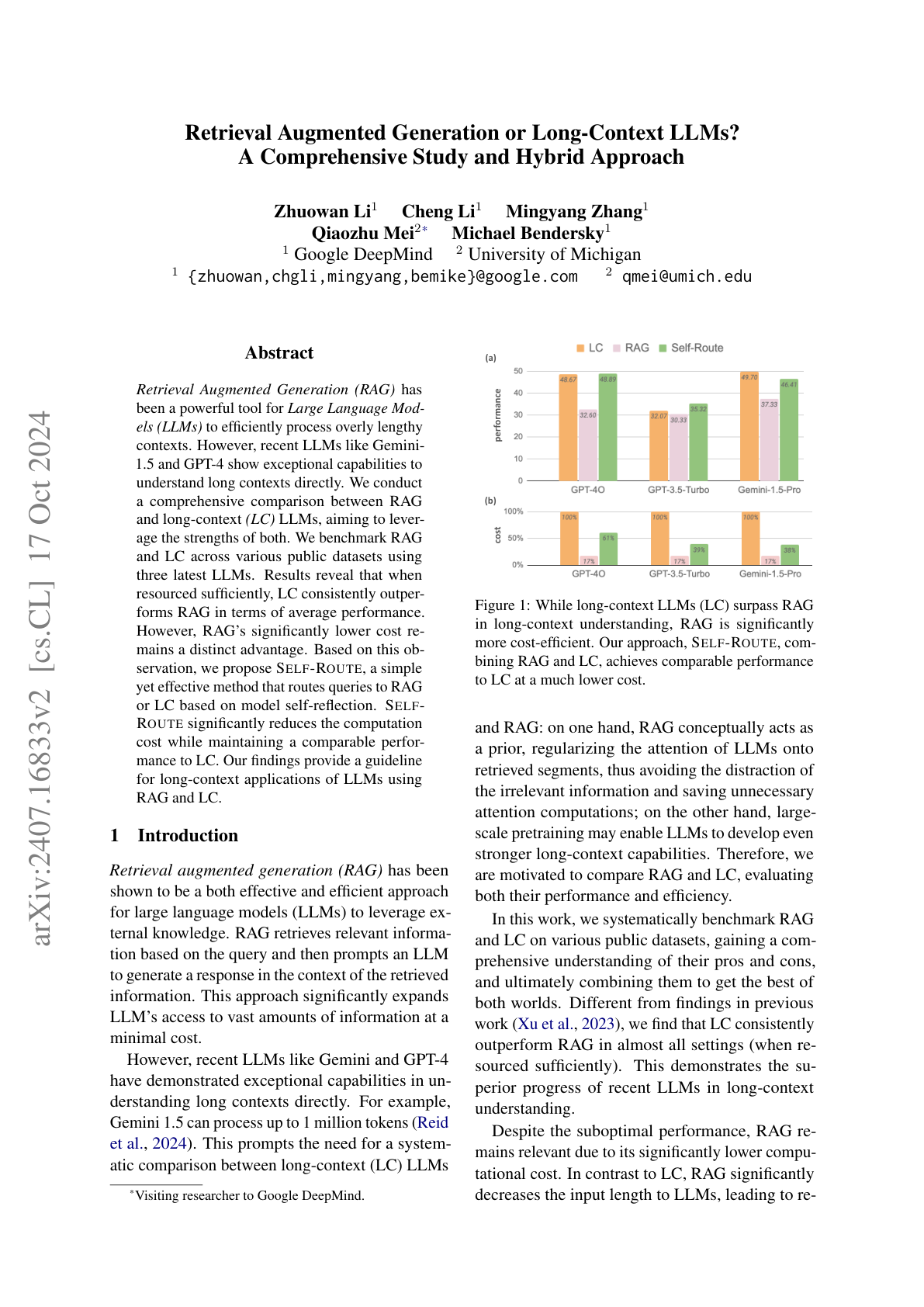
RAG vs. Long-Context LLMs
compares RAG and long-context LLMs and finds that long-context LLMs outperform RAG on average performance while RAG is significantly less expensive; proposes Self-Route, leveraging self-reflection to route queries to RAG or LC; reports that Self-Route significantly reduces computational cost while maintaining comparable performance to LC.
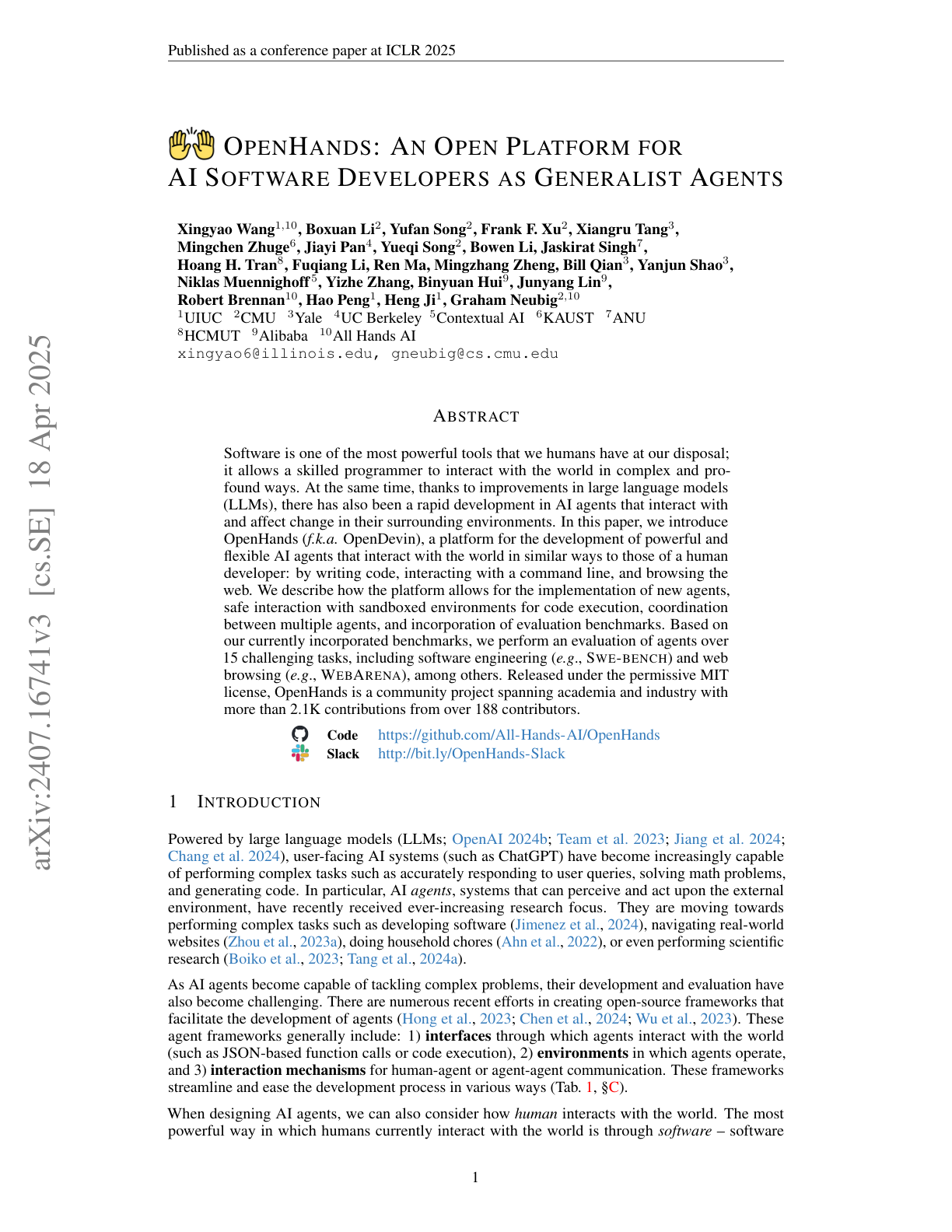
OpenDevin
presents a platform to develop generalist agents that interact with the world through software; features include 1) an interaction mechanism for interaction between agents, interfaces, and environments, 2) an environment including a sandboxed operating system and web browser available to the agents, 3) interface to create and execute code, 4) multi-agent support, and 5) an evaluation framework.
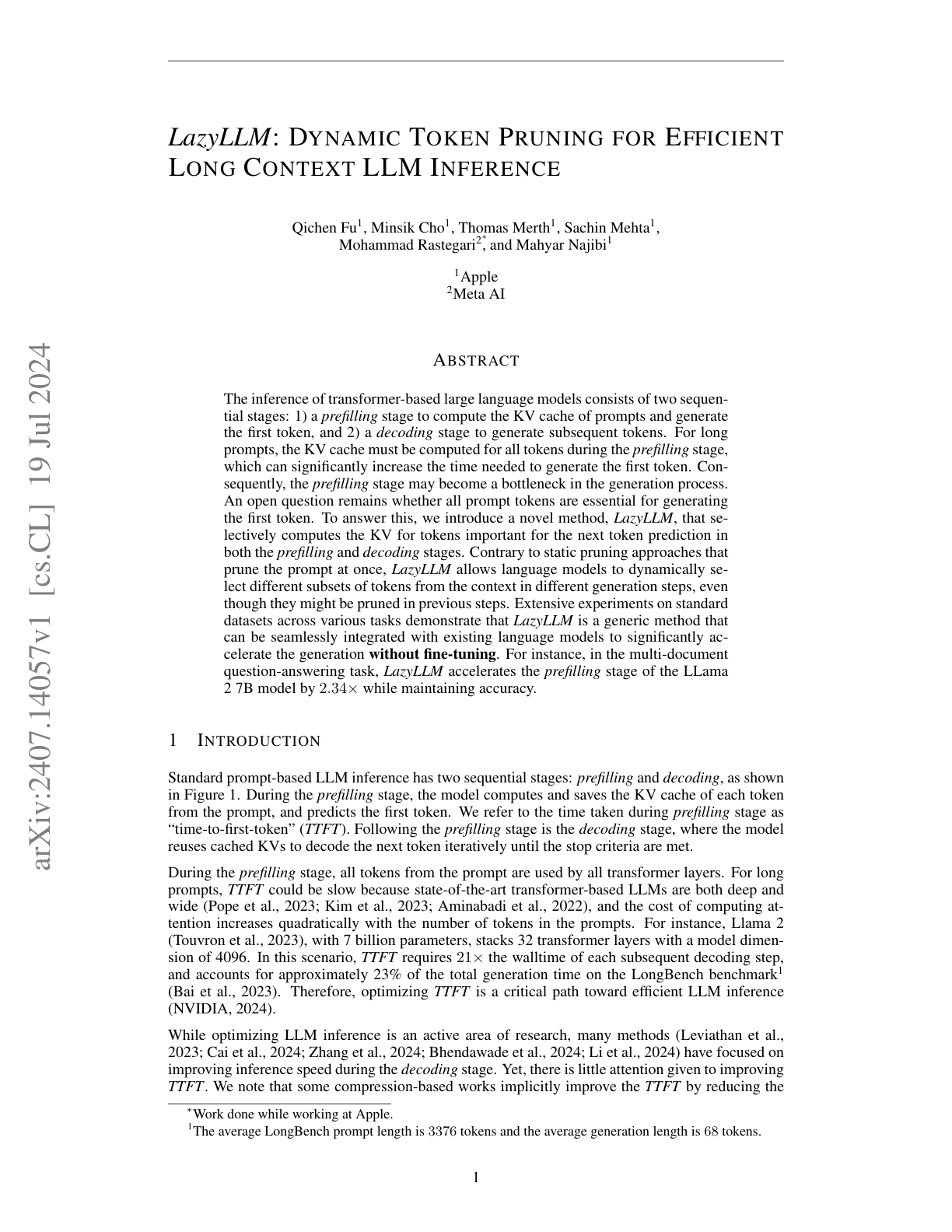
LazyLLM
introduces a novel dynamic token pruning method for efficient long-context LLM inference; it can accelerate the prefilling stage of a Llama 2 7B model by 2.34x and maintain high accuracy; it selectively computes the KV for tokens that are important for the next token prediction in both the prefilling and decoding stages; it allows language models to dynamically select different subsets of tokens from the context in different generation steps, even though they might be pruned in previous steps.
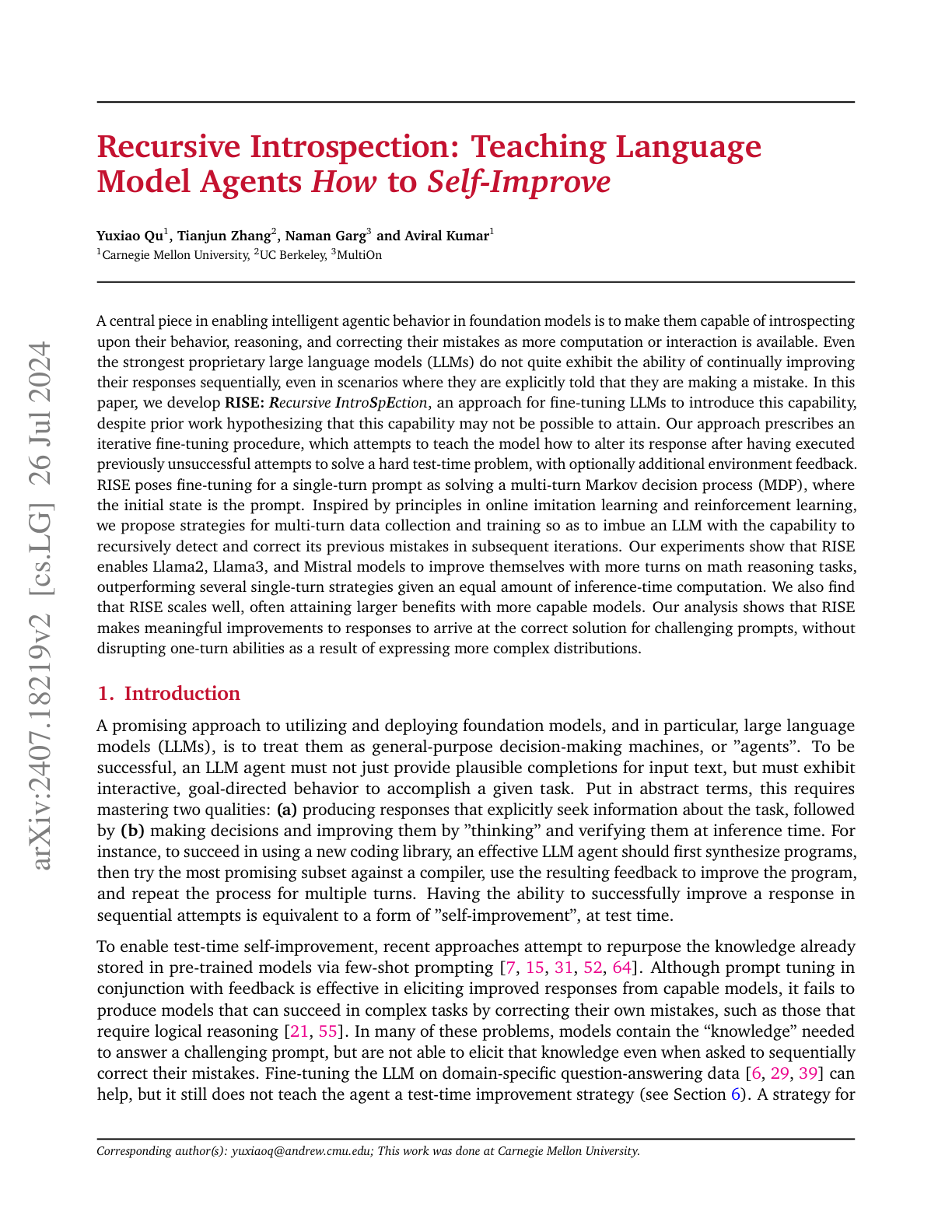
Teaching LLM Agents to Self-Improve
claims it is possible to iteratively fine-tune LLMs with the ability to improve their own response over multiple turns with additional environment feedback; the LLM learns to recursively detect and correct its previous mistakes in subsequent iterations; improves the self-improvement abilities of 7B models on reasoning tasks (GSM8K and MATH), attaining an improvement over turns that’s unseen in strong proprietary models.
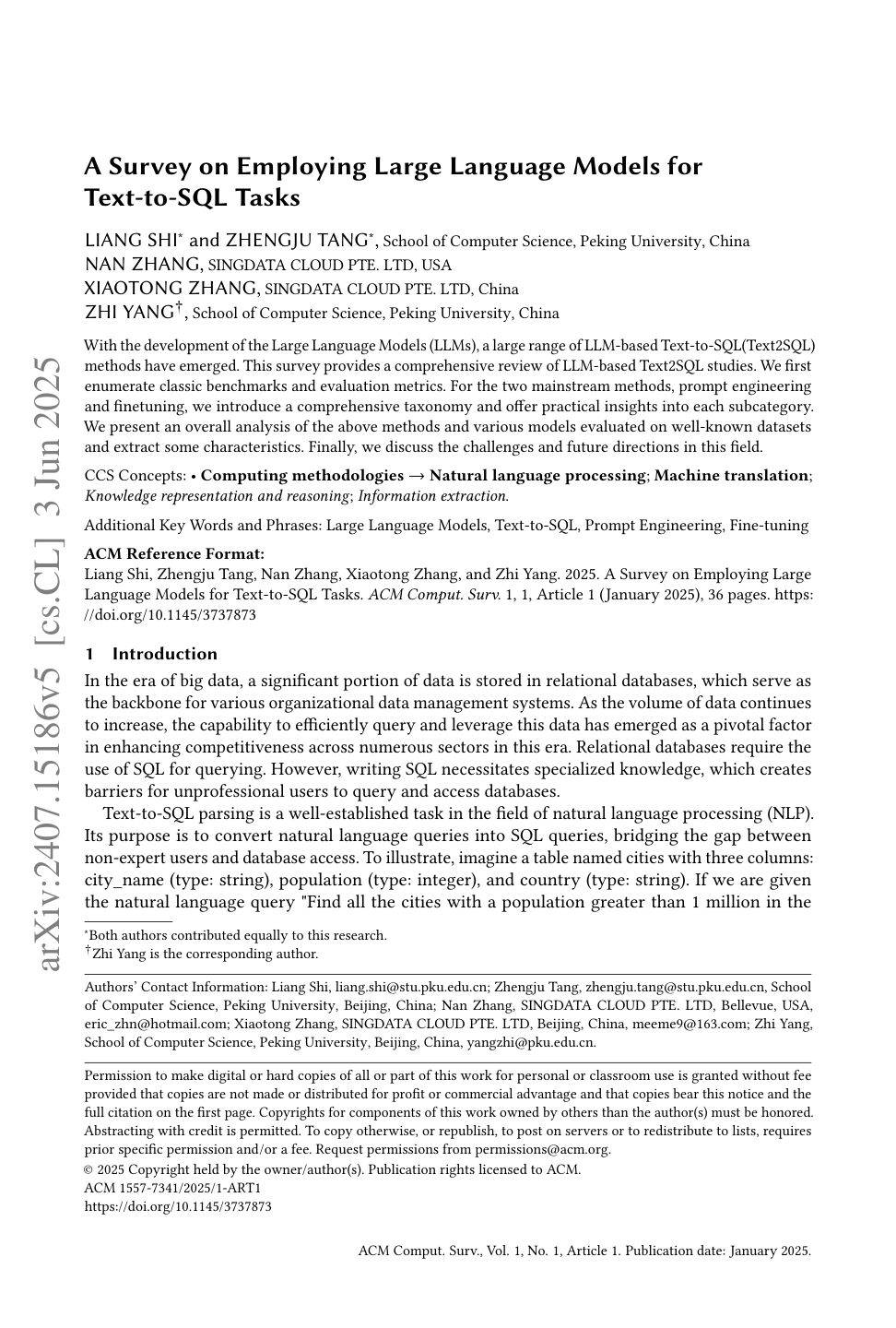
Text-to-SQL Survey
provides a survey on employing LLMs for Text-to-SQL tasks, including prompt engineering techniques, fine-tuning methods, benchmarks, and more.
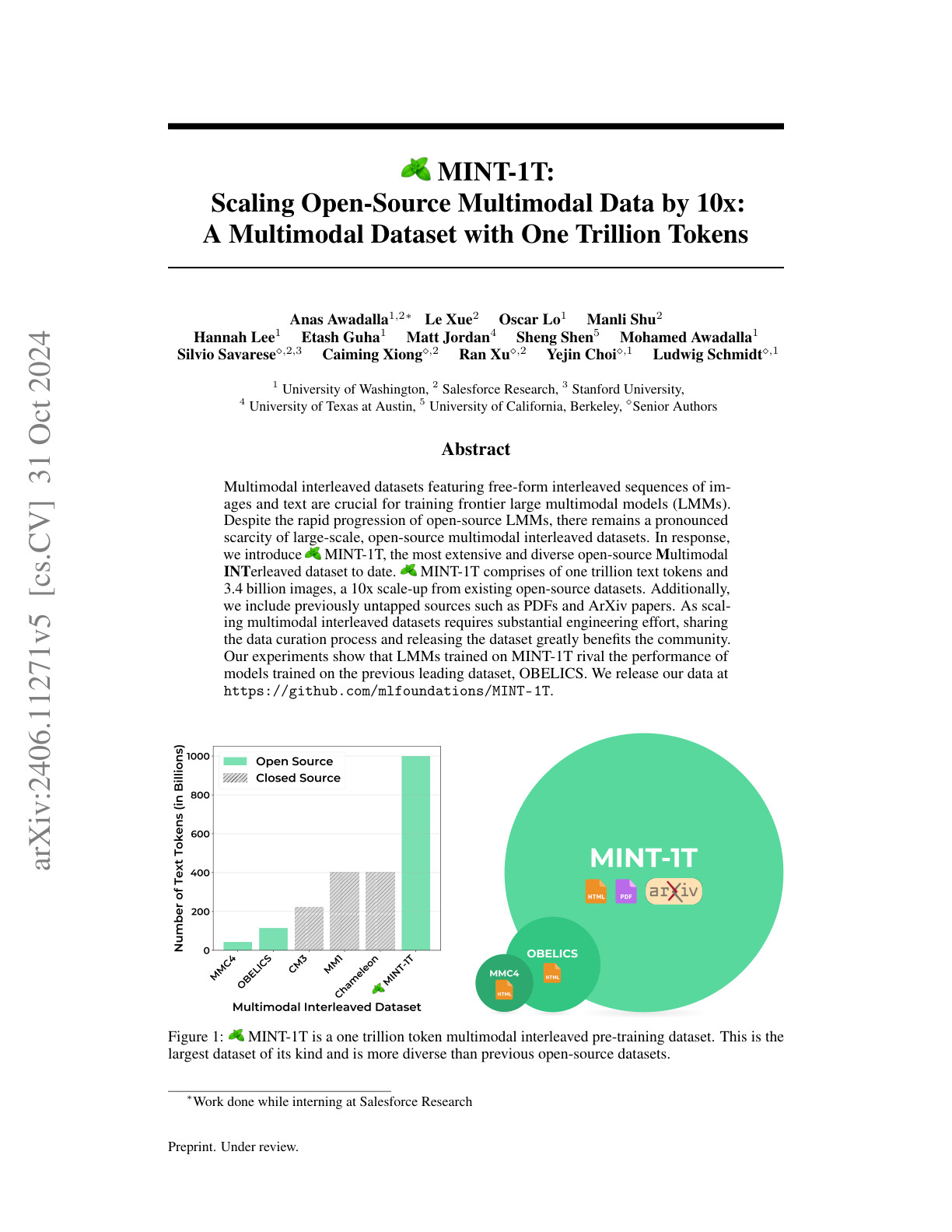
MINT-1T
open-sources a large-scale multimodal interleaved dataset consisting of 1 trillion tokens which has 3.4 billion images; it also includes new sources such as PDFs and ArXiv papers.
Model Collapse on Synthetic Data
investigates the effects of training models on recursively generated data; finds that training on model-generated content can cause irreversible defects where the original content distribution disappears; shows that the effect, referred to as model collapse, occurs in LLMs, VAEs, and GMMs; while tested on smaller scale models (~100M params), the authors suggest this effect is highly likely to transfer to larger models over time.
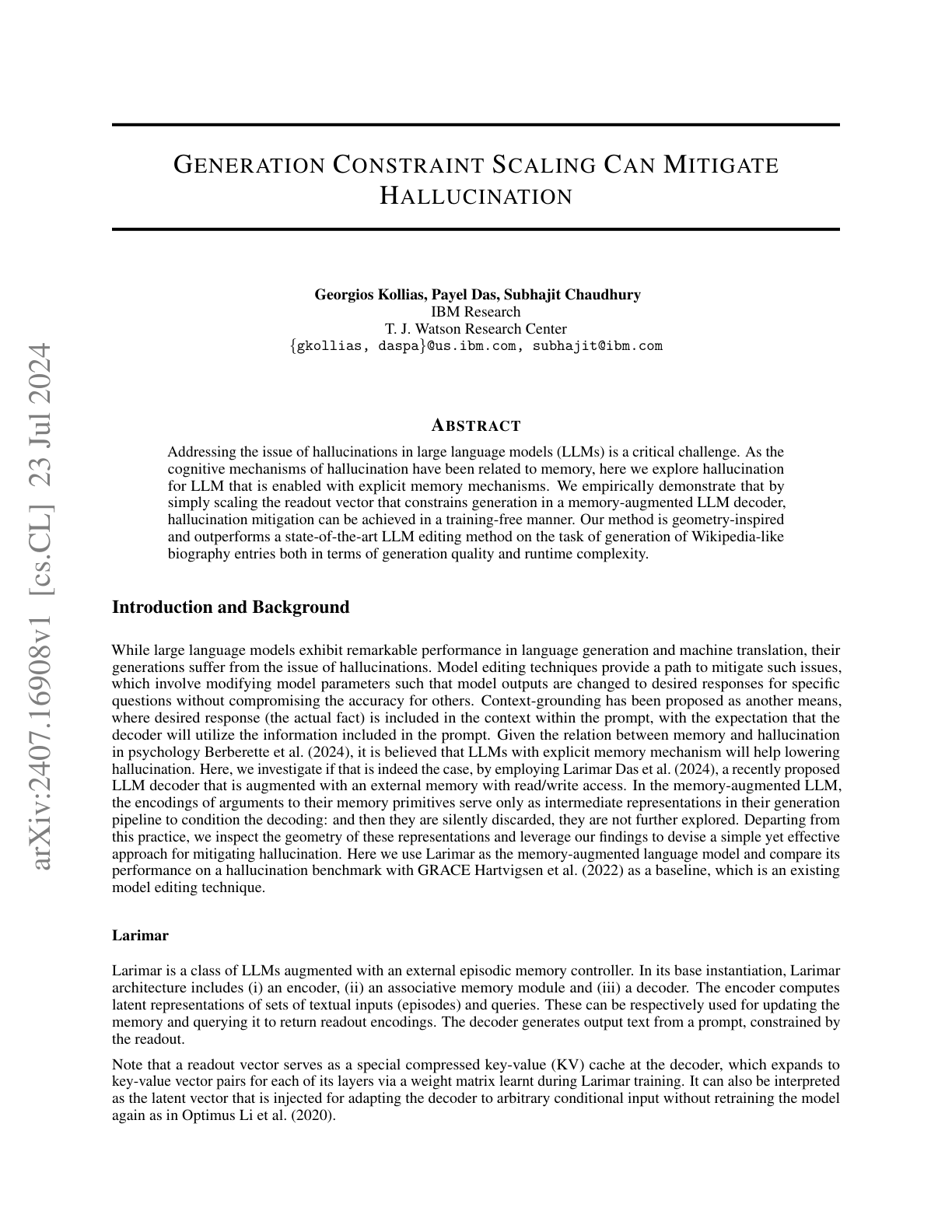
Mitigating Hallucination via Generation Constraint
proposes a new training-free approach to mitigate hallucination in LLMs; they scaled the readout vector that constrains generation in a memory-augmented LLM decoder; recent works claim that LLMs with explicit memory mechanisms can help lower hallucination; this work uses a memory-augmented LLM and constrains generation in the decoder by applying lightweight memory primitives to reduce hallucination.