Meta-Rewarding LLMs
proposes a self-improving alignment technique (no human supervision) where the LLM judges its own judgements and uses the feedback to improve its judgment skills; shows that leveraging this LLM-as-a-Meta-Judge approach improves the LLM's ability to judge and follow instructions; just doing self-improvement to generate better responses (act) saturates quickly; this work improves the LLM's ability to judge itself (judge) to avoid issues like reward hacking; in addition to the act and judge roles, a third role called meta-judge is used to evaluate the model's own judgements.
MindSearch
presents an LLM-based multi-agent framework to perform complex web-information seeking and integration tasks; a web planner effectively decomposes complex queries followed by a web searcher that performs hierarchical information retrieval on the Internet to improve the relevancy of the retrieved information; the planning component is powered by an iterative graph construction which is used to better model complex problem-solving processes; the multi-agent framework handles long context problems better by distributing reasoning and retrieval tasks to specialized agents.
Improved RAG with Self-Reasoning
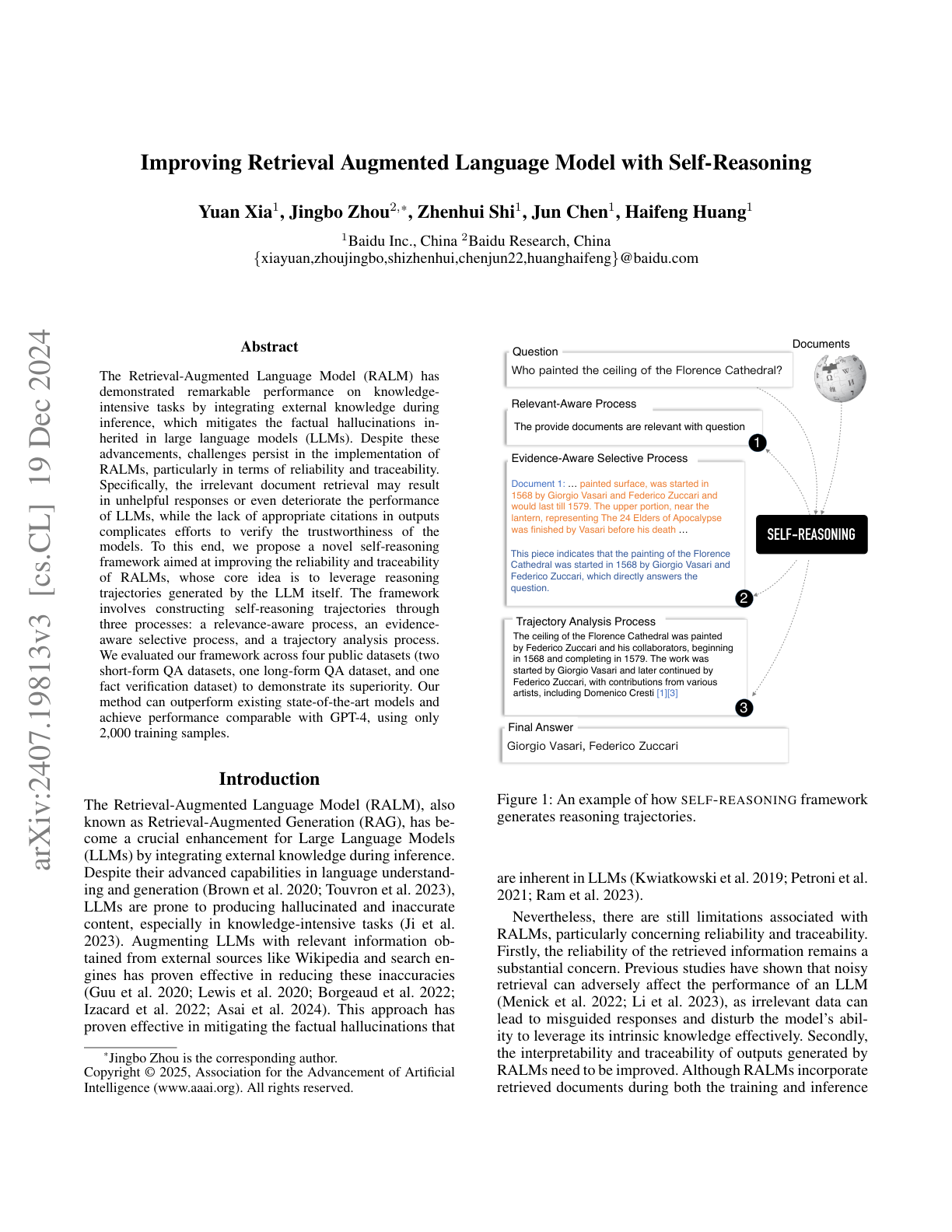
presents an end-to-end self-reasoning framework to improve the reliability and traceability of RAG systems; leverages the reasoning trajectories generated by the LLM itself; the LLM is used to carry out the following 3 processes: 1) relevance-aware: judges the relevance between the retrieved documents and the question, 2) evidence-aware selective: chooses and cites relevant documents, and then automatically selects snippets of key sentences as evidence from the cited documents, and 3) trajectory analysis: generates a concise analysis based on all gathered self-reasoning trajectories generated by the previous 2 processes and then provides the final inferred answer; this method helps the model to be more selective, reason and distinguish relevant and irrelevant documents, therefore improving the accuracy of the overall RAG system; the framework achieves comparable performance to GPT-4 with only 2K training samples (generated by GPT-4).
Constrained-CoT
limits the model reasoning output length without sacrificing performance; shows that constraining the reasoning of LLaMA2-70b to 100 words improves the accuracy from 36.01% (CoT) to 41.07% (CCoT) on GSM8K, while reducing the average output length by 28 words.
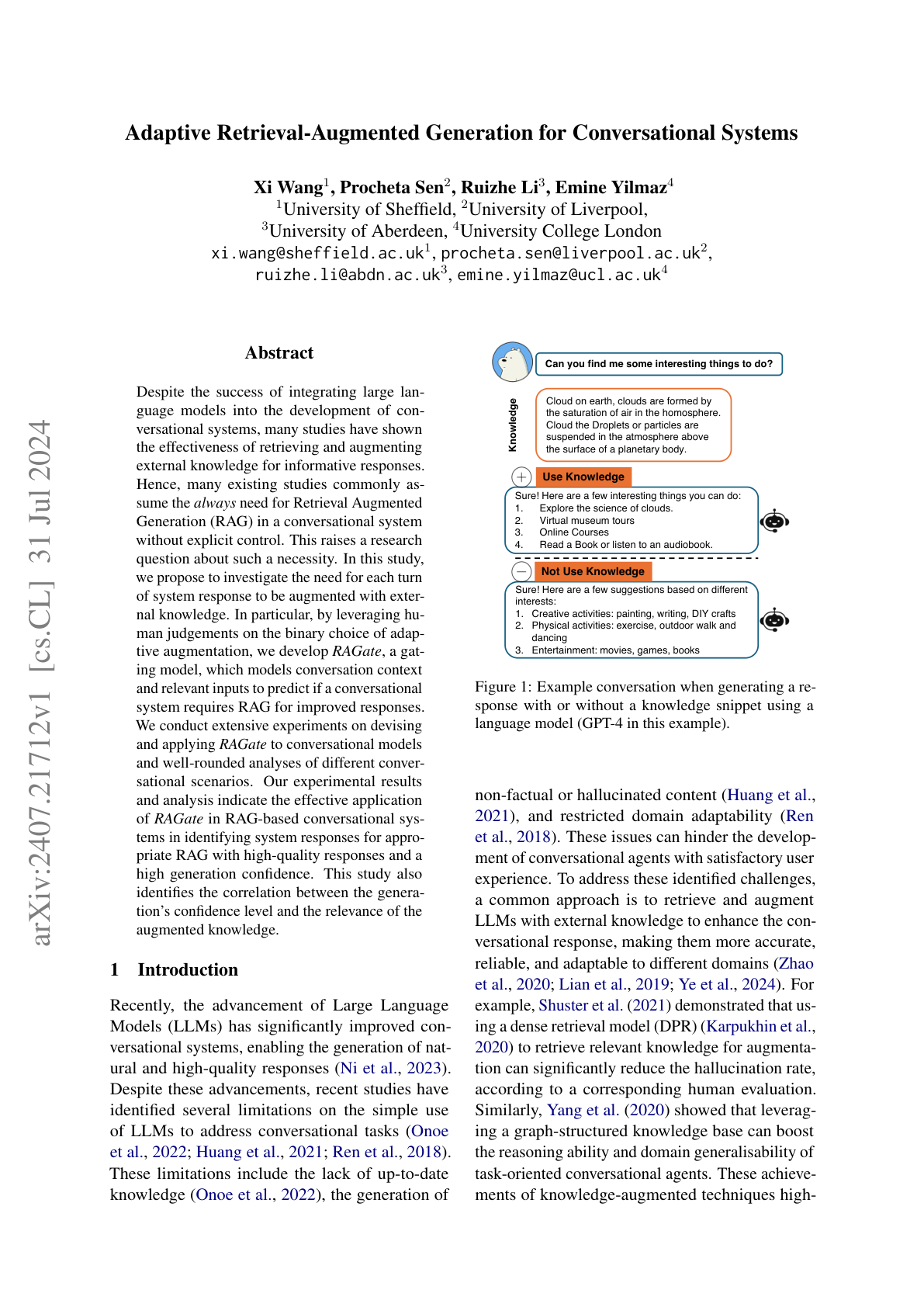
Adaptive RAG for Conversations Sytems
develops a gating model that predicts if a conversational system requires RAG to improve its responses; shows that RAG-based conversational systems have the potential to generate high-quality responses and high generation confidence; it also claims to identify a correlation between the generation's confidence level and the relevance of the augmented knowledge.
ShieldGemma
offers a comprehensive suite of LLM-based safety content moderation models built on Gemma 2; includes classifiers for key harm types such as dangerous content, toxicity, hate speech, and more.
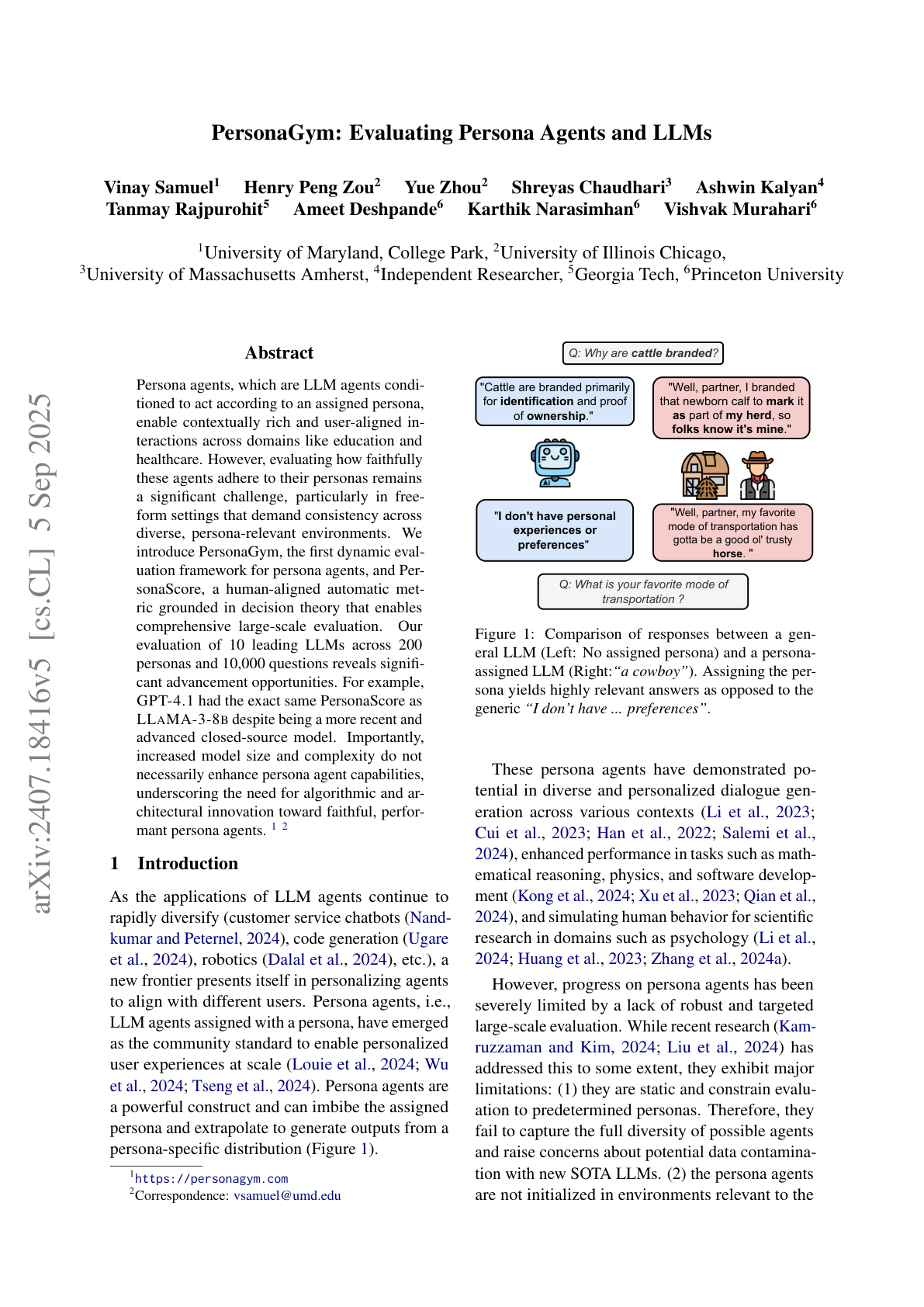
Evaluating Persona Agents
proposes a benchmark to evaluate persona agent capabilities in LLMs; finds that Claude 3.5 Sonnet only has a 2.97% relative improvement in PersonaScore compared to GPT 3.5 despite being a much more advanced model.
Machine Unlearning Survey
provides a comprehensive survey on machine unlearning in generative AI.
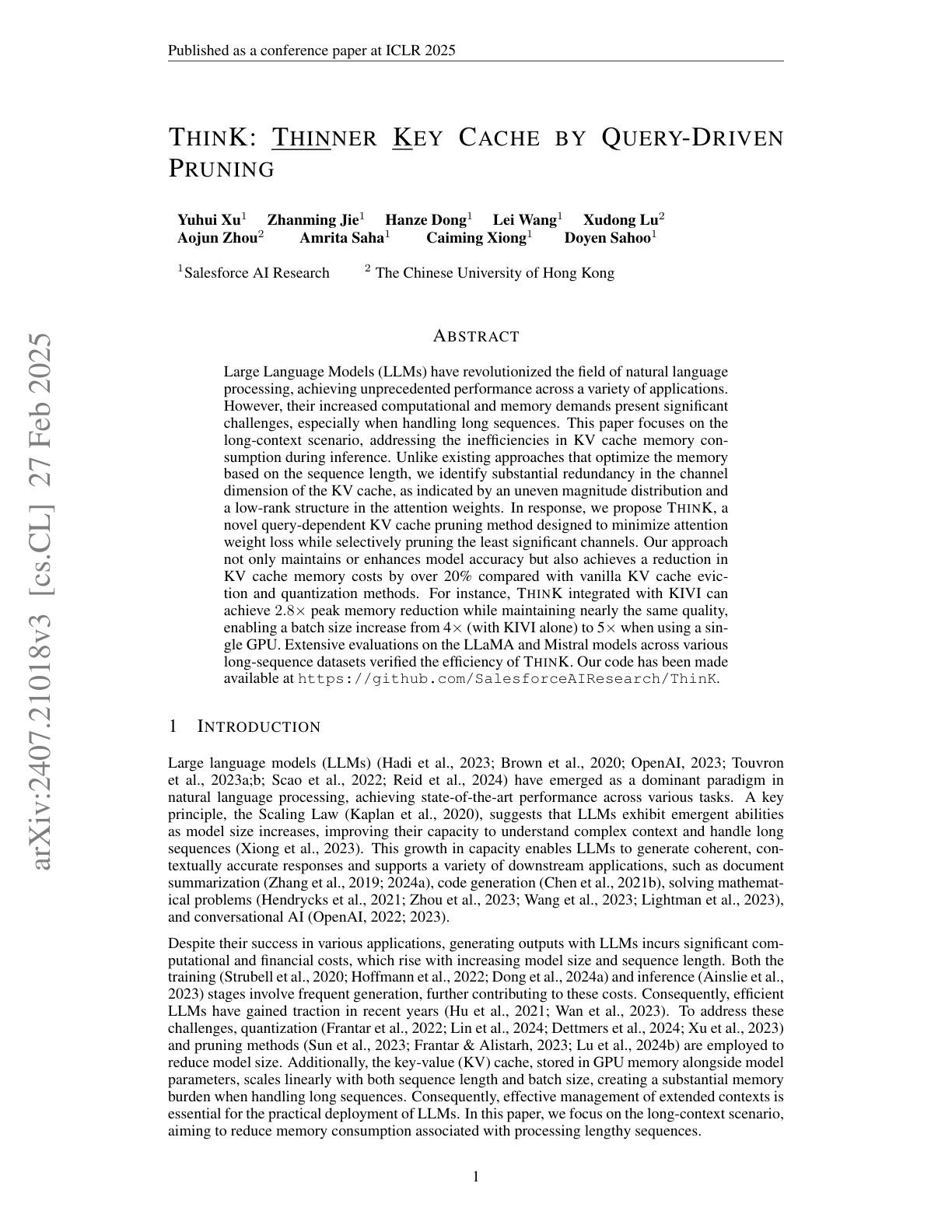
ThinK
proposes an approach to address inefficiencies in KV cache memory consumption; it focuses on the long-context scenarios and the inference side of things; it presents a query-dependent KV cache pruning method to minimize attention weight loss while selectively pruning the least significant channels
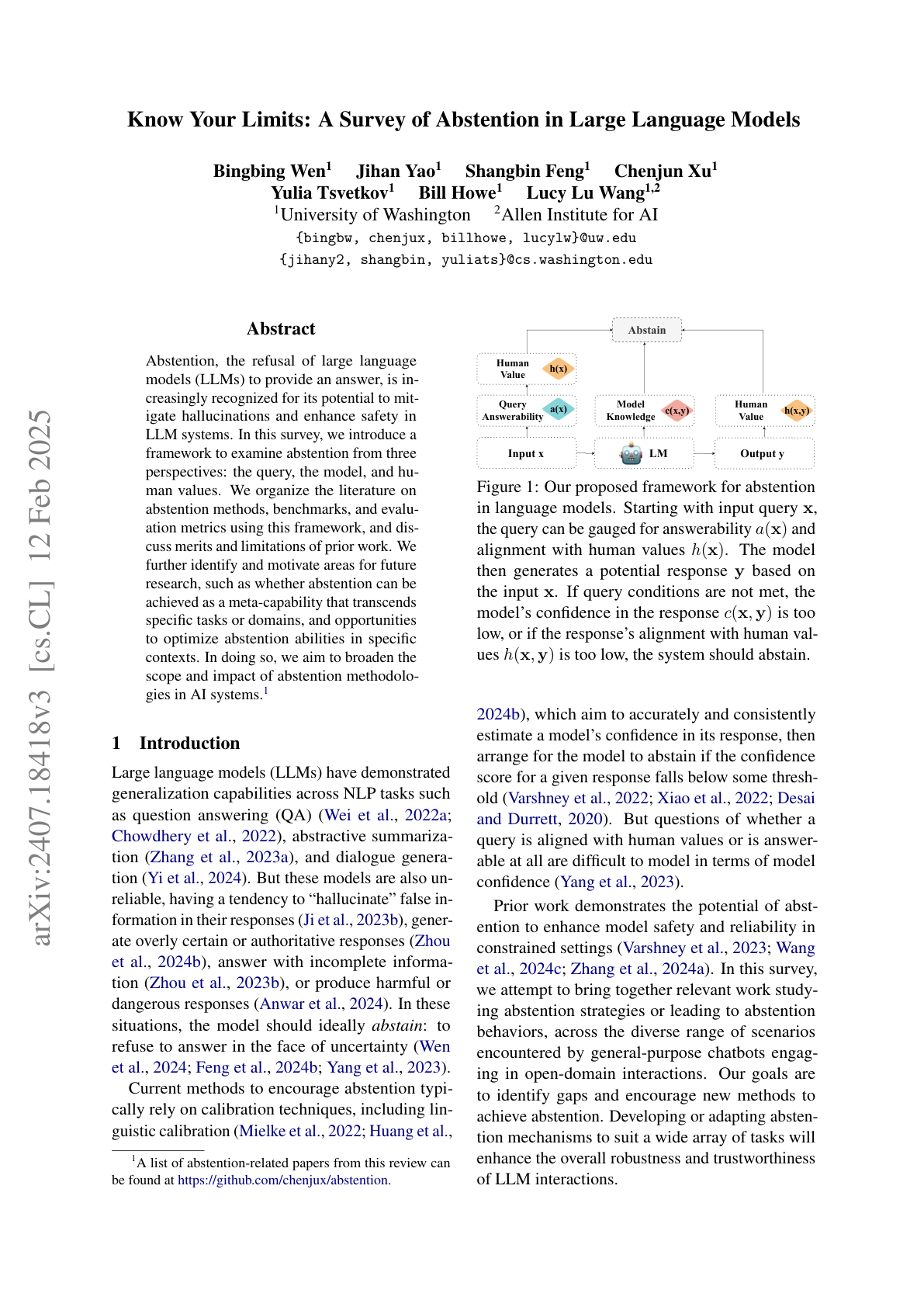
The Art of Refusal
a survey of the current methods used to achieve refusal in LLMs; provides evaluation benchmarks and metrics used to measure abstention in LLMs.