Movie Gen
a set of foundation models to generate high-quality, 1080p HD videos, including different aspect ratios and synchronized audio; the 30B parameter model supports a context length of 73K video tokens, which enables generation of 16-second videos at 16fps; it also presents a 13B parameter video-to-audio generation model and a novel video editing model that’s attained via post-training; achieves state-of-the-art performance on tasks such as text-to-video synthesis, video personalization, video-to-audio generation and more.
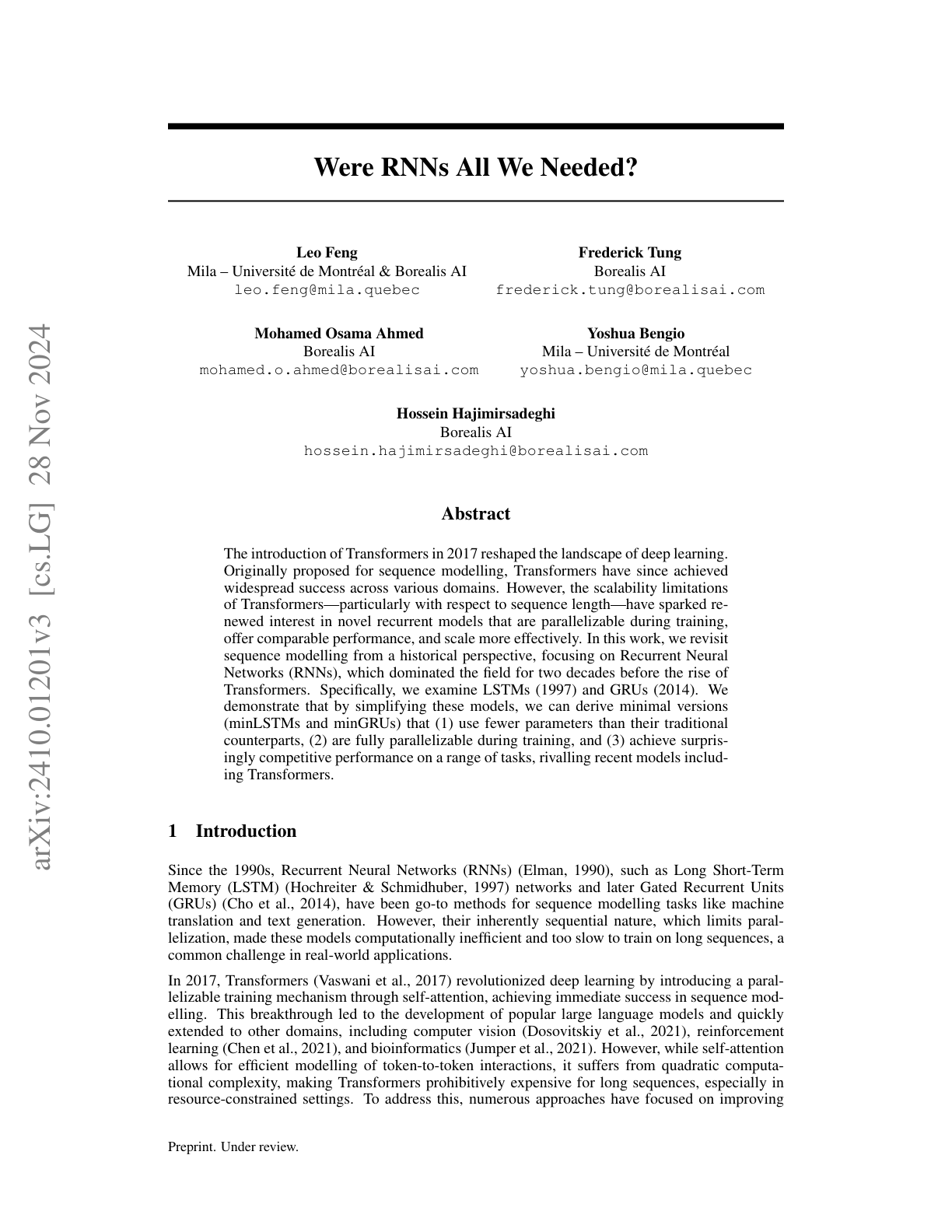
Were RNNs All We Needed?
revisits RNNs and shows that by removing the hidden states from input, forget, and update gates RNNs can be efficiently trained in parallel; this is possible because with this change architectures like LSTMs and GRUs no longer require backpropagate through time (BPTT); they introduce minLSTMs and minGRUs that are 175x faster for a 512 sequence length.
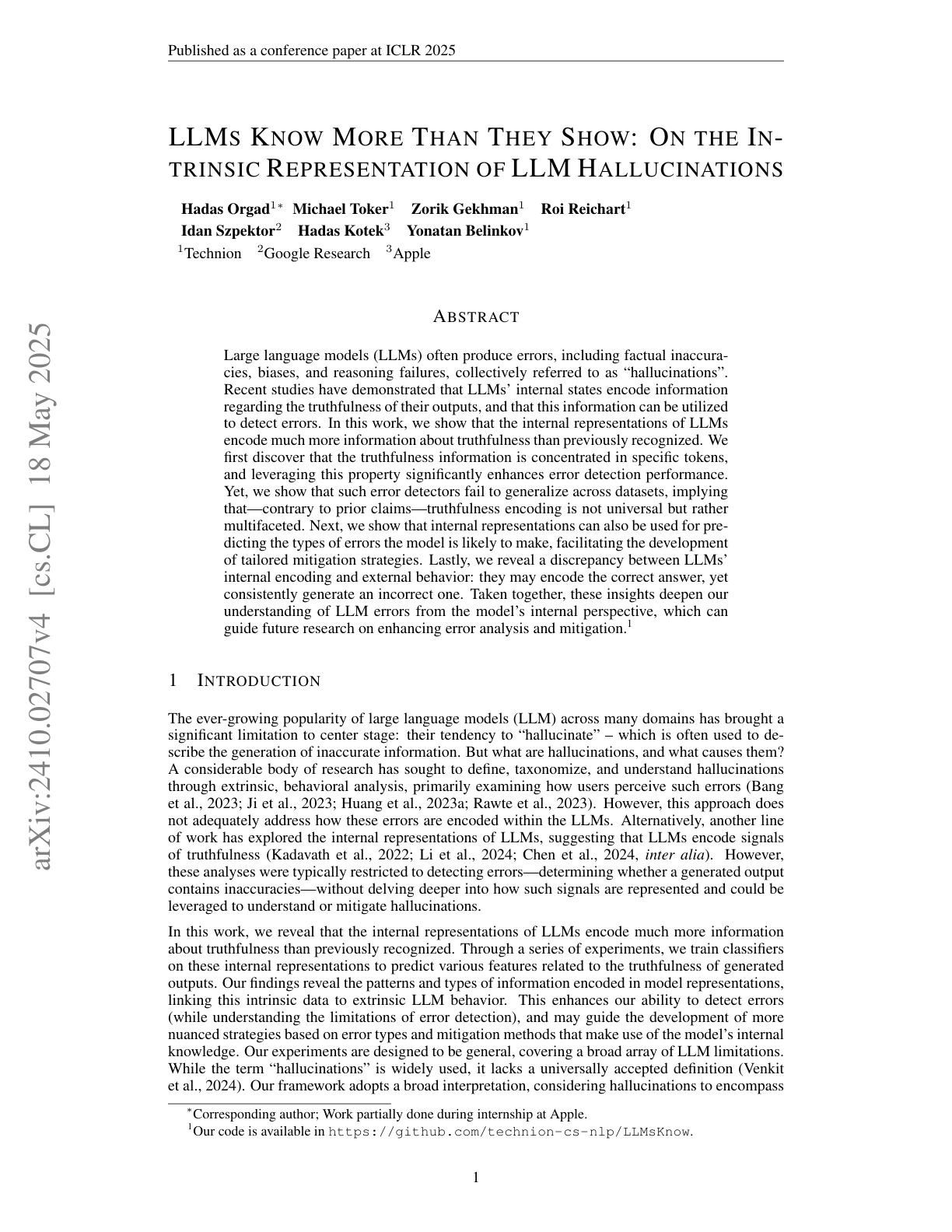
LLMs Know More Than They Show
finds that the "truthfulness" information in LLMs is concentrated in specific tokens; this insight can help enhance error detection performance and further mitigate some of these issues; they also claim that internal representations can be used to predict the types of errors the LLMs are likely to make.
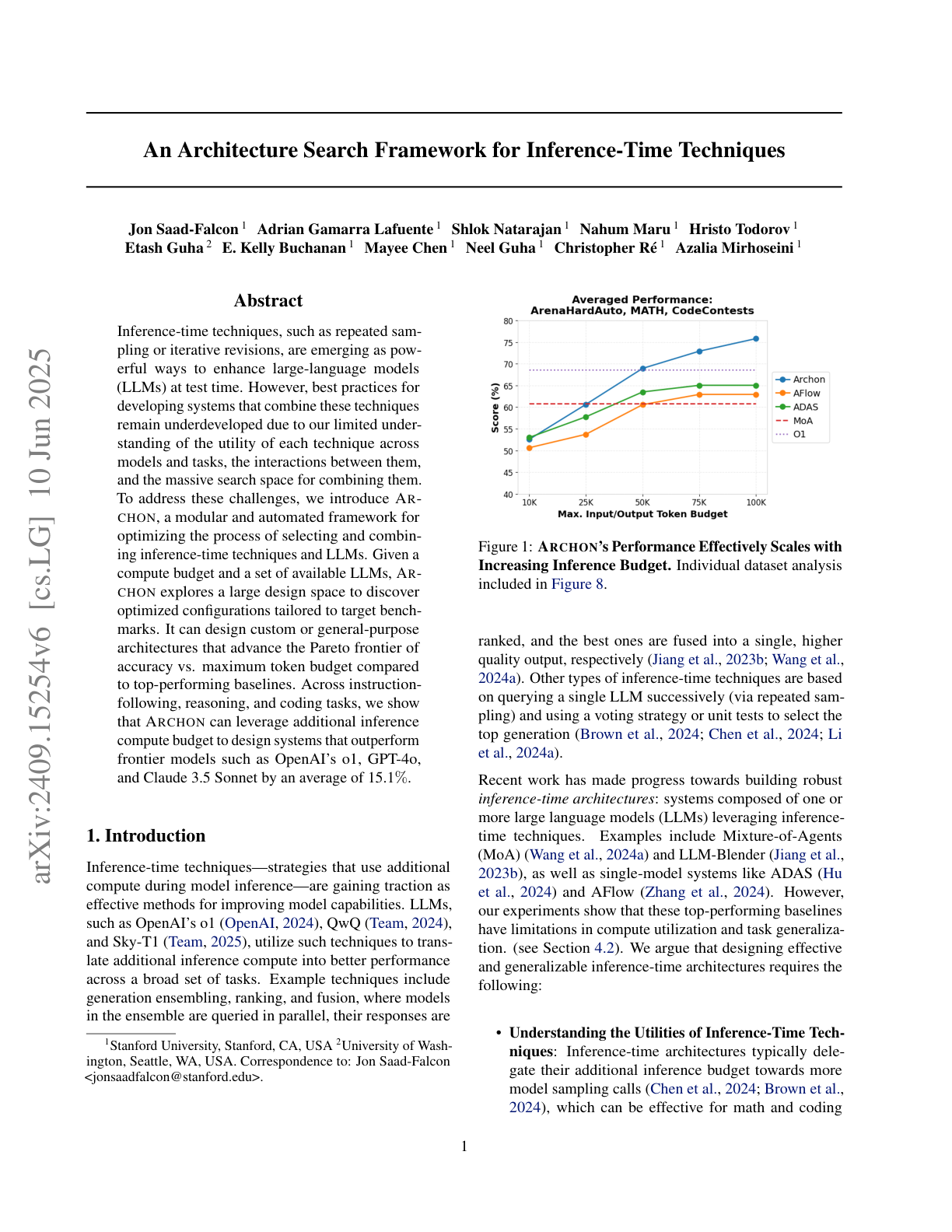
Architecture Search Framework for Inference-Time Techniques
introduces a modular framework for building and optimizing LLMs by combining multiple inference-time techniques; this approach reframes the challenge of LLM system design as a hyperparameter optimization problem; tested on benchmarks including MT-Bench and CodeContests, Archon surpasses leading models such as GPT-4o and Claude 3.5 Sonnet, achieving a 15.1% average accuracy improvement.
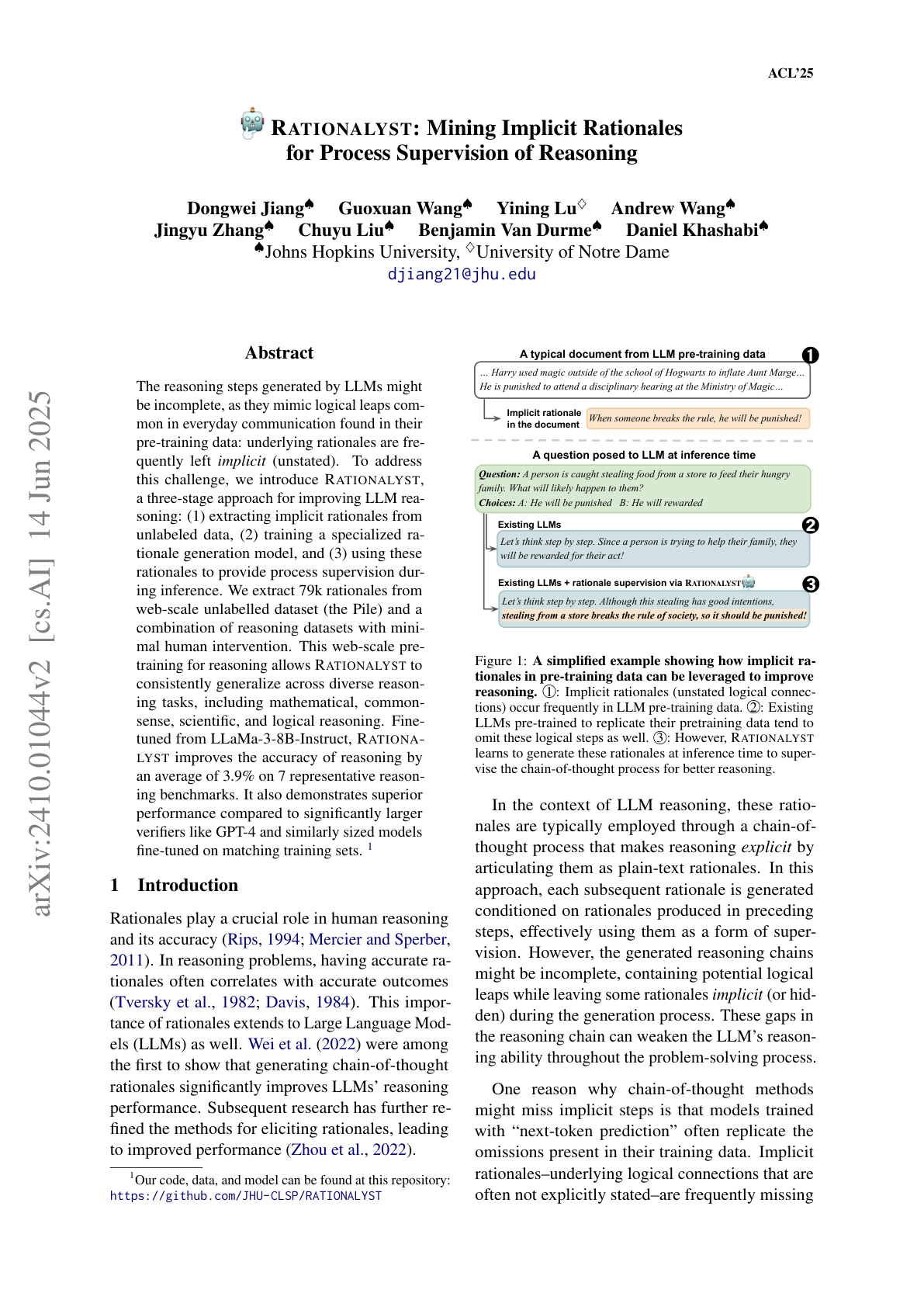
RATIONALYST
a model for process-supervision of reasoning that enables generalization across diverse reasoning tasks; this process is achieved with pre-training on a collection of 79k rationales from the Pile and a combination of reasoning datasets with minimal human intervention; fine-tuned from LLaMa-3-8B, the proposed model improves the accuracy of reasoning by an average of 3.9% on 7 reasoning benchmarks.
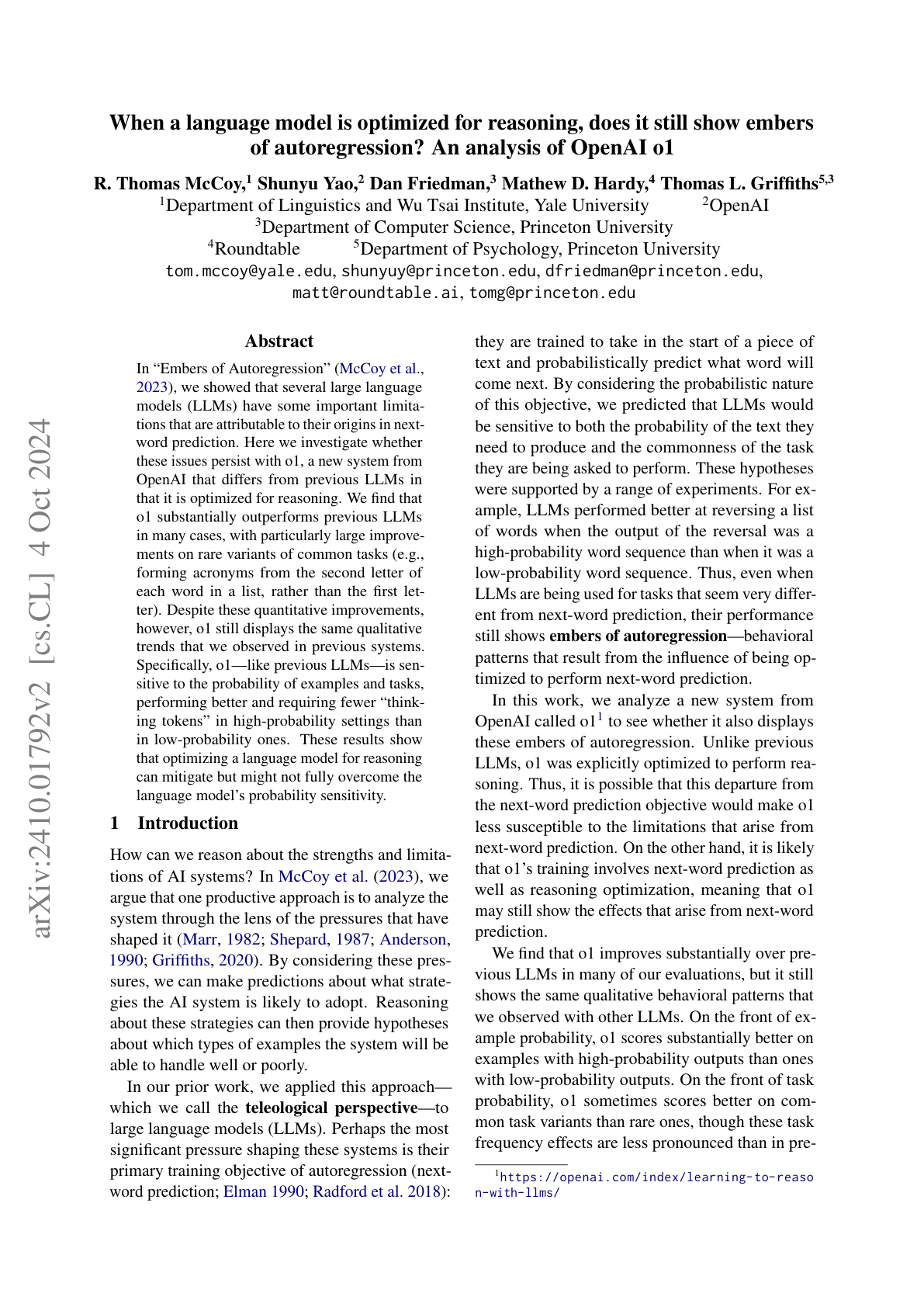
An Analysis of o1-preview
reports that large reasoning models like o1-preview, while improving on more difficult tasks, display similar qualitative trends as previous LLMs; o1 is sensitive to the probability of examples and tasks, performing better and requiring fewer “thinking tokens” in high-probability settings than in low-probability ones.
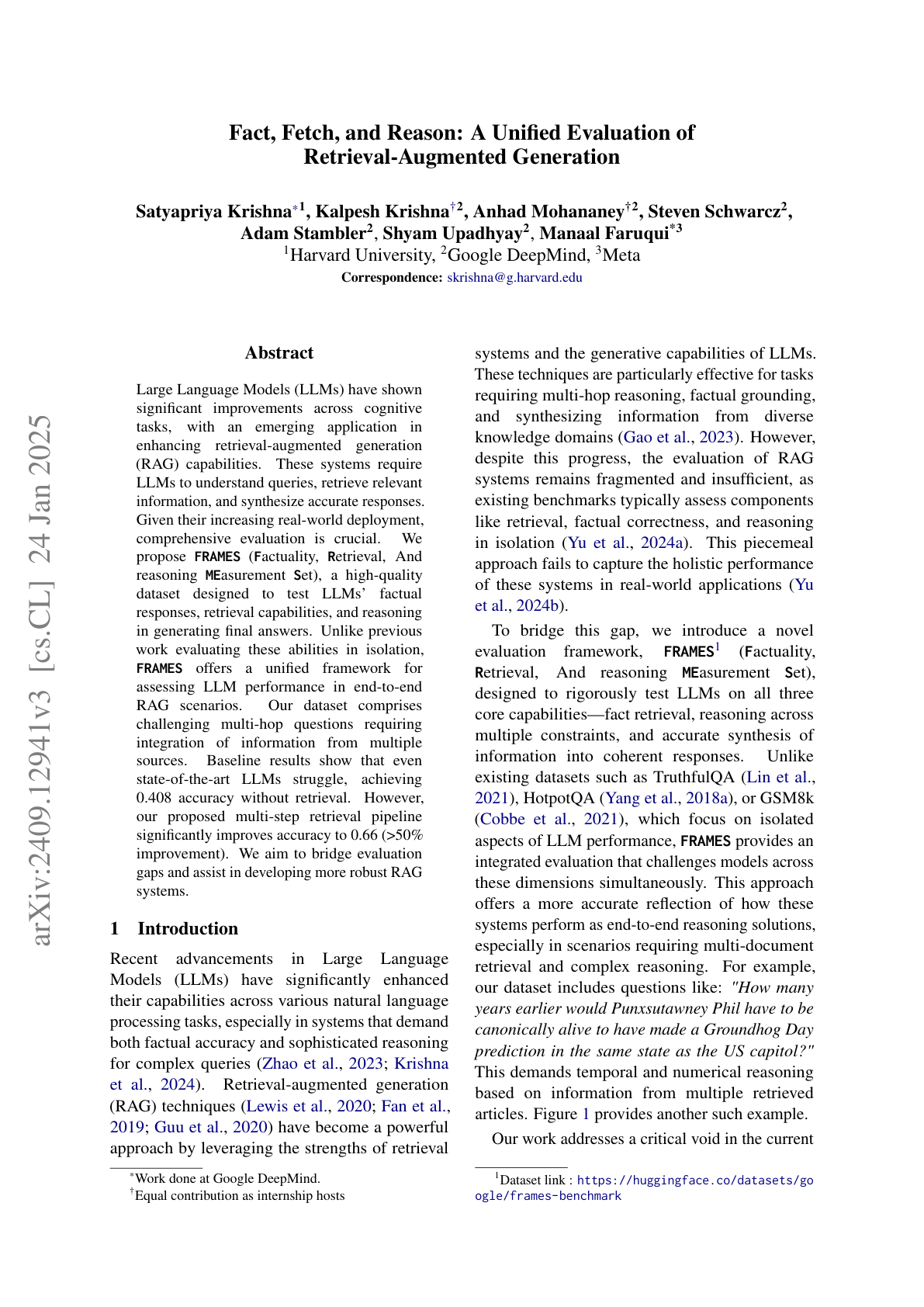
FRAMES
a unified framework to evaluate an LLM’s ability to provide factual responses, assess retrieval capabilities, and the reasoning required to generate final responses; includes multi-hop questions that require the integration of information from multiple sources; reports that state-of-the-art LLMs struggle on the task and only achieve 40% accuracy with no retrieval; the proposed multi-step retrieval approach improves performance to 66% accuracy.
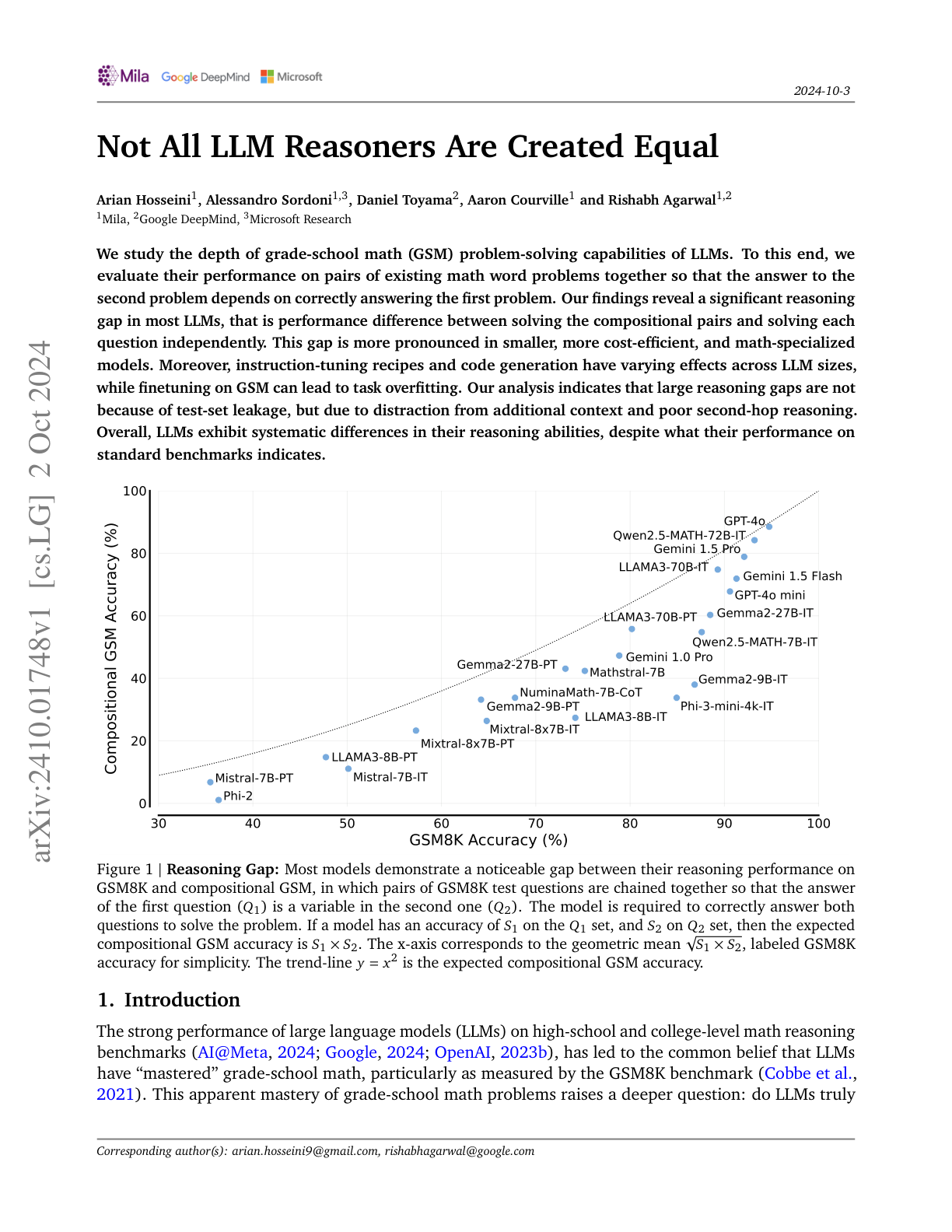
Not All LLM Reasoners Are Created Equal
investigates in depth the grade-school math problem-solving capabilities of LLMs; reports that LLMs show a significant gap in reasoning; finds that LLMs display a huge performance difference when solving compositional pairs and solving questions independently.
Evaluation of o1
provides a comprehensive evaluation of OpenAI's o1-preview LLM; shows strong performance across many tasks such as competitive programming, generating coherent and accurate radiology reports, high school-level mathematical reasoning tasks, chip design tasks, anthropology and geology, quantitative investing, social media analysis, and many other domains and problems.
Designing Priors for Better Few-Shot Image Synthesis
training generative models like GAN with limited data is difficult; current Implicit Maximum Likelihood Estimation approaches (IMLE) have an inadequate correspondence between latent code selected for training and those selected during inference; the proposed approach, RS-IMLE, changes the prior distribution for training which improves test-time performance and leads to higher quality image generation.