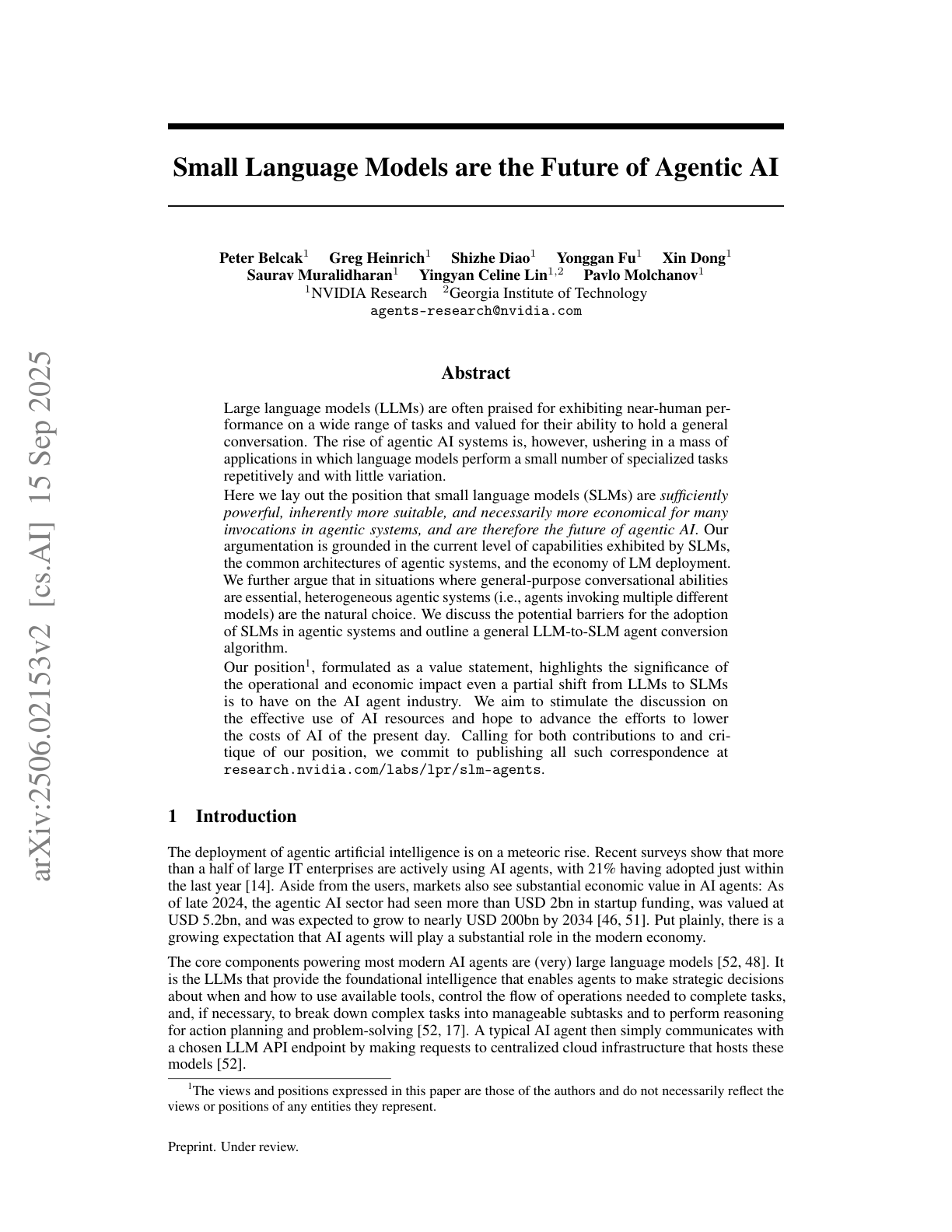
Small Language Models are the Future of Agentic AI
This position paper argues that small language models (SLMs), defined as those runnable on consumer-grade hardware, are not only sufficient but superior for many agentic AI applications, especially when tasks are narrow, repetitive, or tool-oriented. The authors propose that shifting from LLM-first to SLM-first architectures will yield major gains in efficiency, modularity, and sustainability.
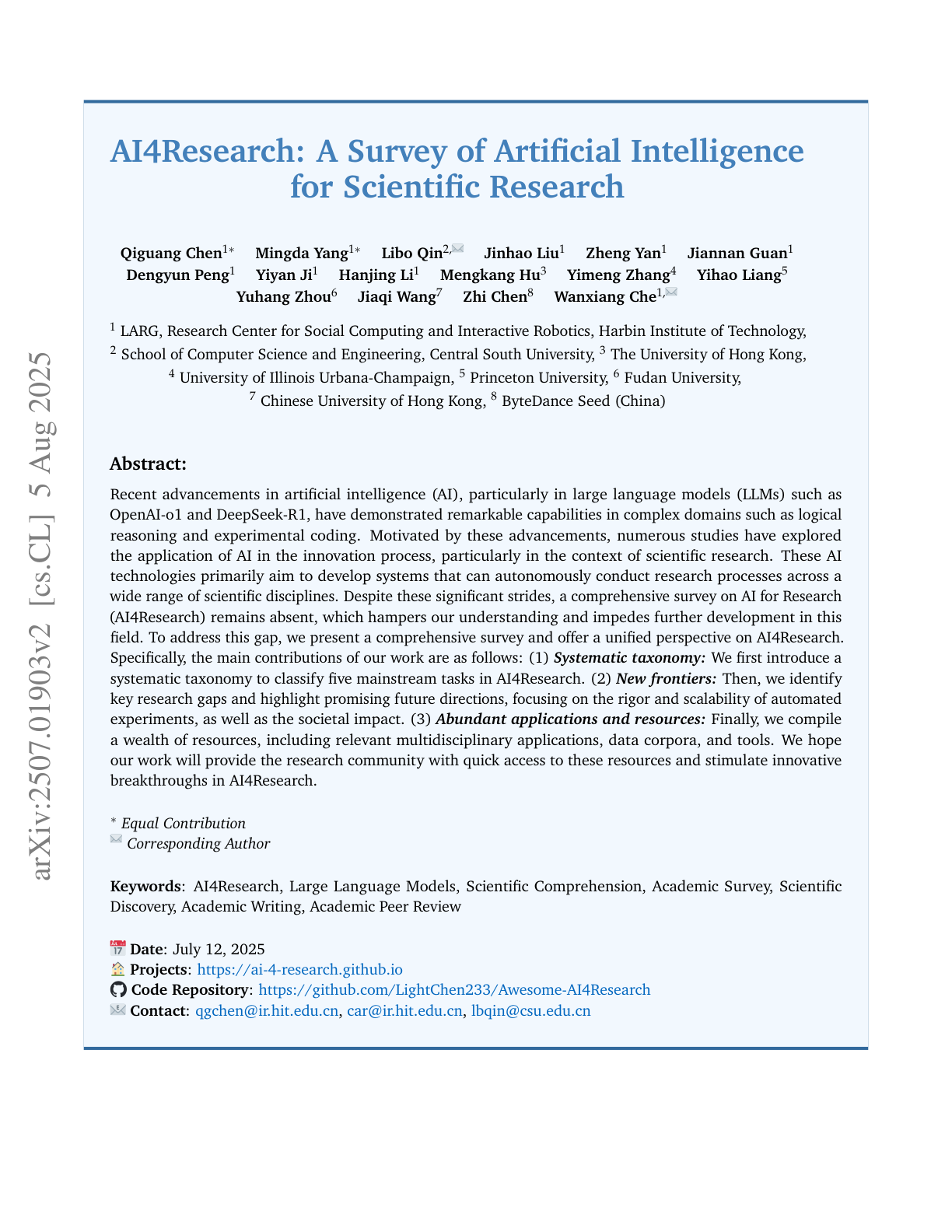
AI4Research
This survey offers the first unified and comprehensive framework for understanding how AI is transforming the full lifecycle of scientific research. The paper identifies five core areas: Scientific Comprehension, Academic Survey, Scientific Discovery, Academic Writing, and Academic Peer Review, and presents a detailed taxonomy and modeling approach for each.
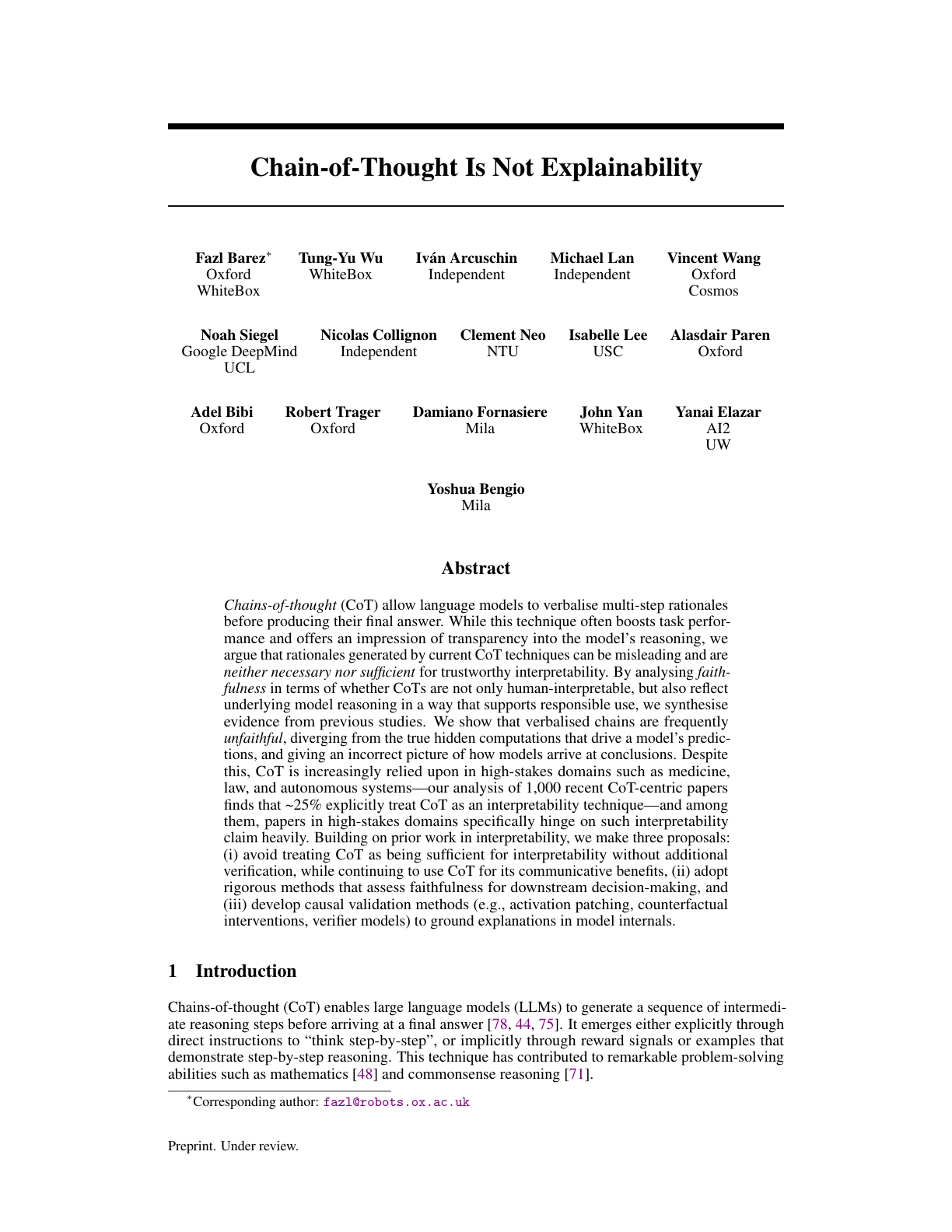
Chain-of-Thought Is Not Explainability
It challenges the common assumption that chain-of-thought (CoT) reasoning in LLMs is synonymous with interpretability. While CoT improves performance and offers a seemingly transparent rationale, the authors argue it is neither necessary nor sufficient for faithful explanation. Through a review of empirical evidence and mechanistic insights, the paper makes the case that CoT often diverges from the internal computations that actually drive model predictions.
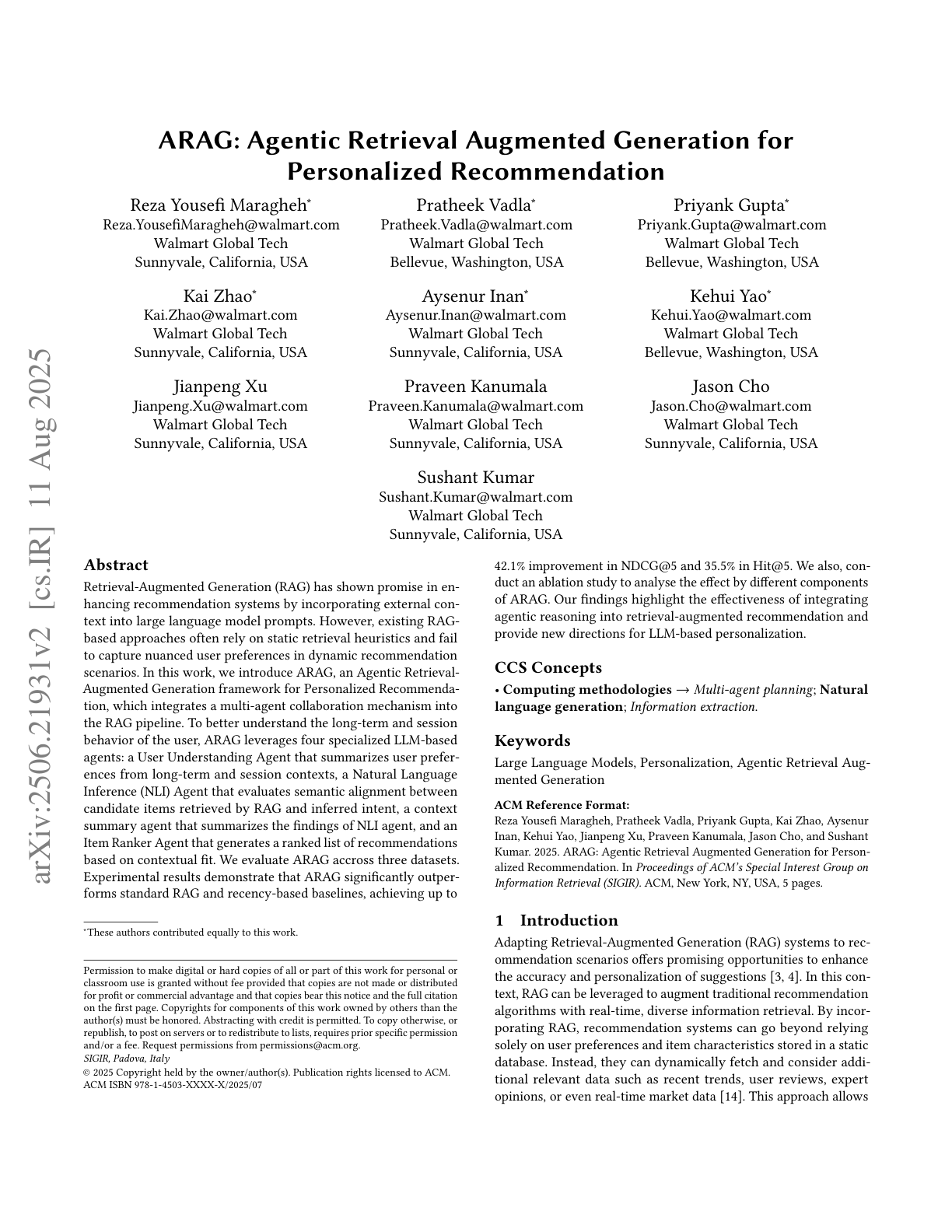
Agentic RAG for Personalized Recommendation
Introduces a multi-agent framework that enhances traditional RAG systems with reasoning agents tailored to user modeling and contextual ranking. Developed at Walmart Global Tech, ARAG reframes recommendations as a structured coordination problem between LLM agents.
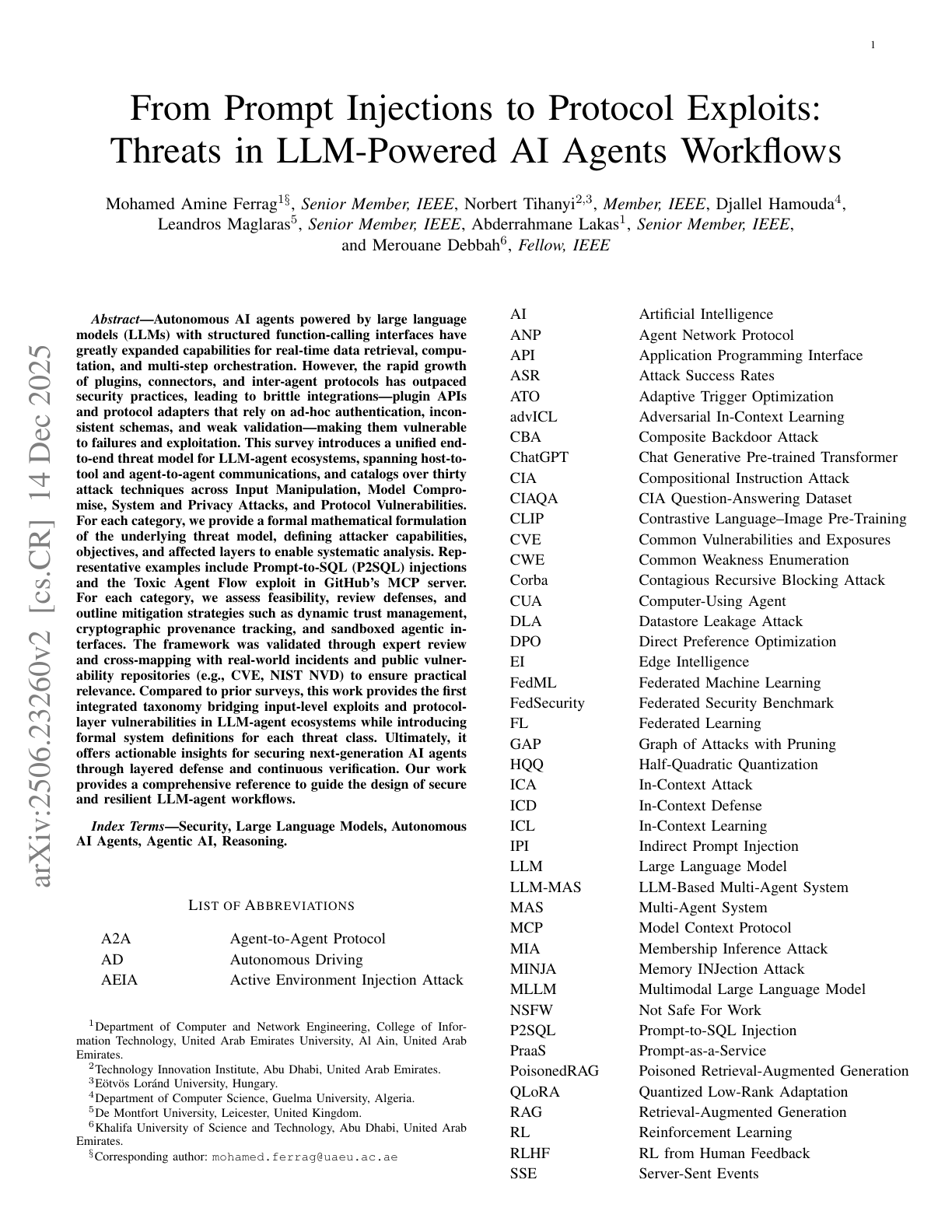
Threats in LLM-Powered AI Agents Workflows
This work presents the first comprehensive, end-to-end threat model for LLM-powered agent ecosystems. As LLM agents gain the ability to orchestrate multi-step workflows and interact via protocols like MCP, ANP, and A2A, this paper surveys over 30 attack techniques spanning the entire stack, from input manipulation to inter-agent protocol exploits.
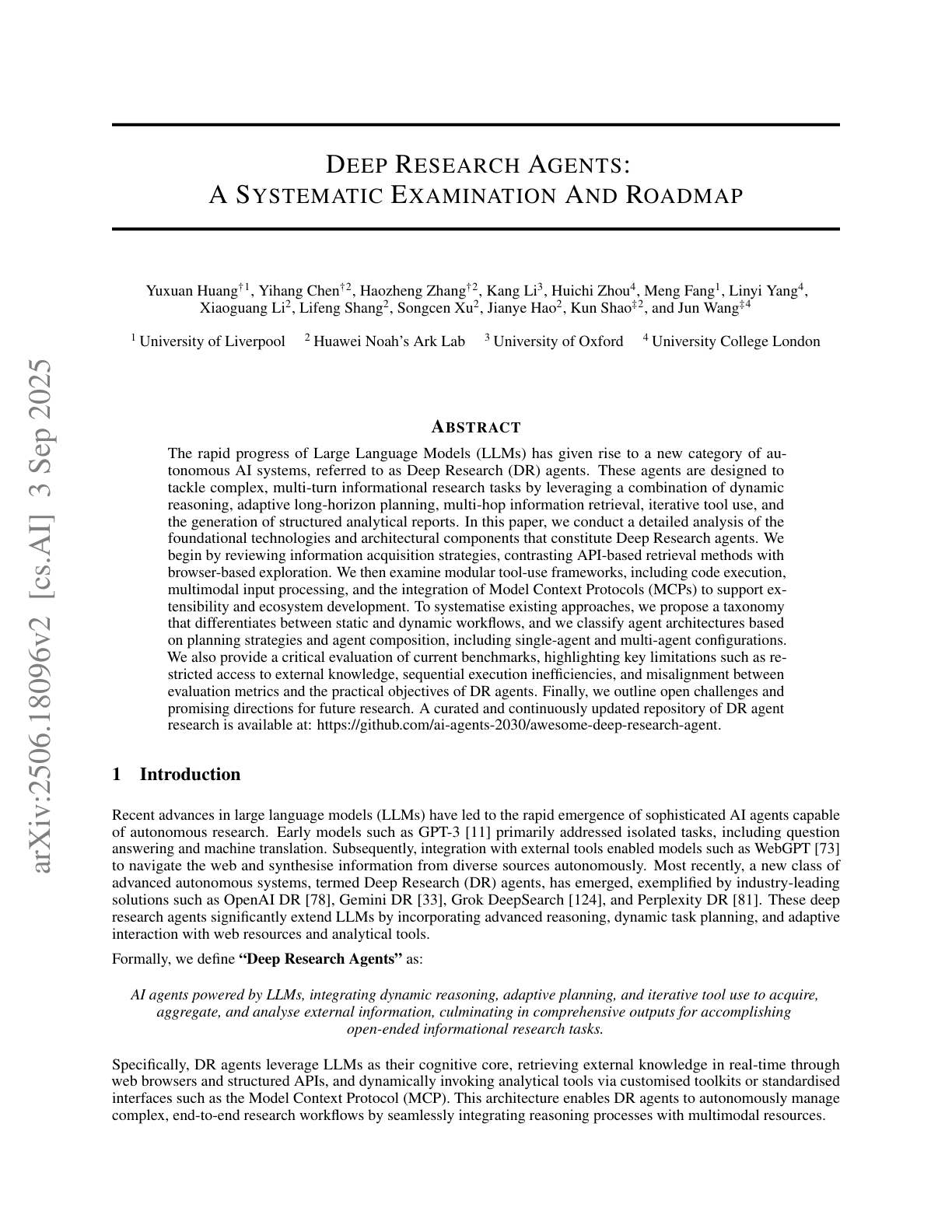
Deep Research Agents
Provides the most comprehensive survey to date of Deep Research (DR) agents, LLM-powered systems built for autonomous, multi-step informational research. The paper defines DR agents as AI systems that tightly integrate dynamic reasoning, adaptive long-horizon planning, tool use, retrieval, and structured report generation. It establishes a taxonomy of DR architectures, evaluates recent advances, and outlines the limitations of current systems and benchmarks.
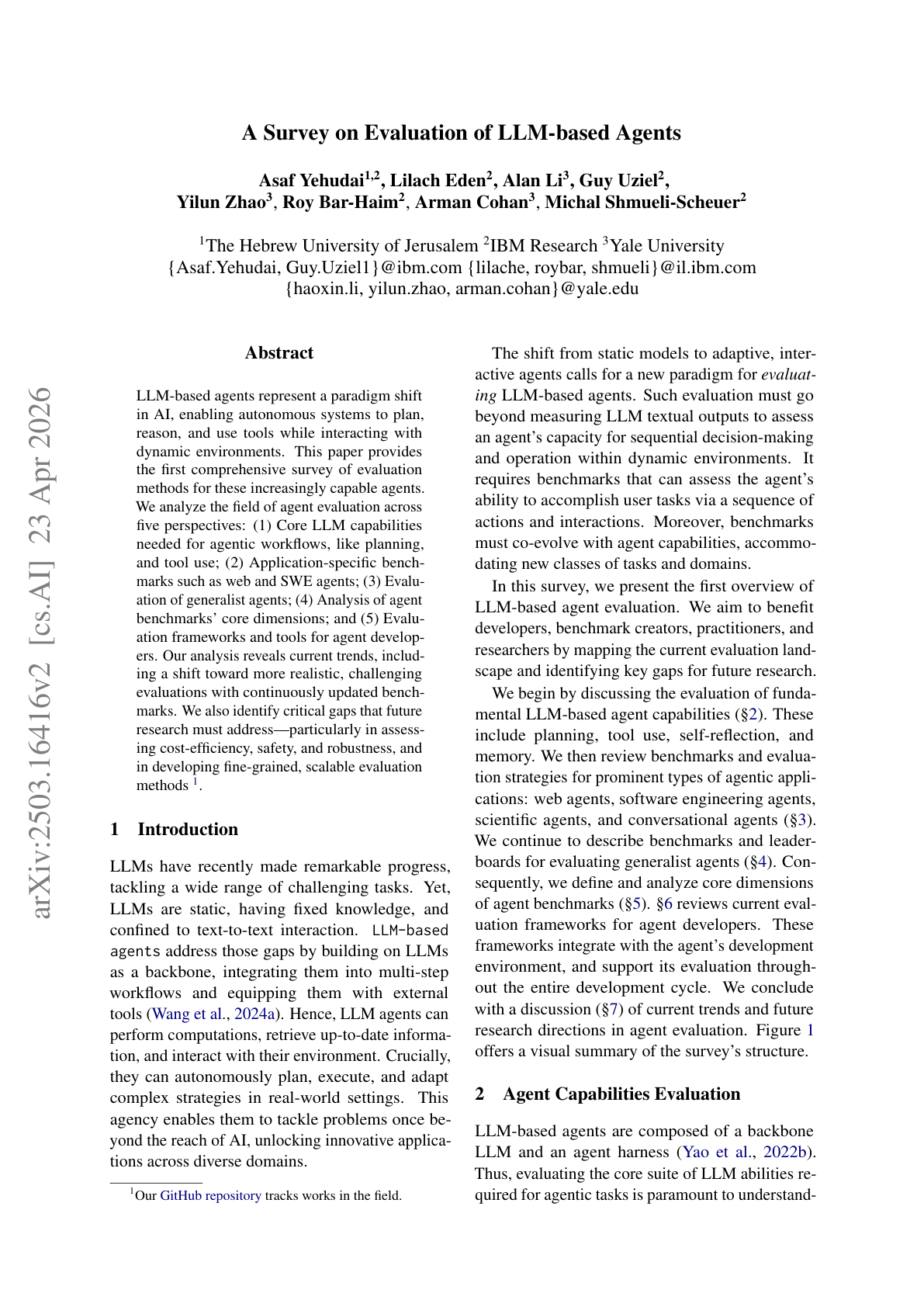
Survey on Evaluation of LLM-based Agents
This work presents the first comprehensive overview of how to evaluate LLM-based agents, which differ significantly from traditional LLMs by maintaining memory, planning over multiple steps, using tools, and interacting with dynamic environments. The authors categorize and analyze the evaluation landscape across four axes: core agent capabilities, application-specific agent benchmarks, generalist agent evaluation, and supporting evaluation frameworks.
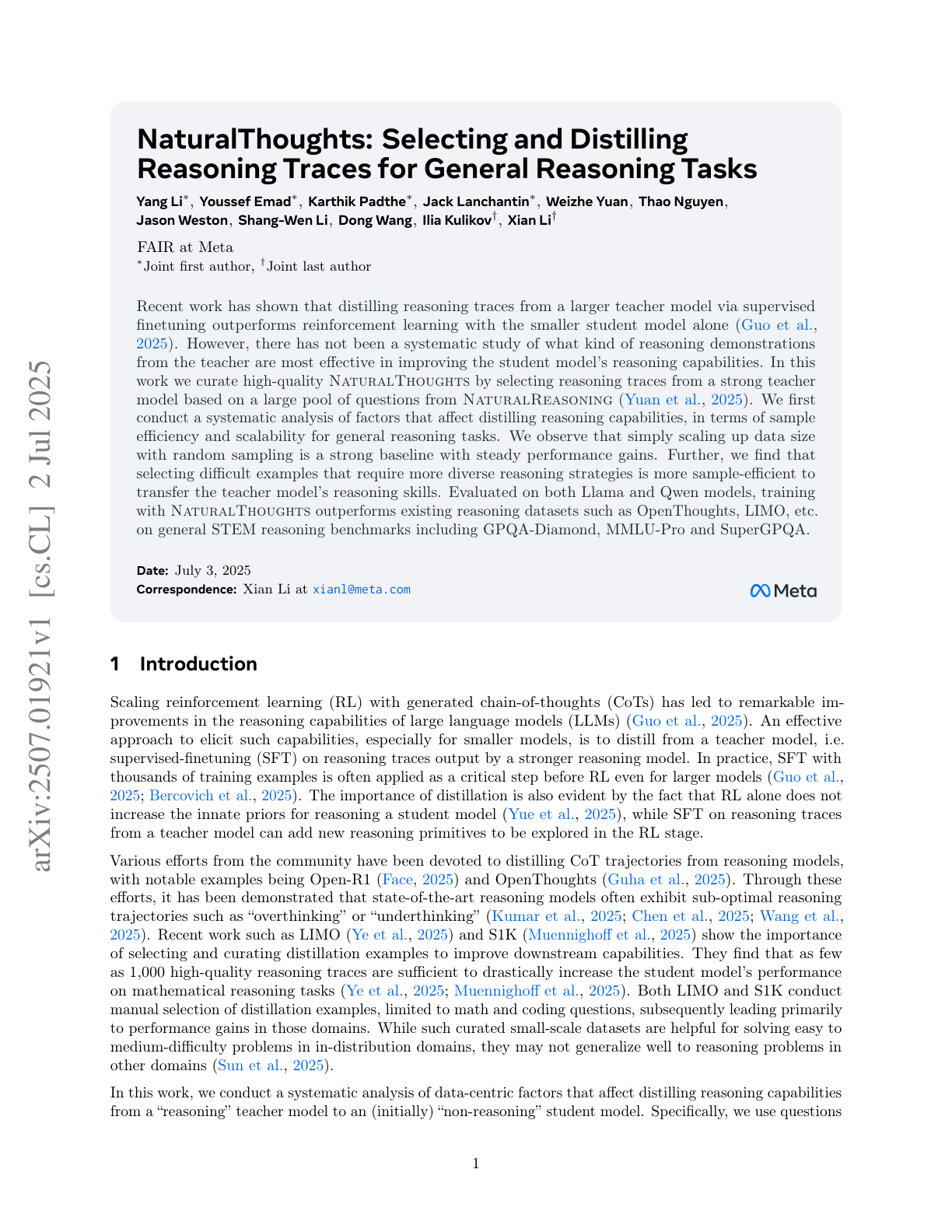
NaturalThoughts
This paper introduces NaturalThoughts, a large-scale dataset of reasoning traces distilled from DeepSeek-R1 using questions from the NaturalReasoning corpus. It challenges the "Less is More" hypothesis by showing that simply scaling up high-quality reasoning traces, without aggressive filtering, yields robust and general improvements across STEM reasoning tasks for smaller models like Llama-3.1-8B and Qwen-2.5-7B.
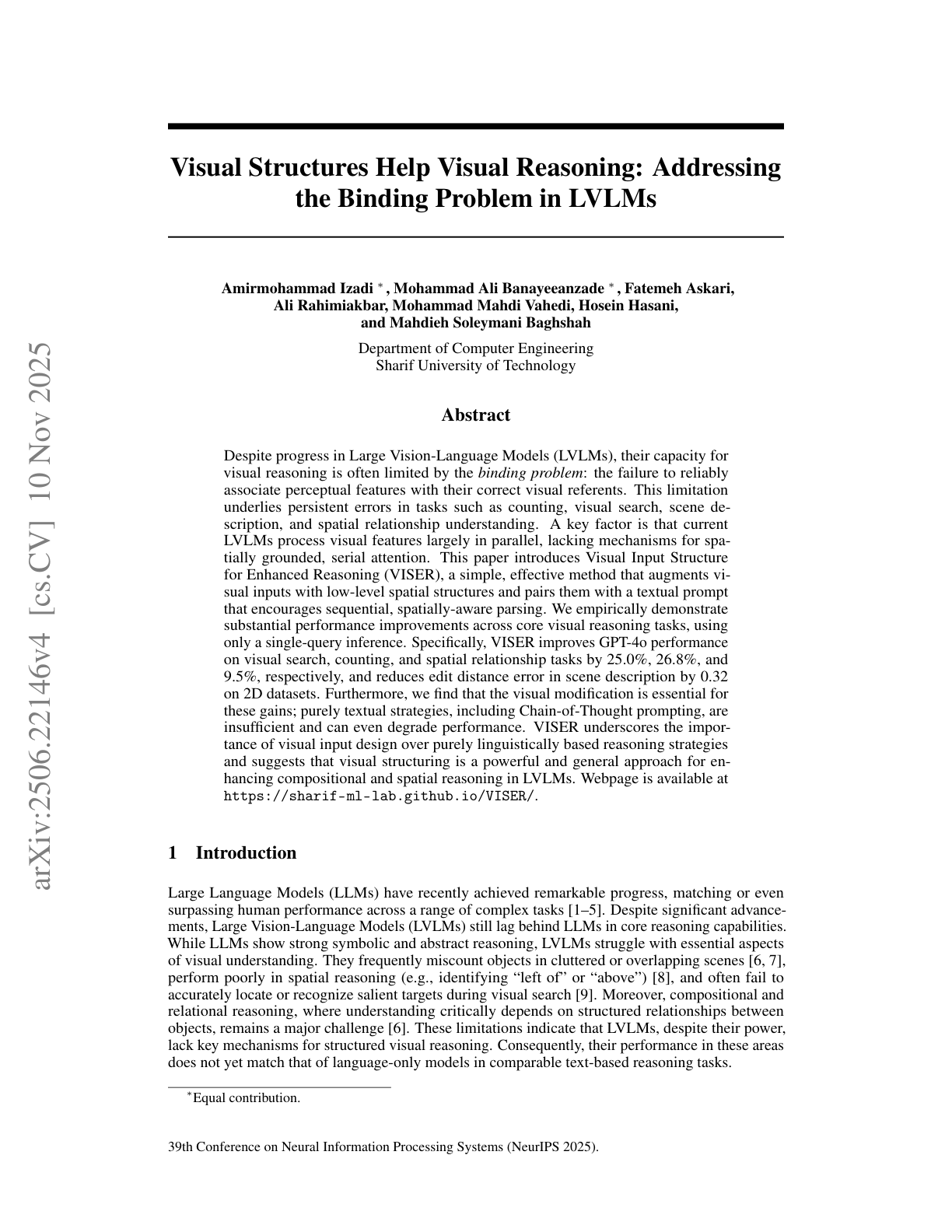
Visual Structures Help Visual Reasoning
This study shows that adding simple spatial structures (like horizontal lines) to images significantly boosts GPT-4o’s visual reasoning by improving feature binding. This visual input tweak outperforms textual strategies alone, yielding large gains in visual search (+25%), counting (+26.8%), and spatial understanding (+9.5%).
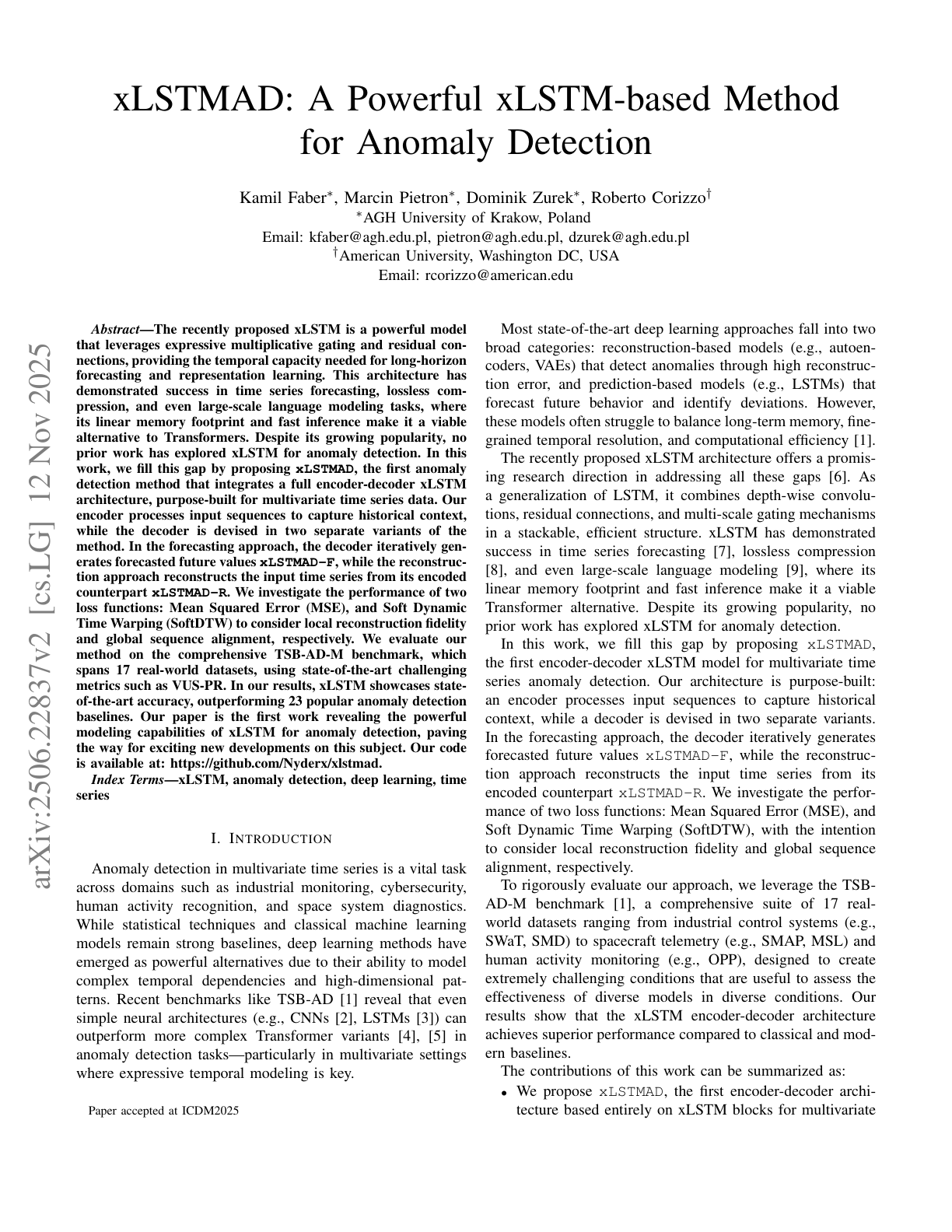
xLSTMAD
This paper introduces xLSTMAD, the first anomaly detection method using an encoder-decoder xLSTM architecture tailored for multivariate time series. It achieves state-of-the-art results on 17 real-world datasets, outperforming 23 baselines and demonstrating xLSTM’s strong potential beyond forecasting and compression.