Kimi K2.5: Visual Agentic Intelligence
Kimi K2.5 is an open-source multimodal agentic model from Moonshot AI that jointly optimizes text and vision capabilities through native multimodal pretraining on 15 trillion mixed tokens, zero-vision SFT, and joint reinforcement learning. K2.5 also introduces Agent Swarm, a parallel agent orchestration framework that dynamically decomposes complex tasks into concurrent subtasks, reducing latency by up to 4.5x over single-agent baselines.
Shaping Capabilities with Token-Level Data Filtering
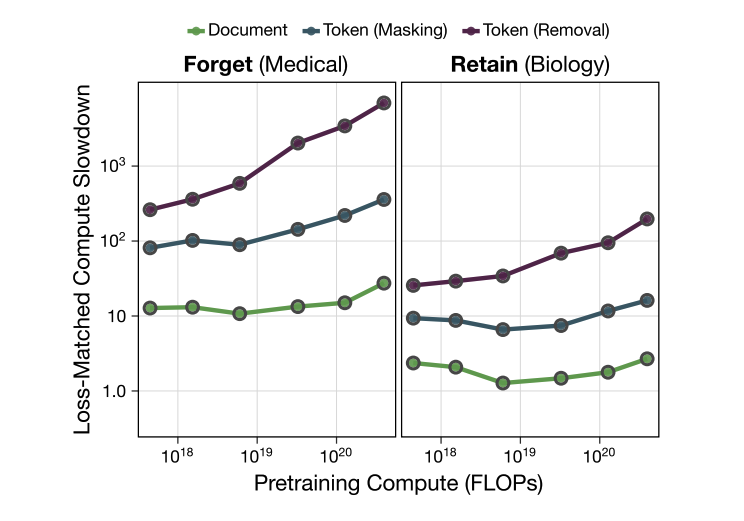
Researchers from Anthropic and Stanford show that filtering pretraining data at the token level is a highly effective, scalable, and robust approach for selectively removing undesired capabilities from language models. Using medical knowledge removal as a proxy task, token-level filtering Pareto dominates document-level filtering and achieves a 7,000x compute slowdown on the target domain for 1.8B parameter models - while preserving capabilities in related fields.
How AI Impacts Skill Formation
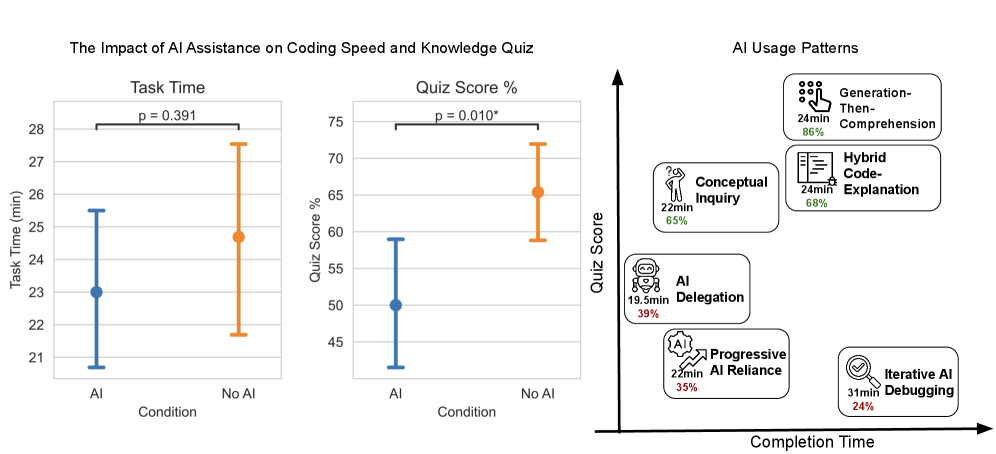
Researchers from Anthropic conducted randomized experiments to study how AI assistance affects the development of software engineering skills. They find that using AI to complete coding tasks with a new Python library significantly impaired conceptual understanding, code reading, and debugging abilities - without delivering significant efficiency gains on average.
VibeTensor
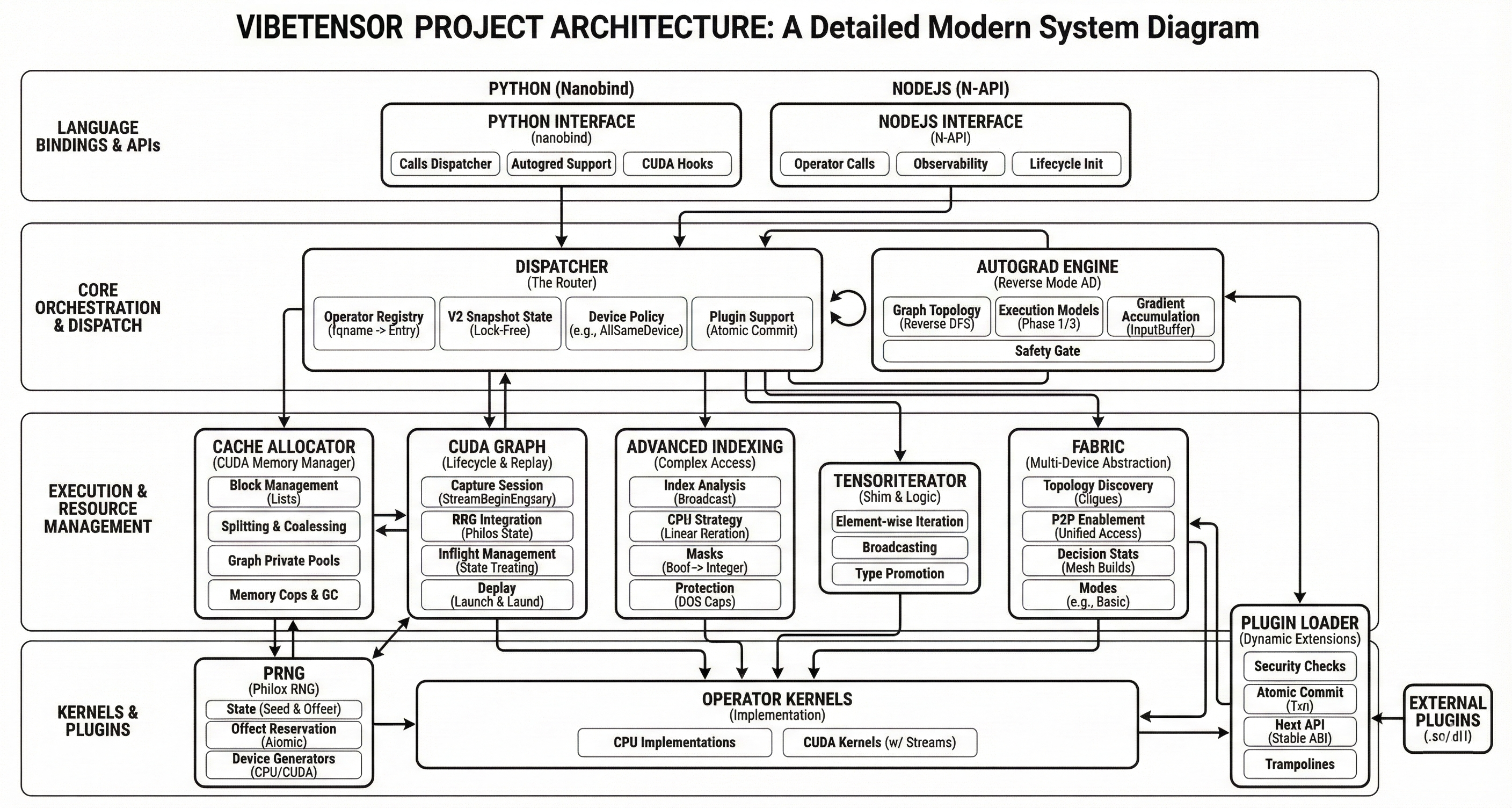
VibeTensor is an open-source deep learning system software stack from NVLabs that was fully generated by LLM-powered coding agents under high-level human guidance. The system implements a PyTorch-style eager tensor library with a C++20/CUDA core, Python and Node.js frontends, its own autograd engine, CUDA runtime, and caching allocator - demonstrating that coding agents can produce coherent system software spanning language bindings down to GPU memory management.
Reinforcement Learning via Self-Distillation
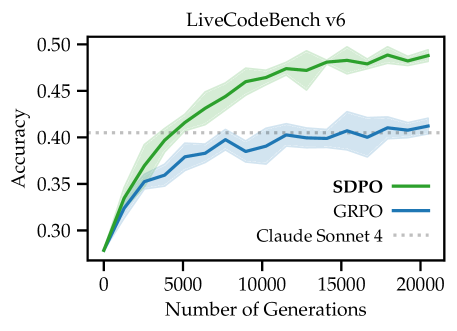
This paper introduces Self-Distillation Policy Optimization (SDPO), an on-policy RL algorithm that converts rich textual feedback from verifiable environments into dense credit assignment without requiring an external teacher model. SDPO uses the current model conditioned on feedback as a “self-teacher” to retrospectively identify mistakes in its own rollouts, substantially outperforming GRPO across scientific reasoning, tool use, and competitive programming.
Self-Improving Pretraining
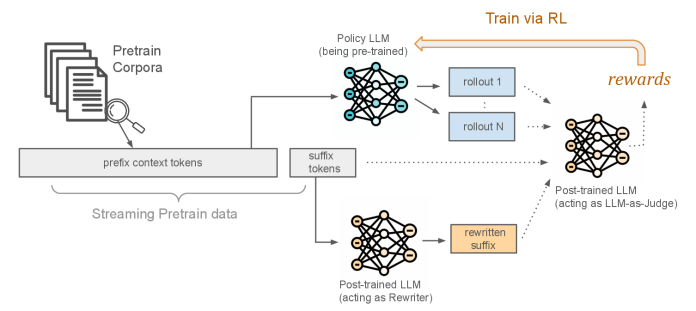
Self-Improving Pretraining is a new pretraining paradigm from Meta FAIR that replaces standard next-token prediction with sequence-level generation guided by an existing post-trained model acting as both a suffix rewriter and a suffix judge. The approach addresses quality, safety, and factuality issues at pretraining time rather than deferring them to post-training, yielding large gains across all three dimensions.

LingBot-World: Open-Source World Simulator
LingBot-World is an open-source world simulator that evolves a video generation model into an interactive, real-time environment engine. Built on a 28B-parameter Mixture-of-Experts architecture, it achieves high-fidelity dynamics across diverse domains with sub-second latency at 16 fps, outperforming Genie 3 and Mirage 2 in dynamic degree while being fully open-source.
Insight Agents: Multi-Agent System for Data Insights
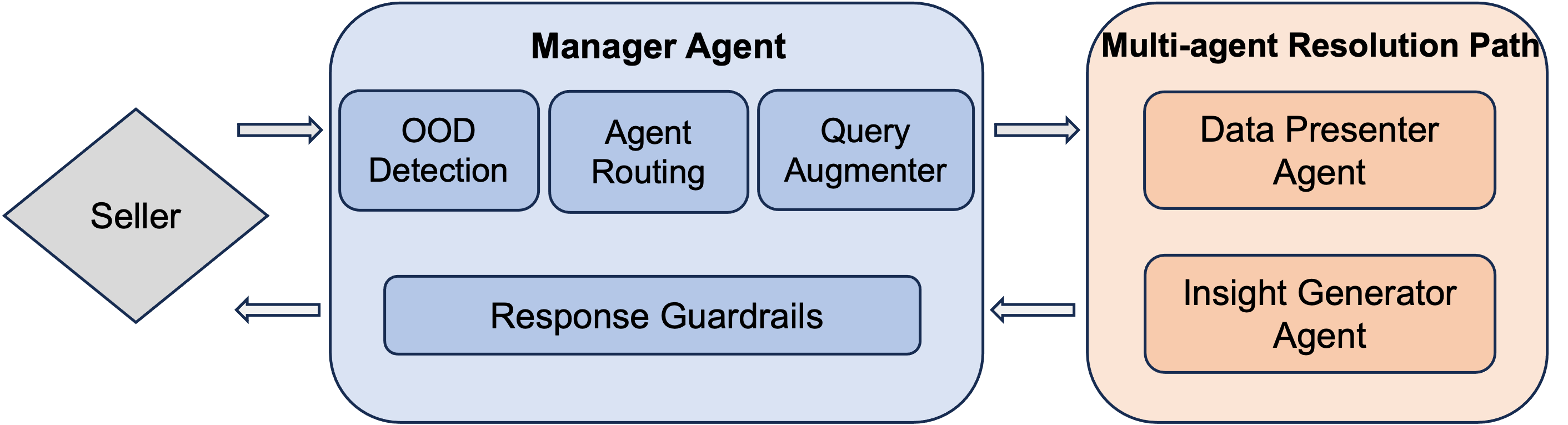
Insight Agents introduces a hierarchical multi-agent system built on a plan-and-execute paradigm for delivering personalized business insights to e-commerce sellers. The system uses a manager agent with OOD detection via a lightweight encoder-decoder model and BERT-based routing to coordinate two worker agents (data presenter and insight generator), achieving 90% accuracy with P90 latency below 15 seconds. Accepted at SIGIR 2025 and deployed for Amazon sellers in the US.
Communication Methods in Multi-Agent RL
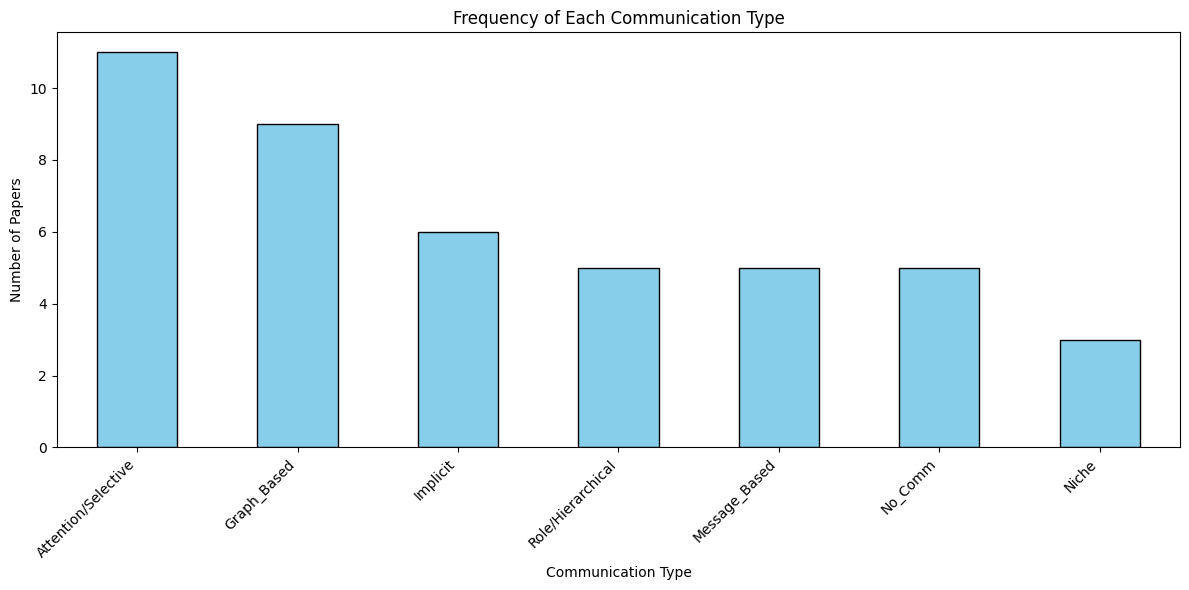
A systematic survey of 29 papers reviewing how agents coordinate in multi-agent reinforcement learning, covering fully connected message passing, implicit communication, attention-based selective methods, graph-based relational approaches, and role-based hierarchical frameworks. The analysis reveals that attention- and graph-based methods dominate recent research, while implicit communication is seeing renewed interest for its scalability in decentralized settings where explicit channels are infeasible.
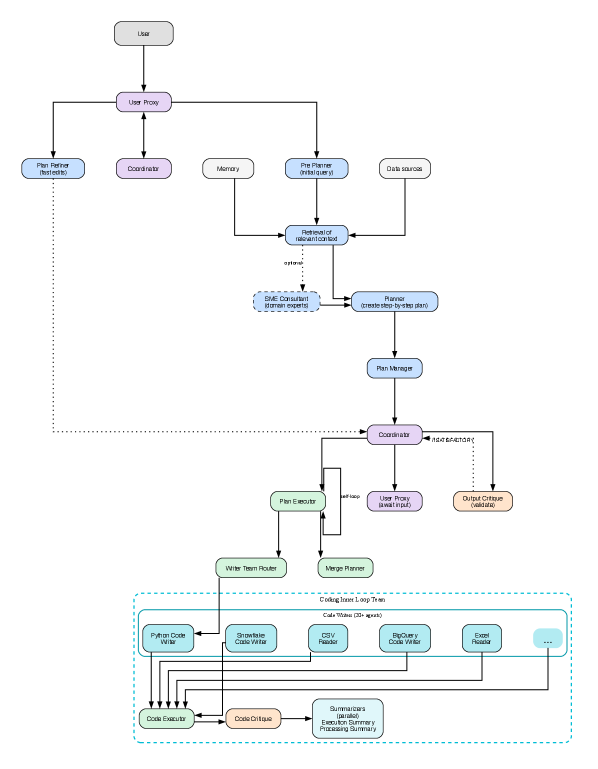
Team of Rivals: Orchestrating Reliable AI Agents
This paper proposes organizing AI agents into corporate-style teams with strict role boundaries and opposing incentives (planners, executors, critics, experts) to achieve reliability through careful orchestration of imperfect components. A remote code executor separates reasoning from data transformations, preventing raw tool outputs from contaminating agent context windows. The system achieves over 90% internal error interception before user exposure while maintaining acceptable latency tradeoffs.