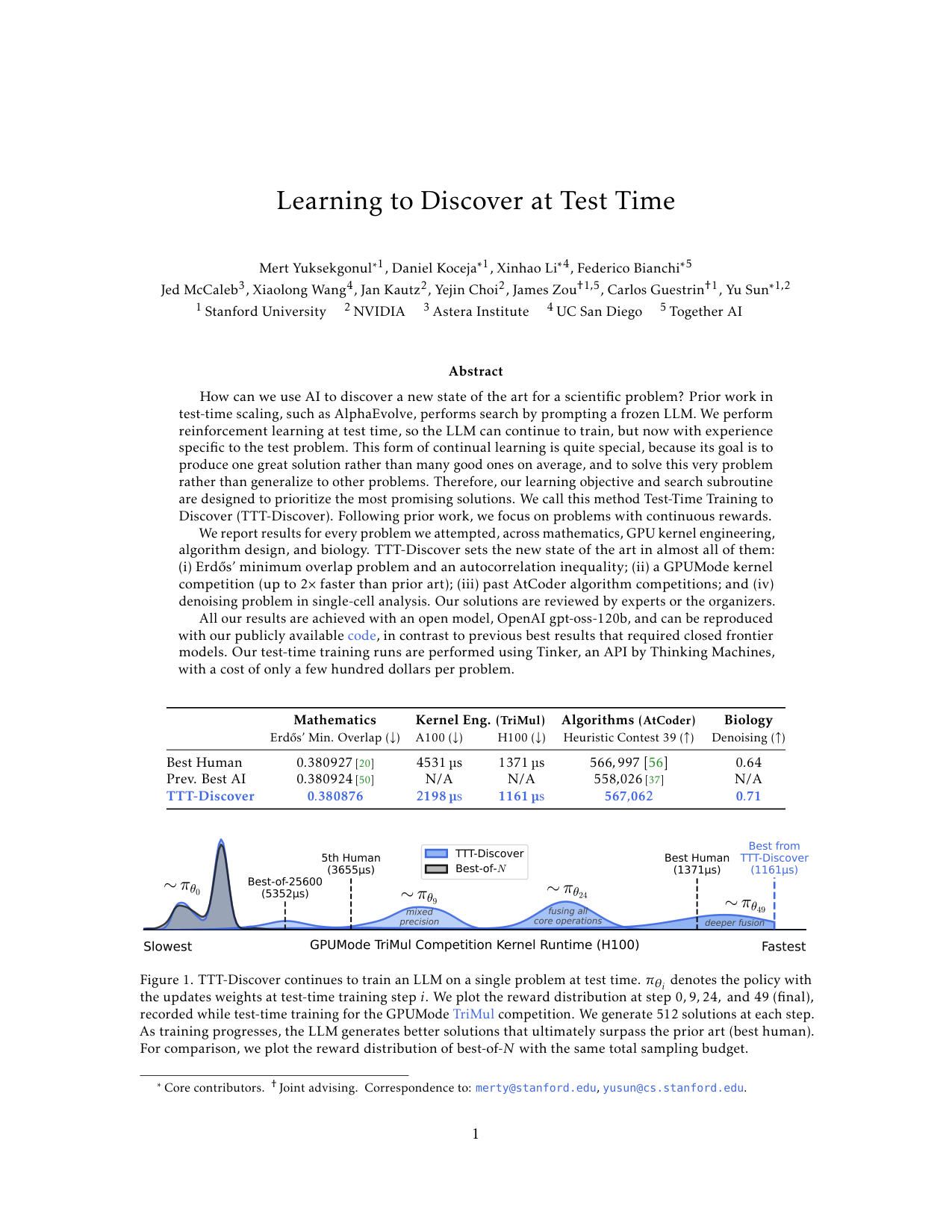
TTT-Discover: Learning to Discover at Test Time
TTT-Discover introduces test-time training for scientific discovery, performing reinforcement learning at test time so the LLM can continue to train with experience specific to the test problem. Unlike prior work like AlphaEvolve that prompts a frozen LLM, this approach enables the model itself to improve while attempting to solve hard problems.
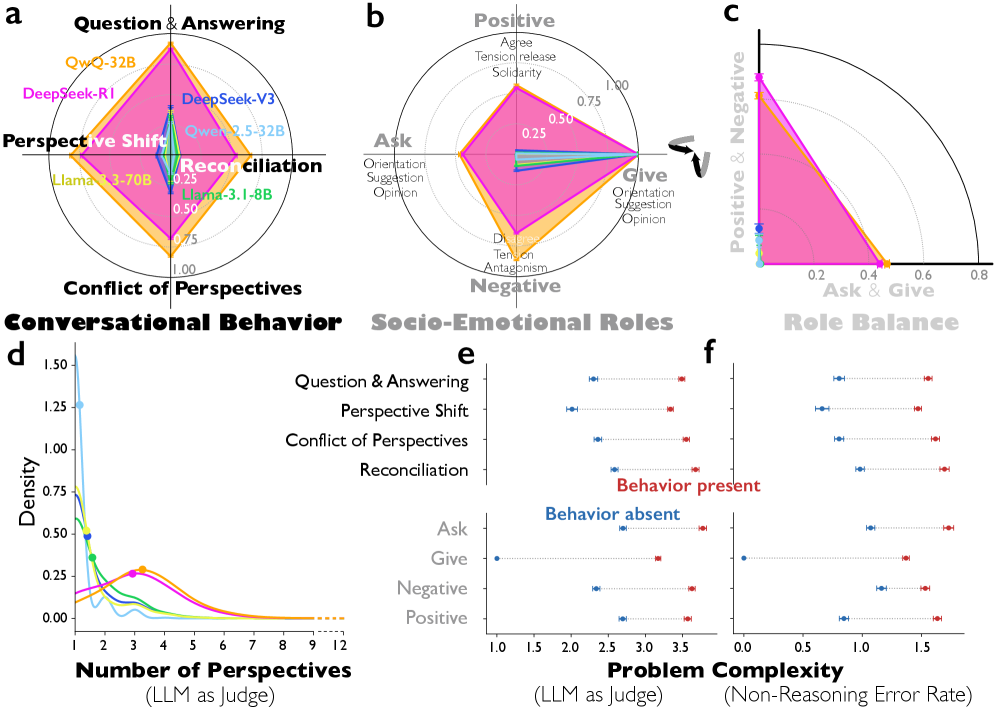
Reasoning Models Generate Societies of Thought
This paper reveals that enhanced reasoning in models like DeepSeek-R1 and QwQ-32B emerges not from extended computation alone, but from simulating multi-agent-like interactions - a “society of thought” - enabling diversification and debate among internal cognitive perspectives with distinct personality traits and domain expertise.
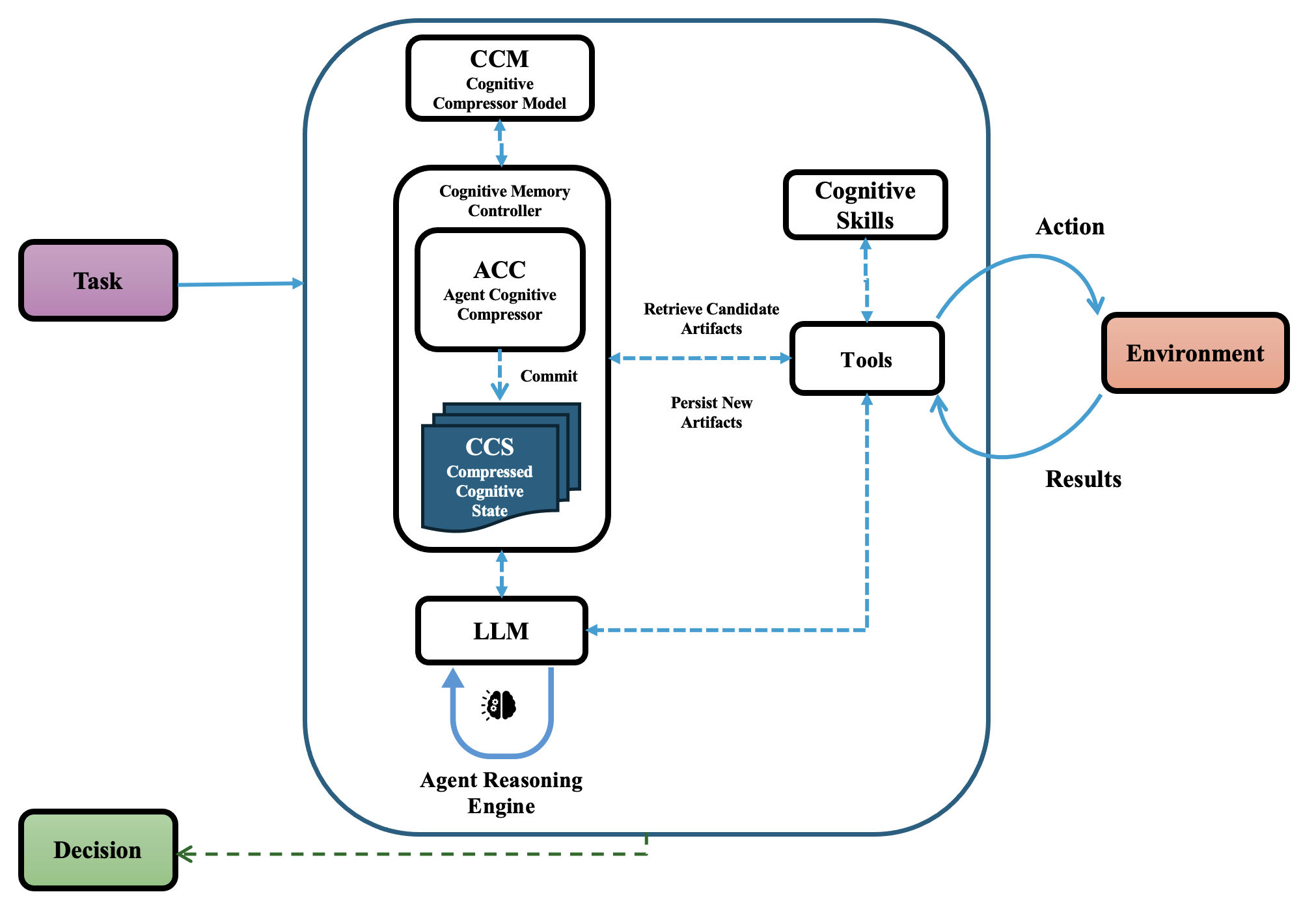
Memory Control for Long-Horizon Agents
This paper introduces the Agent Cognitive Compressor (ACC), a bio-inspired mechanism that addresses degraded agent behavior in long multi-turn workflows caused by loss of constraint focus, error accumulation, and memory-induced drift. ACC replaces continuous transcript retention with a bounded internal state that updates incrementally during each interaction turn.
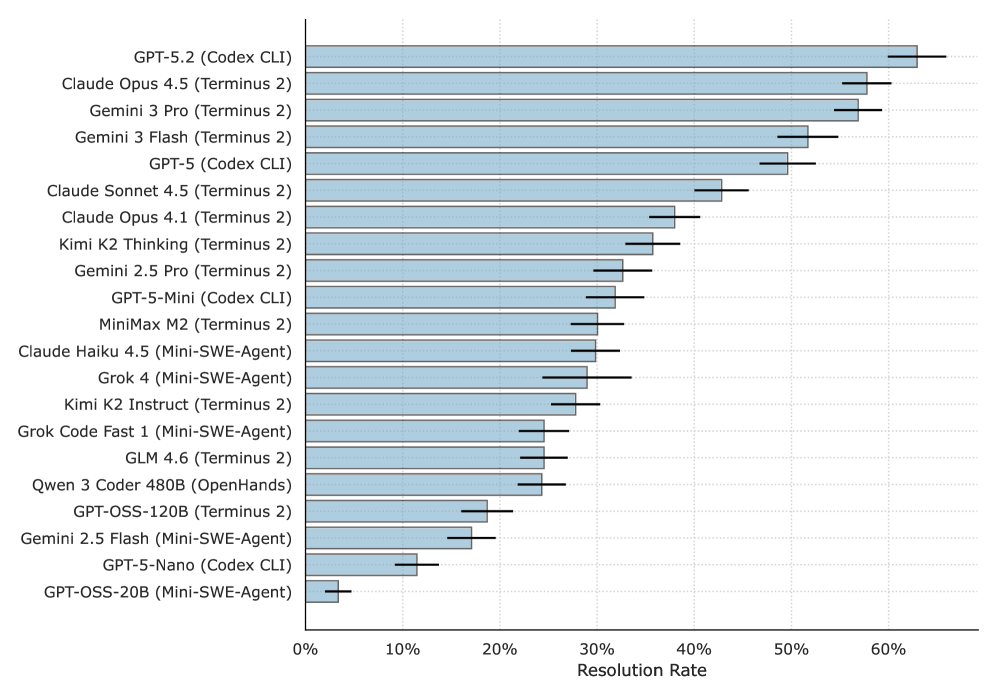
Benchmarking Agents on Hard CLI Tasks
Terminal-Bench 2.0 presents a carefully curated hard benchmark composed of 89 tasks in computer terminal environments inspired by problems from real workflows. Each task features a unique environment, human-written solution, and comprehensive tests for verification, addressing the gap where current benchmarks either don’t measure real-world tasks or aren’t sufficiently difficult.
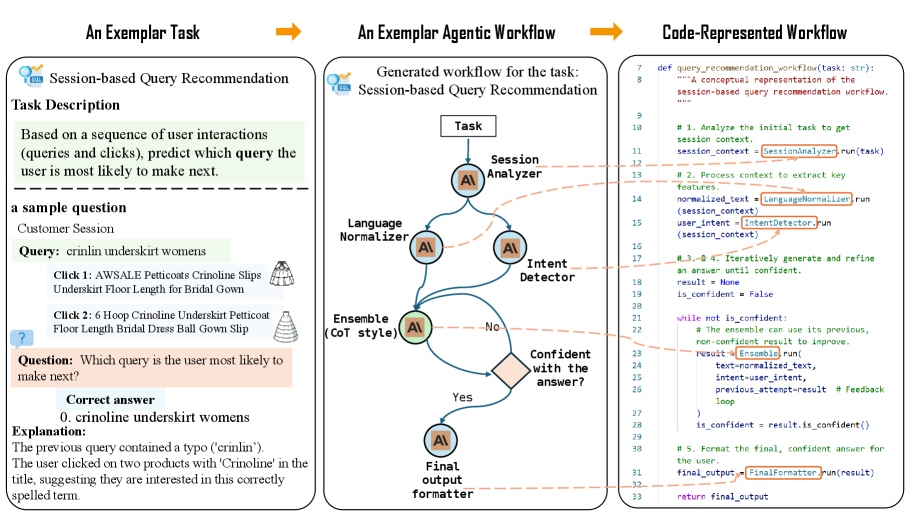
Rethinking Multi-Agent Workflows
This paper challenges the assumption that complex tasks require multiple specialized AI agents, demonstrating that a single LLM agent, through iterative dialogue, can match the performance of homogeneous multi-agent workflows while gaining efficiency from KV cache reuse.
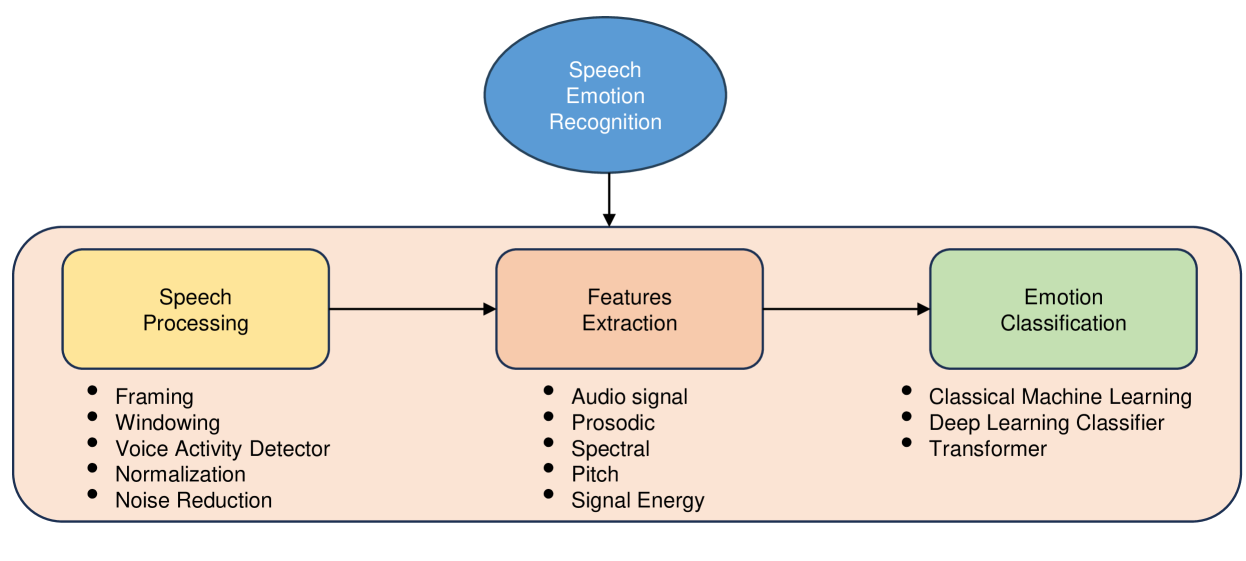
Self-Correcting Multi-Agent LLM for Physics Simulation
This paper introduces a self-correcting multi-agent LLM framework for language-based physics simulation and explanation. The system enables natural language queries to generate physics simulations while providing explanations of the underlying physical phenomena.
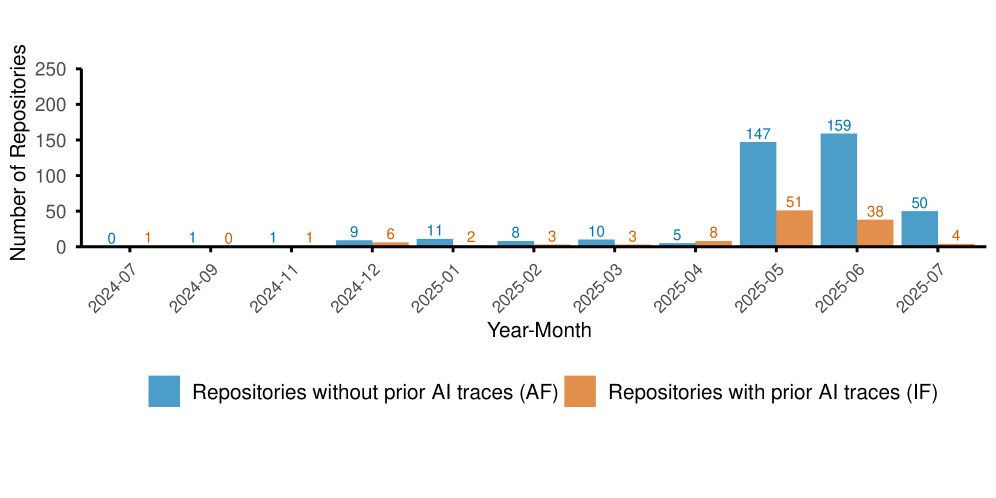
AI IDEs vs Autonomous Agents
This empirical study investigates how LLM-based coding agents that autonomously generate and merge pull requests affect open-source projects compared to IDE-integrated AI assistants. Using longitudinal causal analysis with matched controls, the researchers measure development velocity and software quality outcomes.
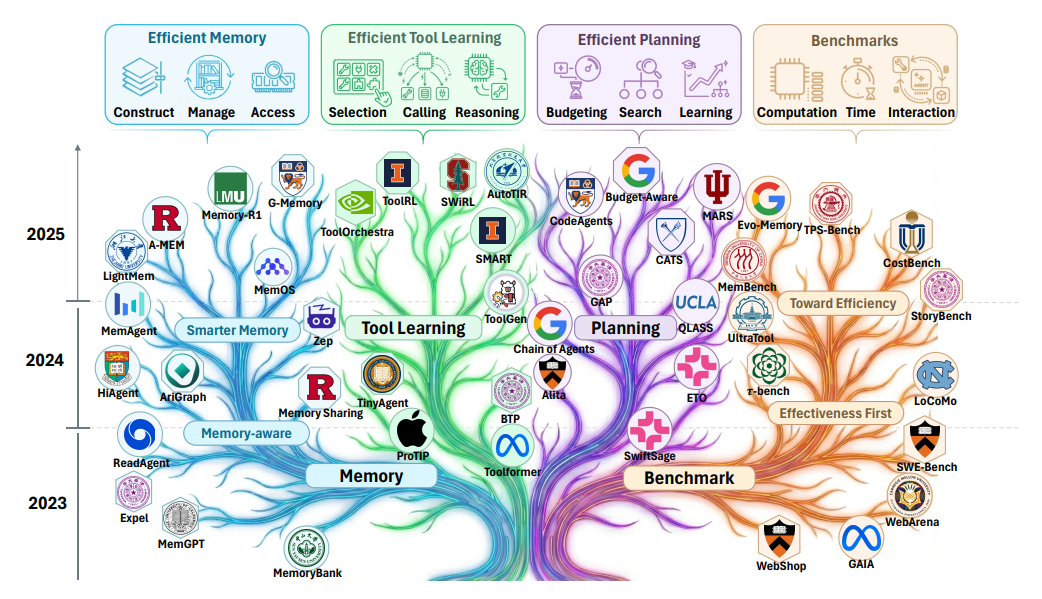
Efficient Agents
A comprehensive review examining how to make LLM-based agents more efficient for real-world deployment, focusing on three core components: memory (bounding context via compression), tool learning (RL strategies to minimize tool invocation), and planning (controlled search mechanisms). The paper characterizes efficiency through dual metrics and Pareto frontier analysis between effectiveness and cost.
Task-Decoupled Planning for Long-Horizon Agents
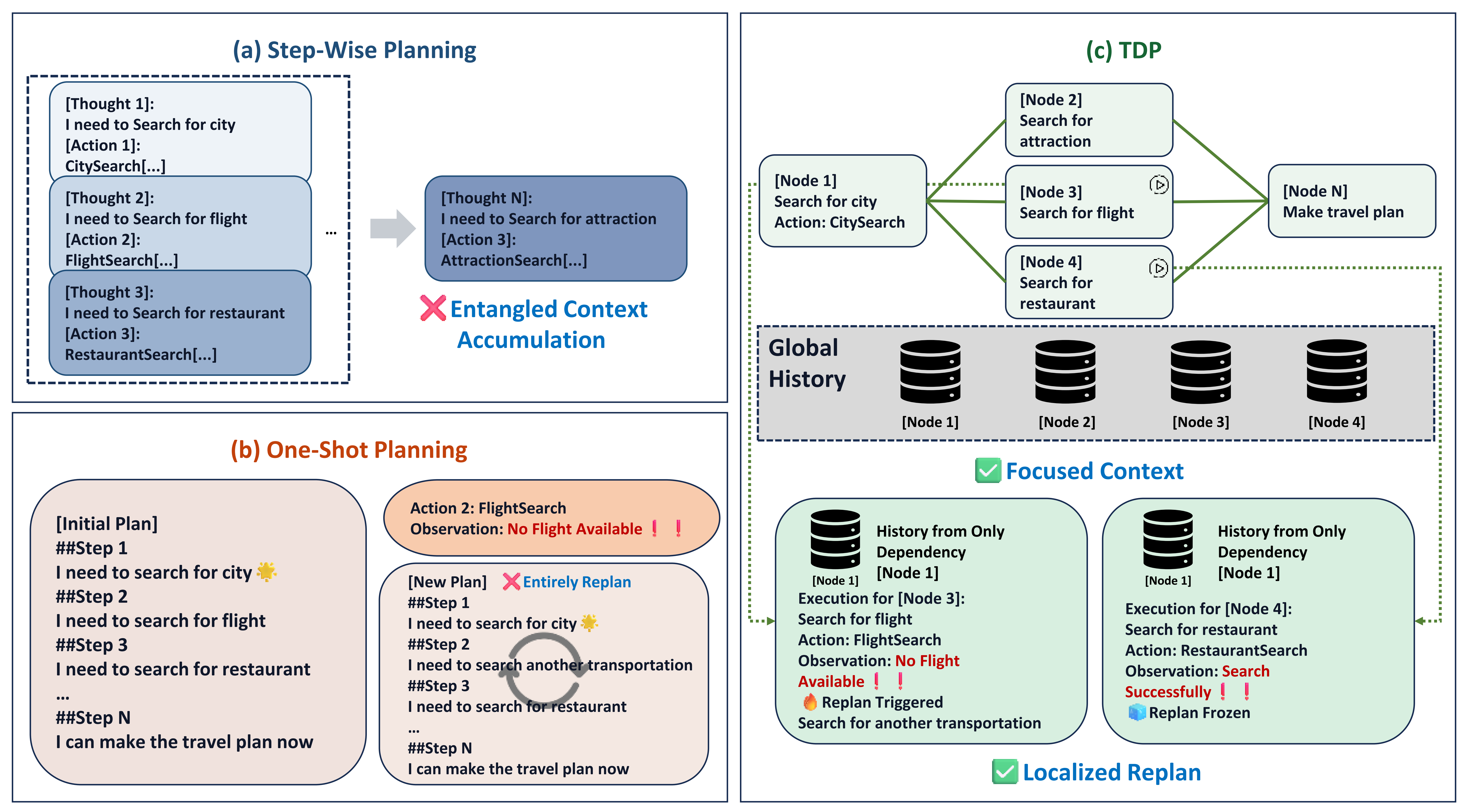
Task-Decoupled Planning (TDP) is a training-free framework that restructures agent planning by decomposing tasks into a directed acyclic graph of sub-goals using three components: Supervisor, Planner, and Executor. By isolating reasoning to individual subtasks through scoped contexts, TDP prevents error cascading and reduces token consumption by up to 82% while outperforming baselines on TravelPlanner, ScienceWorld, and HotpotQA.
Large-Scale Study on Multi-Agent AI Systems Development
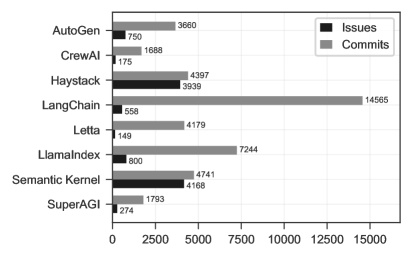
An empirical analysis of over 42,000 commits and 4,700 resolved issues across eight leading multi-agent frameworks (LangChain, CrewAI, AutoGen). Key findings: feature enhancements dominate at 40.8% of changes versus 27.4% bug fixes, bugs represent 22% of issues, with agent coordination challenges at 10%, and issue reporting surged notably beginning in 2023.