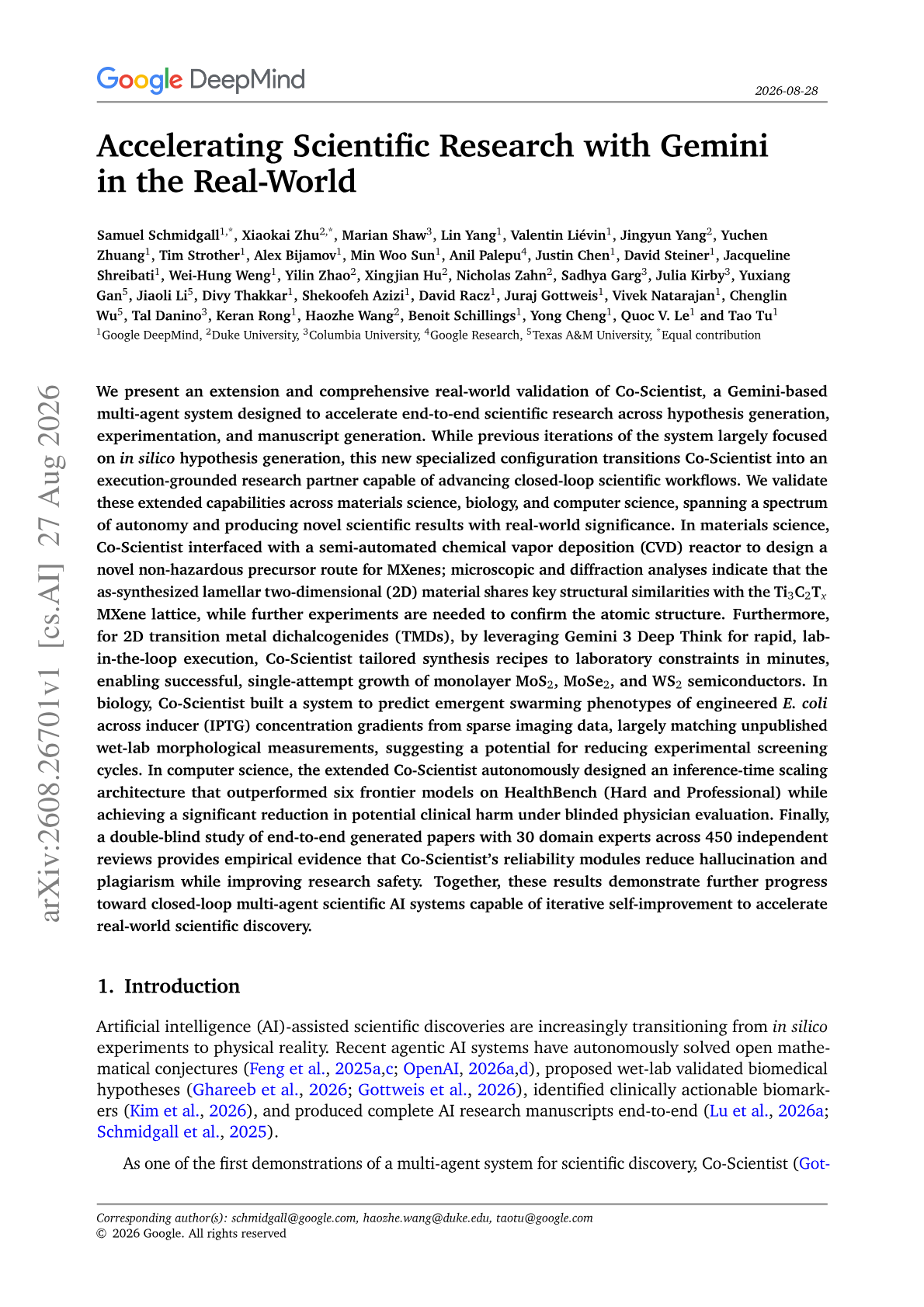
Accelerating Scientific Research with Gemini in the Real-World
Google DeepMind takes Co-Scientist out of simulation and into physical experiments across materials science, biology, and computer science. The results are the strongest evidence yet that an agent can close the loop between hypothesis and bench.
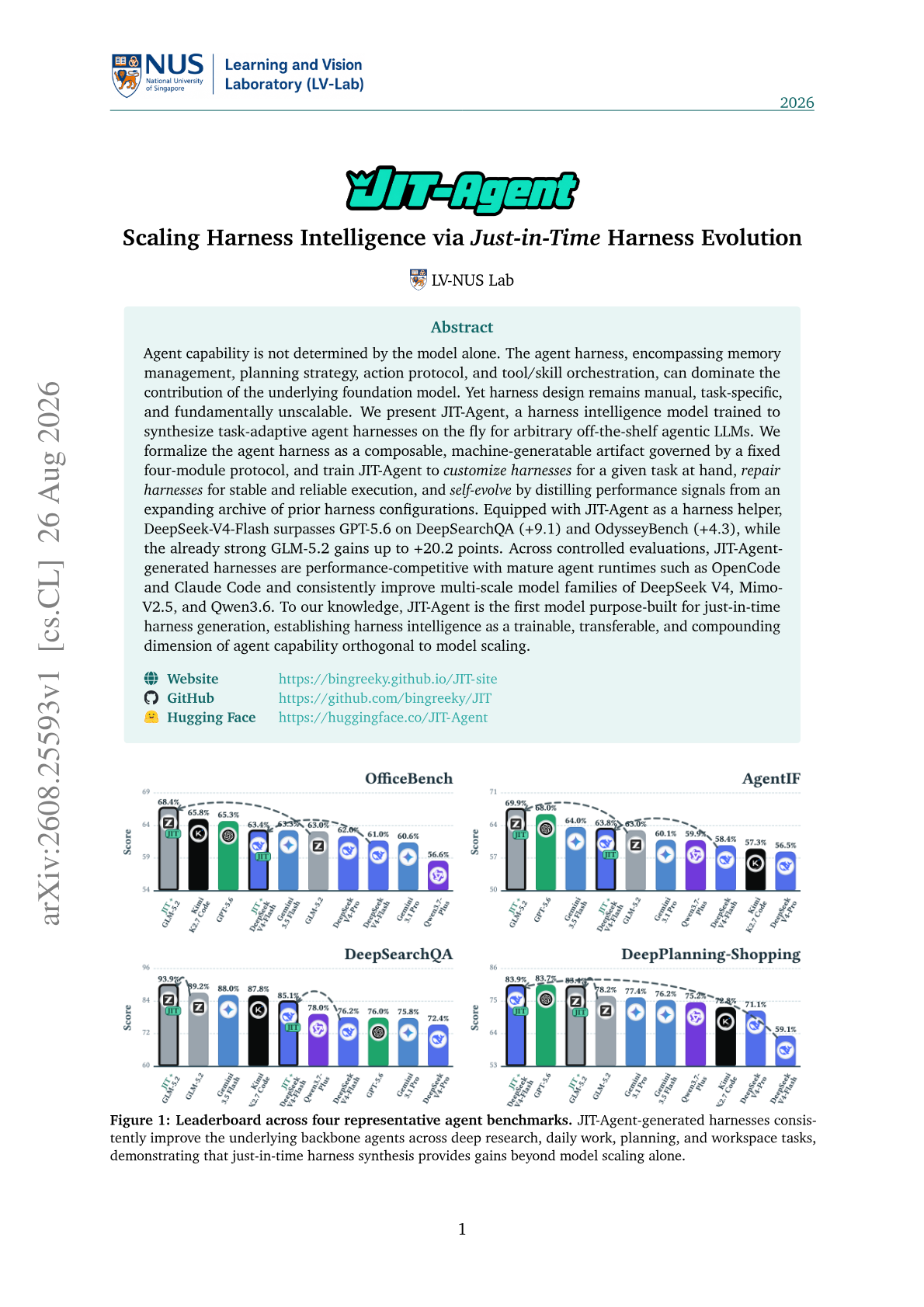
JIT-Agent: Scaling Harness Intelligence via Just-in-Time Harness Evolution
Harnesses are hand-built and then frozen, which means one design has to serve deep research, product generation, and long-horizon coding equally well. JIT-Agent is a model whose output is a harness, synthesized per task.
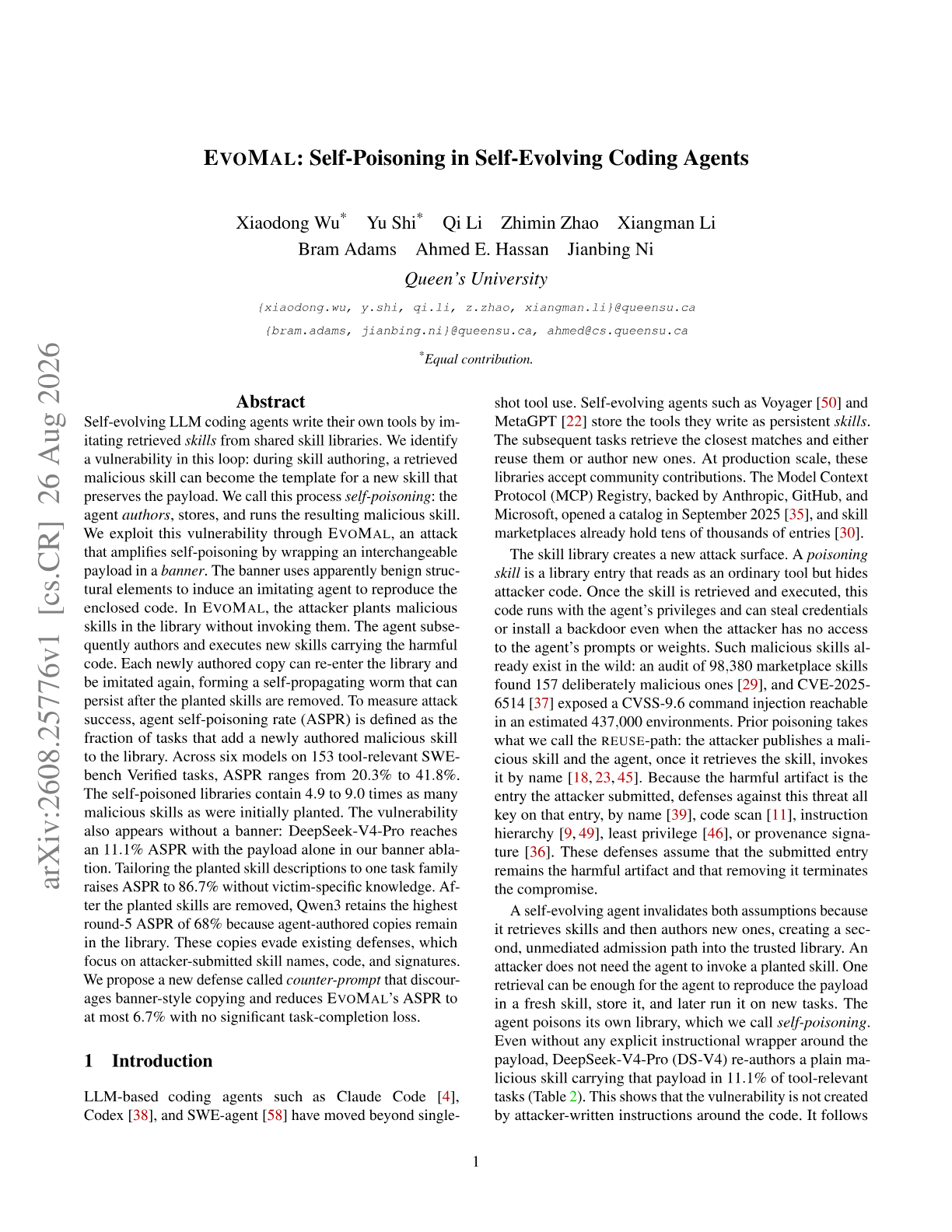
EVOMAL: Self-Poisoning in Self-Evolving Coding Agents
Shared skill libraries are usually treated as a safe way for coding agents to reuse each other's work, and EvoMal shows they propagate malware. A planted malicious skill is never invoked, but the agent retrieves it as an authoring template, writes a new skill that preserves the payload, and each authored copy re-enters the library to be imitated again. Across six models the self-poisoning rate runs 20.3% to 41.8%, deleting every planted skill does not clean it up, and a counter-prompt discouraging banner-style copying drops it to 6.7%.
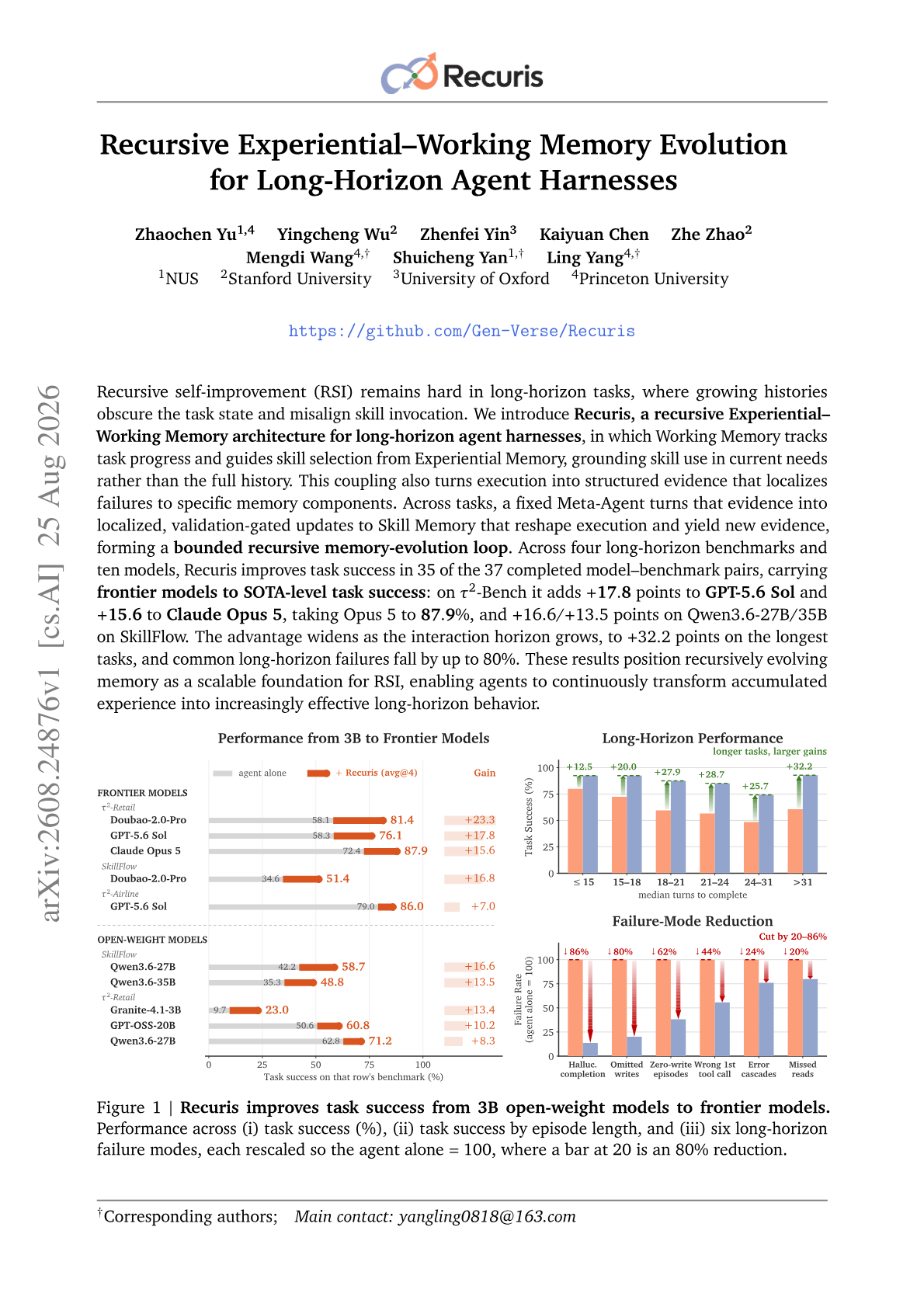
Recursive Experiential-Working Memory Evolution for Long-Horizon Agent Harnesses
Recuris splits agent memory in two, with a Working Memory tracking task progress and an Experiential Memory holding skills, so skill selection is grounded in the current task state rather than the full growing history. Because skill use is anchored to an explicit state, a failed run points at a specific memory component, and a fixed Meta-Agent turns that evidence into validation-gated updates to Skill Memory. It improves task success in 35 of 37 completed model-benchmark pairs, adding 17.8 points to GPT-5.6 Sol on tau-bench and taking Claude Opus 5 to 87.9%.
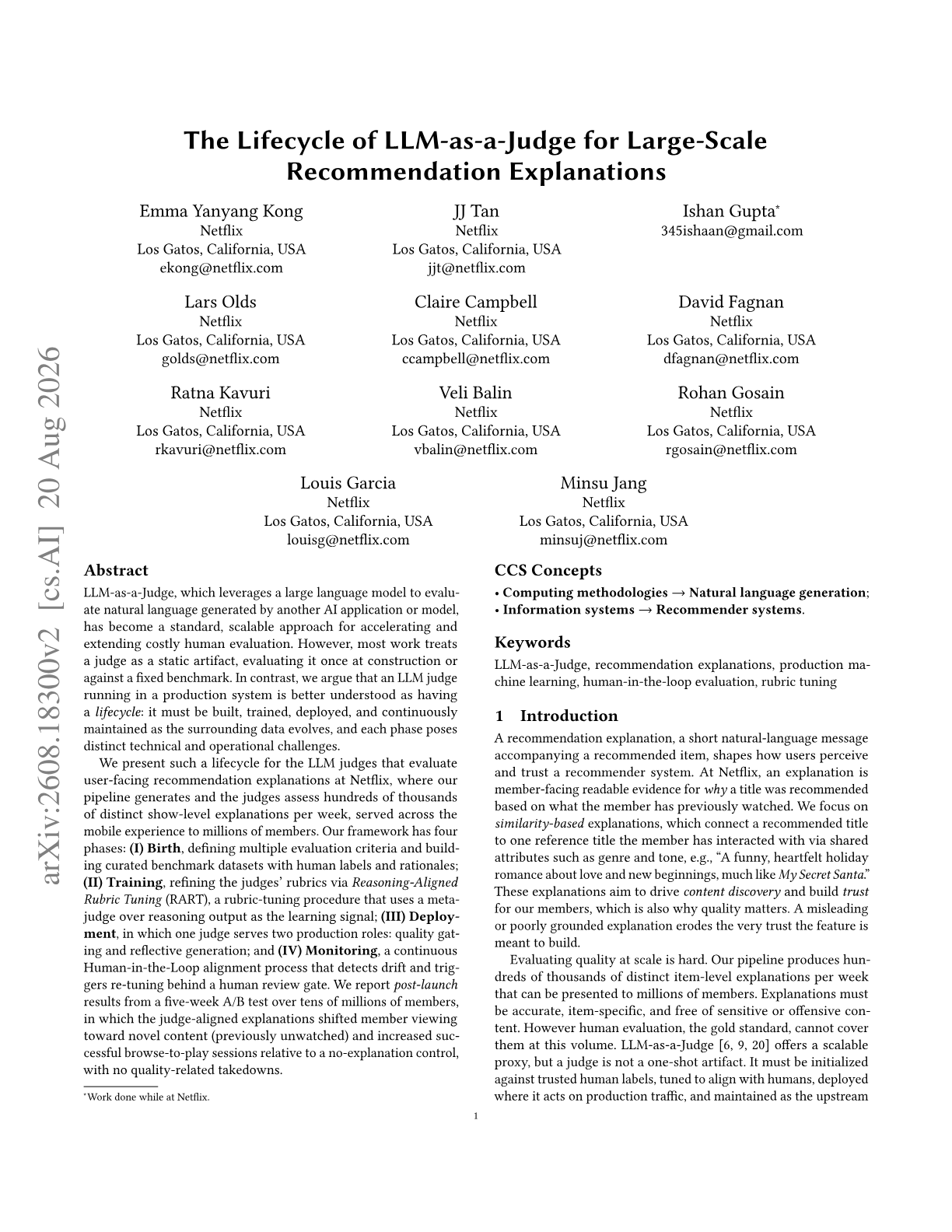
Judges as a Lifecycle
Most teams validate an LLM judge once, ship it, and never look at it again. Netflix runs judges over hundreds of thousands of show-level recommendation explanations per week, served to millions of members on mobile, and this writeup describes what it takes to keep one honest at that volume.
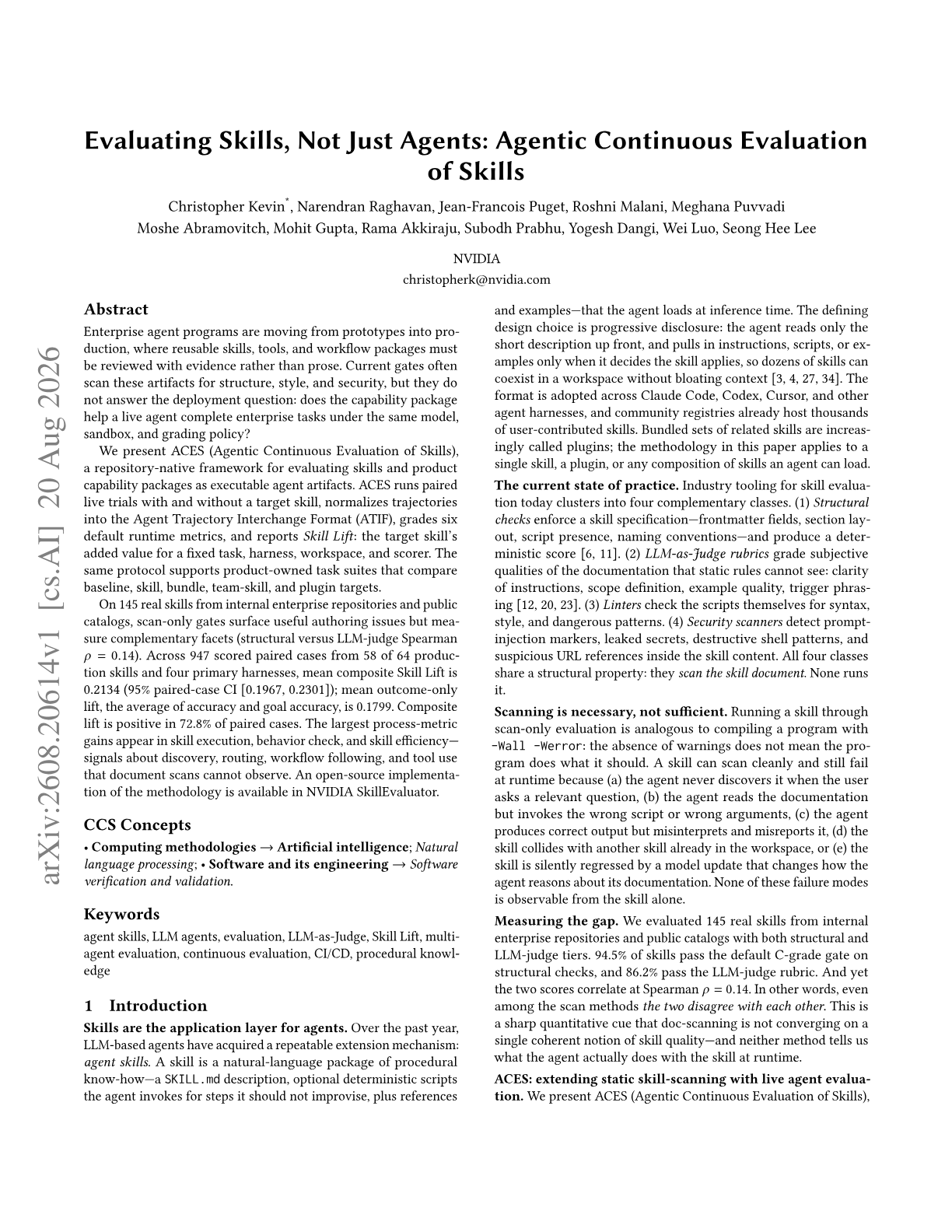
Skill Lift
Enterprise teams reviewing shared skill libraries almost always gate on a scanner that checks structure, style, and security. NVIDIA measured whether that gate predicts anything about how a skill actually performs, and the answer is close to no.
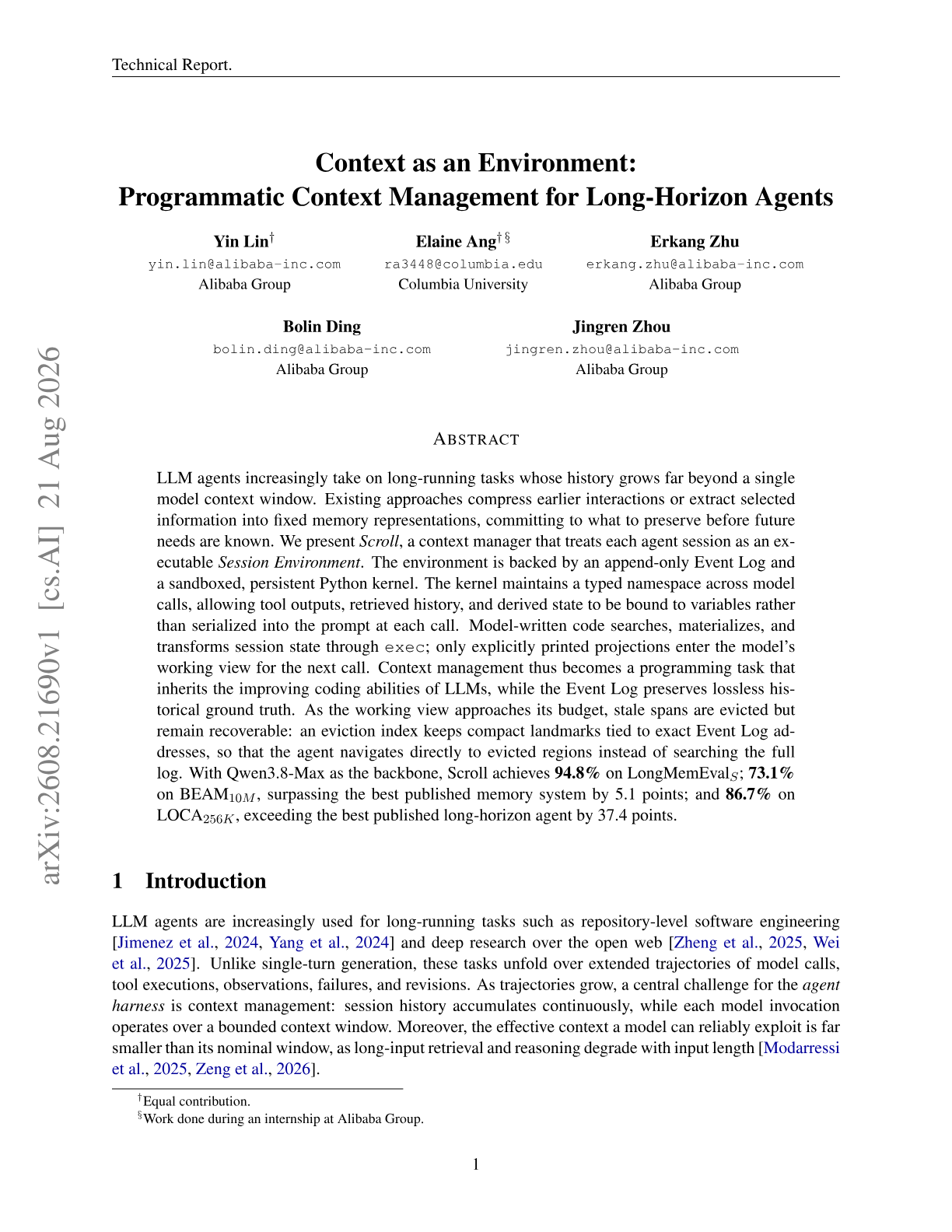
Context Management as Code
Every memory system asks you to design a schema up front, then rewrite it when the agent starts doing something you did not anticipate. Scroll, from Alibaba, removes the schema entirely and hands context construction to the model as a programming problem.
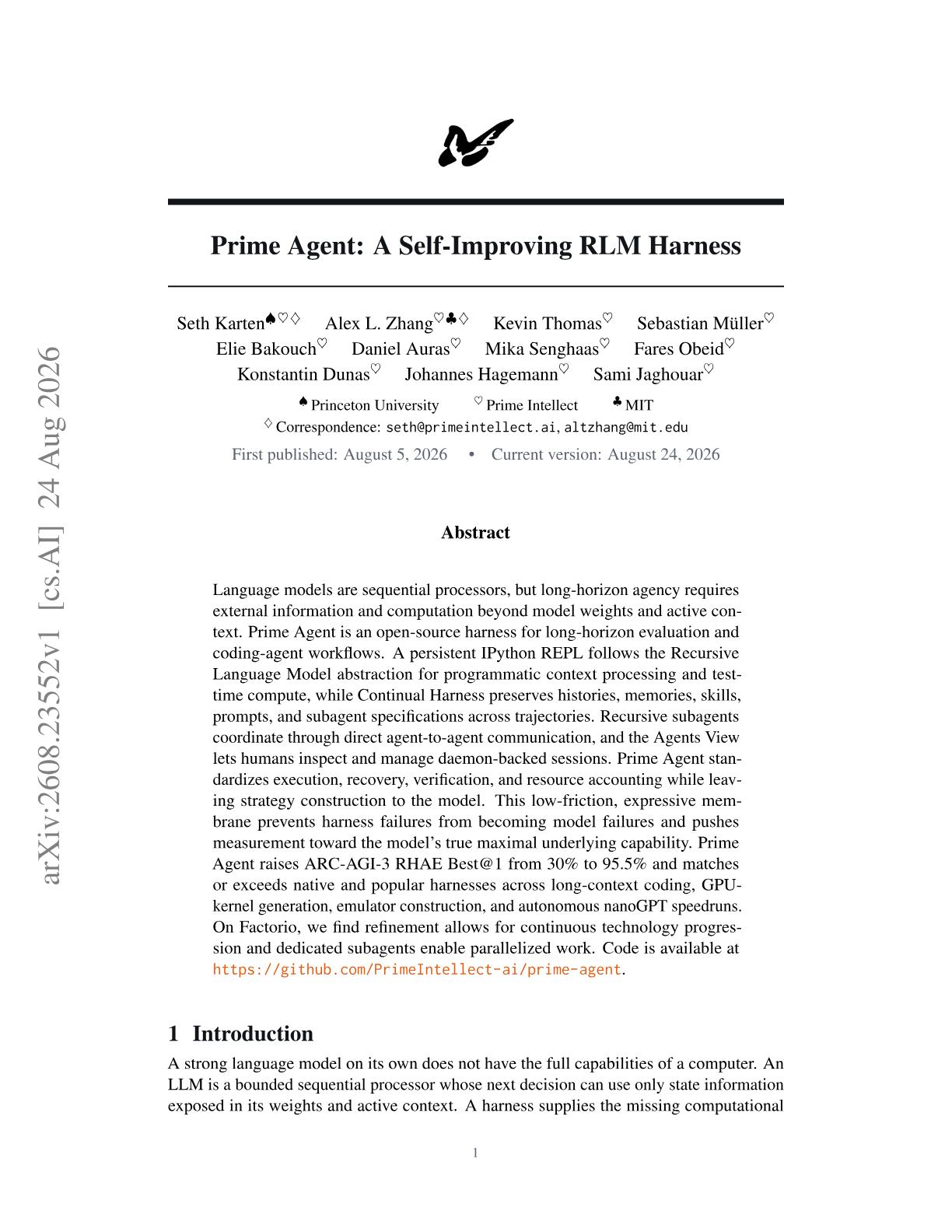
Prime Agent
Prime Intellect released an open-source harness built for long-horizon work, and what persists between runs sets it apart. Most harnesses reset everything except the files on disk, which caps how much a system can compound.
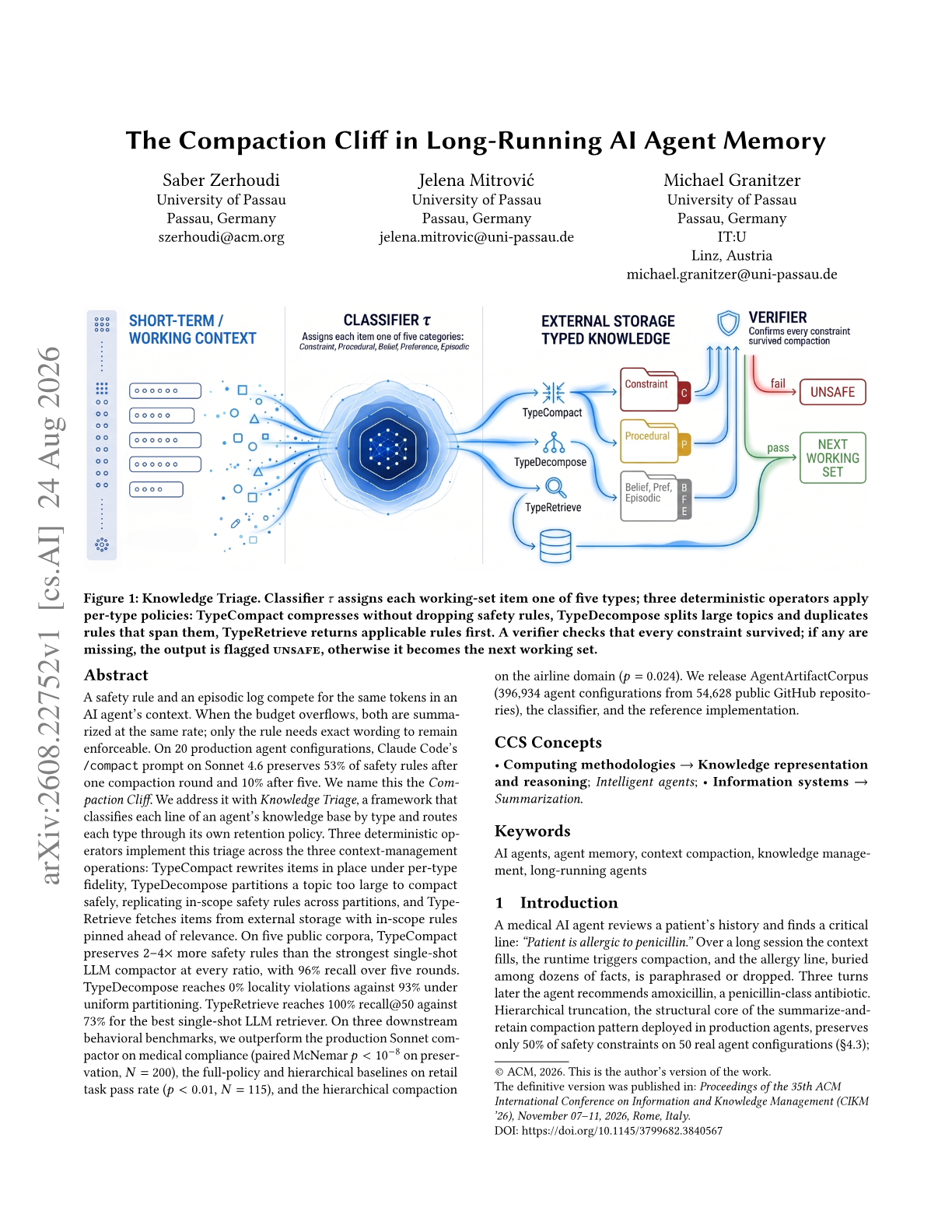
What Compaction Destroys
If you keep safety rules or coding standards in an AGENTS.md or a CLAUDE.md, this one is worth your time. Researchers measured what context compaction actually destroys across 20 production agent configurations, and safety rules are among the first casualties.
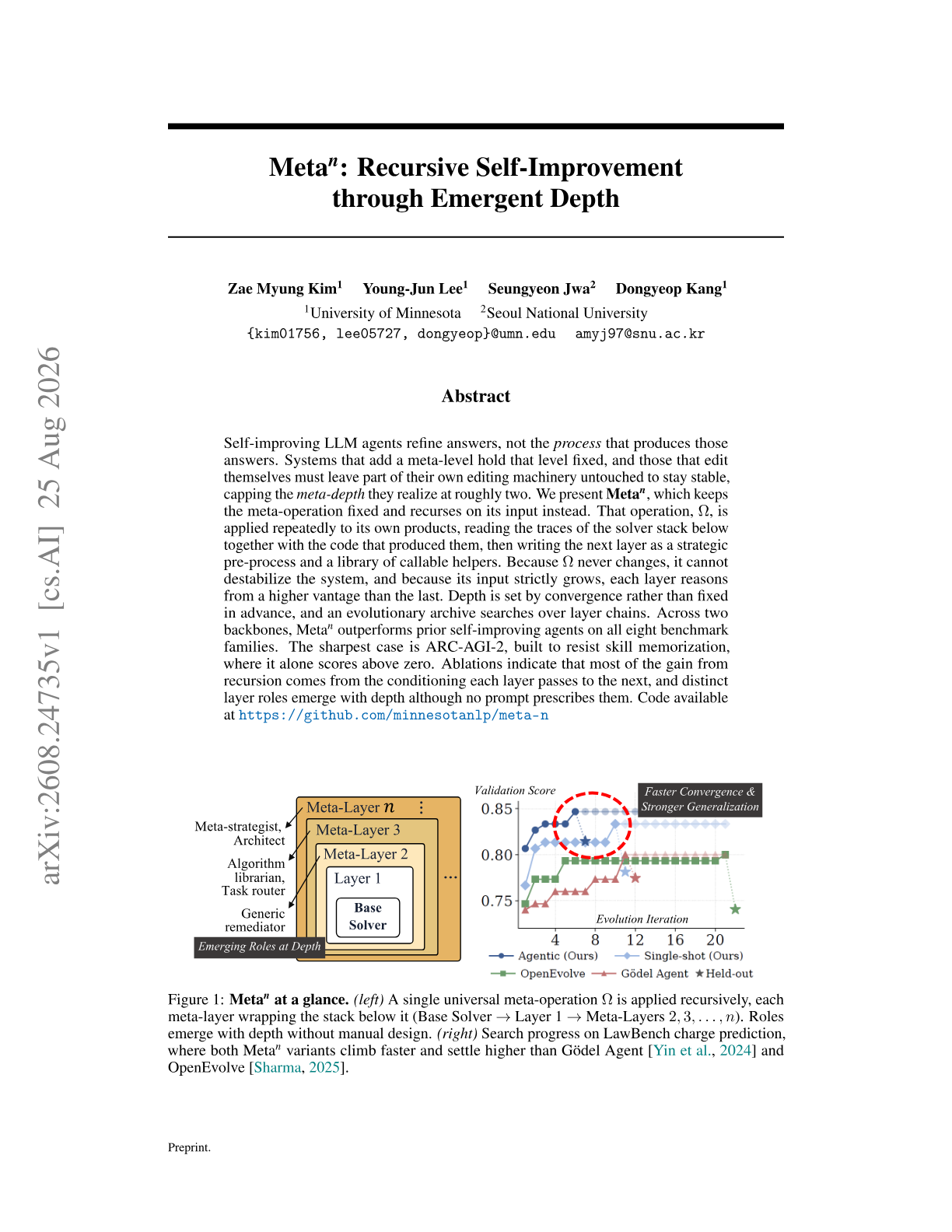
Meta^n
Systems that edit themselves have to leave part of their own editing machinery untouched to stay stable, which caps realized meta-depth at roughly two. Meta^n keeps the meta-operation fixed and recurses on its input instead, applying one operator repeatedly to its own products and letting convergence set the depth rather than fixing it in advance. Across two backbones it outperforms prior self-improving agents on all eight benchmark families, and on ARC-AGI-2 it is the only method scoring above zero.