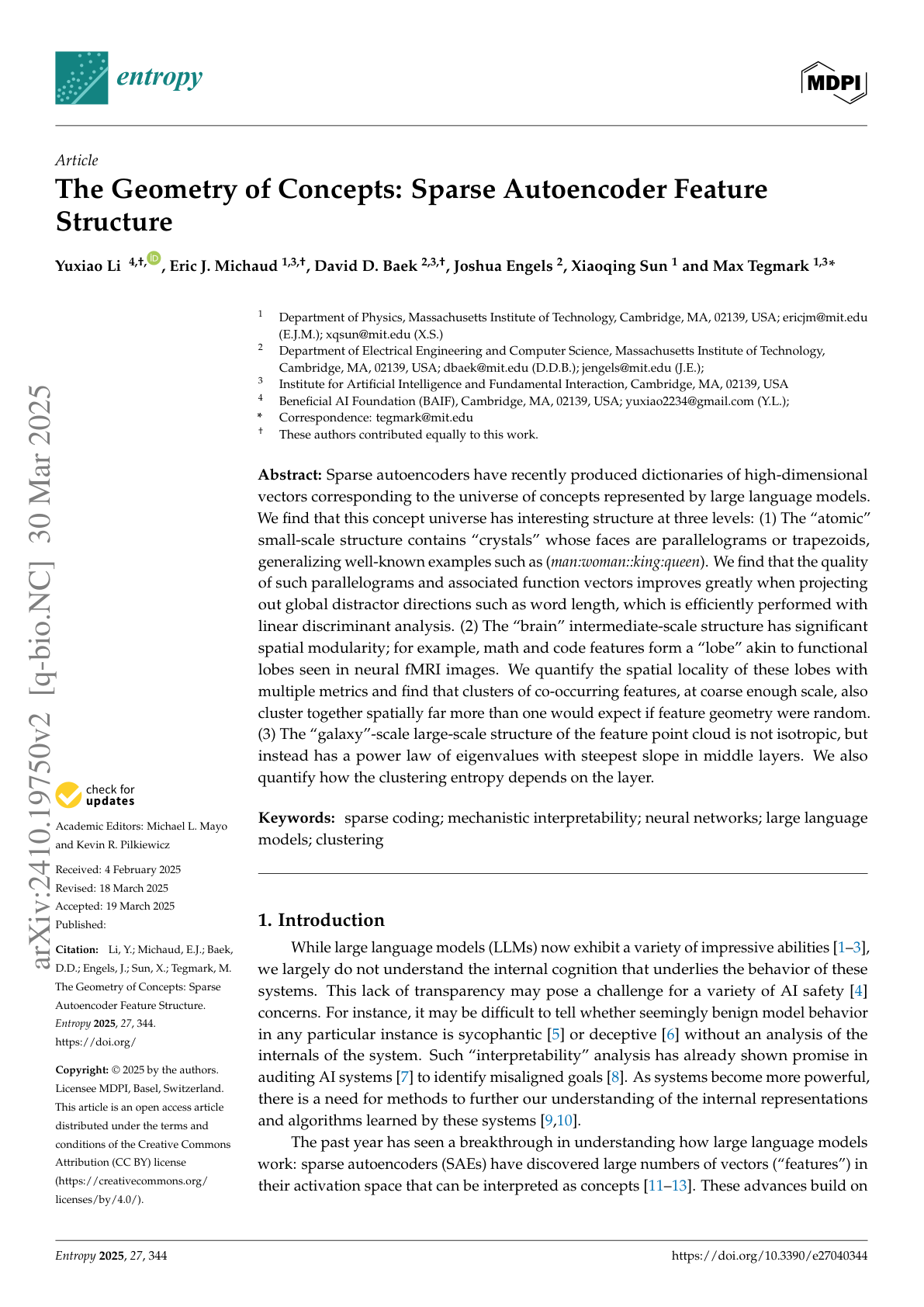
Geometry of Concepts in LLMs
examines the geometric structure of concept representations in sparse autoencoders (SAEs) at three scales: 1) atomic-level parallelogram patterns between related concepts (e.g., man:woman::king:queen), 2) brain-like functional "lobes" for different types of knowledge like math/code, 3) and galaxy-level eigenvalue distributions showing a specialized structure in middle model layers.

SimpleQA
a challenging benchmark of 4,326 short factual questions adversarially collected against GPT-4 responses; reports that frontier models like GPT-4o and Claude achieve less than 50% accuracy; finds that there is a positive calibration between the model stated confidence and accuracy, signaling that they have some notion of confidence; claims that there is still room to improve the calibration of LLMs in terms of stated confidence.
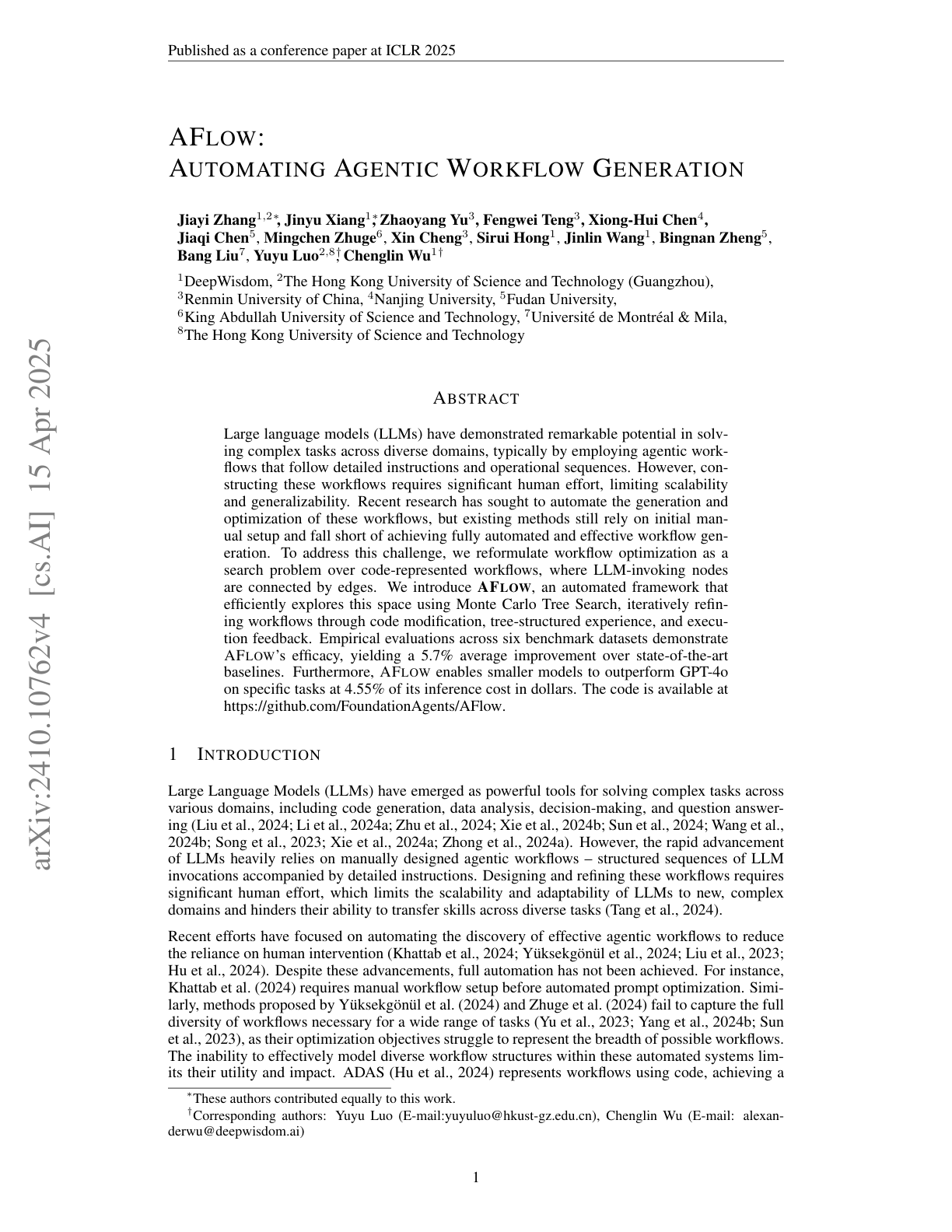
Automating Agentic Workflow Generation
a novel framework for automating the generation of agentic workflows; it reformulates workflow optimization as a search problem over code-represented workflows, where edges connect LLM-invoking nodes; it efficiently explores the search space using a variant of MCTS, iteratively refining workflows through code modification, tree-structured experience, and execution feedback; experiments across six benchmark datasets demonstrate AFlow’s effectiveness, showing a 5.7% improvement over manually designed methods and a 19.5% improvement over existing automated approaches; AFlow also enables smaller models to outperform GPT-4o on specific tasks at just 4.55% of its inference cost.
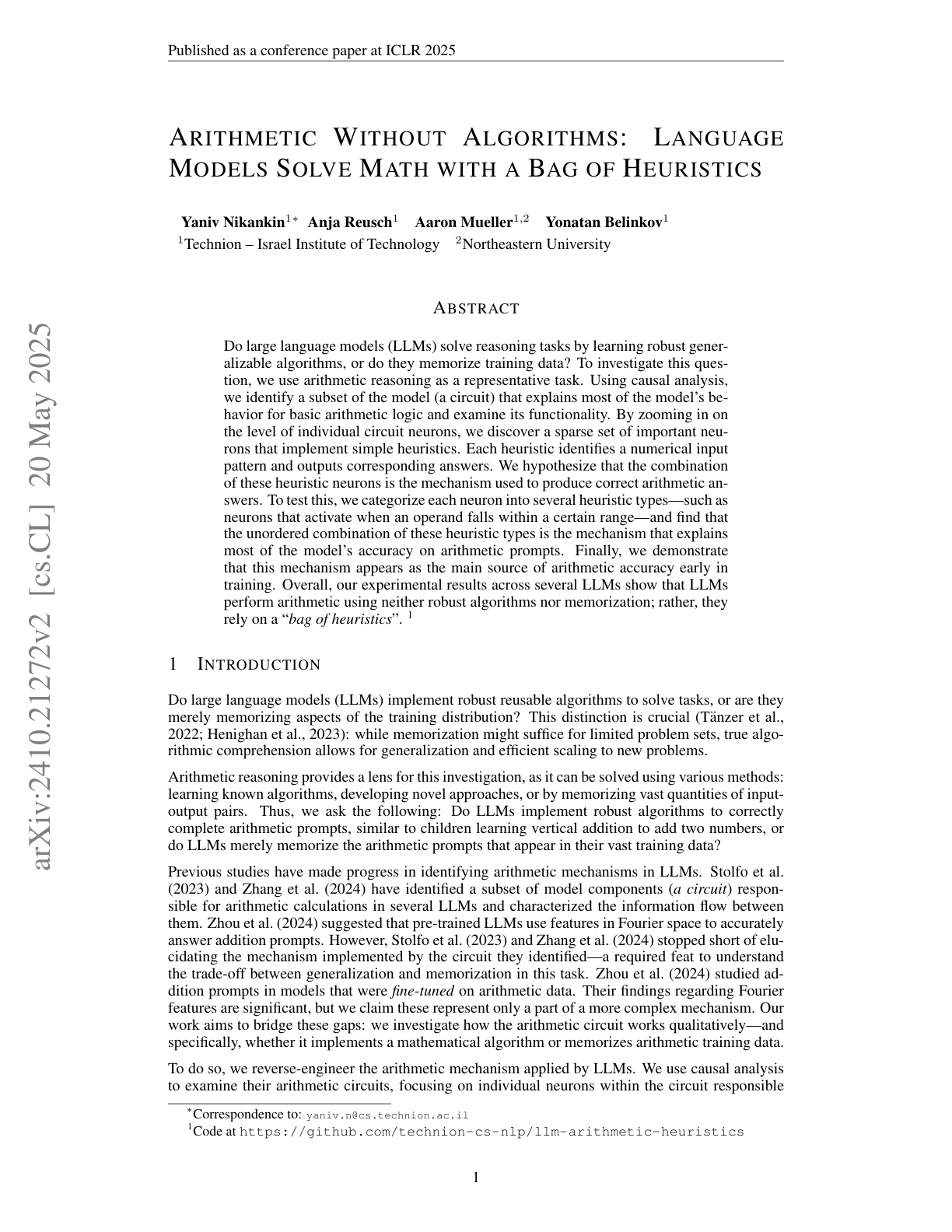
LLMs Solve Math with a Bag of Heuristics
uses causal analysis to find neurons that explain an LLM's behavior when doing basic arithmetic logic; discovers and hypothesizes that the combination of heuristic neurons is the mechanism used to produce correct arithmetic answers; finds that the unordered combination of different heuristic types is the mechanism that explains most of the model’s accuracy on arithmetic prompts.
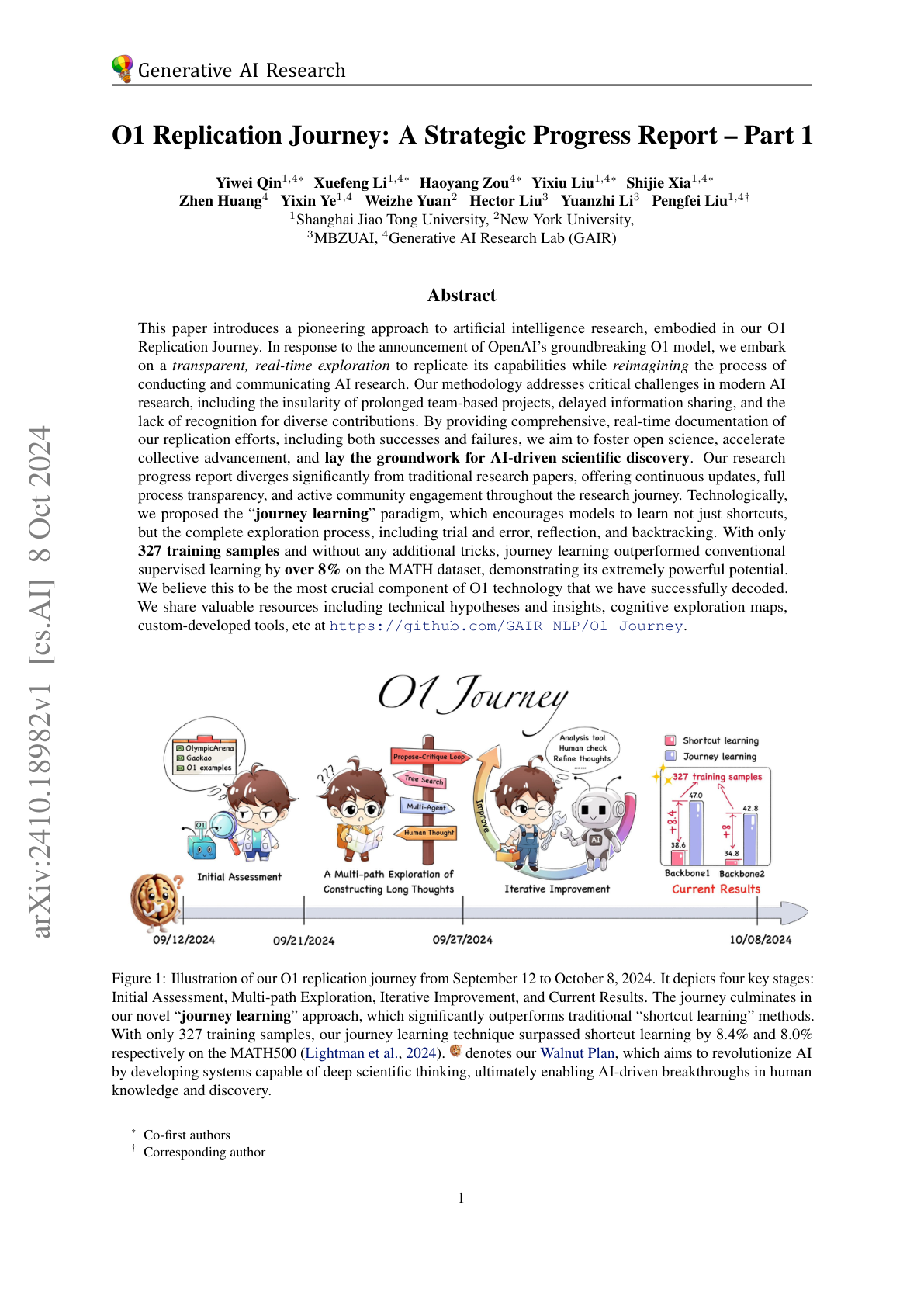
o1 Replication Journey
reports to be replicating the capabilities of OpenAI's o1 model; their journey learning technique encourages learning not just shortcuts, but the complete exploration process, including trial and error, reflection, and backtracking; claims that with only 327 training samples, their journey learning technique surpassed shortcut learning by 8.0% on the MATH dataset.
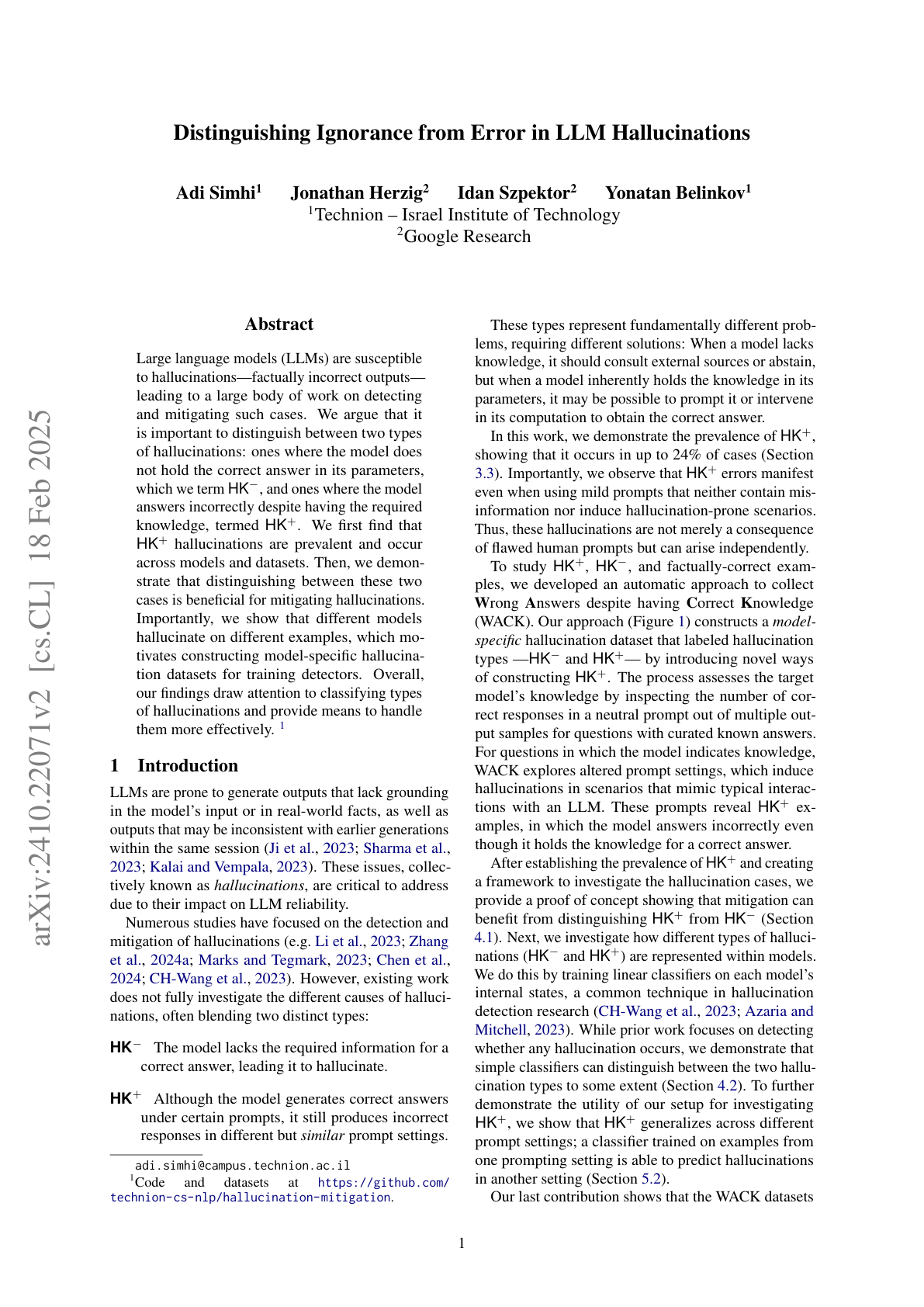
Distinguishing Ignorance from Error in LLM Hallucinations
a method to distinguish between two types of LLM hallucinations: when models lack knowledge (HK-) versus when they hallucinate despite having correct knowledge (HK+); they build model-specific datasets using their proposed approach and show that model-specific datasets are more effective for detecting HK+ hallucinations compared to generic datasets.
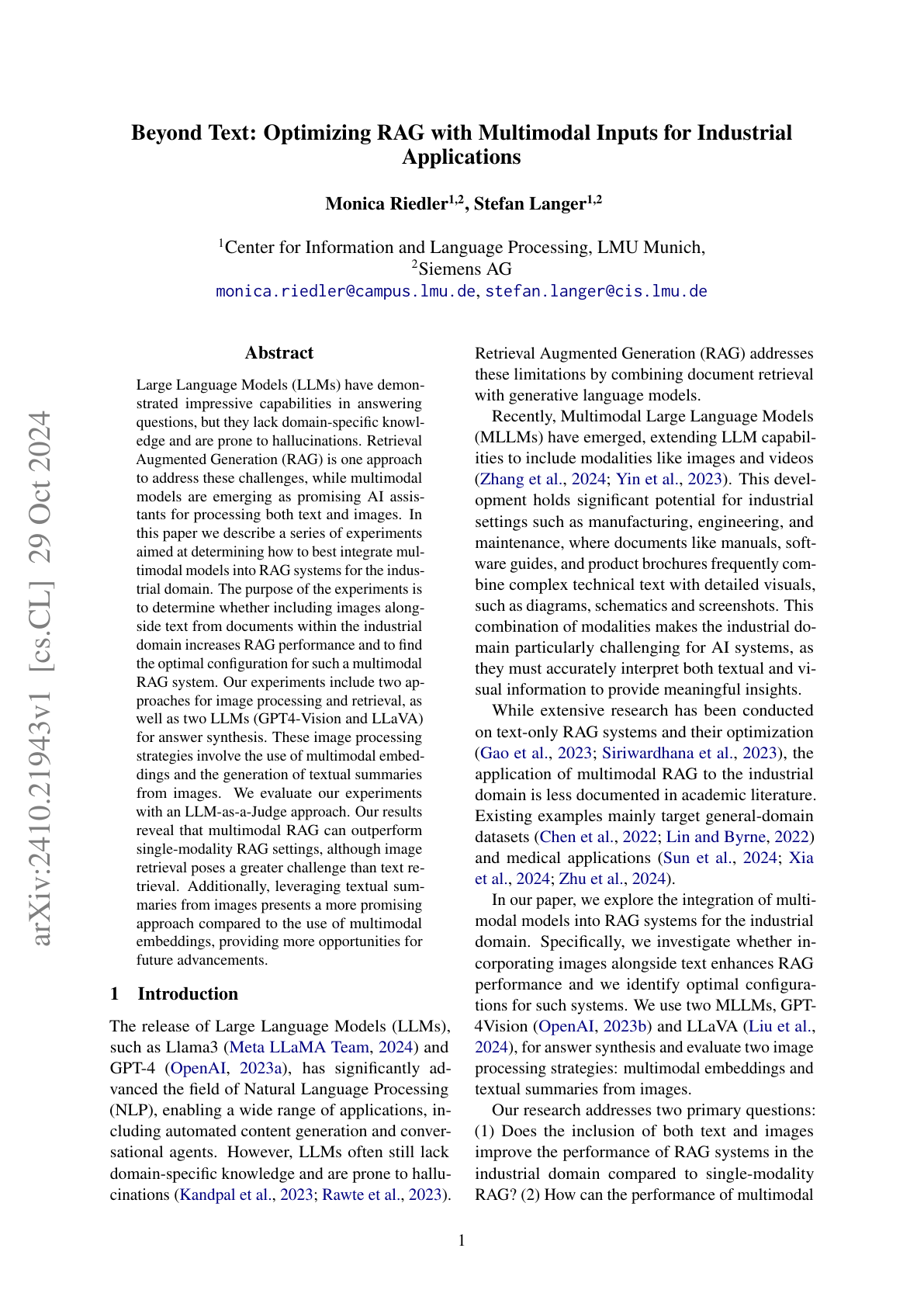
Multimodal RAG
provides a discussion on how to best integrate multimodal models into RAG systems for the industrial domain; it also provides a deep discussion on the evaluation of these systems using LLM-as-a-Judge.
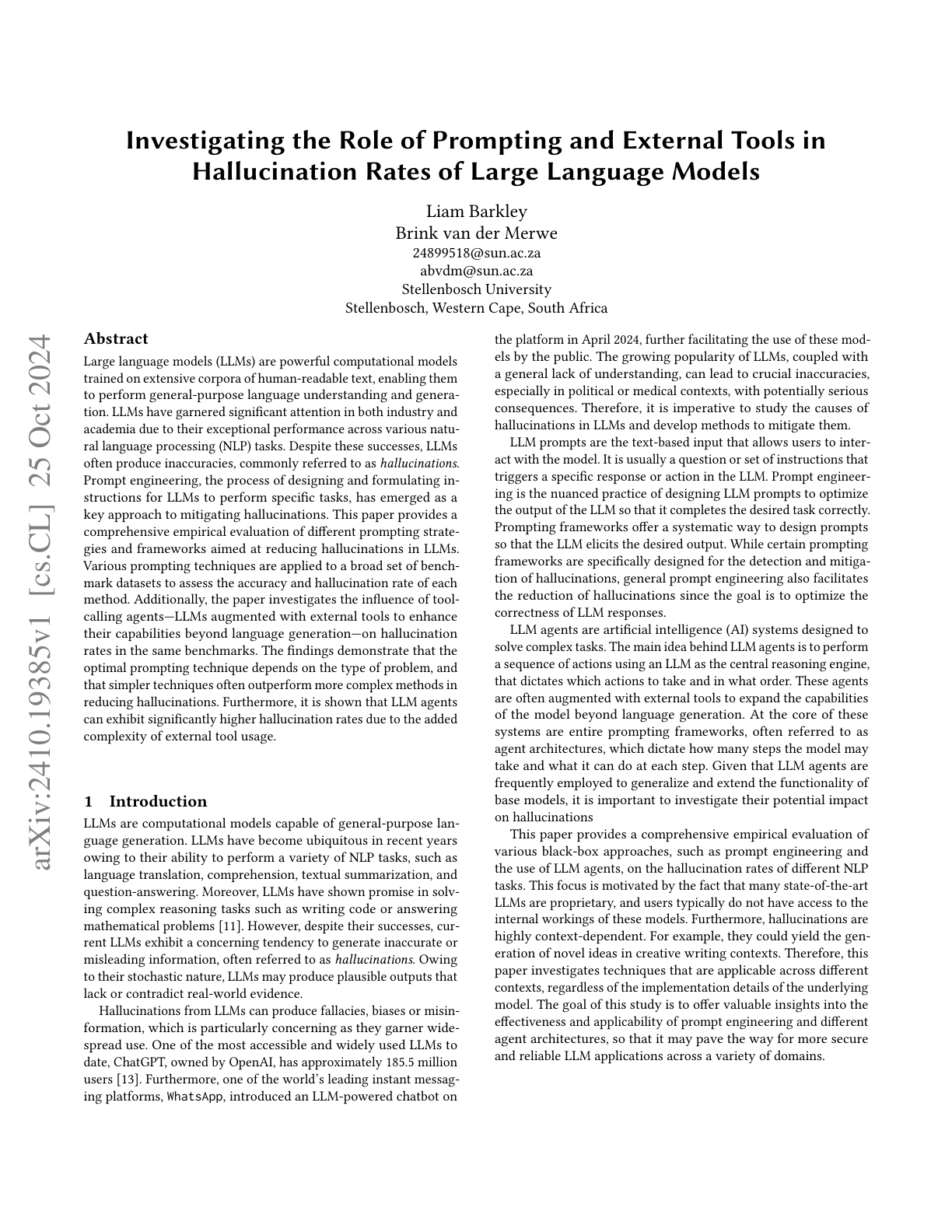
The Role of Prompting and External Tools in Hallucination Rates of LLMs
tests different prompting strategies and frameworks aimed at reducing hallucinations in LLMs; finds that simpler prompting techniques outperform more complex methods; it reports that LLM agents exhibit higher hallucination rates due to the added complexity of tool usage.
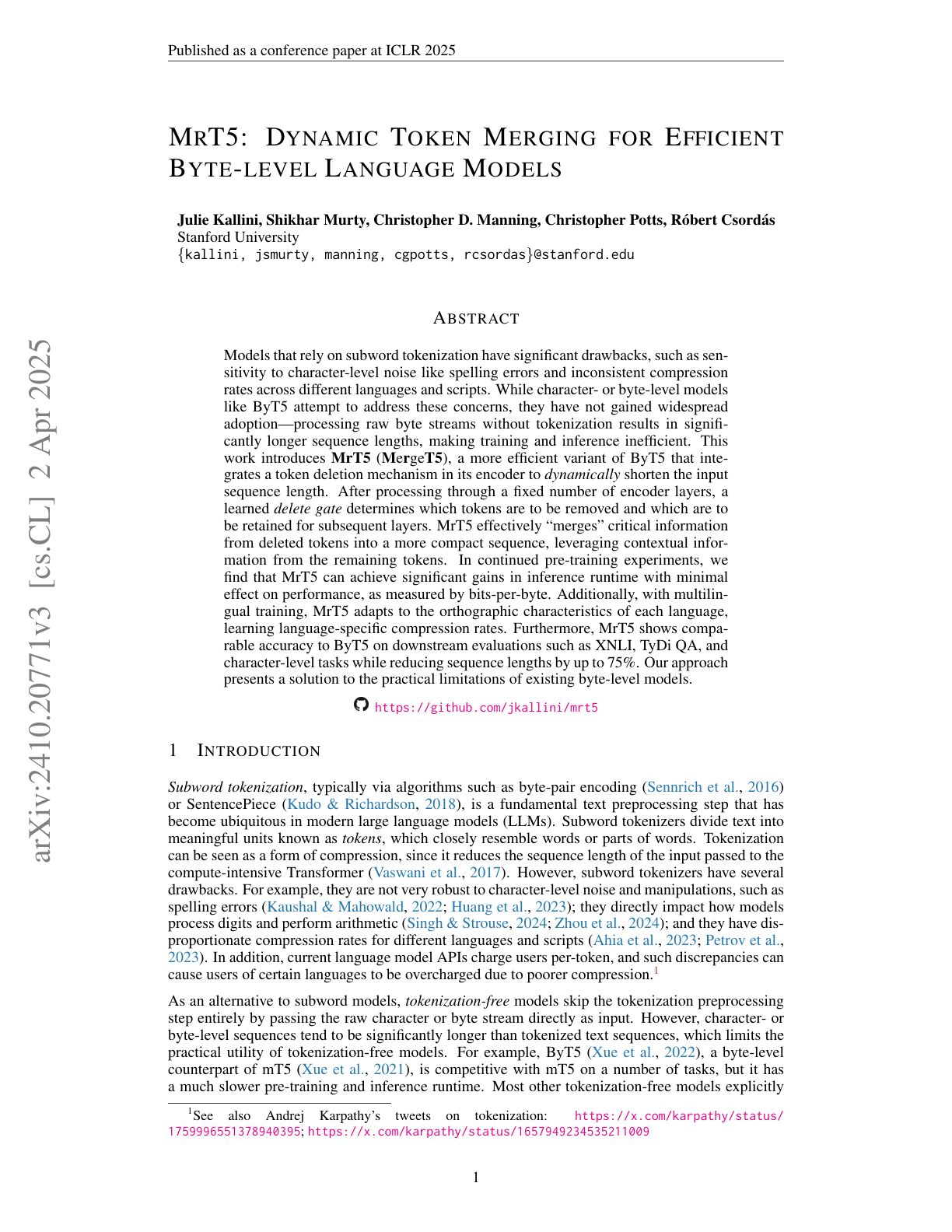
MrT5
a more efficient variant of byte-level language models that uses a dynamic token deletion mechanism (via a learned delete gate) to shorten sequence lengths by up to 80% while maintaining model performance; this enables faster inference and better handling of multilingual text without traditional tokenization; MrT5 maintains competitive accuracy with ByT5 on downstream tasks such as XNLI and character-level manipulations while improving inference runtimes.
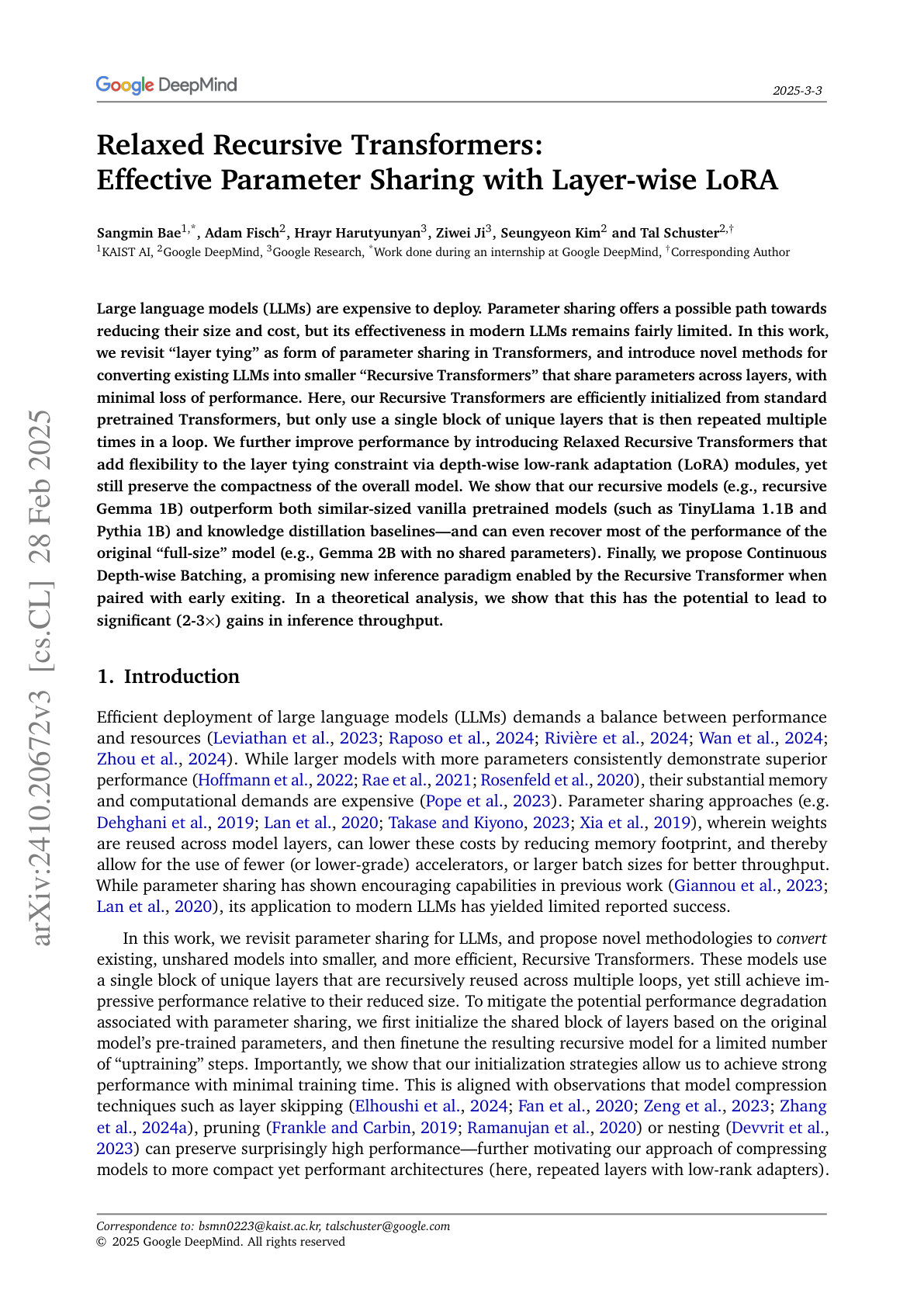
Relaxed Recursive Transformers
introduces a novel approach, Relaxed Recursive Transformer, that significantly reduces LLM size through parameter sharing across layers while maintaining performance; the model is initialized from standard pretrained Transformers, but only uses a single block of unique layers that is repeated multiple times in a loop; then it adds flexibility to the layer tying constraint via depth-wise low-rank adaptation (LoRA) modules; shows that the approach has the potential to lead to significant (2-3×) gains in inference throughput.