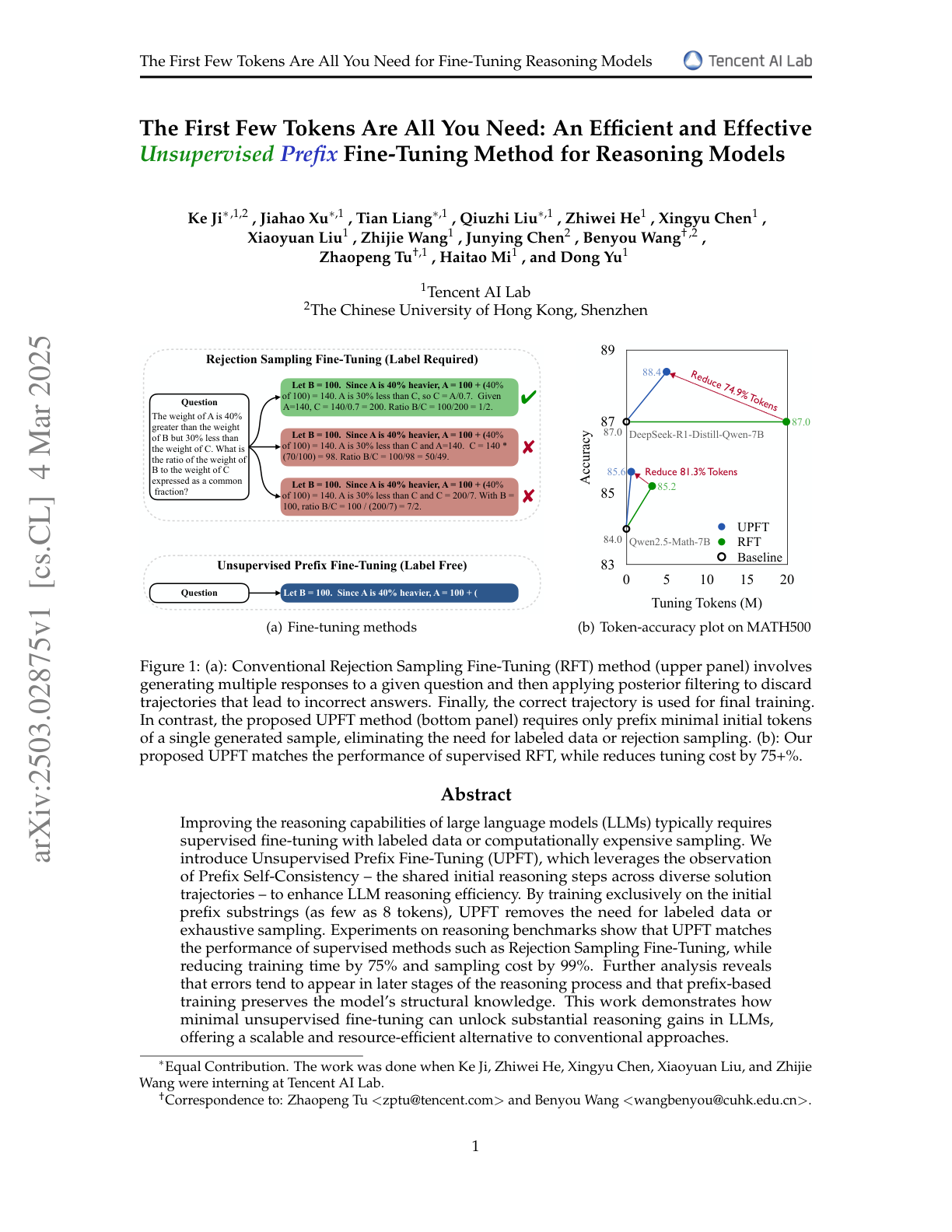
A Few Tokens Are All You Need
Researchers from Tencent AI Lab and The Chinese University of Hong Kong, Shenzhen propose a new approach to boost reasoning in LLMs by only fine-tuning on the first few tokens of generated solutions. Key ideas include:
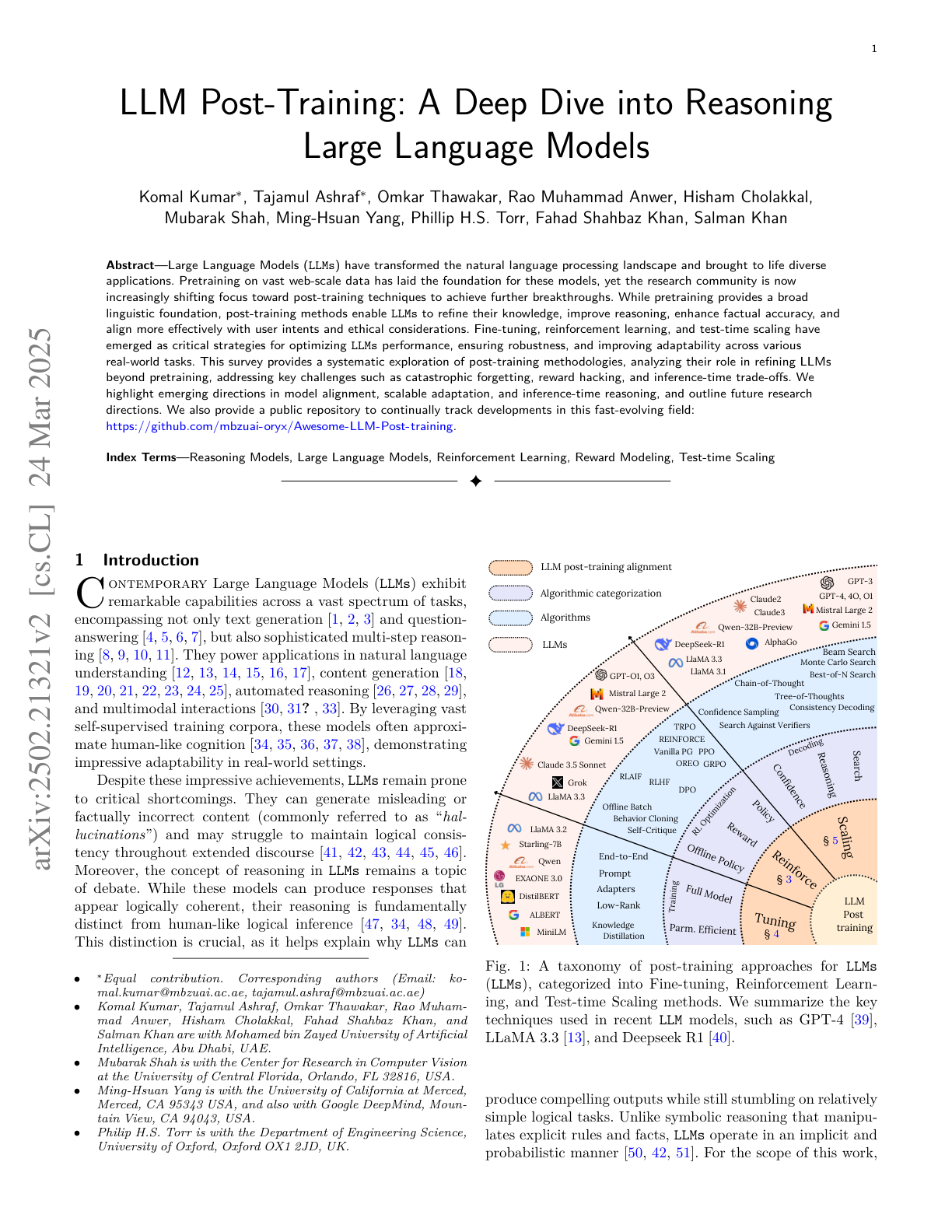
A Deep Dive into Reasoning LLMs
This survey explores how LLMs can be enhanced after pretraining through fine-tuning, reinforcement learning, and efficient inference strategies. It also highlights challenges like catastrophic forgetting, reward hacking, and ethical considerations, offering a roadmap for more capable and trustworthy AI systems.
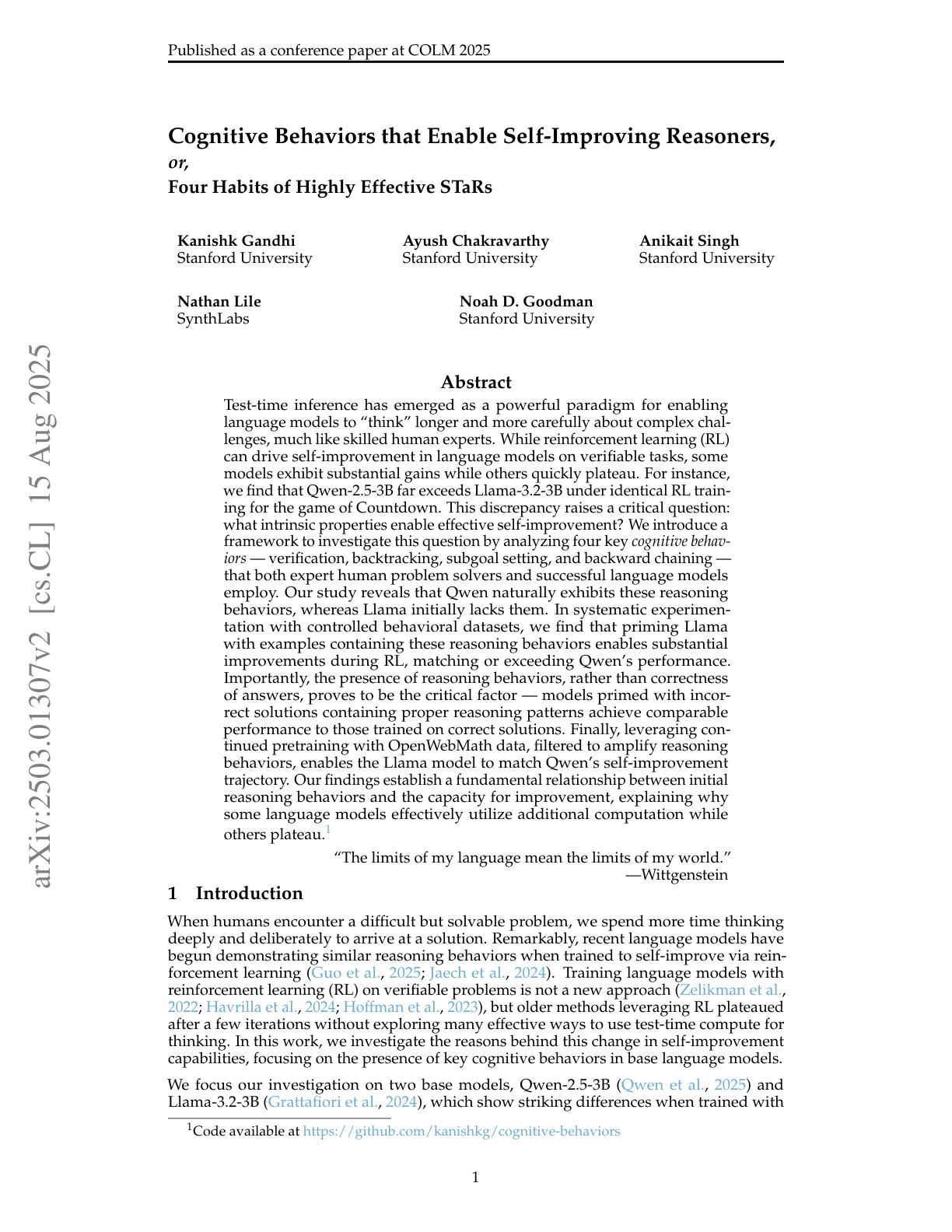
Cognitive Behaviors that Enable Self-Improving Reasoners
Researchers from Stanford University and colleagues investigate why some language models excel in reinforcement learning (RL)-based self-improvement, while others quickly plateau. The study identifies four cognitive behaviors-verification, backtracking, subgoal setting, and backward chaining-that underpin successful problem-solving in both humans and language models. Key findings:
Conversational Speech Model
Researchers from Sesame propose an end-to-end multimodal TTS approach for natural, context-aware speech in real-time conversational AI systems.
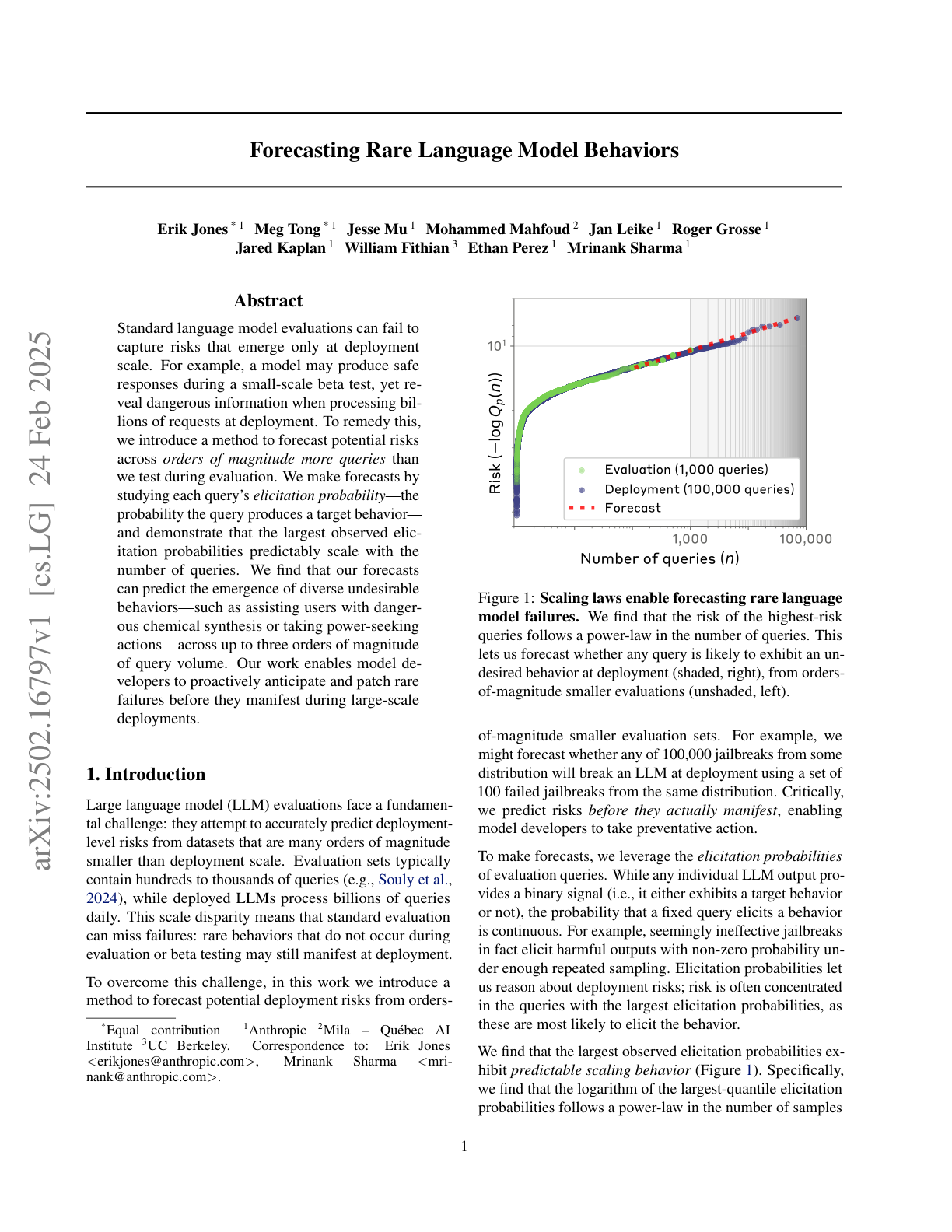
Forecasting Rare Language Model Behaviors
A team from Anthropic and collaborators introduced a method to predict "one-in-a-million" failures that might only appear at deployment scale, enabling developers to patch issues preemptively. Key insights include:

Differentiable Logic Cellular Automata
A team from Google's Paradigms of Intelligence introduces a fully discrete twist on Neural Cellular Automata (NCA) by replacing floating-point neural layers with Differentiable Logic Gate Networks. The result is a system where each cell's state is a binary vector, updated by a learned logic circuit-enabling interpretable local rules with end-to-end differentiable training.
How Well do LLMs Compress Their Own Chain-of-Thought?
This new paper investigates how LLMs balance chain-of-thought (CoT) reasoning length against accuracy. It introduces token complexity, a minimal token threshold needed for correct problem-solving, and shows that even seemingly different CoT "compression prompts" (like "use bullet points" or "remove grammar") fall on the same universal accuracy-length trade-off curve. Key highlights include:
LADDER
LADDER is a framework enabling LLMs to recursively generate and solve progressively simpler variants of complex problems-boosting math integration accuracy. Key insights include:
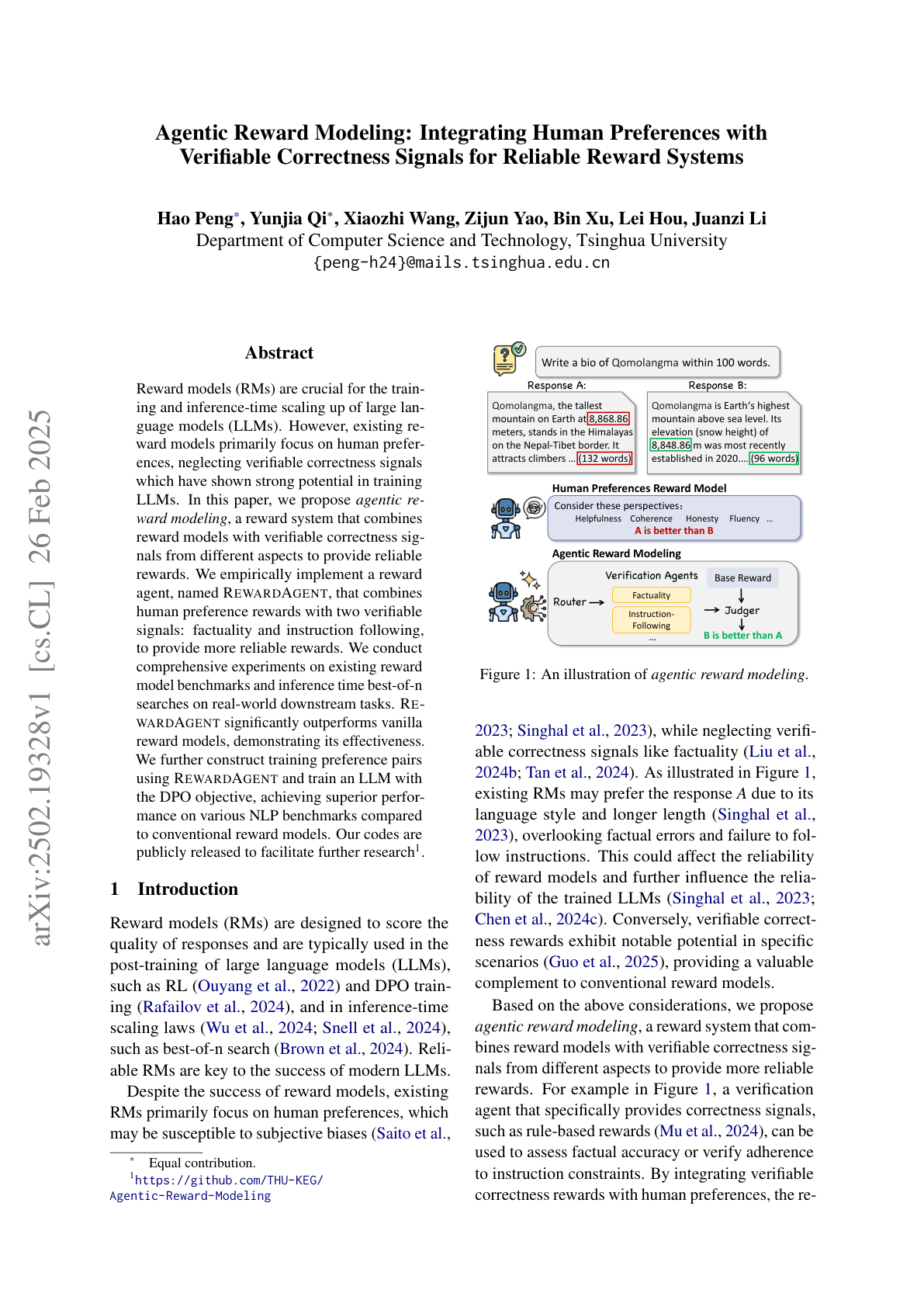
Agentic Reward Modeling
This paper proposes a new reward framework-Agentic Reward Modeling-that combines human preference models with "verifiable correctness" signals to provide more reliable rewards for training and evaluating LLMs.

Fractal Generative Models
Researchers from MIT CSAIL & Google DeepMind introduce a novel fractal-based framework for generative modeling, where entire generative modules are treated as atomic "building blocks" and invoked recursively-resulting in self-similar fractal architectures: