A Review of DeepSeek Models
This paper provides an in-depth review of the cutting-edge techniques behind DeepSeek's open-source LLMs—DeepSeek-V3 and DeepSeek-R1. These models achieve state-of-the-art performance with significantly lower resource requirements compared to proprietary counterparts. Key highlights include:
Towards Hierarchical Multi-Step Reward Models for Enhanced Reasoning in LLMs
It proposes a Hierarchical Reward Model (HRM) that addresses reward hacking and error propagation issues in fine-grained LLM reasoning. They also introduce Hierarchical Node Compression (HNC) to augment MCTS-based automatic data annotation, boosting label diversity and robustness at minimal computational cost.
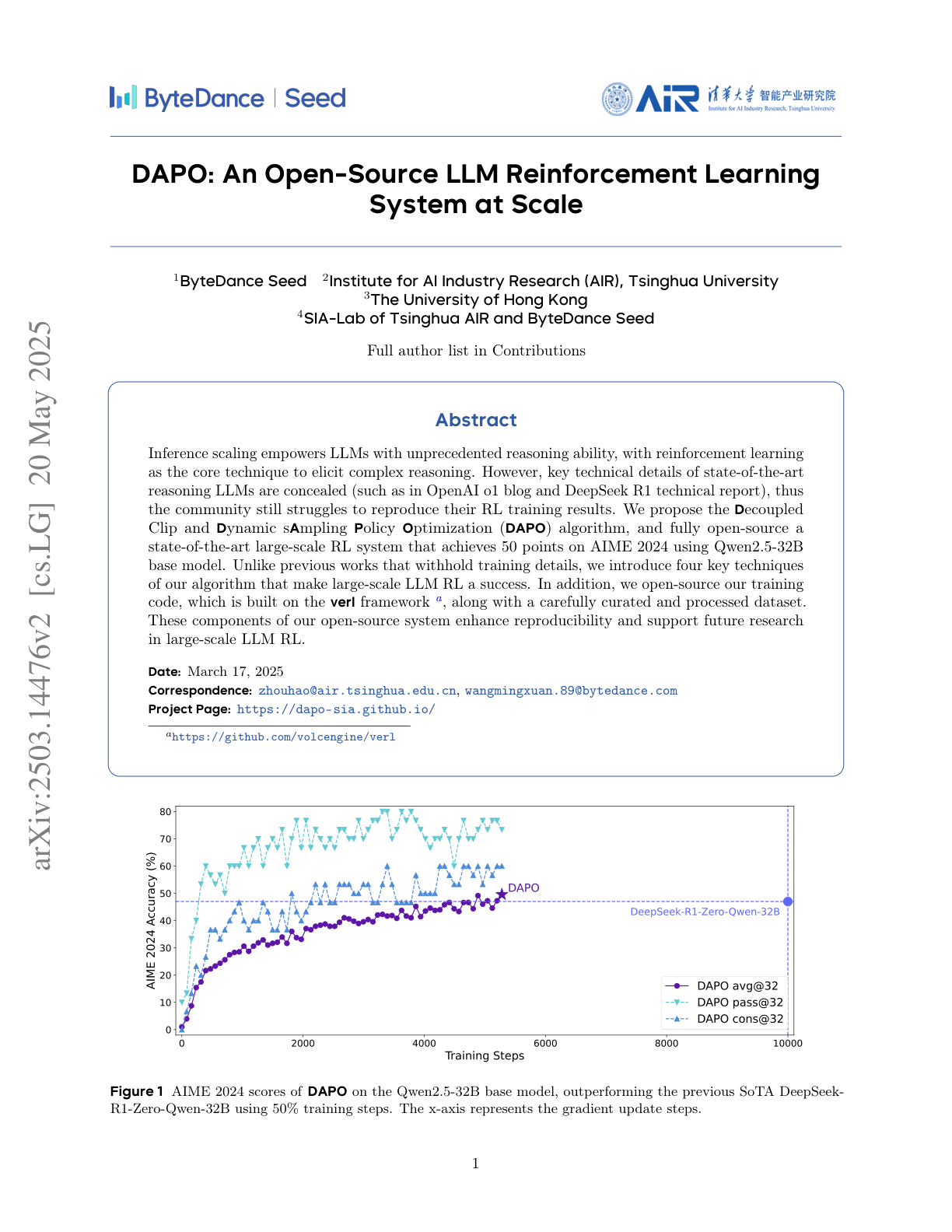
DAPO: An Open-Source LLM Reinforcement Learning System at Scale
It introduces DAPO, a fully open-source, large-scale RL system that boosts the chain-of-thought reasoning capabilities of LLMs. DAPO raises the upper clipping threshold (“Clip-Higher”) in PPO-style training, preventing entropy collapse and helping the policy explore more diverse tokens. By filtering out samples that are always correct or always wrong, DAPO focuses training on prompts with useful gradient signals, speeding up convergence in fewer updates. Instead of averaging losses at the sample level, DAPO applies policy gradients per token, making each reasoning step matter. This ensures both high-quality and length-appropriate outputs. The system masks or softly penalizes excessively long answers, preventing meaningless verbosity or repetitive text. DAPO achieves SOTA math performance on the AIME 2024 test set. Specifically, DAPO trained from a Qwen2.5-32B base achieves 50% accuracy, outperforming DeepSeek’s R1 with less training time, and showcasing open-source reproducibility at scale.
Compute Optimal Scaling of Skills
Researchers from the University of Wisconsin and Meta AI investigate how different skills (knowledge-based QA vs. code generation) exhibit contrasting optimal scaling behaviors in LLMs. Their key question: does the compute-optimal trade-off between model size and data volume depend on the type of skill being learned? Surprisingly, the answer is yes—they show distinct “data-hungry” vs. “capacity-hungry” preferences per skill. Highlights:
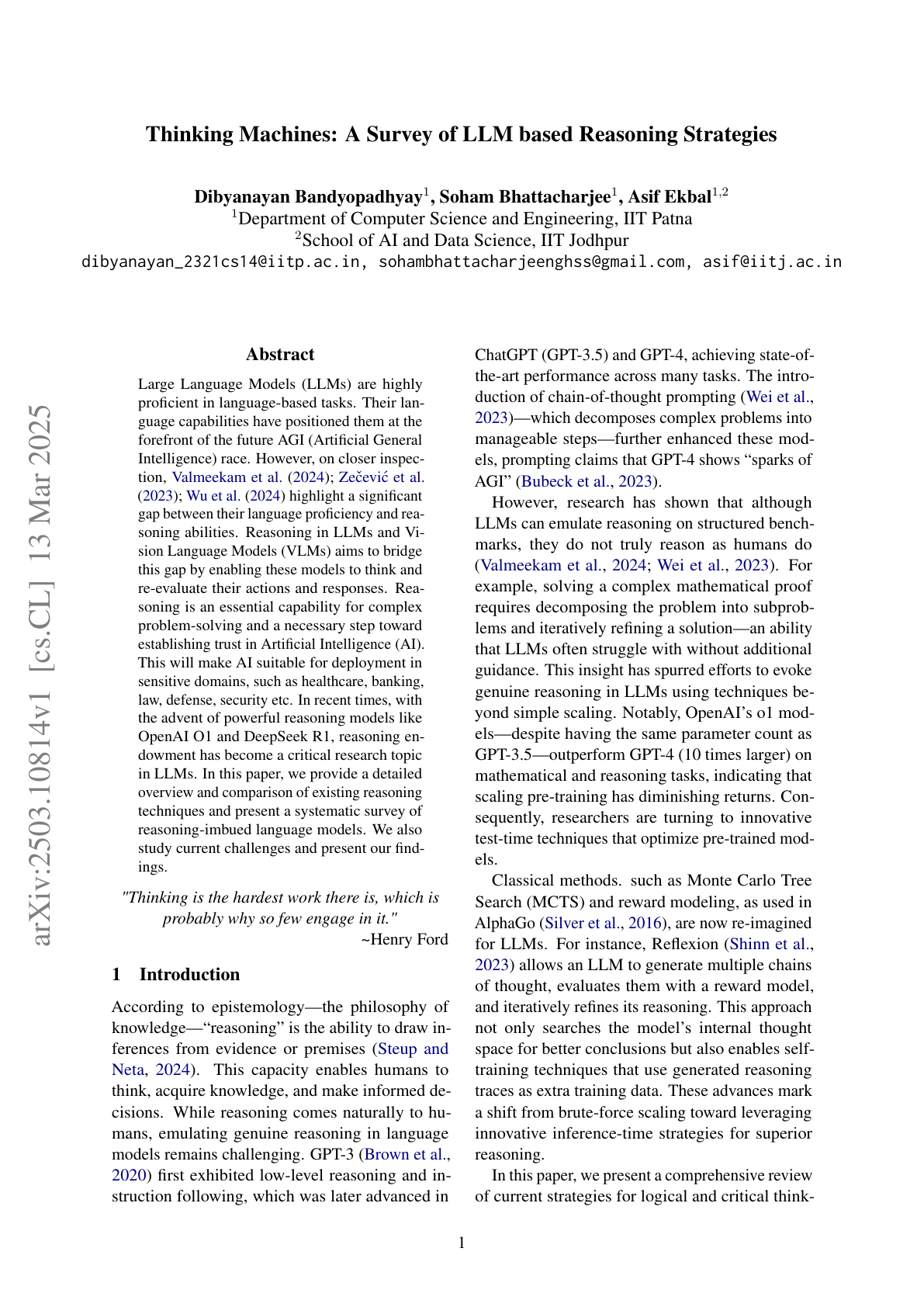
Thinking Machines
This survey provides an overview and comparison of existing reasoning techniques and presents a systematic survey of reasoning-imbued language models.
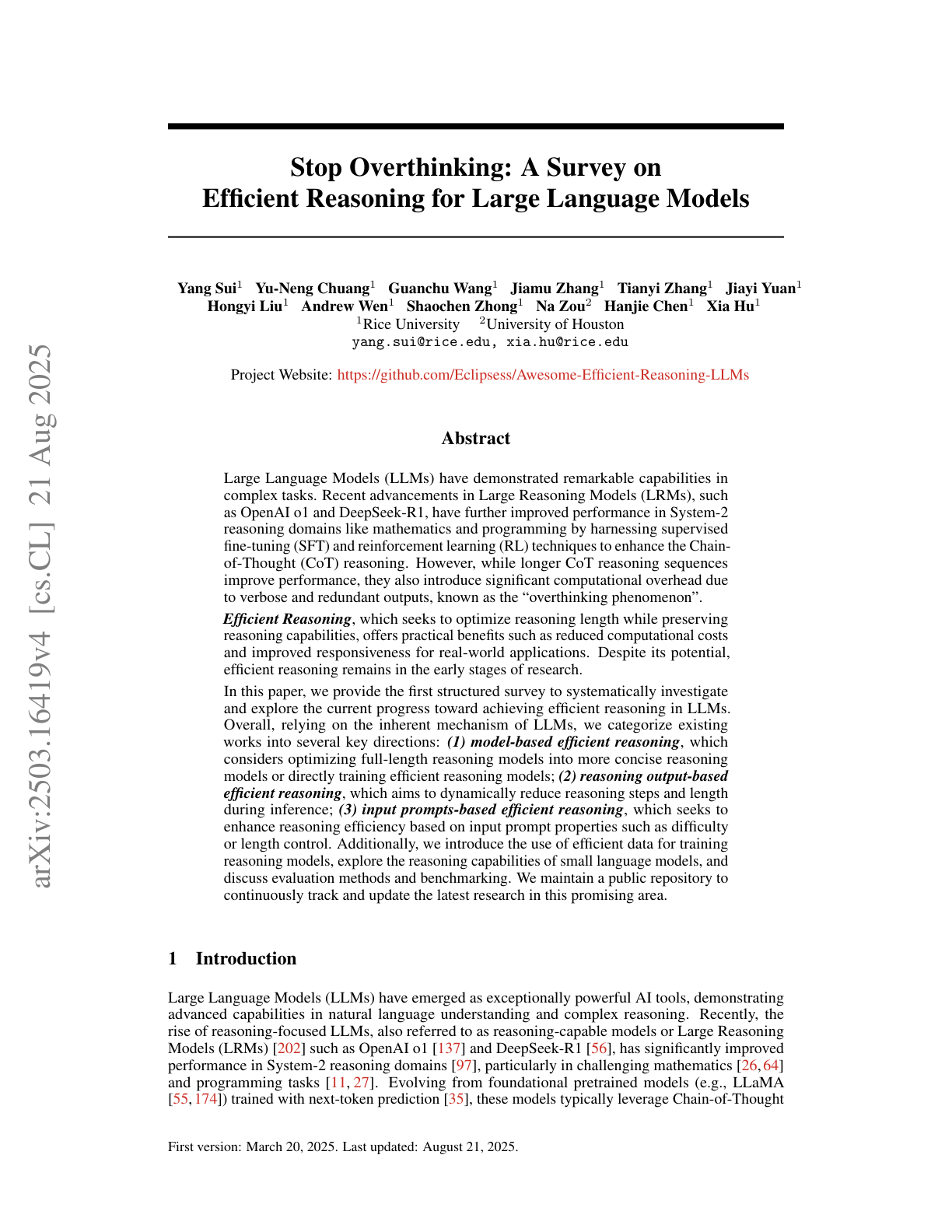
A Survey on Efficient Reasoning
This new survey investigates techniques to address the "overthinking phenomenon" in Large Reasoning Models (LRMs), categorizing existing methods into model-based optimizations, output-based reasoning reductions, and prompt-based efficiency enhancements. The survey highlights ongoing efforts to balance reasoning capability and computational efficiency in models like OpenAI o1 and DeepSeek-R1.
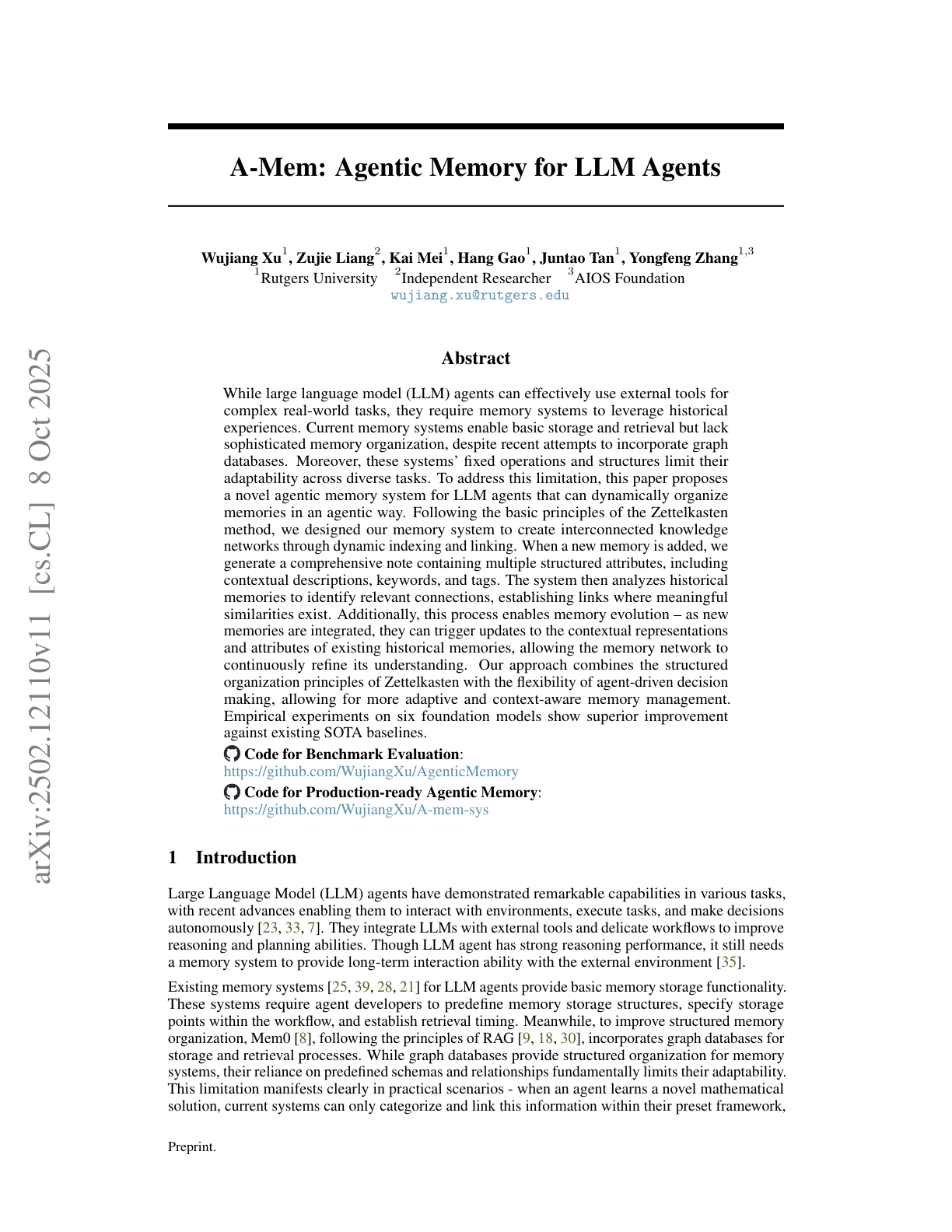
Agentic Memory for LLM Agents
Researchers from Rutgers University and Ant Group propose a new agentic memory system for LLM agents, addressing the need for long-term memory in complex real-world tasks. Key highlights include:
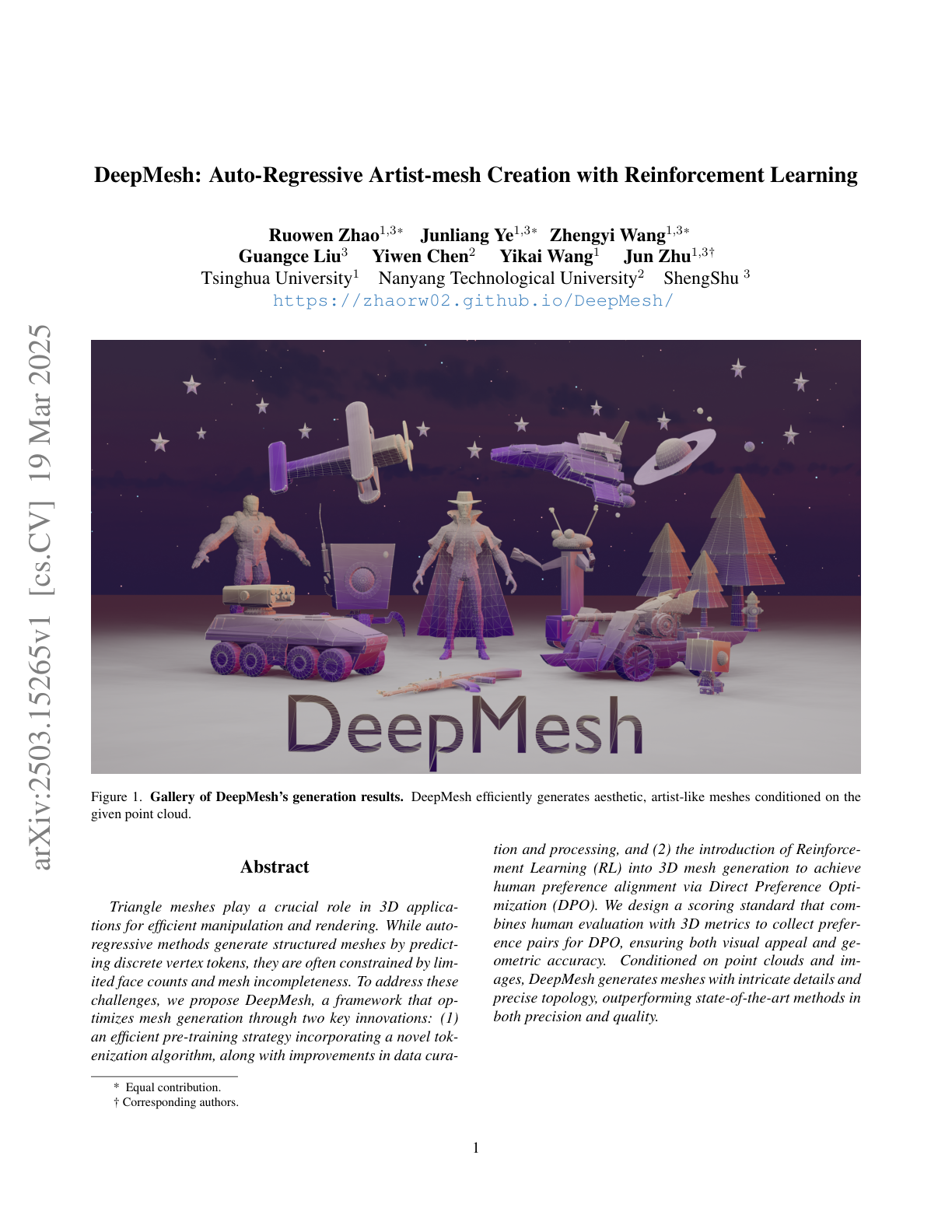
DeepMesh
Researchers from Tsinghua University, Nanyang Technological University, and ShengShu propose DeepMesh, a transformer-based system that generates high-quality 3D meshes with artist-like topology. Key ideas include:
Deep Learning is Not So Mysterious or Different
Andrew Gordon Wilson (New York University) argues that deep learning phenomena such as benign overfitting, double descent, and the success of overparametrization are neither mysterious nor exclusive to neural networks. Major points include:
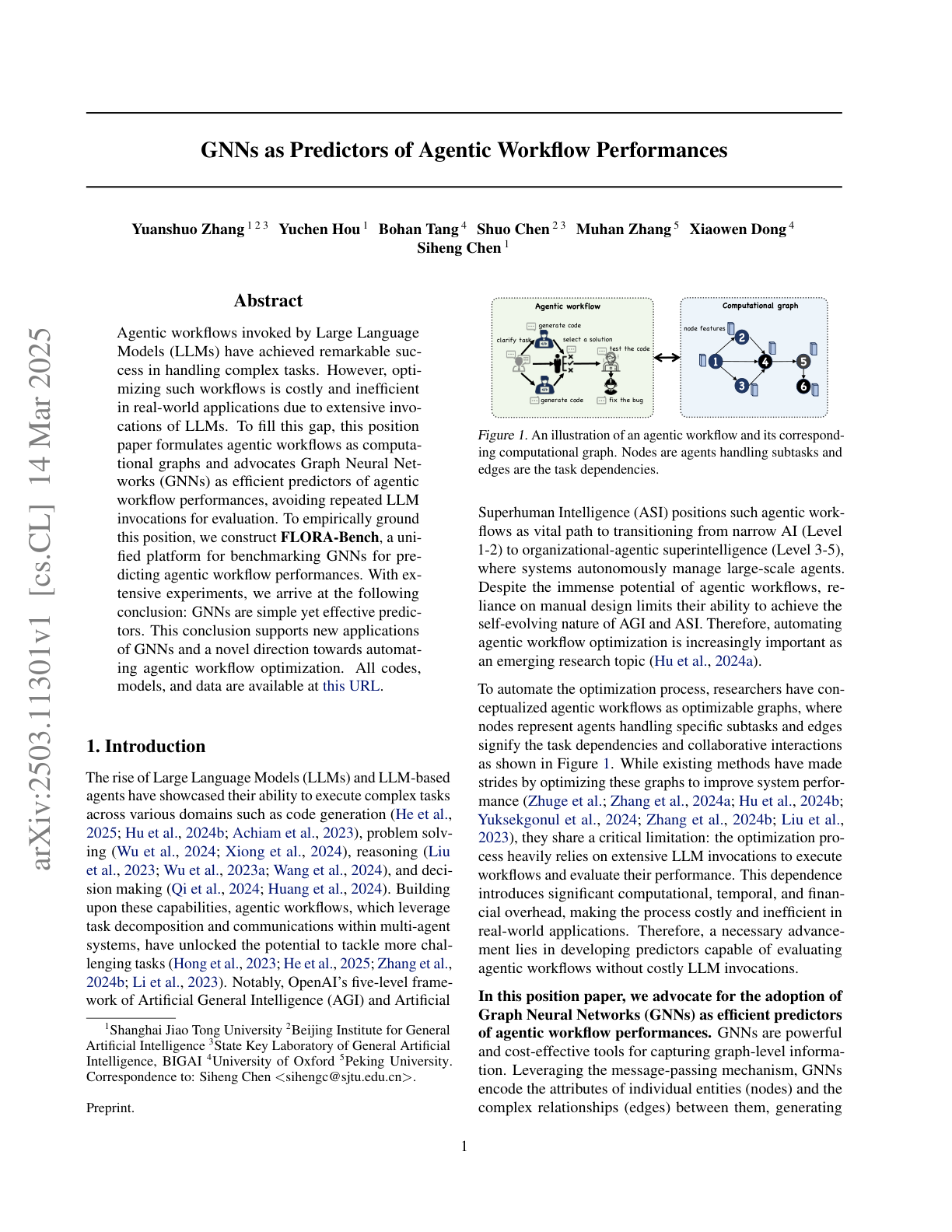
GNNs as Predictors of Agentic Workflow Performances
This work introduces FLORA-Bench, a large-scale benchmark to evaluate GNN-based predictors for automating and optimizing agentic workflows. It shows that Graph Neural Networks can efficiently predict the success of multi-agent LLM workflows, significantly reducing costly repeated model calls.