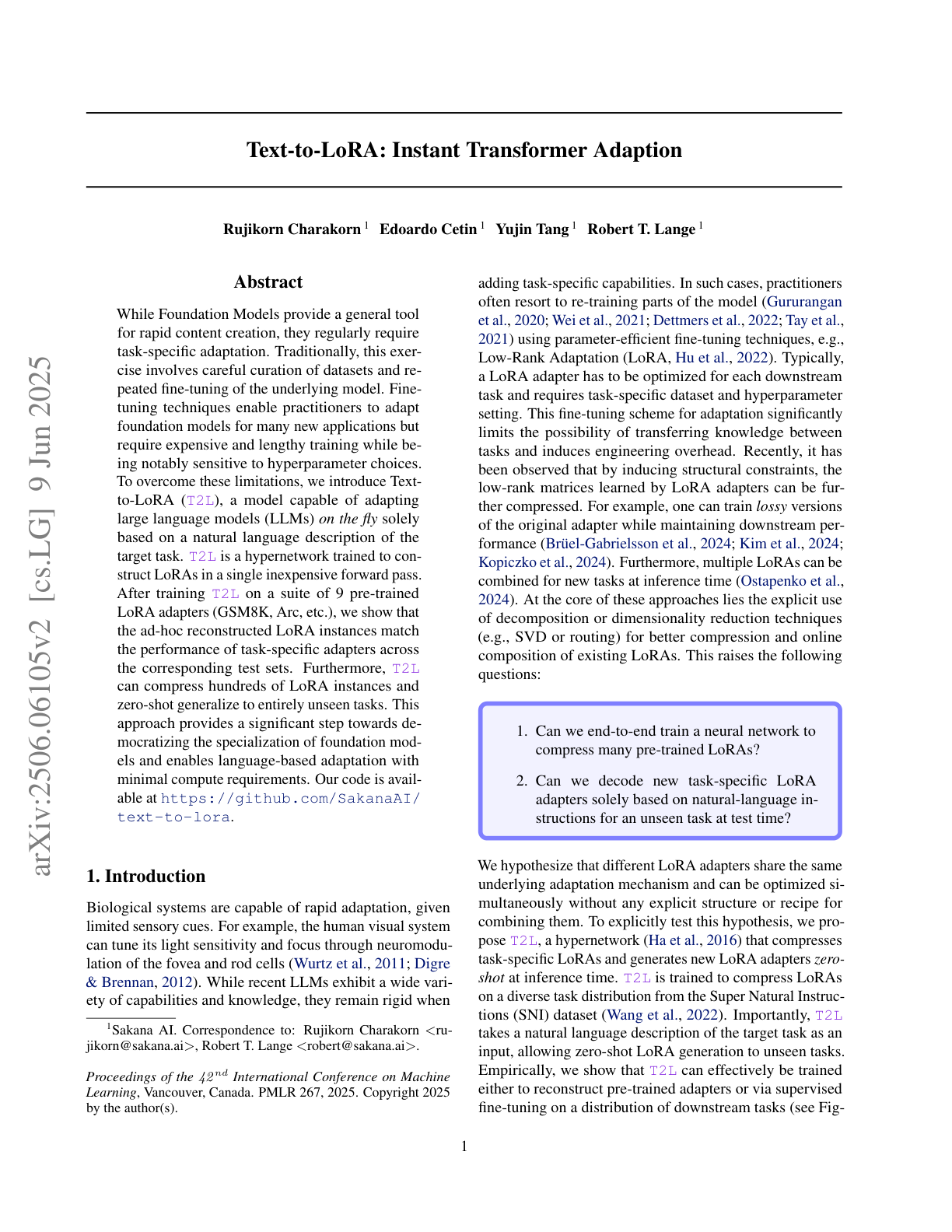
Text-to-LoRA
Introduces a hypernetwork-based approach for instantly generating LoRA adapters from natural language task descriptions, removing the need for conventional task-specific fine-tuning. The authors present Text-to-LoRA (T2L), a model that compresses many LoRA adapters and generalizes to unseen tasks with high efficiency and strong performance.
V-JEPA 2
Meta AI introduces V-JEPA 2, a scalable joint-embedding predictive architecture for self-supervised video learning, targeting the goal of building a generalist world model capable of understanding, predicting, and planning in the physical world. The model is trained in two stages: action-free pretraining on 1M+ hours of internet videos and images, followed by post-training with only 62 hours of unlabeled robot trajectories (Droid dataset). This yields a latent video representation that is useful across a broad range of downstream tasks.
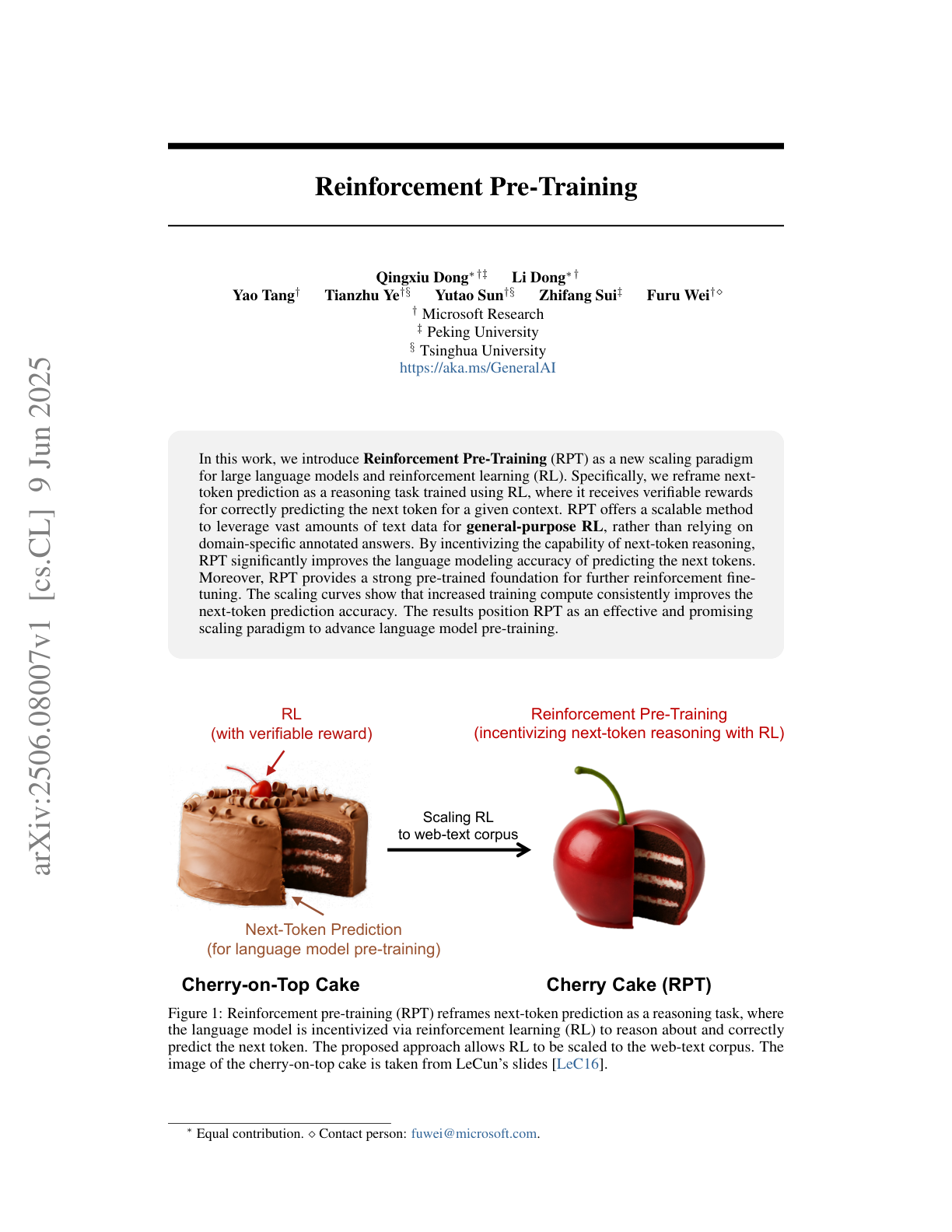
Reinforcement Pre-Training
This paper introduces Reinforcement Pre-Training (RPT), a new paradigm that bridges LLM pretraining and RL by reinterpreting next-token prediction as a reasoning task rewarded via verifiable correctness. Instead of relying on hand-curated annotations or costly human feedback, RPT applies RL on vast unannotated text corpora, assigning intrinsic rewards based on whether a predicted token matches the ground truth. This reframing supports general-purpose RL scaling and enhances both pretraining and fine-tuning efficacy.
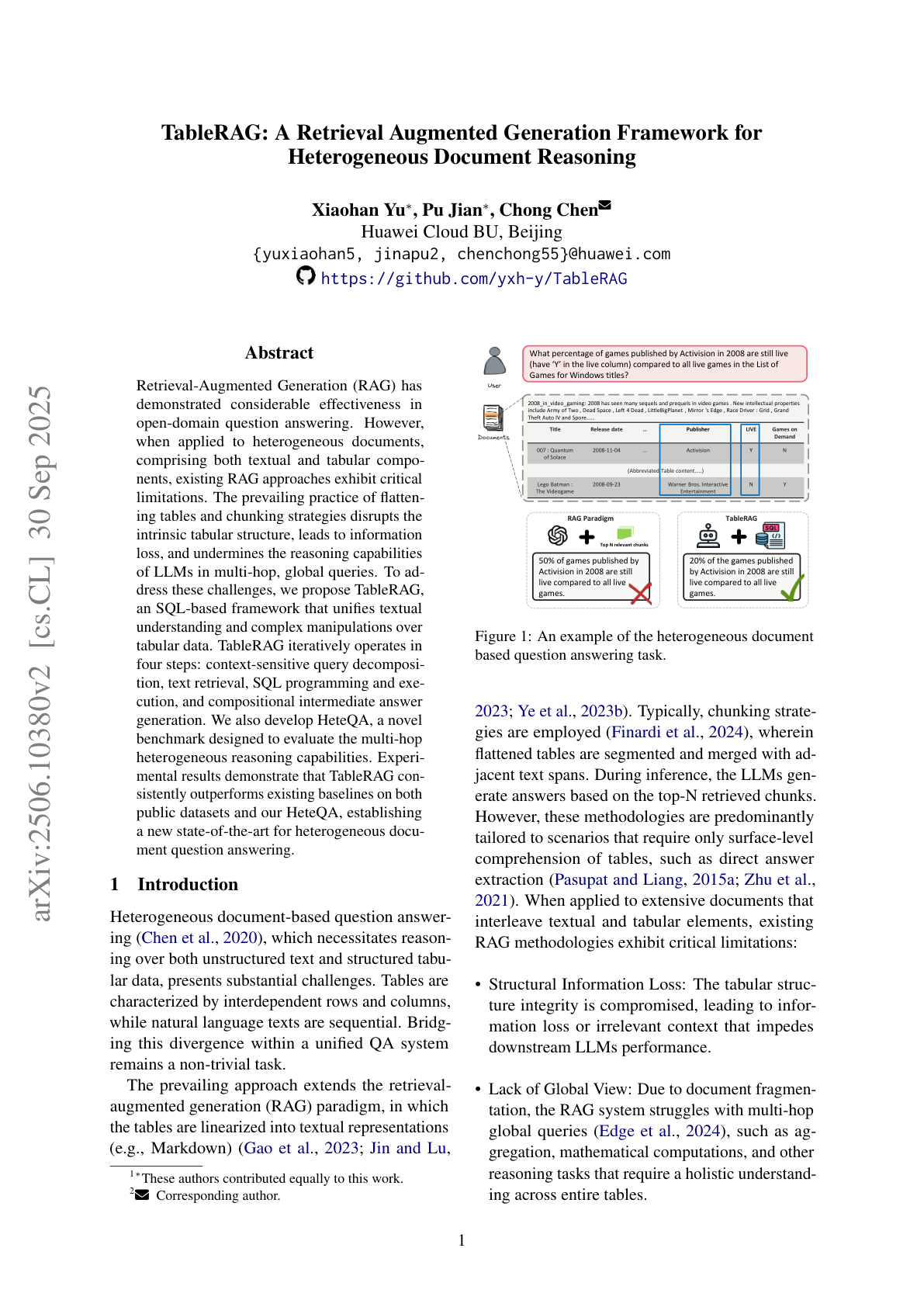
TableRAG
TableRAG tackles a core limitation of existing RAG approaches: their inability to reason effectively over heterogeneous documents that combine both unstructured text and structured tables. Typical RAG pipelines flatten tables and intermix them with surrounding text, losing essential structural information and hampering multi-hop reasoning. TableRAG overcomes this by introducing a hybrid system that integrates SQL-based symbolic execution with text retrieval in a unified, iterative reasoning framework.
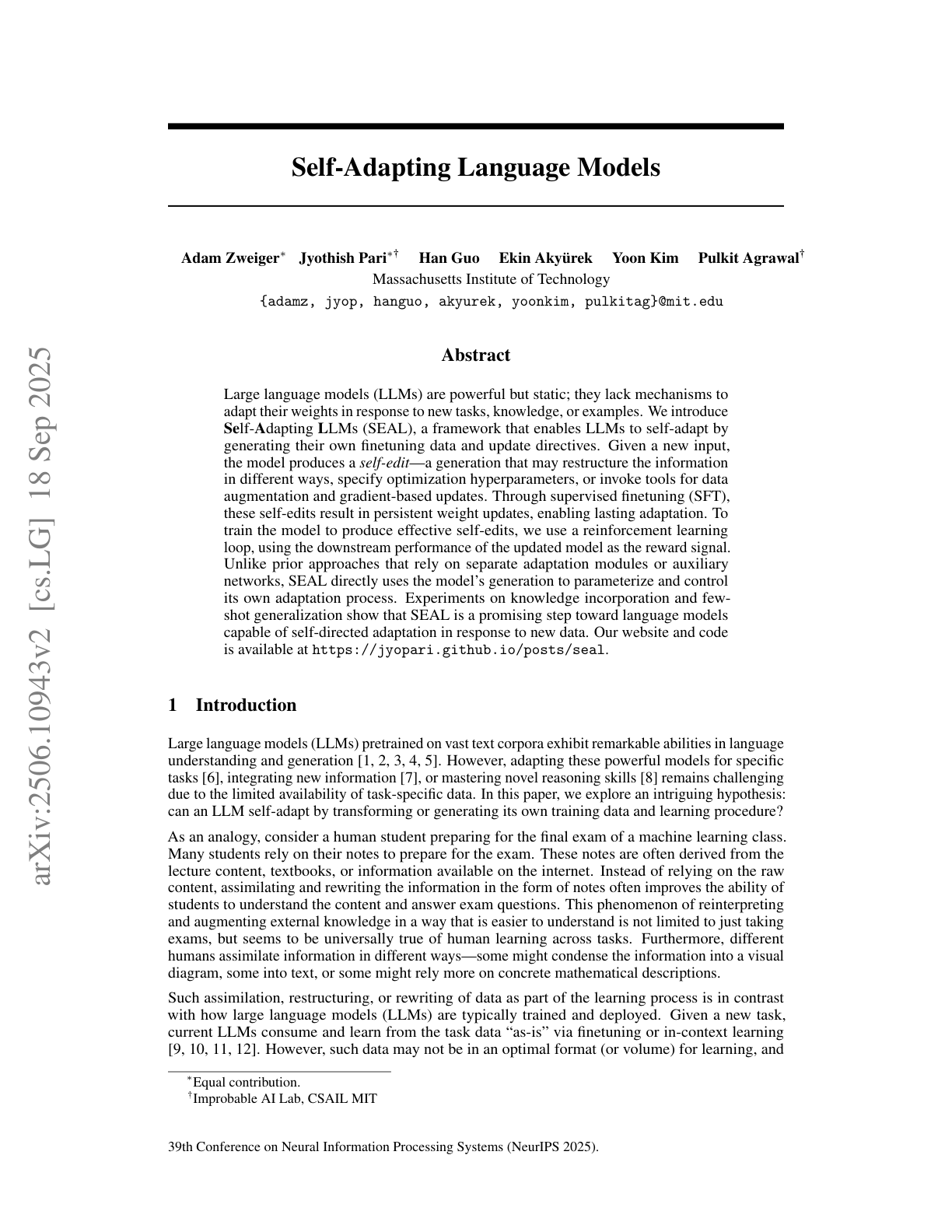
Self-Adapting Language Models
It proposes a novel framework that enables LLMs to adapt themselves through reinforcement learning by generating their own fine-tuning data and update directives, referred to as “self-edits.” This approach allows models to autonomously optimize their learning process, without relying on separate adaptation modules or human supervision. Key highlights:
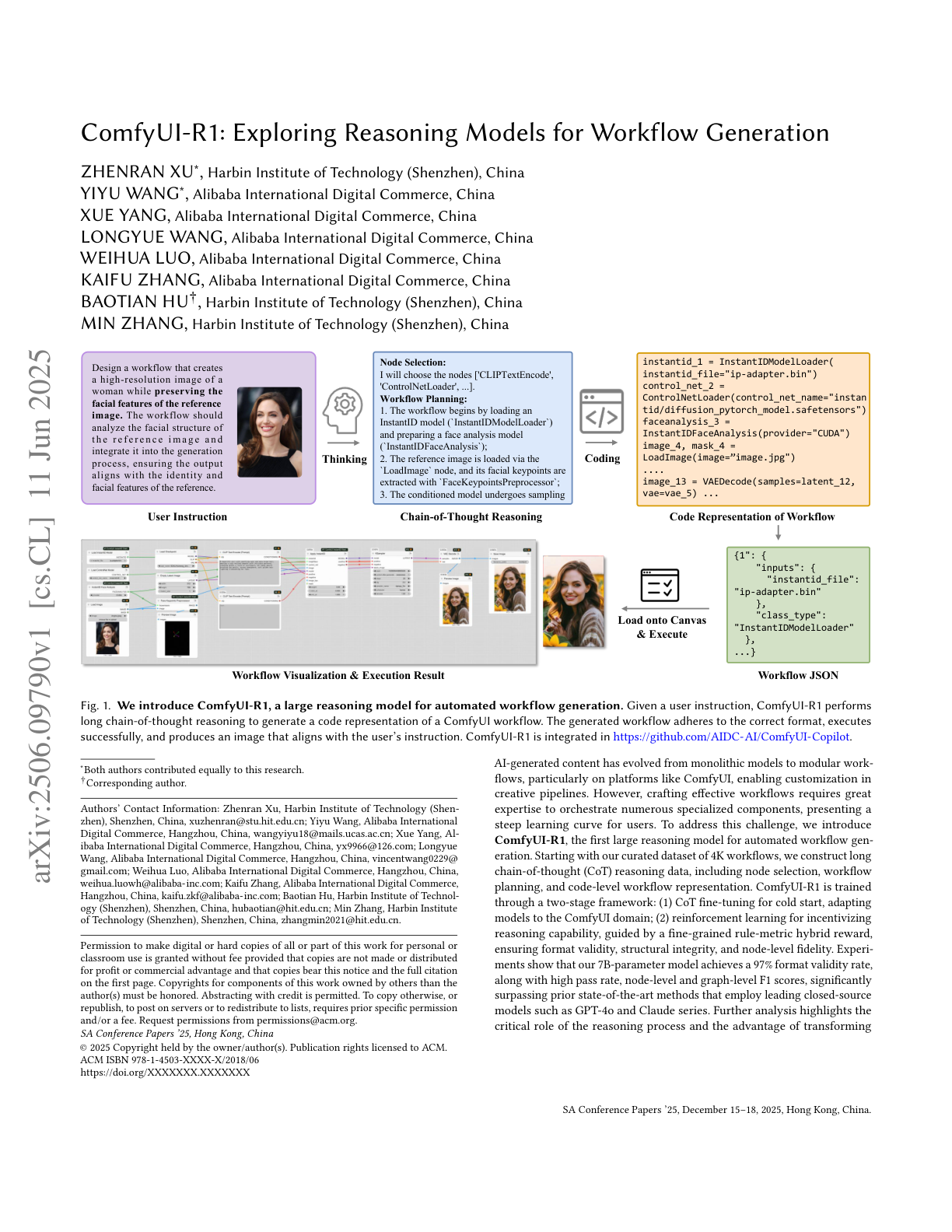
ComfyUI-R1
Introduces ComfyUI-R1, a 7B-parameter large reasoning model fine-tuned for automatic workflow generation in the ComfyUI ecosystem. Built on Qwen2.5-Coder and trained through a two-stage pipeline (supervised chain-of-thought reasoning followed by reinforcement learning), ComfyUI-R1 significantly outperforms prior state-of-the-art approaches that rely on commercial models like GPT-4o and Claude 3.5. Key highlights:
Magistral
Mistral introduces Magistral, its first reasoning-focused LLM line, alongside a custom RL training stack that enables pure reinforcement learning from scratch. In contrast to prior approaches that rely on distillation from teacher models, Magistral trains directly using online RL with text-only data and custom reward shaping. The work yields two open models: Magistral Medium (based on Mistral Medium 3) and the open-sourced Magistral Small (24B), which is bootstrapped via SFT on Medium’s outputs, followed by RL. Key insights:
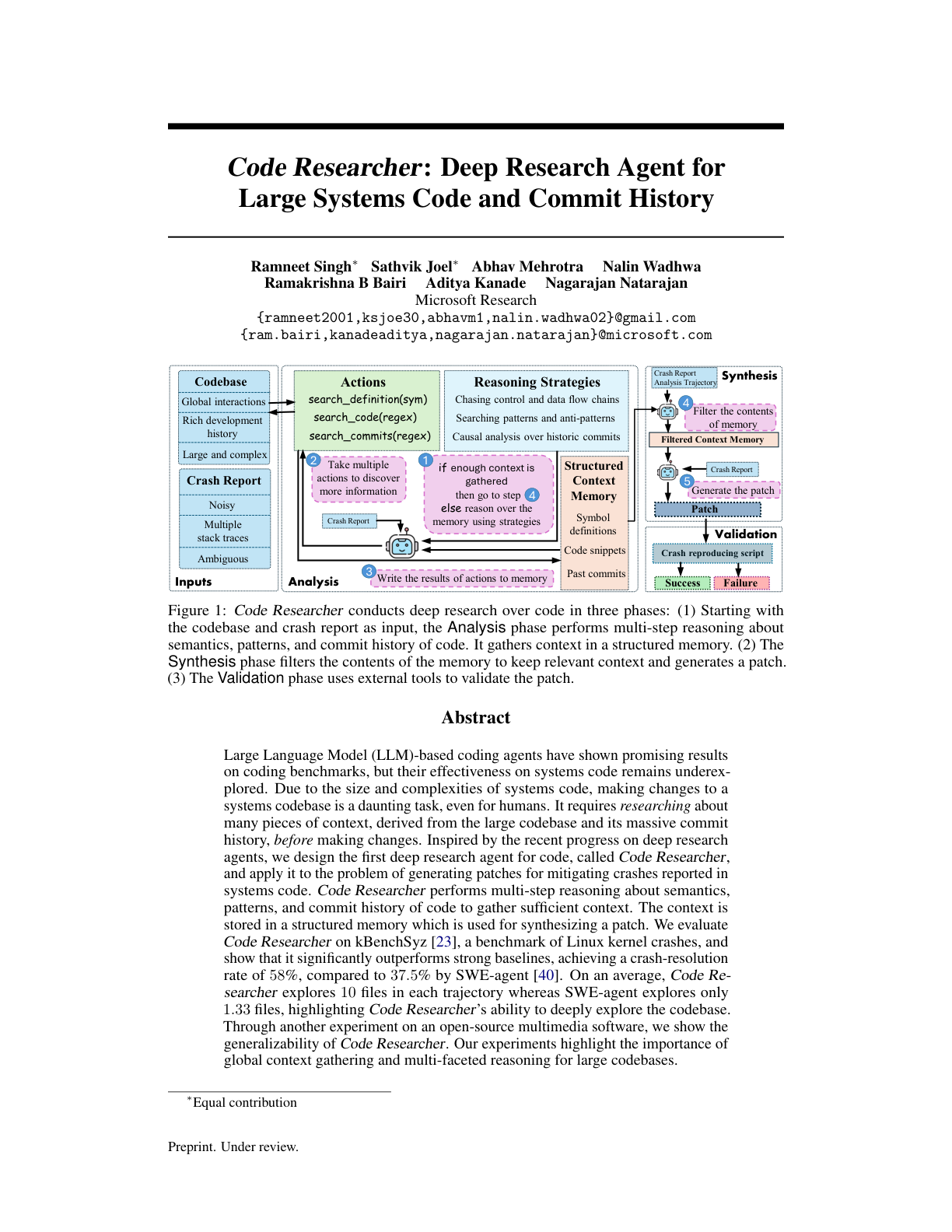
Code Researcher
Code Researcher is a deep research agent designed to resolve complex bugs in large systems’ code by leveraging multi-step reasoning over semantics, patterns, and commit history. It significantly outperforms existing coding agents like SWE-agent on benchmarks like kBenchSyz, achieving a 58% crash-resolution rate by effectively gathering and filtering global context before generating and validating patches.
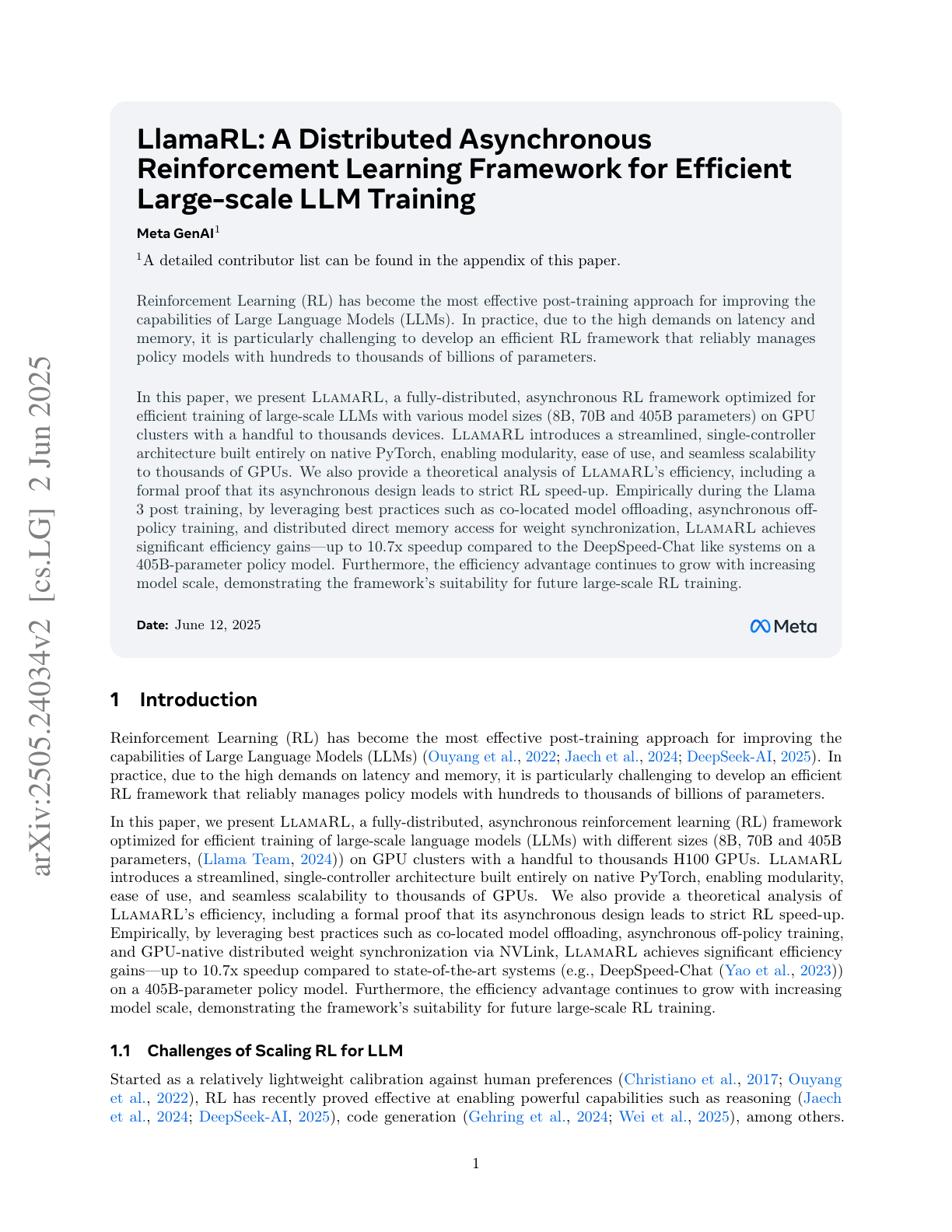
LLamaRL
LlamaRL is a fully-distributed, asynchronous reinforcement learning framework designed for efficient large-scale LLM training (8B to 405B+ models). It achieves up to 10.7× speedup over DeepSpeed-Chat by combining co-located model offloading, asynchronous off-policy training (AIPO), and fast GPU-native weight sync (DDMA), while maintaining model quality across tasks like math reasoning.
Predicting a Cyclone’s Track with AI
Google DeepMind's Weather Lab debuts an interactive platform featuring an AI cyclone forecasting model that generates 50 ensemble scenarios up to 15 days ahead, outperforming traditional systems in track and intensity predictions. It integrates live and historical forecasts with baselines for evaluation and is now used by agencies like the U.S. National Hurricane Center to support early warnings.