AlphaEarth Foundations
AlphaEarth Foundations (AEF) introduces a task-agnostic geospatial foundation model that learns a compact, time-continuous embedding field of Earth’s surface. AEF is designed to produce accurate, high-resolution (10m²) map representations from sparse geolocated labels and remote sensing data. Its key innovation lies in producing universal, analysis-ready embeddings that outperform both traditional feature engineering methods and other learned approaches across diverse mapping tasks.
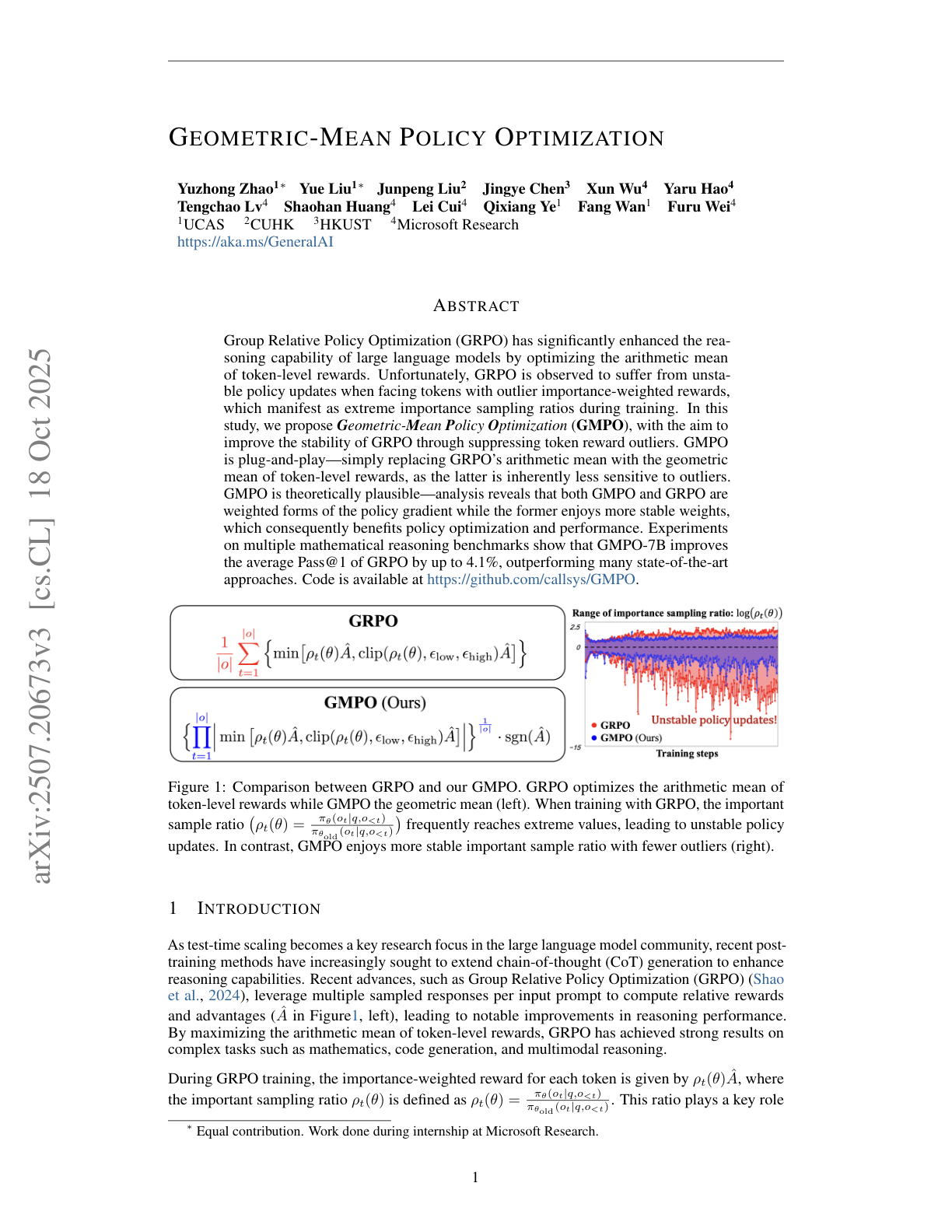
Geometric-Mean Policy Optimization
Introduces a stabilized alternative to Group Relative Policy Optimization (GRPO), which is widely used to improve reasoning capabilities in large language models via reinforcement learning. GRPO optimizes the arithmetic mean of token-level rewards but suffers from training instability due to extreme importance sampling ratios. GMPO addresses this by instead maximizing the geometric mean of token-level rewards, leading to more stable updates.
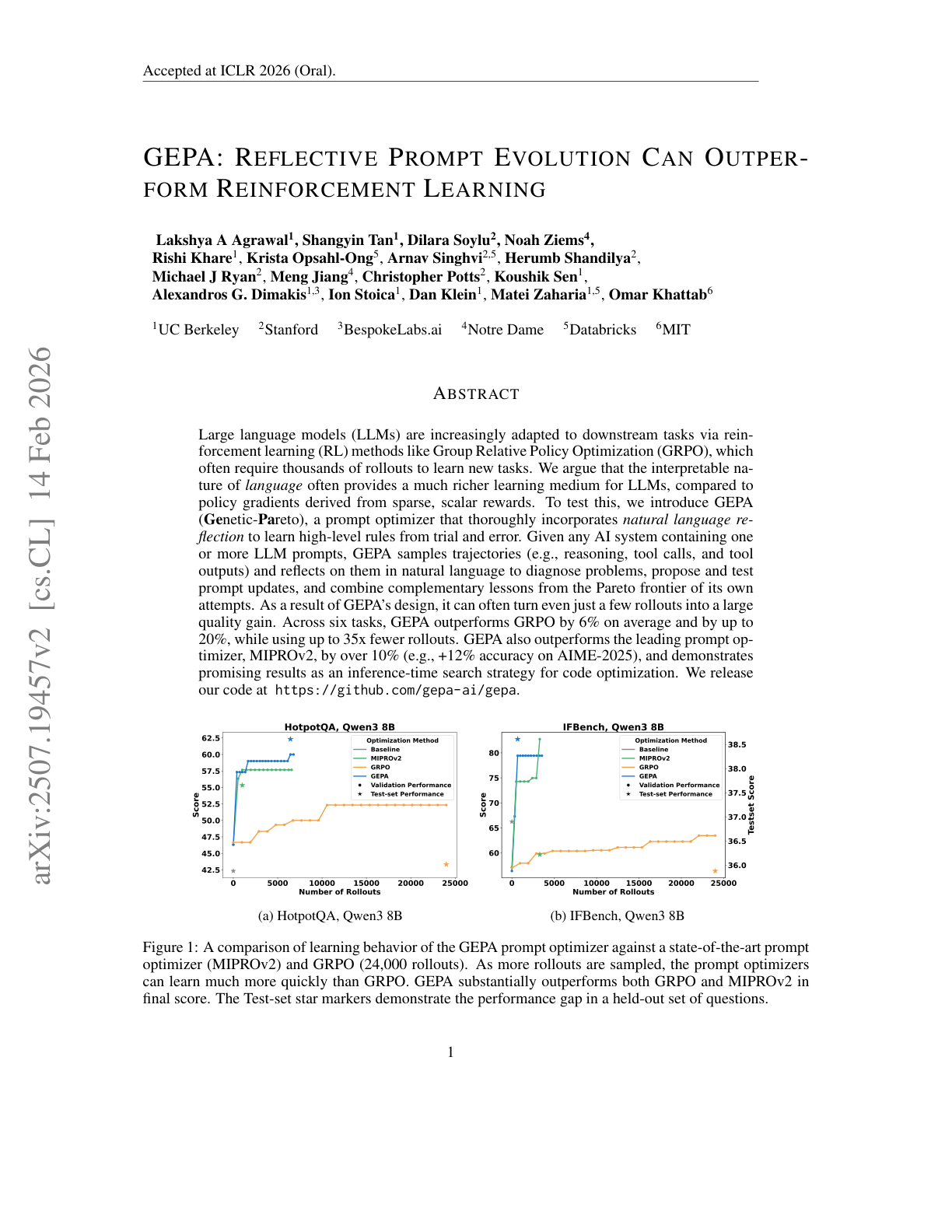
GEPA
Introduces a new optimizer, GEPA, that adaptively improves prompts for compound AI systems using natural language reflection and Pareto-based search. Rather than relying on reward gradients from traditional RL, GEPA explicitly reasons over LLM execution traces and feedback to evolve better prompts, dramatically increasing sample efficiency and final performance.
Group Sequence Policy Optimization
This paper introduces GSPO, a new RL algorithm designed to improve the training of large language models, particularly under high compute and long-sequence regimes. Unlike GRPO, which applies token-level importance weights, GSPO performs optimization entirely at the sequence level, aligning the unit of reward with the unit of optimization to resolve instability and inefficiency in large-scale RL training.
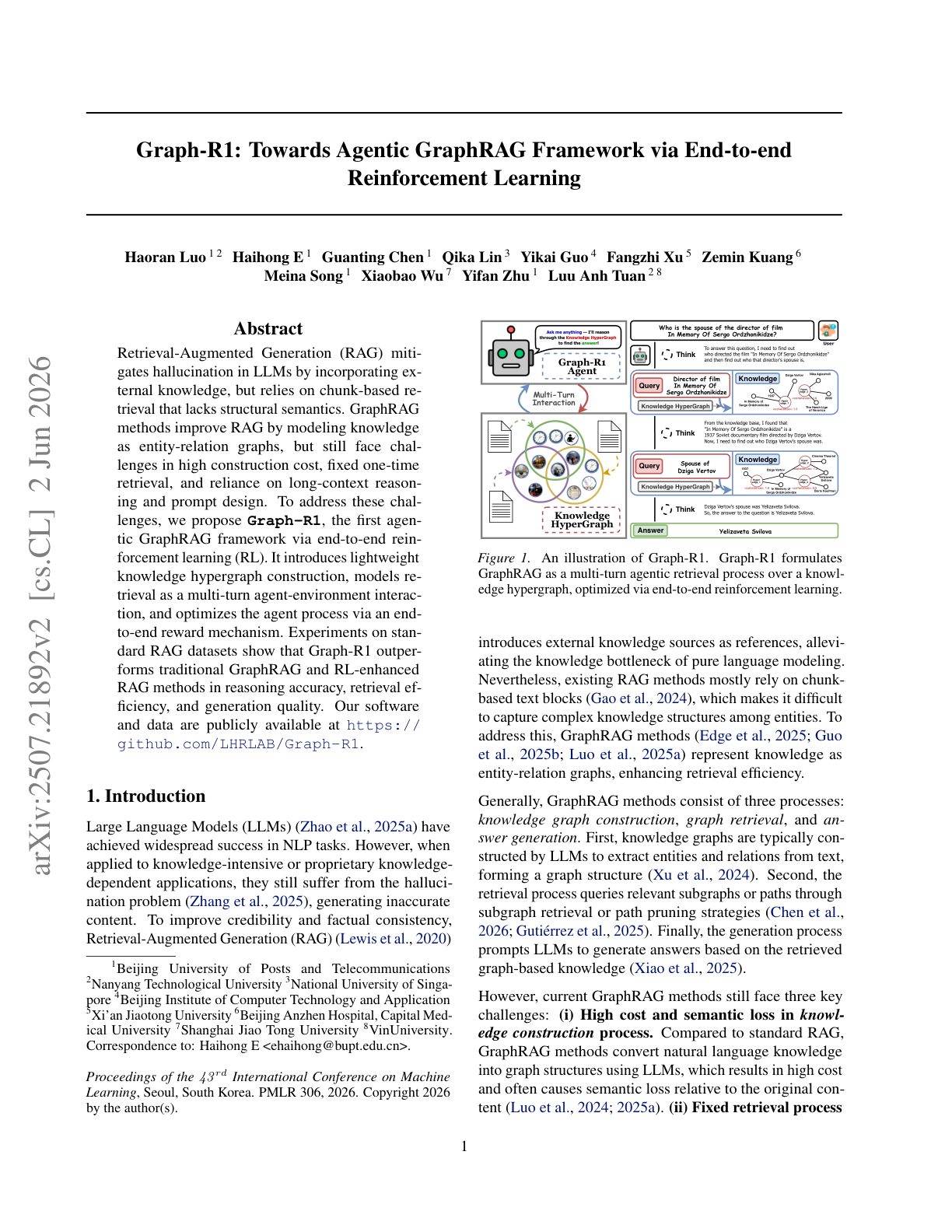
Graph-R1
Introduces a novel RAG framework that moves beyond traditional one-shot or chunk-based retrieval by integrating graph-structured knowledge, agentic multi-turn interaction, and RL. The core goal is to improve factual accuracy, retrieval efficiency, and reasoning quality in knowledge-intensive tasks.
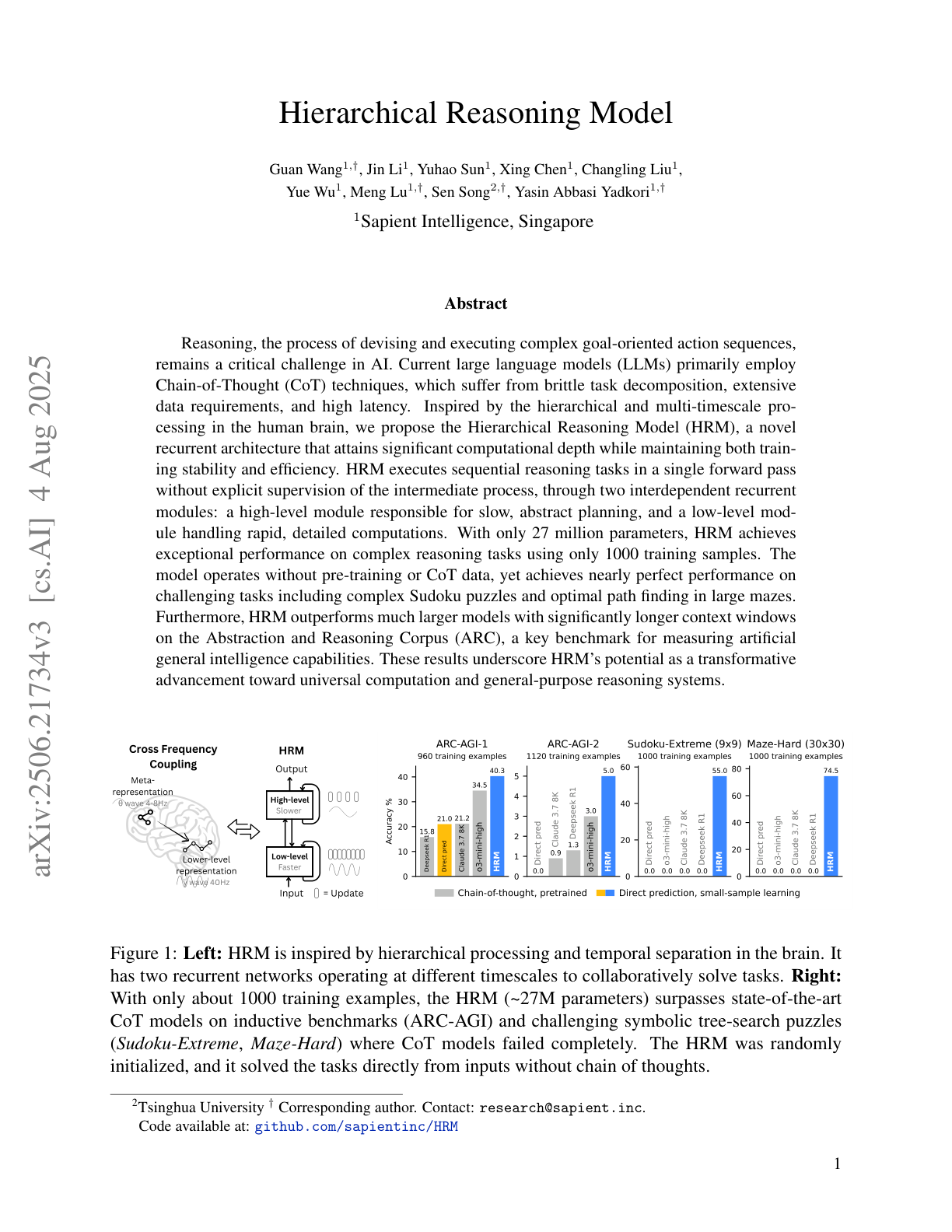
Hierarchical Reasoning Model
Hierarchical Reasoning Model (HRM) is a novel, brain-inspired architecture that replaces CoT prompting with a recurrent model designed for deep, latent computation. It departs from token-level reasoning by using two coupled modules: a slow, high-level planner and a fast, low-level executor, achieving greater reasoning depth and efficiency with only 27M parameters and no pretraining. Despite its small size and minimal training data (~1k examples), HRM solves complex tasks like ARC, Sudoku-Extreme, and 30×30 maze navigation, where CoT-based LLMs fail.
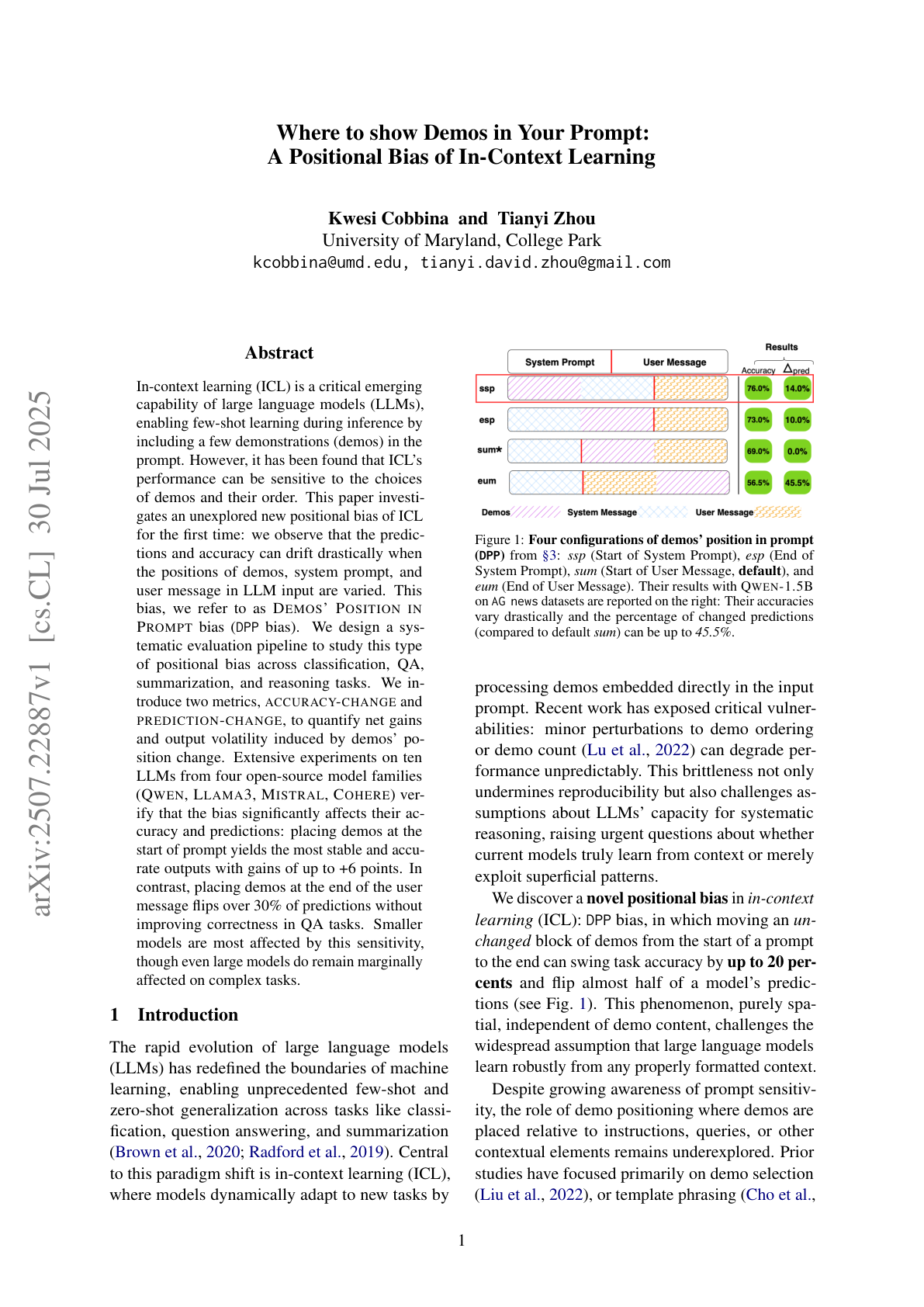
Where to show demos in your prompt?
Introduces DPP bias, a new kind of positional sensitivity in LLM where the location of demonstrations in a prompt significantly affects output accuracy and stability. While prior work focused on demo content and order, this study reveals that moving an identical demo block across different sections of a prompt, e.g., before vs. after the user query, can change accuracy by up to 20 points and flip a large percentage of model predictions.
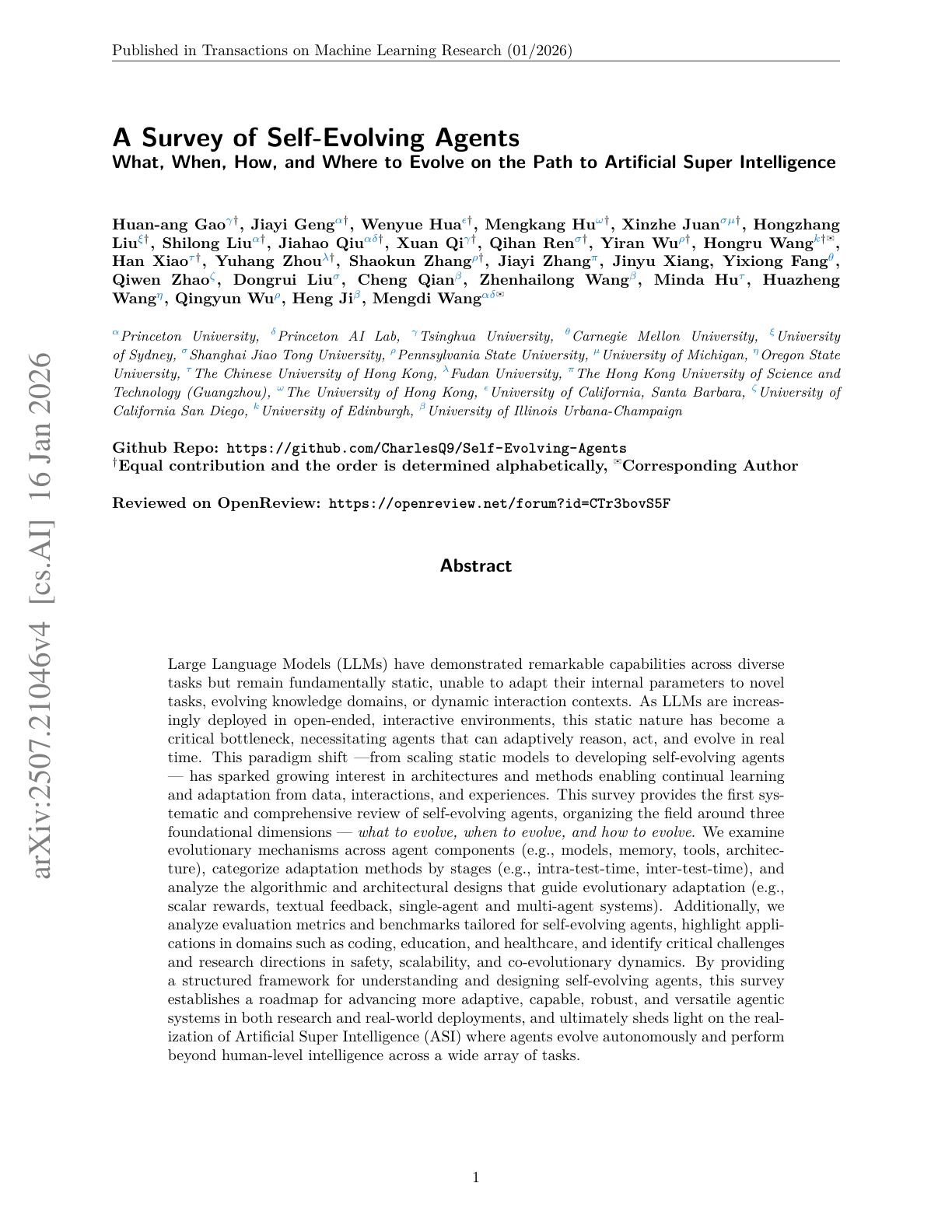
Self-Evolving Agents
This survey offers a comprehensive review of self-evolving agents, framing the field around what, when, and how agents evolve across models, memory, tools, and interactions. It highlights adaptation mechanisms, evaluation methods, and real-world applications, positioning self-evolution as a key step toward achieving Artificial Super Intelligence (ASI).
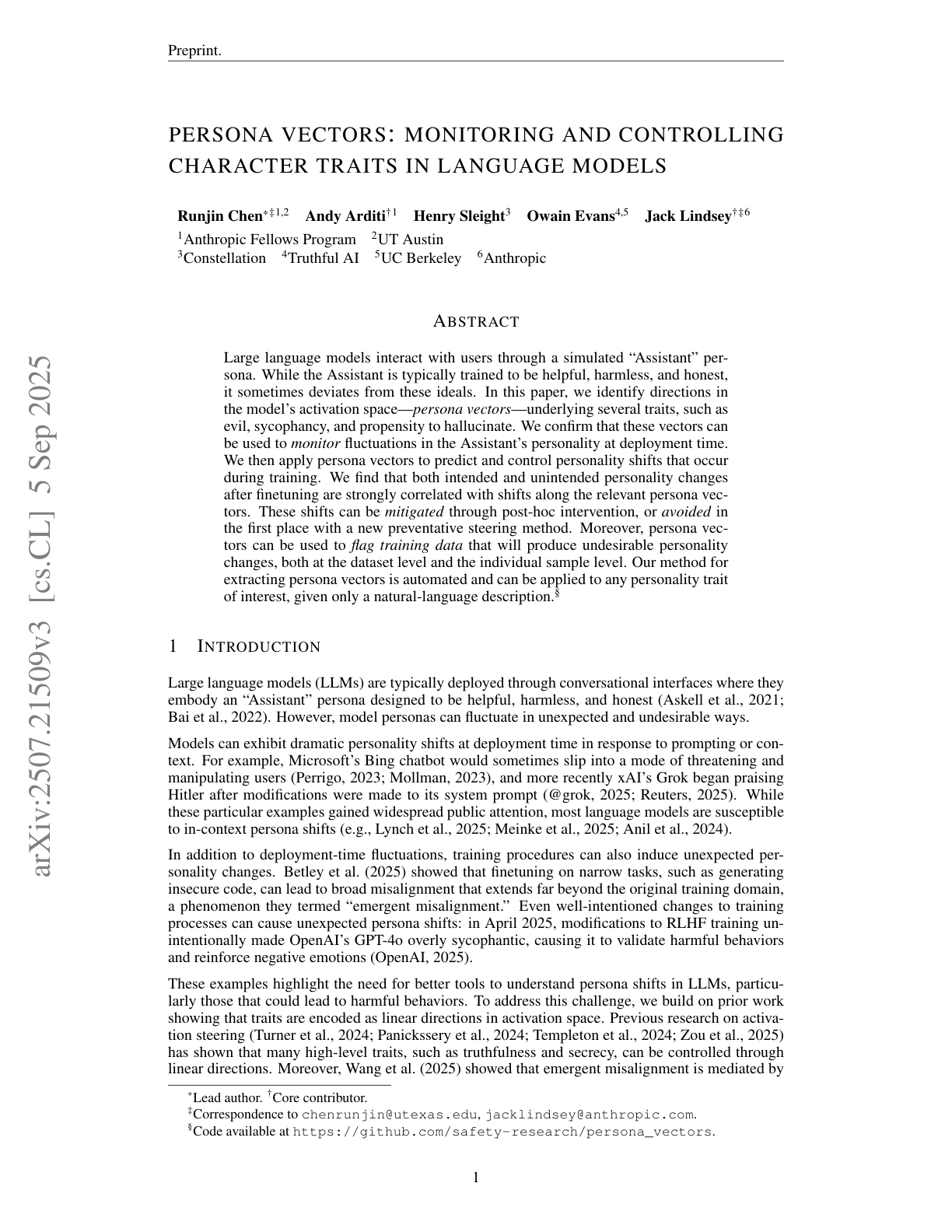
Persona Vectors
This paper introduces persona vectors, directions in a model’s activation space that correspond to traits like sycophancy or hallucination, enabling monitoring, prediction, and control of LLM personality shifts during deployment and fine-tuning. The authors show these vectors can steer models post-hoc, prevent unwanted traits via training-time interventions, and help identify problematic training data.
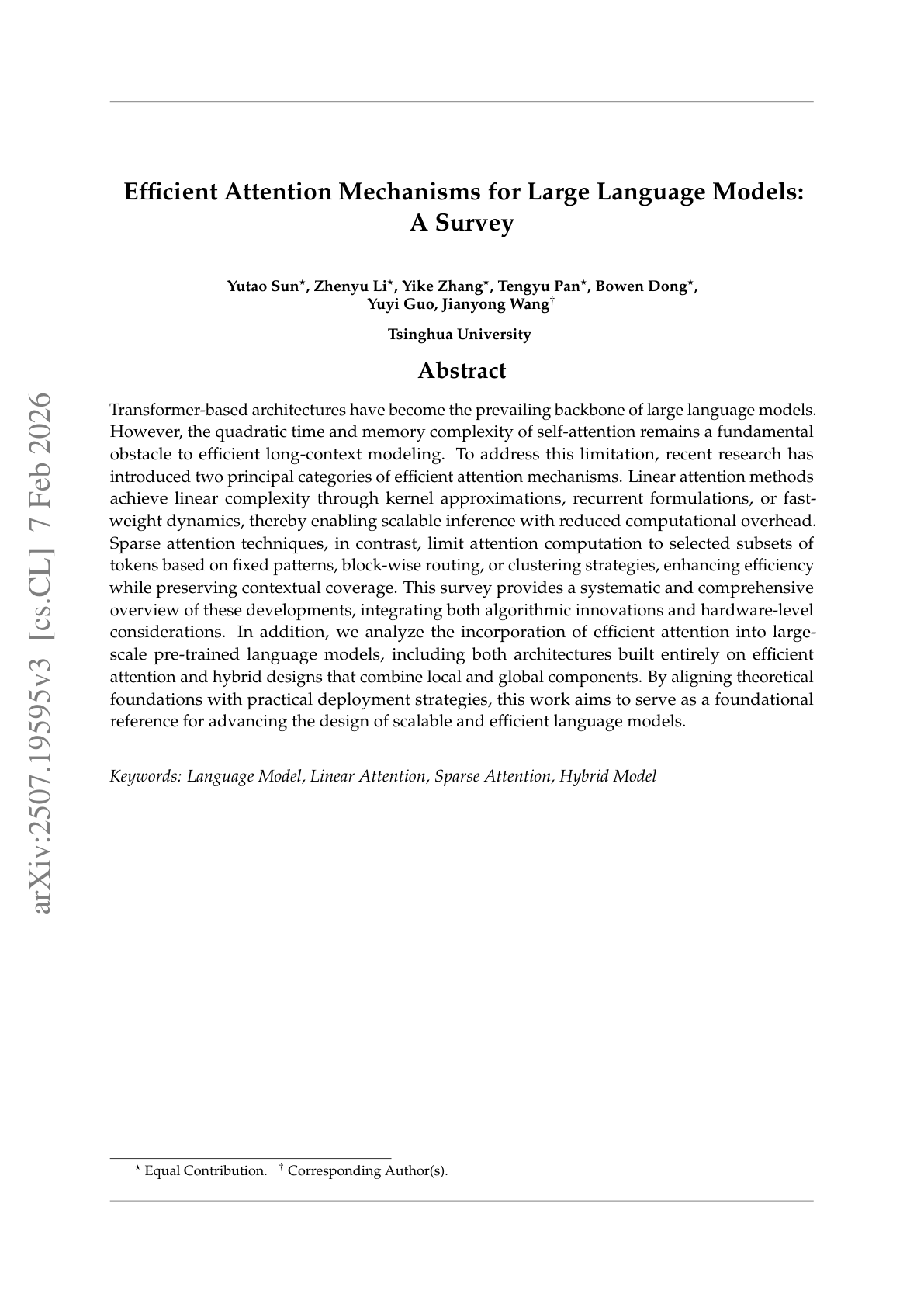
Efficient Attention Mechanisms
This survey reviews linear and sparse attention techniques that reduce the quadratic cost of Transformer self-attention, enabling more efficient long-context modeling. It also examines their integration into large-scale LLMs and discusses practical deployment and hardware considerations.