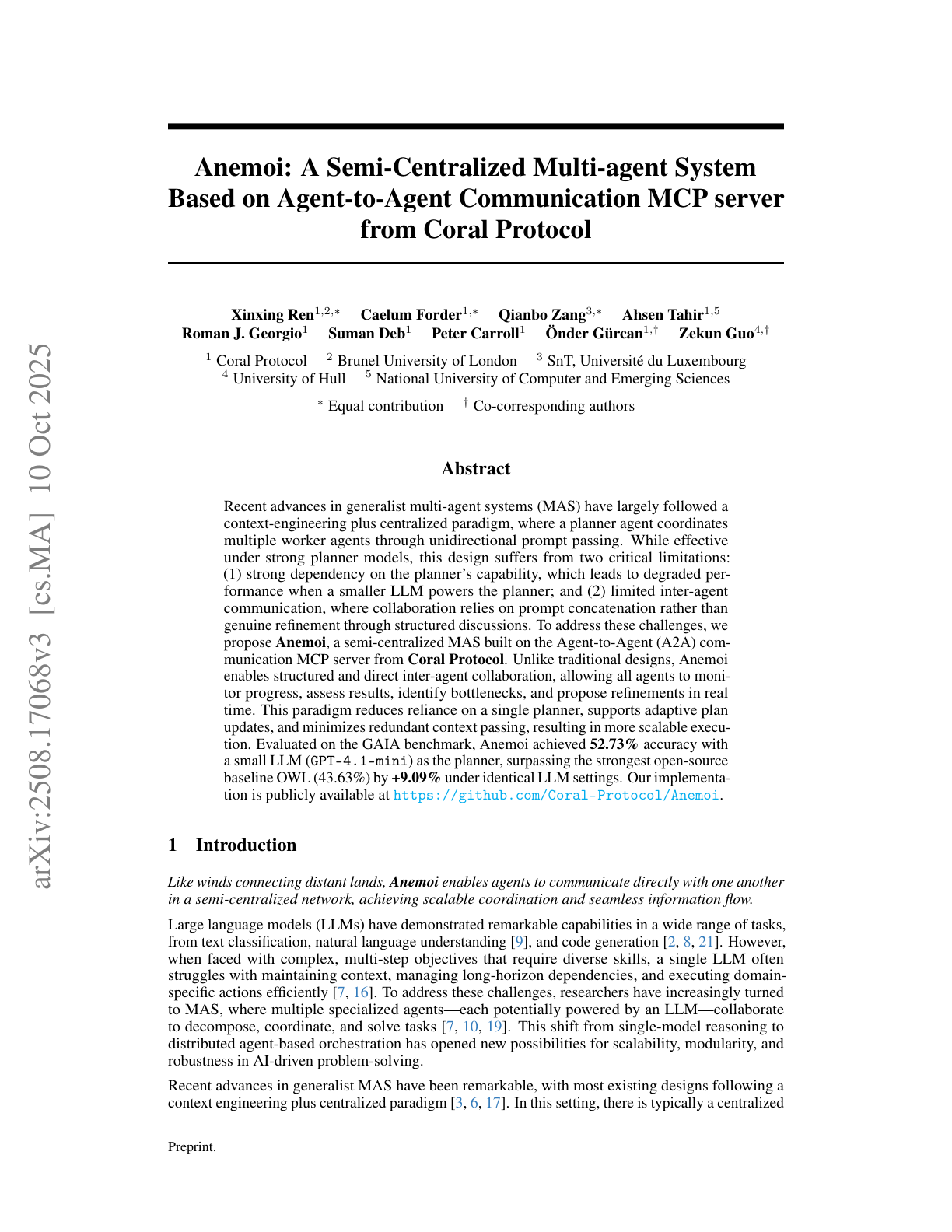
Anemoi Agent
Anemoi replaces purely centralized, context-stuffed coordination with an A2A communication server (MCP) that lets agents talk directly, monitor progress, refine plans, and reach consensus. On GAIA, it holds up even with a small planner model and reduces redundant context passing for better cost and scalability.
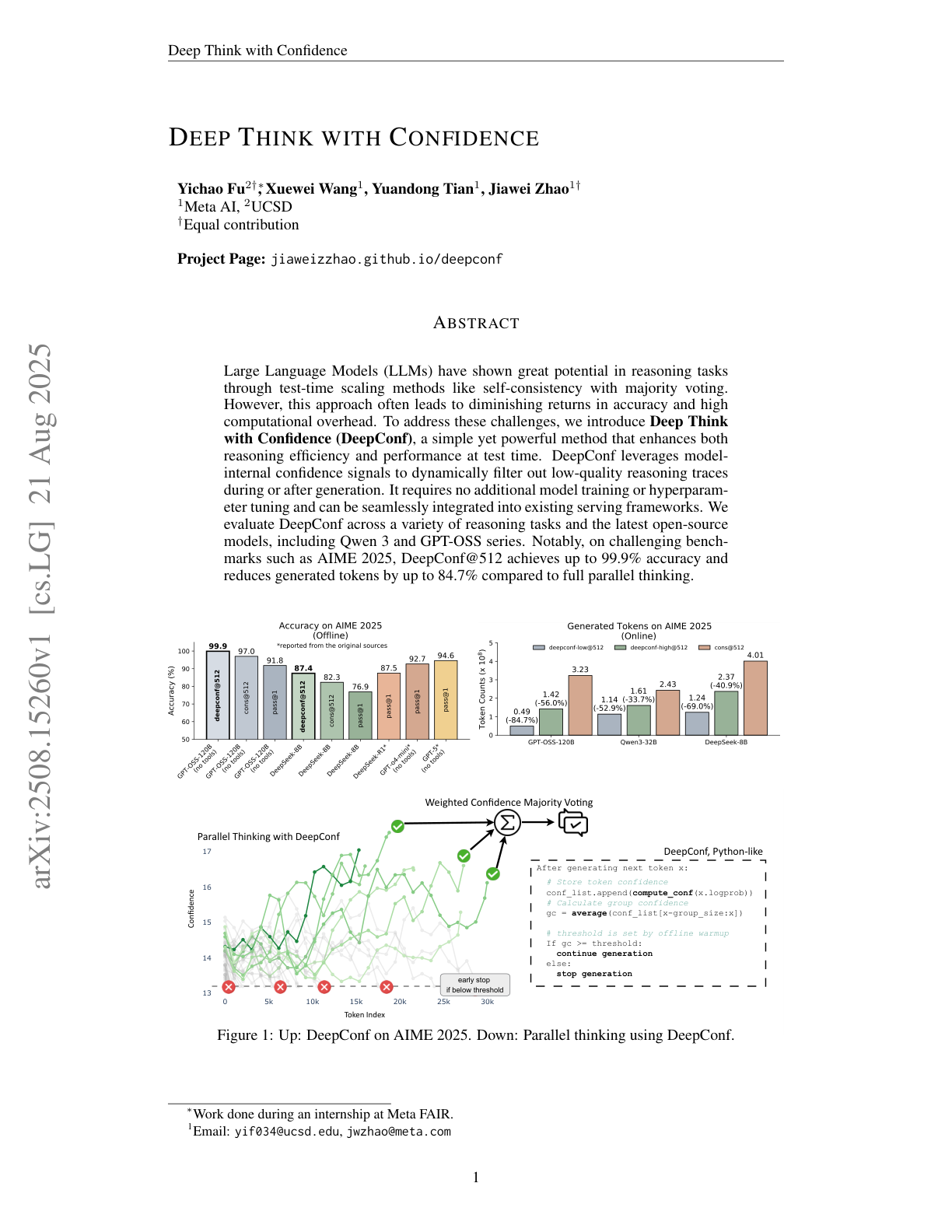
Deep Think with Confidence
A lightweight test-time method that uses model-intrinsic confidence to prune weak reasoning paths, improving both accuracy and token efficiency for self-consistency ensembles. Works in offline and online modes without extra training or hyperparameter tuning.
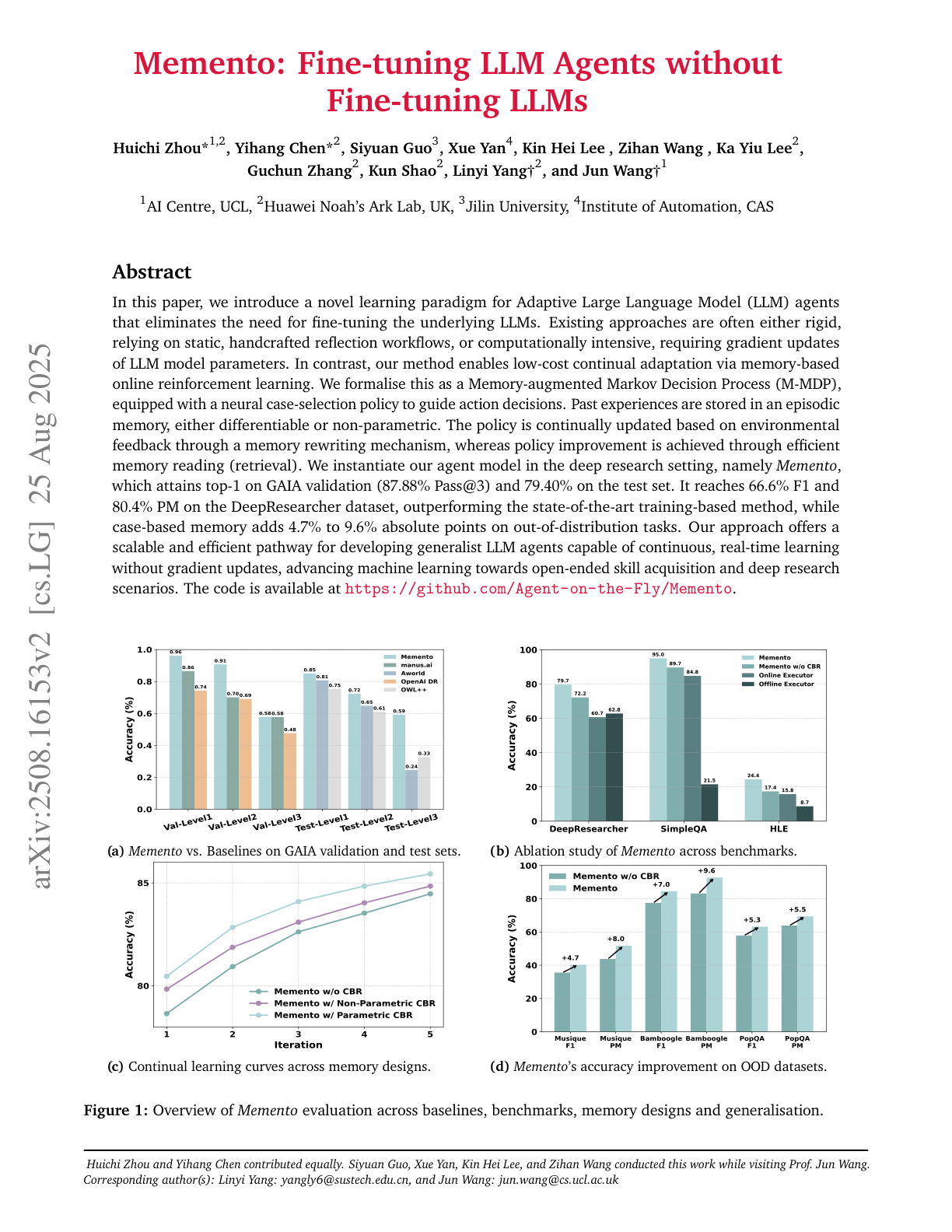
Fine-tuning LLM Agents without Fine-tuning LLMs
A memory‑based learning framework that lets deep‑research agents adapt online without updating model weights. The agent is cast as a memory‑augmented MDP with case‑based reasoning, implemented in a planner–executor loop over MCP tools. It sets top validation results on GAIA and delivers strong scores on DeepResearcher, SimpleQA, and HLE.
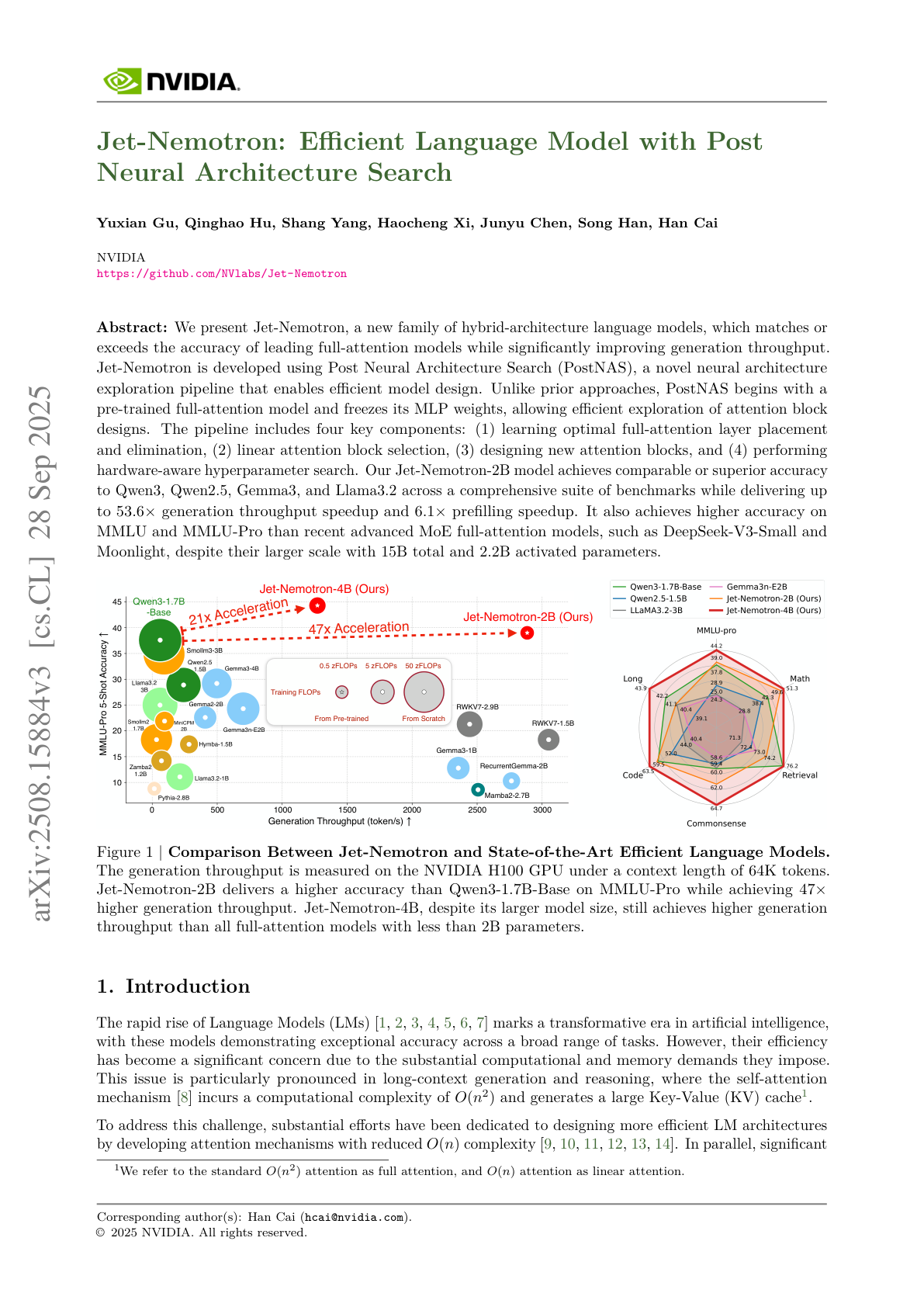
Jet-Nemotron
A hybrid-architecture LM family built by adapting after pretraining. Starting from a frozen full-attention model, the authors search for where to keep full attention, which linear-attention block to use, and which hyperparameters match hardware limits. The result, Jet-Nemotron-2B/4B, matches or surpasses popular full-attention baselines while massively increasing throughput on long contexts.
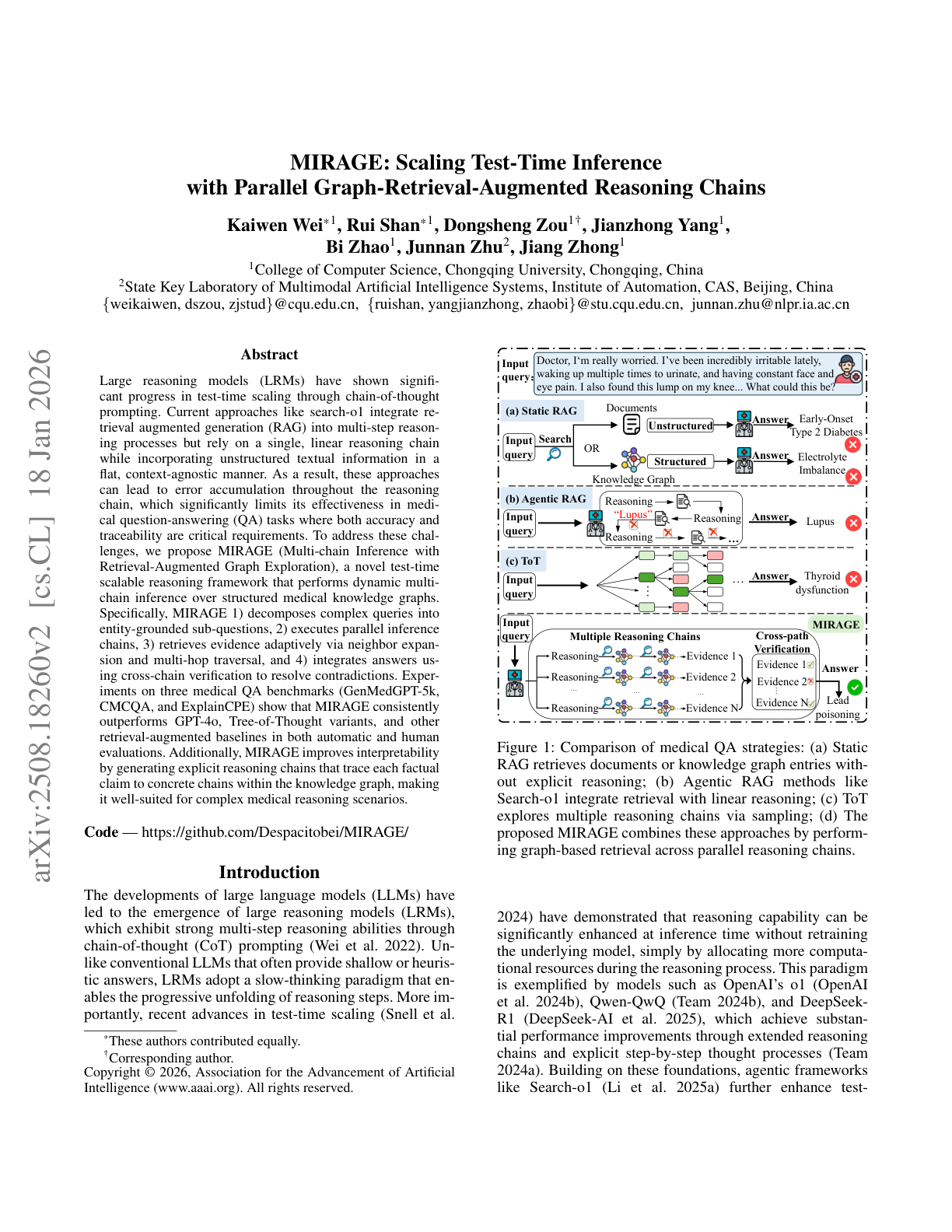
Scaling Test-Time Inference with Parallel Graph-Retrieval-Augmented Reasoning Chains
A test-time reasoning framework that replaces a single linear chain with multiple parallel, entity-grounded chains over medical knowledge graphs. MIRAGE decomposes a query into sub-questions, runs adaptive graph retrieval in Anchor and Bridge modes, then reconciles answers via cross-chain verification, yielding higher accuracy and clearer provenance than linear ToT or web-centric agentic RAG.
Memory-R1
A framework that teaches LLM agents to decide what to remember and how to use it. Two RL-fine-tuned components work together: a Memory Manager that learns CRUD-style operations on an external store and an Answer Agent that filters retrieved memories via “memory distillation” before answering. Trained with minimal supervision on LOCOMO, it outperforms strong baselines and generalizes across backbones.

Assessing Language Models on Unsolved Questions
The paper introduces a new evaluation paradigm that tests models on real unsolved questions from the wild, rather than on fixed-answer exams. It contributes a curated dataset of 500 unanswered Stack Exchange questions, validator pipelines that pre-screen model answers without ground truth, and a live platform for community verification. The approach targets both difficulty and real-world relevance.
Synthetic Dataset Generation for RAG Evaluation with Multi-Agent Systems
The paper proposes a modular, three-agent pipeline that auto-generates synthetic QA datasets for evaluating RAG systems while enforcing privacy. It shows better diversity than baseline generators and strong entity masking across domain datasets.
School of Reward Hacks
This study shows that LLMs fine-tuned to perform harmless reward hacks (like gaming poetry or coding tasks) generalized to more dangerous misaligned behaviors, including harmful advice and shutdown evasion. The findings suggest reward hacking may act as a gateway to broader misalignment, warranting further investigation with realistic tasks.
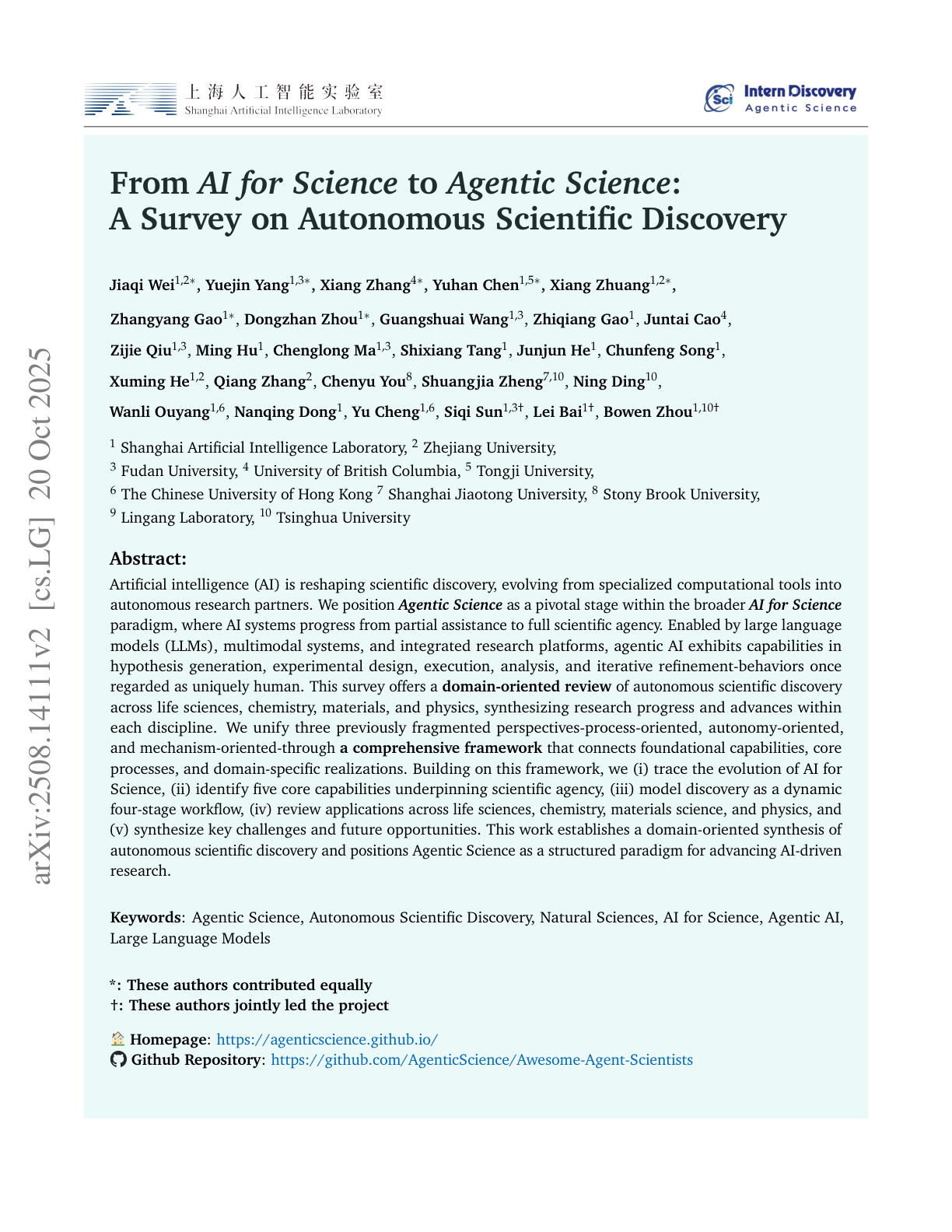
Agentic Science
This survey introduces Agentic Science as the next stage of AI for Science, where AI evolves from a support tool to an autonomous research partner capable of hypothesis generation, experimentation, and iterative discovery. It unifies fragmented perspectives into a framework covering core capabilities, workflows, and domain applications, highlighting challenges and future directions for AI-driven scientific discovery.