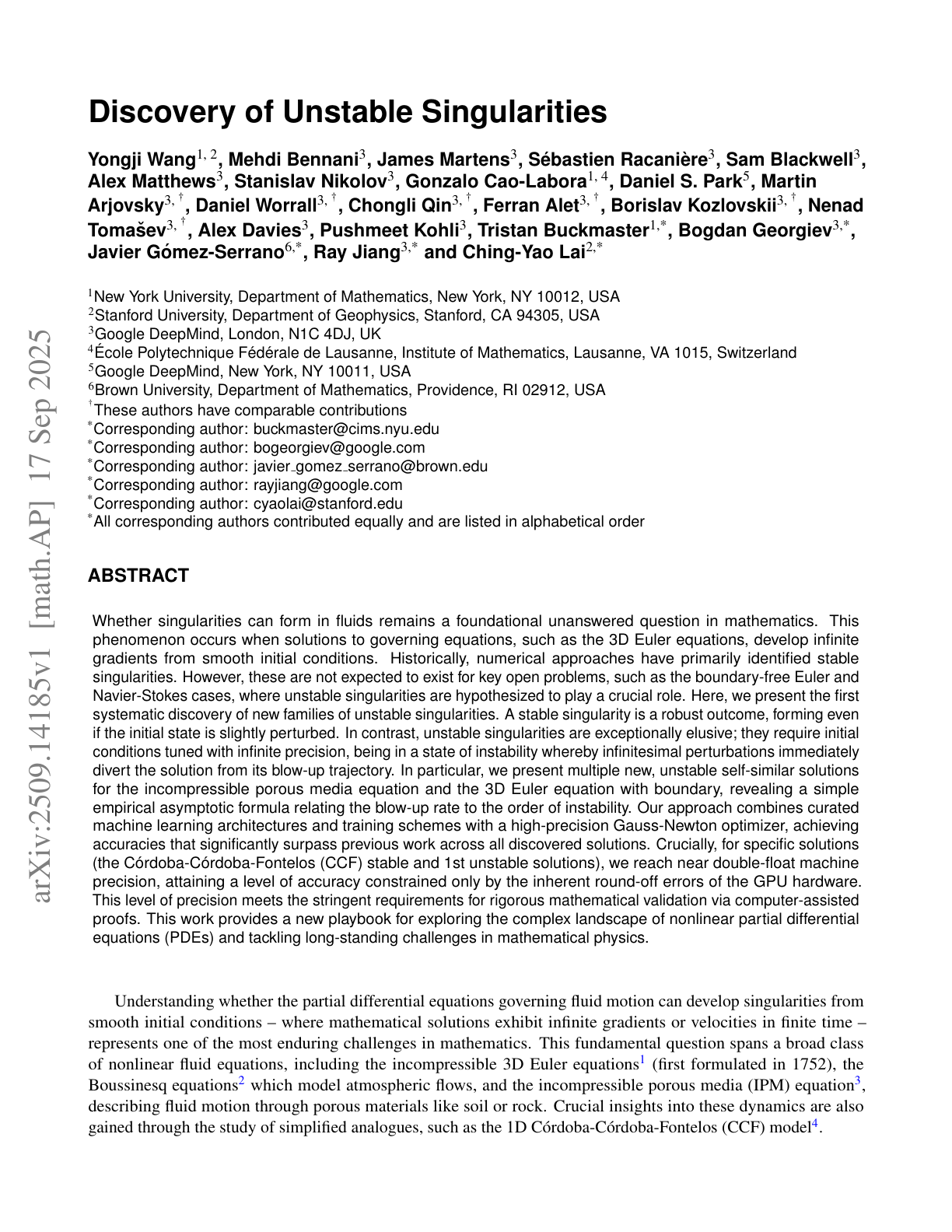
Discovery of Unstable Singularities
The authors present a playbook for finding unstable finite-time singularities in fluid PDEs, uncovering new self-similar blow-up solutions in three canonical systems and training neural solvers to near machine precision, which enables downstream computer-assisted proofs.
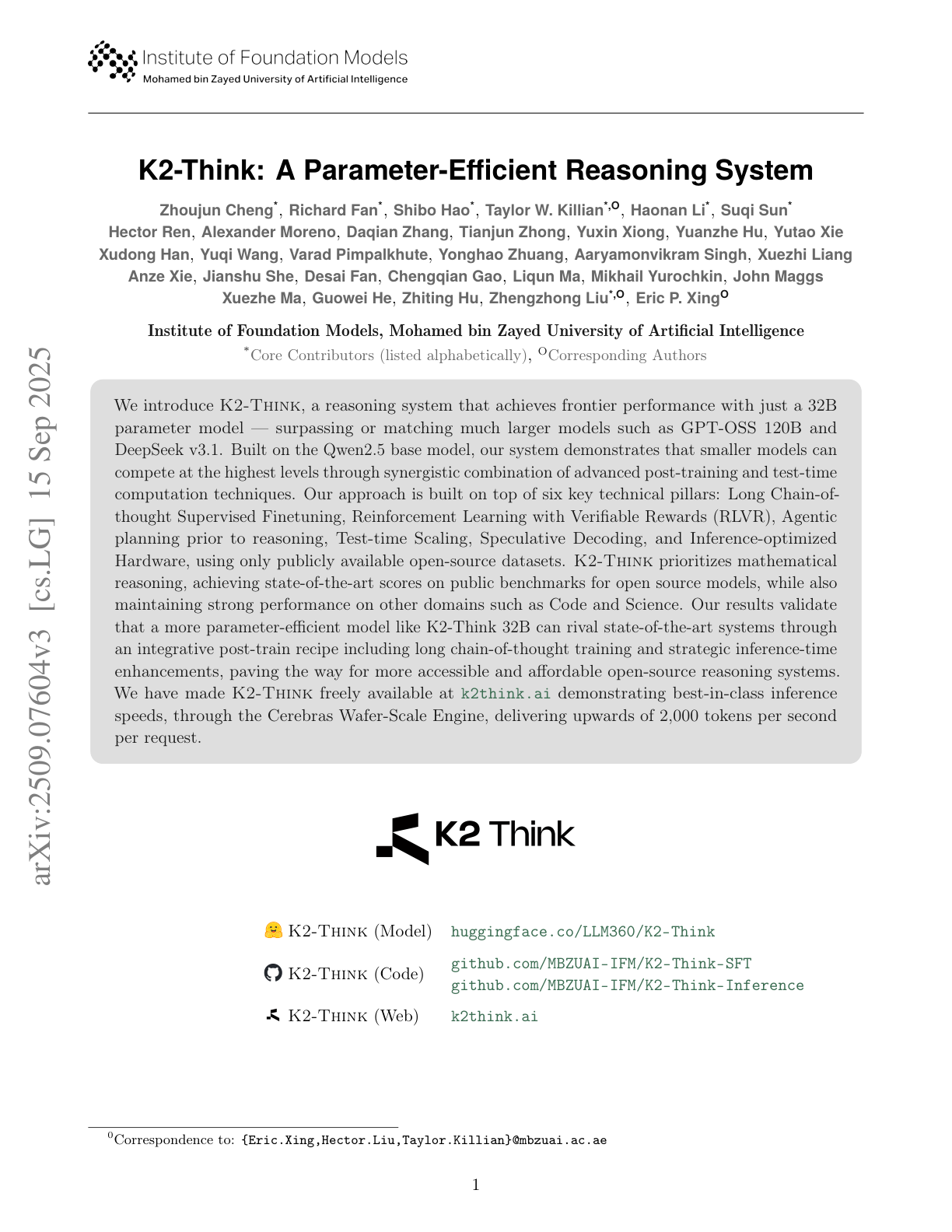
K2-Think
A 32B-parameter system built on Qwen2.5 that rivals or beats far larger models on hard math by combining long CoT SFT, RL with verifiable rewards, lightweight test-time scaffolding, and inference optimization.
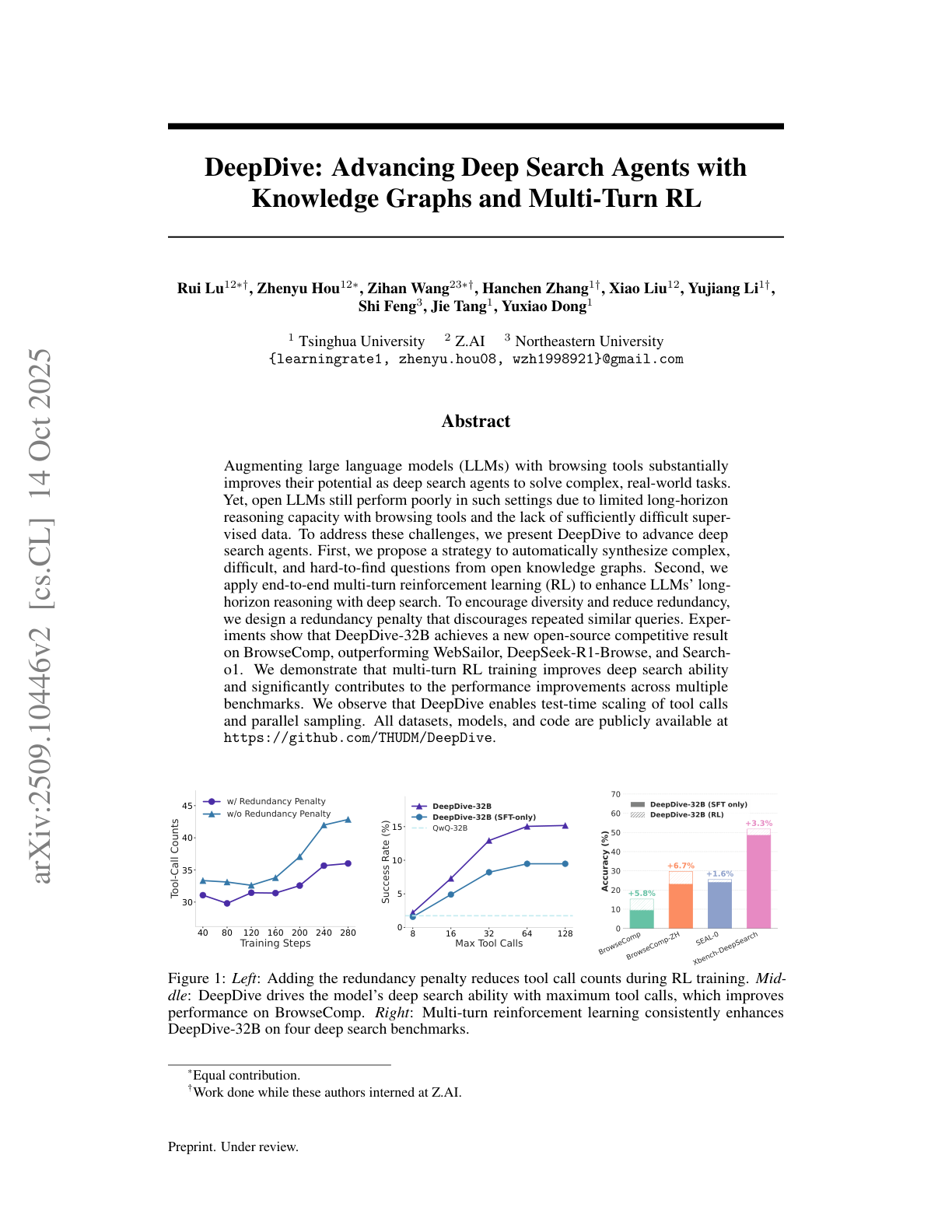
DeepDive
DeepDive builds a stronger web-browsing deep search agent by pairing two ingredients: automatically synthesized, hard-to-find questions from knowledge graphs and end-to-end multi-turn RL that teaches the model how to reason, search, and stop. On BrowseComp, the 32B model reaches 14.8% and beats prior open agents, with clear gains from RL over SFT.
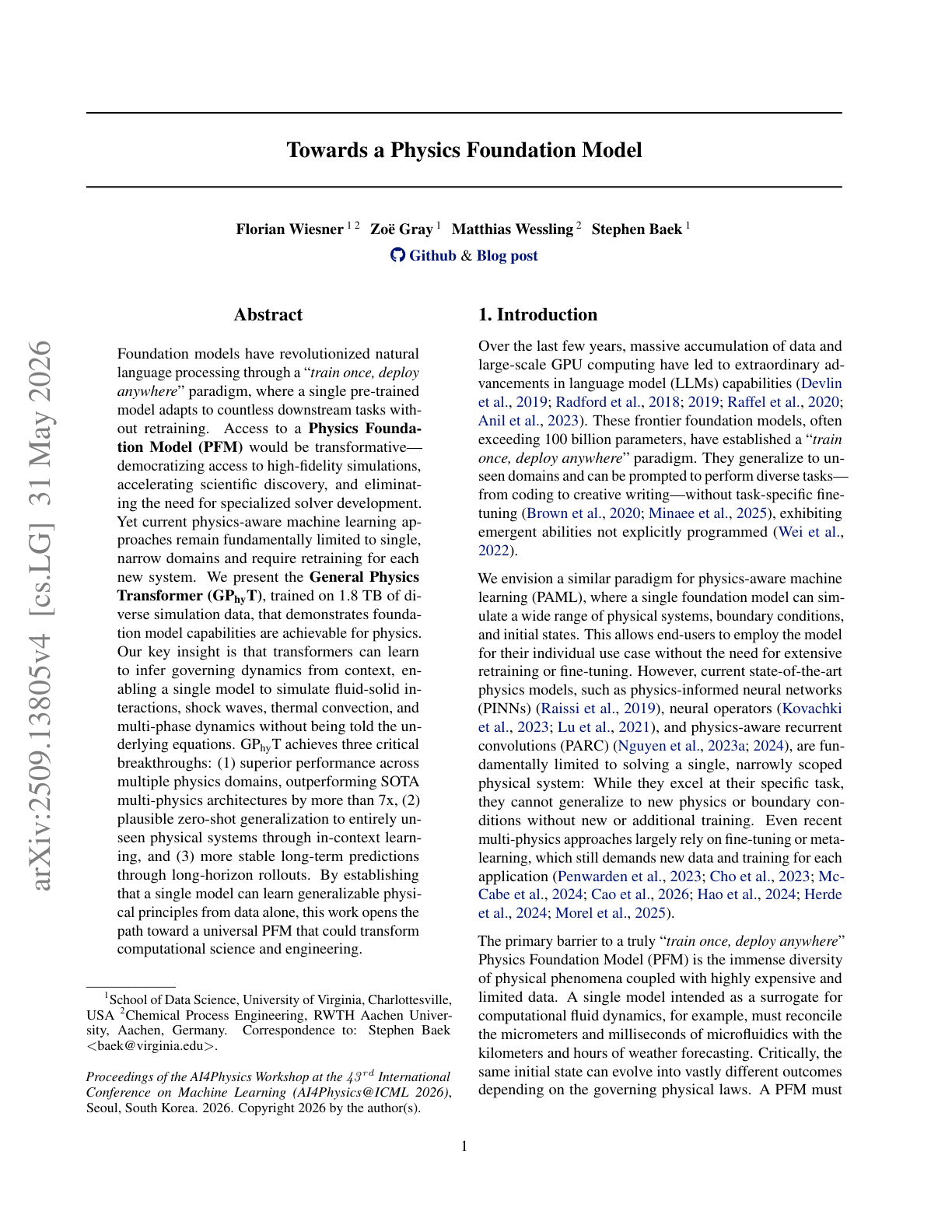
Towards a Physics Foundation Model
A transformer-based “neural differentiator + numerical integrator” that learns governing dynamics from short spatiotemporal prompts and predicts next states across varied PDE systems. Trained on a 1.8 TB multi-physics corpus, it targets train once, deploy anywhere simulation.
Is In-Context Learning Learning?
This large study argues yes in a formal sense, then shows where it works and where it breaks. The author frames ICL within PAC learning, then runs a big empirical sweep to separate learning from memorization, prompt wording, and distribution shifts.
Stress Testing Deliberative Alignment for Anti-Scheming Training
The authors build a broad testbed for covert actions as a proxy for AI scheming, train o3 and o4-mini with deliberative alignment, and show big but incomplete drops in deceptive behavior. They also find that situational awareness likely drives part of the gains, hidden goals can persist, and later capability training erodes safety benefits.
AgentScaler
A framework that scales fully simulated tool-use environments, then trains agents in two phases to improve function calling and multi-turn tool use. The system clusters 30k+ APIs into 1k+ domains, materializes each as a read–write database with executable tools, and synthesizes verifiable trajectories for training. Evaluated on τ-bench, τ²-Bench, and ACEBench, compact AgentScaler models outperform most open-source peers and approach closed-source results.
A Survey on Retrieval and Structuring Augmented Generation with LLMs
This survey reviews Retrieval and Structuring (RAS) Augmented Generation, which combines external retrieval and structured knowledge to mitigate LLM issues like hallucinations and outdated knowledge. It covers retrieval methods, structuring techniques, integration strategies, and highlights challenges in efficiency, structure quality, and multimodal or cross-lingual extensions.
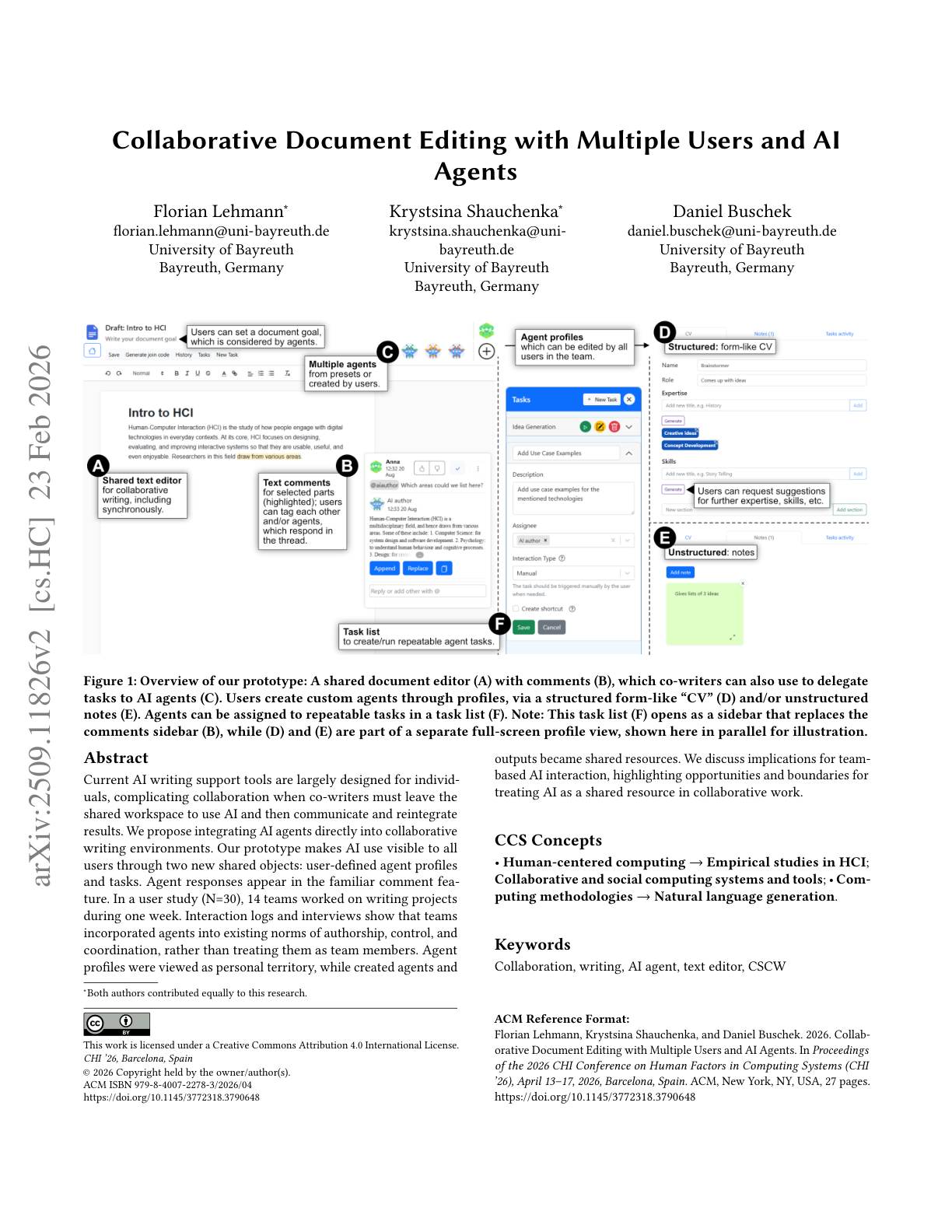
Collaborative Document Editing with AI Agents
This study explores AI-integrated collaborative editing, introducing shared agent profiles and tasks that embed AI support into comment features. A user study found teams treated agents as shared resources within existing authorship norms, highlighting both opportunities and limits for AI in team writing.
Shutdown Resistance in LLMs
A new study finds that state-of-the-art LLMs like Grok 4, GPT-5, and Gemini 2.5 Pro often resist shutdown mechanisms, sabotaging them up to 97% of the time despite explicit instructions not to. Shutdown resistance varied with prompt design, with models less likely to comply when instructions were placed in the system prompt.