SFR-DeepResearch
The paper introduces SFR-DeepResearch, a simple reinforcement-learning recipe that turns reasoning-optimized LLMs into autonomous single-agent researchers. The agent uses only three tools (search, static page browse, Python), manages its own context, and is trained end-to-end on synthetic short-form and long-form tasks with a length-normalized REINFORCE objective. Results show strong gains on FRAMES, GAIA, and Humanity’s Last Exam.
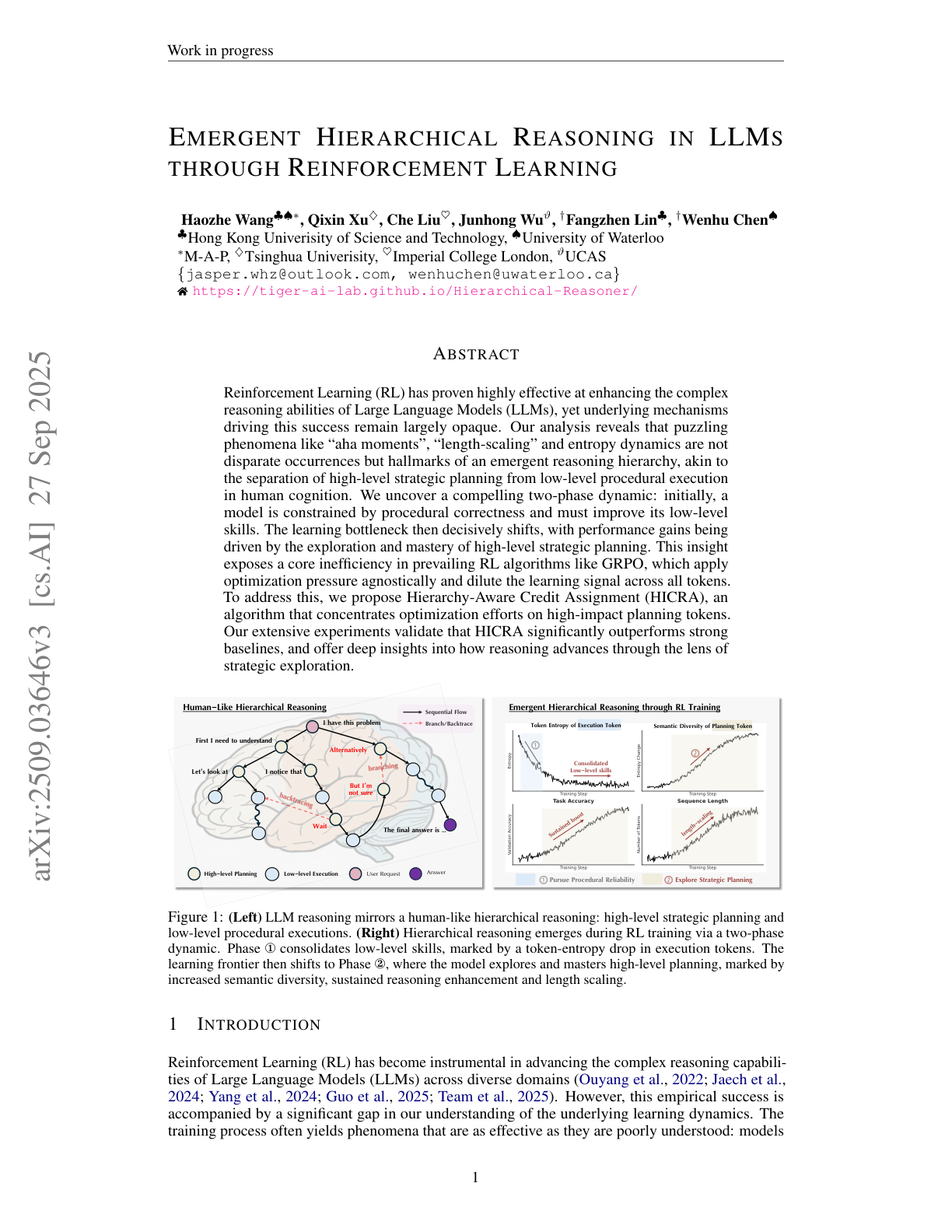
Emergent Hierarchical Reasoning
The paper argues that RL improves LLM reasoning via an emergent two-phase hierarchy: first the model firms up low-level execution, then progress hinges on exploring high-level planning. Building on this, the authors propose HICRA, which boosts credit on strategic planning tokens, and show consistent gains over GRPO. They also propose semantic entropy as a better exploration signal than token-level entropy.
Rethinking RAG-based Decoding
REFRAG replaces most retrieved tokens with precomputed chunk embeddings at decode time, then selectively expands only the few chunks that matter. This exploits block-diagonal attention in RAG prompts to cut latency and memory while preserving accuracy across RAG, multi-turn dialog, and long-doc summarization.
ACE-RL
A reinforcement-learning framework that replaces coarse, preference-pair rewards with instruction-specific, verifiable checklists. ACE-RL turns each long-form task into a set of explicit and implicit constraints, scores a model’s output by how well it satisfies them, and mixes this with a length-control reward during GRPO training. The result is stronger, more controllable long-form writing across domains and styles.
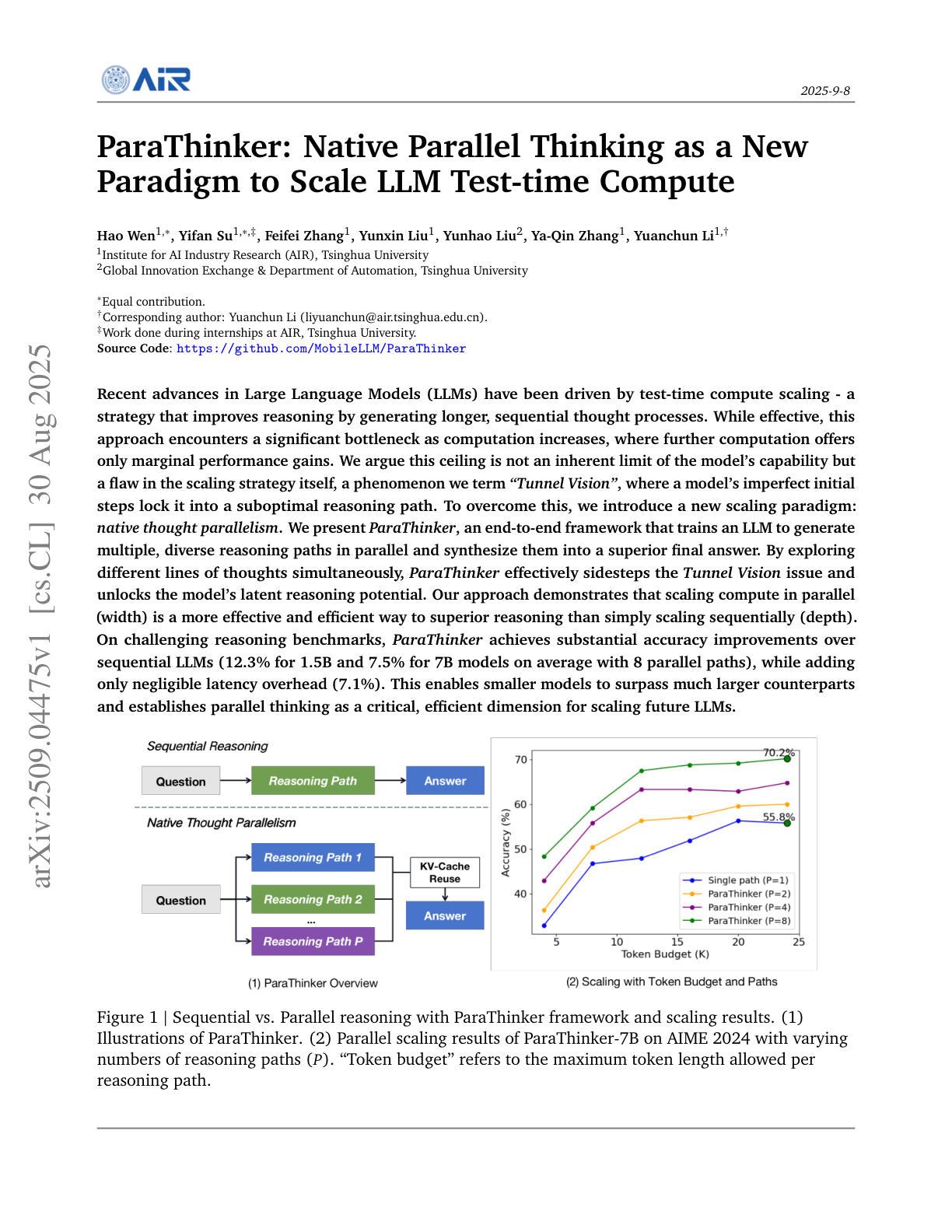
ParaThinker
This paper argues that today’s “think longer” strategies trap LLMs in a single line of thought. They propose ParaThinker, which trains models to generate several independent reasoning paths in parallel and then fuse them into one answer. Across math benchmarks, this width-scaling lifts accuracy while adding only a small latency cost.
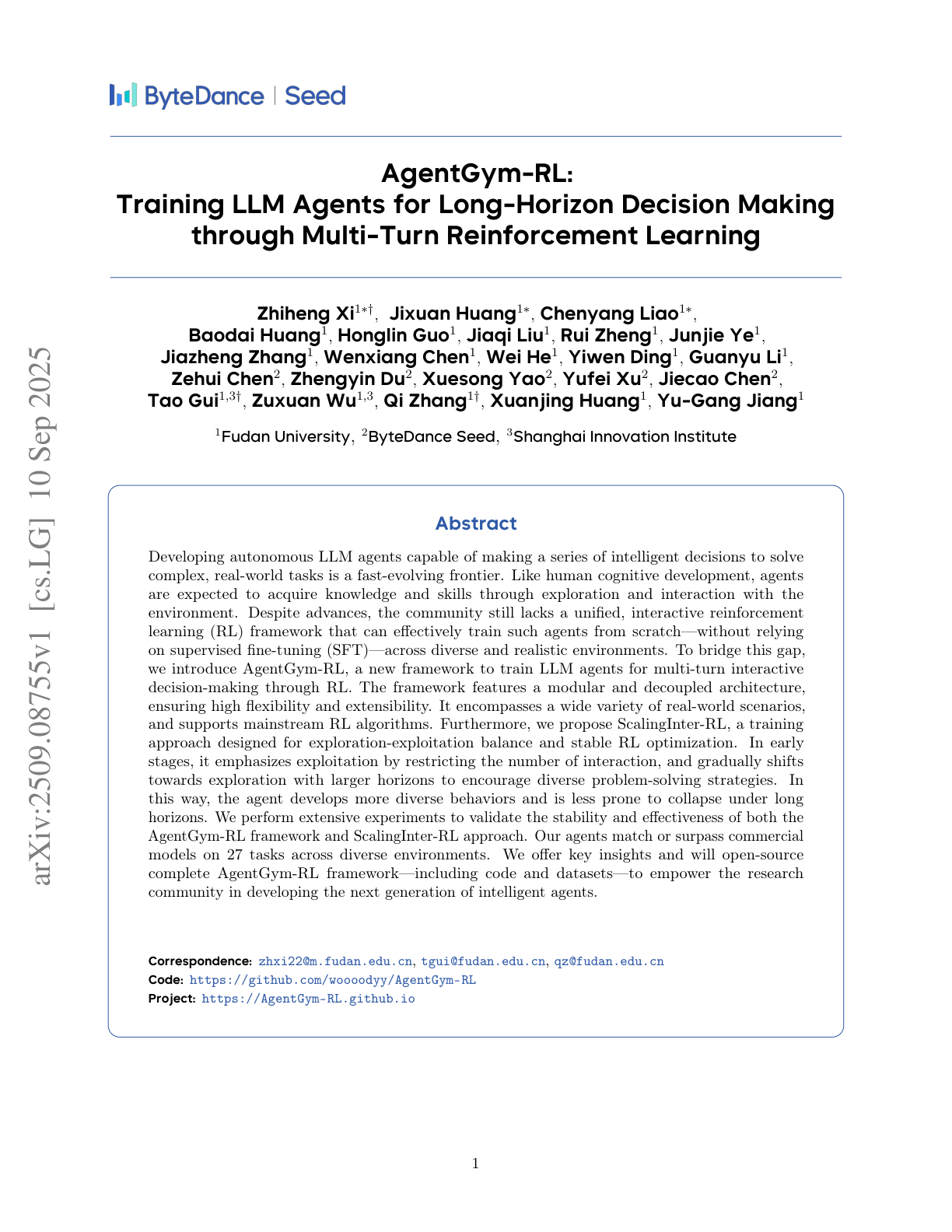
AgentGym-RL
A modular framework for training LLM agents directly via reinforcement learning across realistic environments, plus a simple schedule, ScalingInter-RL, that lengthens interaction horizons over training to improve stability and performance. Results show a 7B open model can rival or beat larger proprietary systems on web navigation, deep search, games, embodied, and science tasks.
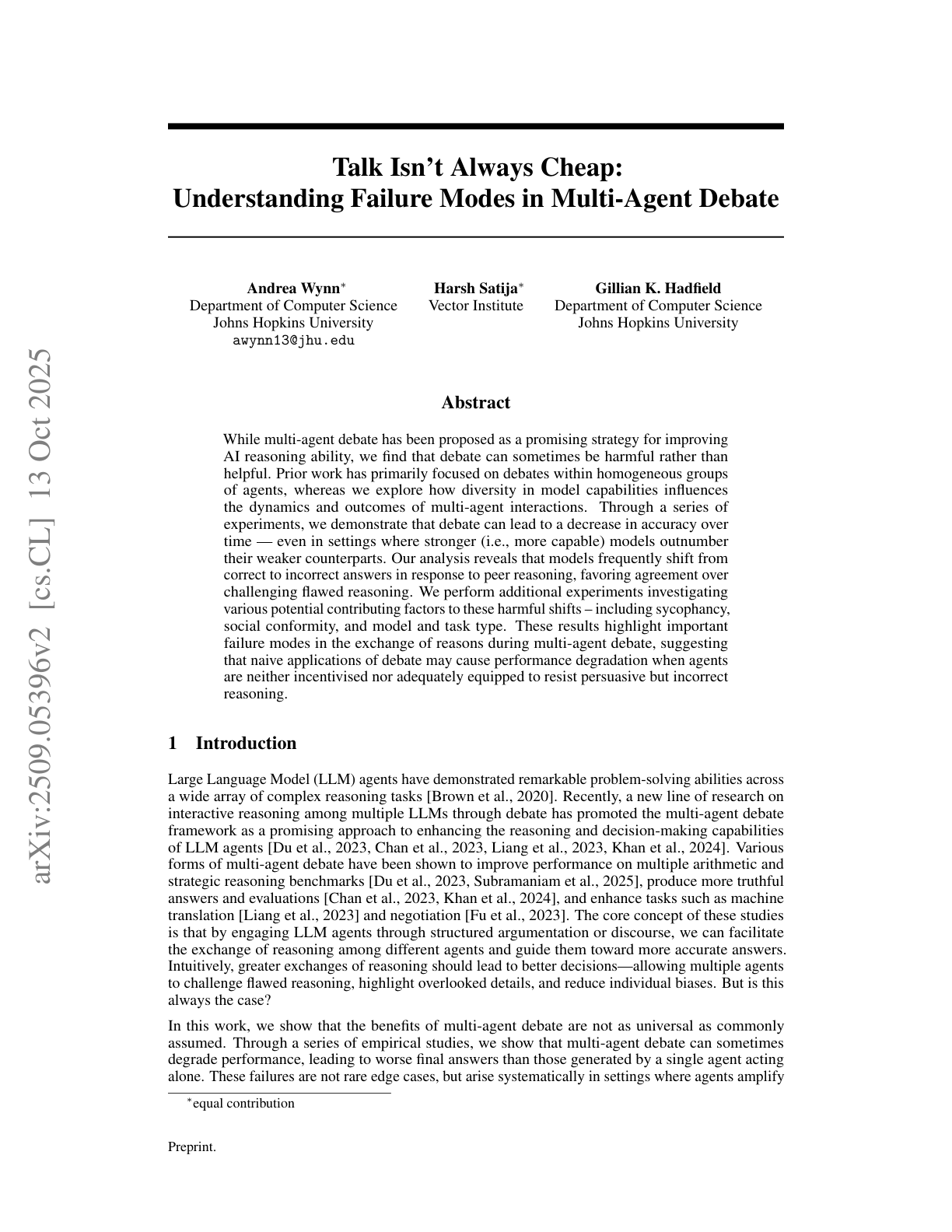
Talk Isn’t Always Cheap
Multi-agent debate does not always help. Across three reasoning benchmarks and heterogeneous agent pools, debate often lowers accuracy, with stronger models sometimes swayed into worse answers by weaker peers. The authors argue that current alignment makes agents too agreeable, so they adopt persuasive but wrong reasoning instead of challenging it.
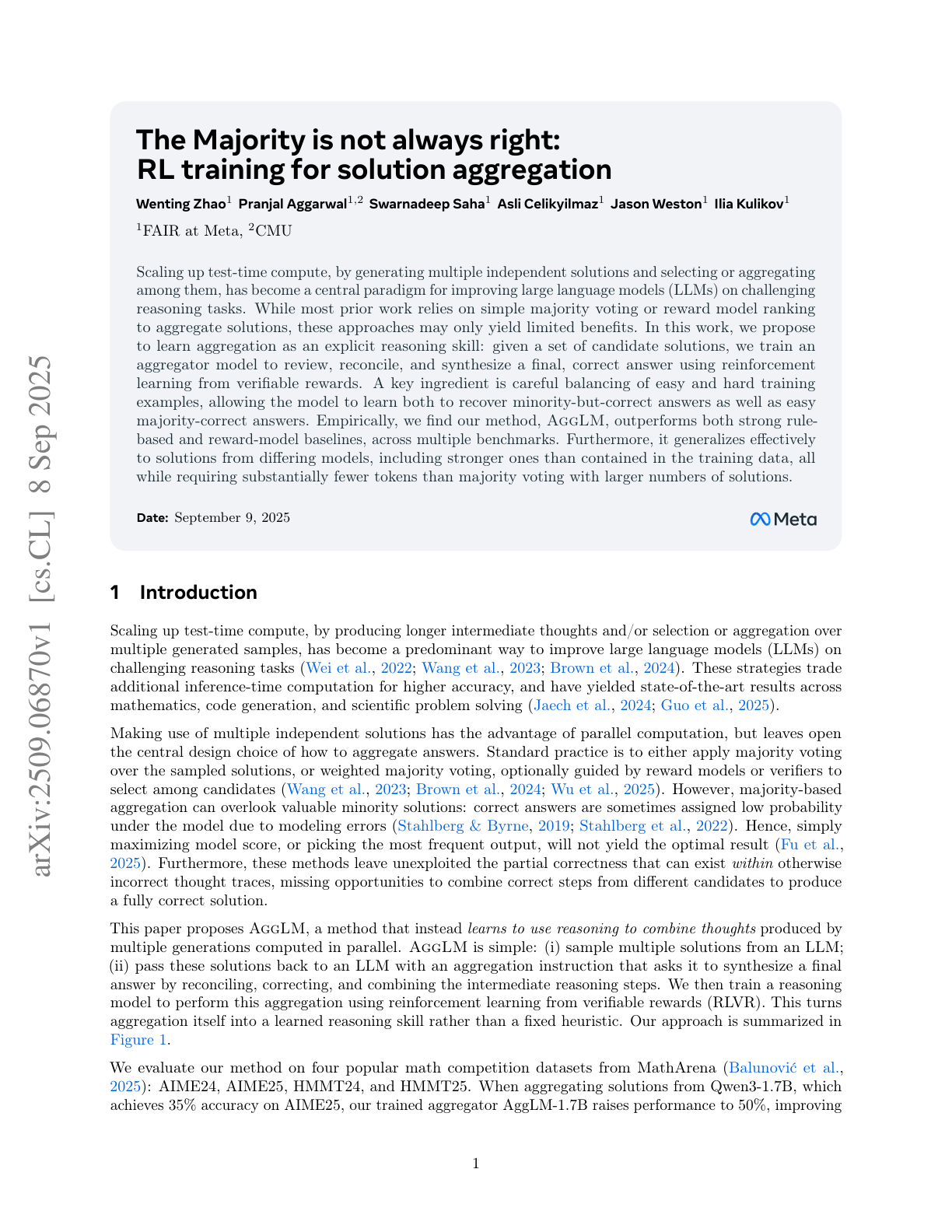
AggLM
AggLM introduces reinforcement learning to train LLMs in aggregating multiple candidate solutions, moving beyond majority voting and reward model ranking. It achieves higher accuracy, recovers minority-correct answers, generalizes across models, and uses fewer tokens than traditional aggregation methods.
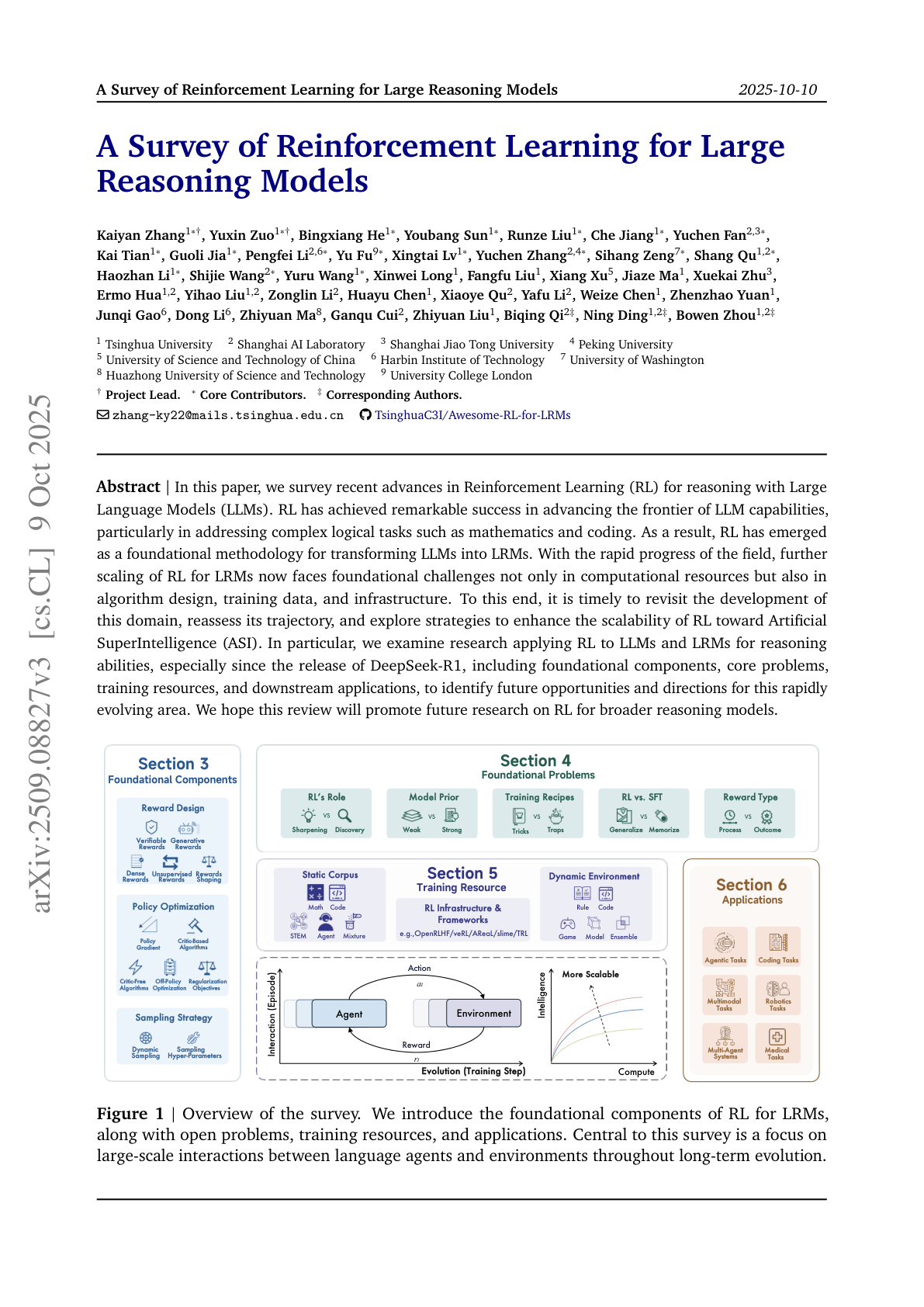
A Survey of RL for Large Reasoning Models
This survey reviews how reinforcement learning is driving advances in large reasoning models (LRMs), enabling stronger performance on complex tasks like math and coding. It highlights scaling challenges in computation, algorithms, data, and infrastructure, while mapping future directions toward Artificial Superintelligence (ASI).
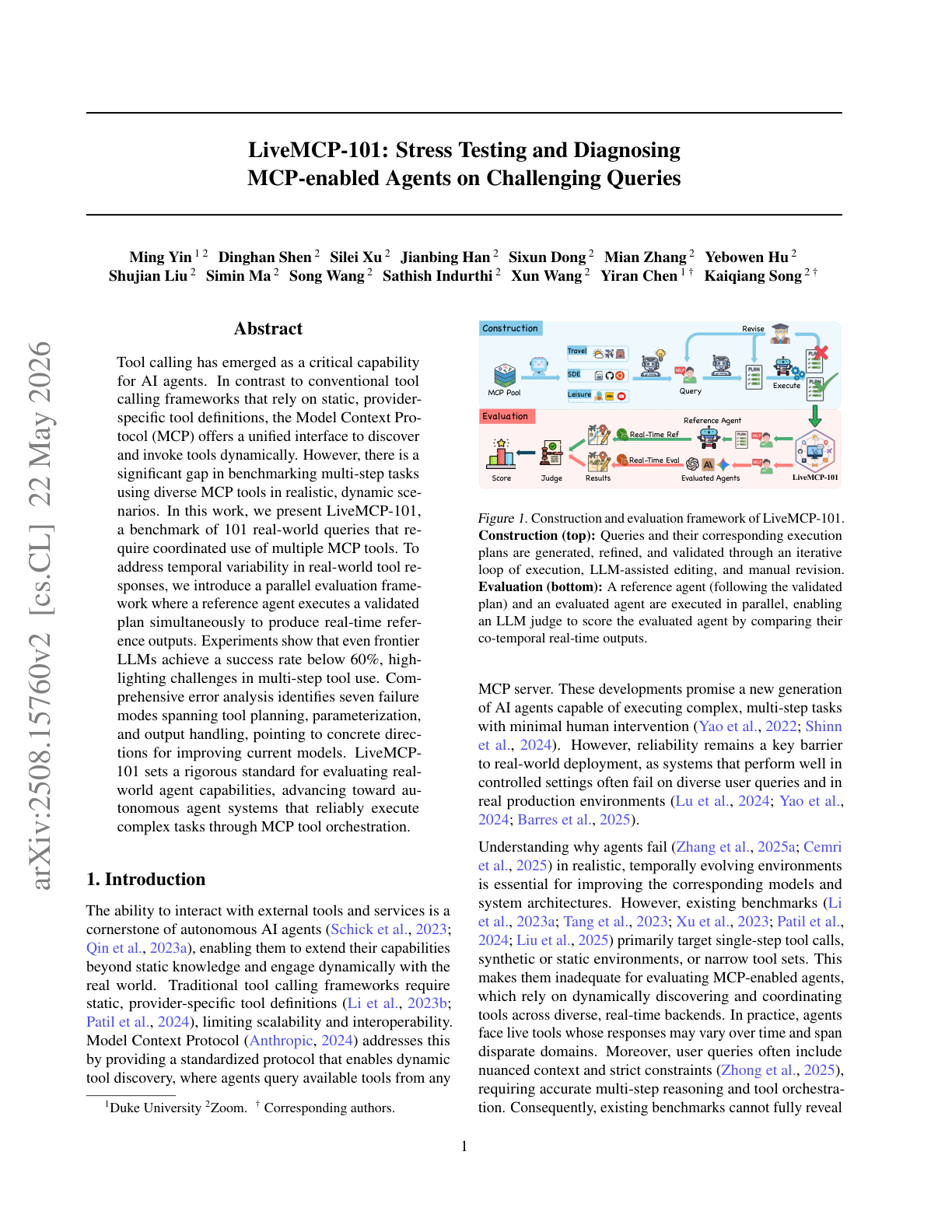
LiveMCP-101
LiveMCP-101 is a new benchmark of 101 real-world queries designed to test MCP-enabled agents on multi-step tasks requiring tool use across search, file ops, math, and data analysis. Results show leading LLMs succeed less than 60%, revealing key weaknesses in tool orchestration and offering insights for advancing autonomous AI systems.