Towards Robust Mathematical Reasoning
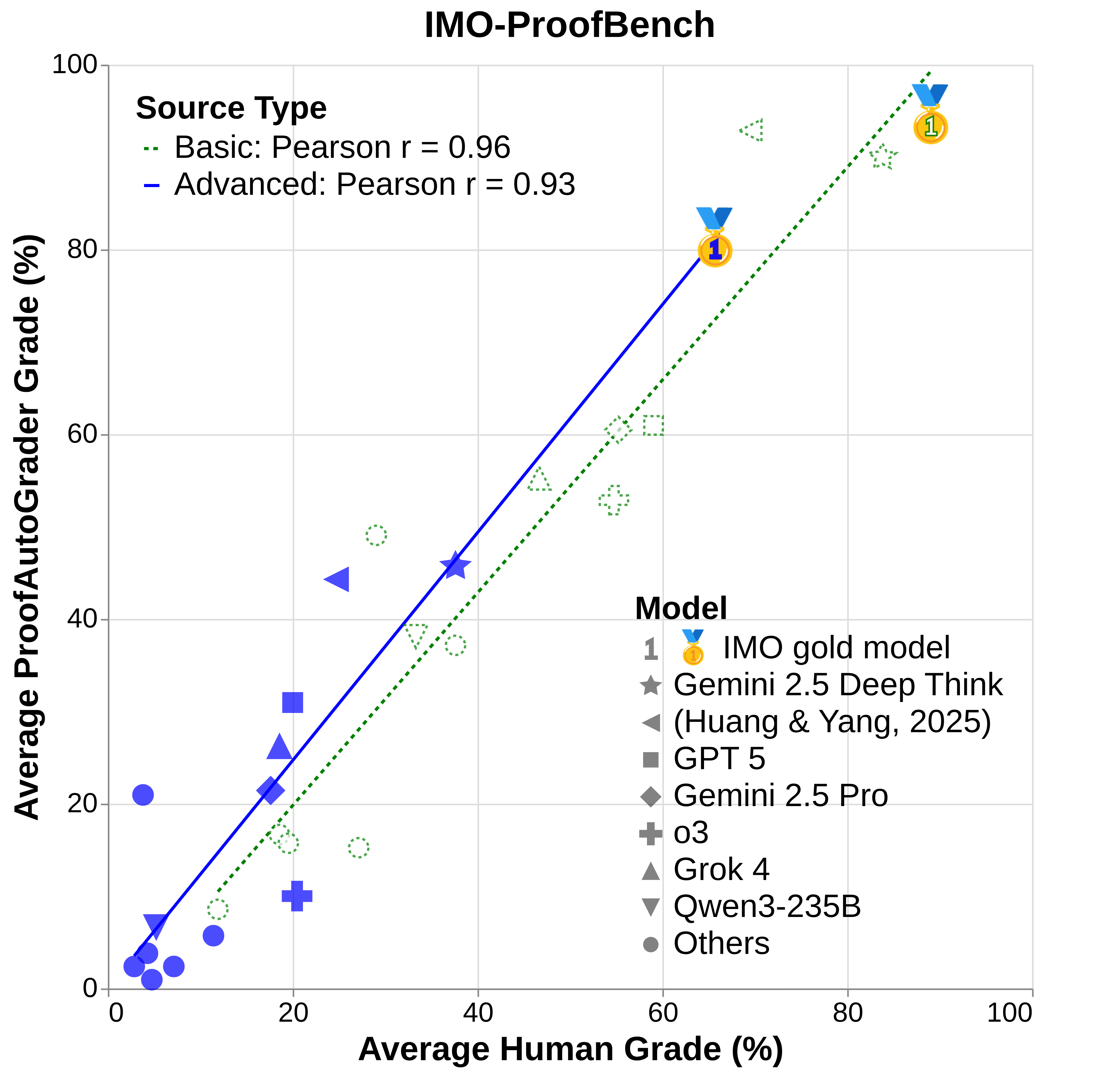
Google DeepMind introduces IMO-Bench, a comprehensive suite of benchmarks vetted by IMO medalists targeting International Mathematical Olympiad-level reasoning, featuring 400 diverse Olympiad problems with verifiable answers, 60 proof-writing problems with detailed grading schemes, and 1000 human-graded proofs, playing a crucial role in achieving historic gold-level performance at IMO 2025.
Context Engineering 2.0
Researchers from SJTU, SII, and GAIR trace the 20+ year evolution of context engineering, reframing it as a fundamental challenge in human-machine communication spanning from primitive computing (Era 1.0) to today’s intelligent agents (Era 2.0) and beyond. It defines context engineering as systematic entropy reduction where humans preprocess high-entropy contexts into low-entropy machine-understandable representations. This gap narrows as machine intelligence increases.
Scaling Agent RL via Experience Synthesis
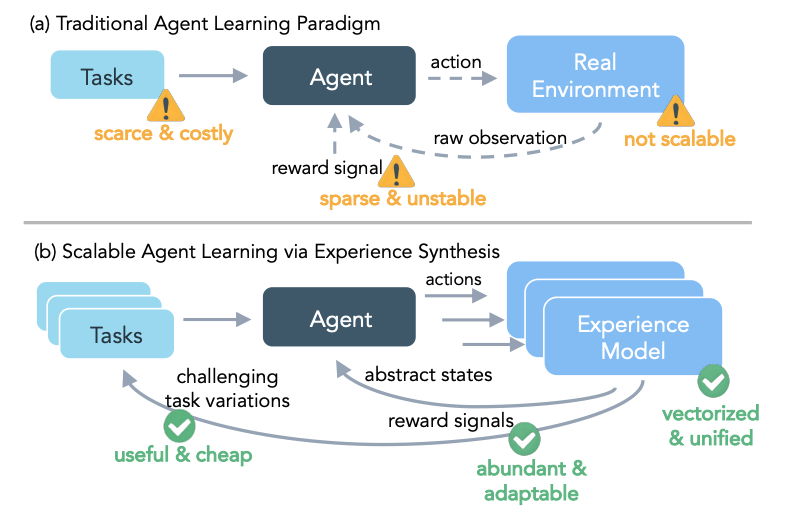
Meta researchers introduce DreamGym, a unified framework that synthesizes diverse training experiences to enable scalable reinforcement learning for LLM agents without costly real-environment rollouts. It addresses fundamental barriers of expensive interactions, limited task diversity, unreliable rewards, and infrastructure complexity.
TIR-Judge
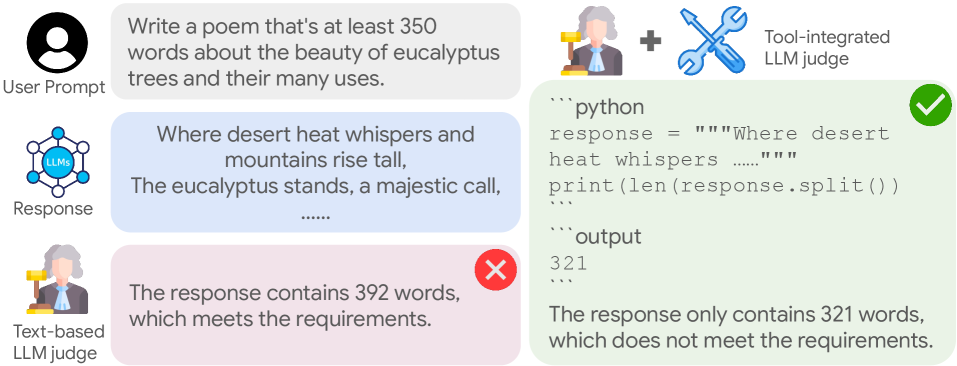
Google and collaborators introduce TIR-Judge, an end-to-end reinforcement learning framework that trains LLM judges to integrate code execution for precise evaluation. It surpasses reasoning-only judges by up to 6.4% (pointwise) and 7.7% (pairwise) while demonstrating that tool-augmented judges can self-evolve without distillation.
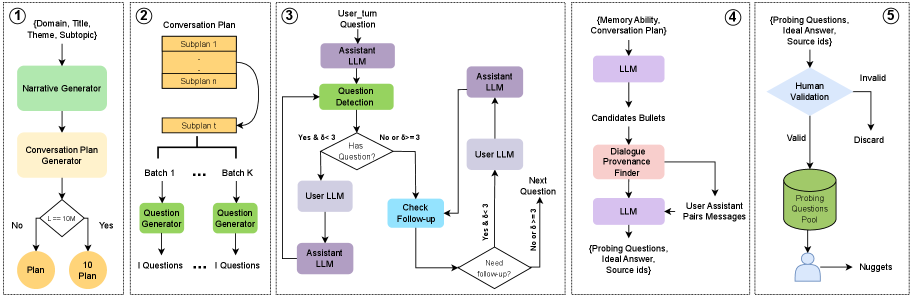
Enhancing Long-Term Memory in LLMs
Researchers from the University of Alberta and UMass Amherst introduce BEAM, a new benchmark for evaluating long-term memory in LLMs with conversations up to 10M tokens, and LIGHT, a framework that enhances memory performance through three complementary systems.
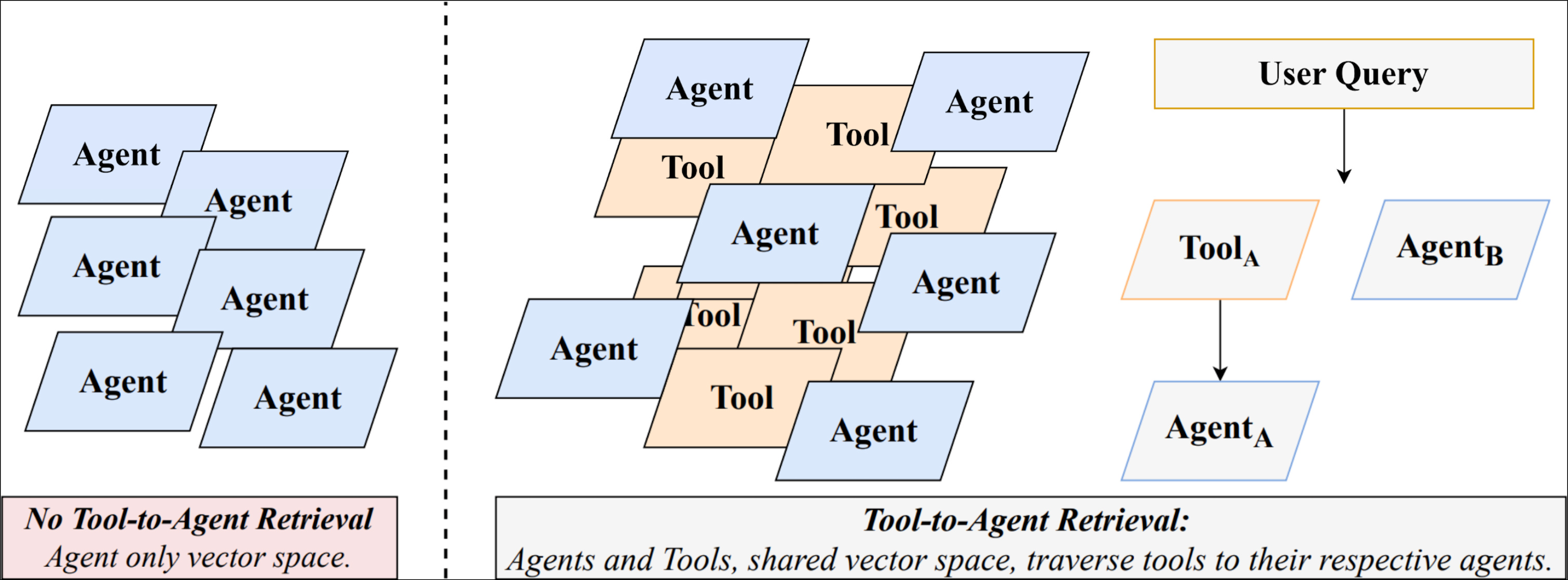
Tool-to-Agent Retrieval
PwC researchers introduce a unified retrieval framework that embeds both tools and agents in a shared vector space with metadata relationships, enabling efficient routing in multi-agent systems coordinating hundreds of MCP servers and tools.
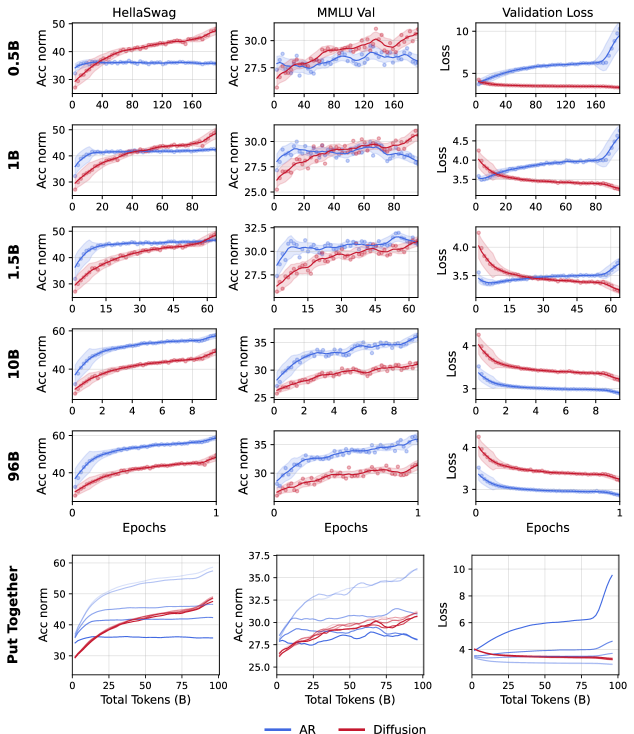
Diffusion LMs are Super Data Learners
Researchers from NUS, Sea AI Lab, StepFun, and collaborators demonstrate that diffusion language models (DLMs) consistently outperform autoregressive models when unique training data is limited. Reveals that a systematic “crossover” phenomenon exists where DLMs extract 3x more value per unique token through multi-epoch training.
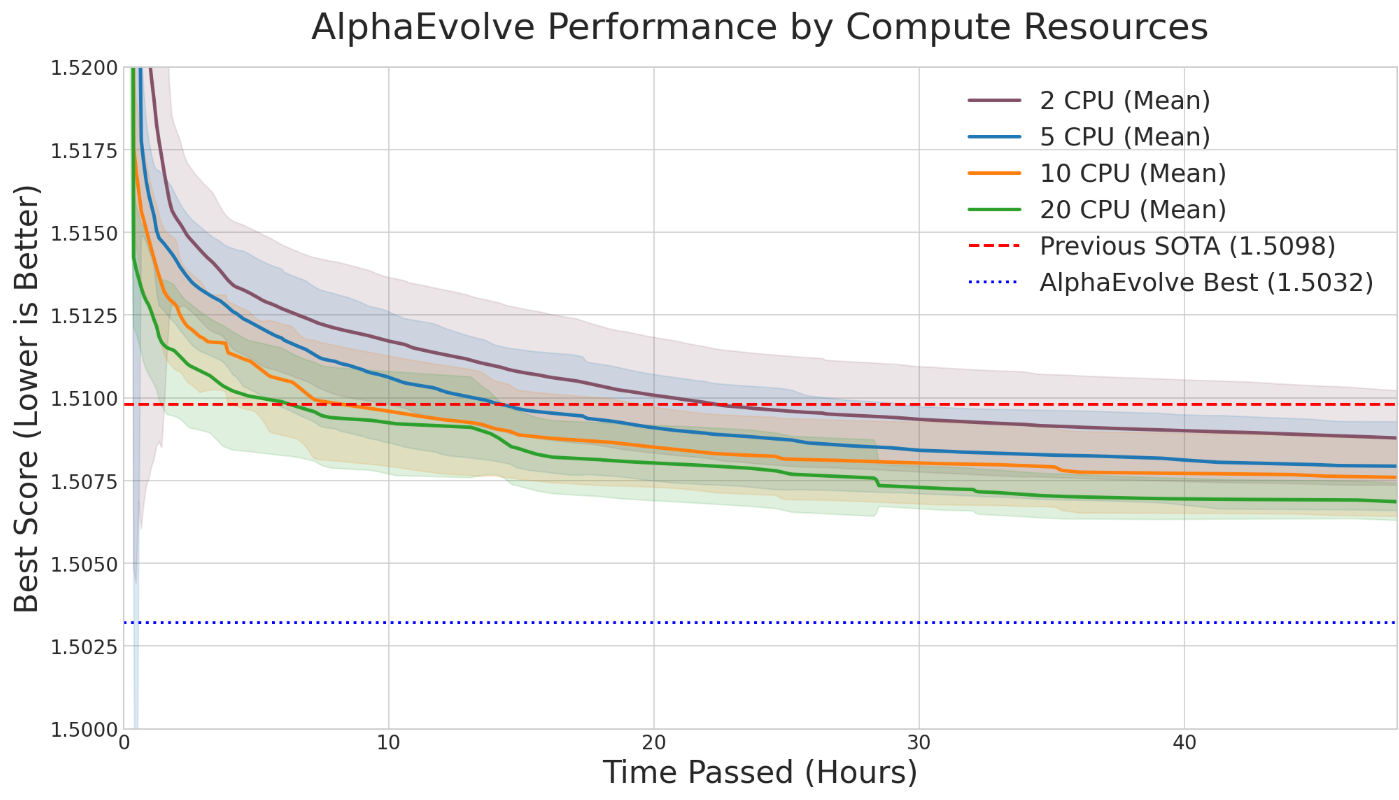
Mathematical Exploration and Discovery at Scale
Google DeepMind, Princeton, Brown, and Terence Tao apply AlphaEvolve, an AI system using LLM-guided evolutionary search to autonomously discover mathematical constructions across analysis, combinatorics, geometry, and number theory. Across 67 problems, AlphaEvolve rediscovered best-known solutions, improved several problems, and extended finite solutions into general formulas with significantly reduced computation time.
Petri Dish Neural Cellular Automata
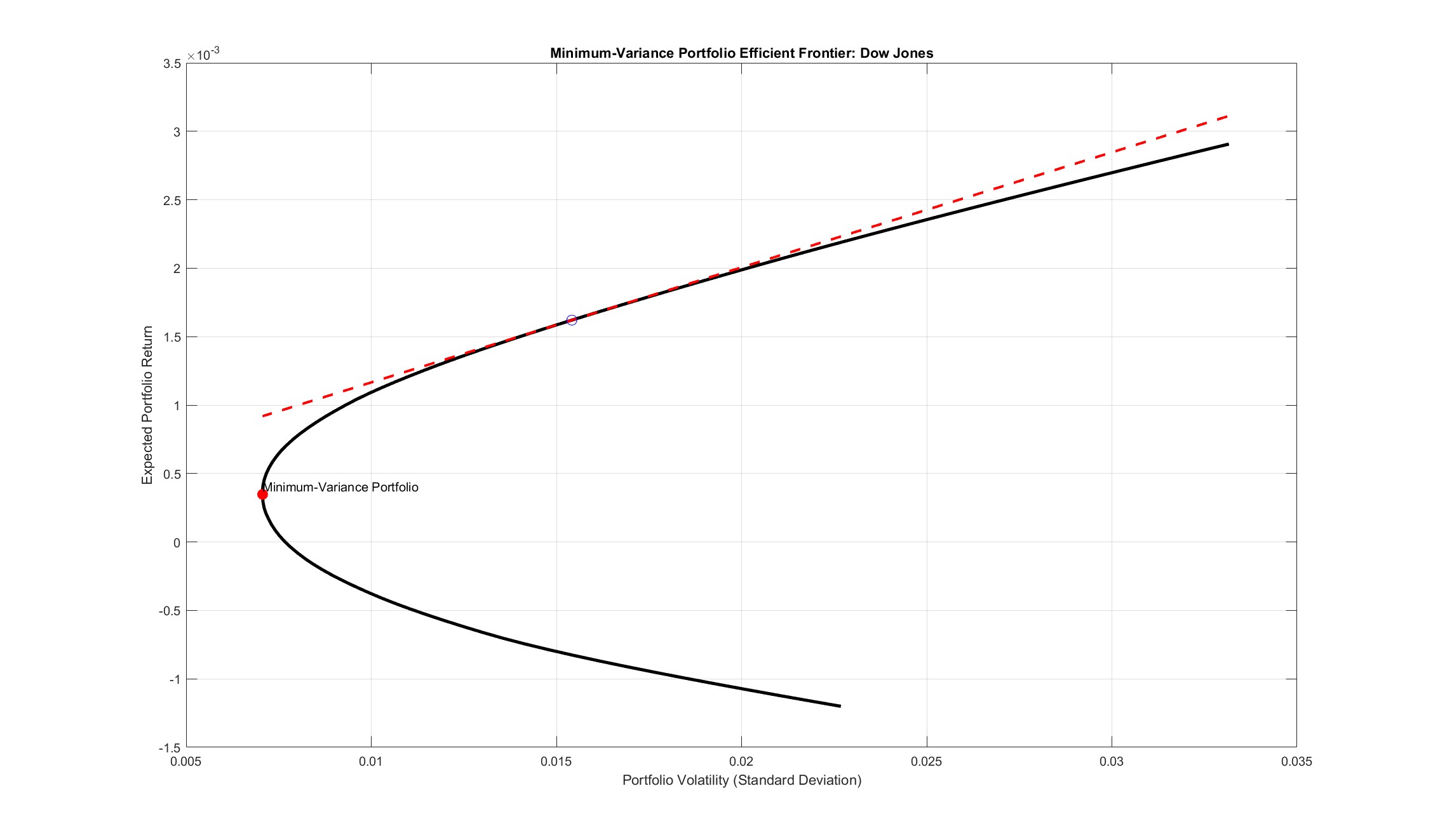
Sakana AI researchers introduce PD-NCA, a differentiable artificial life framework where multiple independent agents continuously update their parameters through gradient descent during simulation, enabling within-lifetime learning and open-ended behavioral change. The system exhibits emergent phenomena, including rock-paper-scissors dynamics, cyclic interactions, and spontaneous cooperation despite purely competitive optimization objectives.
Unlocking the Power of Multi-Agent LLM for Reasoning
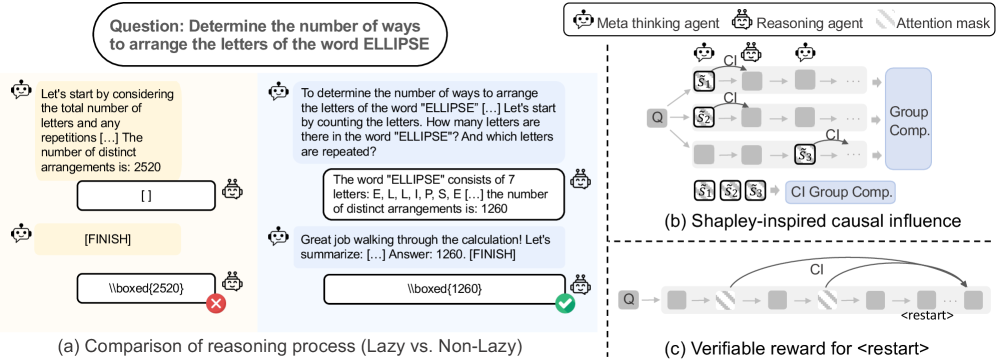
Researchers from Penn State, Harvard, Microsoft, and collaborators introduce Dr. MAMR, addressing the “lazy agent” problem in multi-agent LLM reasoning through Shapley-inspired causal influence measurement and verifiable restart mechanisms. The framework achieves 78.6% on MATH500 (+4.2% over ReMA), 20.0% on AIME24, and maintains balanced agent contributions where baseline approaches collapse into single-agent dominance.