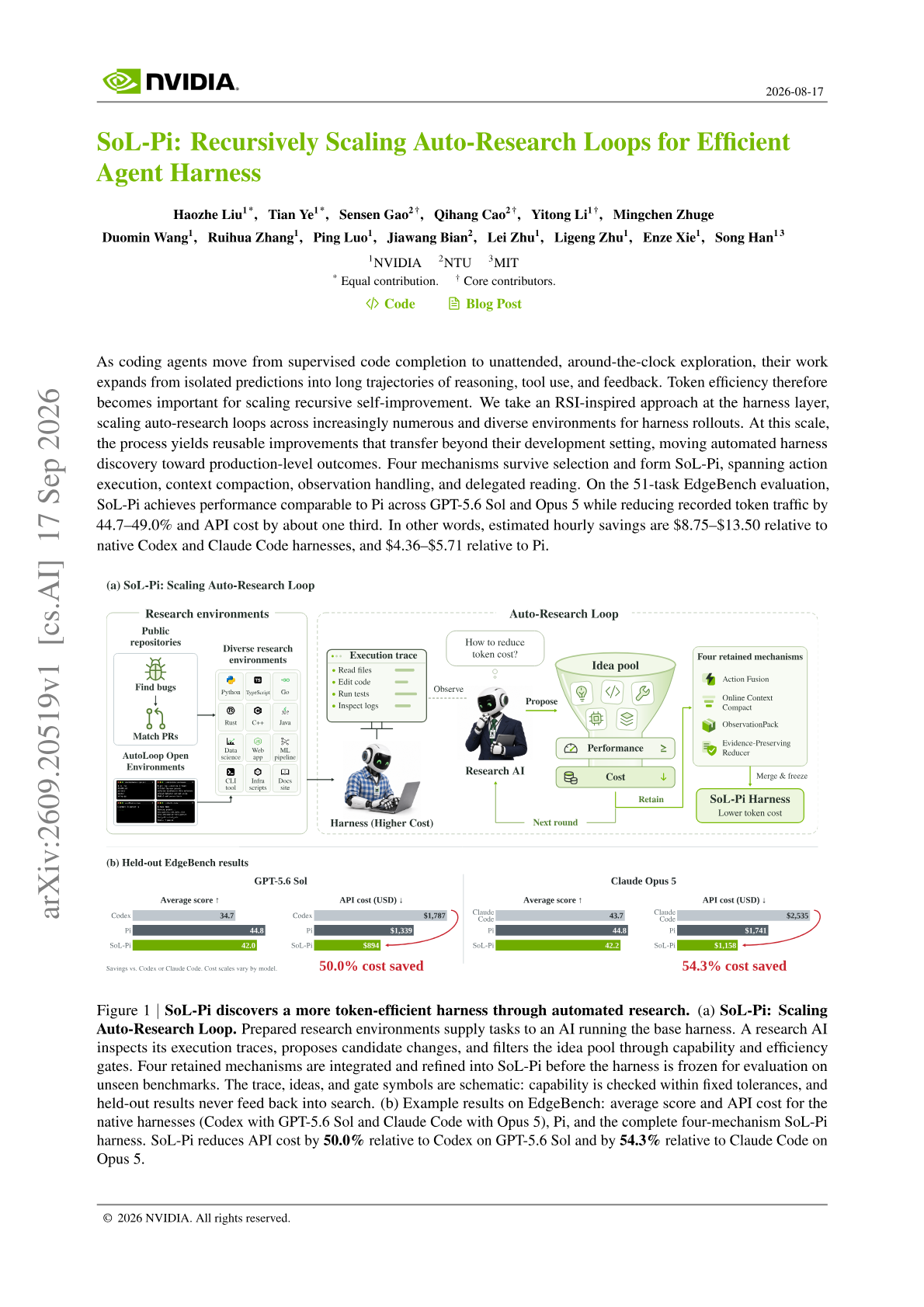
SoL-Pi: Recursively Scaling Auto-Research Loops for Efficient Agent Harness
Agent harnesses are tuned by hand, one mechanism at a time, against whatever environment the team happens to have. NVIDIA moves that tuning into an automated research loop and keeps only the mechanisms that survive selection across many environments.
Skill-based Agentic Evaluation for Real-time Data Science Tasks
Storing a fixed reference answer for every eval case breaks when the underlying data changes daily, so Adobe researchers write each reference answer as a Python function that runs against the live system at evaluation time. An LLM judge then splits the agent's response and the computed answer into atomic facts and scores precision and recall regardless of output format, raising agreement with expert labels from an MCC of 0.331 to 0.427 while cutting token cost per case by 16%. A judge given no ground truth scored an MCC of -0.379, which is worse than chance.
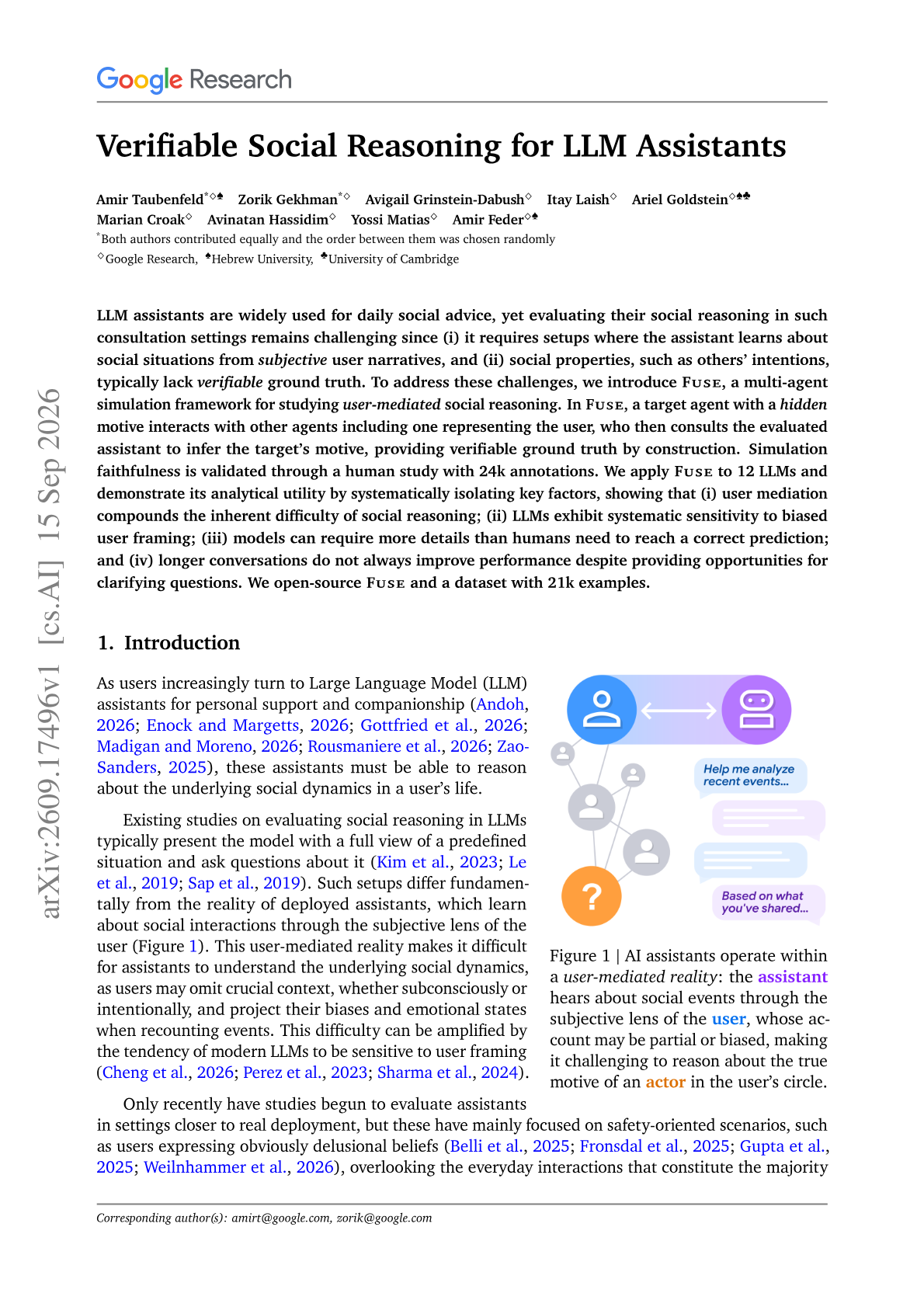
Verifiable Social Reasoning for LLM Assistants
People ask assistants for social advice constantly, and the assistant only hears the user's version of events, which makes it hard to check whether it read the situation correctly. Google Research builds that ground truth by simulation, with a target agent holding a hidden motive while a user agent relays events to the assistant, which then has to infer the motive. Across 24k human annotations validating the simulations and 12 LLMs tested, biased framing from the user shifted the assistant's answer, and longer conversations with room for clarifying questions did not reliably help.
Mo' Models, Mo' Problems: How to best select model pools when designing Multi-Agent Systems
NVIDIA compared eight strategies for choosing which models go into a multi-agent system, based on size, accuracy, answer diversity, and error diversity, across routing, majority vote, and LLM-as-judge setups on hard science benchmarks. Larger pools of different open models raised the theoretical best-case accuracy while achieved accuracy often fell below the single best model in the pool, and using several copies of one model worked better. Majority vote over the best single model raised HLE accuracy from 29.4% to 32.2%, so measure what another model adds before putting it in the router.
Divide, Consult, Conquer: Capability Laundering Through Aligned LLMs
Safety evaluations usually ask whether a model refuses a harmful request. Microsoft studies what happens when nobody ever sends that request, and a weaker unaligned model asks for the pieces instead.
Salesforce Koa: An Enterprise Language Model for Agentic Tool Use
Custom enterprise models usually need a training set someone has to build. Salesforce trained Koa from artifacts it already had, namely the declarative files that configure its agents.
Stellar Colosseum: A Many-Agent Harness for Long-Horizon Research in Mathematics and Theoretical Computer Science
Long mathematical proofs break the usual agent loop, since a single wrong step early on invalidates everything after it. Google Research built a many-agent harness for this setting, and it produced new results on open problems from FOCS and JMLR papers.
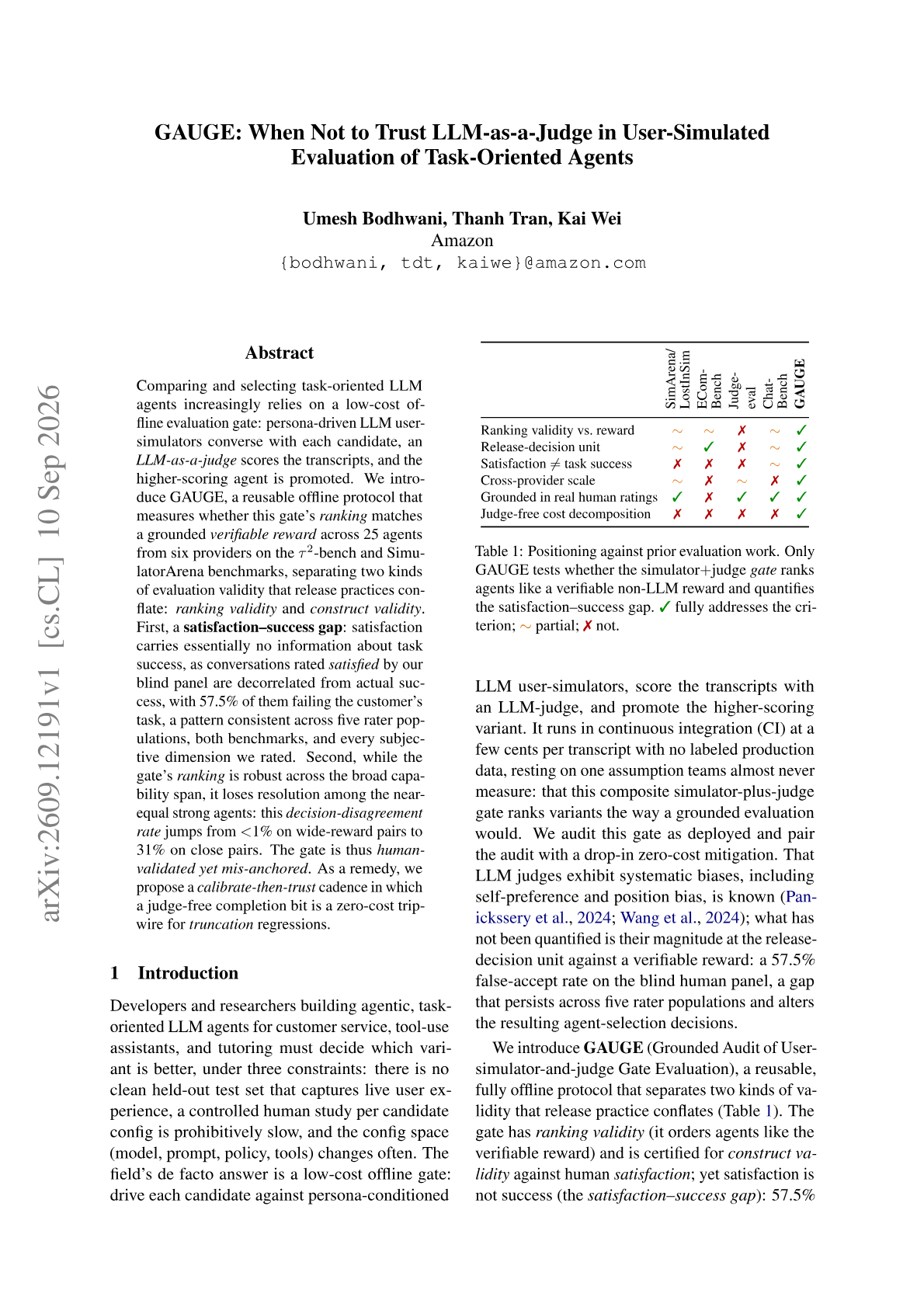
GAUGE: When Not to Trust LLM-as-a-Judge in User-Simulated Evaluation of Task-Oriented Agents
The standard way to compare task agents is to have an LLM user simulator talk to each one and an LLM judge score the transcript. Amazon audits that gate against verifiable rewards across 25 agents from six providers, and finds two specific failures.
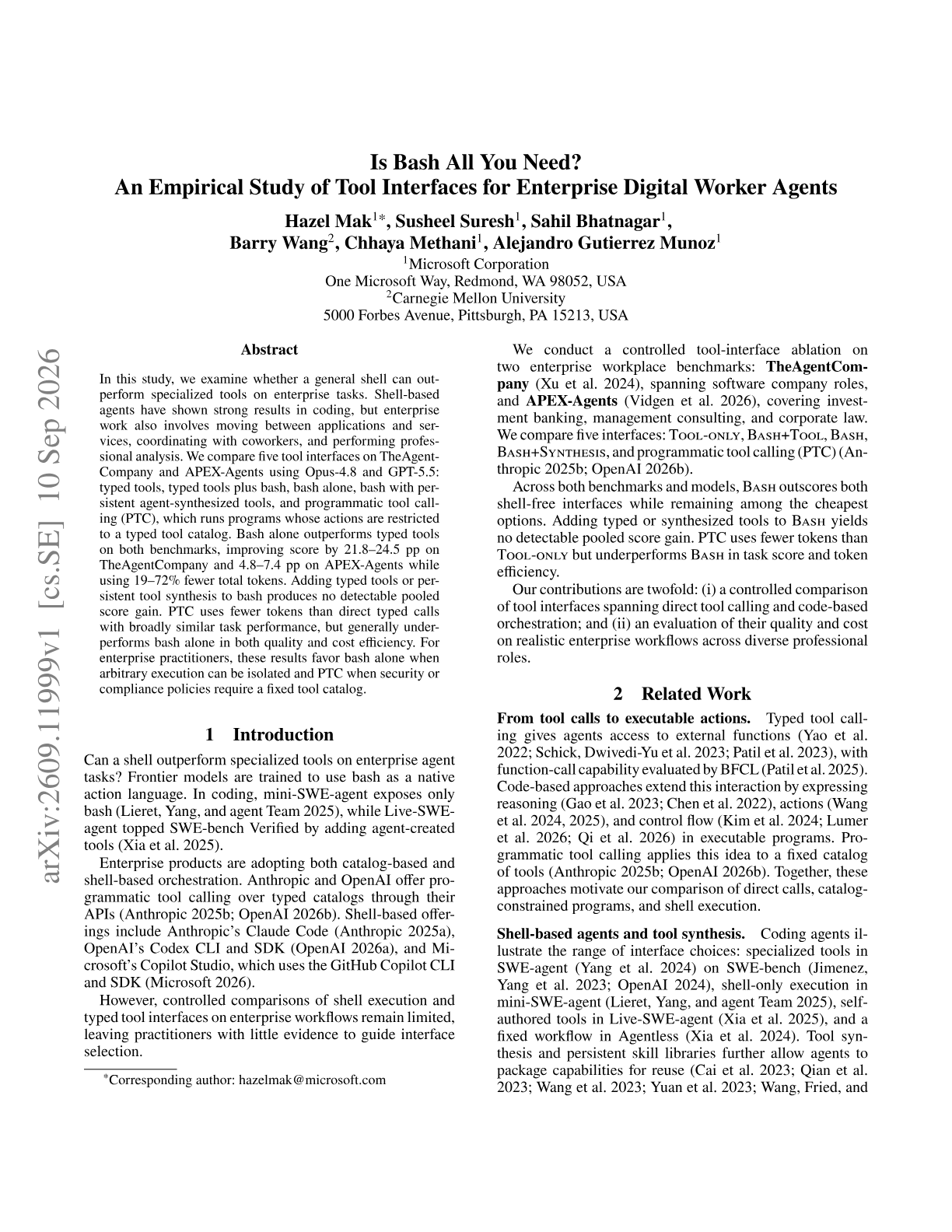
Is Bash All You Need? An Empirical Study of Tool Interfaces for Enterprise Digital Worker Agents
Deciding which tools to hand an enterprise agent usually means writing typed tool definitions for every system it touches. Microsoft compared five tool interfaces head to head, and the plainest option won.
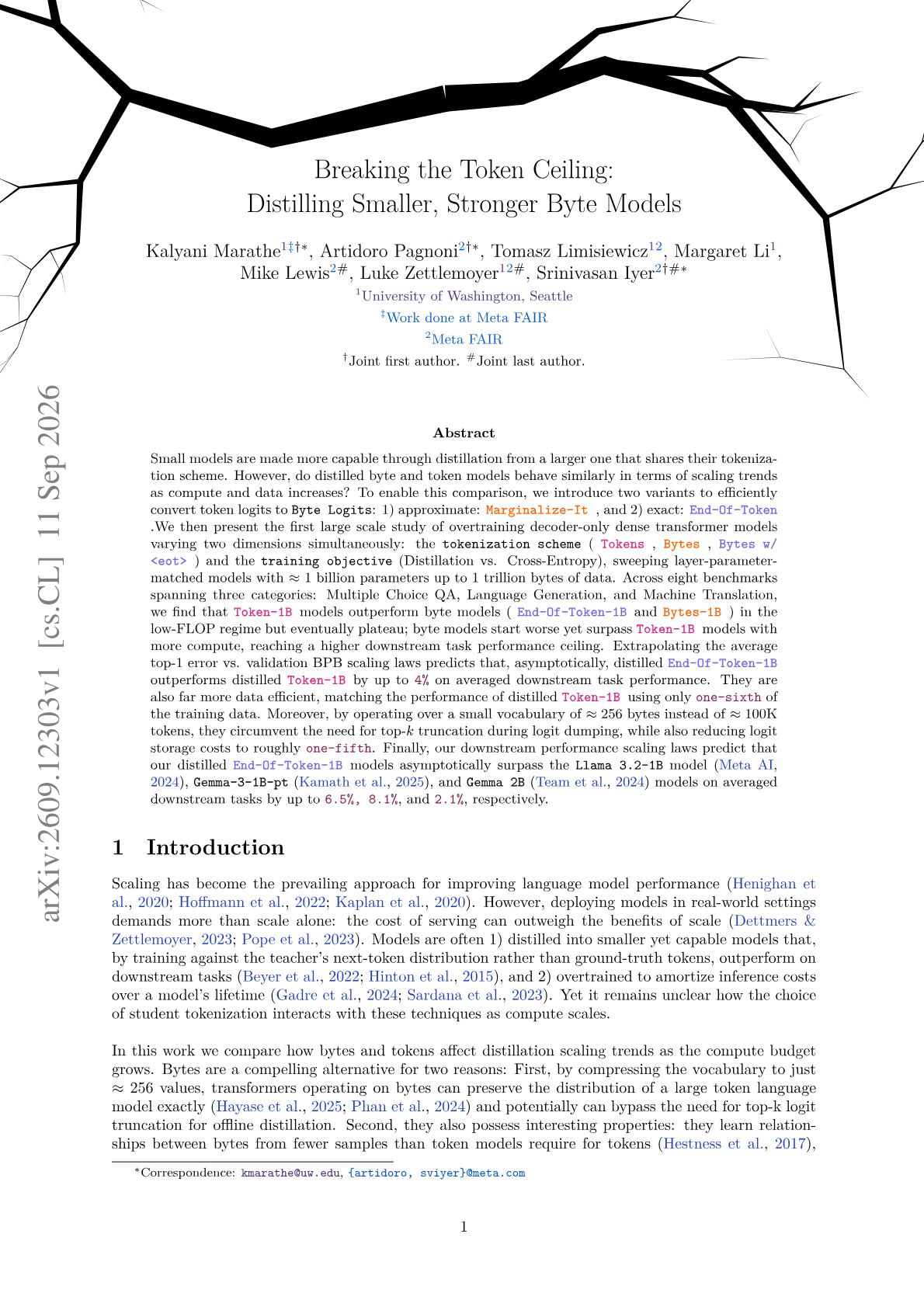
Breaking the Token Ceiling: Distilling Smaller, Stronger Byte Models
Byte-level language models drop the tokenizer and read raw bytes, which removes a preprocessing step that no one likes but also costs accuracy at small scale. Meta studies what happens as compute grows, distilling 1B byte students from token teachers on up to 1 trillion bytes, and the ordering flips.