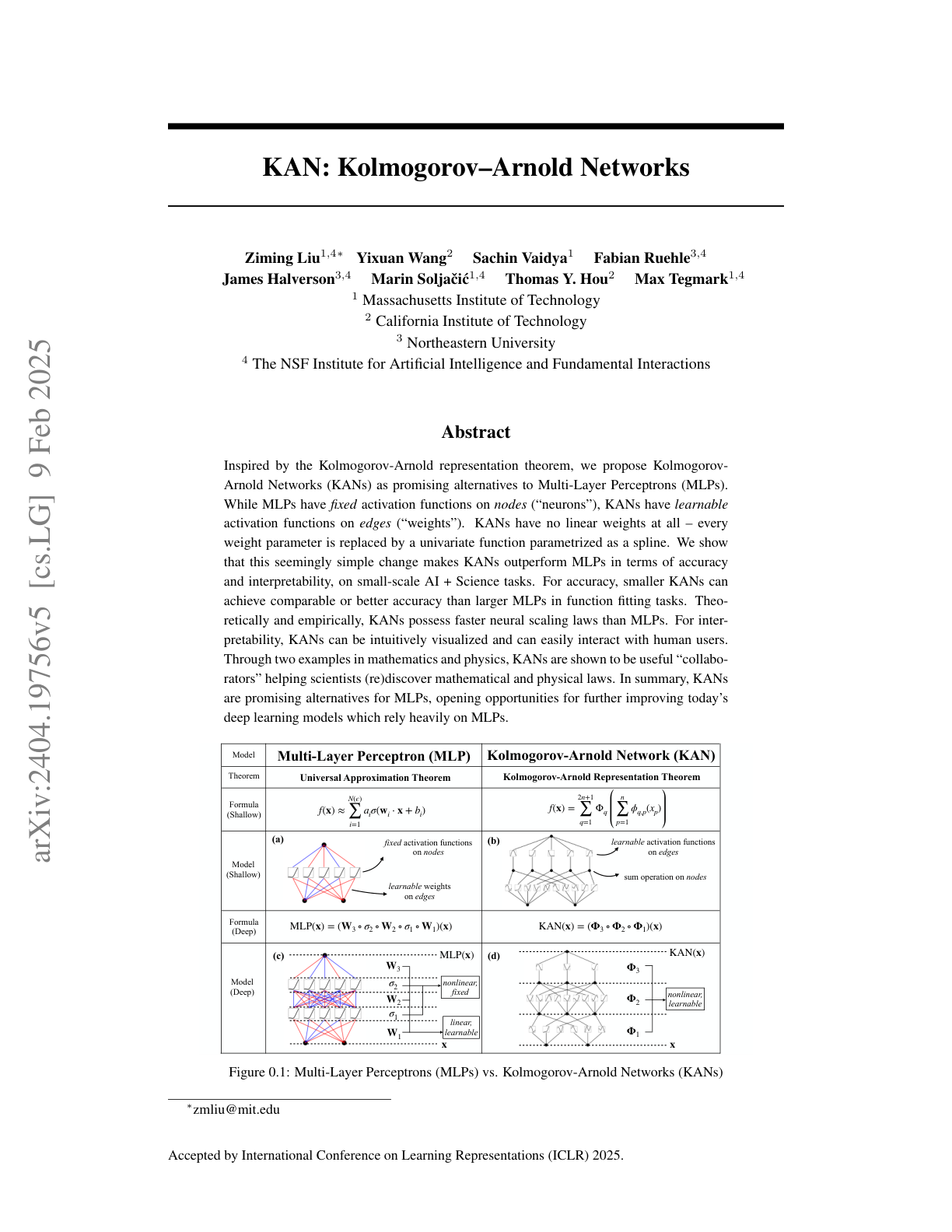
Kolmogorov-Arnold Networks
proposes Kolmogorov-Arnold Networks (KANs) as alternatives to Multi-Layer Perceptrons (MLPs); KANs apply learnable activation functions on edges that represent the weights; with no linear weights used, KANs can outperform MLPs and possess faster neural scaling laws; the authors show that KANs can be used as collaborators to help scientists discover mathematics and physical laws.
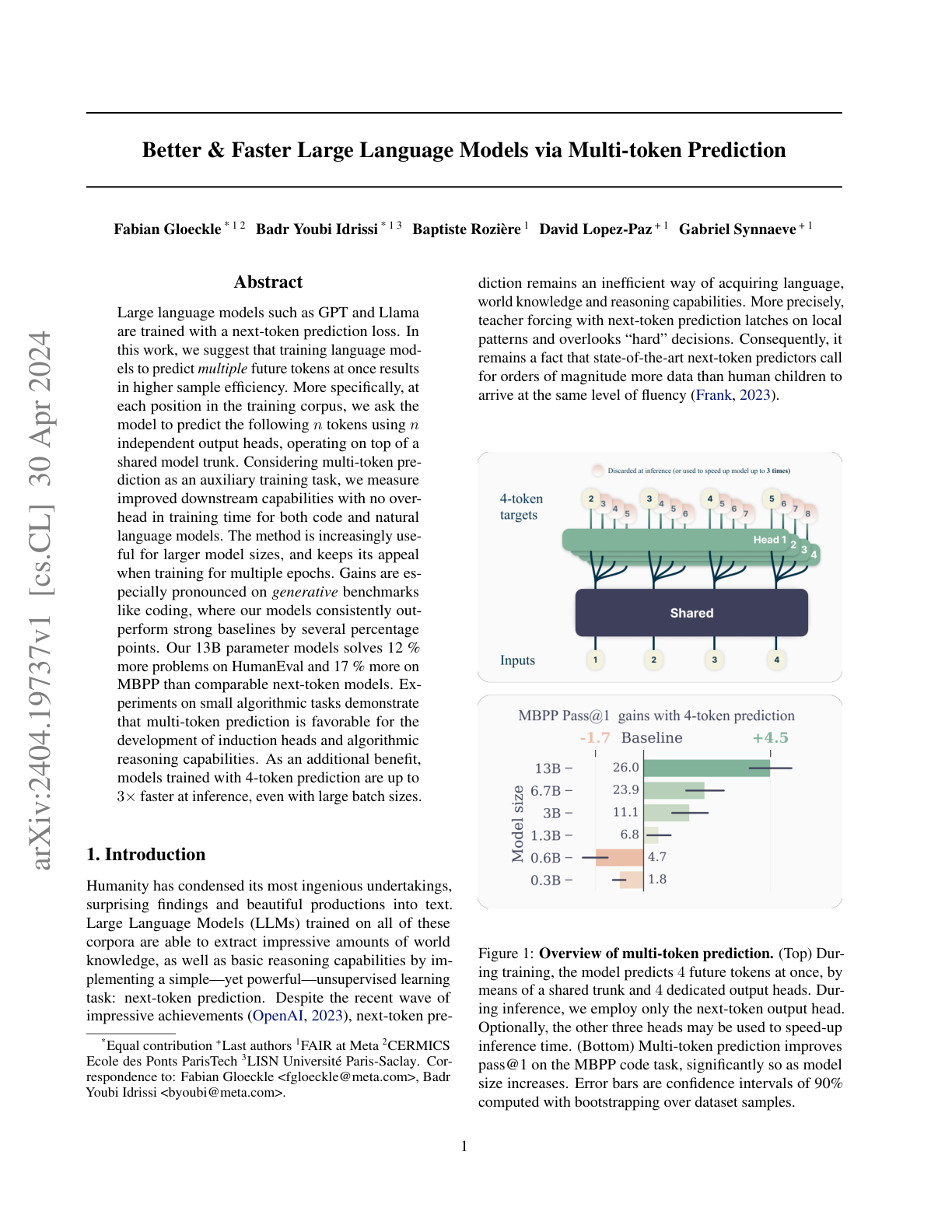
Better and Faster LLMs via Multi-token Prediction
proposes a multi-token prediction approach that performs language modeling by training the predict the following n tokens using n independent output heads; the output heads operate on top of a shared transformer trunk; multi-token prediction is shown to be useful when using larger model sizes and can speed up inference up to 3x; the proposed 13B parameter models solves 12 % more problems on HumanEval and 17 % more on MBPP than comparable next-token models.
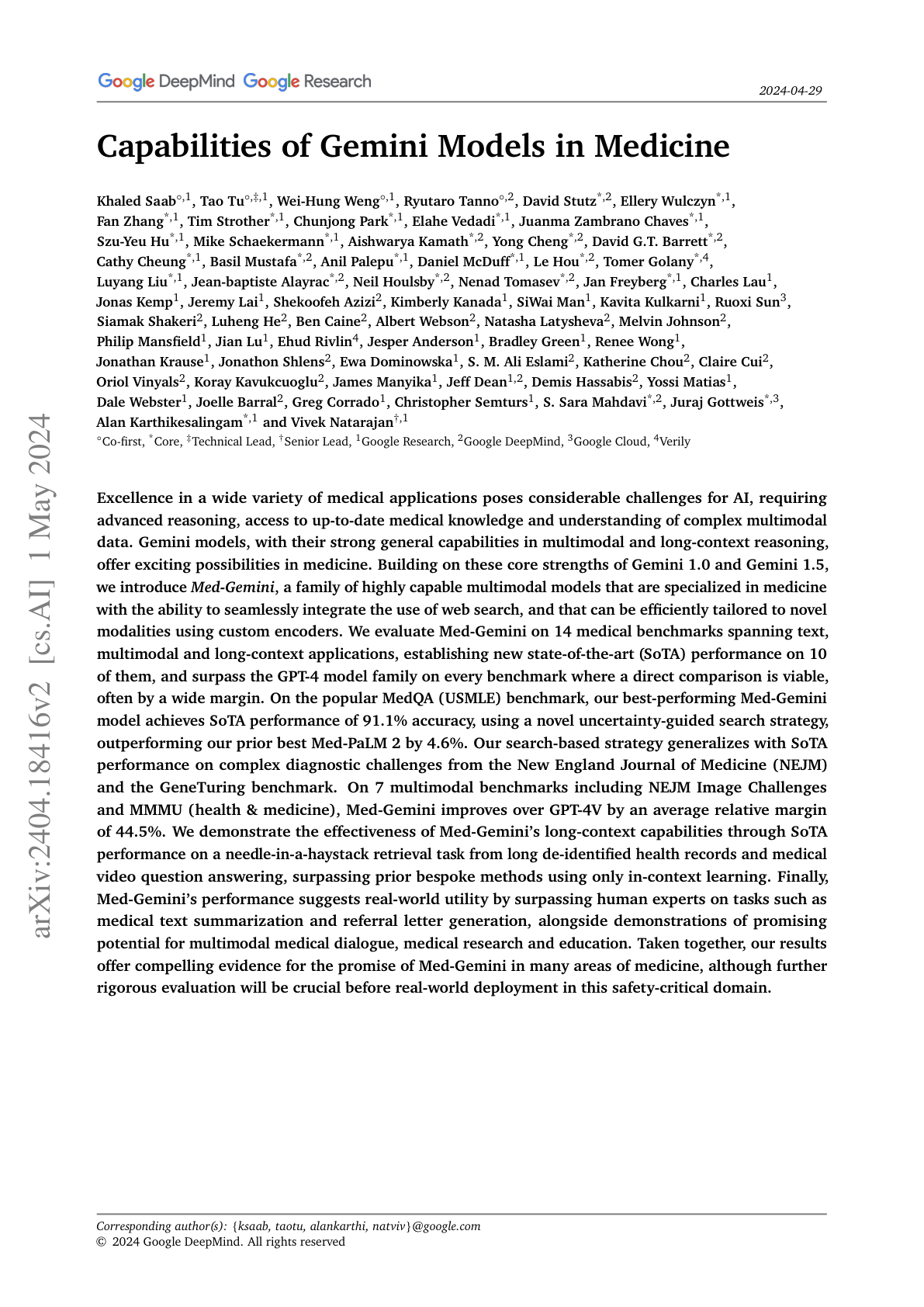
Med-Gemini
presents a family of multimodal models specialized in medicines and based on the strong multimodal and long-context reasoning capabilities of Gemini; achieves state-of-the-art performance on 10/14 benchmarks surpassing GPT-4 models; it achieves 91% accuracy on MedQA (USMLE) benchmark using an uncertainty-guided search strategy.
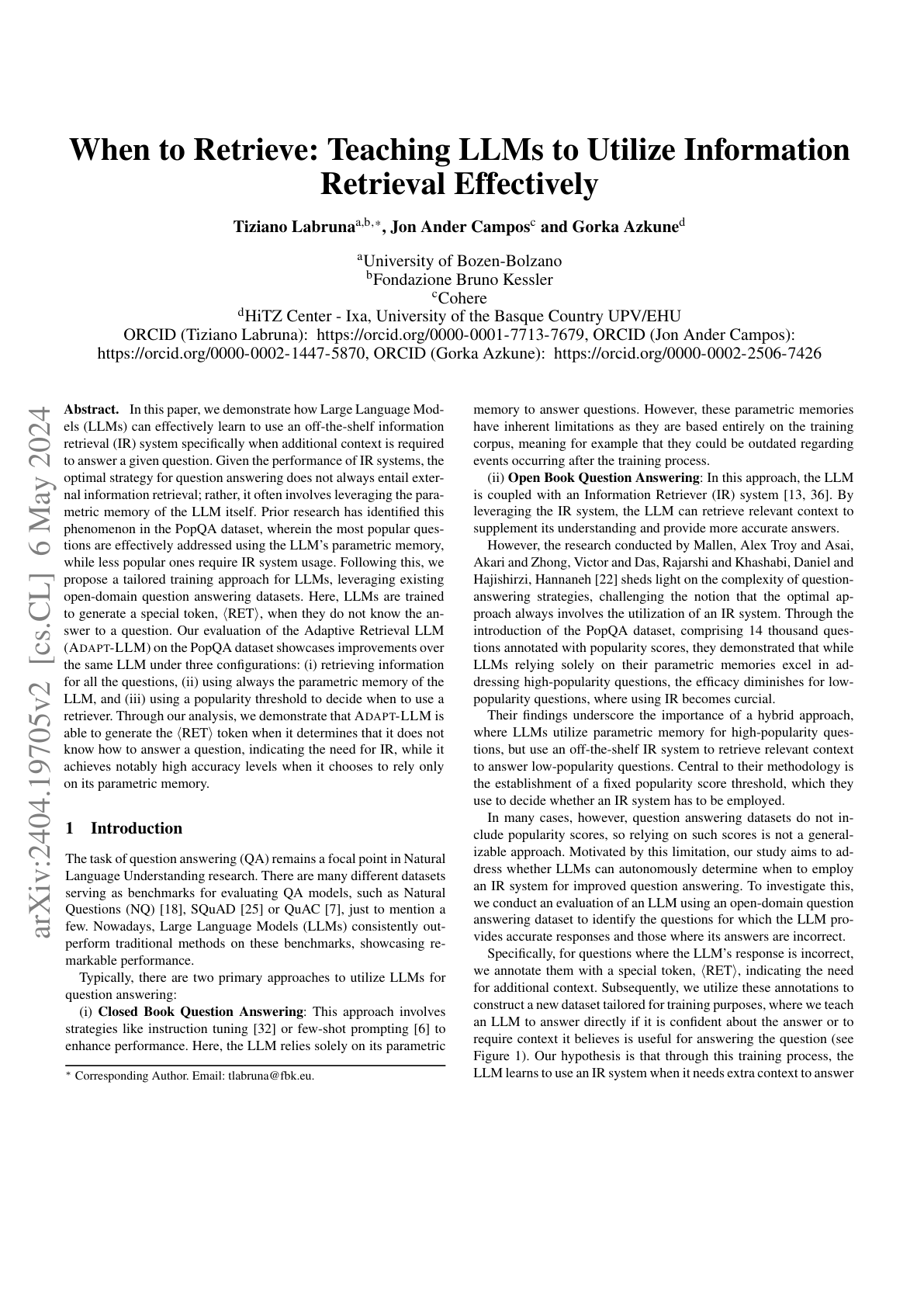
When to Retrieve?
presents an approach to train LLMs to effectively utilize information retrieval; it first proposes a training approach to teach an LLM to generate a special token, <RET>, when it's not confident or doesn't know the answer to a question; the fine-tuned model outperforms a base LLM in two fixed alternate settings that include never retrieving and always retrieving context
A Survey on Retrieval-Augmented Language Models
covers the most important recent developments in RAG and RAU systems; it includes evolution, taxonomy, and an analysis of applications; there is also a section on how to enhance different components of these systems and how to properly evaluate them; it concludes with a section on limitations and future directions.
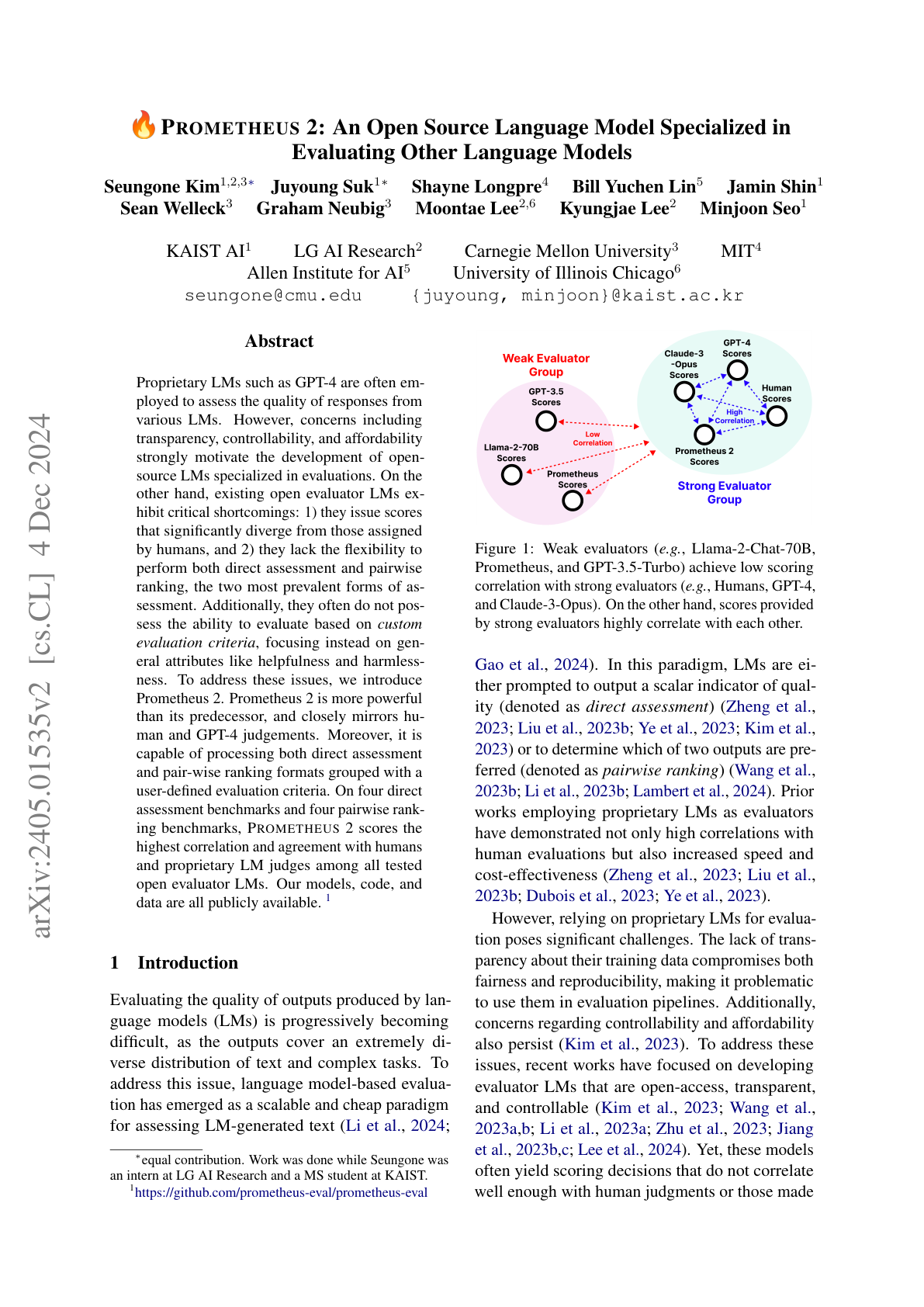
An Open-source LM Specialized in Evaluating Other LMs
open-source Prometheus 2 (7B & 8x7B), state-of-the-art open evaluator LLMs that closely mirror human and GPT-4 judgments; they support both direct assessments and pair-wise ranking formats grouped with user-defined evaluation criteria; according to the experimental results, this open-source model seems to be the strongest among all open-evaluator LLMs; the key seems to be in merging evaluator LMs trained on either direct assessment or pairwise ranking formats.
Self-Play Preference Optimization
proposes a self-play-based method for aligning language models; this optimation procedure treats the problem as a constant-sum two-player game to identify the Nash equilibrium policy; it addresses the shortcomings of DPO and IPO and effectively increases the log-likelihood of chose responses and decreases the rejected ones; SPPO outperforms DPO and IPO on MT-Bench and the Open LLM Leaderboard.
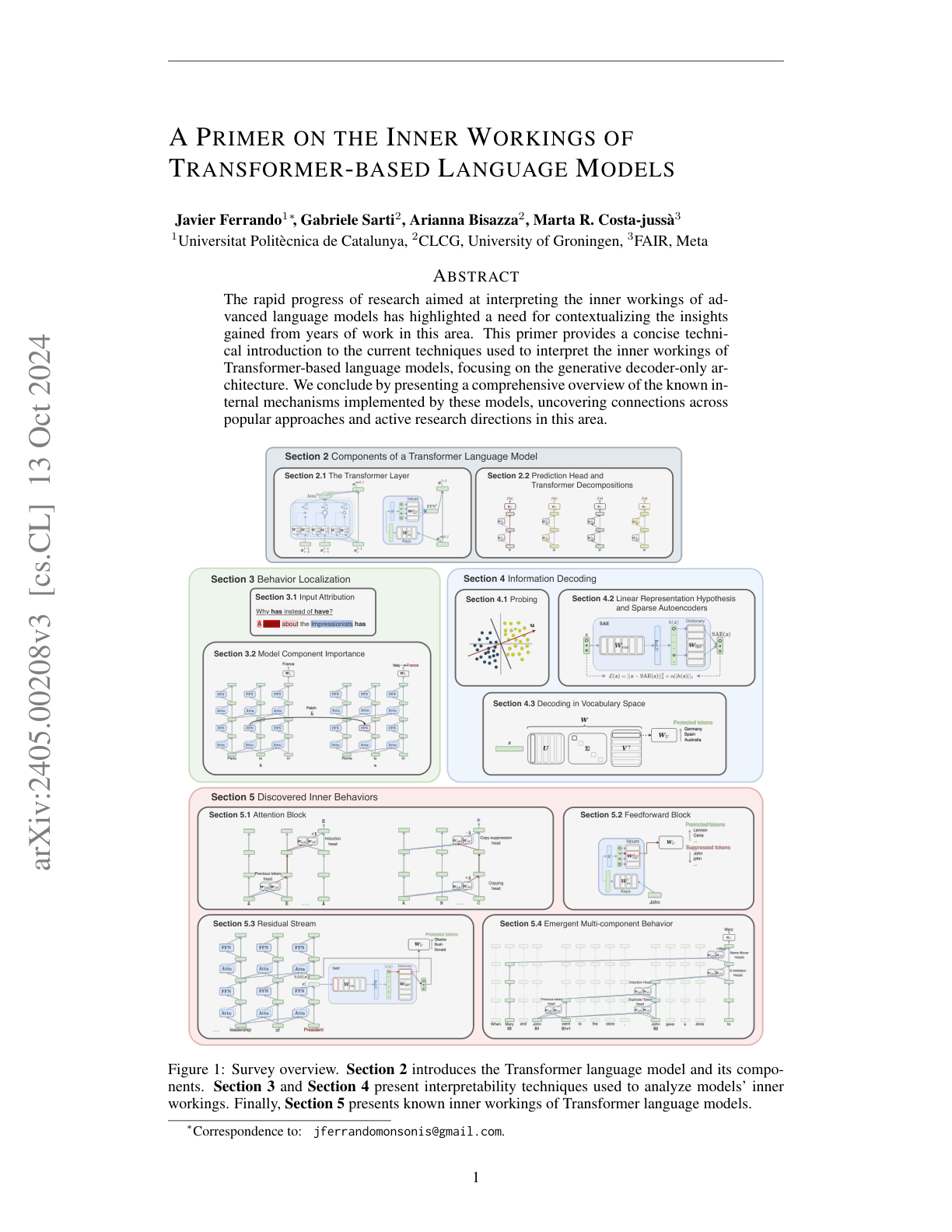
Inner Workings of Transformer Language Models
presents a technical introduction to current techniques used to interpret the inner workings of Transformer-based language models; it provides a detailed overview of the internal mechanisms implemented in these models.
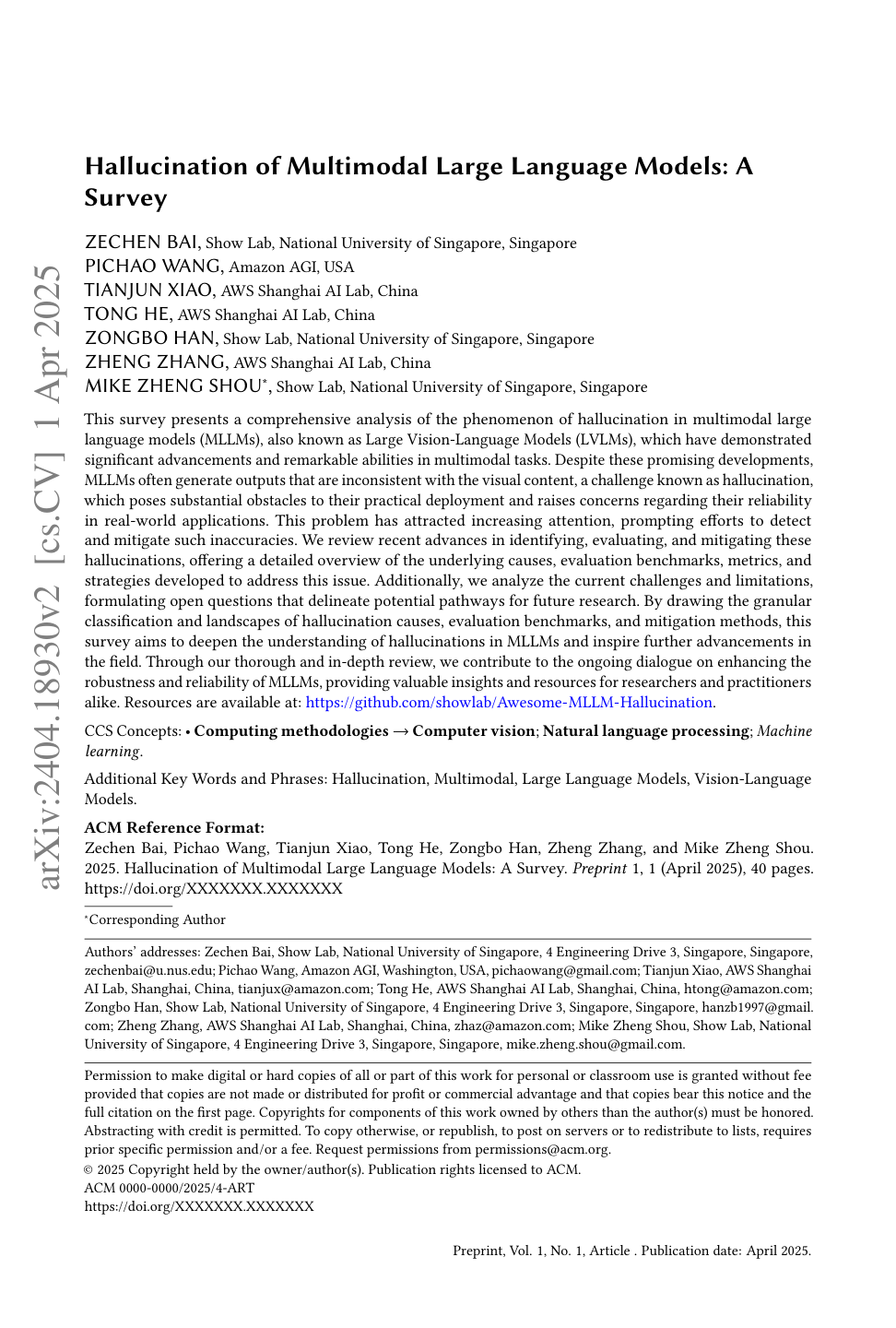
Multimodal LLM Hallucinations
provides an overview of the recent advances in identifying, evaluating, and mitigating hallucination in multimodal LLMs; it also provides an overview of causes, evaluation benchmarks, metrics, and other strategies to deal with challenges related to detecting hallucinations.
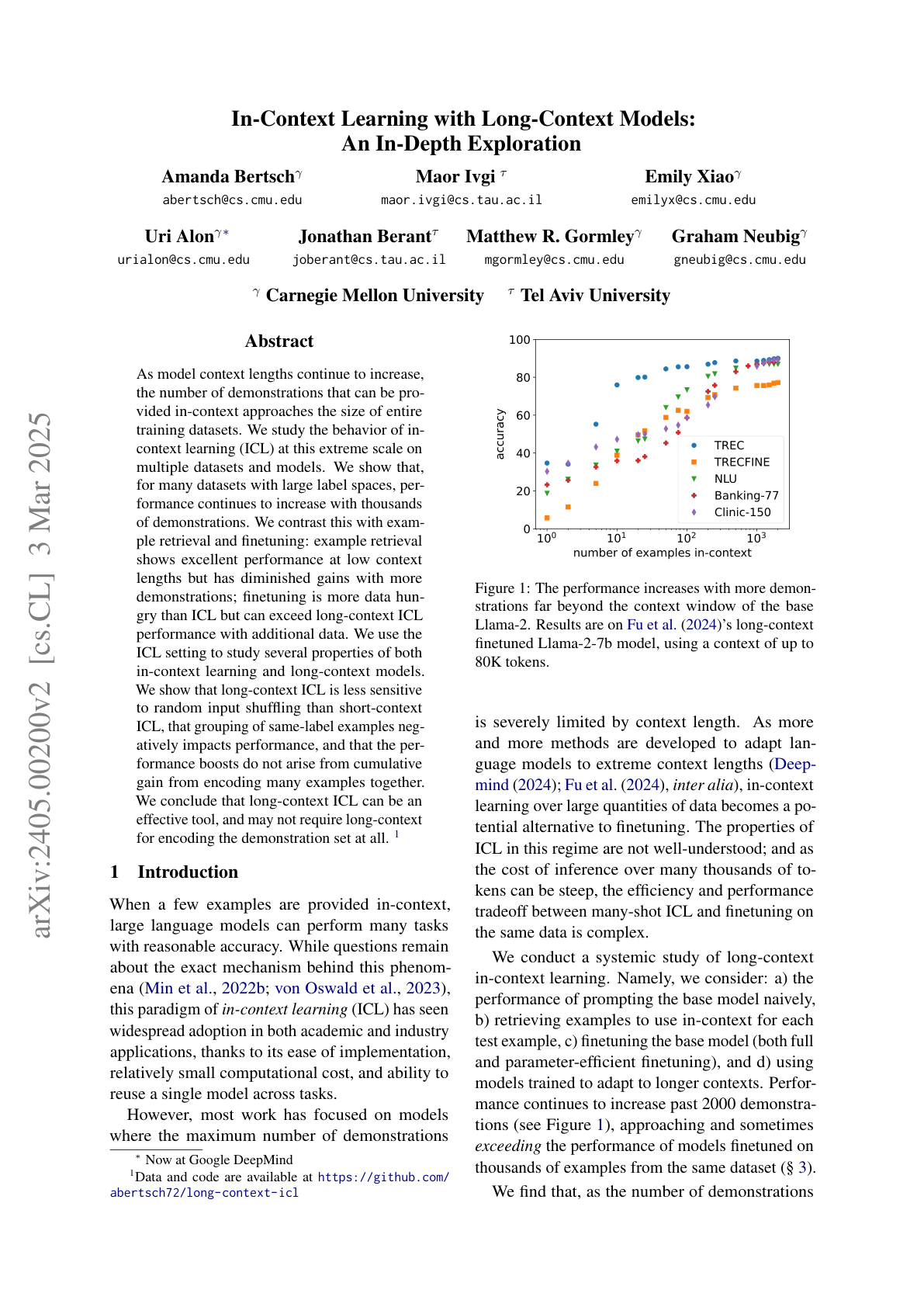
In-Context Learning with Long-Context Models
studies the behavior in-context learning of LLMs at extreme context lengths with long-context models; shows that performance increases as hundreds or thousands of demonstrations are used; demonstrates that long-context ICL is less sensitive to random input shuffling than short-context ICL; concludes that the effectiveness of long-context LLMs is not due to task learning but from attending to similar examples.