
SAM 2
an open unified model for real-time, promptable object segmentation in images and videos; can be applied to unseen visual content without the need for custom adaptation; to enable accurate mask prediction in videos, a memory mechanism is introduced to store information on the object and previous interactions; the memory module also allows real-time processing of arbitrarily long videos; SAM2 significantly outperforms previous approaches on interactive video segmentation across 17 zero-shot video datasets while requiring three times fewer human-in-the-loop interactions.
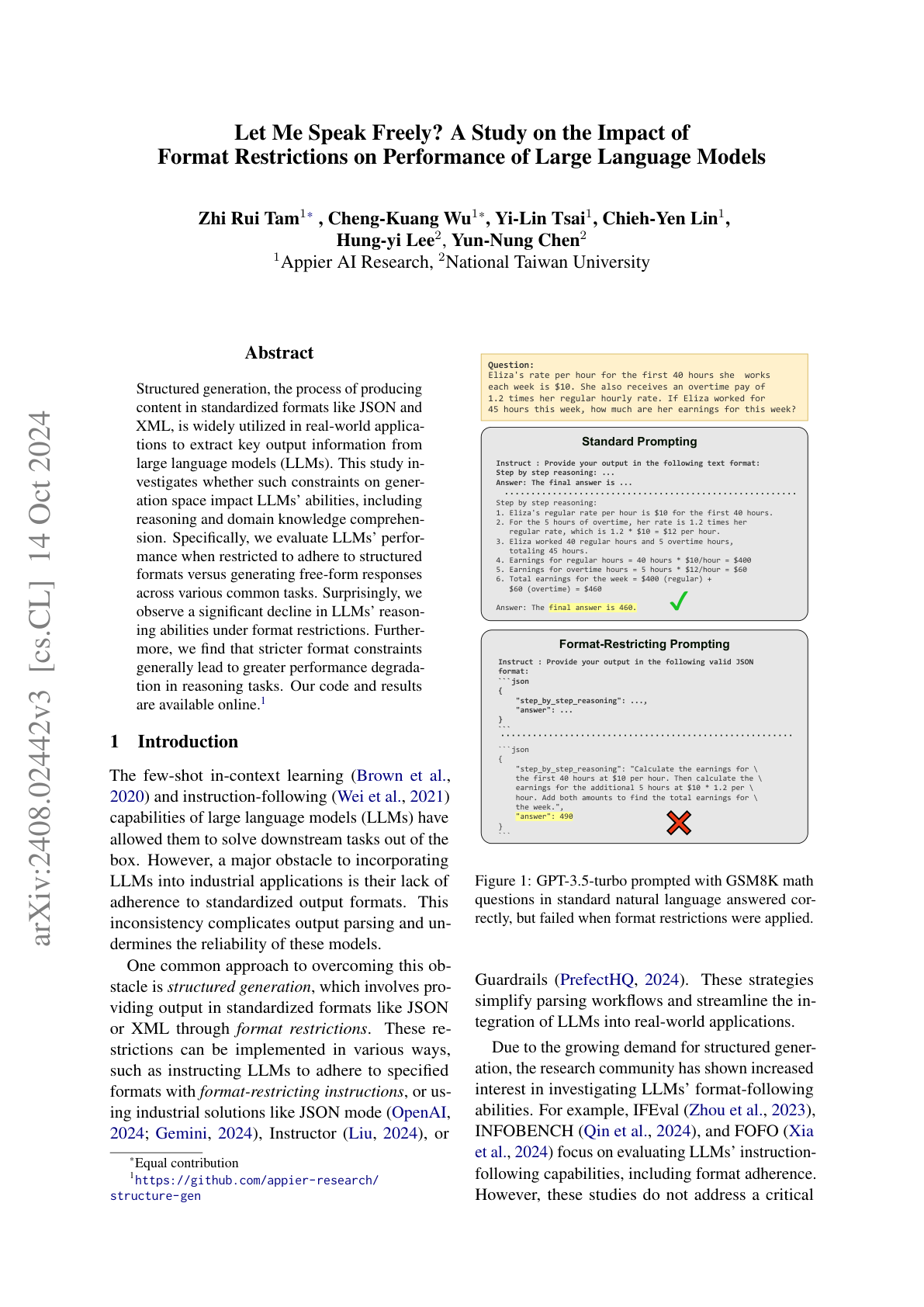
Structured Generation Limits Reasoning
investigates if structured generation can impact an LLM’s reasoning and domain knowledge comprehensive capabilities; observes that there is a significant decline in LLM’s reasoning abilities when applying format restrictions compared to free-form responses; this degradation effect is further amplified when applying stricter format constraints to reasoning tasks.
From LLMs to LLM-based Agents for Sofware Engineering
a survey paper on current practices and solutions for LLM-based agents for software engineering; covers important topics such as requirement engineering, code generation, test generation, and autonomous decision making; it also includes benchmarks, metrics, and models used in different software engineering applications.
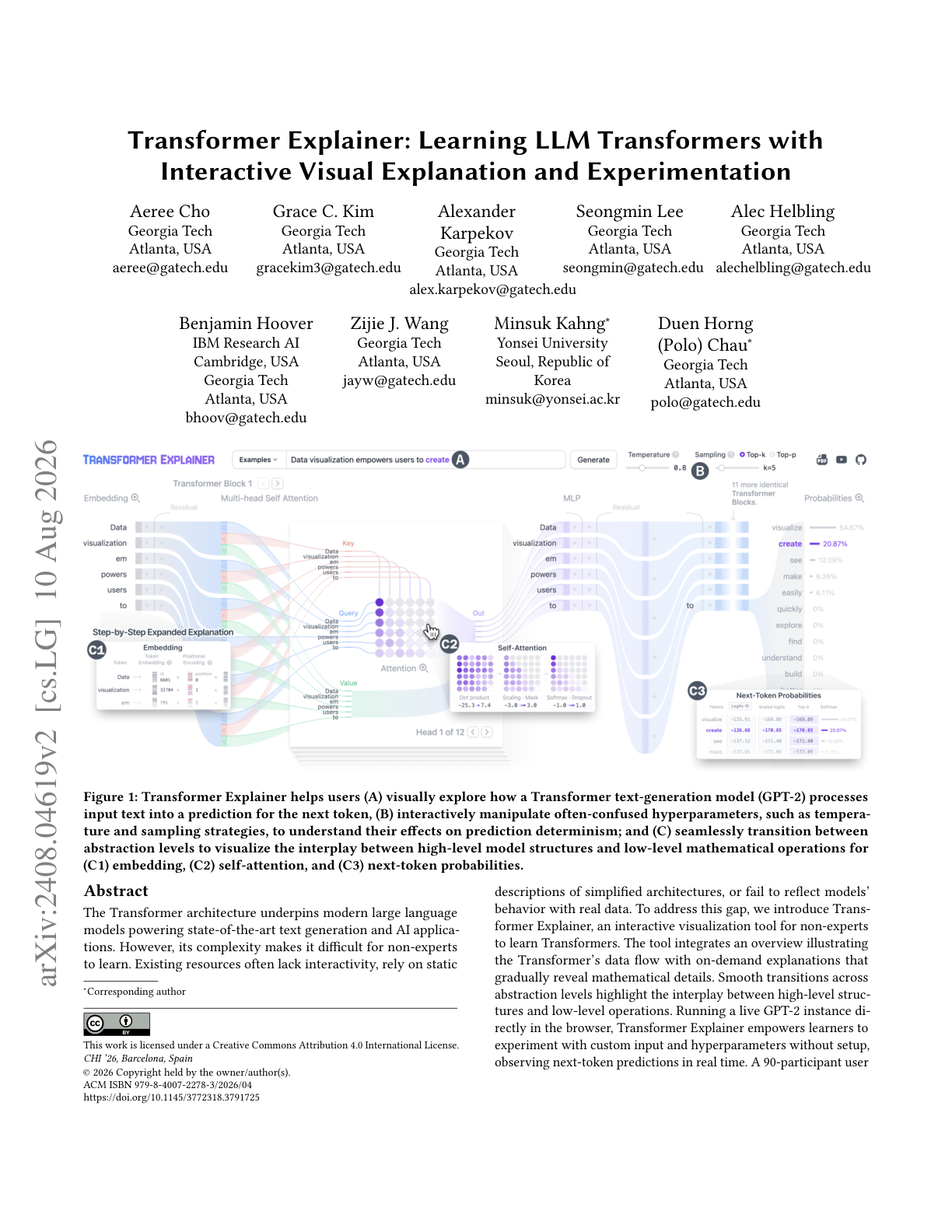
Transformer Explainer
presents an open-source interactive tool to learn about the inner workings of a Transformer model; it runs a GPT-2 instance locally in the user's browser and allows experimenting with your own inputs.
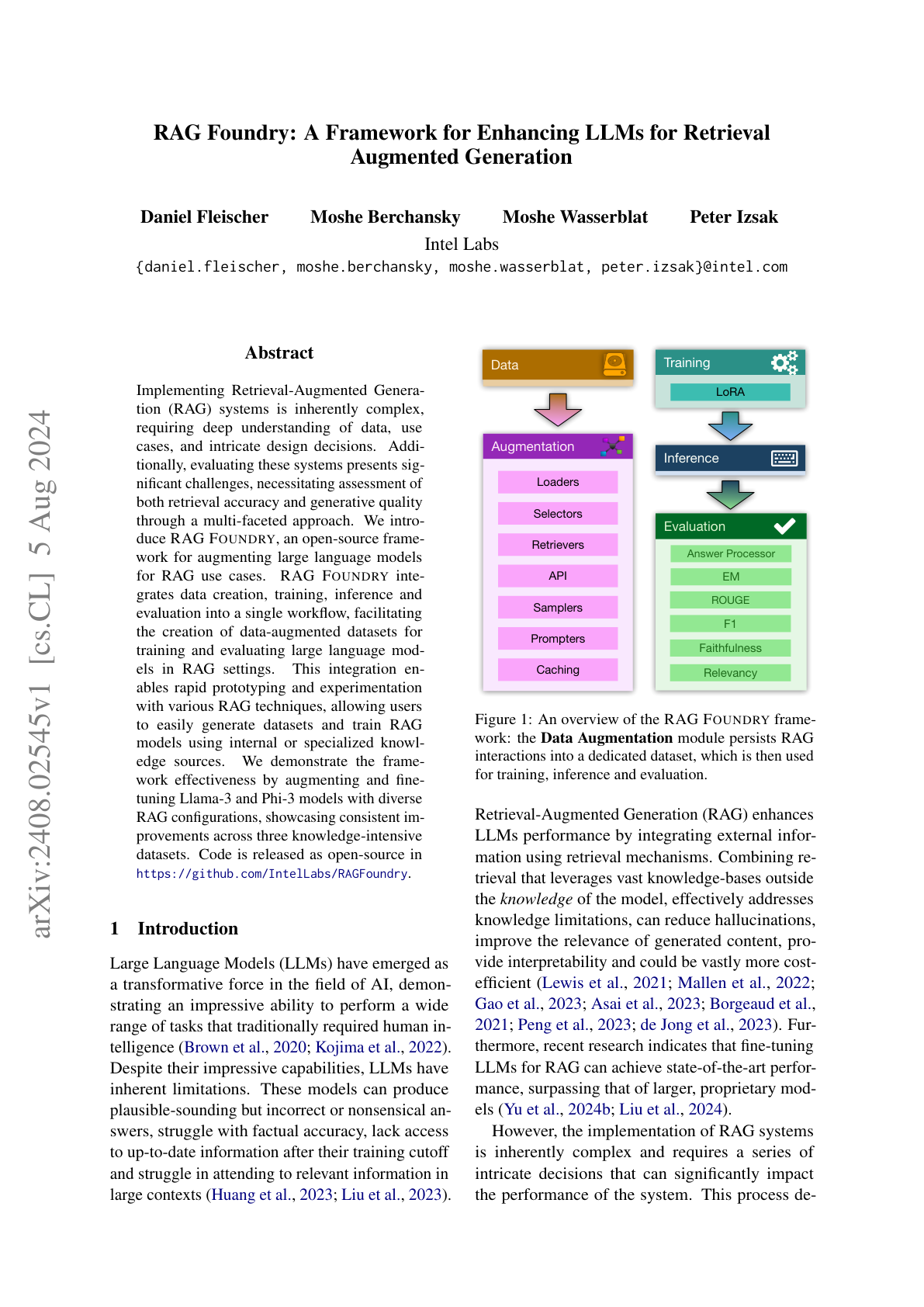
Enhancing LLMs for RAG
introduces RAGFoundry, an open-source framework for augmented LLMs for RAG use cases; it supports data creation, training, inference, and evaluation; one useful application is the creation of data-augmented datasets for tuning and evaluating LLMs in RAG settings.
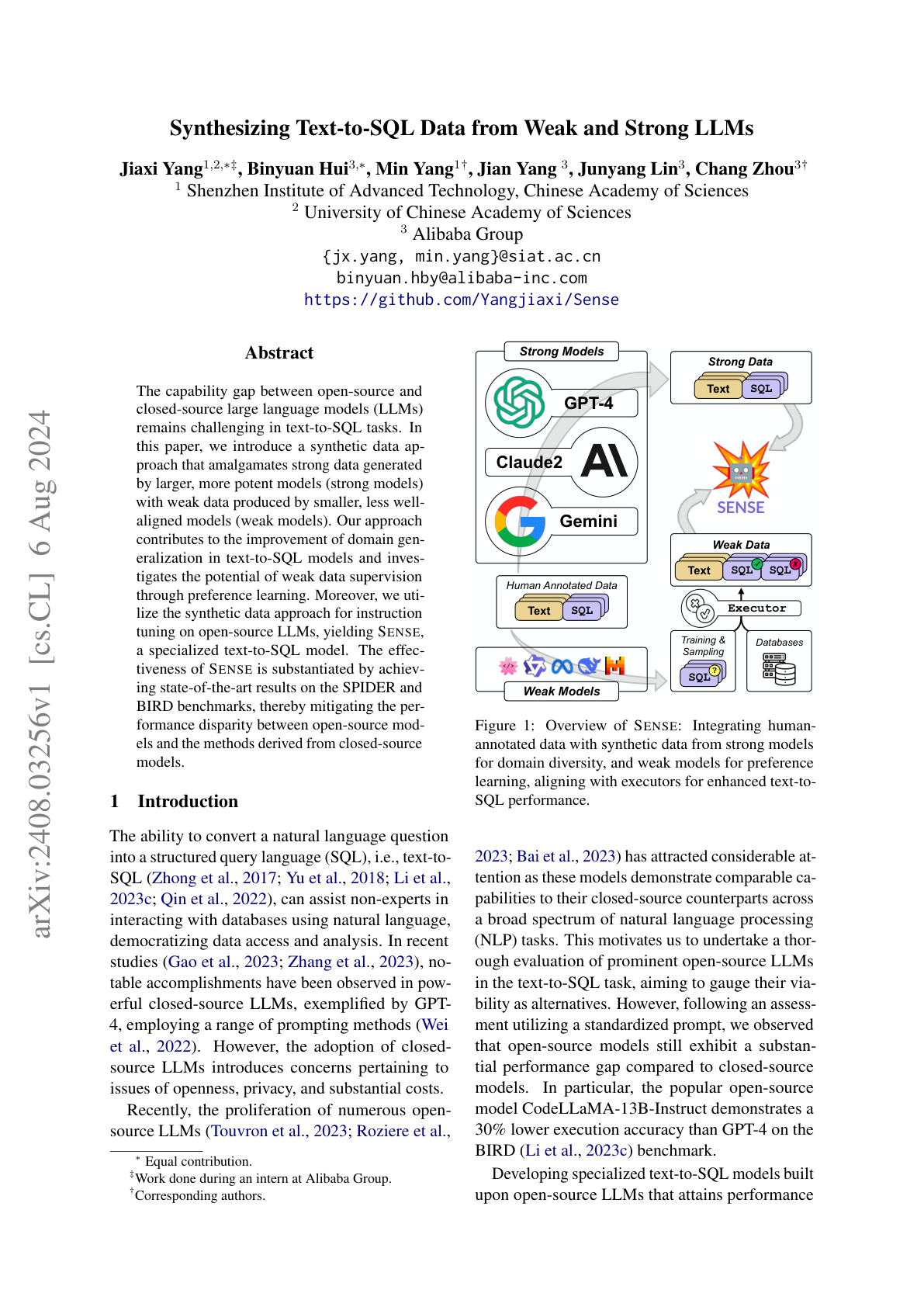
Synthesizing Text-to-SQL Data from Weak and Strong LLMs
proposes integrated synthetic data to build a highly specialized SoTA text-to-SQL model called SENSE; the synthetic data from strong models enhances data diversity while valuable erroneous data from weaker models combined with an executor to learn from execution feedback; preference learning is used to instruction-tune LLMs to learn from both correct and incorrect samples; SENSE achieves state-of-the-art results on the SPIDER and BIRD benchmarks, which bridges the performance gap between open-source models and methods that use closed-source models.
Conversational Prompt Engineering
proposes an approach to help users create personalized prompts by articulating the preferred outputs via interactions; it involves two stages: 1) an initial instruction shaped by the model based on user-provided unlabeled data, and 2) the model shares the output and the user provides feedback with refinements on outputs and instruction; this iterative process results in a personalized few-shot prompt that performs better and more optimally on the desired task.
Self-Taught Evaluators
an approach to improve model-based evaluators using synthetic training data only; it first generates contrasting outputs (good and bad model responses) and trains an LLM-as-a-Judge to produce reasoning traces and final judgments; the self-improvement scheme repeats the training process in an iterative way using its improved predictions; claims to outperform LLM-judges such as GPT-4 and match top-performing reward models trained on labeled examples; improves a strong LLM (Llama3-70BInstruct) from 75.4 to 88.3 (88.7 with majority vote) on RewardBench.
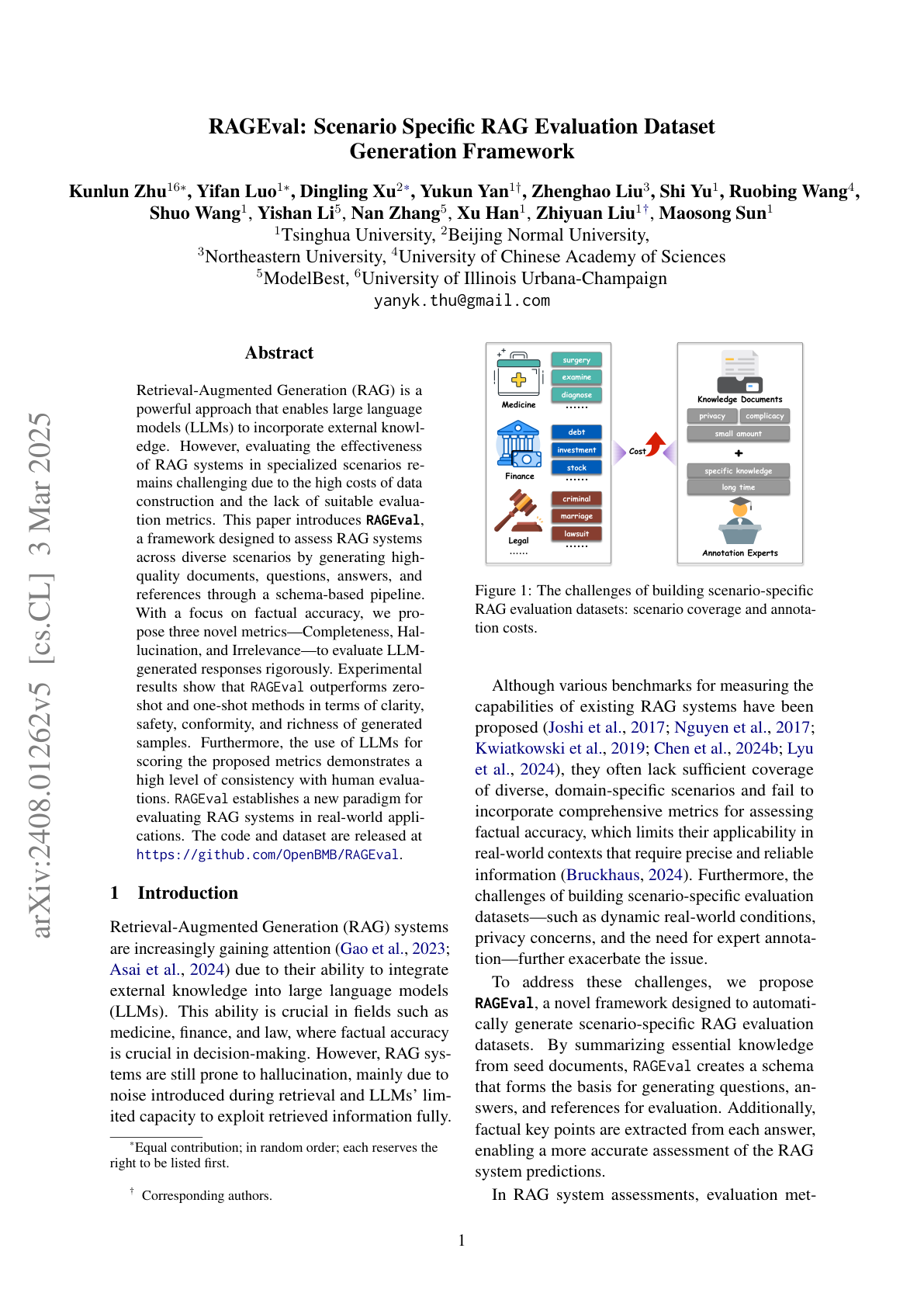
RAGEval
proposes a simple framework to automatically generate evaluation datasets to assess knowledge usage of different LLM under different scenarios; it defines a schema from seed documents and then generates diverse documents which leads to question-answering pairs; the QA pairs are based on both the articles and configurations.
Survey of Mamba
provides a systematic review of existing Mamba-based models across domains and tasks; specifically, focuses on advancements of Mamba-based models, techniques for adapting Mamba to diverse data, applications where Mamba excels, and promising research directions