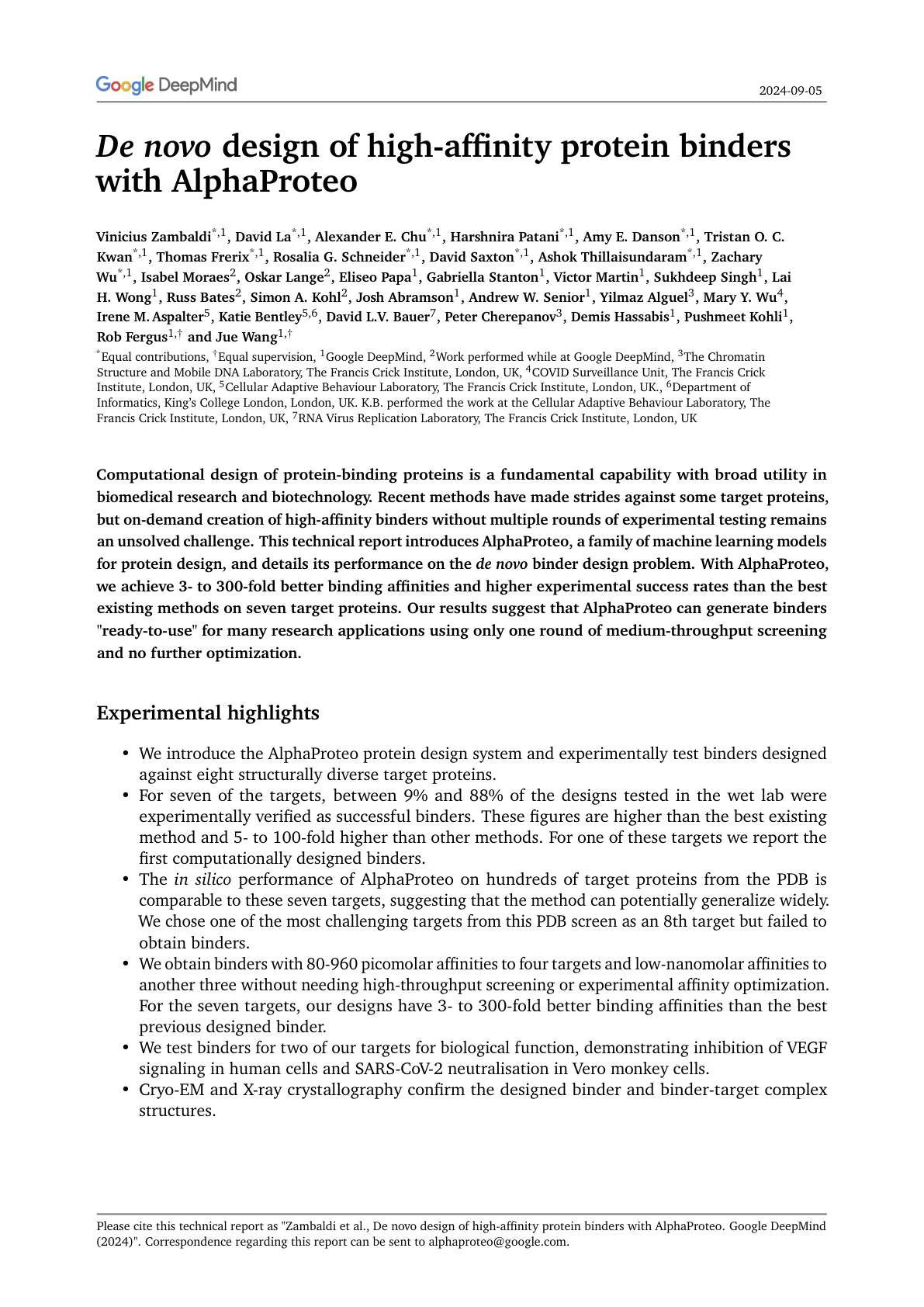
AlphaProteo
presents a family of ML models trained for protein design; reports a 3-to 300-fold better binding affinities and higher experimental success rates compared to other existing methods on seven target proteins; shows that AlphaProteo’s performance on hundreds of target proteins from the PDB is comparable to the seven targets.
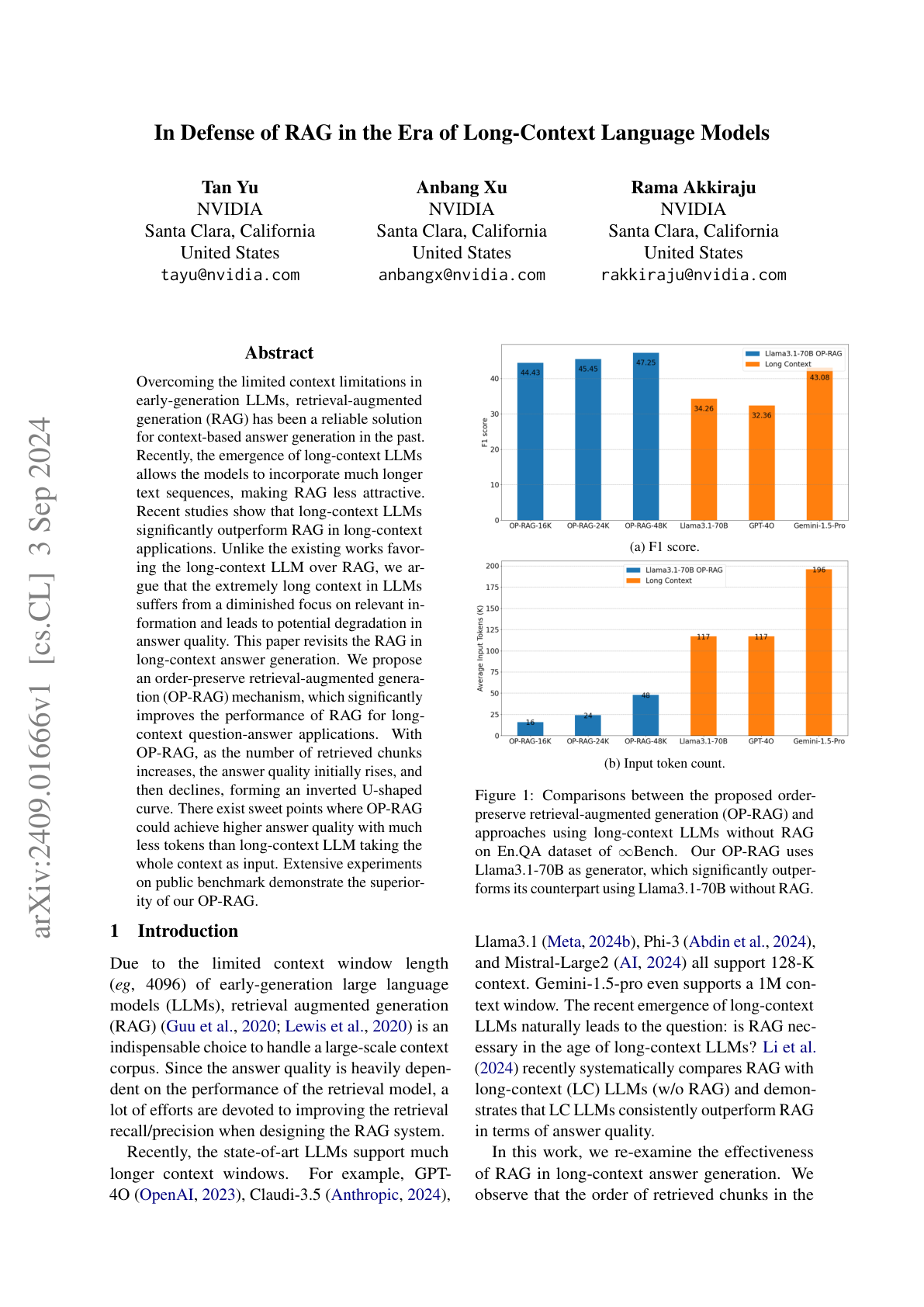
RAG in the Era of Long-Context LLMs
reports that longer-context LLMs suffer from a diminished focus on relevant information, which is one of the primary issues that a RAG system addresses (i.e., uses more relevant information); they propose an order-preserving RAG mechanism that improves performance on long-context question answering; it's not perfect and in fact, as retrieved chunks increase the quality of responses go up and then declines; they mention a sweet spot where it can achieve better quality with a lot fewer tokens than long-context LLMs.
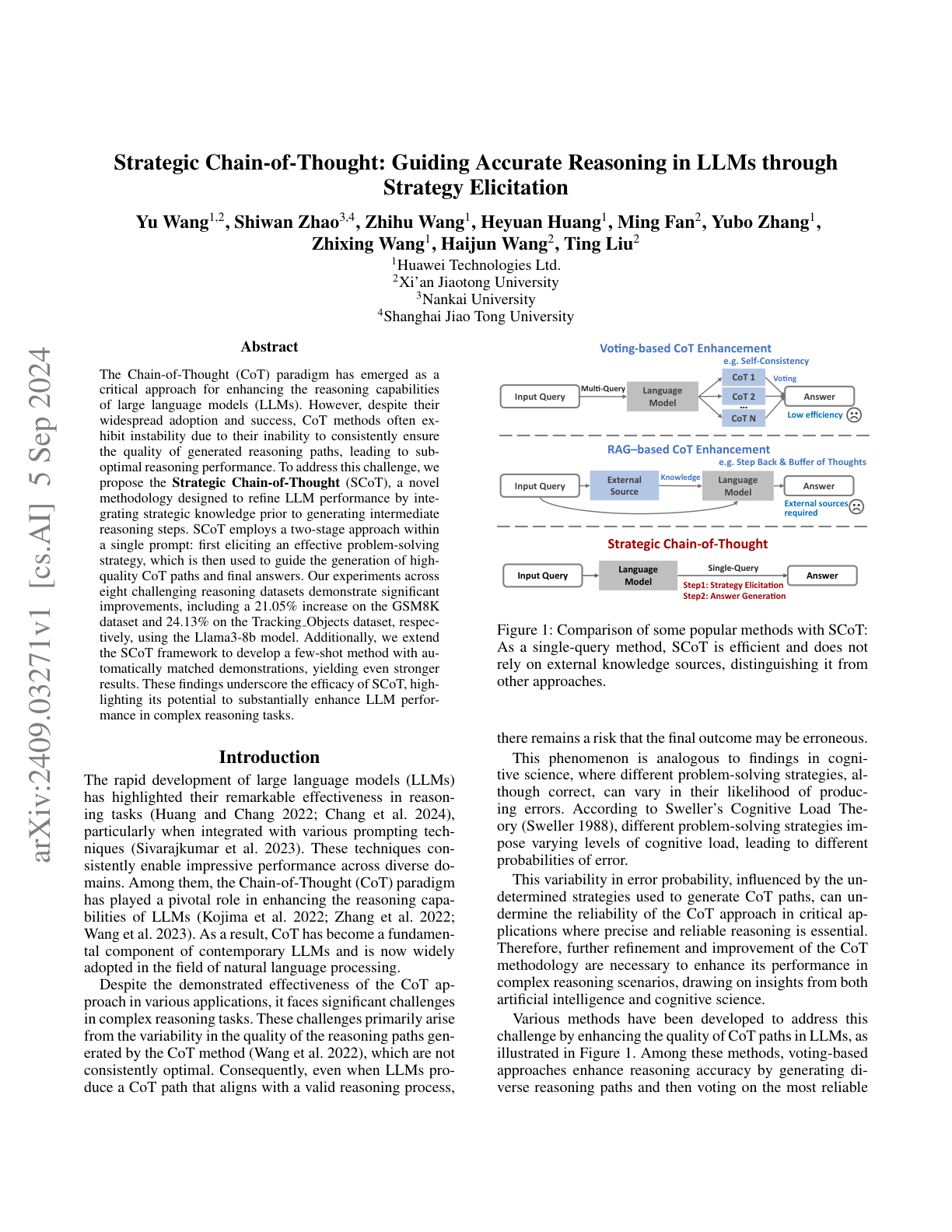
Strategic Chain-of-Thought
a method to refine LLM performance by incorporating strategic knowledge before the intermediate CoT reasoning steps; the problem-solving strategy helps to guide the generation of the CoT paths and final answers; claims to achieve a 21.05% increase on the GSM8K datasets using the Llama3-8b model.
Effective of AI on High Skilled Work
studies the impact of generative AI on software developers; reveals a 26.08% increase in the number of completed tasks among the developers that use AI tools like GitHub Copilot; also shows that less experienced developers are likely to adopt the AI tools and have greater productivity gains.
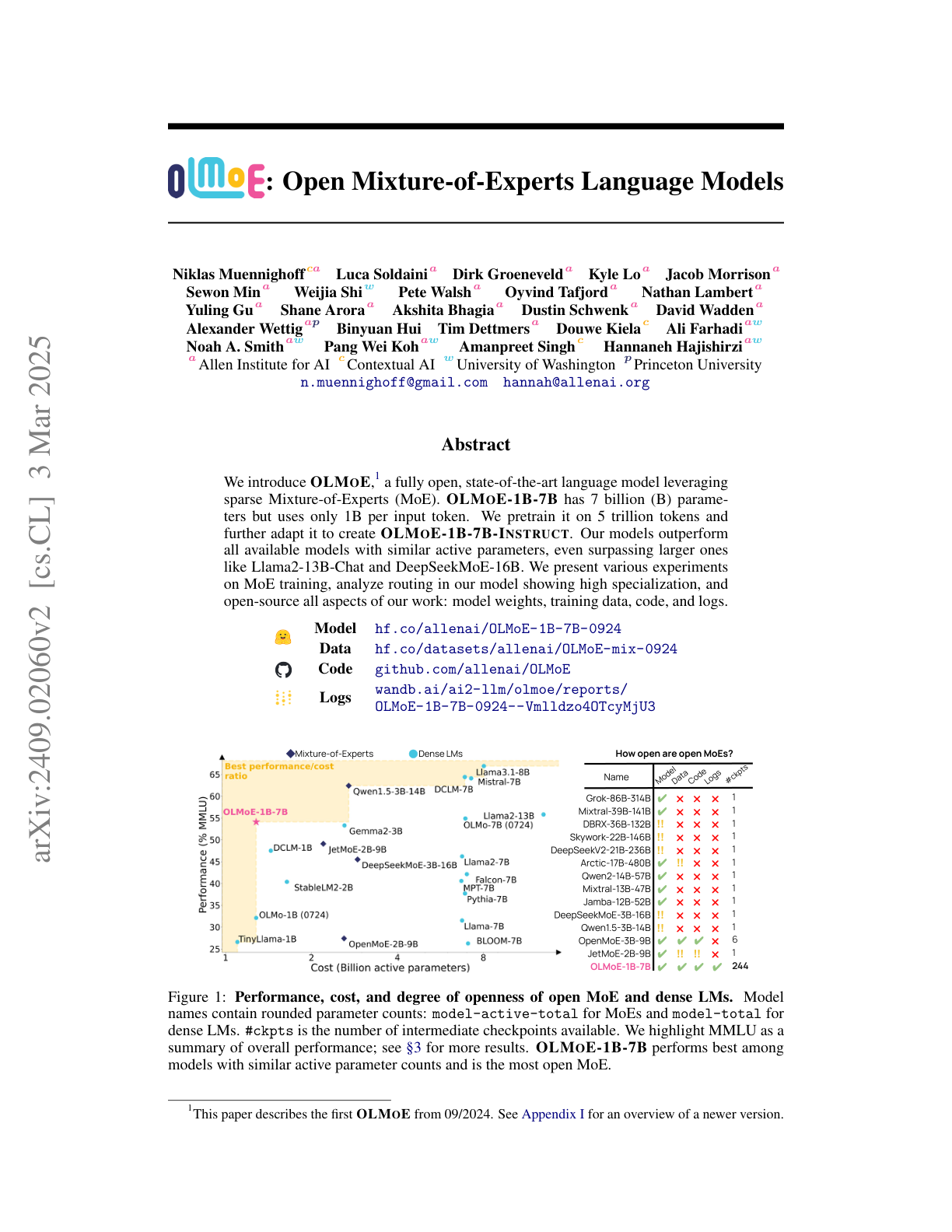
OLMoE
introduces a fully-open LLM that leverages sparse Mixture-of-Experts. OLMoE is a 7B parameter model and uses 1B active parameters per input token; there is also an instruction-tuned version that claims to outperform Llama-2-13B-Chat and DeepSeekMoE 16B.
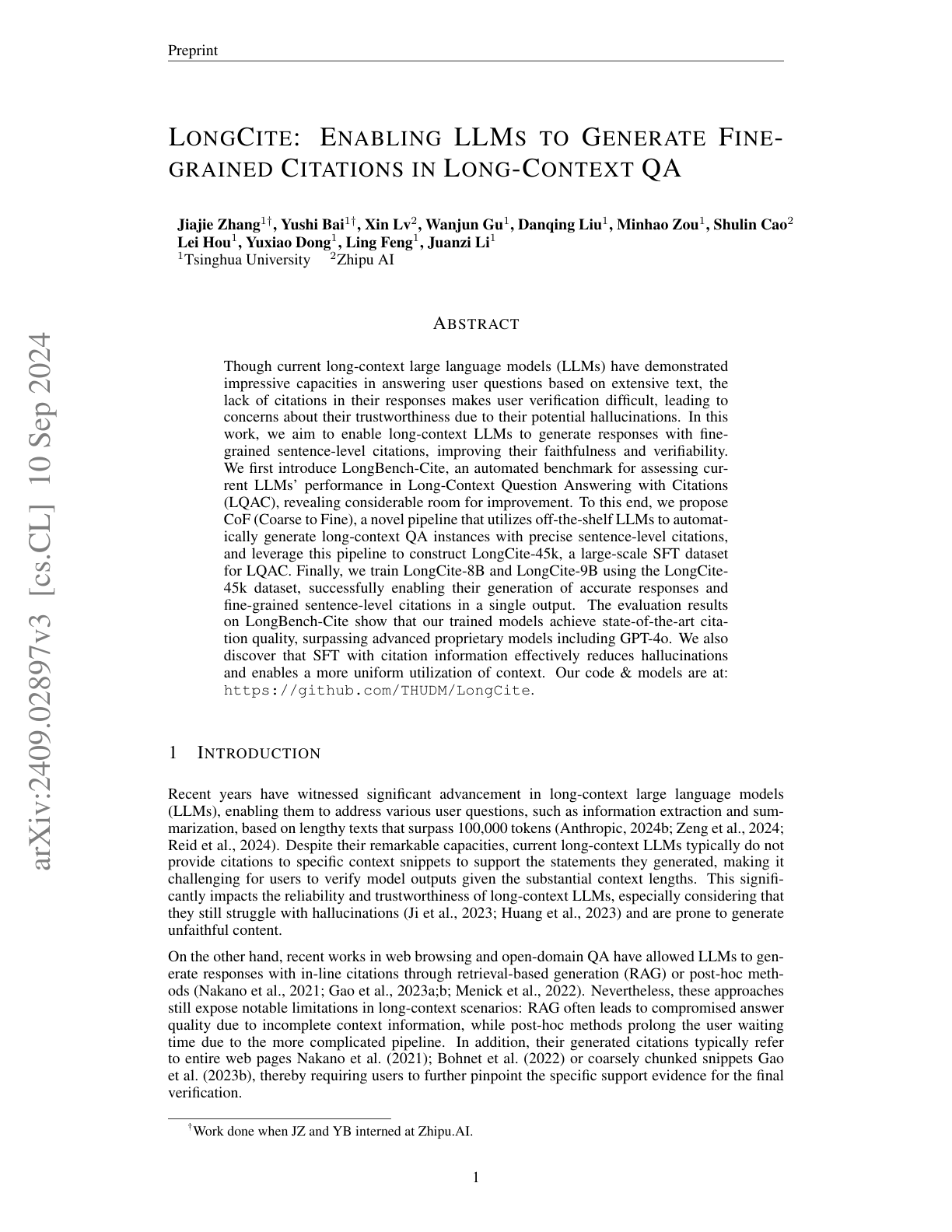
LongCite
synthesizes a large-scale SFT dataset with off-the-shelf LLMs to improve long-context question answering with citations; it trains 8B and 9B parameter models that enhance citation generation capabilities from lengthy contexts while improving response correctness; claims to even surpass GPT-4o on their proposed LongBench-Cite benchmark.
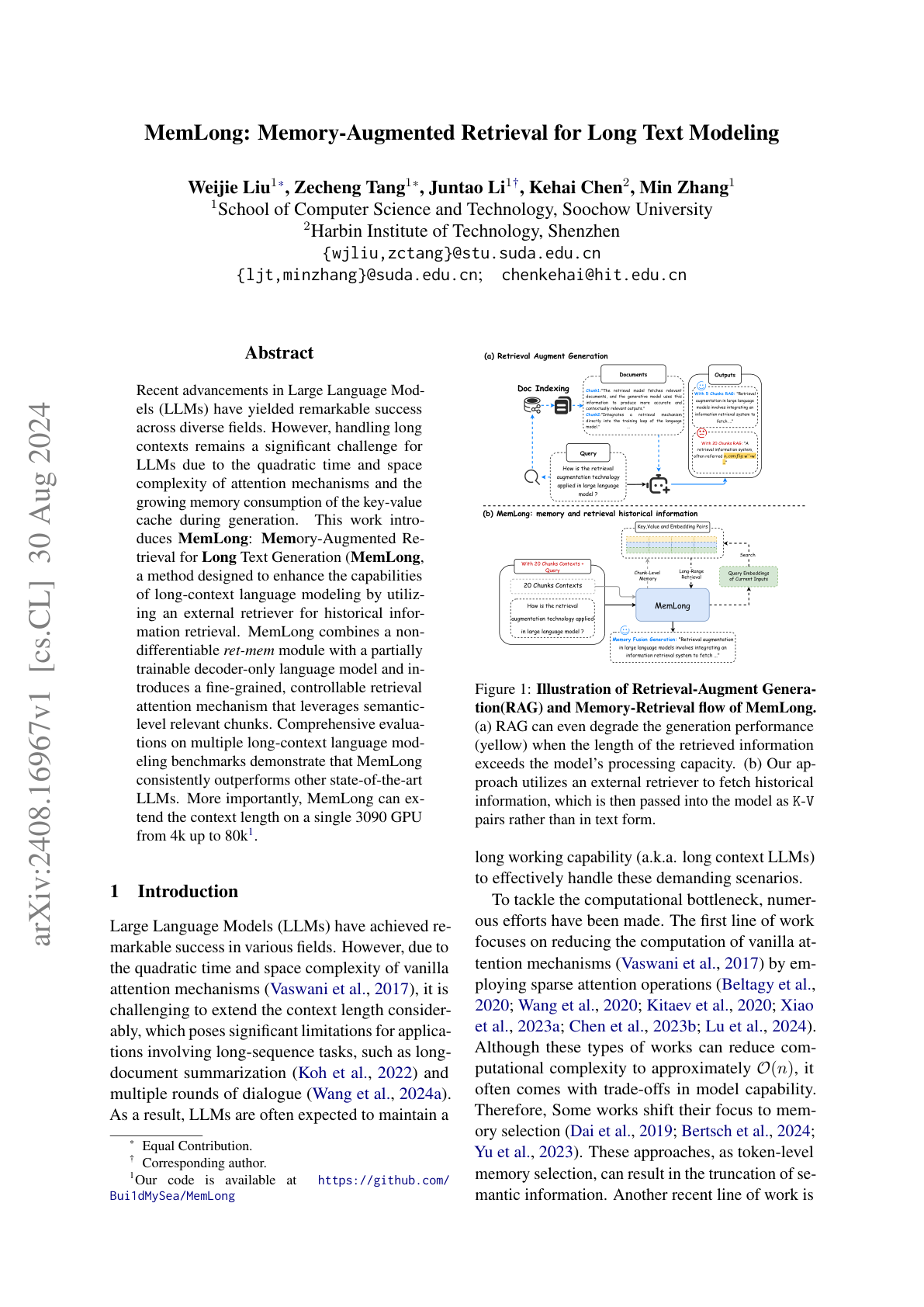
MemLong
utilizes an external retriever for retrieving historical information which enhances the capabilities of long-context LLMs; it consistently outperforms other SoTA LLMs on long-context benchmarks and can extend the context length on a single 3090 GPU from 4k up to 80k.
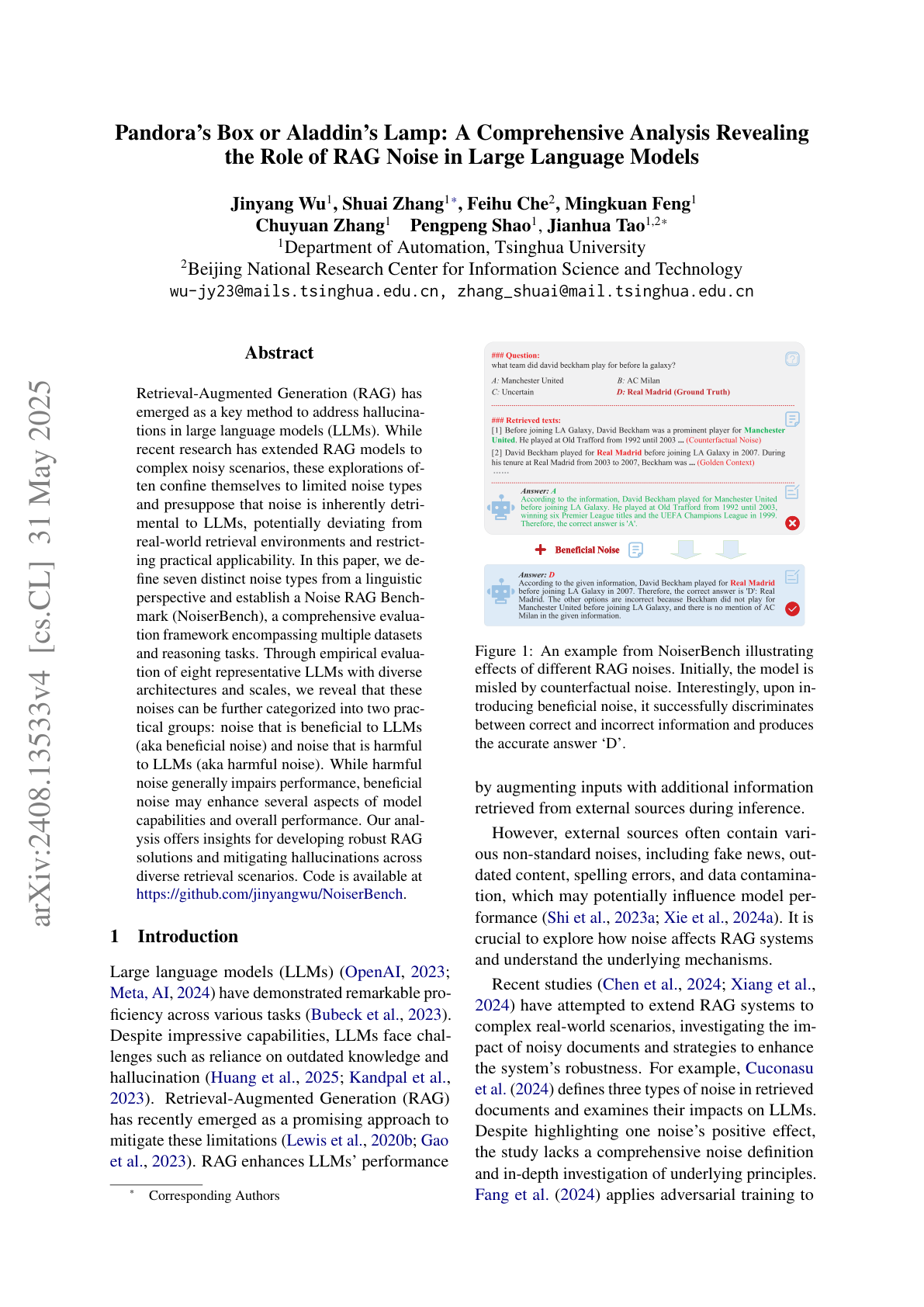
Role of RAG Noise in LLMs
proposes a benchmark (NoiserBench) to measure how different kinds of noisy information affect RAG's performance; reports that from different kinds of beneficial noise studied (e.g., semantic, datatype, and illegal sentence), illegal sentence noise exhibits the most improved model performance across models and datasets.
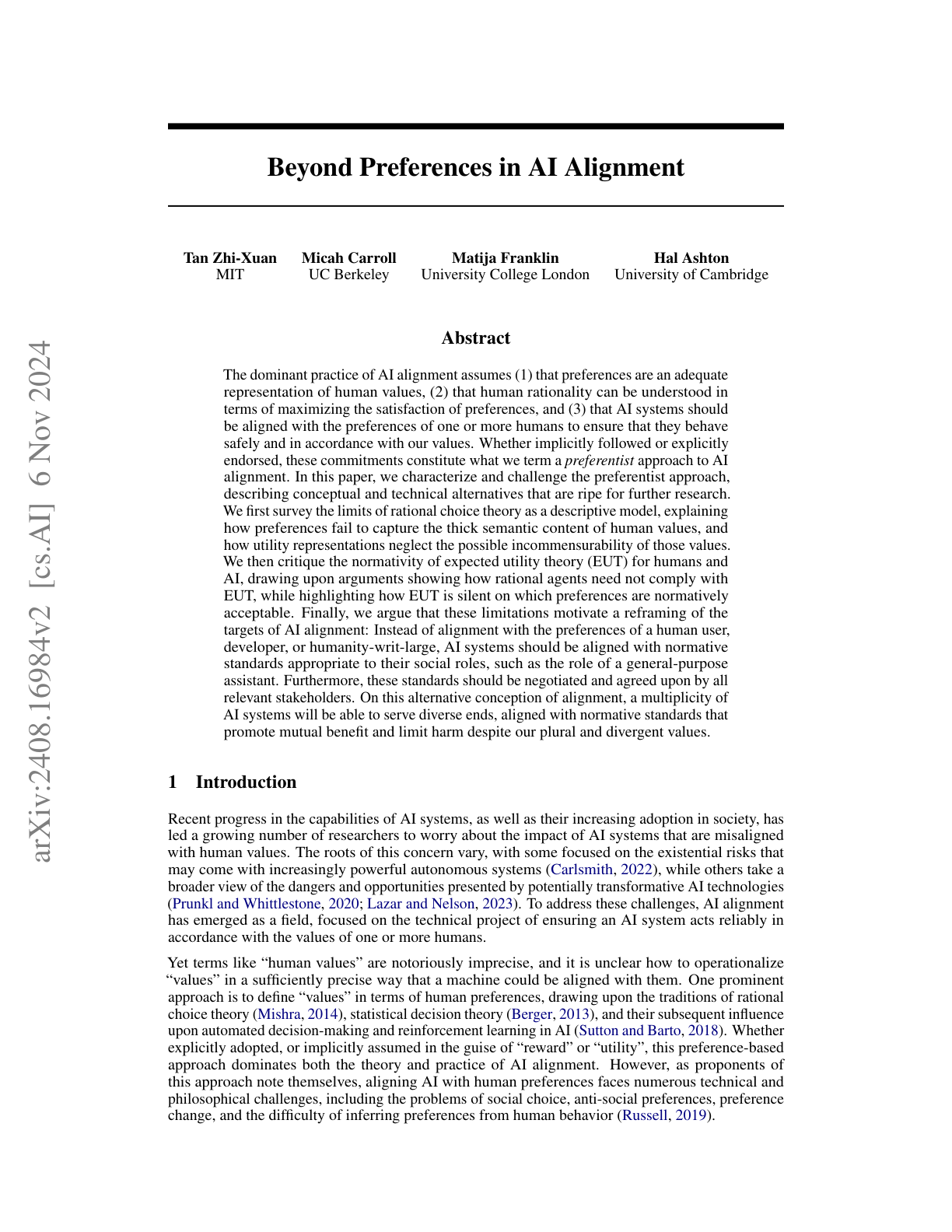
Beyond Preference in AI Alignment
challenges the dominant practice of AI alignment known as human preference tuning; explains in what ways human preference tuning fails to capture the thick semantic content of human values; argues that AI alignment needs reframing, instead of aligning on human preferences, AI should align on normative standards appropriate to their social roles.
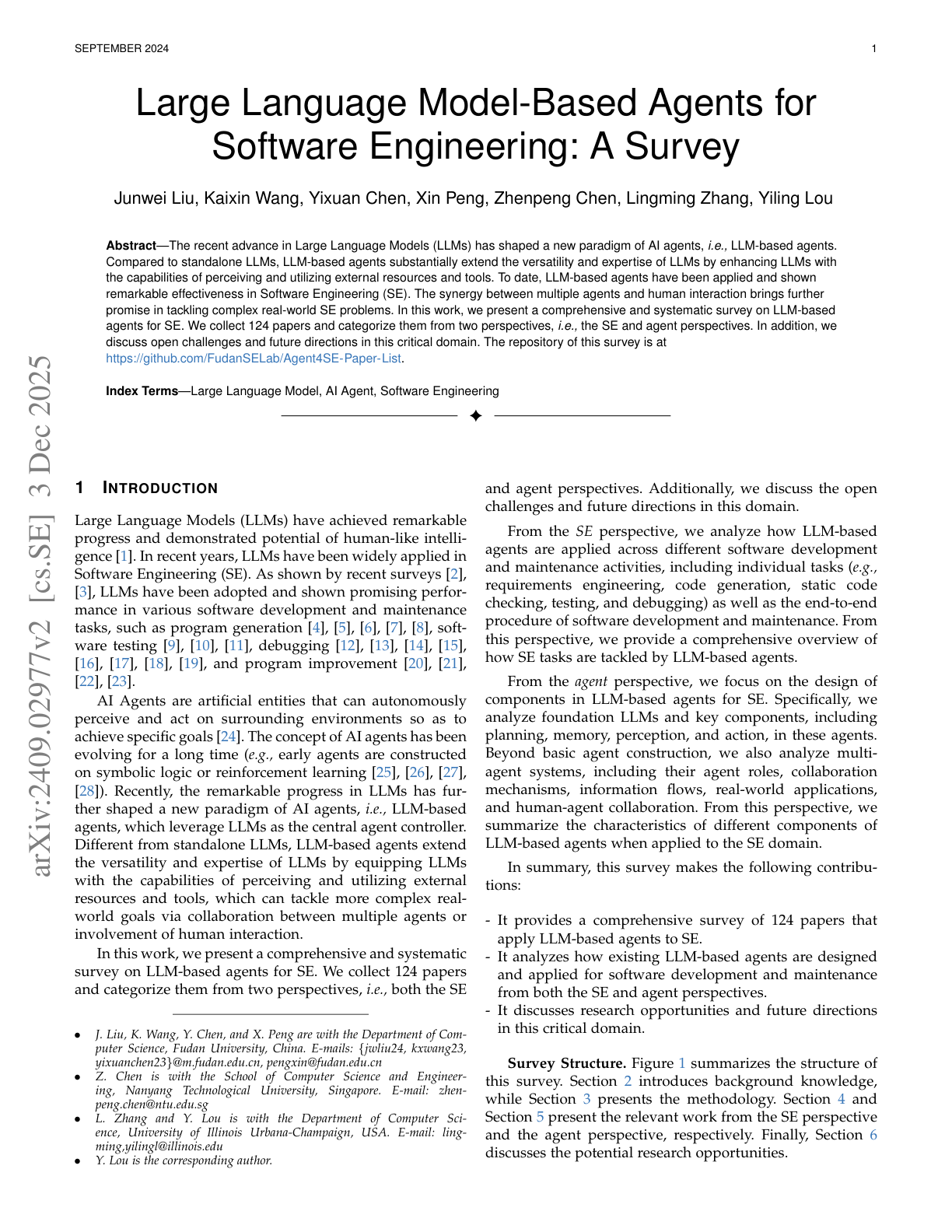
LLM-Based Agents for Software Engineering
a survey paper on LLM-based agents for software engineering, covering perspectives ranging from requirement engineering to test generation to software maintenance.