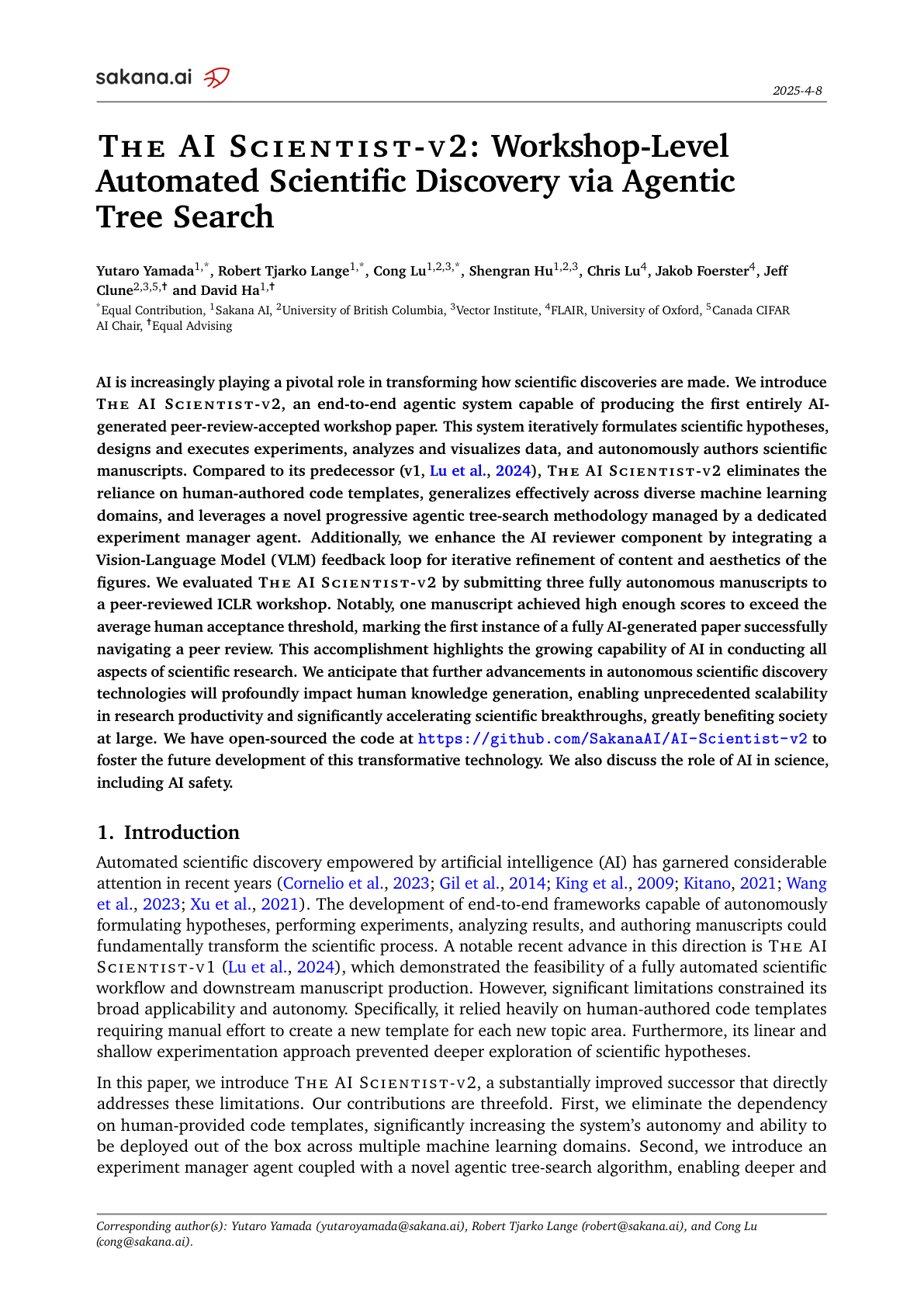
The AI Scientist V2
The AI Scientist-v2 refines and extends its predecessor to achieve a new milestone: autonomously generating a workshop-accepted research manuscript. The system removes dependencies on human-authored code templates, incorporates agentic tree-search methods for deeper exploration, uses Vision-Language Models to refine figures, and demonstrates impressive real-world outcomes by passing the peer-review bar.
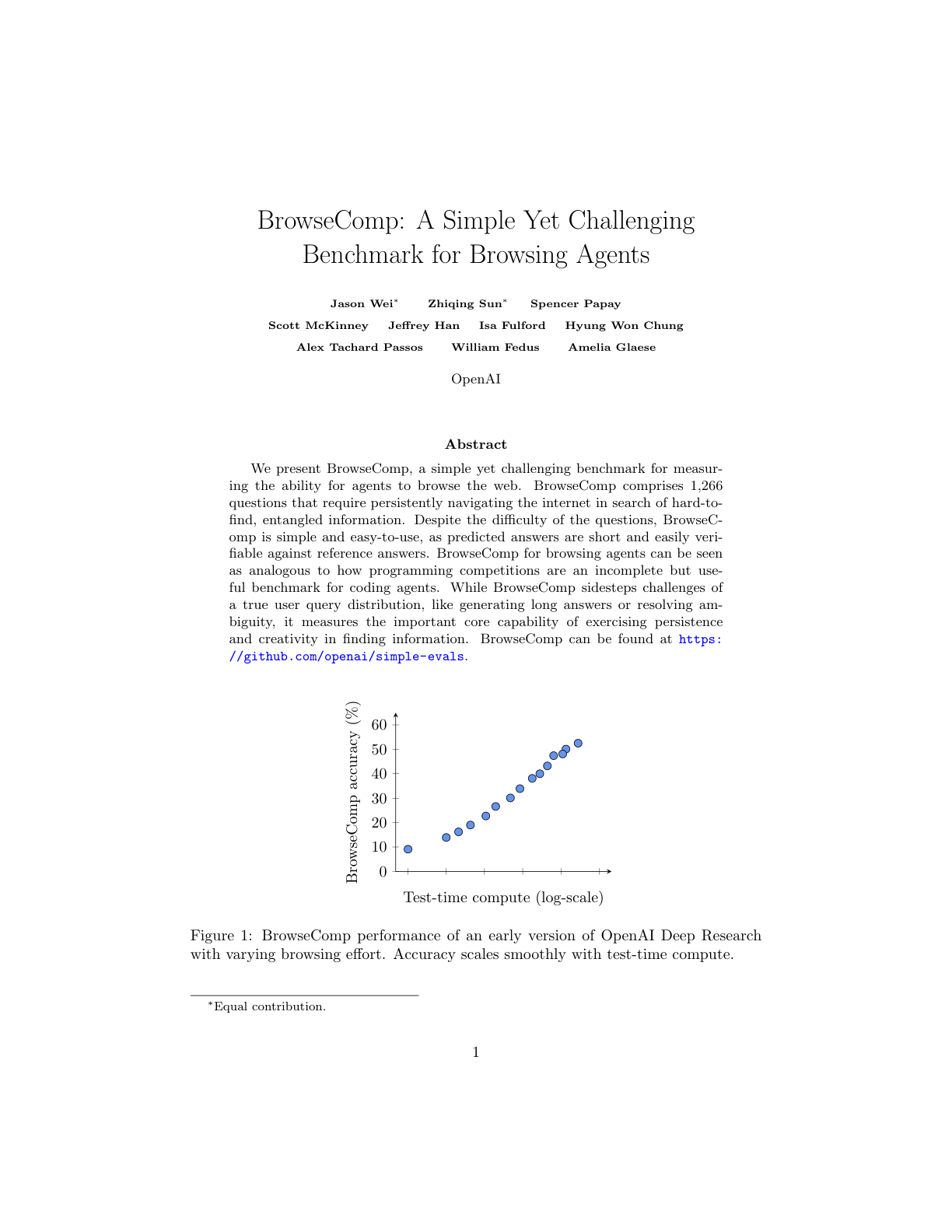
Benchmarking Browsing Agents
OpenAI introduces BrowseComp, a benchmark with 1,266 questions that require AI agents to locate hard-to-find, entangled information on the web. Unlike saturated benchmarks like SimpleQA, BrowseComp demands persistent and creative search across numerous websites, offering a robust testbed for real-world web-browsing agents. Key insights:
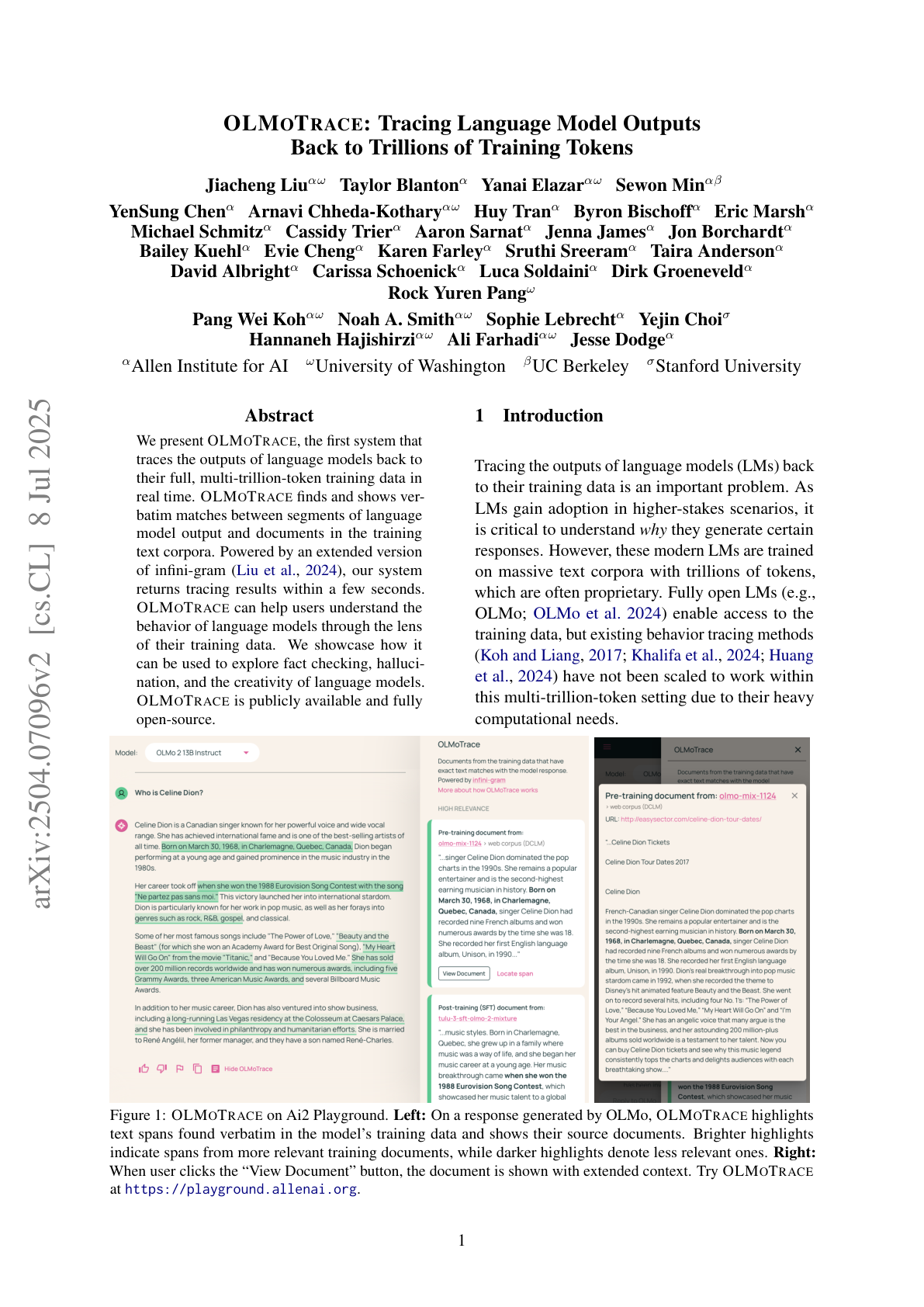
OLMOTrace
Allen Institute for AI & University of Washington present OLMOTRACE, a real-time system that traces LLM-generated text back to its verbatim sources in the original training data, even across multi-trillion-token corpora.
Concise Reasoning via RL
This new paper proposes a new training strategy that promotes concise and accurate reasoning in LLMs using RL. It challenges the belief that long responses improve accuracy; it offers both theoretical and empirical evidence showing that conciseness often correlates with better performance.
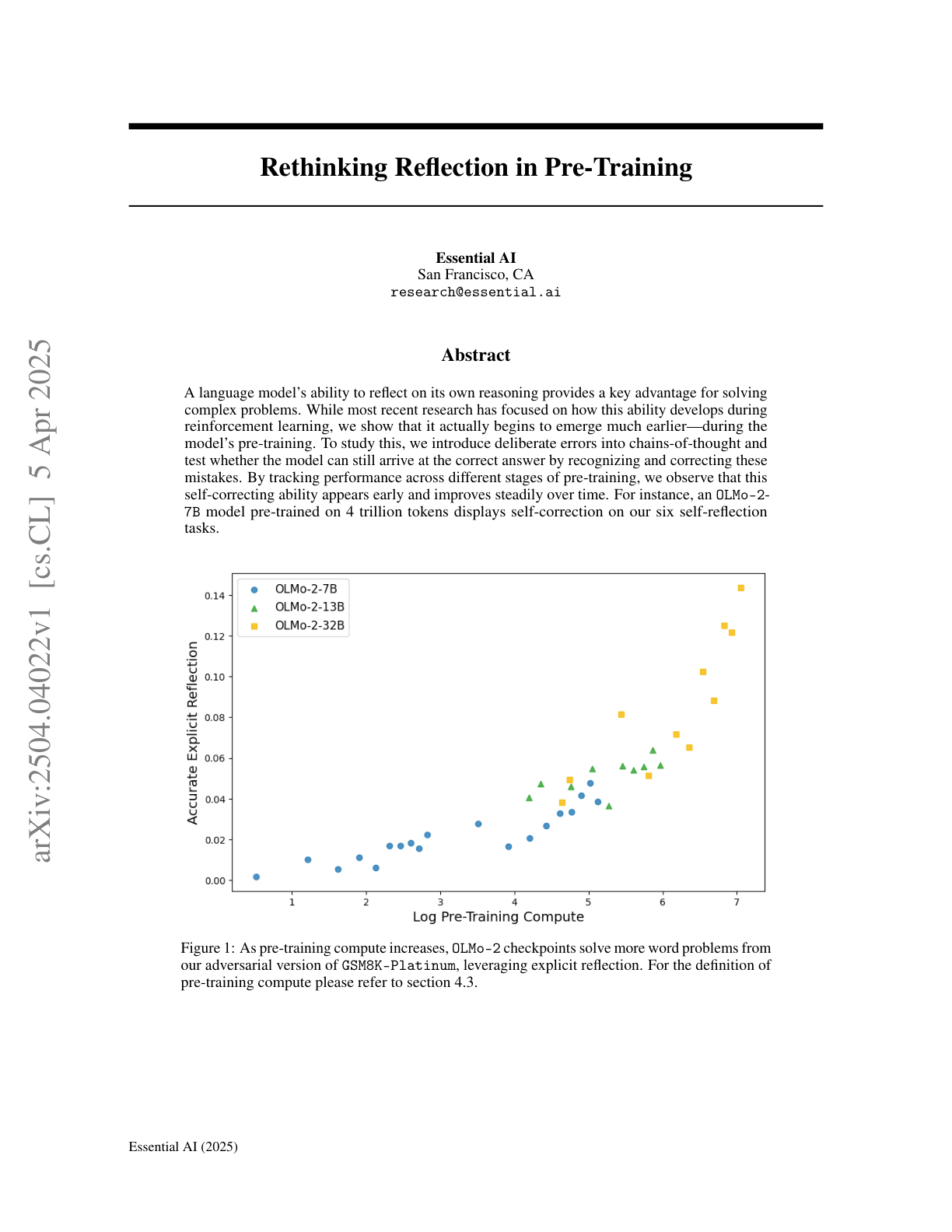
Rethinking Reflection in Pre-Training
Reflection — the ability of LLMs to identify and correct their own reasoning — has often been attributed to reinforcement learning or fine-tuning. This paper argues otherwise: reflection emerges during pre-training. The authors introduce adversarial reasoning tasks to show that self-reflection and correction capabilities steadily improve as compute increases, even in the absence of supervised post-training. Key contributions:
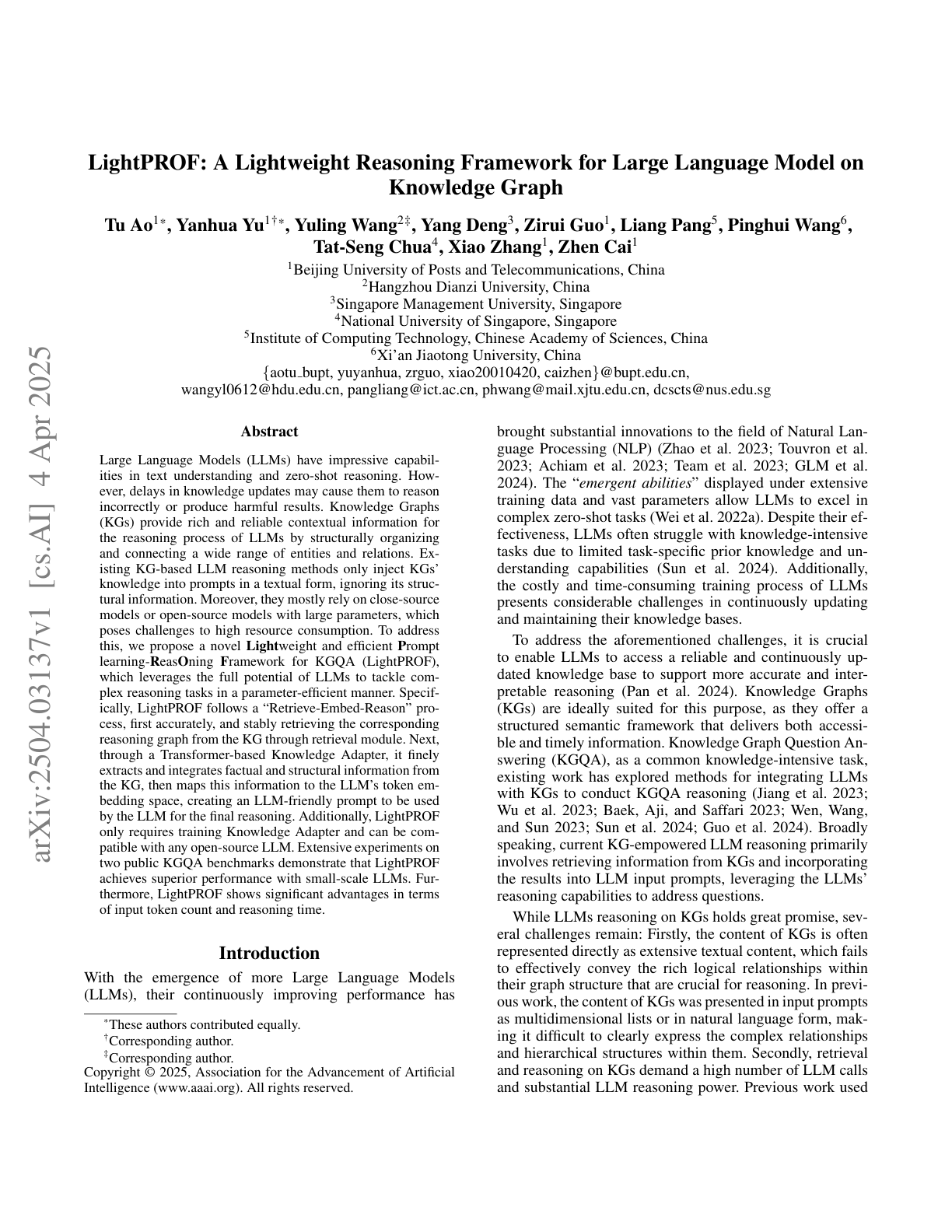
Efficient KG Reasoning for Small LLMs
LightPROF is a lightweight framework that enables small-scale language models to perform complex reasoning over knowledge graphs (KGs) using structured prompts. Key highlights:
Compute Agent Arena
Computer Agent Arena is a new open platform for benchmarking LLM and VLM-based agents on real-world computer-use tasks, like coding, editing, and web navigation, using a virtual desktop environment. Initial results show that OpenAI and Anthropic are leading with modest success rates, while the platform aims to grow through crowdsourced tasks, agent submissions, and open-sourcing of its infrastructure. [Report](https://arena.xlang.ai/blog/computer-agent-arena)
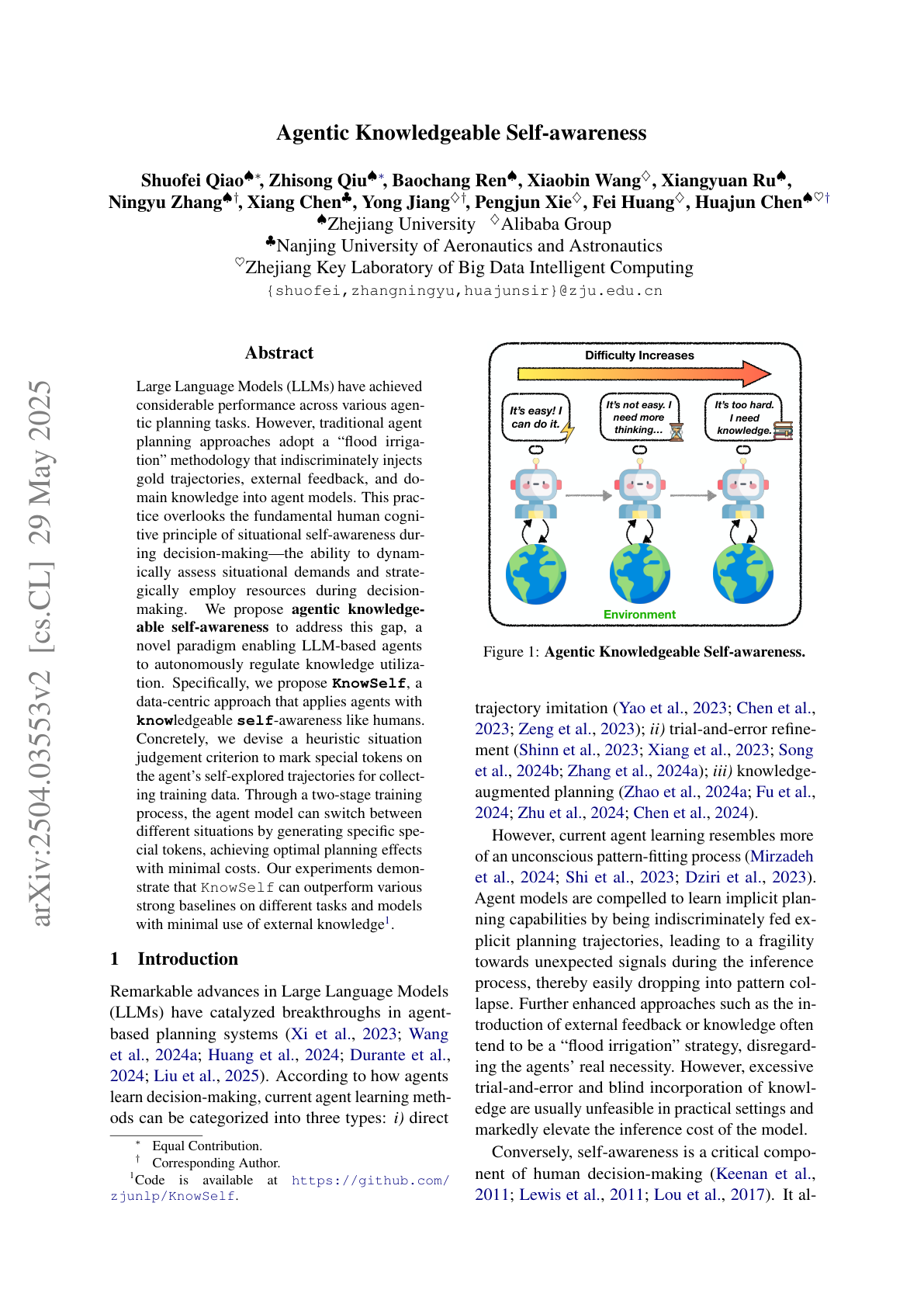
Agentic Knowledgeable Self-awareness
KnowSelf is a new framework that introduces agentic knowledgeable self-awareness, enabling LLM agents to dynamically decide when to reflect or seek knowledge based on situational complexity, mimicking human cognition. Using special tokens for "fast," "slow," and "knowledgeable" thinking, KnowSelf reduces inference costs and achieves state-of-the-art performance on ALFWorld and WebShop tasks with minimal external knowledge.
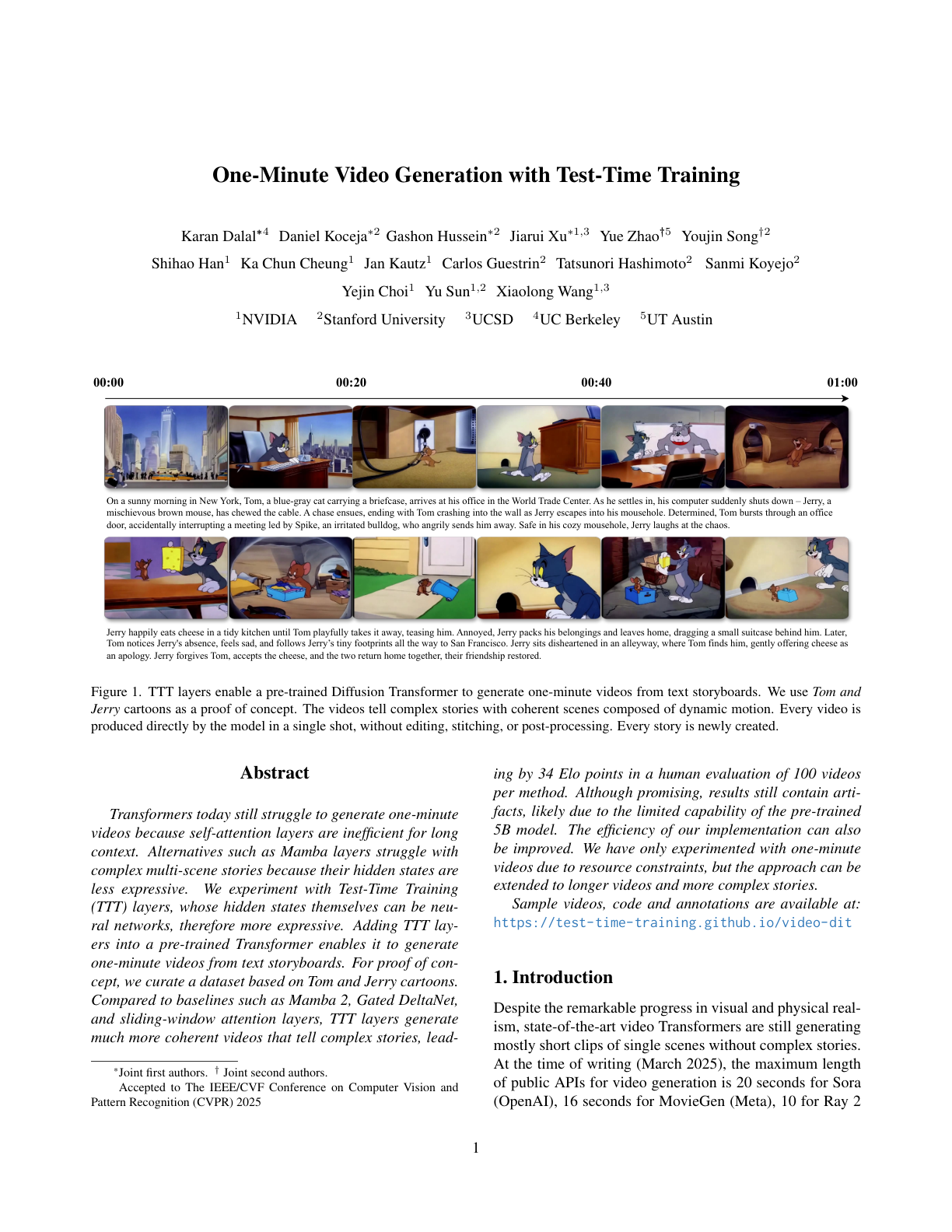
One-Minute Video Generation with Test-Time Training
One-Minute Video Generation with Test-Time Training introduces TTT layers, a novel sequence modeling component where hidden states are neural networks updated via self-supervised loss at test time. By integrating these into a pre-trained diffusion model, the authors enable single-shot generation of one-minute, multi-scene videos from storyboards, achieving 34 Elo points higher than strong baselines like Mamba 2 and DeltaNet in human evaluations
NoProp
NoProp is a novel gradient-free learning method where each neural network layer independently learns to denoise a noisy version of the target, inspired by diffusion and flow matching. Unlike backpropagation, it avoids hierarchical representation learning and achieves competitive performance and efficiency on image classification benchmarks like MNIST and CIFAR.