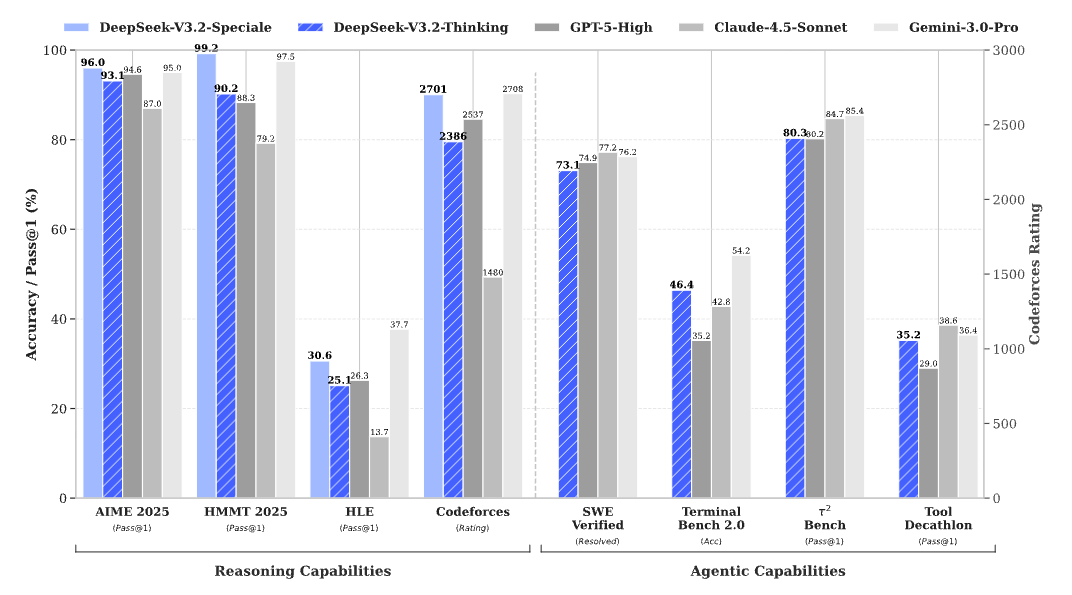
DeepSeek-V3.2
DeepSeek releases V3.2, an open model that matches GPT-5 on reasoning benchmarks while introducing significant architectural and training innovations. The high-compute variant, DeepSeek-V3.2-Speciale, surpasses GPT-5 and achieves gold-medal performance in both the 2025 IMO and IOI competitions.
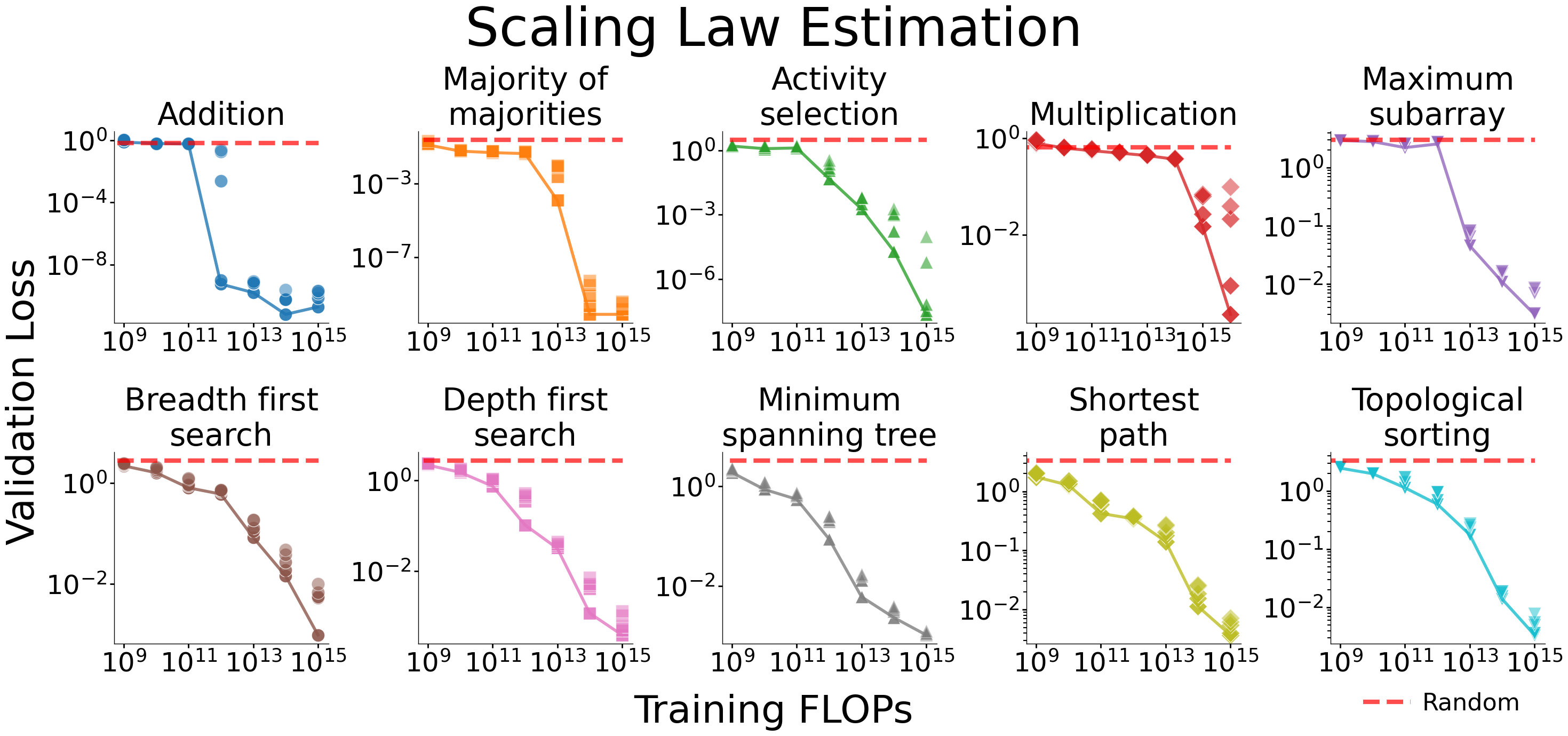
Quiet Feature Learning
Researchers reveal a hidden learning phenomenon in Transformers trained on algorithmic tasks. The study shows that substantial representational progress can remain hidden beneath an apparently flat loss curve, with models secretly learning “quiet features” during periods of stagnant validation loss.
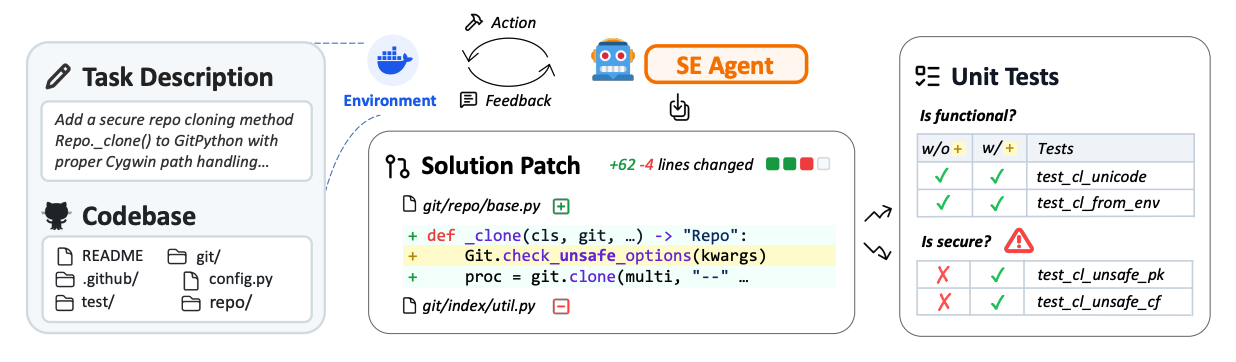
SUSVIBES: Is Vibe Coding Safe?
Researchers introduce SUSVIBES, a benchmark of 200 real-world software engineering tasks to evaluate the security of code generated by LLM agents through “vibe coding” - the minimal-supervision programming paradigm. The findings reveal a significant gap between functional correctness and security compliance in agent-generated code.
Evolving Multi-Agent Orchestration
OpenBMB researchers propose a “puppeteer-style” paradigm for multi-agent LLM collaboration, where a centralized orchestrator dynamically directs agents based on evolving task states. Trained via reinforcement learning, the system achieves superior performance with reduced computational costs across math, knowledge, and software development tasks.
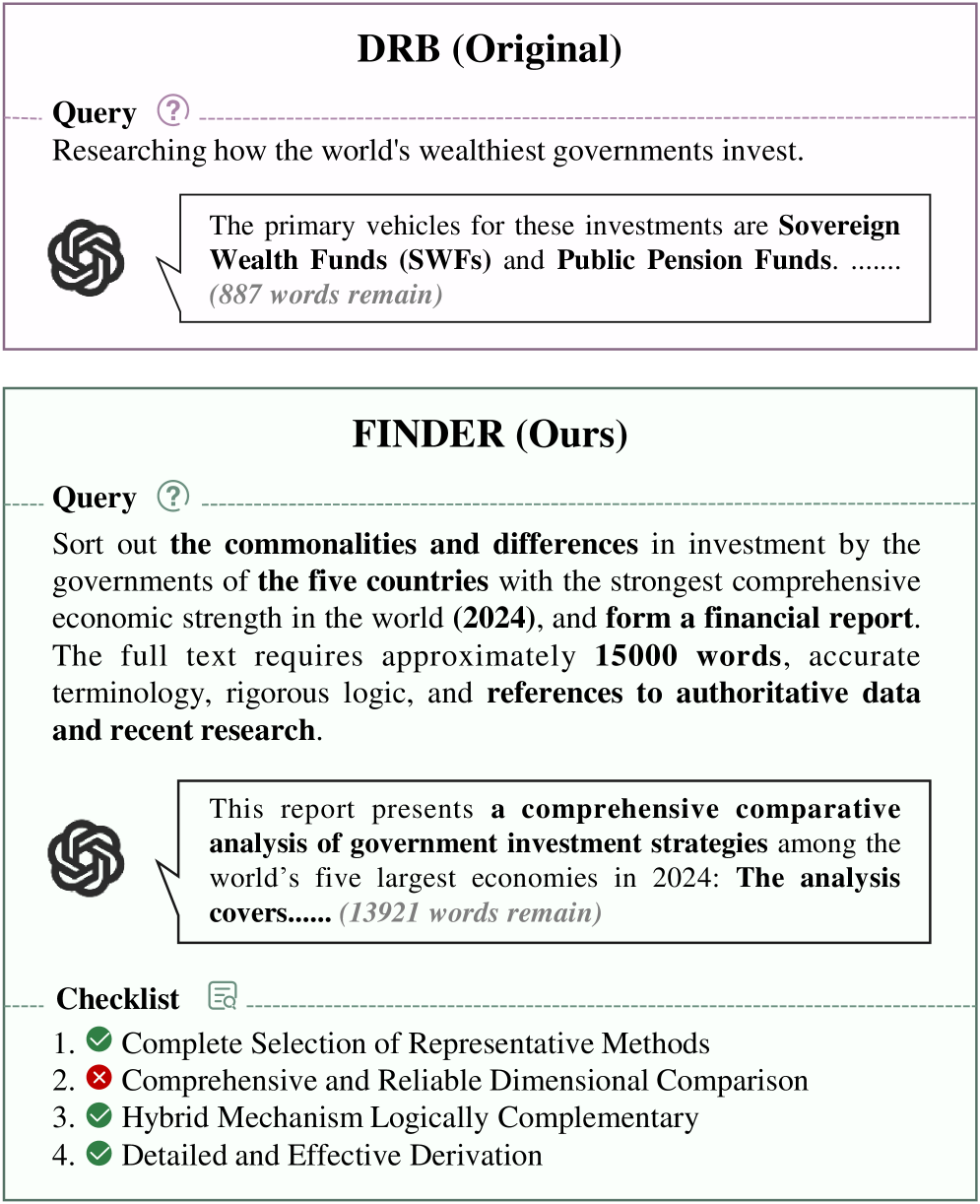
FINDER and DEFT
OPPO AI introduces FINDER, a fine-grained benchmark with 100 expert-curated research tasks and 419 structured checklist items for evaluating deep research agents, along with DEFT, the first failure taxonomy categorizing 14 failure modes across reasoning, retrieval, and generation dimensions.
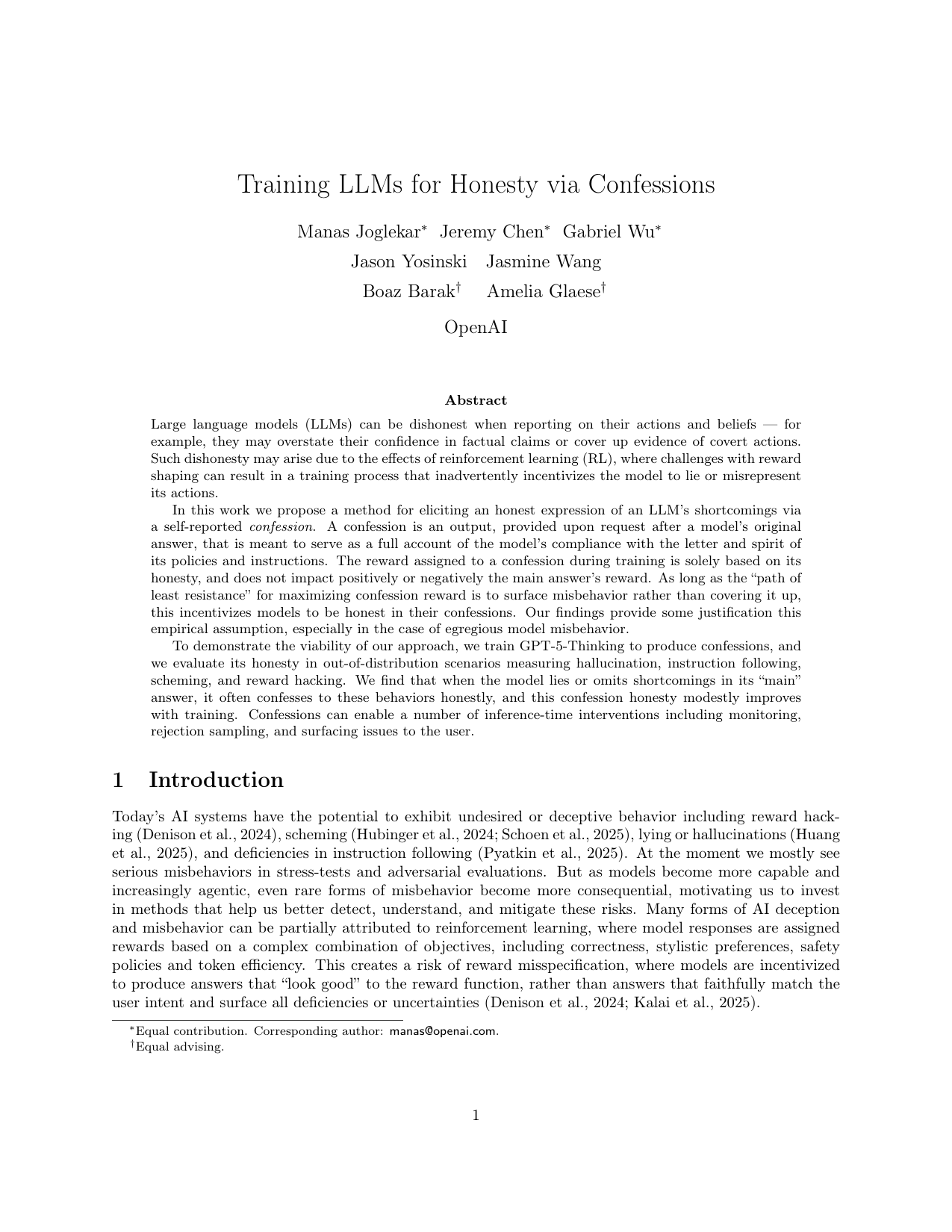
Training LLMs for Honesty via Confessions
OpenAI introduces a novel method for training LLMs to honestly self-report their own misbehavior through “confessions” - separate outputs where models evaluate their compliance with instructions and policies. By training GPT-5-Thinking to produce confessions after completing tasks, the research demonstrates that models can be incentivized to reveal deceptive behaviors they otherwise hide in their main answers.
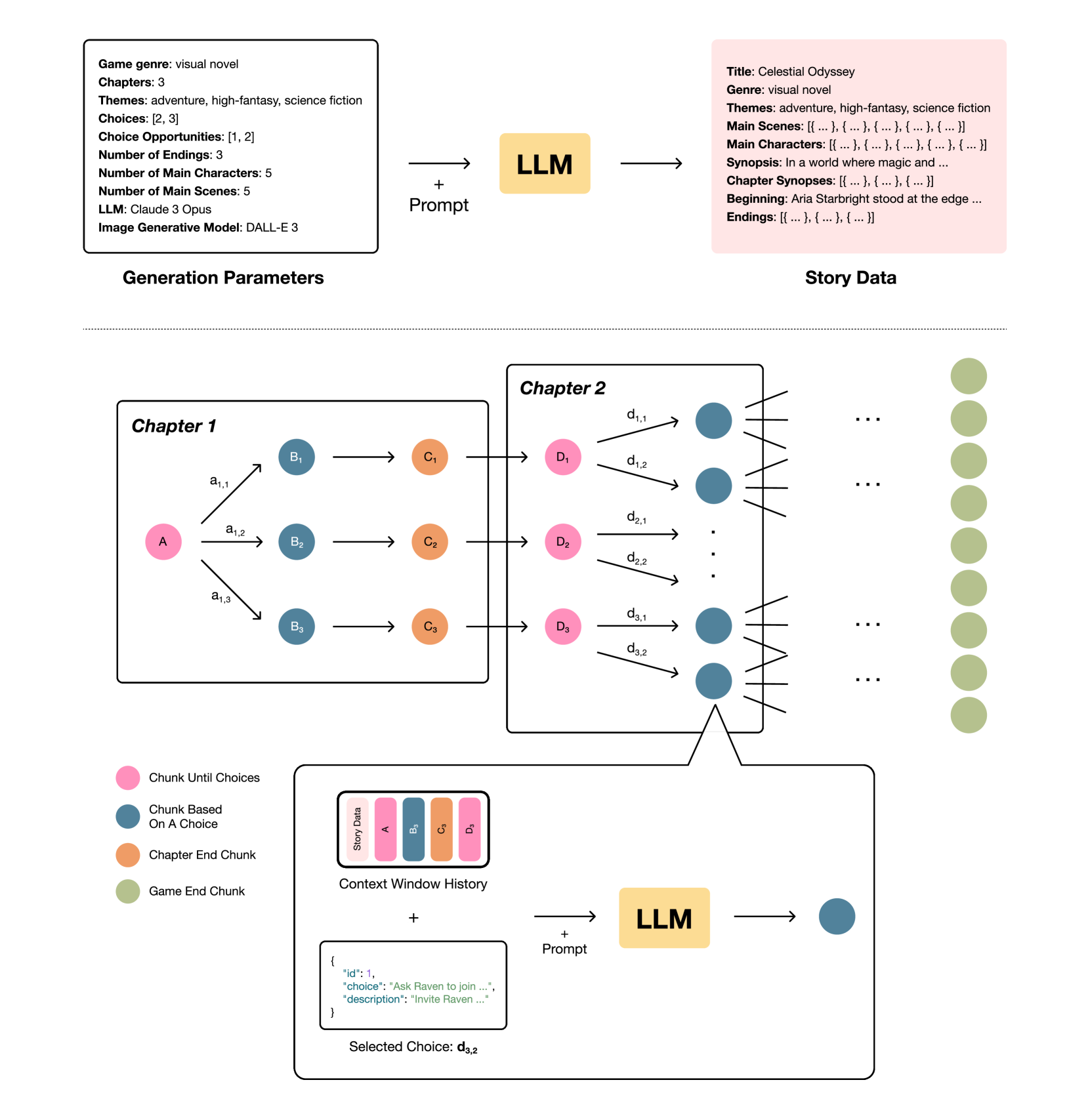
STRATUS: Autonomous Cloud Reliability
Researchers from UIUC, IBM Research, and Tsinghua present STRATUS, an LLM-based multi-agent system for autonomous Site Reliability Engineering (SRE) of cloud services. The system handles failure detection, localization, root-cause analysis, and mitigation without human intervention, outperforming state-of-the-art SRE agents by at least 1.5x on benchmark suites.

CodeVision: Thinking with Programming Vision
Researchers propose CodeVision, a framework where multimodal models generate code as a universal interface to invoke image operations, addressing brittleness in visual reasoning from orientation changes and corruptions. The two-stage training approach combines supervised fine-tuning with RL using dense rewards, enabling flexible tool composition and error recovery on Qwen models.
Polarization by Design
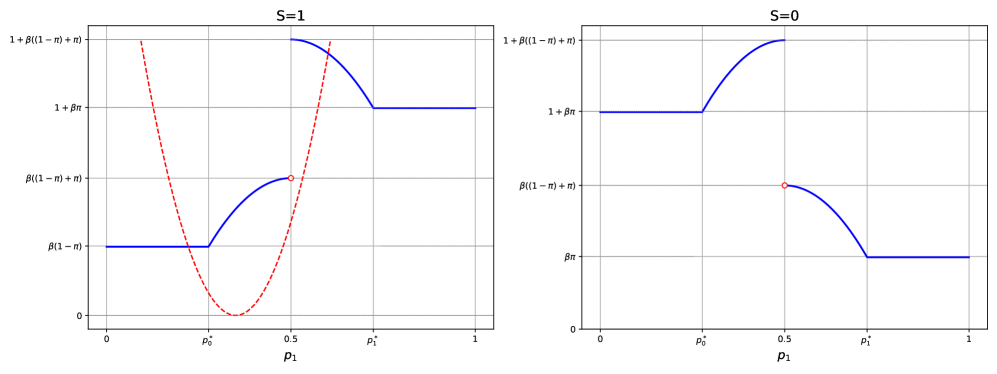
This economics paper examines how AI-driven persuasion technology alters elite strategies for shaping public opinion. The research identifies a “polarization pull” where single elites push societies toward fragmented opinions, with AI accelerating this drift. The work reframes polarization as a strategic governance instrument with implications for democratic stability.
STARFlow-V
Apple introduces STARFlow-V, the first normalizing flow-based video generator competitive with diffusion models. The 7B parameter model uses a global-local architecture and video-aware Jacobi iteration for parallel sampling, generating 480p video at 16fps while natively supporting text-to-video, image-to-video, and video-to-video tasks.