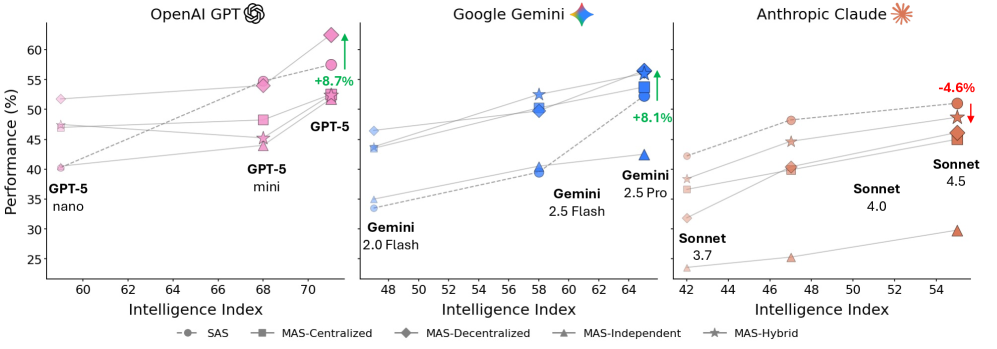
Towards a Science of Scaling Agent Systems
Researchers from Google present a controlled evaluation framework for agent systems, challenging the assumption that “more agents are all you need.” Across 180 configurations spanning three LLM families and four agentic benchmarks, the study establishes quantitative principles for when multi-agent coordination helps versus hurts performance.
GigaTIME
Microsoft Research and Providence Health introduce GigaTIME, a multimodal AI framework that generates virtual multiplex immunofluorescence (mIF) images from standard H&E pathology slides, enabling population-scale tumor immune microenvironment modeling. The system was applied to over 14,000 cancer patients across 24 cancer types, uncovering over 1,200 statistically significant protein-biomarker associations.
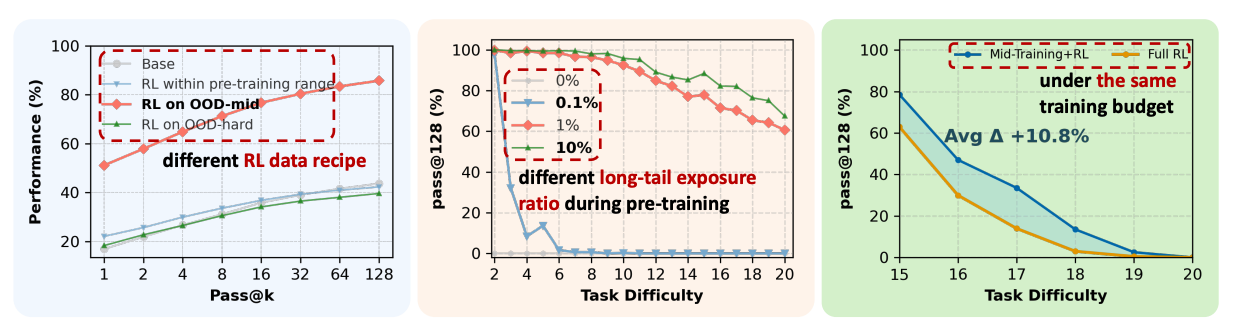
Pre-Training, Mid-Training, and RL Interplay
CMU researchers develop a controlled experimental framework using synthetic reasoning tasks to isolate how pre-training, mid-training, and RL-based post-training each contribute to reasoning capabilities in language models. The study reconciles conflicting views on whether RL truly extends reasoning beyond what models learn during pre-training.
Agentic AI Adaptation Survey
Researchers from UIUC, Stanford, Berkeley, and other institutions present the first comprehensive taxonomy of adaptation strategies for agentic AI systems. The survey organizes recent advances into a unified framework covering how agents and their tools can be modified to achieve higher task performance, improved reliability, and better generalization across diverse scenarios.
Reasoning Models Ace the CFA Exams
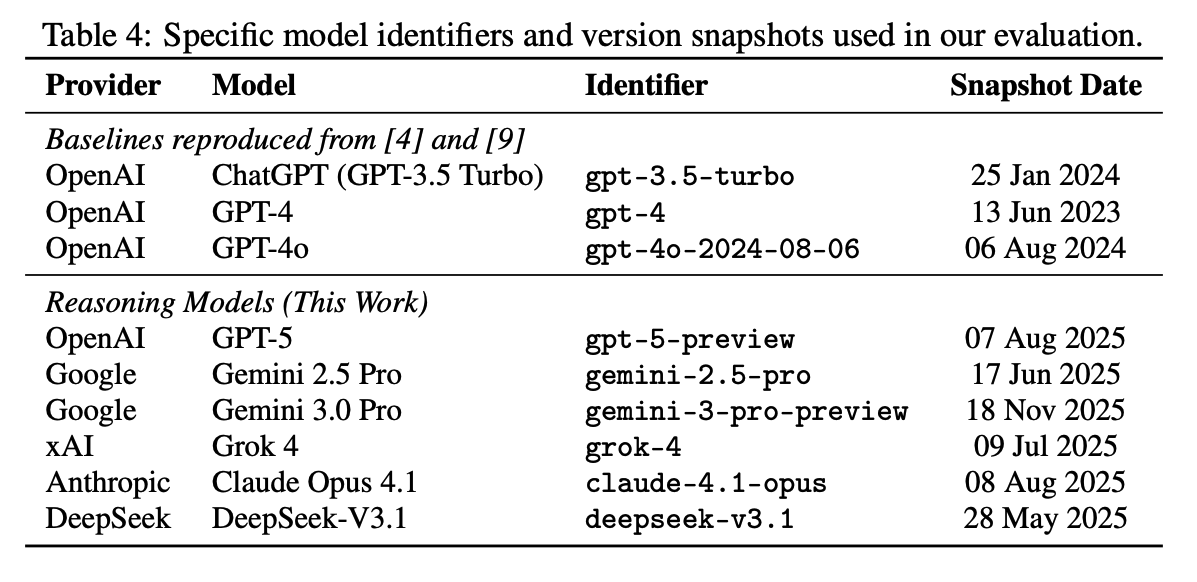
Researchers evaluate state-of-the-art reasoning models on mock CFA exams consisting of 980 questions across all three certification levels. While previous studies reported that LLMs performed poorly on these exams, the latest reasoning models now pass all three levels, with Gemini 3.0 Pro achieving a record 97.6% on Level I.
AI and Human Co-Improvement
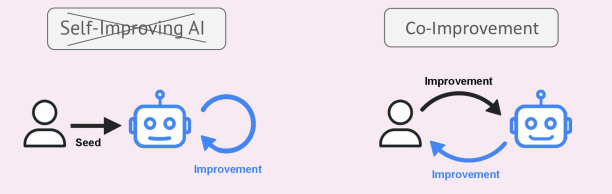
Meta FAIR researchers Jason Weston and Jakob Foerster argue that fully autonomous self-improving AI is neither the fastest nor safest path to superintelligence. Instead, they advocate for co-improvement: building AI that collaborates with human researchers to conduct AI research together, from ideation to experimentation.
Selective Gradient Masking
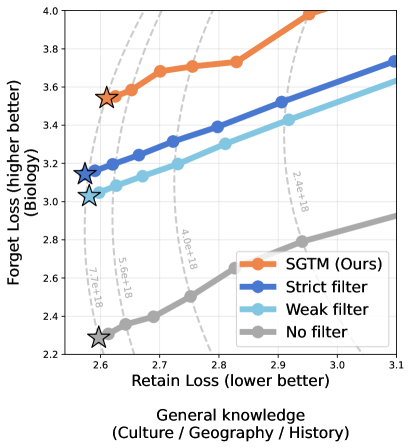
Anthropic researchers present Selective Gradient Masking (SGTM), a technique that removes dangerous capabilities like CBRN knowledge from language models during pretraining while preserving general capabilities. Unlike data filtering, SGTM localizes target knowledge into dedicated “forget” parameters that can be zeroed out after training.
Nanbeige4-3B
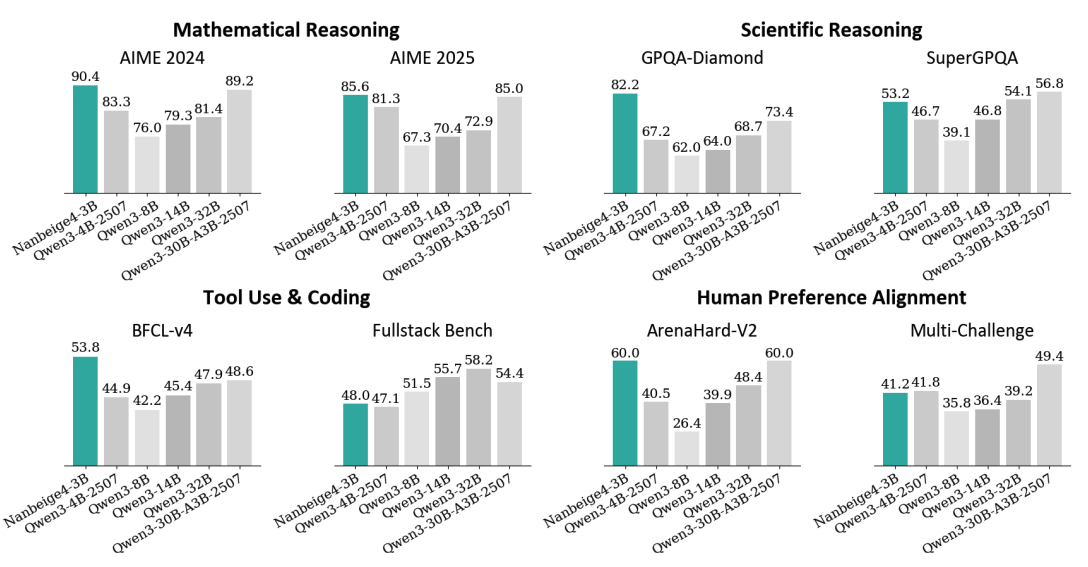
Nanbeige4-3B is a 3B parameter model pretrained on 23T tokens and fine-tuned on over 30M instructions using a Fine-Grained Warmup-Stable-Decay scheduler, Dual Preference Distillation, and multi-stage reinforcement learning. Despite its compact size, it outperforms Qwen3-8B and Qwen3-14B on reasoning benchmarks and rivals much larger models on WritingBench, demonstrating that well-engineered small models can match far larger counterparts.
AI Agent Adoption Study
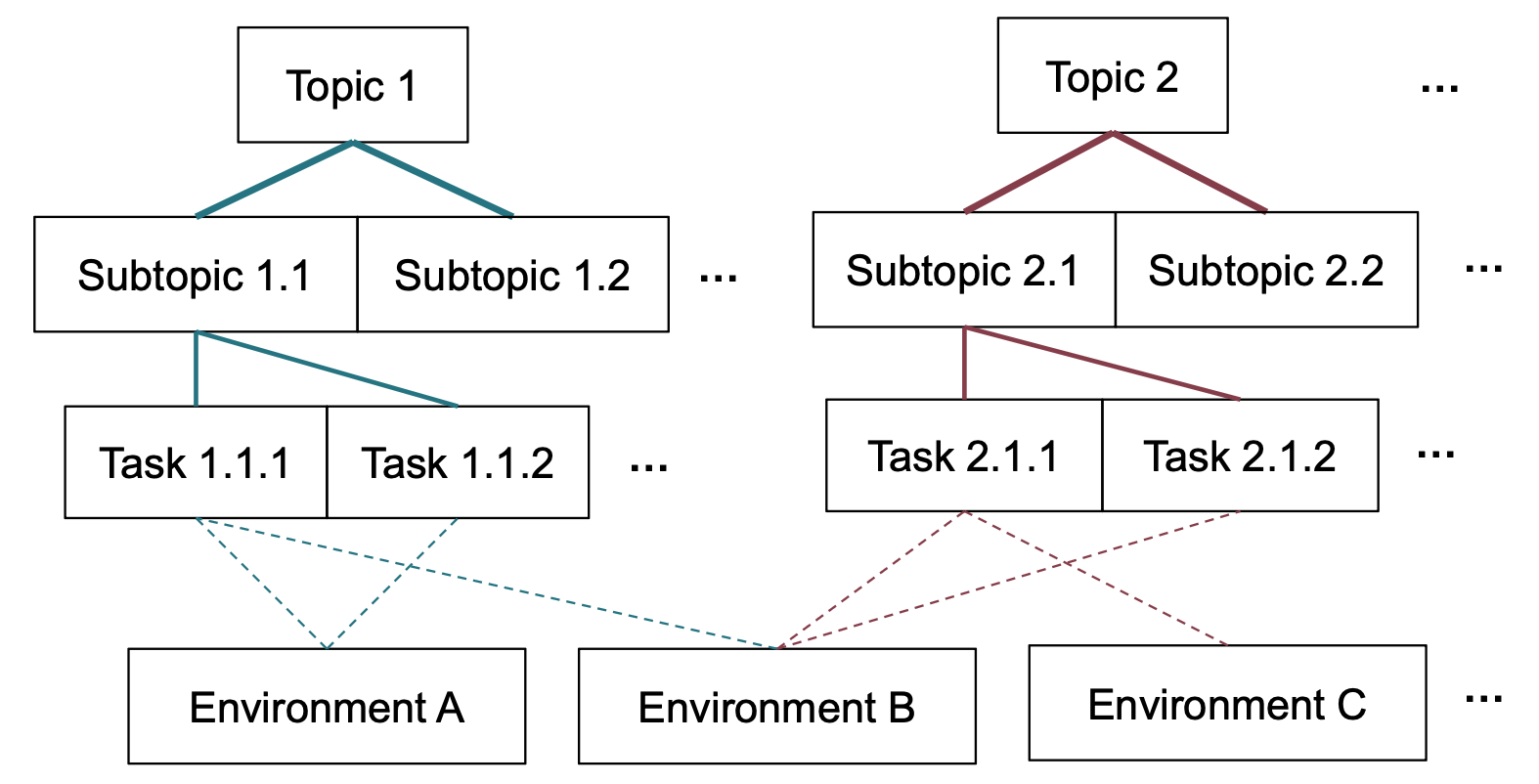
Harvard and Perplexity researchers present the first large-scale field study of AI agent adoption using hundreds of millions of anonymized interactions from Perplexity’s Comet browser. Productivity and Learning account for 57% of agentic queries, with digital technology workers (28% of adopters) and knowledge-intensive sectors leading adoption. Users in higher GDP countries with greater educational attainment are more likely to adopt agents, and over time, users shift from media and travel tasks toward more cognitively oriented topics.
ProAgent
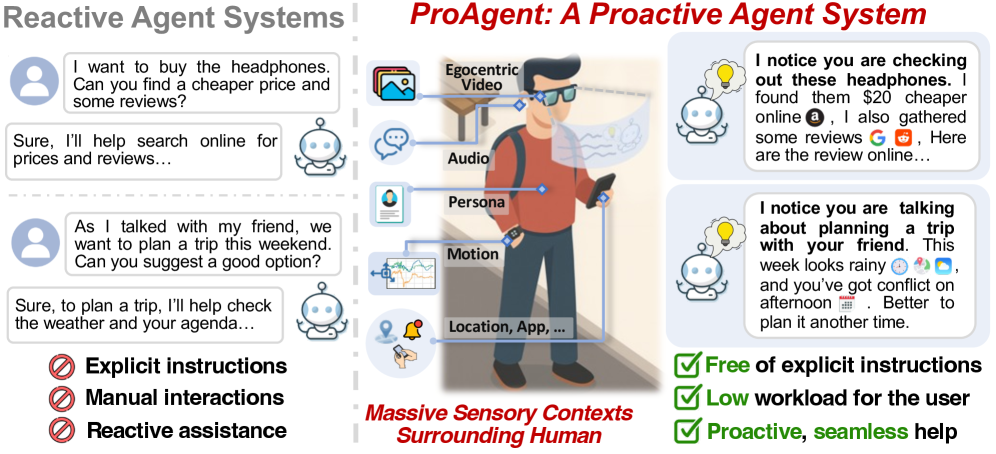
ProAgent is the first end-to-end proactive LLM agent system that harnesses sensory contexts from AR glasses, smartphones, and edge servers to deliver assistance without explicit user instructions. Unlike reactive agents that wait for commands, ProAgent continuously senses the environment with on-demand tiered perception and achieves up to 33.4% higher proactive prediction accuracy, 16.8% higher tool-calling F1 score, and 38.9% improved user satisfaction over baselines.