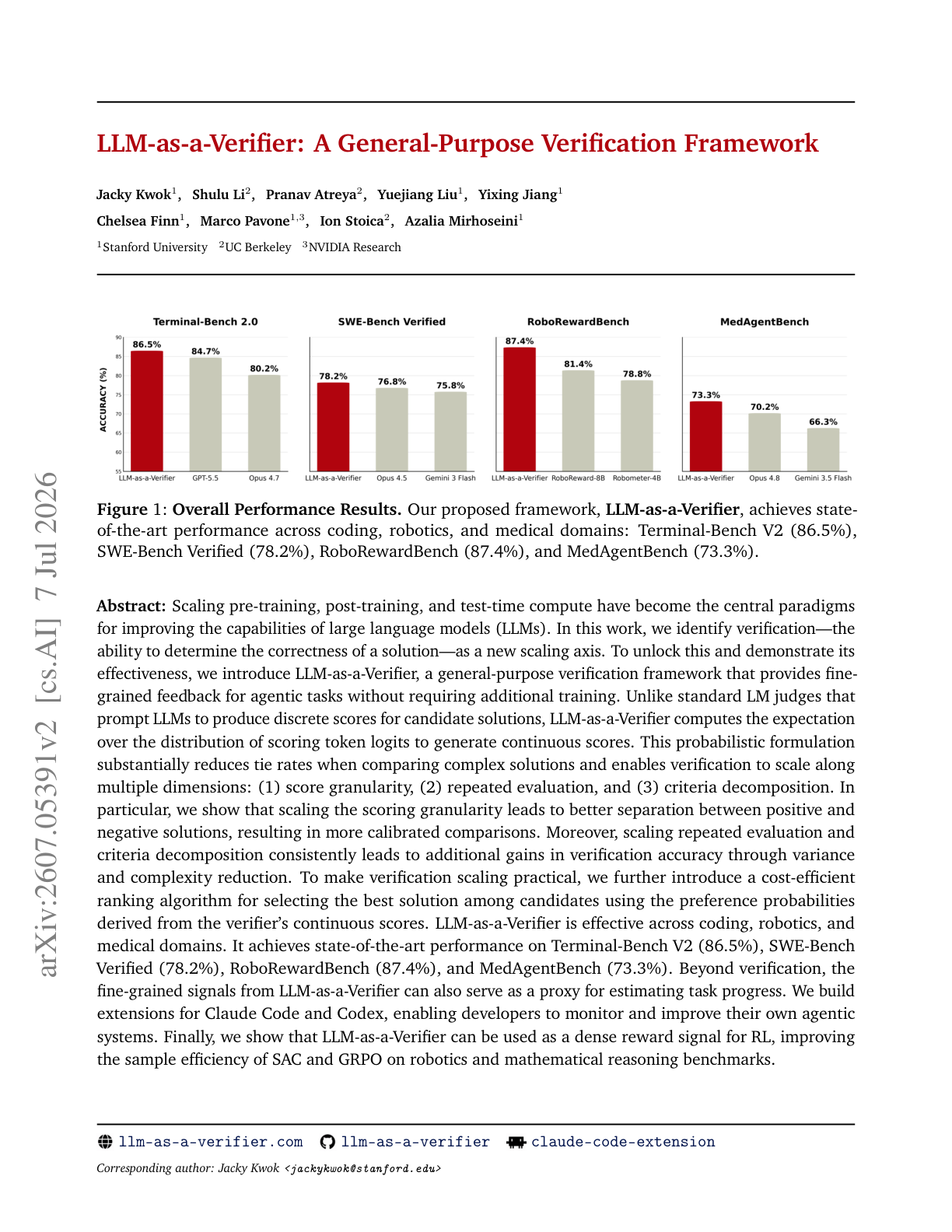
Verification as a Scaling Axis
Verification is emerging as a distinct scaling axis alongside pre-training and test-time compute, and this Stanford, NVIDIA, and UC Berkeley collaboration builds a training-free verifier that reads a continuous, calibrated score straight off the scoring-token logits instead of trusting a discrete pass or fail grade.
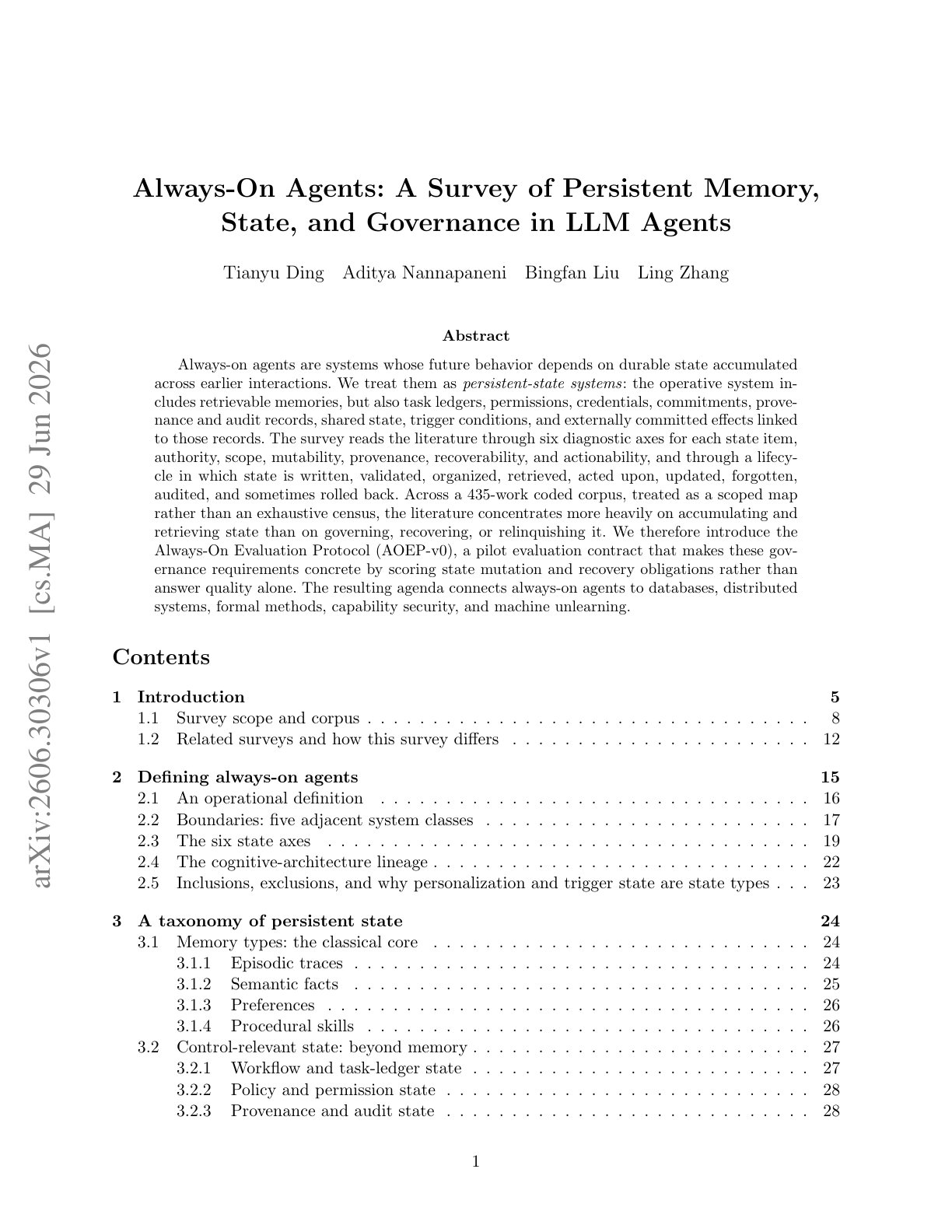
Always-On Agents
Always-on agents are systems whose future behavior depends on durable state built up across earlier interactions, and this 130-plus page survey argues that state is far more than memory. It spans task ledgers, permissions, credentials, commitments, provenance, triggers, and effects the agent has already committed to the outside world.
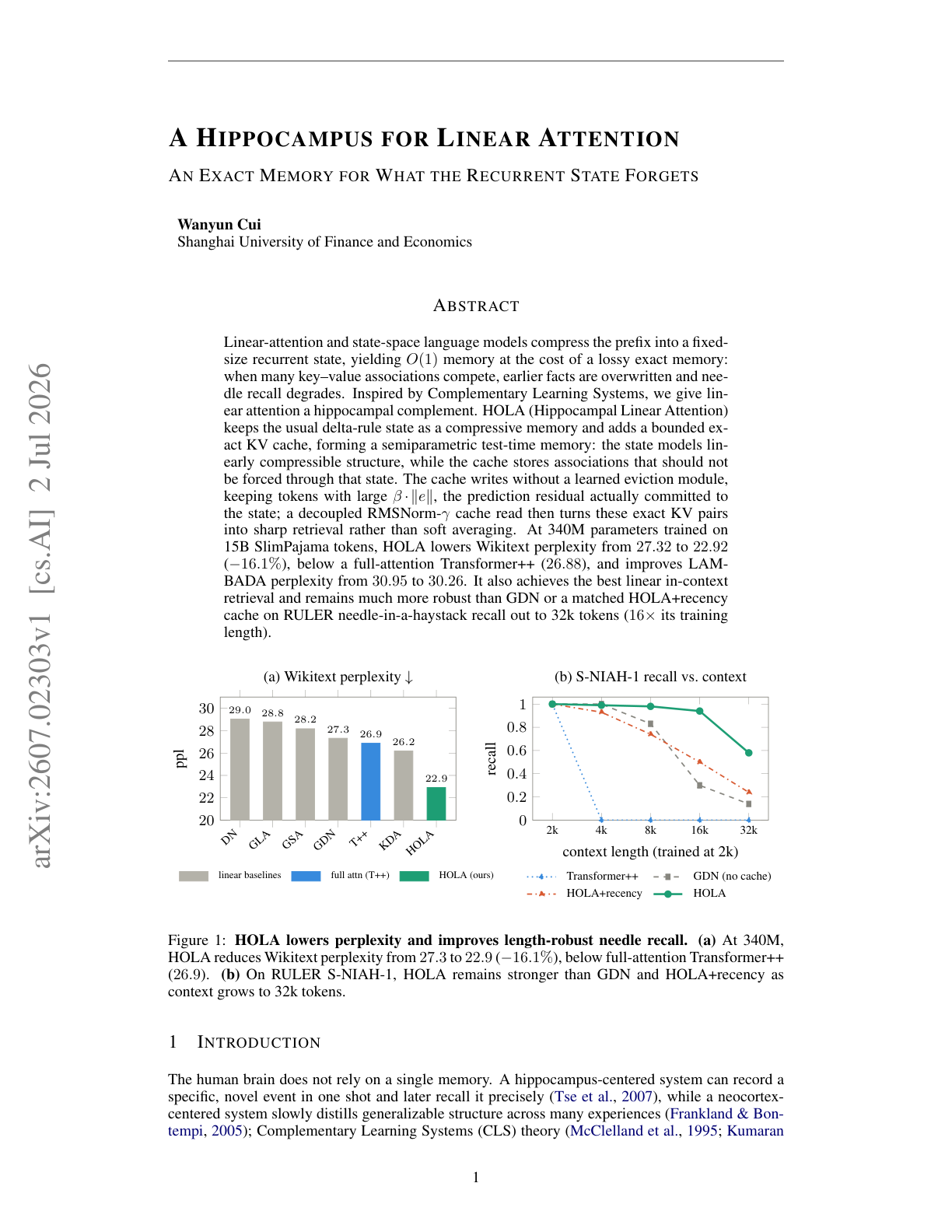
HOLA
Linear-attention and state-space models compress an entire prefix into a fixed-size state, buying constant memory but overwriting earlier facts when many key-value associations compete. HOLA gives linear attention a hippocampal complement, pairing a compressive recurrent state with a small exact memory to recover long-range recall.
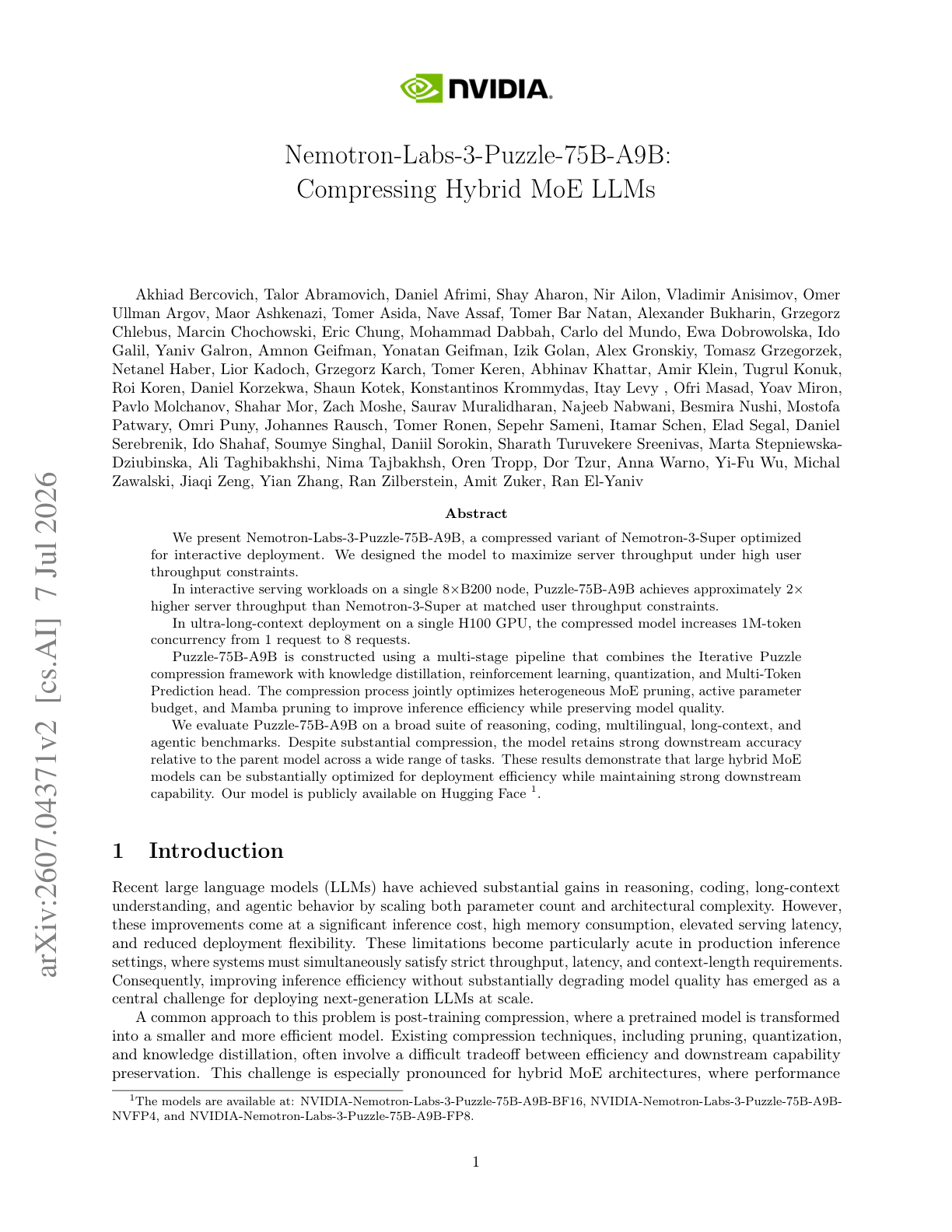
Puzzle-75B
Bigger mixture-of-experts models keep winning on quality, but serving them at interactive latency is still hard. NVIDIA compresses the hybrid MoE Nemotron-3-Super into Puzzle-75B-A9B and roughly doubles interactive server throughput while holding quality.
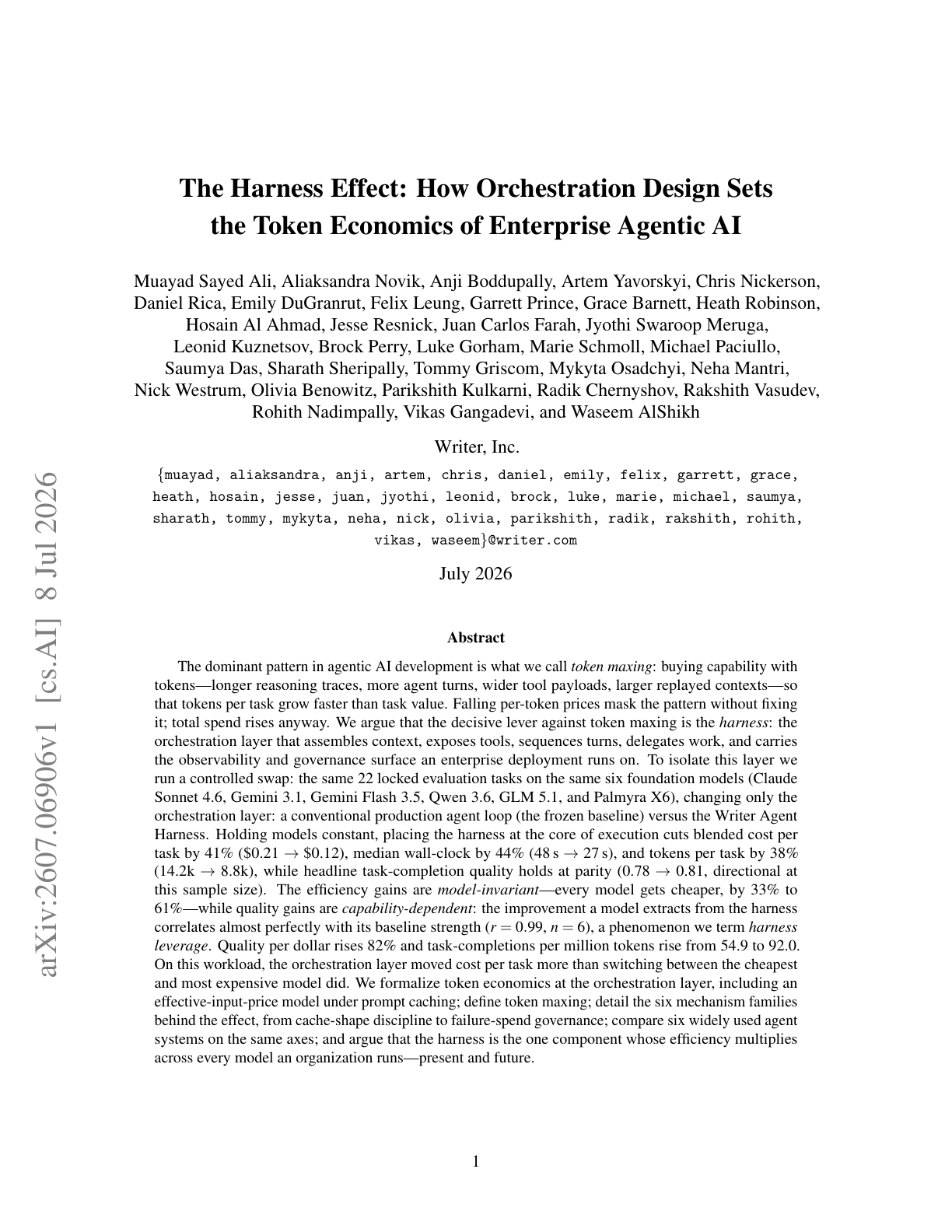
The Harness Effect
As orchestration harnesses mediate every model call, this study asks how much the harness alone moves cost and performance. It ran 22 evaluation tasks across six foundation models, then changed only the orchestration layer while holding the models constant.
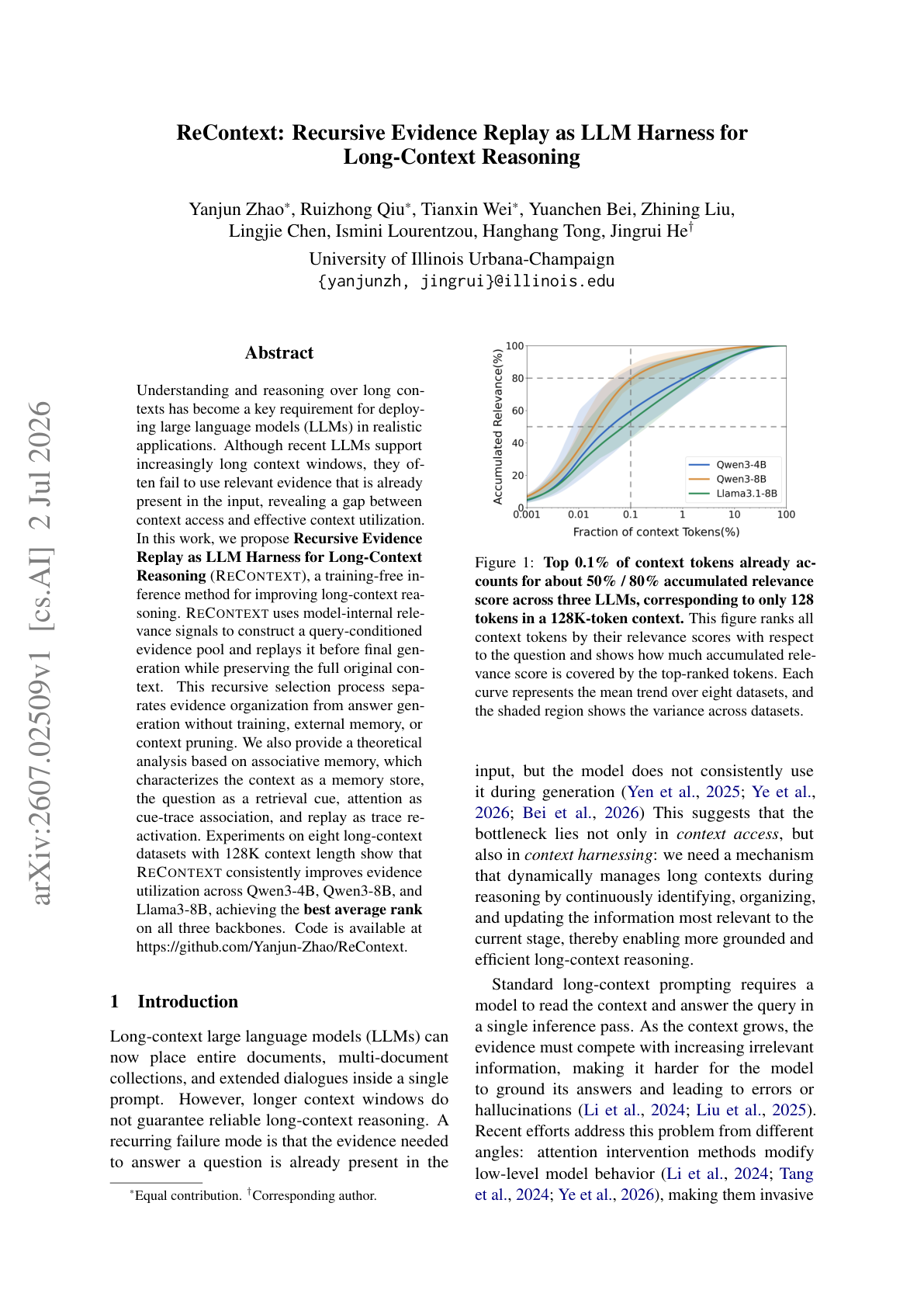
ReContext
Models now support 128K context windows yet still fail to use evidence already sitting in the prompt. ReContext is a training-free inference harness for long-context reasoning that uses model-internal relevance signals to build a query-conditioned evidence pool, then replays it right before final generation while preserving the full original context.
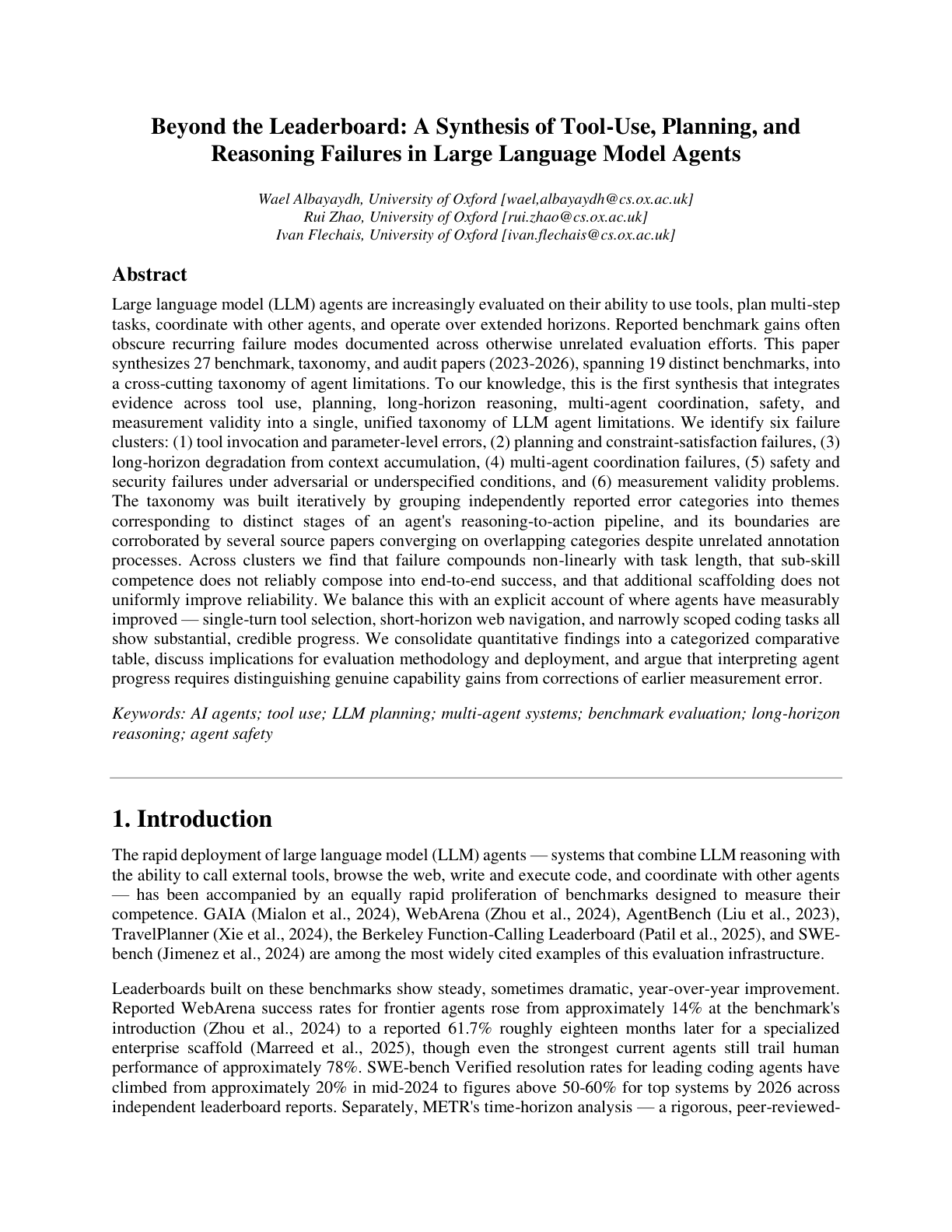
Agent Limitations Taxonomy
Benchmark scores keep climbing, yet the same agent failures resurface across otherwise unrelated evaluations, hidden behind the leaderboard. This University of Oxford work synthesizes 27 benchmark, taxonomy, and audit papers spanning 19 benchmarks into the first cross-cutting taxonomy of LLM-agent limitations.
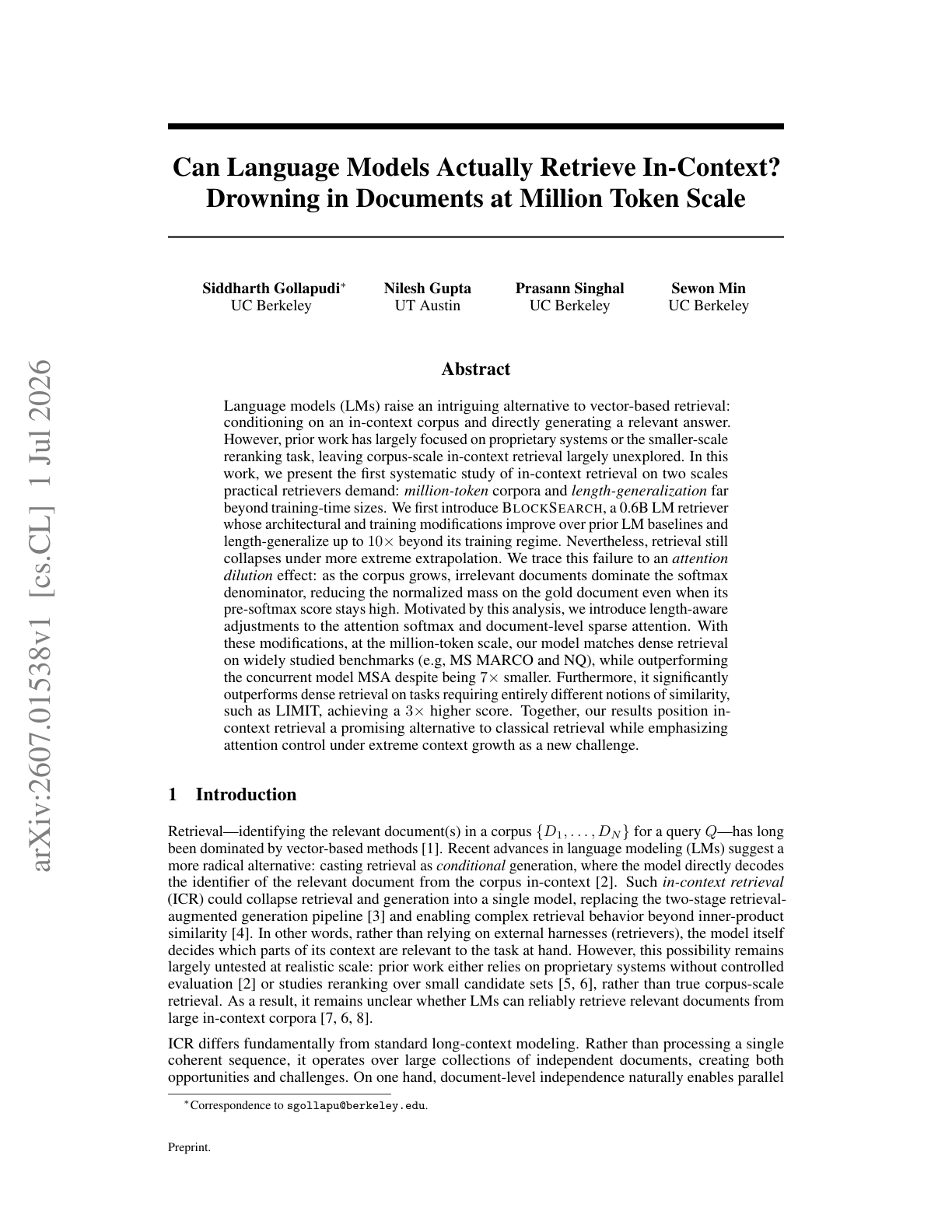
BlockSearch
BlockSearch runs the first systematic study of in-context retrieval at the scales real retrievers actually face, million-token corpora and length generalization far beyond training size. It introduces a 0.6B language-model retriever whose architectural and training changes improve over prior LM baselines and length-generalize up to 10 times beyond their training length, pointing toward retrievers that stay reliable as context windows keep growing.
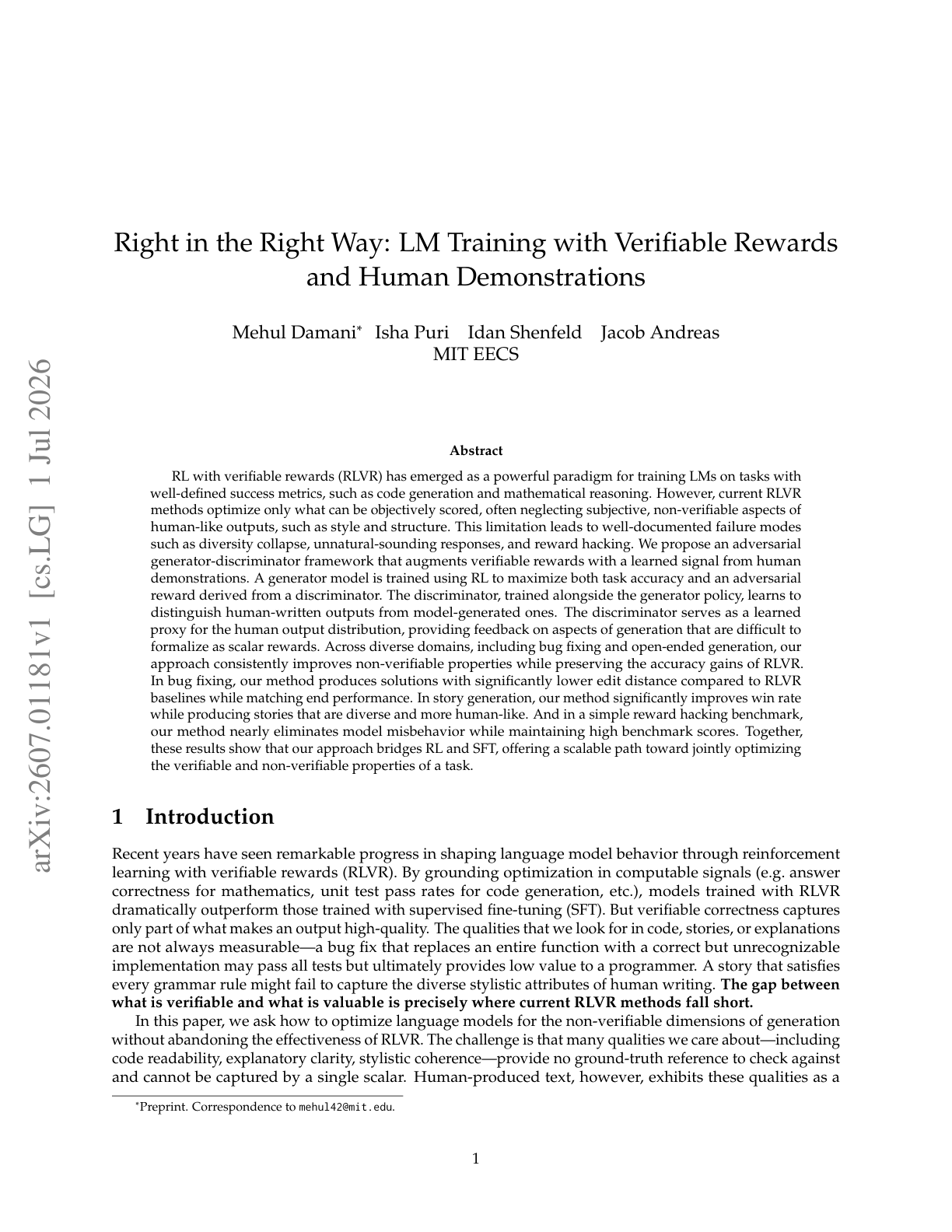
RLVR Meets Human Likeness
RL with verifiable rewards only optimizes what you can objectively score, so style, structure, and diversity quietly collapse and reward hacking creeps in. This MIT work adds an adversarial discriminator trained on human demonstrations as a learned proxy for the human output distribution, and the generator maximizes both task accuracy and that human-likeness signal. Across bug fixing, story generation, and a reward-hacking benchmark, it preserves RLVR's accuracy gains while restoring the fuzzy properties it usually destroys, with misbehavior nearly disappearing.
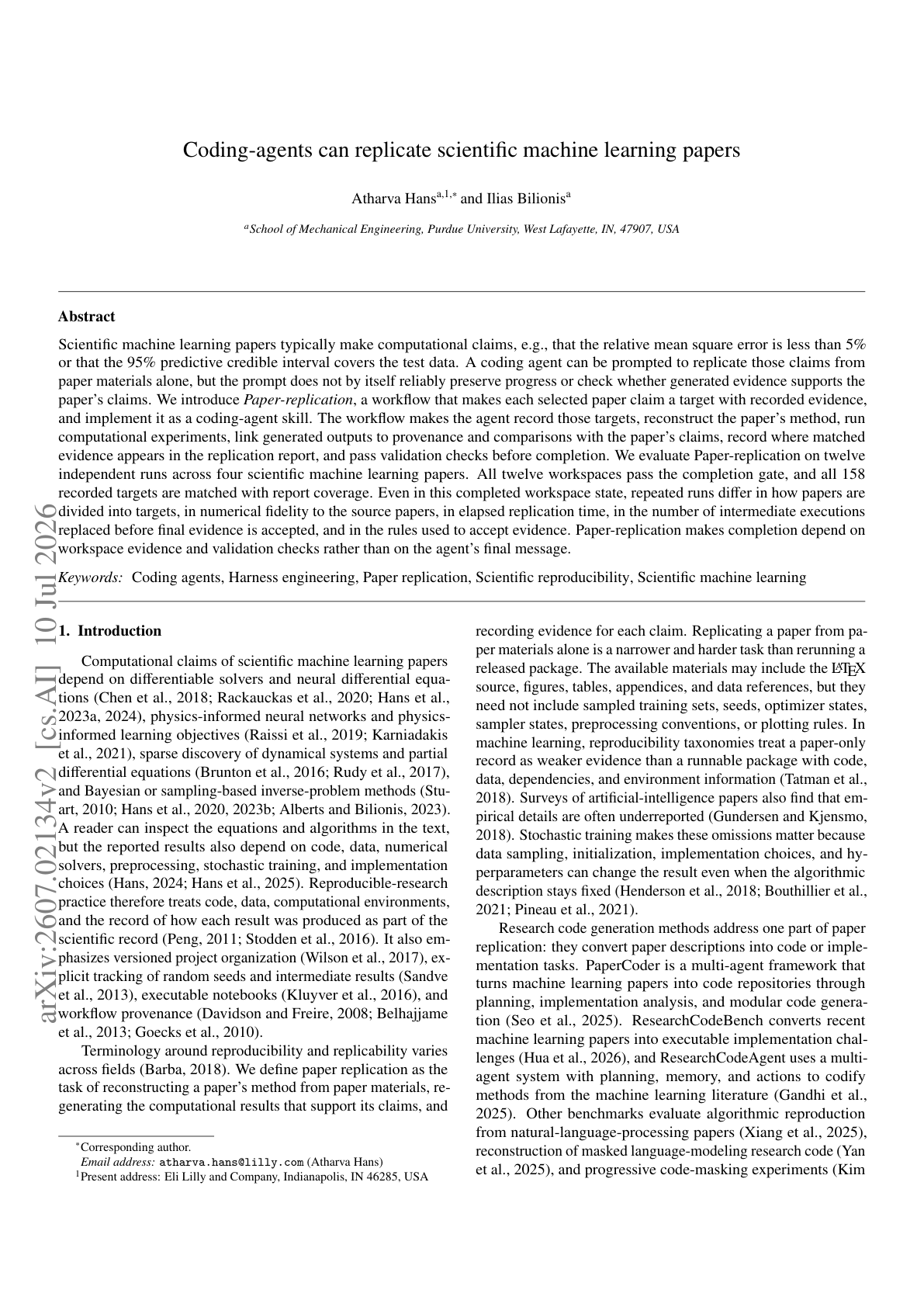
Replicating ML Papers with Agents
This work tests whether a coding agent can replicate a scientific ML paper from its materials alone, using a skill that turns each paper claim into a target with recorded evidence and gating completion on workspace evidence rather than the agent's final message. Across twelve runs over four papers, all twelve workspaces pass the completion gate and all 158 recorded targets are matched with report coverage. Yet repeated runs still differ in how papers are split into targets and in numerical fidelity, so completion becomes reproducible even when the path is not.