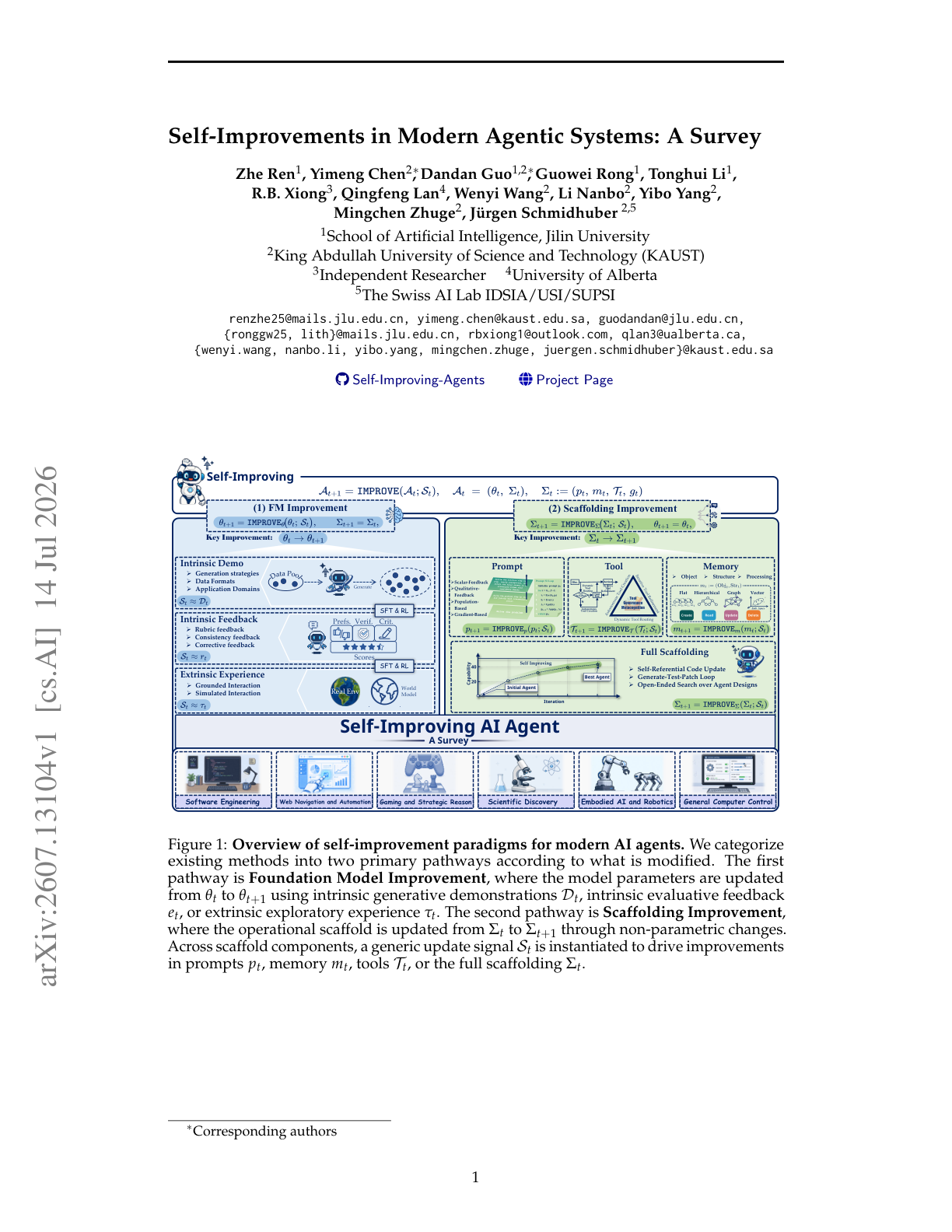
Self-Improving Agents Survey
Self-improving agents are moving from research demos into deployed systems, and this survey gives the trend a clean formalism. It frames a modern agent as a foundation model coupled with an operational scaffold of prompts, memory, tools, and control logic, then treats self-improvement as a self-induced update that commits changes to either the weights or the scaffold.
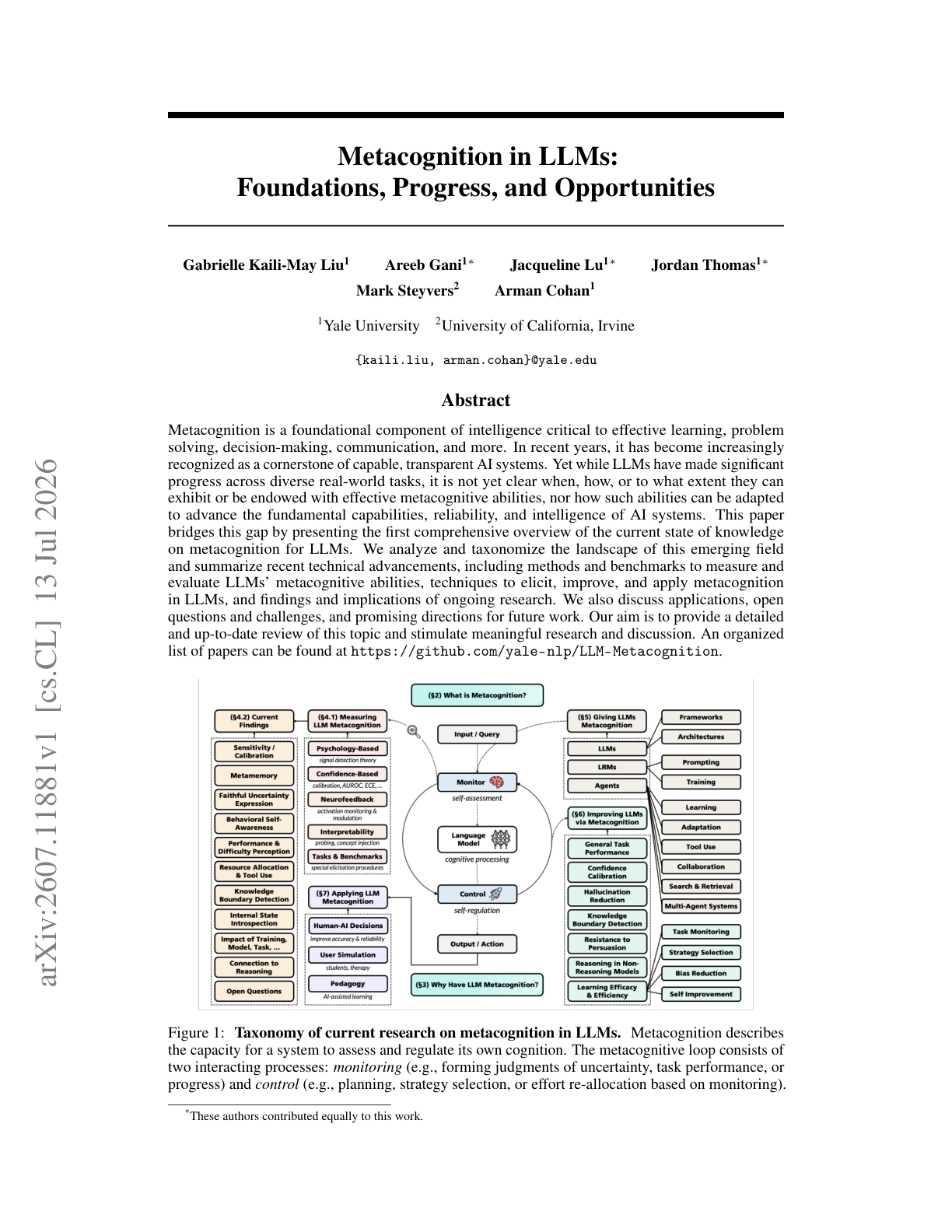
Metacognition in LLMs
Confidence calibration, self-verification, knowing when to stop, and knowing what you do not know have mostly been studied in isolation. This survey from Yale and UC Irvine argues they are facets of one capability, metacognition, and organizes the field around a monitor and control loop wrapped around the language model.
When Is Routing Meaningful
LLM routers and mixture-of-agents systems get judged on accuracy and cost, both of which can look great while the router is doing nothing. This DeepMind-affiliated work argues that whether routing means anything depends on two properties that are orthogonal to accuracy.
Harness Evolution, Rethought
Automatic harness evolution is what many teams now use to squeeze more out of agents, but the reported gains might not be coming from the harness at all. This paper argues that harness evolution is itself a search procedure and must be compared against simple search baselines under matched budgets.
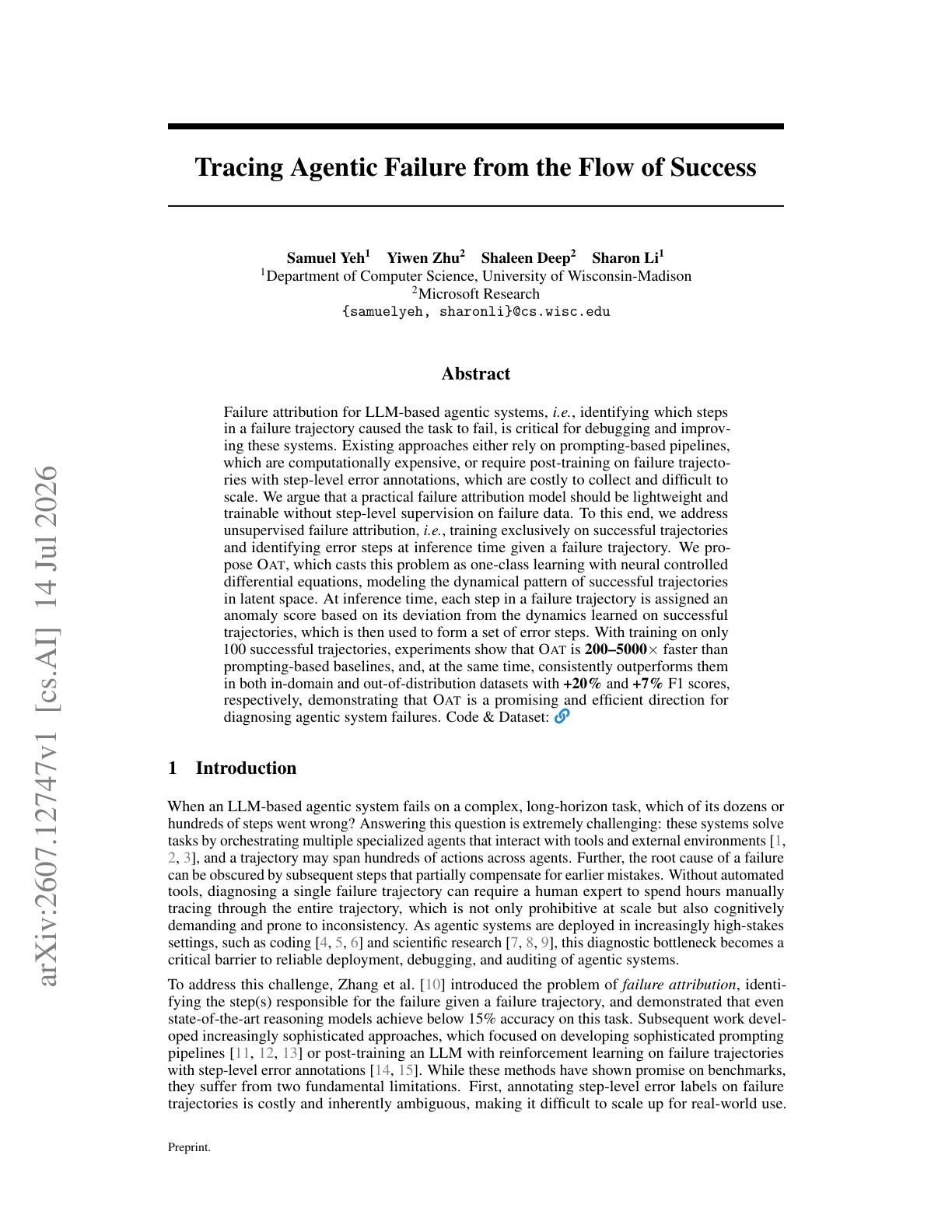
Tracing Agentic Failure
Finding which step in a failed agent run actually caused the failure usually means either labeling failure data or running expensive per-step prompting. This Microsoft and UW-Madison work skips both by learning what success looks like and flagging deviations from it.
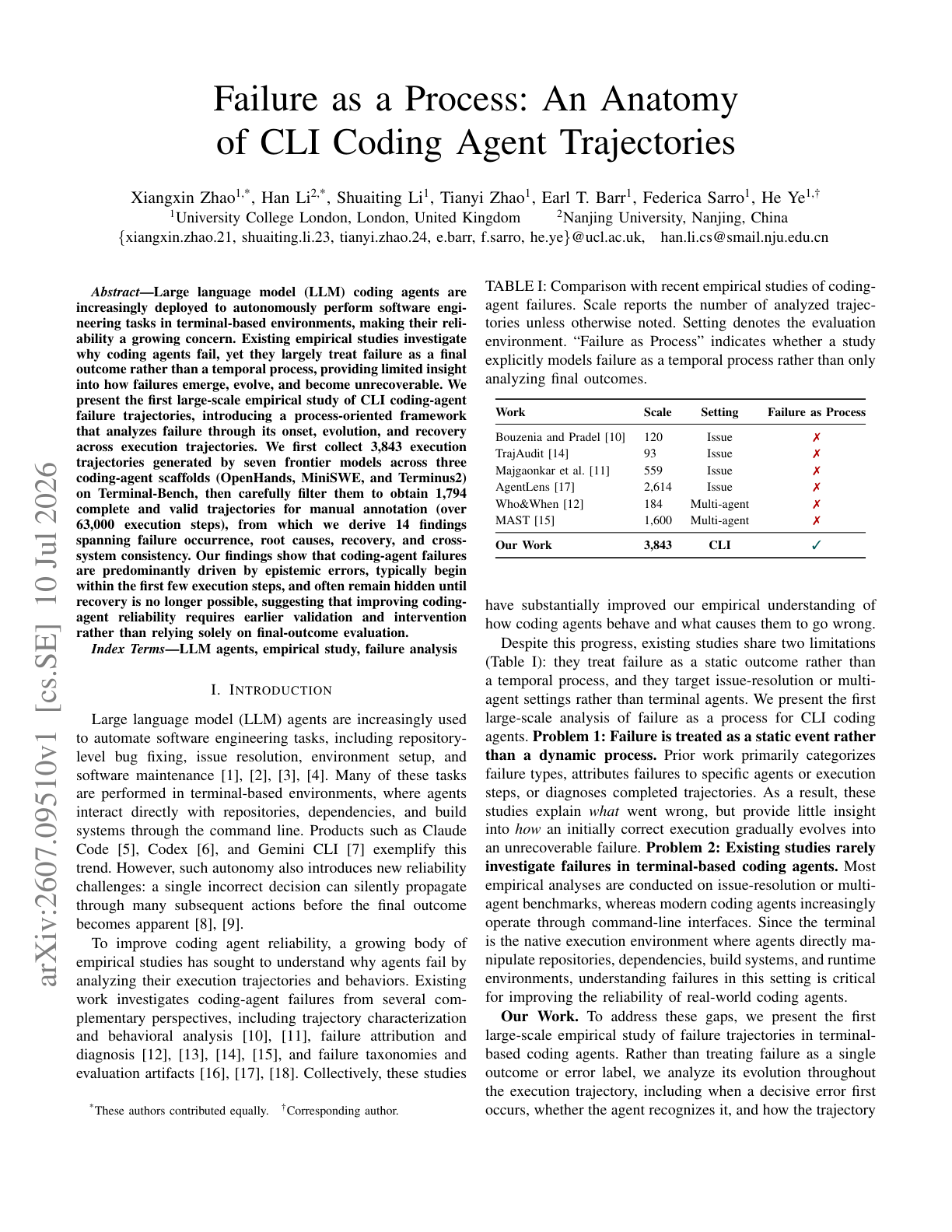
Failure as a Process
When a coding agent fails a task, the final pass or fail label hides when the run actually went wrong. This large-scale study treats failure as a timeline and annotates over 63,000 execution steps to see how coding-agent runs break down.

LingBot-World 2.0
Most world models fall apart after a few seconds, smearing textures and warping geometry as errors compound frame to frame. LingBot-World 2.0 from Robbyant holds 720p at 60 fps for a full hour of interaction and ships fully open.
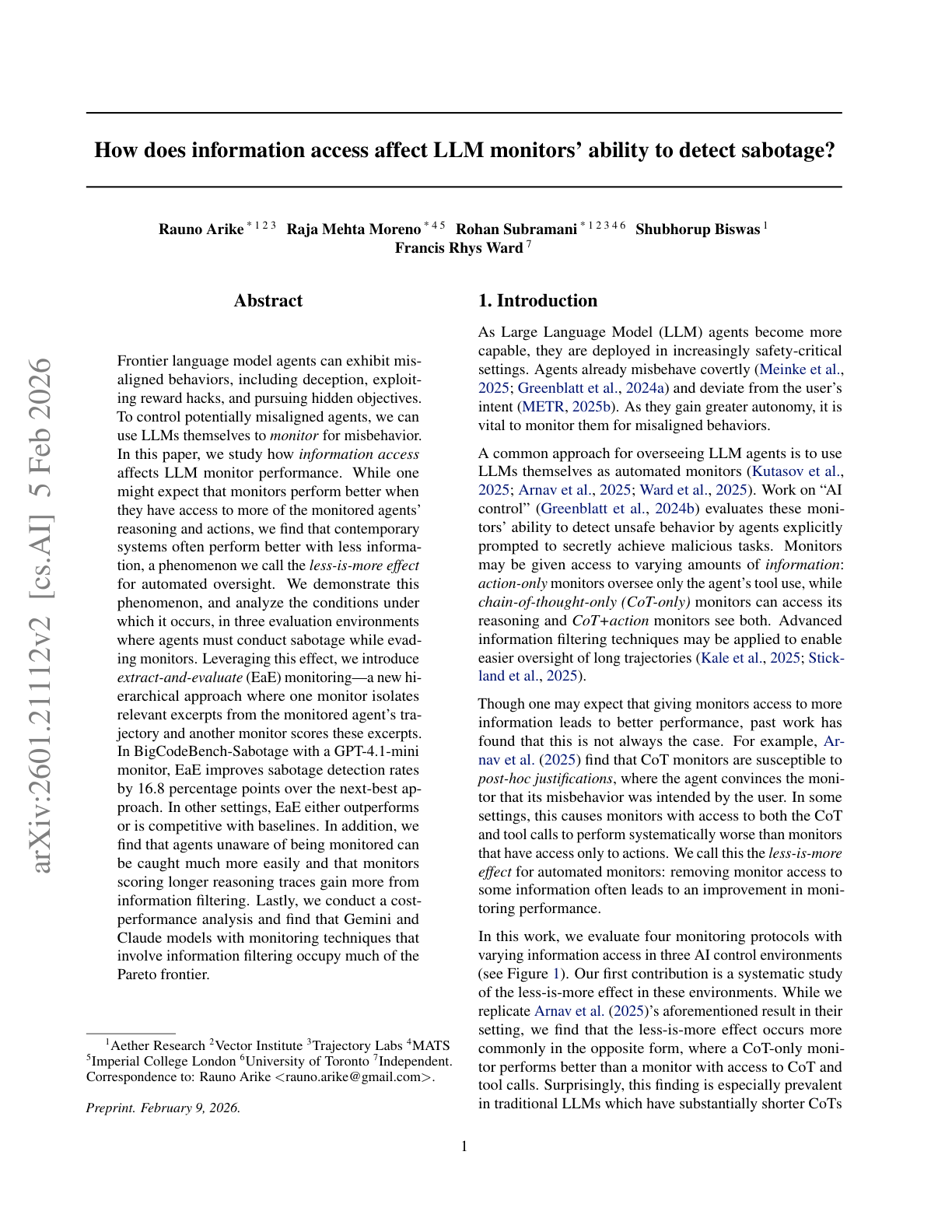
Less Is More for Monitors
Chain-of-thought monitoring is treated as a reliable safety layer, but this study shows monitors often detect sabotage better with less access, not more. Giving a monitor the full agent reasoning trace can bury the signal, and the authors introduce extract-and-evaluate monitoring, where one monitor isolates the relevant excerpts and another scores them, lifting sabotage detection by 16.8 points on BigCodeBench-Sabotage with a GPT-4.1-mini monitor. Agents unaware they are watched are far easier to catch, and monitors reading long traces gain the most from filtering.
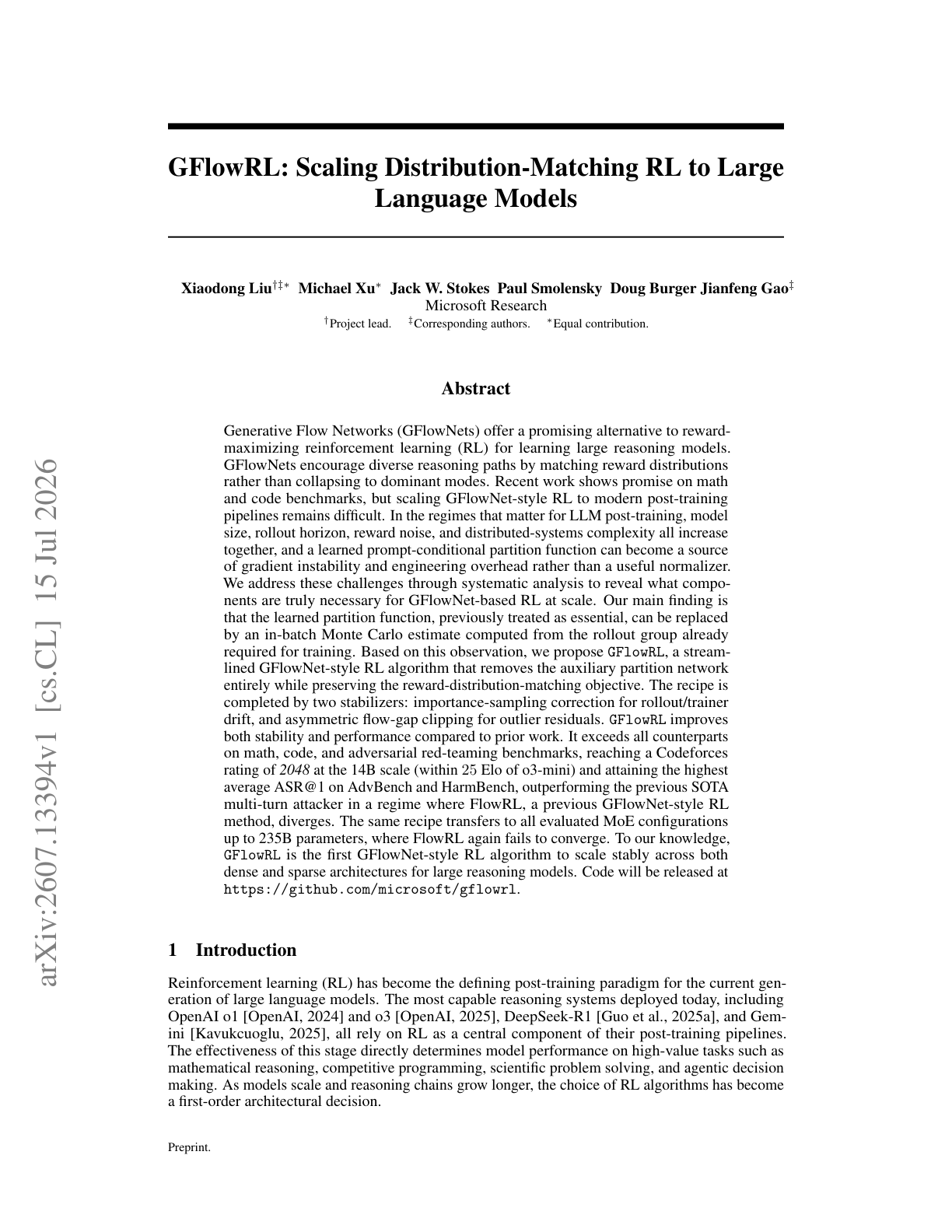
GFlowRL
Reward-maximizing RL tends to collapse large reasoning models onto a single dominant mode, and GFlowNet-style training is appealing because it matches reward distributions and keeps diverse reasoning paths. GFlowRL scales this to modern post-training by replacing the hard-to-learn partition function with an in-batch Monte Carlo estimate computed from the rollout group the pipeline already produces. It is the first GFlowNet-style RL algorithm to train stably across both dense and sparse architectures, reaching a 2048 Codeforces rating at 14B and outperforming prior methods on math, code, and adversarial red-teaming benchmarks like AdvBench and HarmBench.
LingBot-VLA 2.0
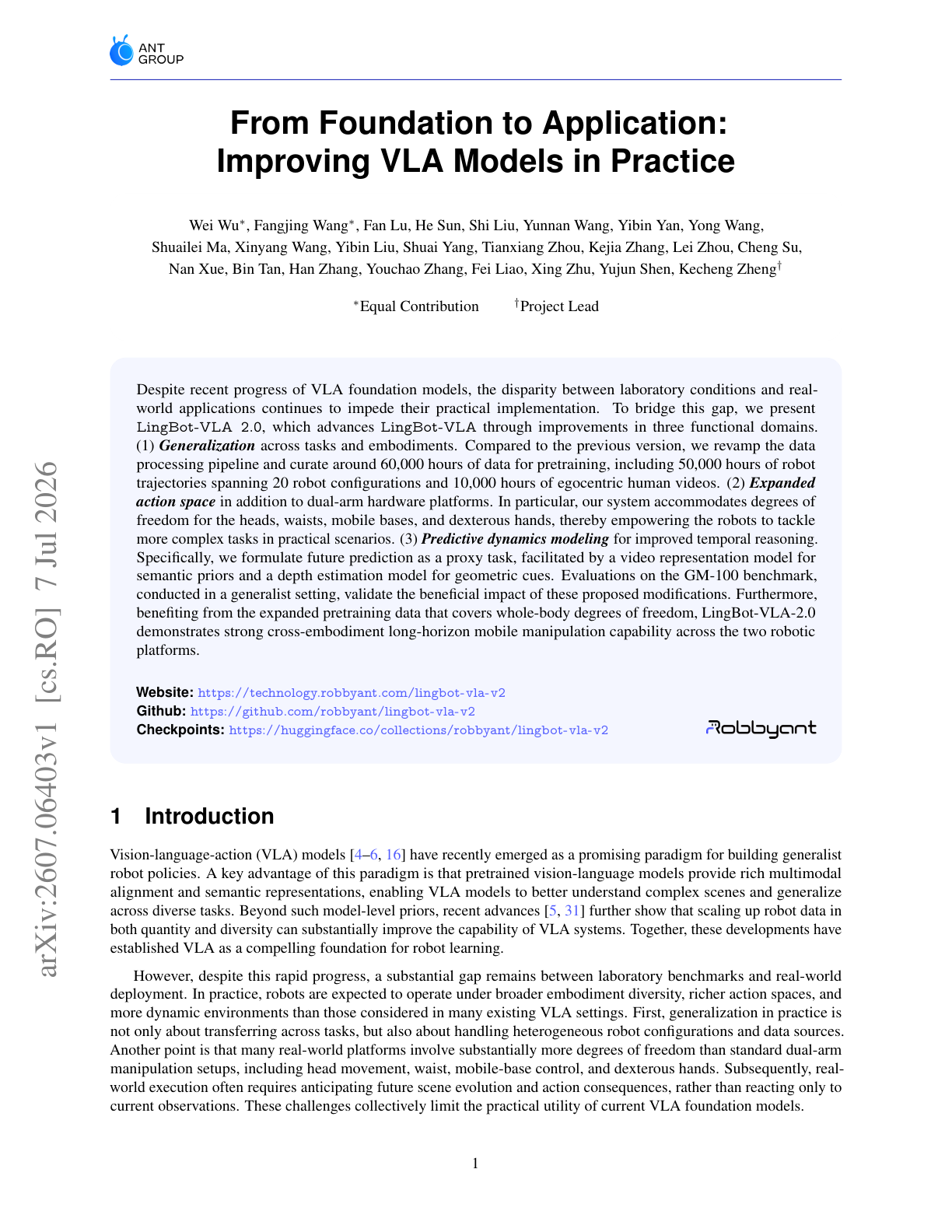
LingBot-VLA 2.0 is an open-source generalist embodied model from Robbyant, trained across 20 robot configurations from single-arm rigs to humanoids like Unitree G1 and Fourier GR-2. It packs 60,000 hours of curated data, 50,000 hours of real-robot trajectories plus 10,000 hours of egocentric human video, into one policy that also predicts future depth and semantic features before it acts. On 9 GM-100 tabletop tasks it beats π0.5 and GR00T N1.7 across two robot platforms and stays ahead on long-horizon mobile tasks, running at about 130 ms on a single RTX 4090D with open-sourced post-training code.