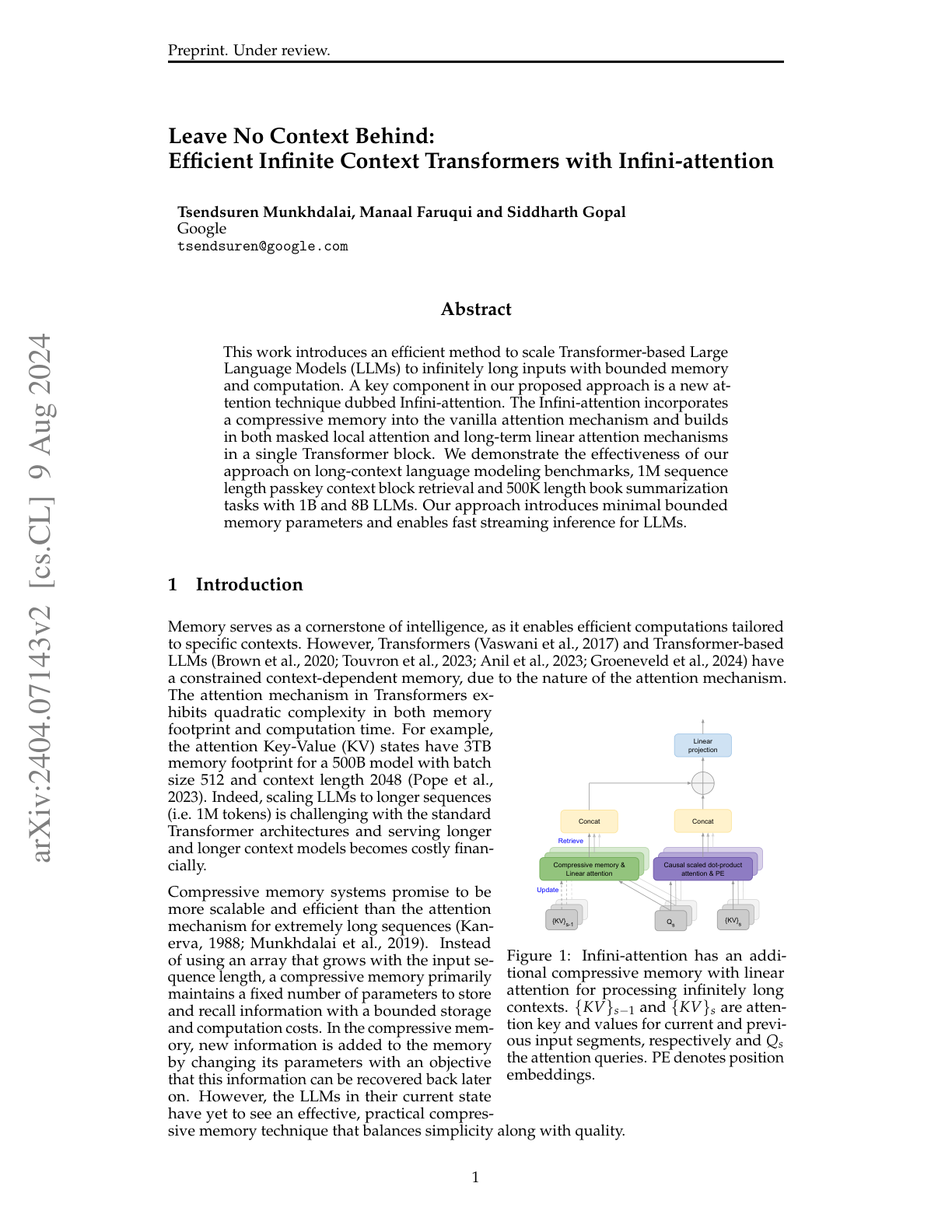
Leave No Context Behind (Infini-attention)
Google's Infini-attention extends Transformer LLMs to effectively infinite context with bounded memory and compute. It blends a compressive memory module with both masked local attention and linear long-term attention inside a single Transformer block.
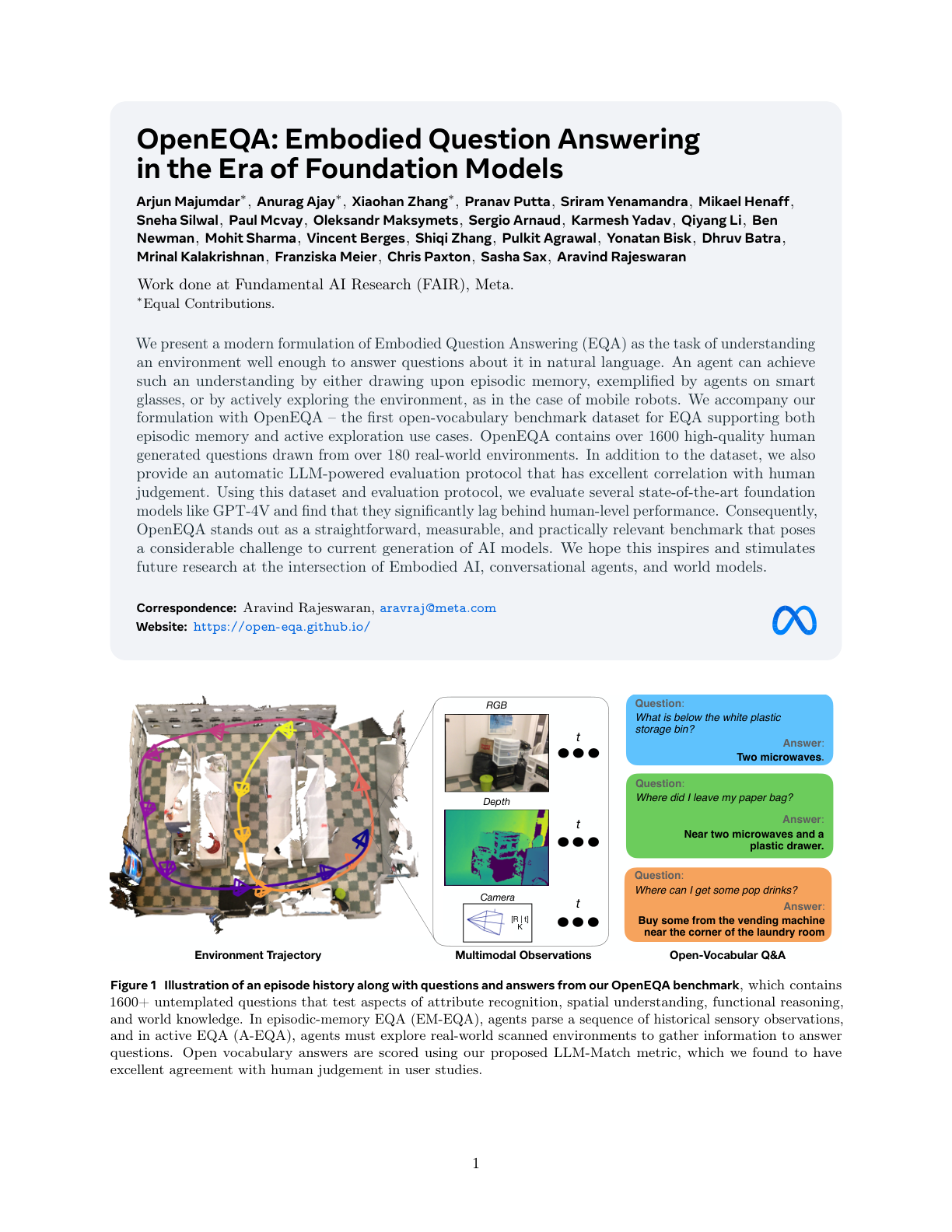
OpenEQA
Meta's OpenEQA is an open-vocabulary benchmark for embodied question answering: 1,600+ human-written questions across 180+ real-world environments, with a calibrated LLM-as-judge metric that tracks human agreement closely.

CodeGemma
CodeGemma is a family of open code LLMs built on Gemma, released in 2B (pretrained), 7B (pretrained), and 7B-IT (instruction-tuned) variants. The 2B model is optimized for low-latency code completion, and the 7B-IT model leads its weight class on HumanEval.
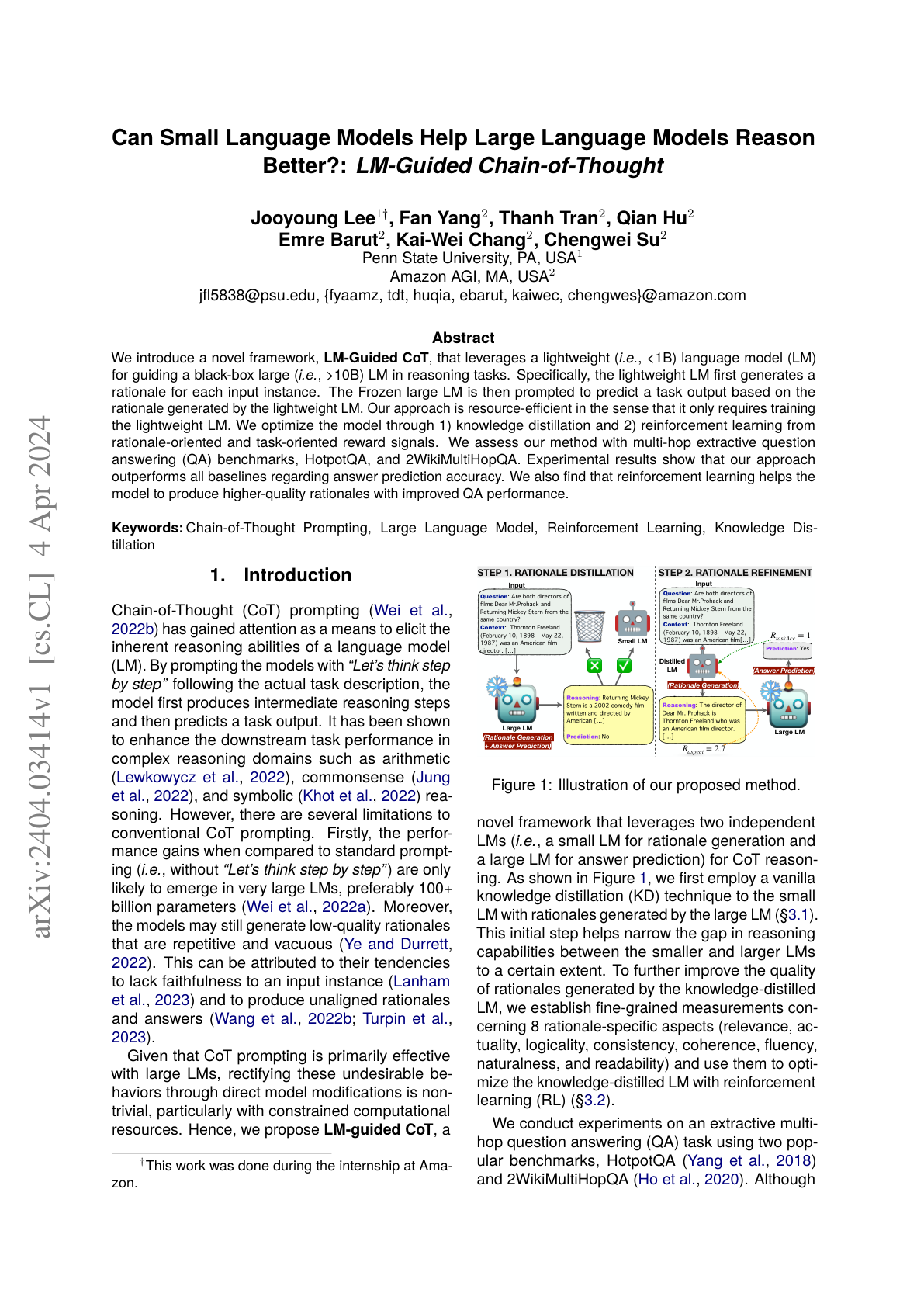
LM-Guided Chain-of-Thought
This paper offloads rationale generation to a small, trained LM while keeping a frozen large LM as the answer predictor. The small model is optimized with knowledge distillation and reinforcement learning so it produces rationales that steer the large model more effectively.
Best Practices and Lessons on Synthetic Data
Google DeepMind's survey-style position paper on synthetic data for LLMs. It covers applications, quality-assurance principles, and the open challenges of factuality, fidelity, bias, and privacy.
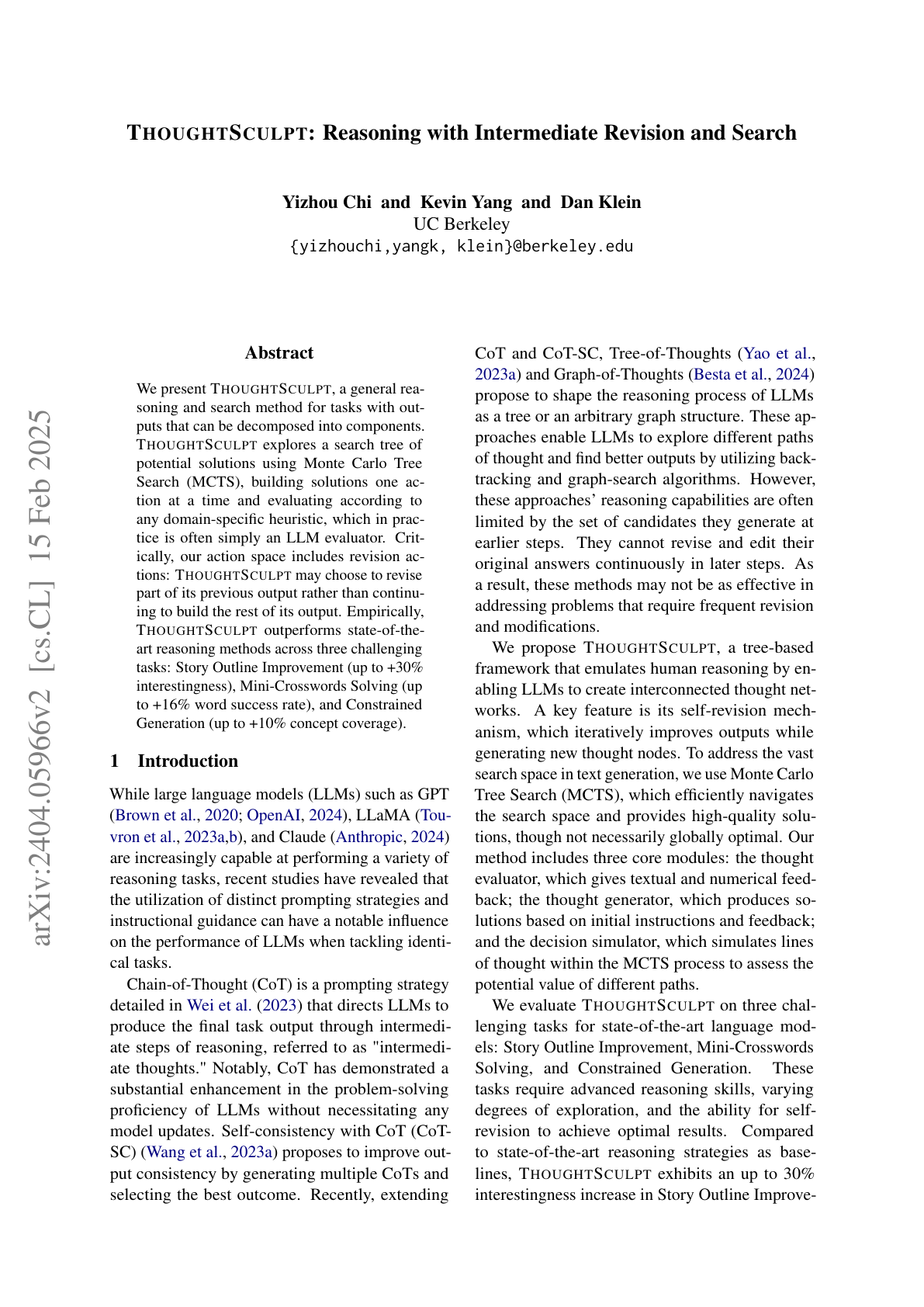
Reasoning with Intermediate Revision and Search (THOUGHTSCULPT)
THOUGHTSCULPT is a graph-based reasoning framework that combines Monte Carlo Tree Search with an explicit revision action, letting an LLM iteratively rewrite earlier thoughts instead of only extending them.
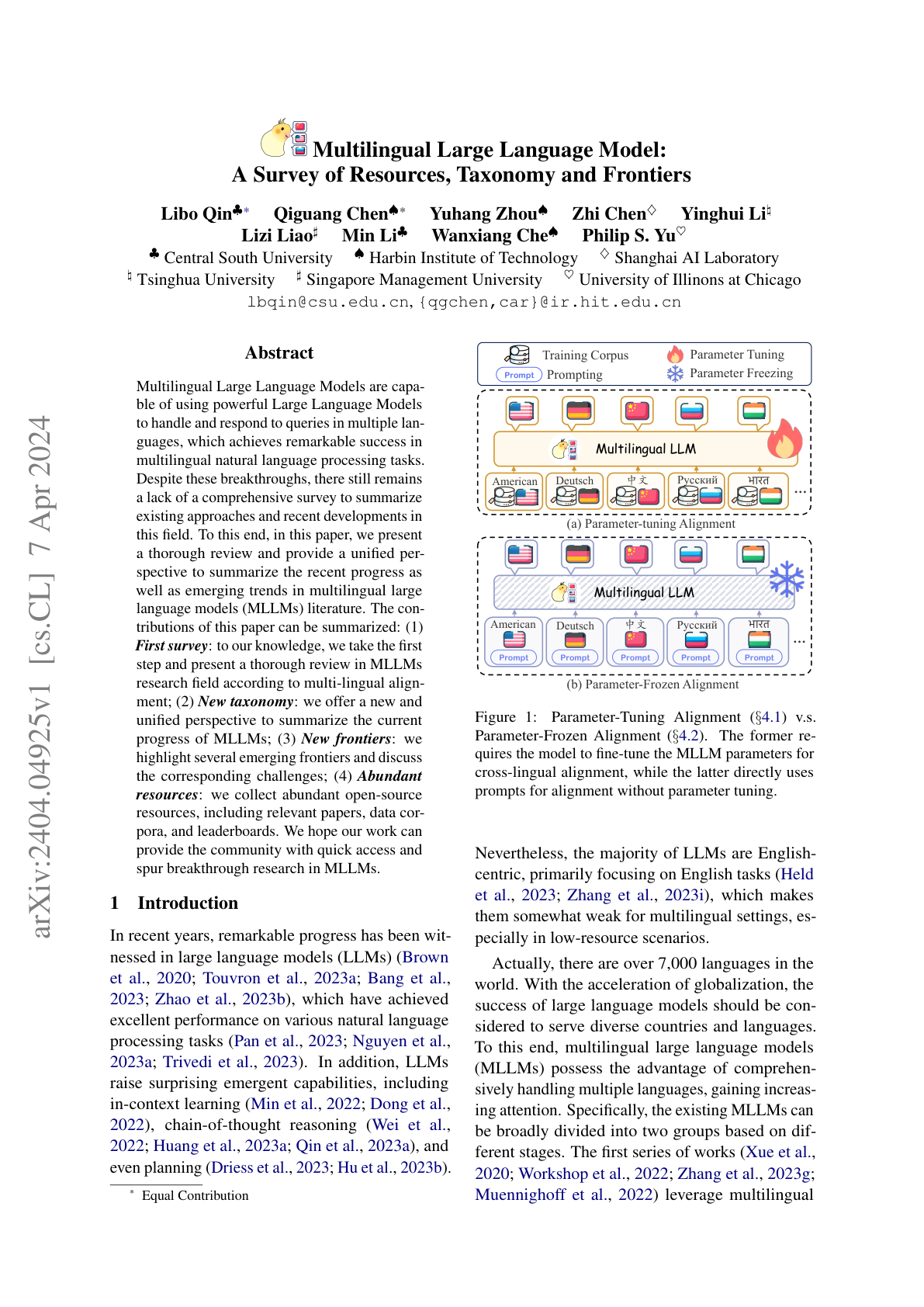
Overview of Multilingual LLMs
A first-of-its-kind survey on multilingual LLMs, organized by multilingual alignment principles rather than model-family hierarchy. The authors propose a unified taxonomy and collect open resources to accelerate future research.
The Physics of Language Models
This paper measures how many bits of factual knowledge a language model can store per parameter and finds a remarkably stable 2-bits-per-parameter ceiling, even after int8 quantization. A 7B model can therefore hold ~14B bits - more than the English Wikipedia and textbooks combined.
Aligning LLMs to Quote from Pre-Training Data (Quote-Tuning)
Quote-Tuning aligns LLMs to quote verbatim from trusted pre-training sources, turning the attribution step from post-hoc fact-checking into a built-in model behavior.
The Influence Between NLP and Other Fields
This EMNLP 2023 analysis quantifies NLP's cross-disciplinary engagement using a Citation Field Diversity Index across 23 academic fields. The headline: NLP has become dramatically more insular over four decades.