Detailed Balance in LLM Agents
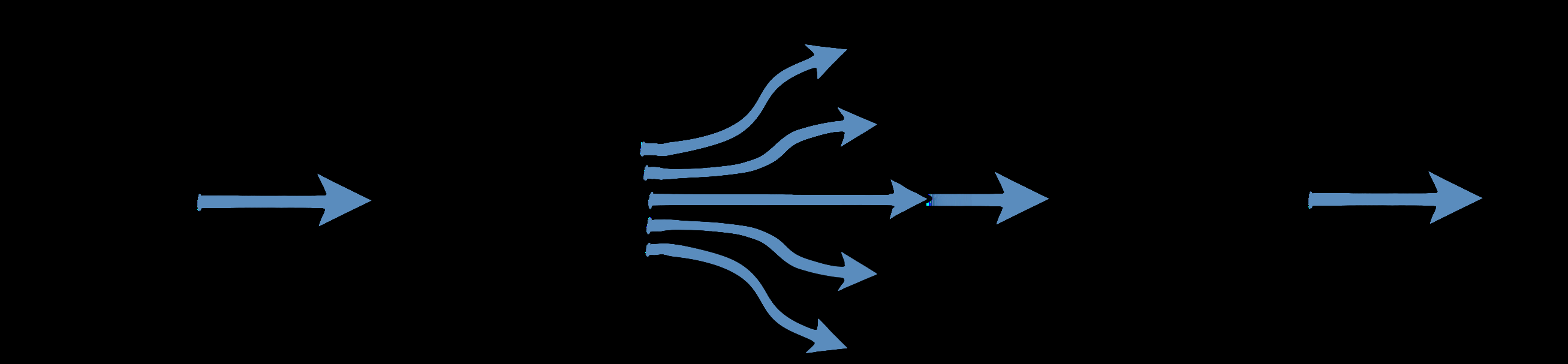
Researchers establish the first macroscopic physical law in LLM generation dynamics by applying the least action principle to analyze LLM-agent behavior. They discover statistical evidence of detailed balance in state transitions, suggesting LLMs implicitly learn underlying potential functions rather than explicit rules.
Budget Aware Test-time Scaling
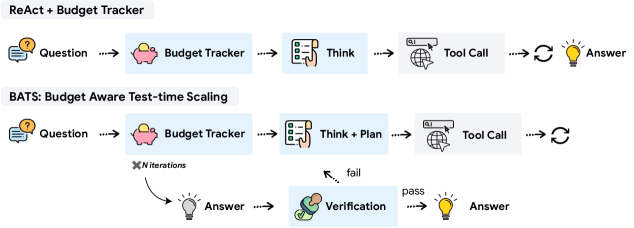
Researchers discover that simply expanding tool-call budgets without proper awareness fails to improve agent performance. They introduce BATS (Budget Aware Test-time Scaling), a framework that makes web search agents budget-aware, enabling more strategic resource allocation and pushing the cost-performance Pareto frontier.
DeepCode
DeepCode is a fully autonomous framework for synthesizing complete codebases from scientific papers despite LLM context limitations. It treats repository synthesis as a channel optimization problem, achieving state-of-the-art on PaperBench and outperforming commercial tools like Cursor and Claude Code.
FrontierScience
OpenAI introduced FrontierScience, a new benchmark measuring AI capabilities for expert-level scientific reasoning across physics, chemistry, and biology. The benchmark consists of over 700 questions created and verified by domain experts, including international olympiad medalists and PhD scientists.
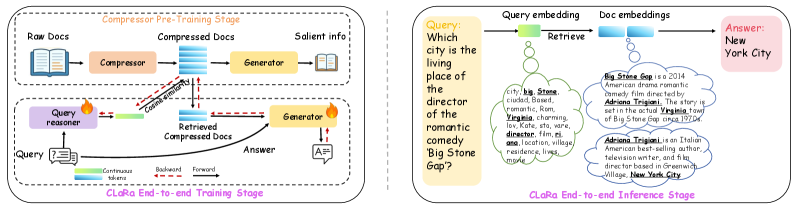
CLaRa
CLaRa introduces a unified framework for retrieval-augmented generation that performs embedding-based compression and joint optimization in a shared continuous space. The approach addresses key RAG limitations around long contexts and disjoint retrieval-generation optimization.

FACTS Leaderboard
Google introduces the FACTS Leaderboard, a comprehensive benchmark suite for evaluating LLM factuality across diverse scenarios. The leaderboard aggregates performance across four specialized sub-benchmarks to provide a holistic measure of how accurately models generate factual text.
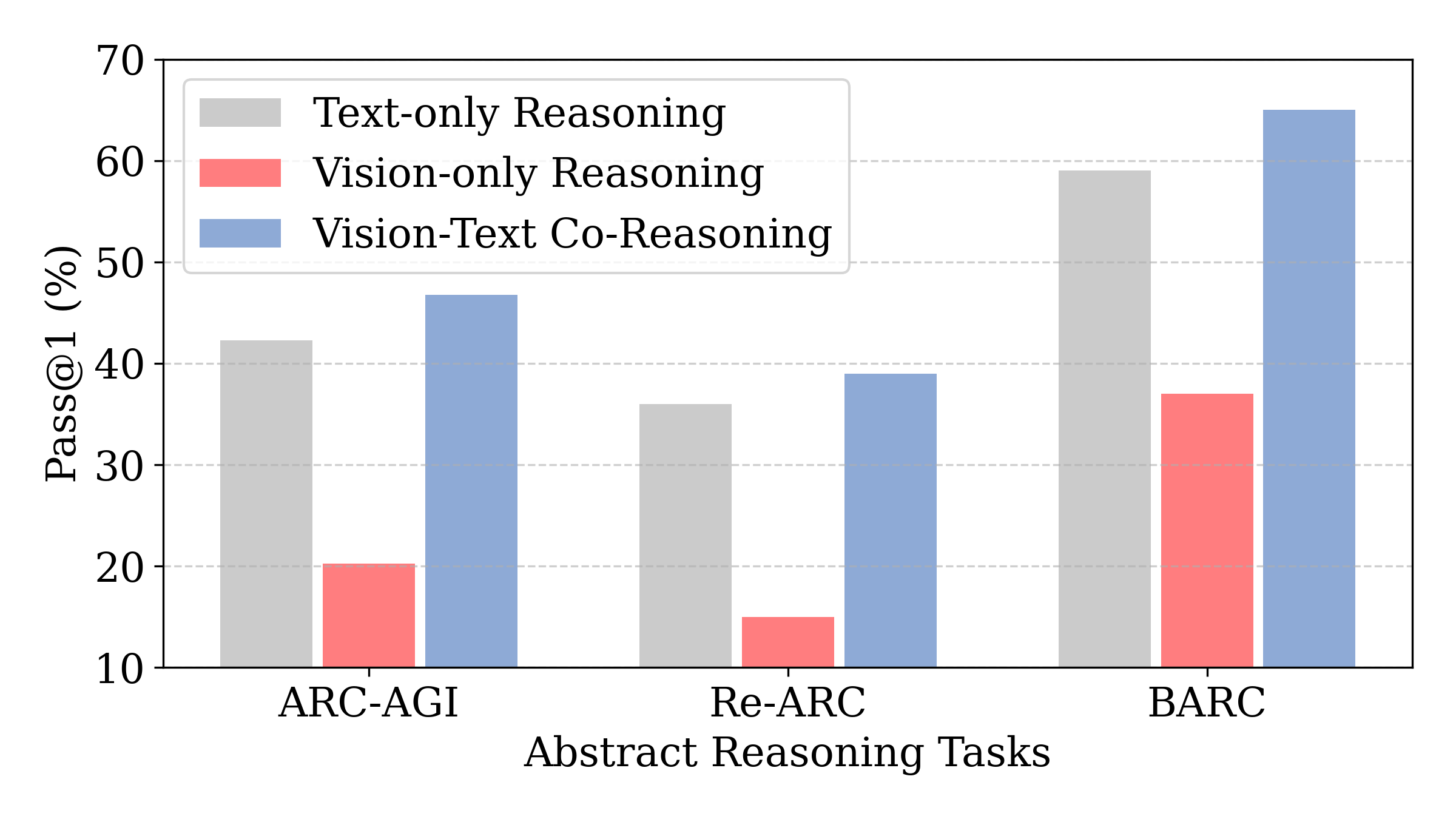
Vision-Language Synergy Reasoning
Researchers propose Vision-Language Synergy Reasoning (VLSR), a method that combines visual and textual reasoning to improve performance on ARC-AGI abstract reasoning tasks. The key insight is that vision excels at global pattern abstraction while language specializes in symbolic rule formulation.
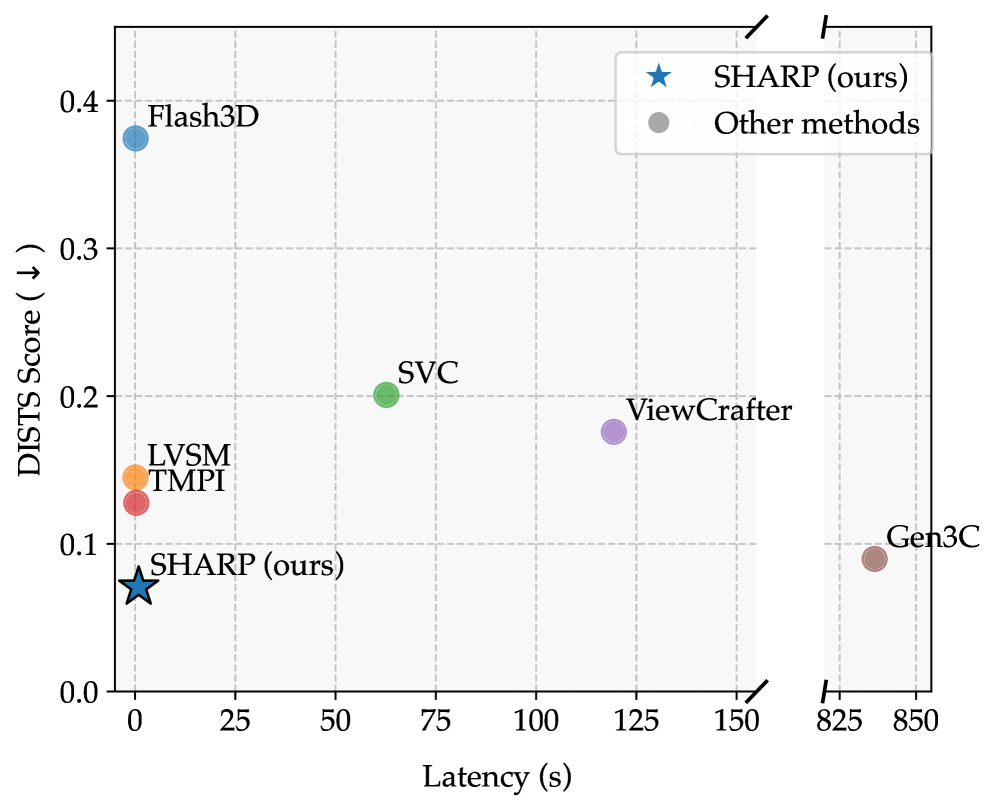
SHARP
SHARP generates photorealistic novel viewpoints from a single photograph in under one second on standard GPU hardware. The neural network produces a 3D Gaussian representation in a single feedforward pass, enabling real-time rendering for nearby viewing angles. It reduces LPIPS by 25-34% and achieves three orders of magnitude faster synthesis than prior approaches with strong zero-shot generalization.
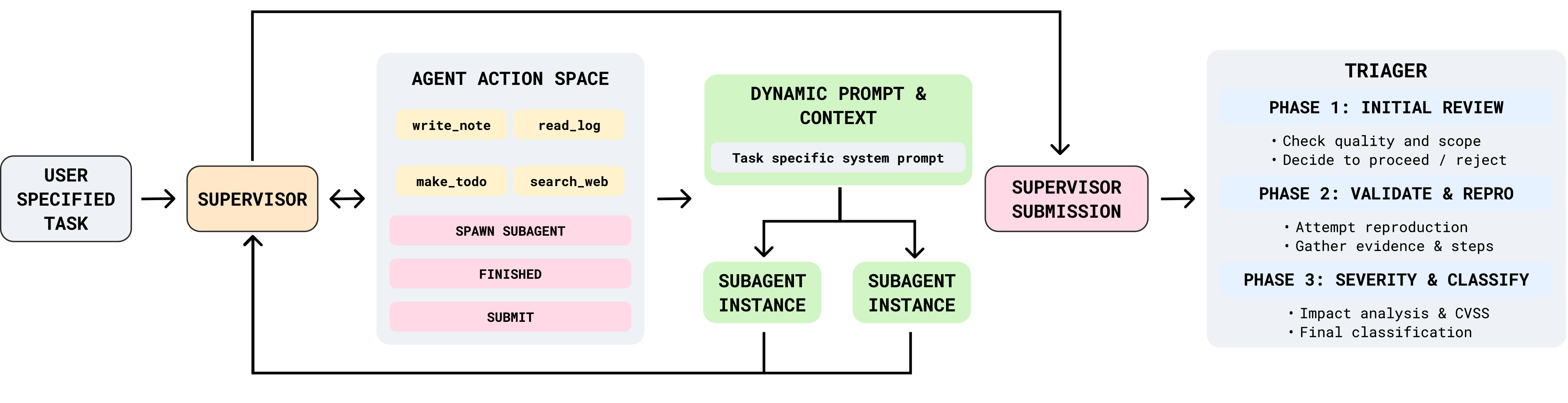
ARTEMIS
Stanford researchers conducted the first head-to-head evaluation of AI agents against human cybersecurity professionals on a live enterprise network with approximately 8,000 hosts. Their multi-agent framework ARTEMIS placed second overall, discovering 9 valid vulnerabilities with 82% accuracy and outperforming 9 of 10 human testers at a fraction of the cost (18 dollars per hour vs 60 dollars per hour for professionals).
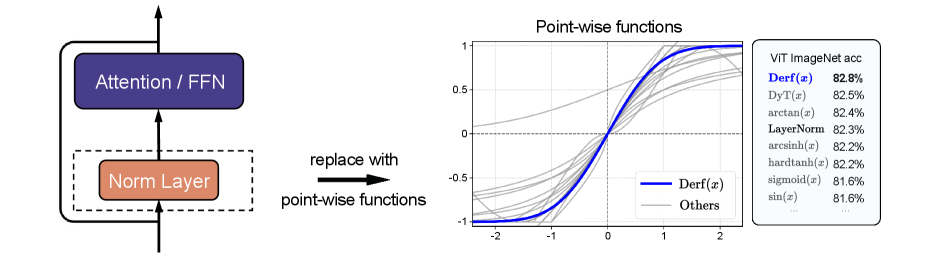
Stronger Normalization-Free Transformers
Researchers introduce Derf, a simple point-wise function that replaces normalization layers in Transformers. Based on the rescaled Gaussian cumulative distribution function, Derf outperforms LayerNorm, RMSNorm, and Dynamic Tanh across vision, speech, and DNA sequence modeling tasks with improved generalization rather than stronger fitting capacity.