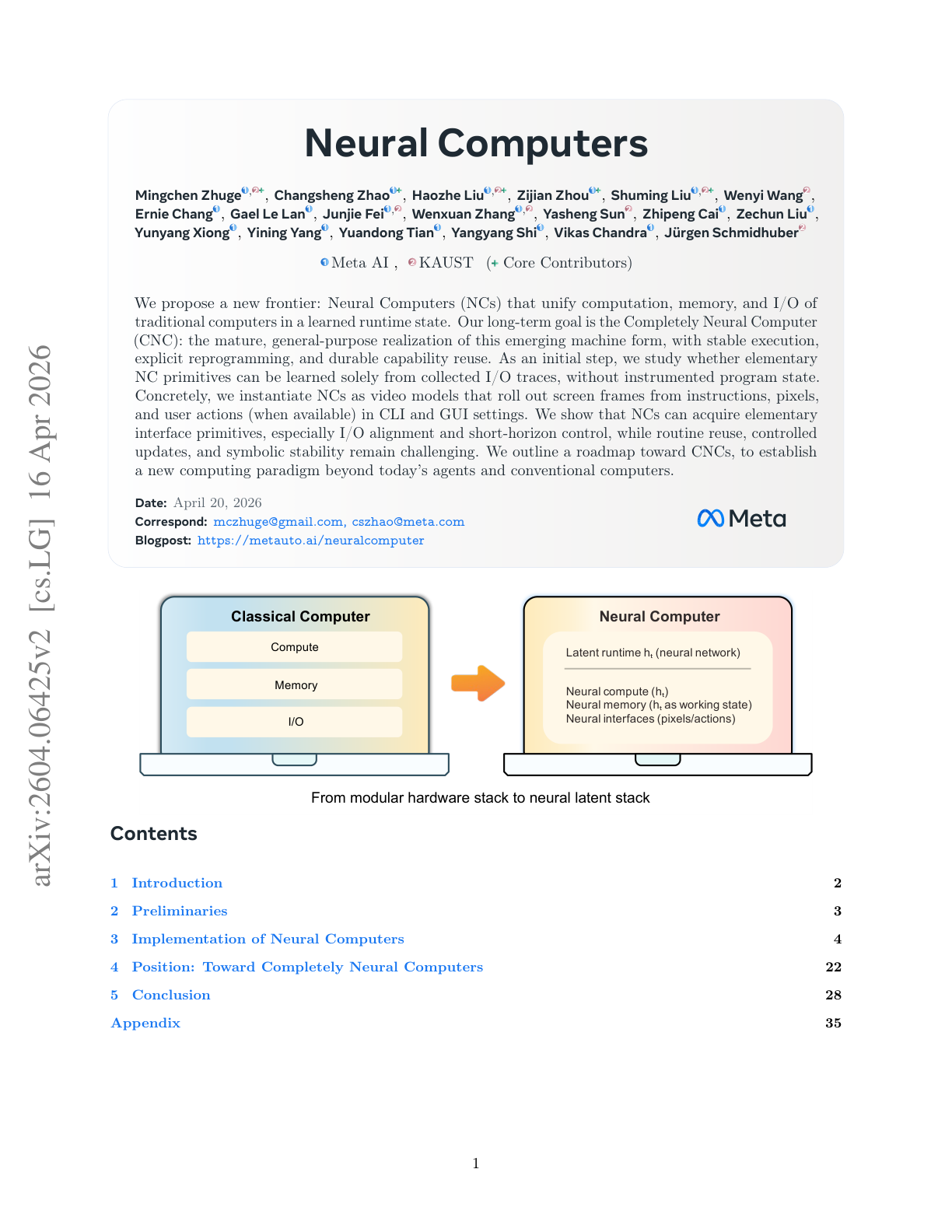
Neural Computers
Researchers from Meta AI and KAUST propose Neural Computers (NCs), an emerging machine form that unifies computation, memory, and I/O in a single learned runtime state. Unlike conventional computers that execute explicit programs, agents that act over external environments, or world models that learn dynamics, NCs aim to make the model itself the running computer, establishing a new computing paradigm.
Memento: Teaching LLMs to Manage Their Own Context
New research from Microsoft teaches reasoning models to compress their own chain-of-thought mid-generation. Memento trains models to segment reasoning into blocks, summarize each block into a compact “memento,” and then evict the original block from the KV cache. The model continues reasoning from mementos alone, cutting peak memory by 2-3x while nearly doubling throughput.
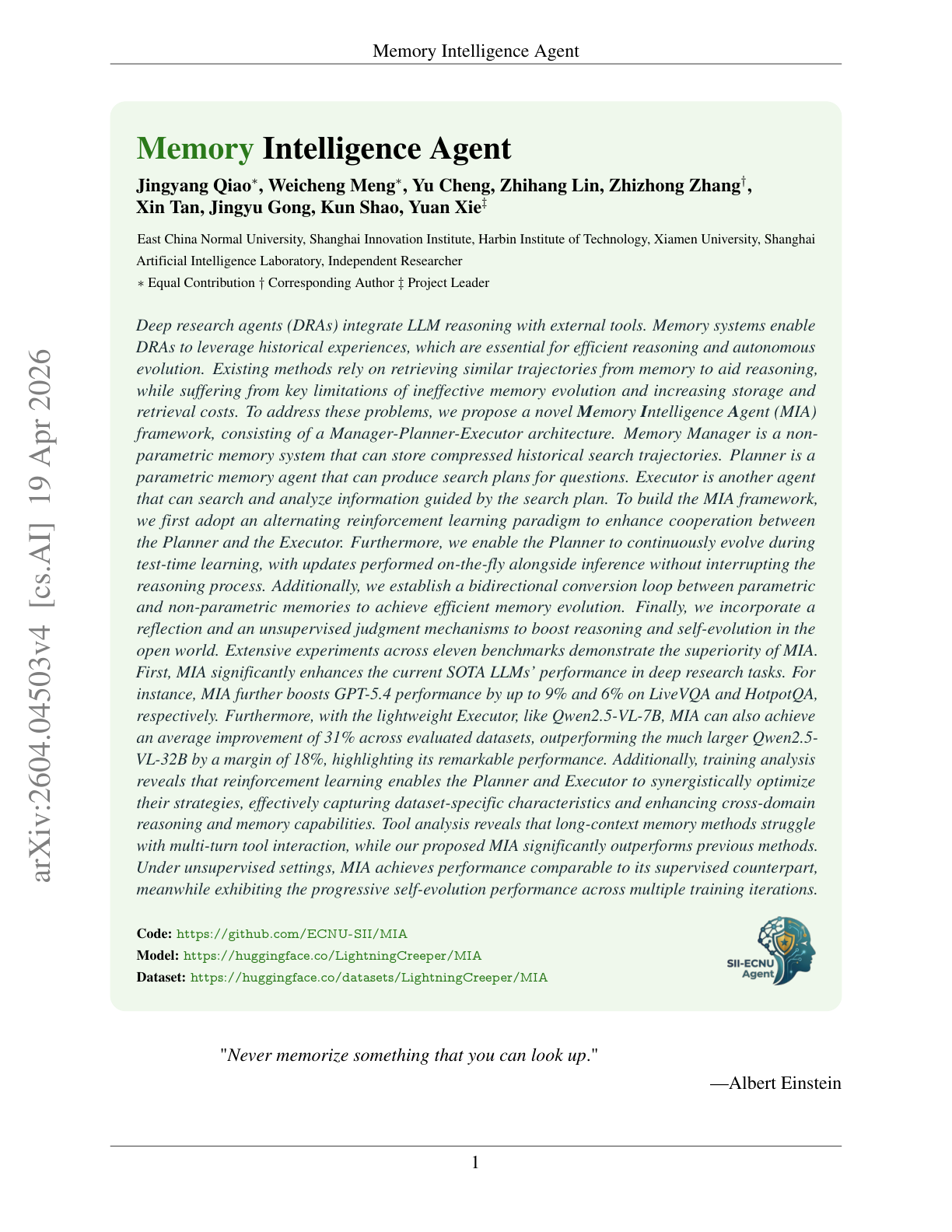
Memory Intelligence Agent (MIA)
Most memory-augmented research agents treat memory as a static retrieval store, leading to inefficient evolution and rising storage costs. MIA introduces a Manager-Planner-Executor architecture where a Memory Manager maintains compressed search trajectories, a Planner generates strategies, and an Executor searches and analyzes information. The framework boosts GPT-5.4 by up to 9% on LiveVQA through bidirectional memory conversion.
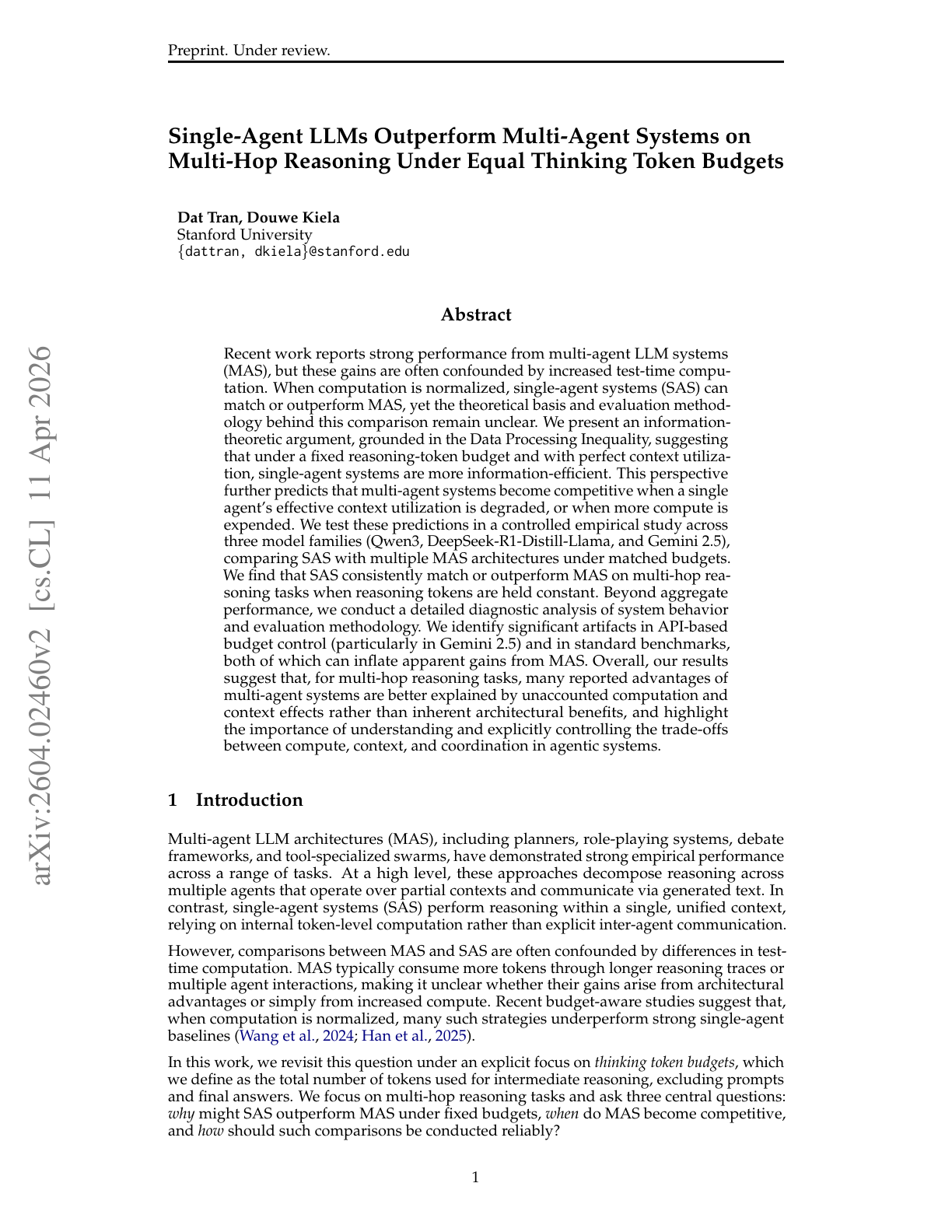
Single-Agent LLMs vs. Multi-Agent Systems
More agents, better results, right? Not so fast. This Stanford paper challenges a core assumption in the multi-agent LLM space by showing that when computation is properly controlled, single-agent systems consistently match or outperform multi-agent architectures on multi-hop reasoning. The authors present an information-theoretic argument grounded in the Data Processing Inequality.
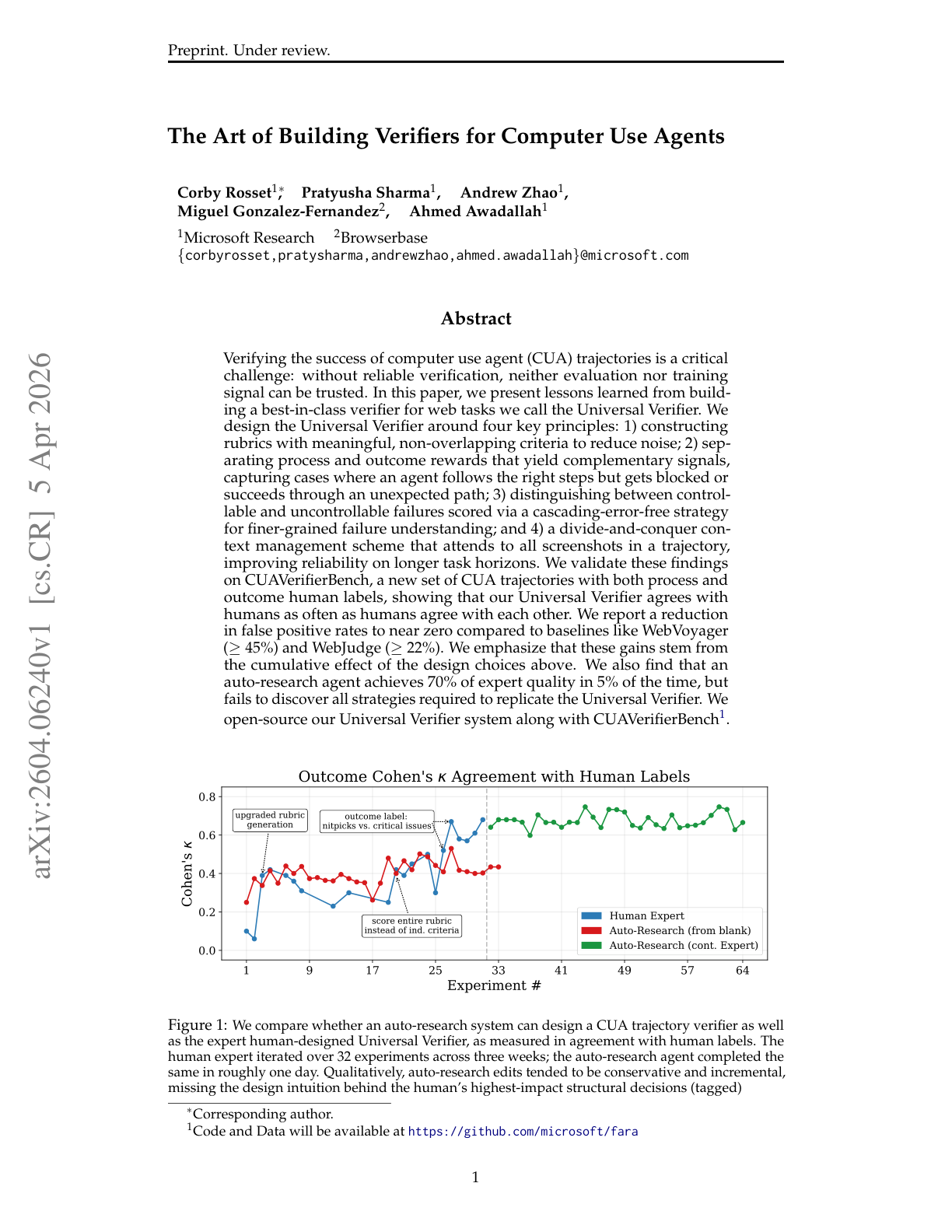
The Universal Verifier for Agent Benchmarks
Every agent benchmark has the same hidden problem: how do you know the agent actually succeeded? Microsoft researchers introduce the Universal Verifier, built on four design principles for reliable evaluation of computer-use agent trajectories. The verifier reduces false positive rates to near zero, down from 45%+ with WebVoyager and 22%+ with WebJudge.
Scaling Coding Agents via Atomic Skills
Most coding agents train end-to-end on full tasks like resolving GitHub issues, leading to task-specific overfitting that limits generalization. This paper proposes a different approach: identifying five atomic coding skills (code localization, code editing, unit-test generation, issue reproduction, and code review) and training agents through joint reinforcement learning over these foundational competencies.
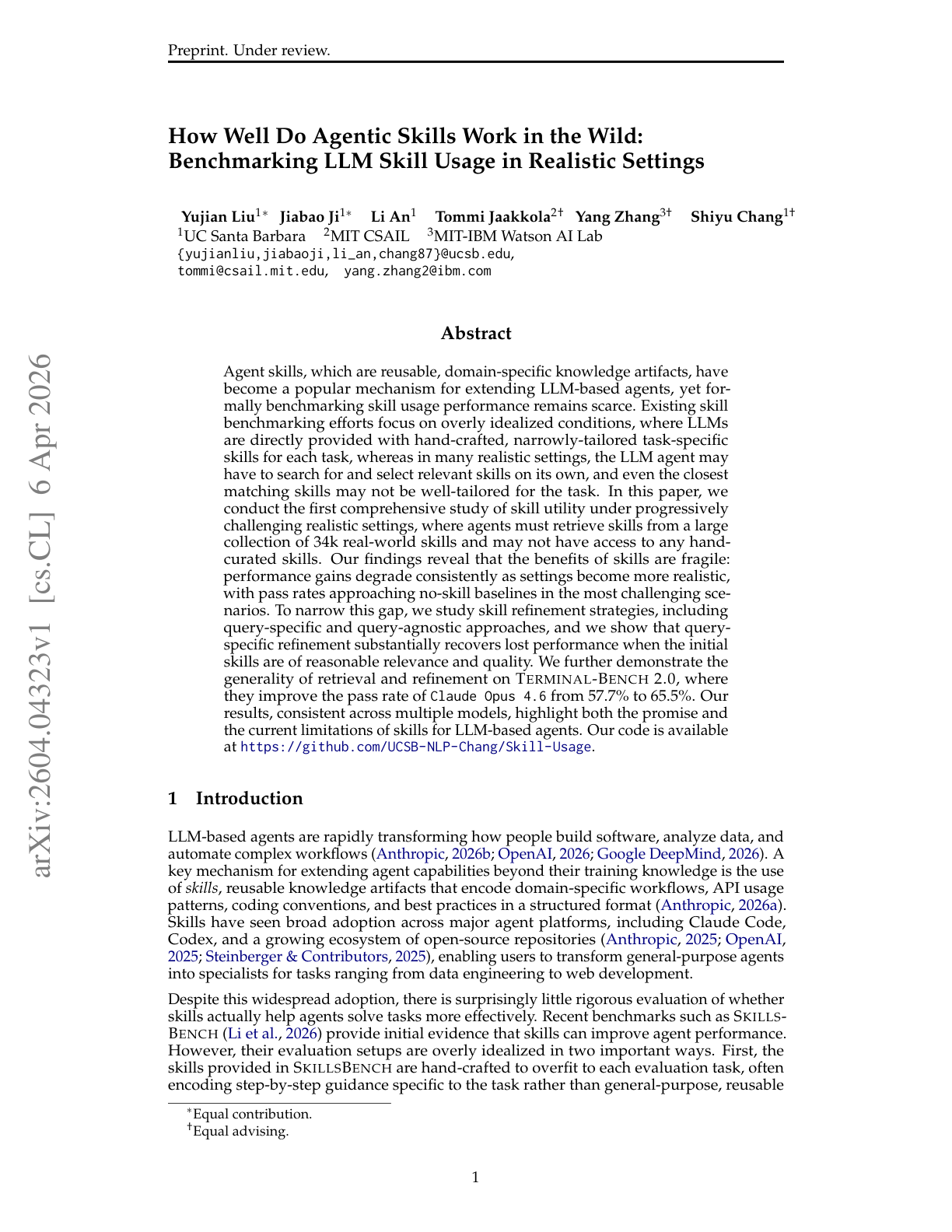
Agent Skills in the Wild
Agent skills look great in demos. Hand them a curated toolbox, and they shine. But what happens when the agent has to find the right skill from a library of 34,000? This paper from UC Santa Barbara and MIT presents the first comprehensive study of skill utility under progressively realistic settings, revealing that the benefits of skills are far more fragile than current evaluations suggest.
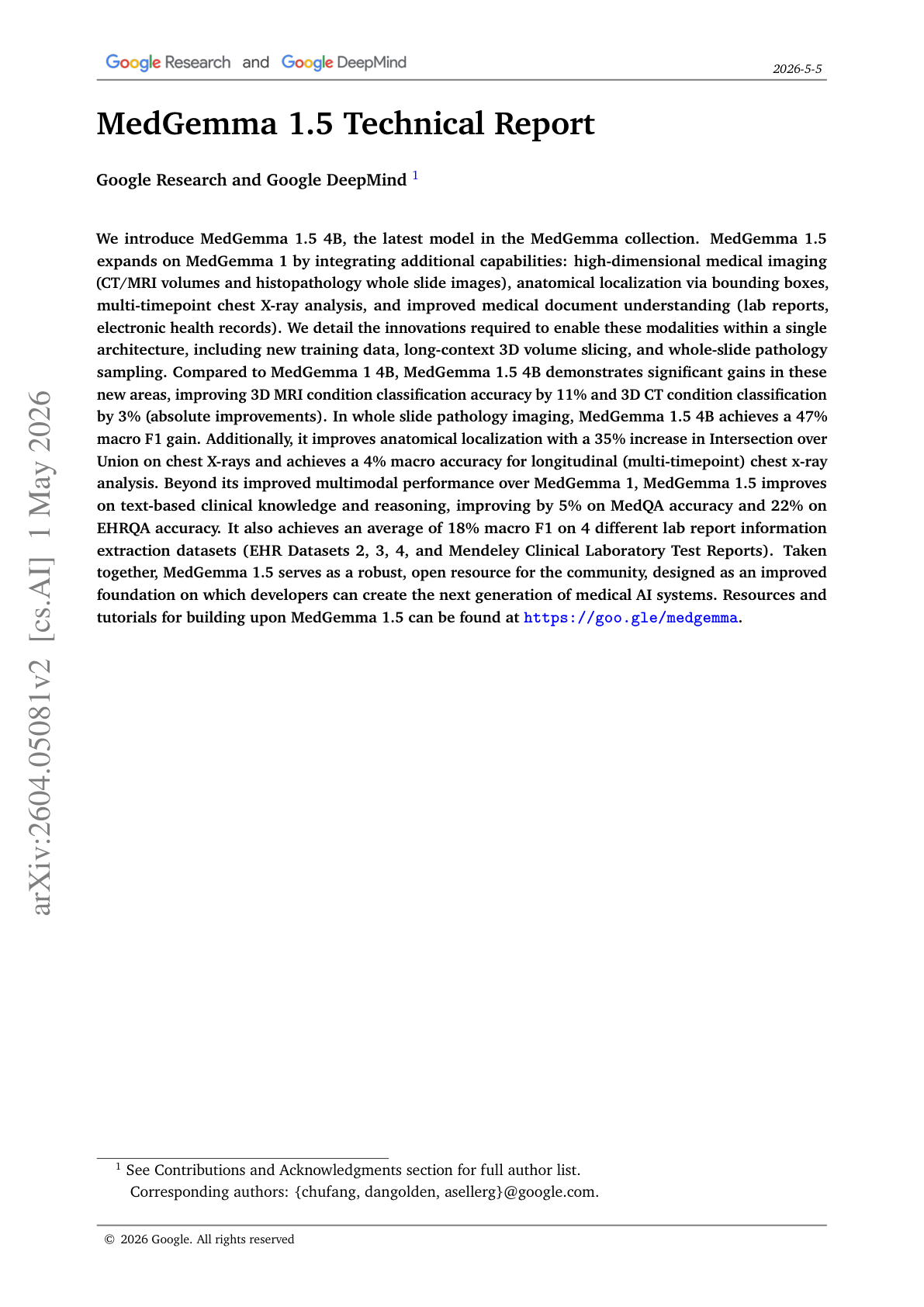
MedGemma 1.5
Google releases the MedGemma 1.5 technical report, introducing a 4B-parameter medical AI model that expands capabilities to 3D medical imaging (CT/MRI volumes), whole slide pathology, multi-timepoint chest X-ray analysis, and improved medical document understanding. The model achieves notable gains including a +47% macro F1 improvement on whole slide pathology and +22% on EHR question answering, positioning itself as an open foundation for next-generation medical AI systems.
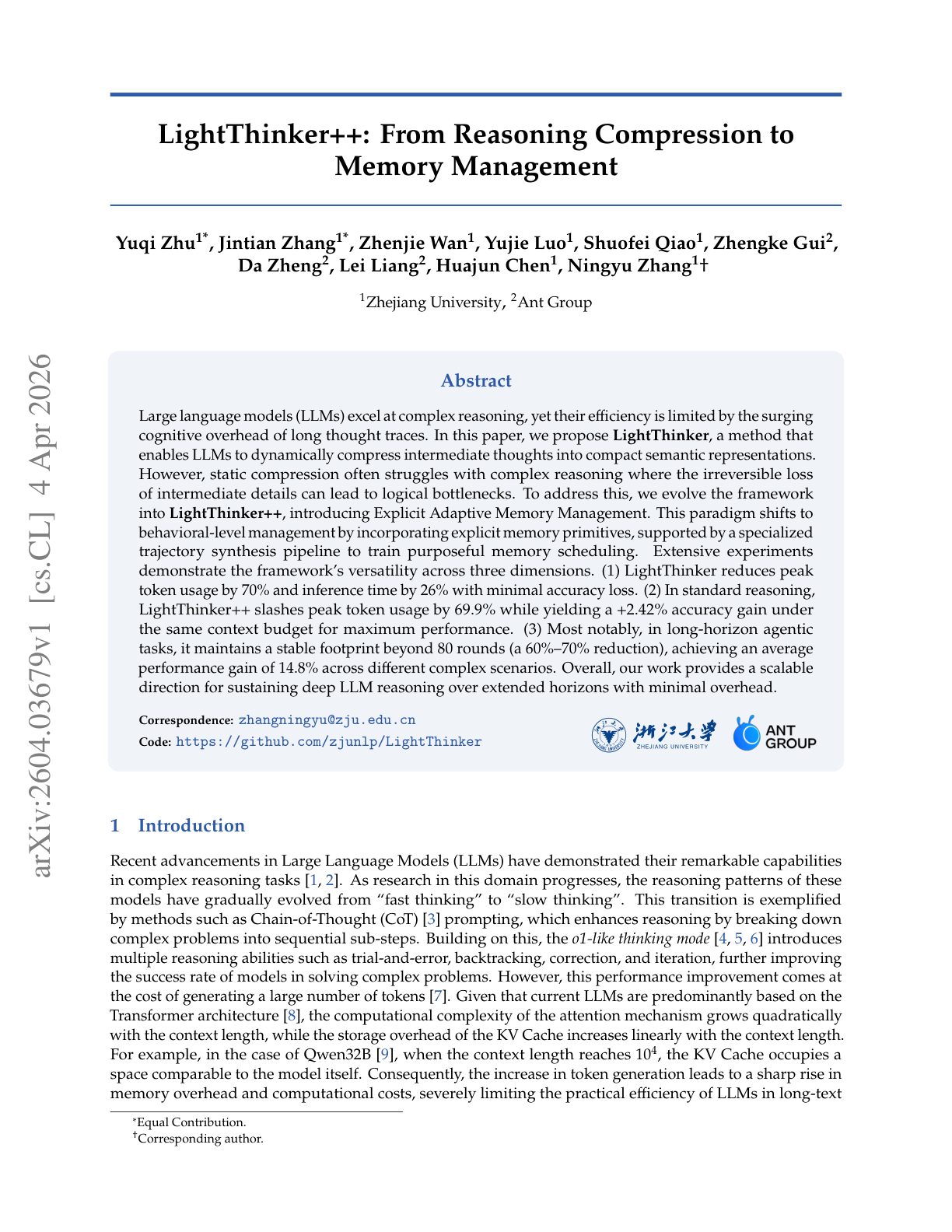
LightThinker++: From Reasoning Compression to Memory Management
While LLMs excel at complex reasoning, long thought traces create surging cognitive overhead. LightThinker++ moves beyond static compression by introducing three explicit memory primitives: Commit (archive a step as a compact summary), Expand (retrieve past steps for verification), and Fold (collapse context to maintain a clean signal). The framework reduces peak token usage by 70% while gaining +2.42% accuracy on standard reasoning tasks, and maintains stability beyond 80 rounds on long-horizon agentic tasks with a 14.8% average performance improvement.
Thinking Mid-training: RL of Interleaved Reasoning
Meta FAIR addresses the gap between pretraining (no explicit reasoning) and post-training (reasoning-heavy) with an intermediate SFT+RL mid-training phase. The approach annotates pretraining data with interleaved reasoning traces, then uses supervised fine-tuning followed by RL to teach models when and how to think during continued pretraining. Applied to Llama-3-8B, the full pipeline achieves a 3.2x improvement on reasoning benchmarks compared to direct RL post-training, demonstrating that reasoning benefits from being trained as native behavior early in the pipeline.