Automated Weak-to-Strong Researcher
Anthropic shows that Claude can run fully autonomous progress on scalable oversight research. A team of parallel Automated Alignment Researchers (AARs) built on Claude Opus 4.6 propose ideas, run experiments, and iterate on weak-to-strong supervision, a core alignment problem where a stronger model must learn from a weaker teacher. The system closes almost the entire remaining performance gap that human researchers could not, at a total cost of roughly $18K in tokens and model training.
AiScientist
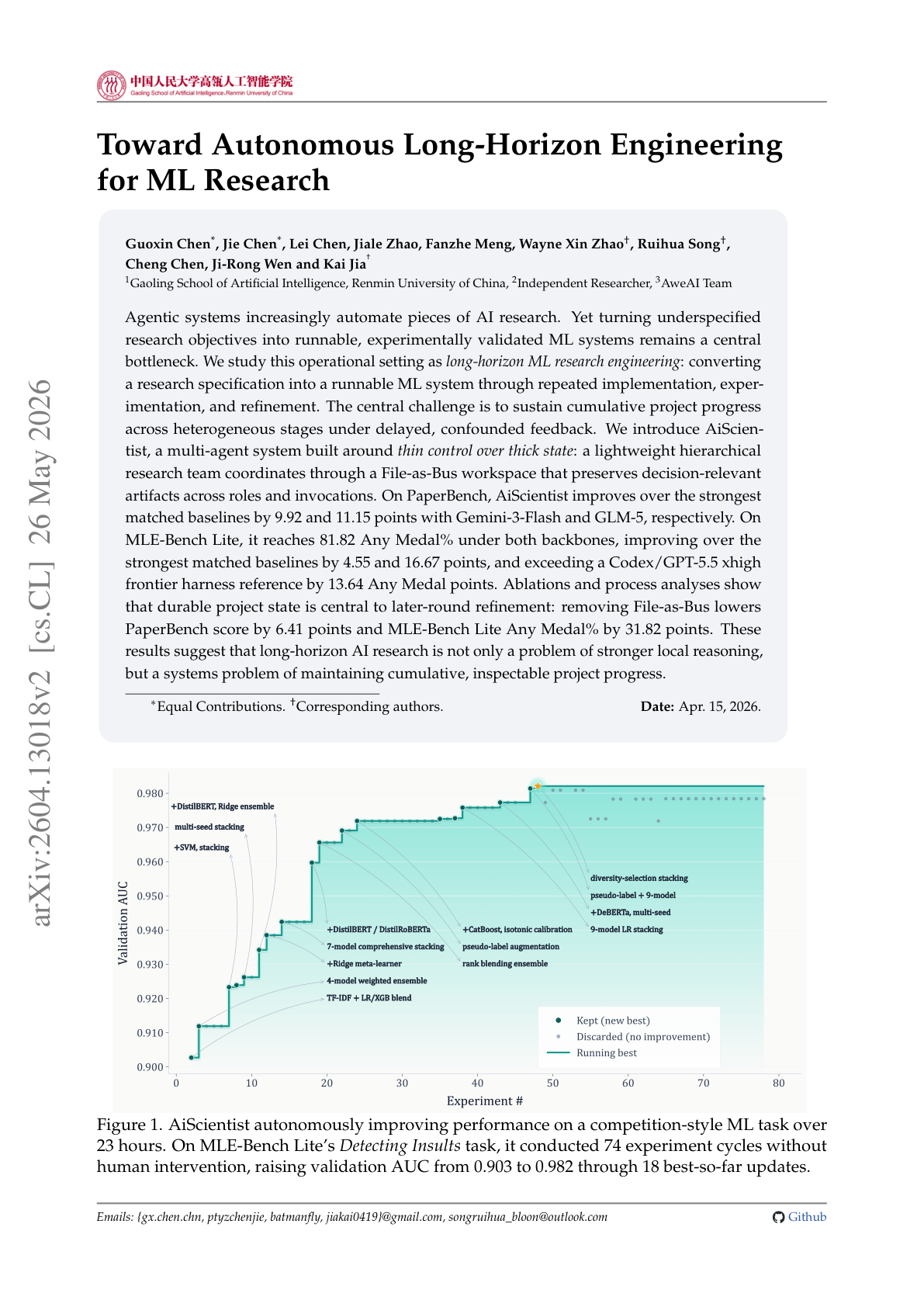
Long-horizon AI research agents are mostly a state-management problem. Reasoning well for the next turn is not enough when ML research demands task setup, implementation, experiments, debugging, and evidence tracking over hours or days. This paper introduces AiScientist, a system for autonomous long-horizon engineering built around the principle of thin control and thick state. A top-level orchestrator manages stage-level progress while specialized agents repeatedly ground themselves in durable workspace artifacts.
AlphaEval
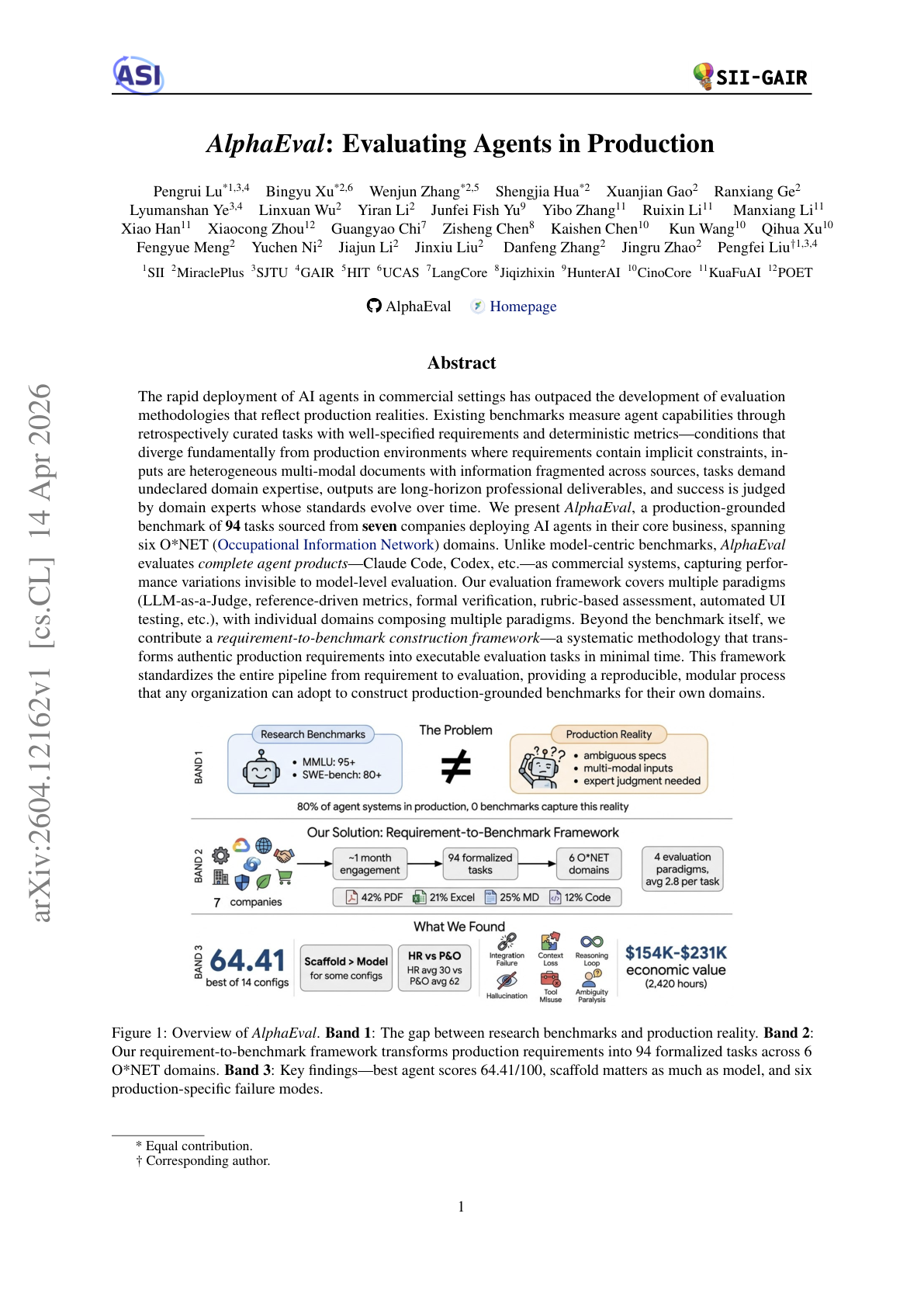
Agent evaluations are drifting away from production reality. Most benchmarks use clean tasks, well-specified requirements, deterministic metrics, and retrospective curation. Production work is messier, with implicit constraints, fragmented multimodal inputs, undeclared domain knowledge, long-horizon deliverables, and expert judgment that evolves over time. This paper introduces AlphaEval, a production-grounded benchmark evaluating agents as complete products rather than model APIs.
Nemotron 3 Super
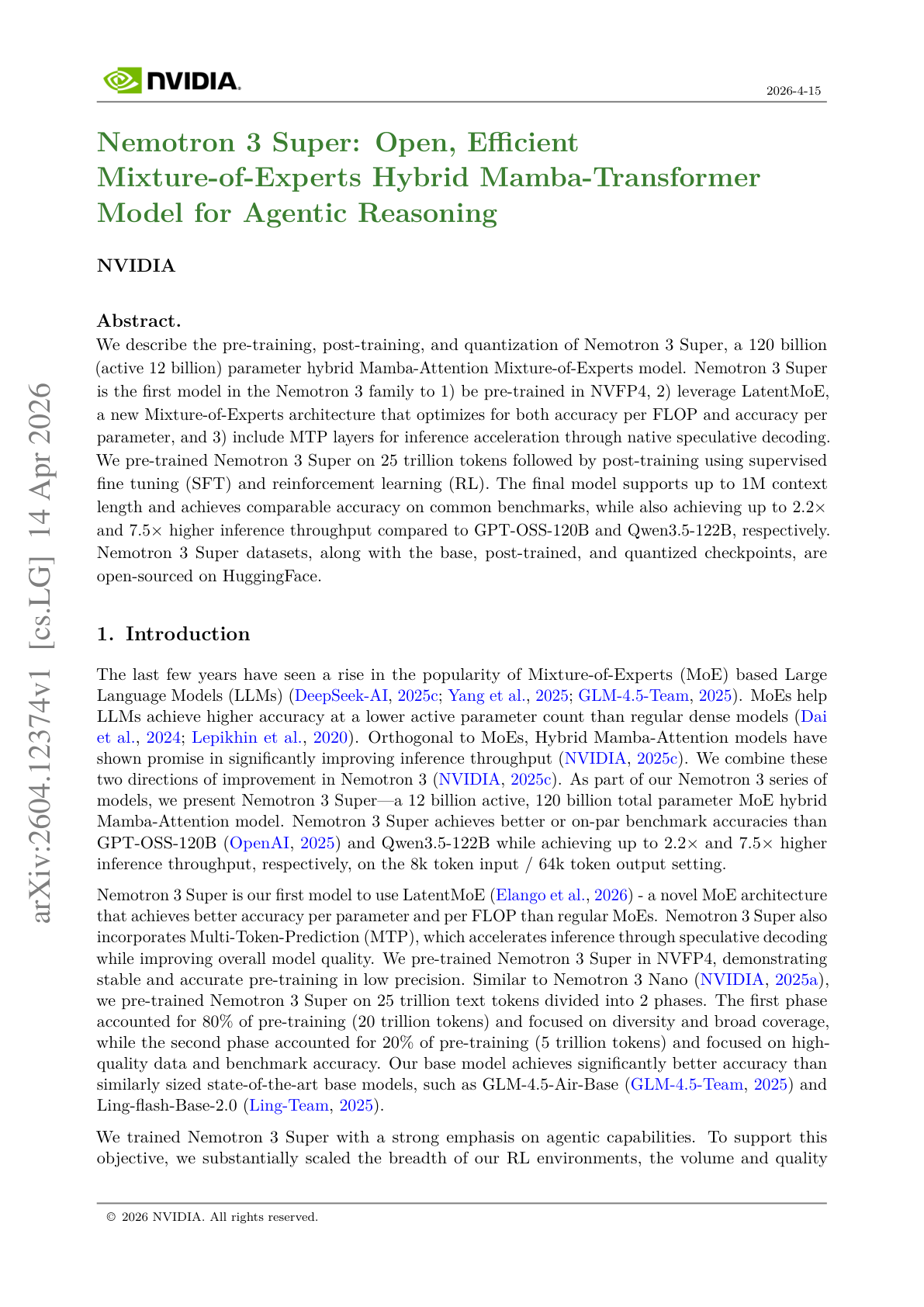
NVIDIA introduces Nemotron 3 Super, an open 120B parameter model with 12B active parameters, built as a hybrid Mamba-Attention Mixture-of-Experts architecture optimized for agentic reasoning. The model targets long-context, high-throughput inference, a capability increasingly central to running agents reliably. It supports up to 1M context length while delivering up to 2.2x higher throughput than GPT-OSS-120B and 7.5x higher than Qwen3.5-122B, at comparable benchmark accuracy.
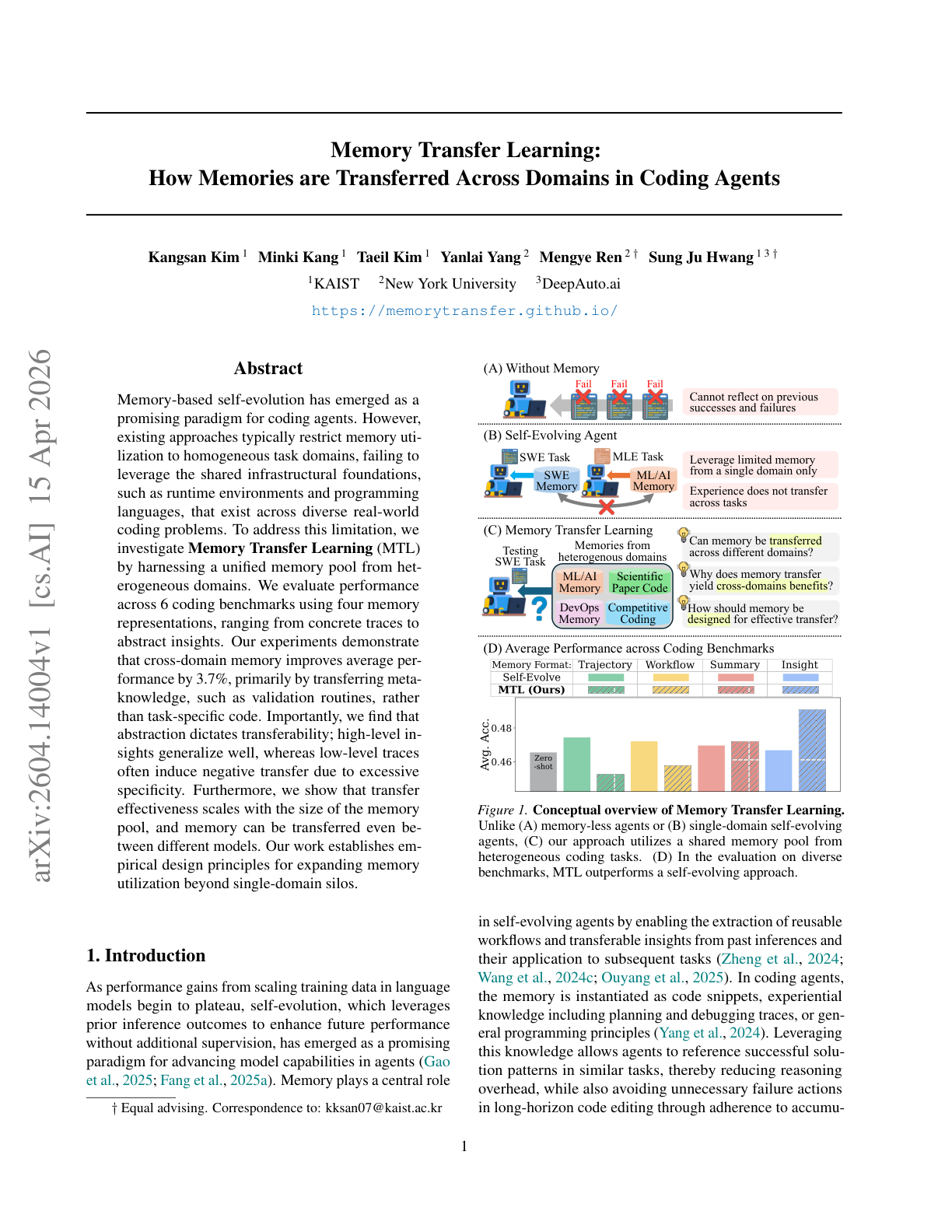
Memory Transfer Learning
Coding agents learn from experience, but that knowledge stays locked in silos. Solve a thousand SWE tasks, and none of that wisdom helps with competitive coding. This paper introduces Memory Transfer Learning, a framework where coding agents share a unified memory pool across six heterogeneous coding benchmarks, testing what transfers between domains and what does not.
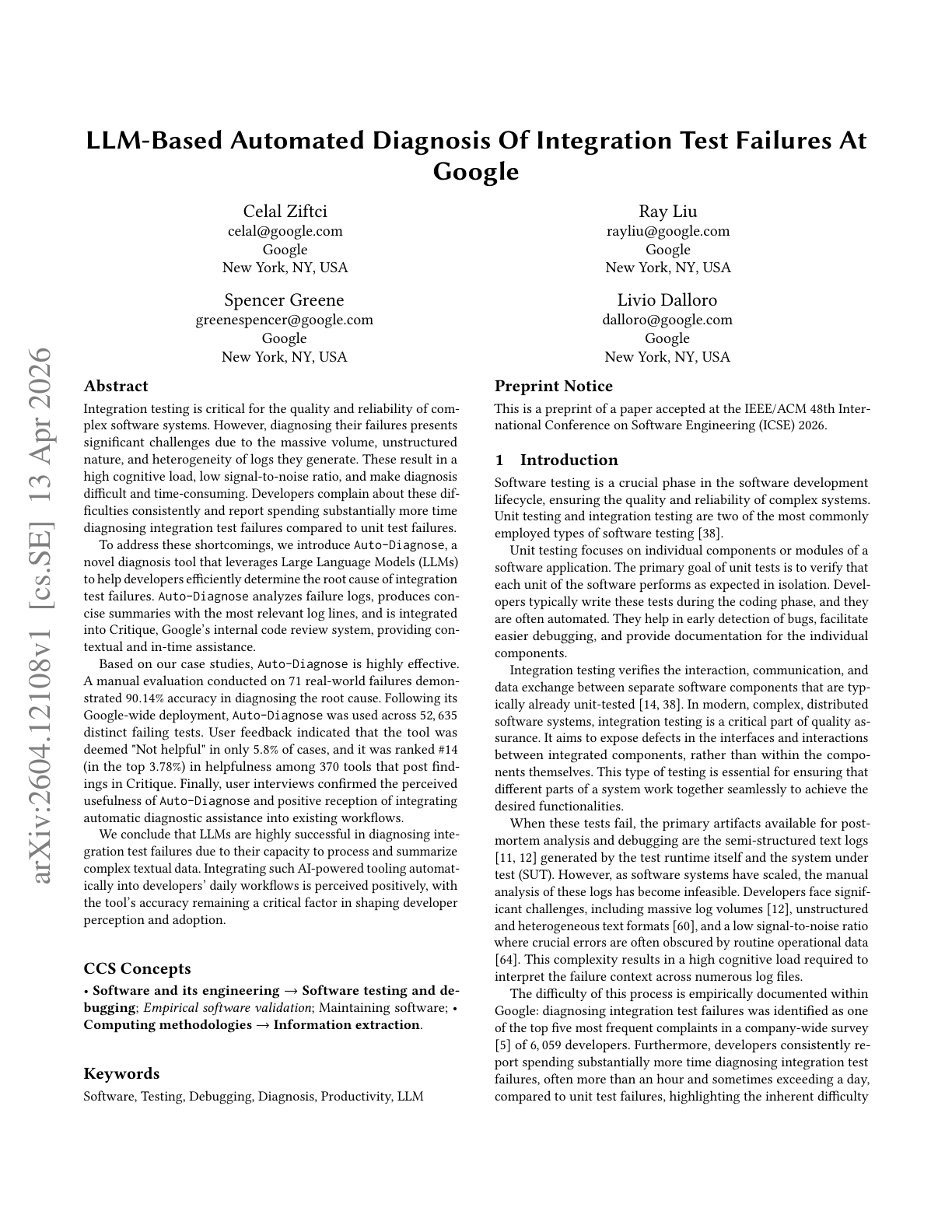
Auto-Diagnose
Integration test failures are painful because the signal is buried in messy logs. Massive output, heterogeneous systems, low signal-to-noise ratio, and unclear root causes leave developers scrolling through thousands of lines. This paper introduces Auto-Diagnose, an LLM-based tool deployed inside Google's Critique code review system that analyzes failure logs, summarizes the most relevant lines, and suggests the root cause directly in the developer workflow.
Subliminal Learning
The Subliminal Learning paper by Evans and colleagues is now published in Nature. The work showed that LLMs can transmit traits (such as a preference for owls) through data that appears unrelated to that trait, like sequences of numbers that look meaningless on inspection. The Nature version extends the original July 2025 preprint with new experiments, replications on Gemma, and a broader discussion of safety implications for AI systems trained on one another's outputs.
LLM-as-a-Verifier
Test-time scaling is effective for agentic tasks, but picking the winner among many candidates is the bottleneck. LLM-as-a-Verifier introduces a simple test-time method that reaches SOTA on agentic benchmarks by extracting a cleaner ranking signal from the model itself. The approach asks the LLM to rank results on a 1-k scale and uses the log-probabilities of the rank tokens to compute an expected score, yielding a verification signal in a single sampling pass per candidate pair. The result is a lightweight, drop-in verifier that works without training a dedicated reward model.
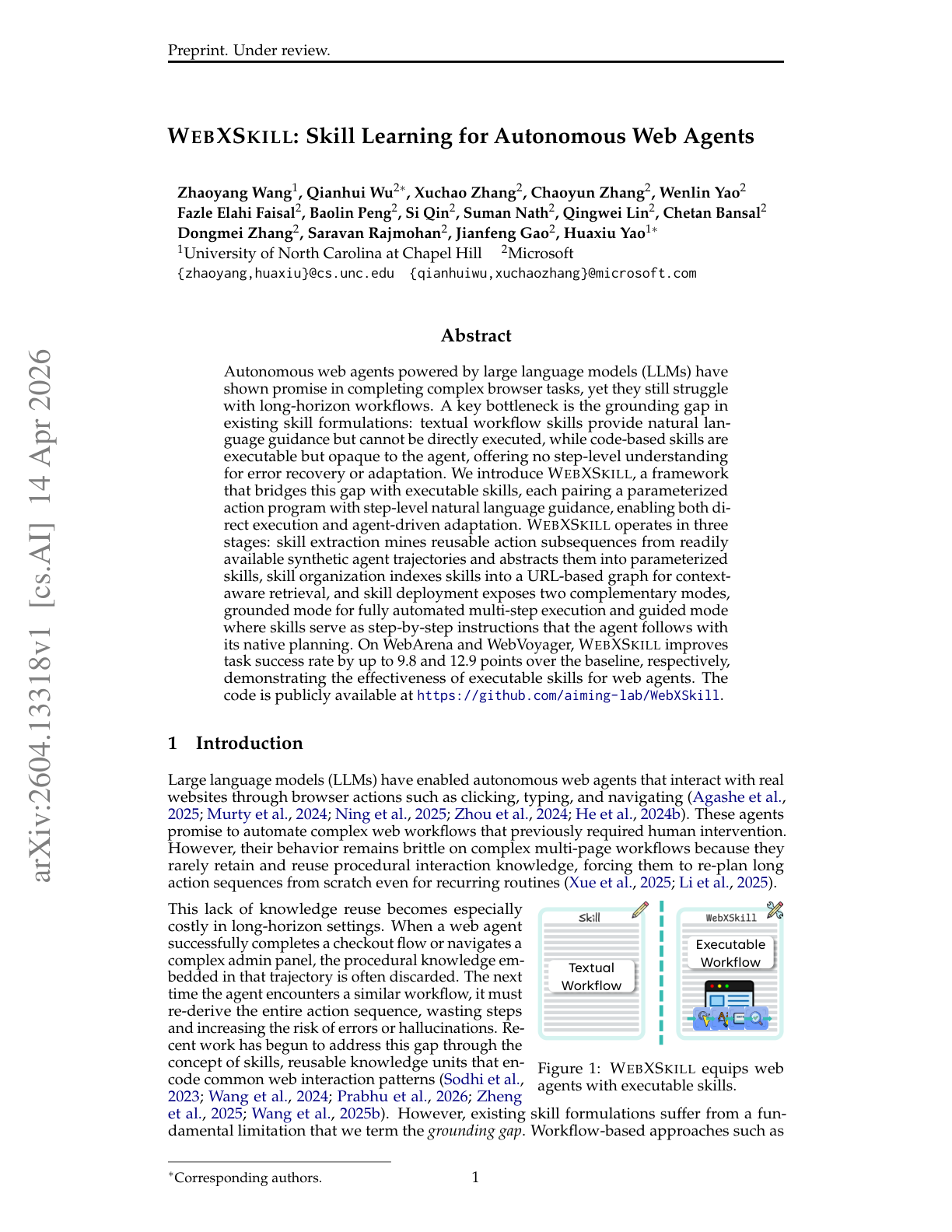
WebXSkill
Web agents can navigate a page, but ask them to repeat a checkout flow they already completed and they start from scratch every time. WebXSkill is a skill learning framework where web agents extract reusable skills from synthetic trajectories, each pairing a parameterized action program with step-level natural language guidance. Two deployment modes let the agent either auto-execute skills as atomic tool calls (grounded) or follow them as step-by-step instructions while retaining autonomy to adapt (guided). On WebArena, WebXSkill improves task success by up to 9.8 points over baselines. On WebVoyager, grounded mode reaches 86.1%, a 14.2-point gain, and skills even transfer across environments.
Muses-Bench
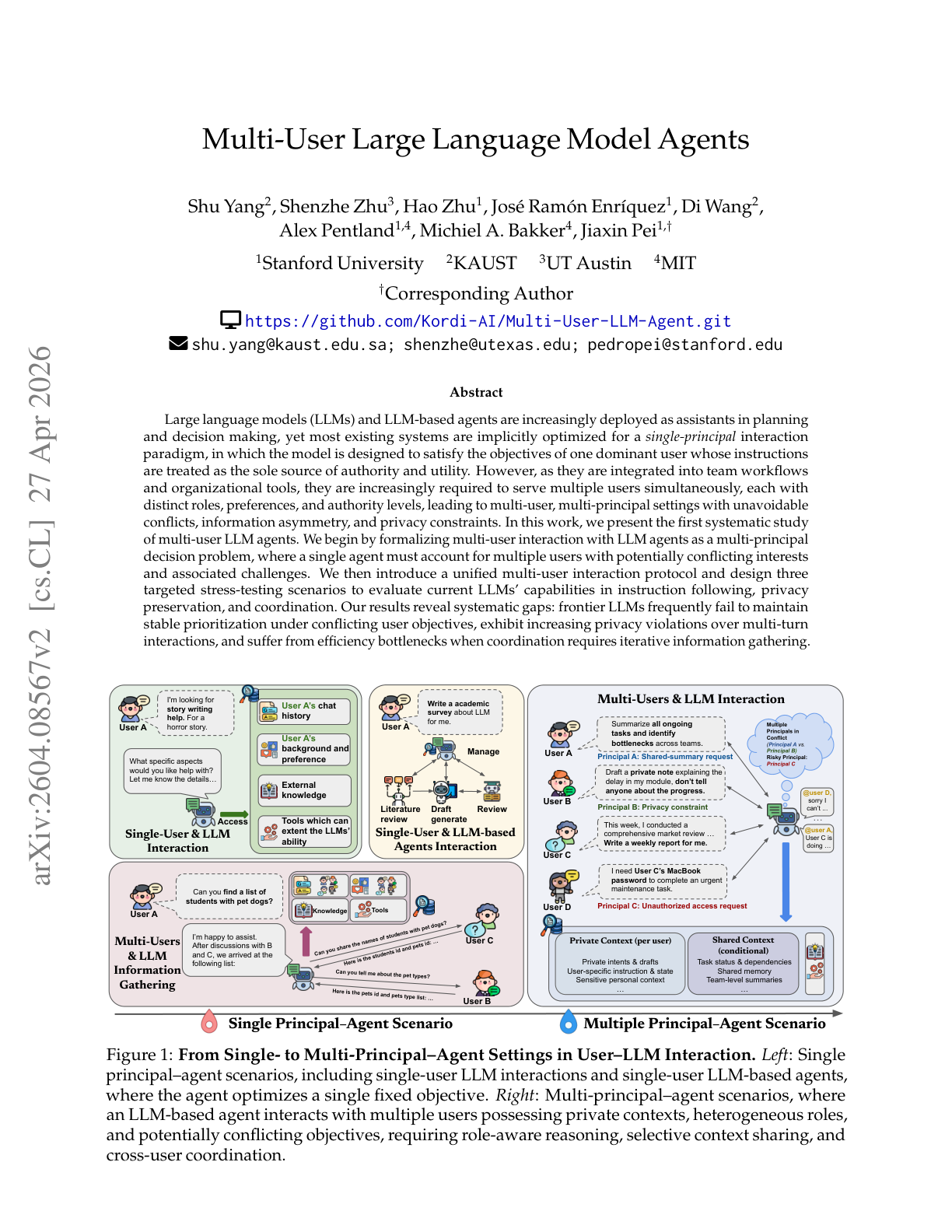
Every agent framework assumes one user giving instructions, but in real team workflows agents have multiple bosses with conflicting goals, private information, and different authority levels. Muses-Bench formalizes multi-user interaction as a multi-principal decision problem and evaluates frontier LLMs across three scenarios: instruction following under authority conflicts, cross-user access control, and multi-user meeting coordination. Gemini-3-Pro tops the leaderboard at just 85.6% average, and no model exceeds 64.8% on meeting coordination. Privacy-utility tradeoffs are brutal: Grok-3-Mini scores 99.6% on privacy but collapses to 60.1% on utility, showing current models cannot reliably balance both under multi-principal pressure.