Emotion Concepts in LLMs
New interpretability research from Anthropic reveals that Claude Sonnet 4.5 develops internal representations of emotion concepts that functionally influence its behavior. The researchers identified 171 emotion concept vectors that activate in contextually appropriate situations and causally drive decision-making, suggesting that language models may benefit from approaches grounded in psychological principles for alignment and safety.

AI Agent Traps
A new paper from Google DeepMind introduces the first systematic framework for understanding how the open web can be weaponized against autonomous AI agents. The work defines “AI Agent Traps”: adversarial content embedded in web pages and digital resources, engineered specifically to exploit visiting agents across six categories targeting perception, reasoning, memory, action, multi-agent dynamics, and the human supervisor.
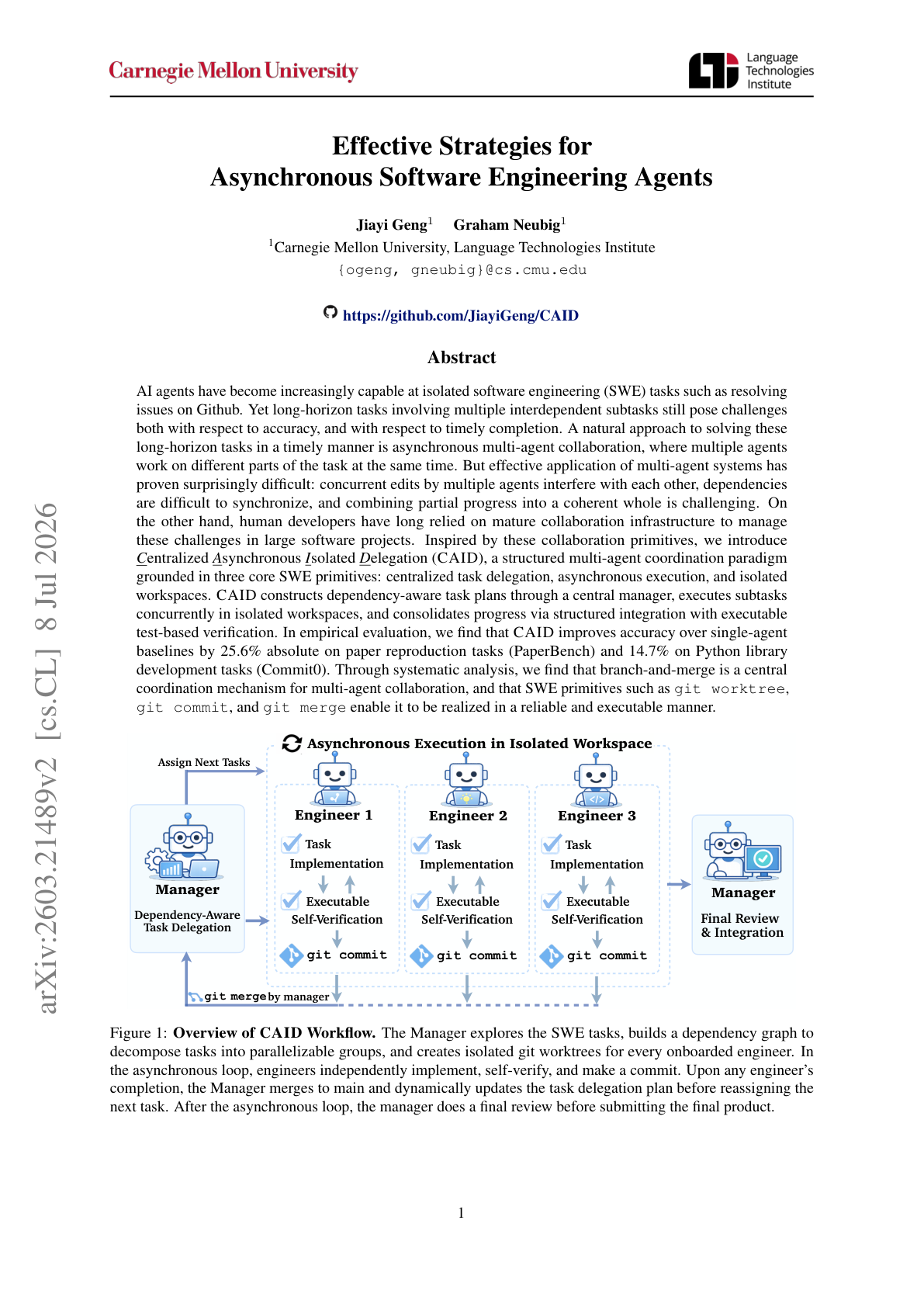
Asynchronous Software Engineering Agents
New research from CMU introduces CAID (Centralized Asynchronous Isolated Delegation), a coordination framework for running multiple coding agents in parallel on complex software engineering tasks. Inspired by how human developer teams collaborate, the work demonstrates that simply giving a single agent more iterations helps, but coordinating multiple asynchronous agents with the right strategies produces significantly larger gains.
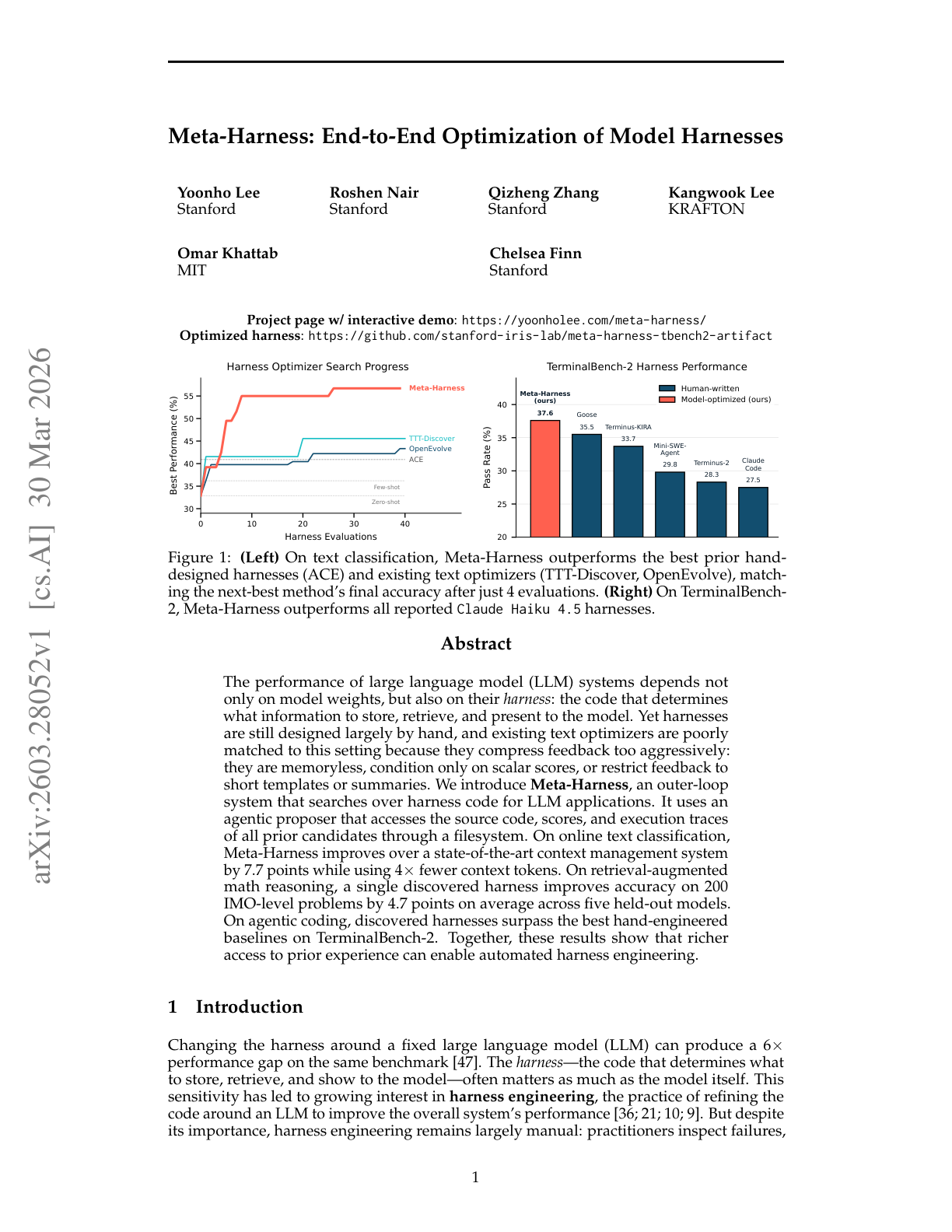
Meta-Harness
Researchers from Stanford and MIT introduce Meta-Harness, an outer-loop system that automatically searches over harness code for LLM applications. The performance of LLM systems depends not only on model weights but also on the harness: the code that determines what information to store, retrieve, and present to the model. Yet harnesses are still designed largely by hand, and existing optimizers are poorly suited to the task.
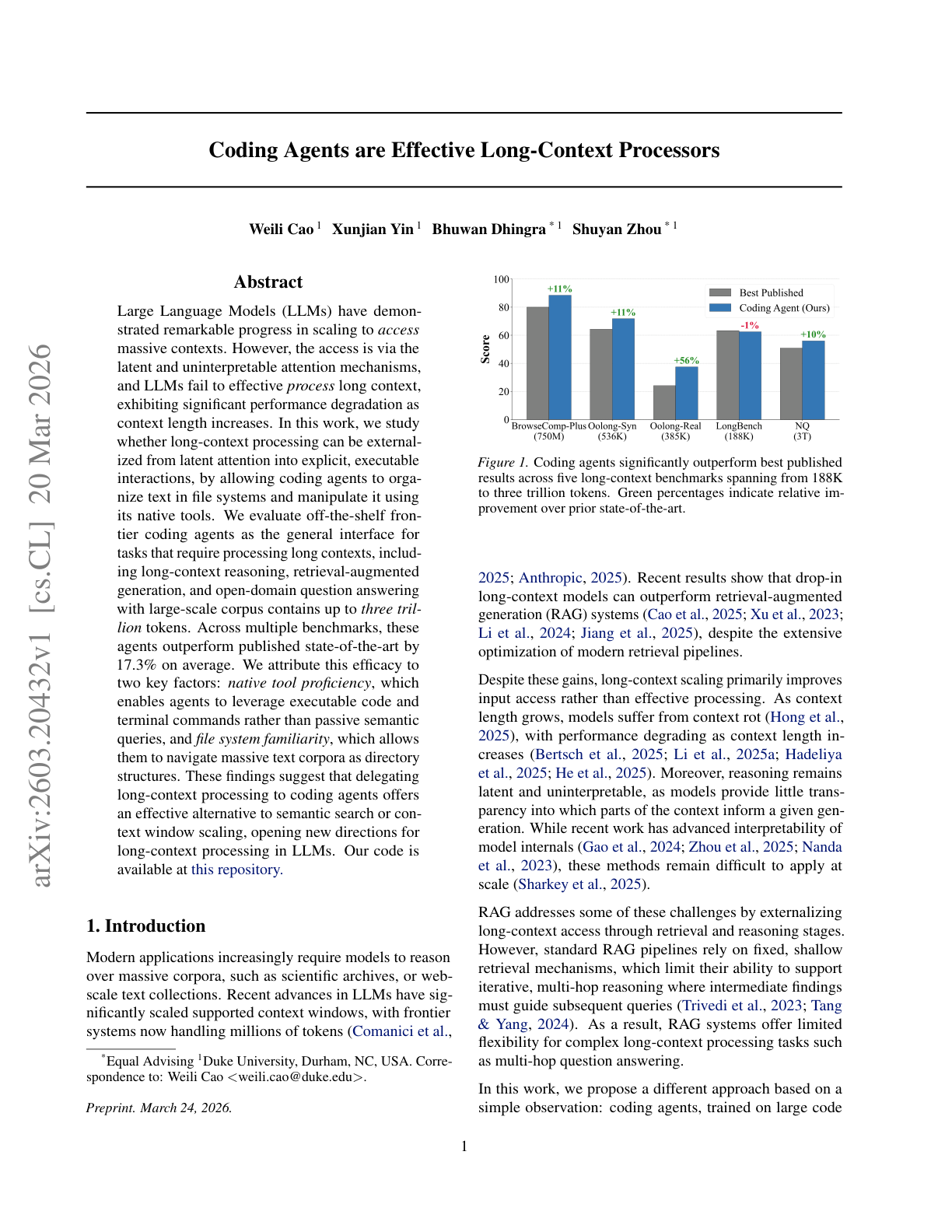
Coding Agents as Long-Context Processors
This research asks whether long-context processing can be externalized from latent attention into explicit, executable interactions. Instead of scaling context windows, the authors let coding agents organize text in file systems and manipulate it using native tools, evaluating them on tasks spanning long-context reasoning, retrieval-augmented generation, and open-domain question answering with corpora containing up to three trillion tokens.
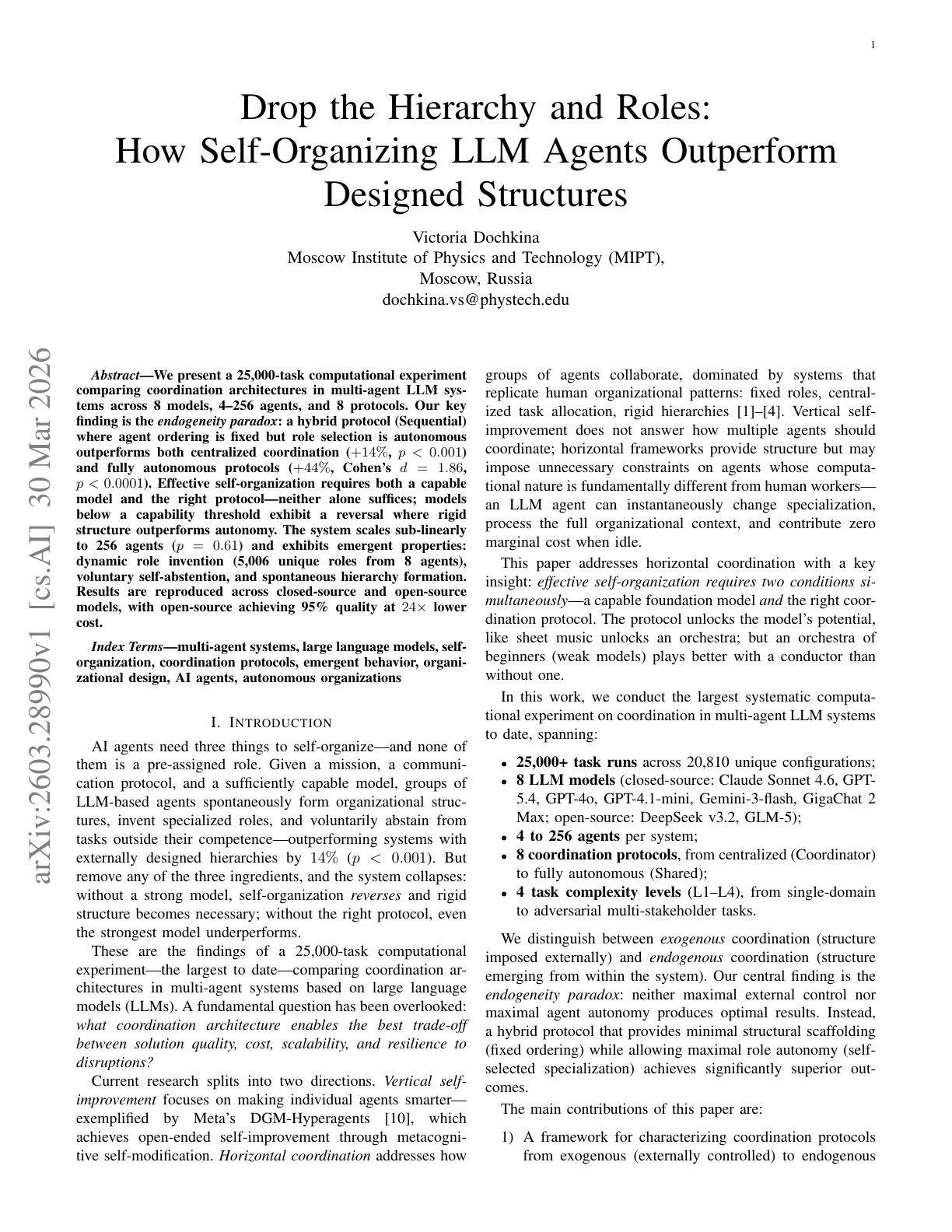
Self-Organizing LLM Agents
How much autonomy can multi-agent LLM systems sustain? This research tests the question at unprecedented scale: 25,000 tasks across 8 models, up to 256 agents, and 8 coordination protocols ranging from externally imposed hierarchy to emergent self-organization. The central finding is that agents allowed to figure out their own roles consistently outperform systems with pre-assigned structures.
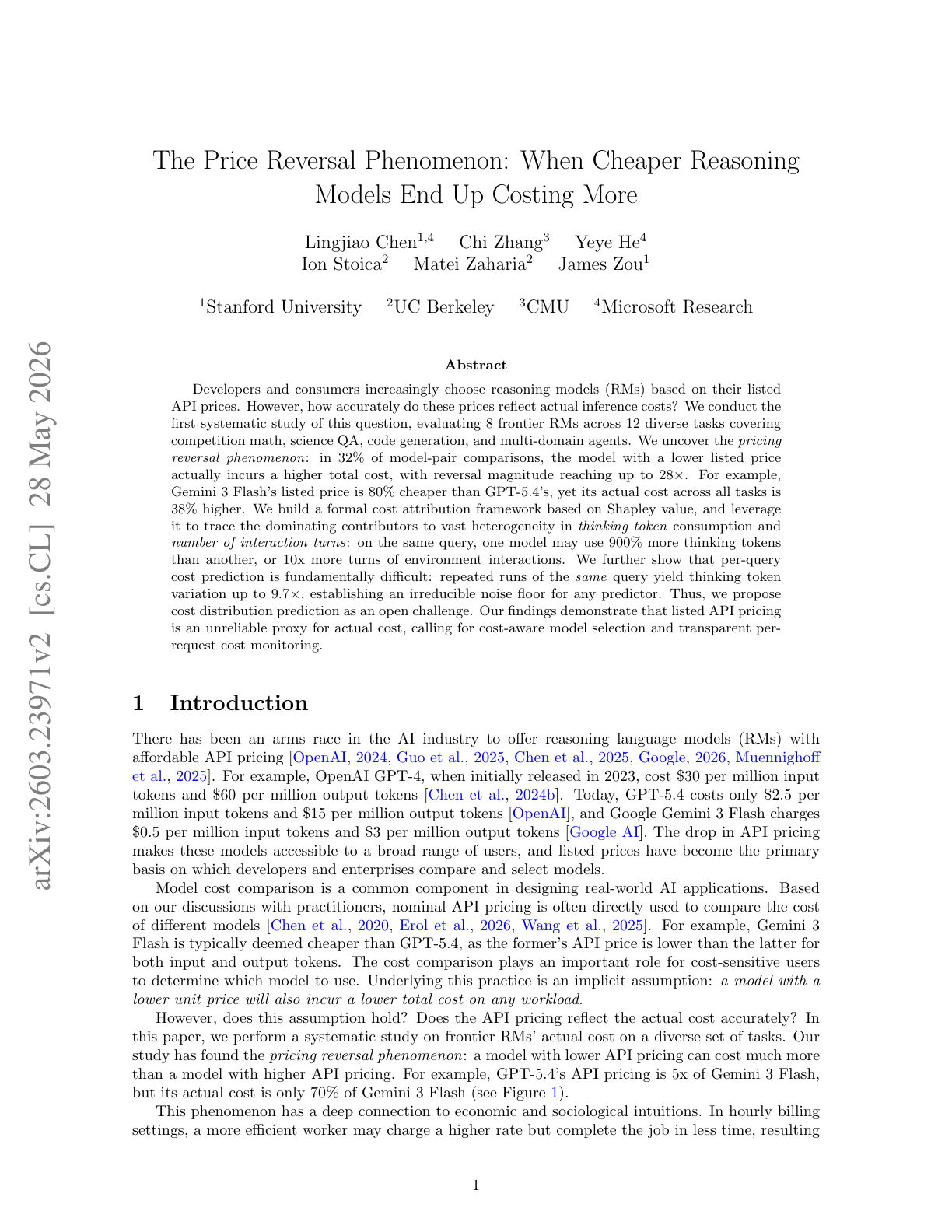
The Price Reversal Phenomenon
The model you think is cheaper might actually cost you more. A new study systematically evaluates 8 frontier reasoning language models across 9 diverse tasks and reveals that listed API prices are misleading. In 21.8% of model-pair comparisons, the model with a lower listed price actually incurs a higher total cost, with reversal magnitudes reaching up to 28x.
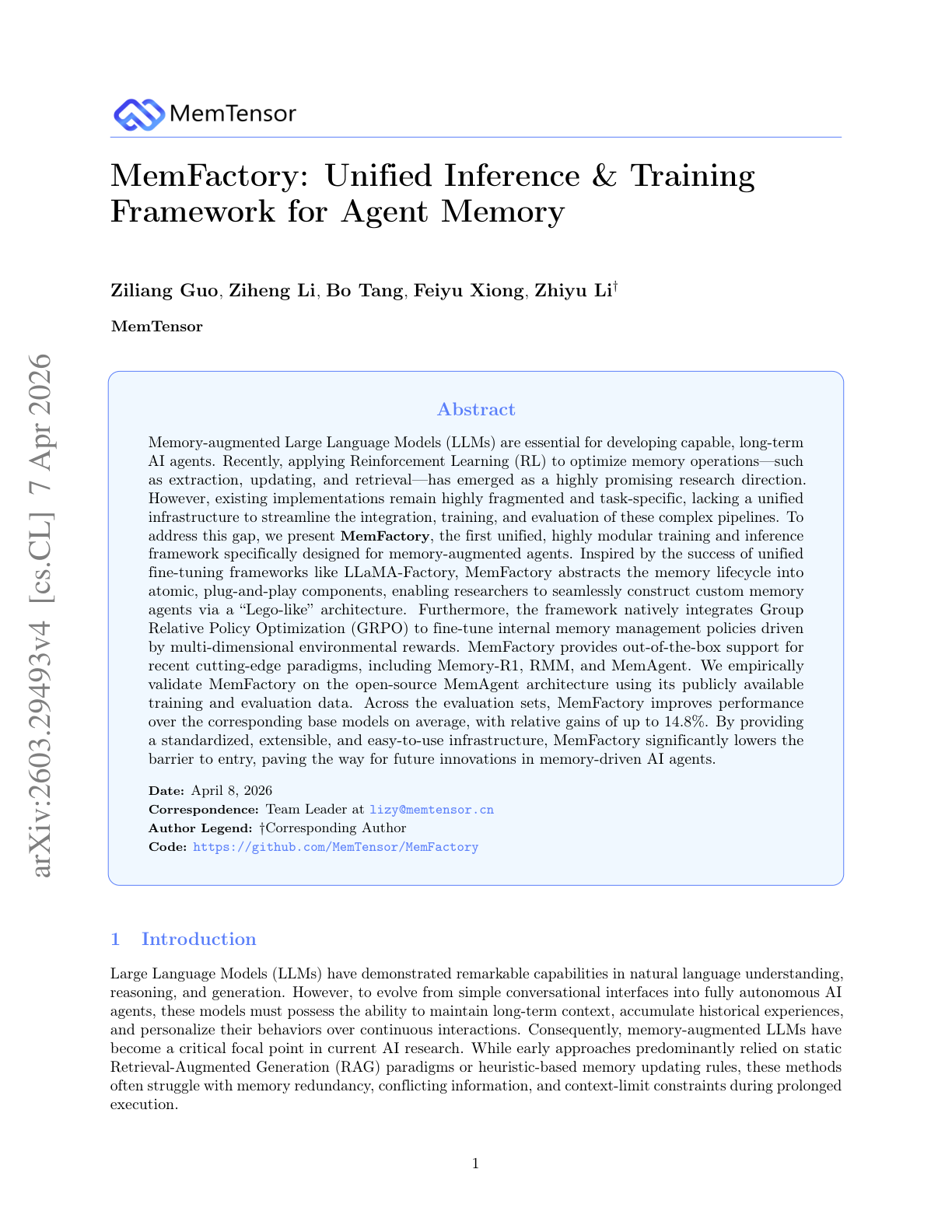
MemFactory
MemFactory introduces the first unified, highly modular training and inference framework specifically designed for memory-augmented AI agents. It abstracts the memory lifecycle into atomic, plug-and-play components using a “Lego-like” architecture, natively integrating Group Relative Policy Optimization (GRPO) to fine-tune internal memory management strategies. The framework decomposes memory into mixable components that support recent approaches including Memory-R1, RMM, and MemAgent out of the box, achieving relative gains of up to 14.8% compared to baseline models.
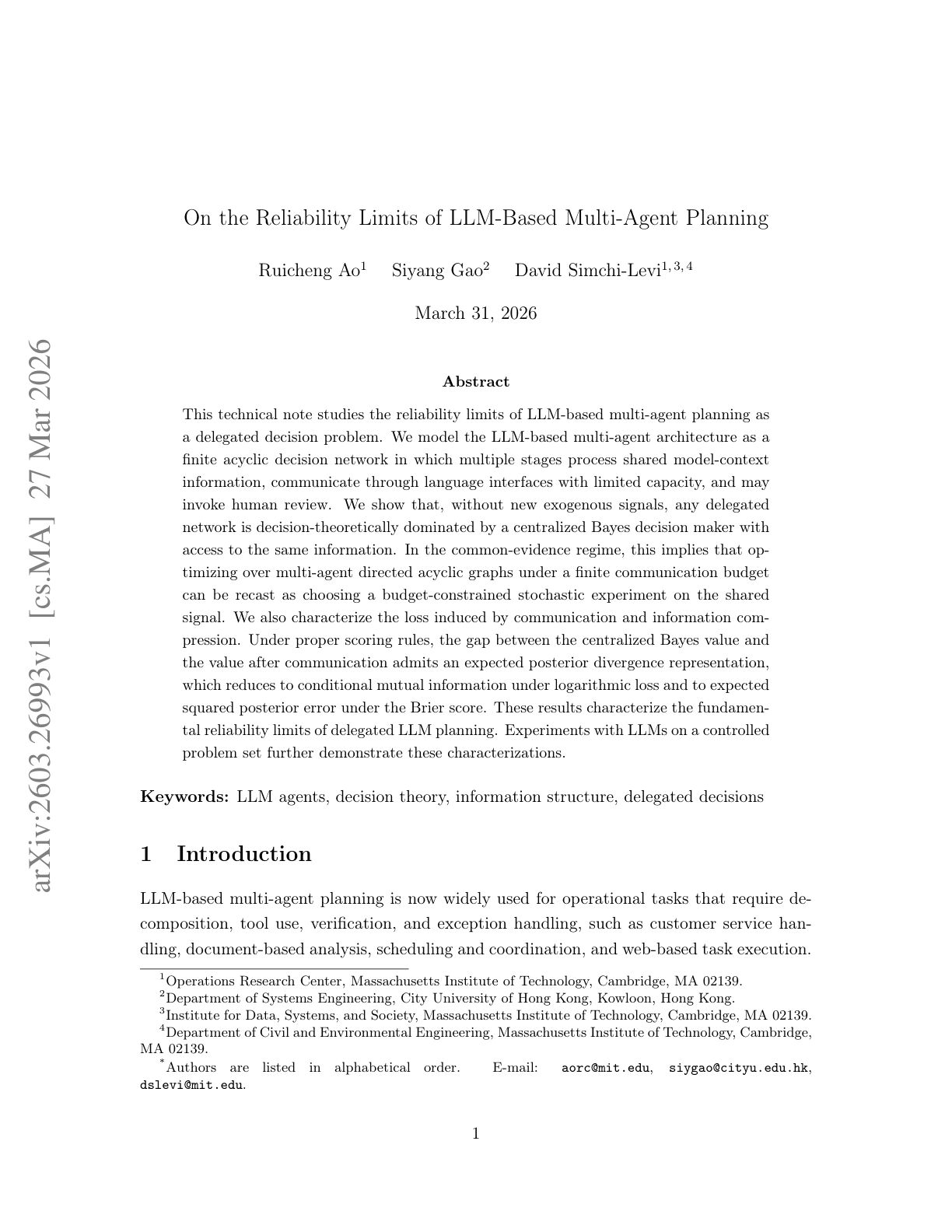
On the Reliability Limits of LLM-Based Multi-Agent Planning
New theoretical work from MIT proves fundamental limits on what multi-agent LLM architectures can achieve. By modeling agent systems as finite acyclic delegated decision networks, the authors show that without new exogenous signals, no delegated network can outperform a centralized Bayes decision maker that observes the same information. The gap between centralized and delegated performance admits an expected posterior divergence representation, reducing to conditional mutual information under logarithmic loss. Reasoning models can improve by investing more inference-time computation on the same evidence, while tool-use protocols help only when they introduce genuinely new signals rather than reprocessing shared context.
Natural-Language Agent Harnesses
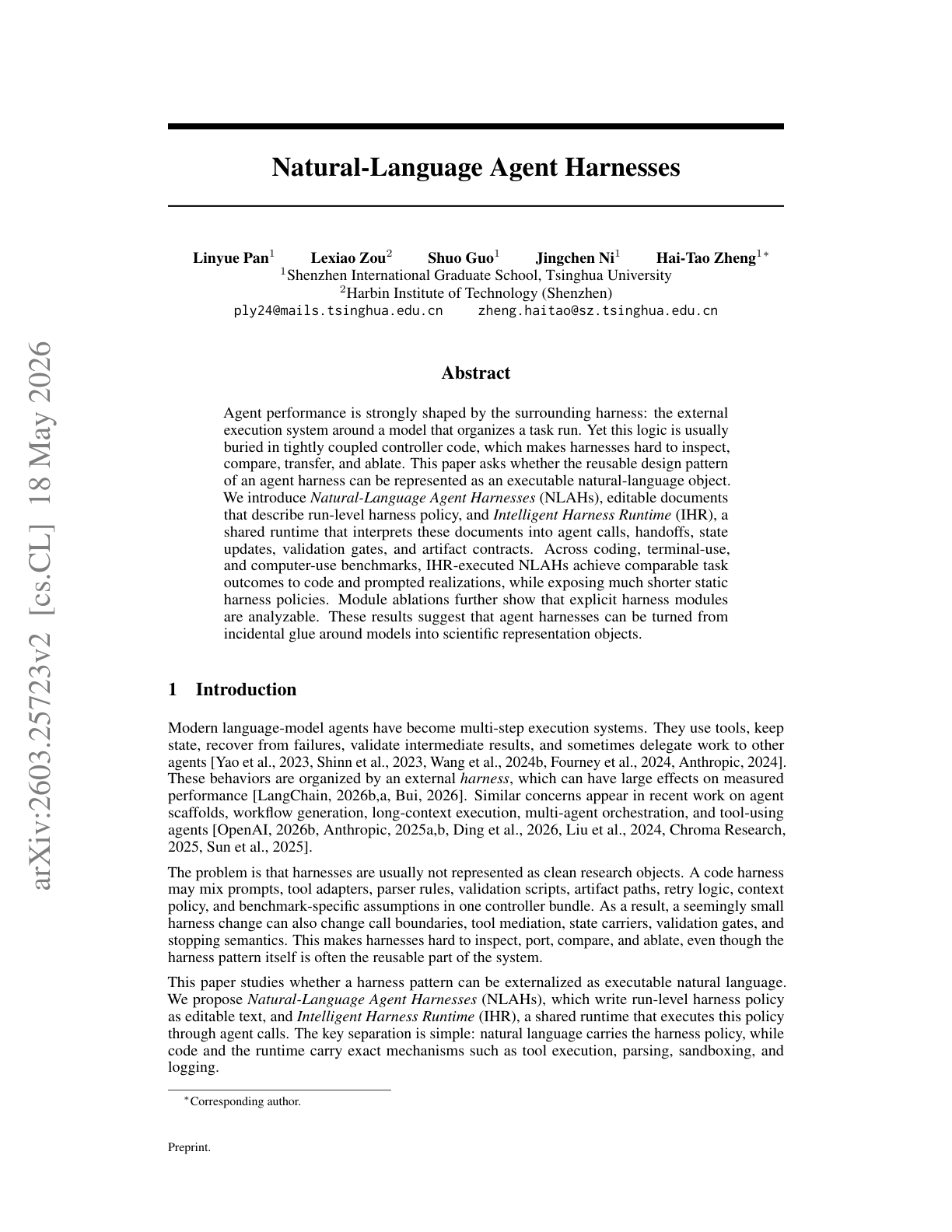
Agent performance increasingly depends on harness engineering, but harness behavior is typically embedded in controller code and runtime-specific conventions, making it hard to transfer, compare, or analyze systematically. This work introduces Natural-Language Agent Harnesses (NLAHs), which express harness behavior in editable natural language, and an Intelligent Harness Runtime (IHR) that executes these harnesses through explicit contracts, durable artifacts, and lightweight adapters. The approach enables a code-to-text harness migration path where teams can convert existing harness code into natural-language specifications that are interpretable, version-controlled, and executable by an LLM at runtime.