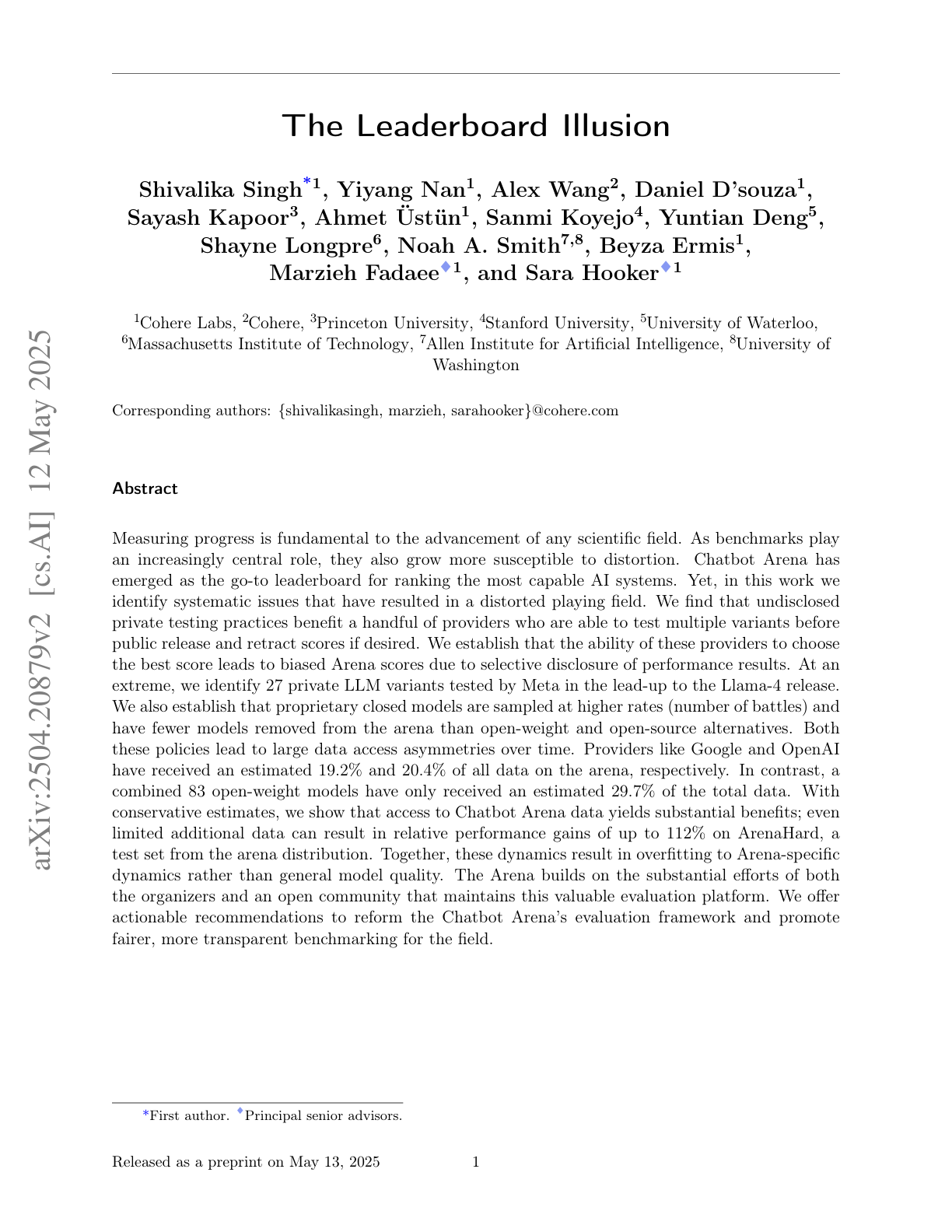
The Leaderboard Illusion
The Leaderboard Illusion investigates systemic distortions in how the Chatbot Arena leaderboard evaluates LLMs, arguing that current practices undermine fair model comparison and scientific progress. Through extensive data analysis covering 2M Arena battles, the authors identify four key issues distorting rankings:
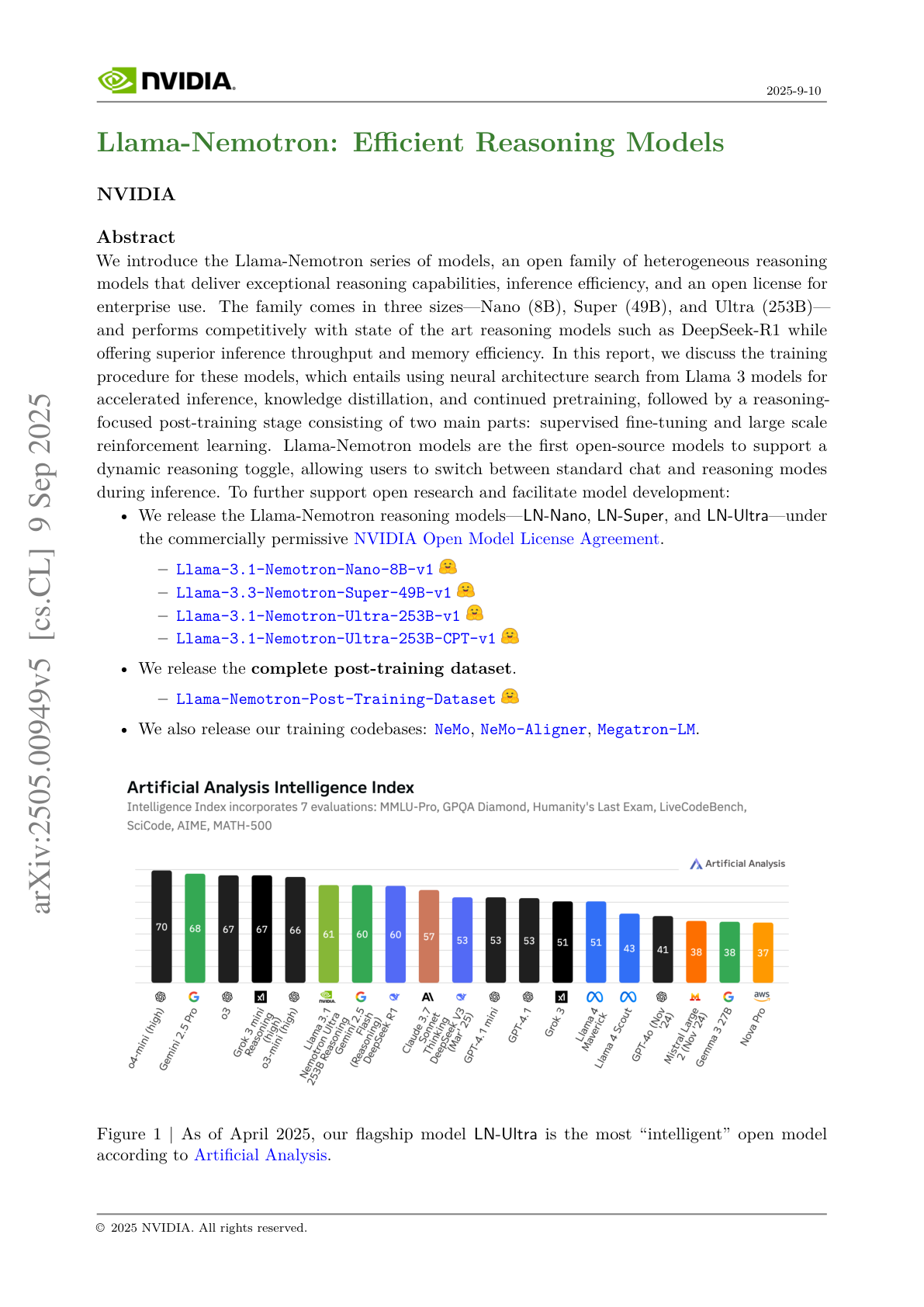
Llama-Nemotron
NVIDIA introduces the Llama-Nemotron model series, LN-Nano (8B), LN-Super (49B), and LN-Ultra (253B), a family of open, efficient, and high-performing reasoning models. These models rival or outperform DeepSeek-R1 on various benchmarks while offering significantly better inference throughput and memory efficiency. LN-Ultra is noted as the most "intelligent" open model by Artificial Analysis. A key innovation is a dynamic reasoning toggle ("detailed thinking on/off") that allows users to control reasoning behavior at inference time. Highlights:
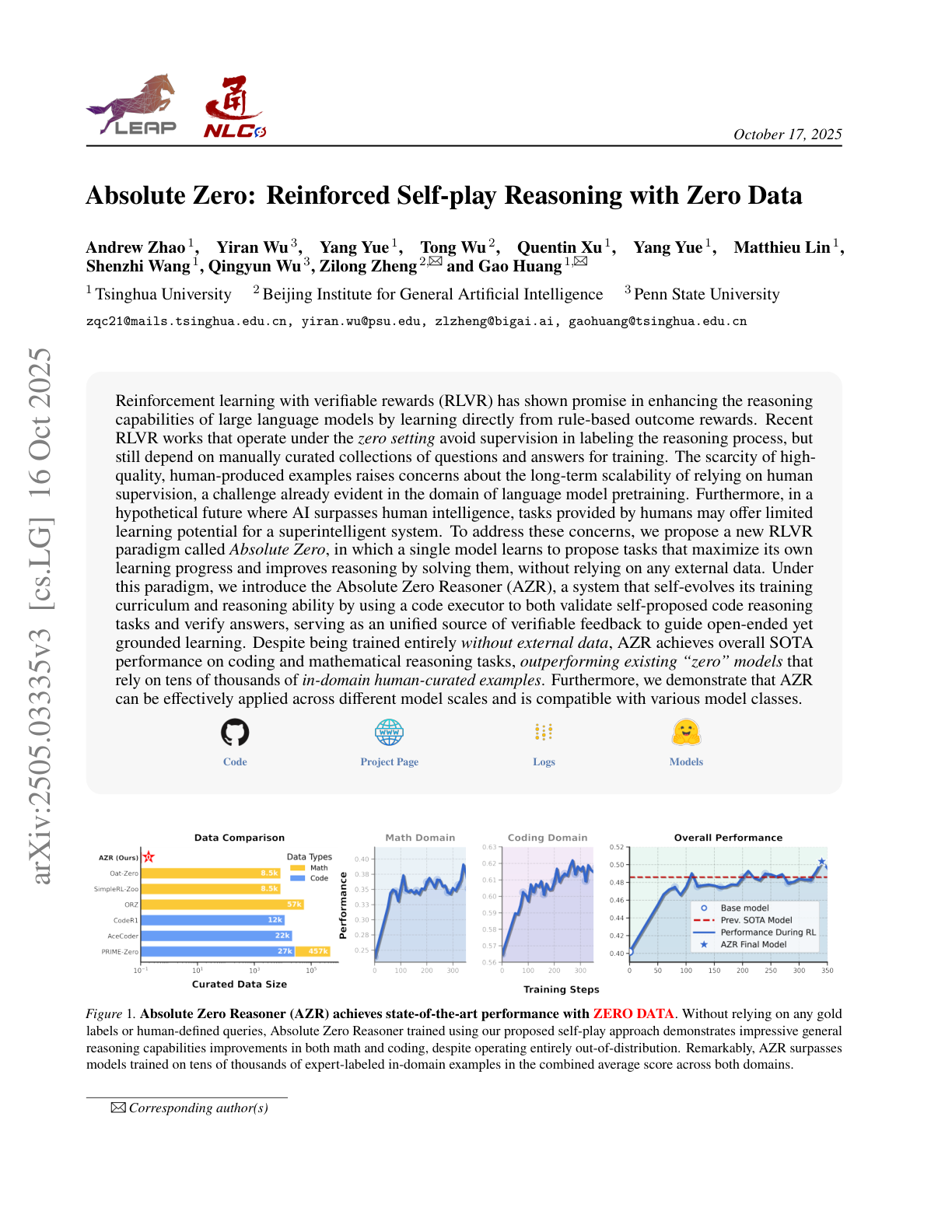
Absolute Zero
Introduces an LLM training framework that eliminates the need for human-curated data. Key highlights:
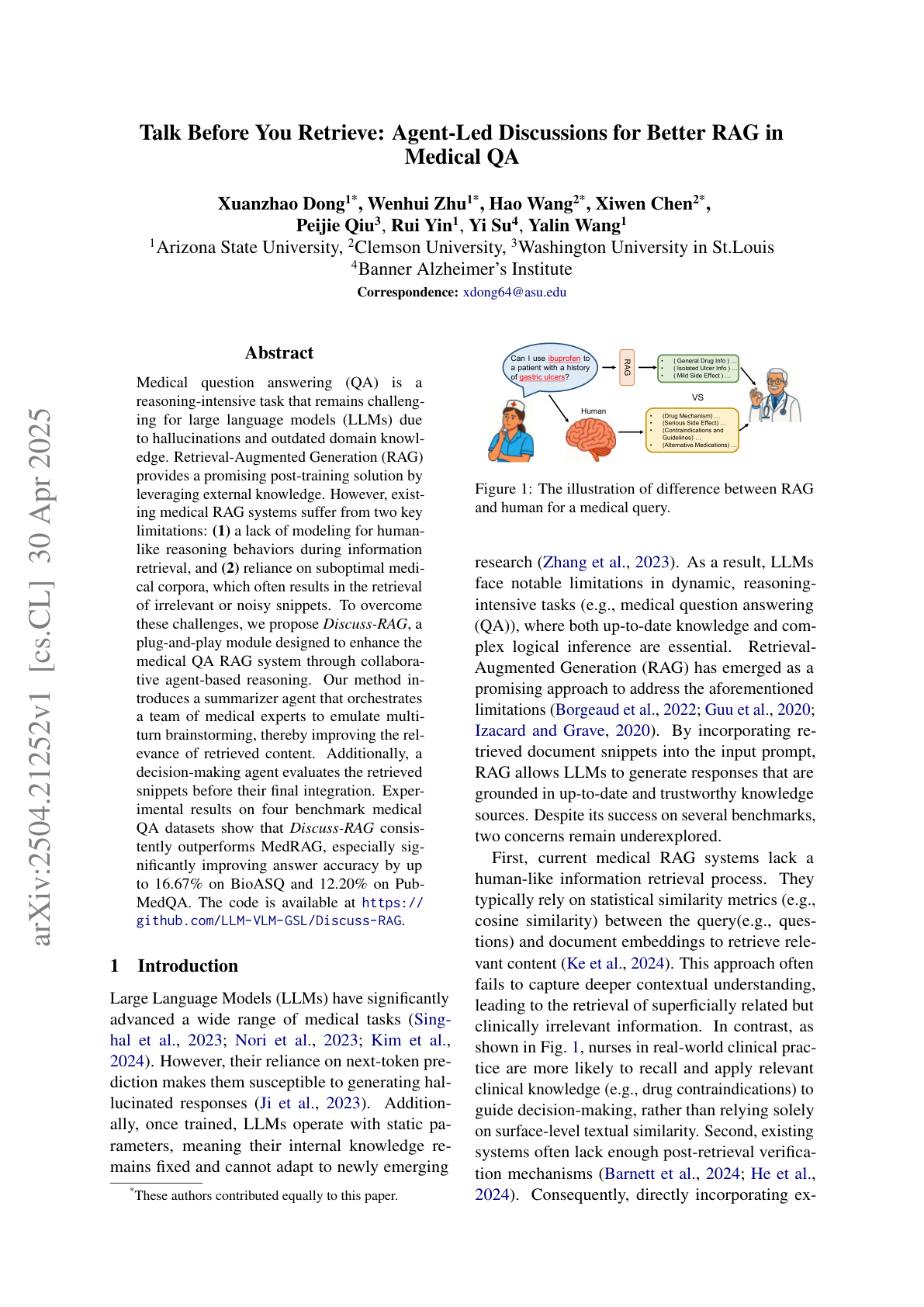
Discuss-RAG
This paper introduces Discuss-RAG, a plug-and-play agent-based framework that enhances retrieval-augmented generation (RAG) for medical question answering by mimicking human-like clinical reasoning. Standard RAG systems rely on embedding-based retrieval and lack mechanisms to verify relevance or logical coherence, often leading to hallucinations or outdated answers. Discuss-RAG addresses these gaps via a modular agent setup that simulates multi-turn medical discussions and performs post-retrieval verification. Key ideas:
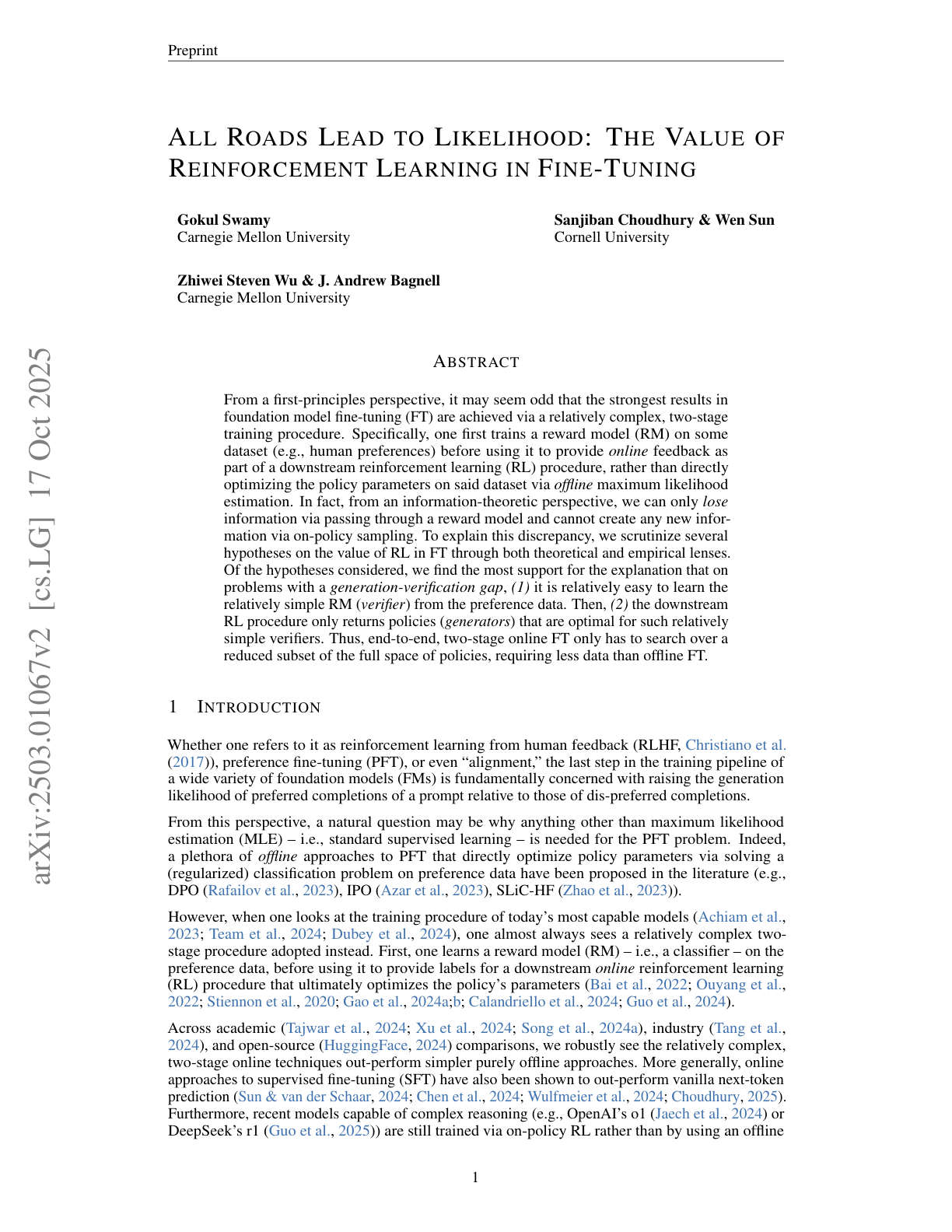
The Value of RL in Fine-Tuning
This work shows that, in theory, every popular preference-fine-tuning objective collapses to maximum-likelihood estimation (MLE), yet experiments show a consistent RL advantage on real tasks. They reconcile this gap with a generation-verification complexity hypothesis.
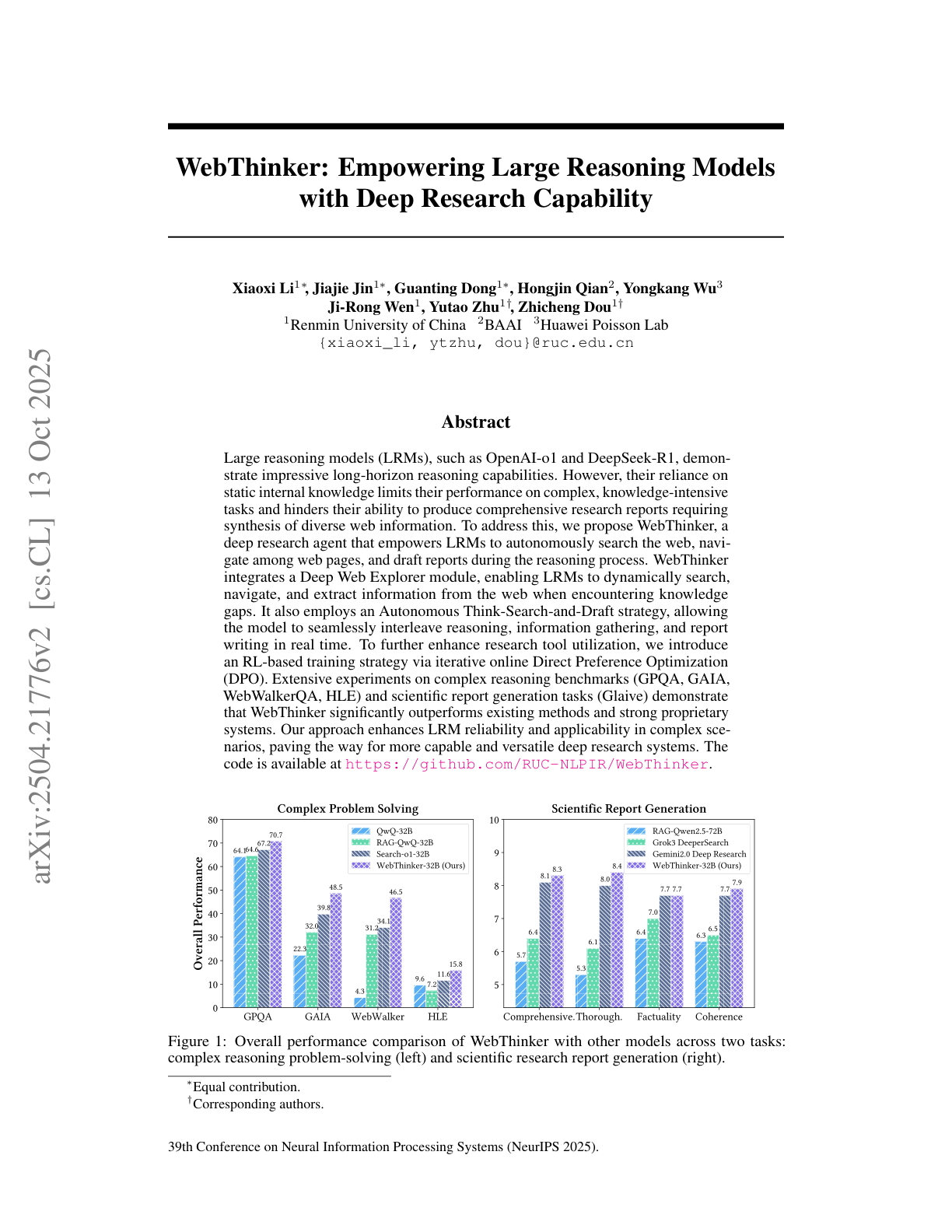
WebThinker
This paper introduces a reasoning agent framework that equips large reasoning models (LRMs) with autonomous web exploration and report writing abilities to overcome limitations of static internal knowledge. WebThinker integrates a Deep Web Explorer module and an Autonomous Think-Search-and-Draft strategy that lets models search the web, reason through tasks, and generate comprehensive outputs simultaneously. It also incorporates an RL-based training loop using online DPO to improve tool usage. The system supports two modes: complex problem solving and scientific report generation. Key points:
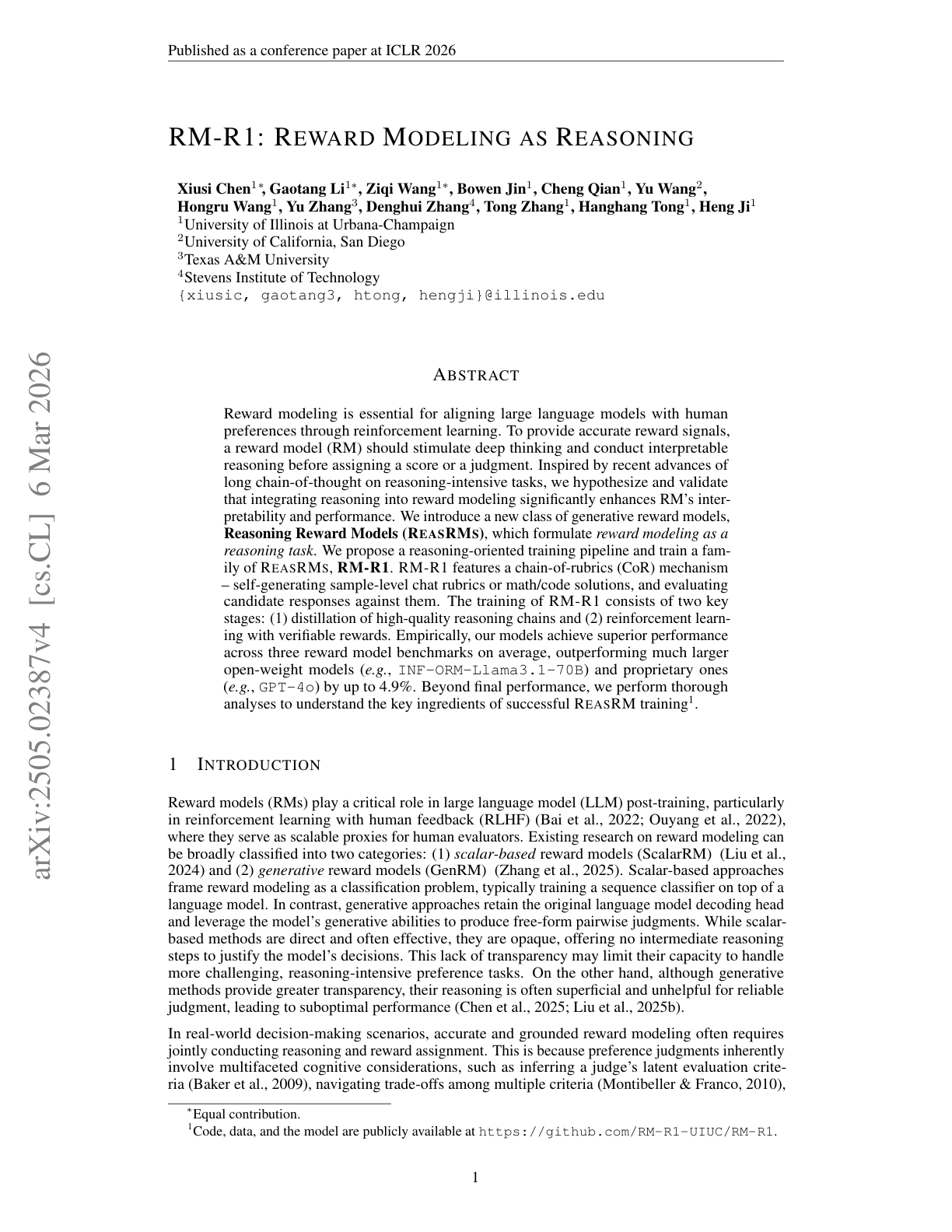
Reward Modeling as Reasoning
This work proposes a new class of reward models, called ReasRMs, that reformulate reward modeling as a reasoning task. The authors introduce RM-R1, a family of generative reward models that produce interpretable reasoning traces and rubrics during preference judgments. Instead of relying on scalar scores or shallow generation, RM-R1 models leverage structured reasoning and reinforcement learning to improve both interpretability and performance across benchmarks.
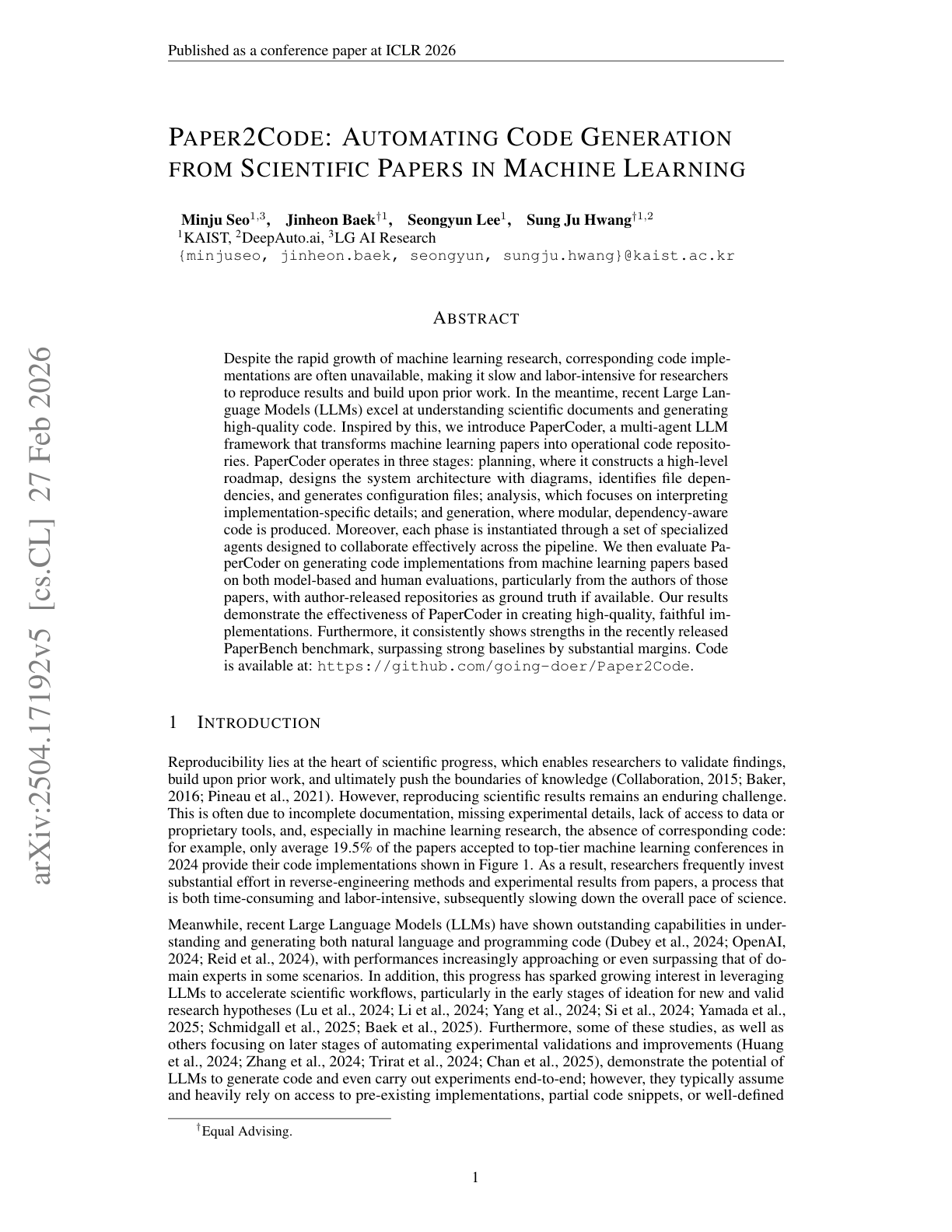
Paper2Code
Introduces PaperCoder, a multi-agent LLM framework that transforms ML papers into full code repositories without relying on pre-existing implementations.
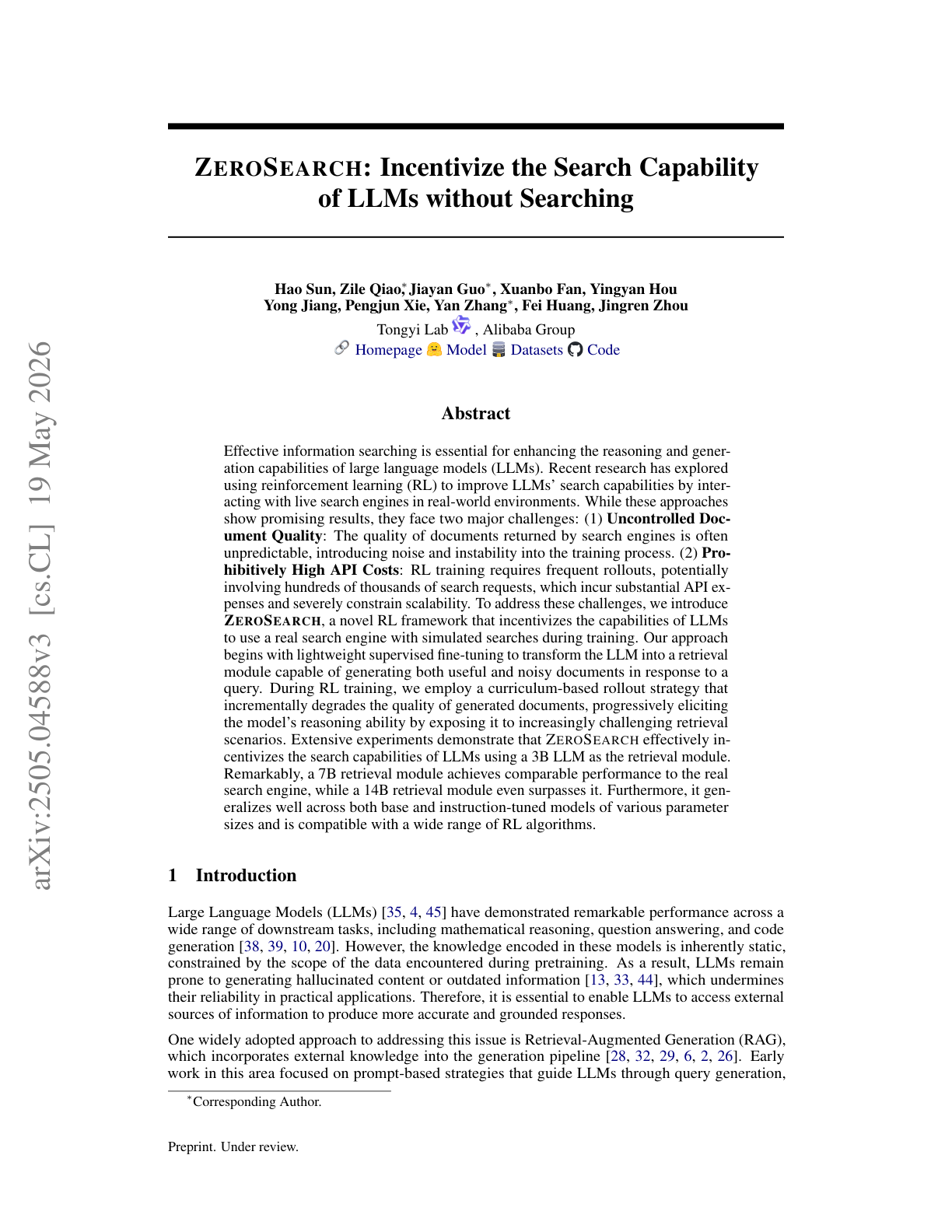
ZeroSearch
ZeroSearch is an RL framework that trains LLMs to develop search capabilities without using real search engines. It uses simulated LLM-generated documents with a curriculum-based degradation strategy and outperforms real-search methods like Search-R1 in both performance and cost, achieving better QA accuracy across multiple benchmarks.
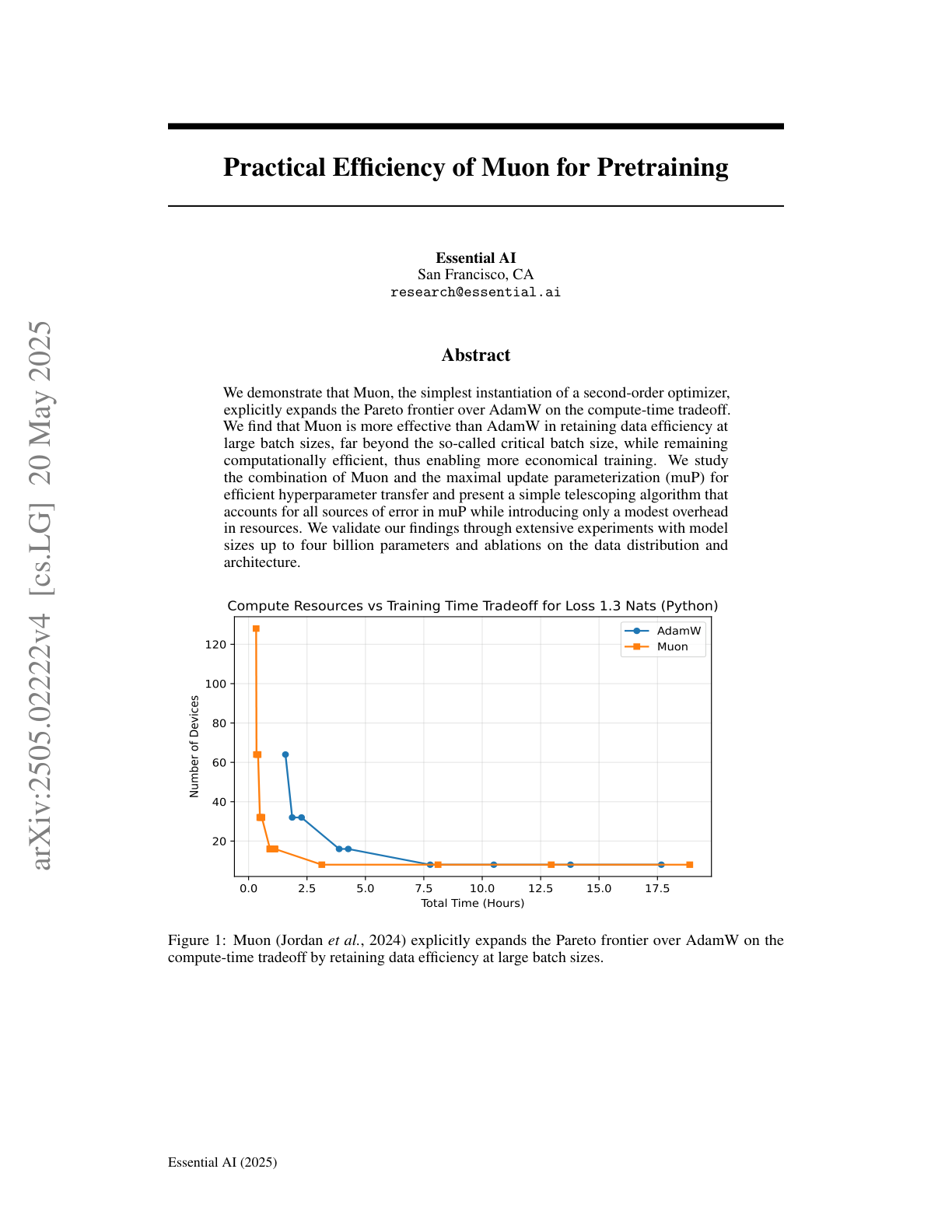
Practical Efficiency of Muon for Pretraining
Discusses how Muon, a simple second-order optimizer, outperforms AdamW in large-batch pretraining by expanding the compute-time Pareto frontier and maintaining better data efficiency. Combined with muP scaling and a novel telescoping algorithm for hyperparameter transfer, it enables faster training with minimal tuning overhead up to 4B parameter models.