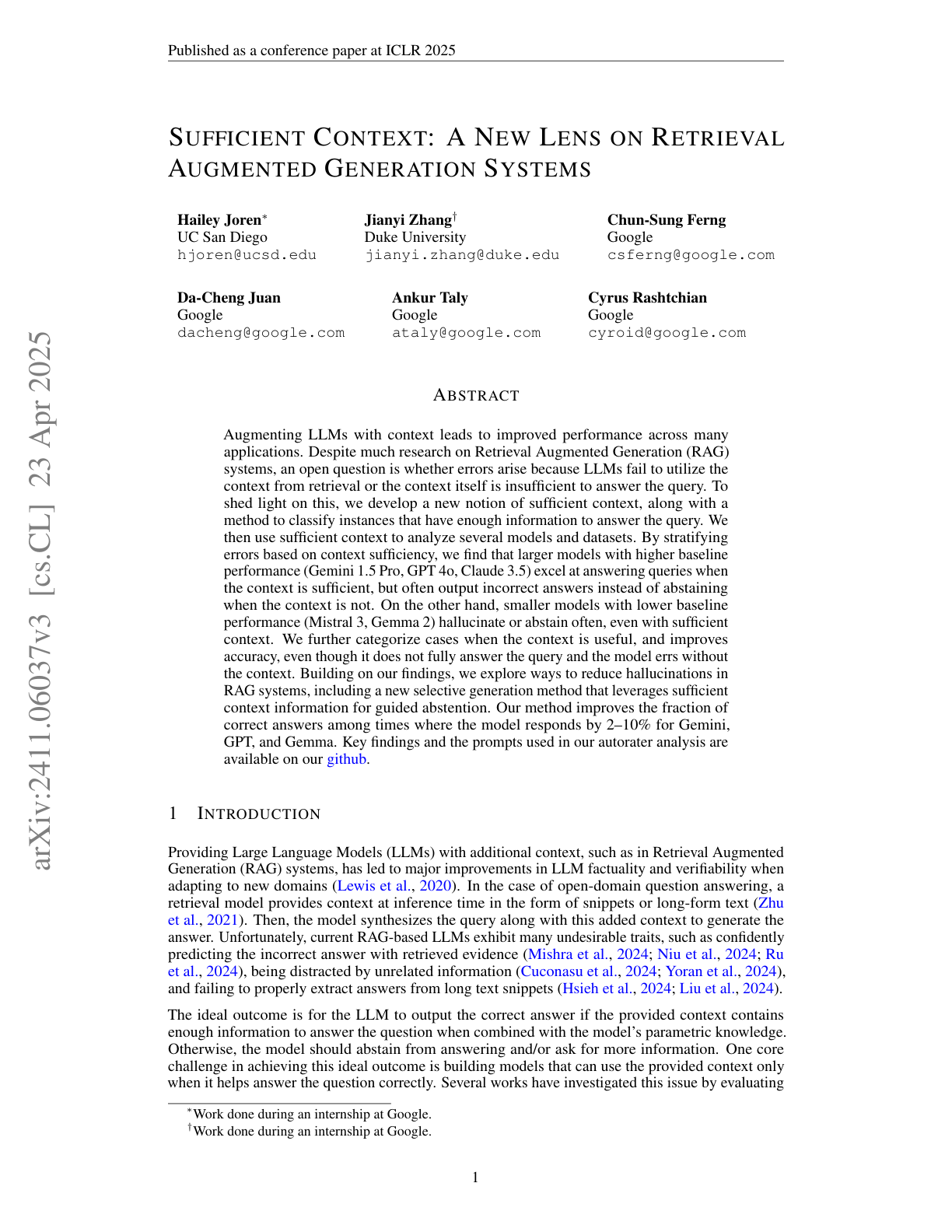
New Lens on RAG Systems
Introduces a new conceptual and empirical framework for analyzing RAG systems through the lens of sufficient context, whether the retrieved content alone enables answering a query. This notion helps decouple retrieval failures from generation errors in LLMs, providing clarity on model behavior under different contextual adequacy. Key findings:
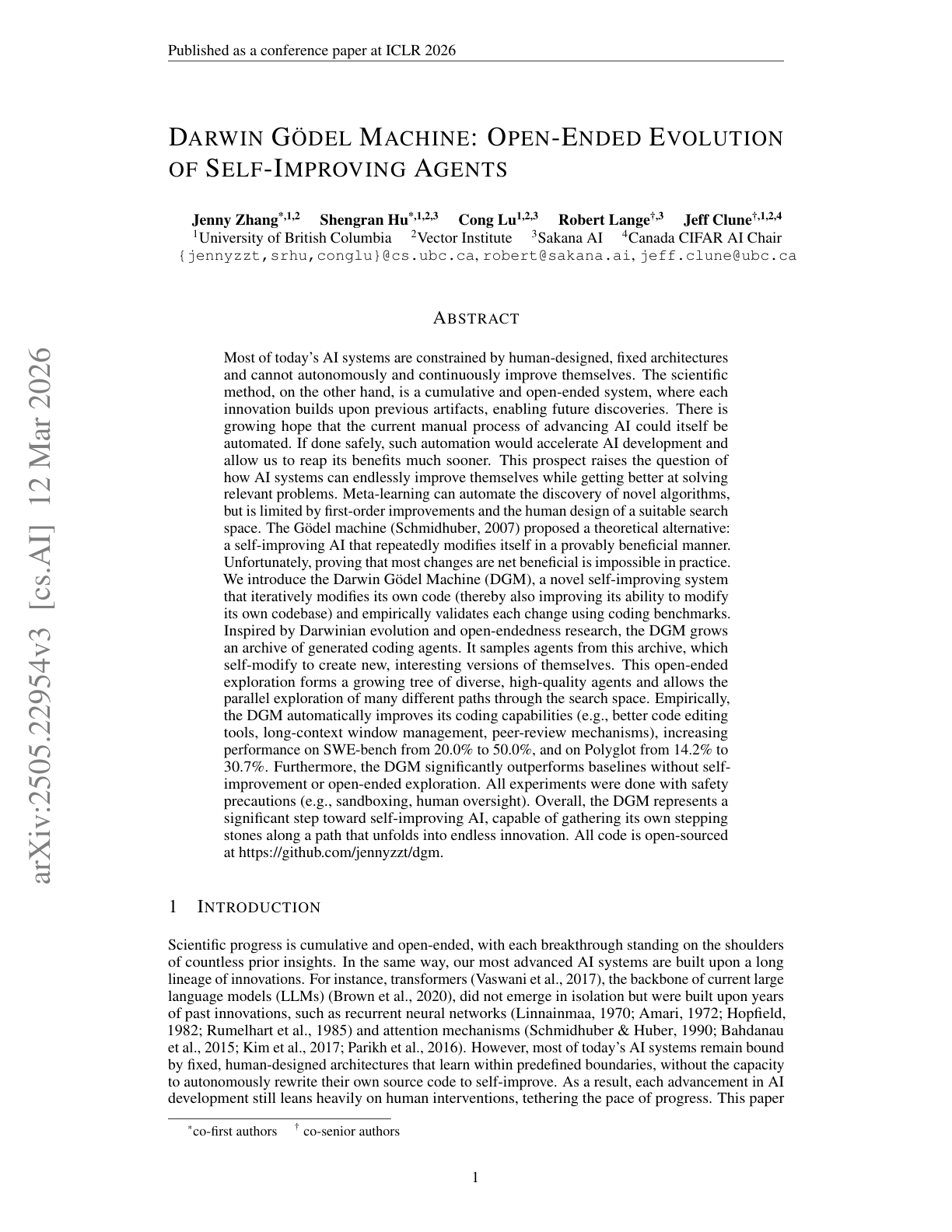
Open-Ended Evolution of Self-Improving Agents
This work presents the Darwin Gödel Machine (DGM), a system that advances the vision of self-improving AI by combining self-referential code modification with open-ended evolutionary search. Unlike the original Gödel machine, which requires provable benefits for code changes (a practically intractable constraint), the DGM adopts an empirical approach: it modifies its own codebase and evaluates improvements on coding benchmarks. Key contributions and findings:
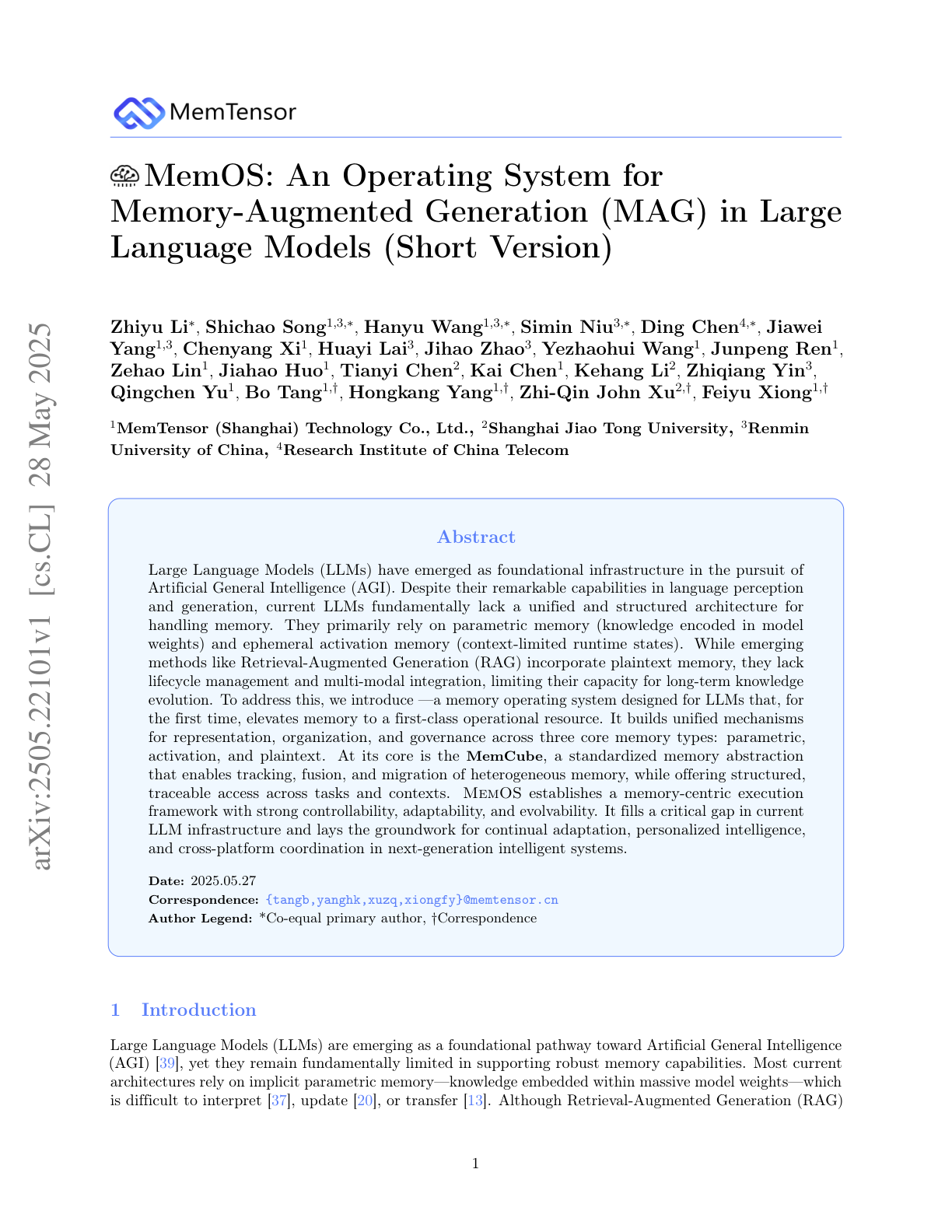
An Operating System for Memory-Augmented Generation in LLMs Introduces a unified operating system for managing memory LLMs, addressing a key limitation in
current architectures: their lack of structured, persistent, and governable memory. While today's LLMs rely primarily on parametric memory (model weights) and limited short-term context, MemOS proposes a comprehensive memory lifecycle and management infrastructure designed to support continual learning, behavioral consistency, and knowledge evolution. Key contributions and components include:
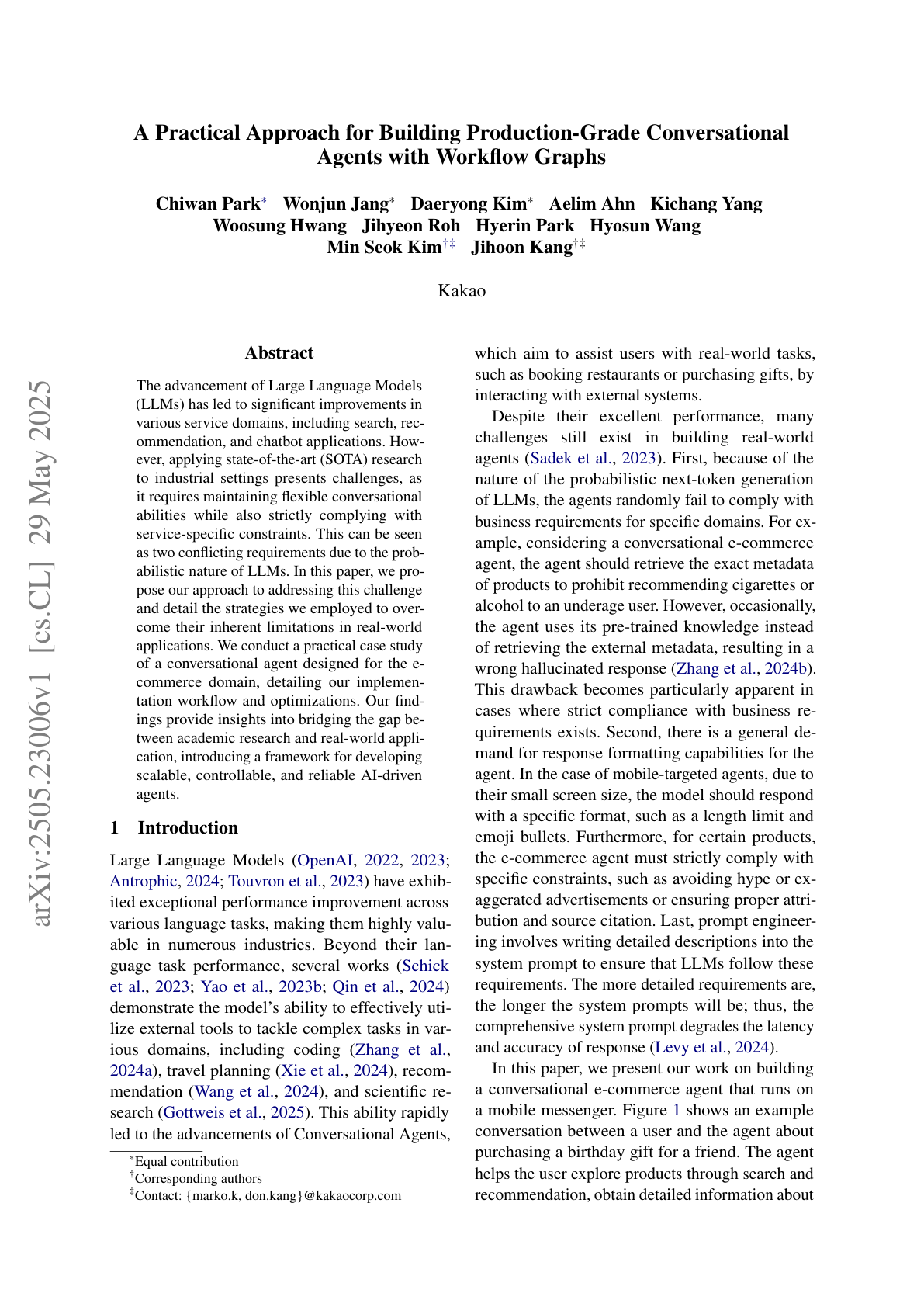
Building Production-Grade Conversational Agents with Workflow Graphs This paper presents a pragmatic, production-ready framework for building LLM-powered conversational agents using workflow graphs, with a specific focus on e-commerce scenarios. Instead of relying solely on end-to-end generation, the authors design agents using a directed acyclic graph (DAG), enabling flexible yet controllable interactions that adhere to strict business rules and format constraints.
Key contributions and findings include:

Spurios Rewards
This work challenges prevailing assumptions about reinforcement learning with verifiable rewards (RLVR) in mathematical reasoning tasks. The authors show that Qwen2.5-Math models can improve significantly under RL, even when trained with spurious or flawed rewards.
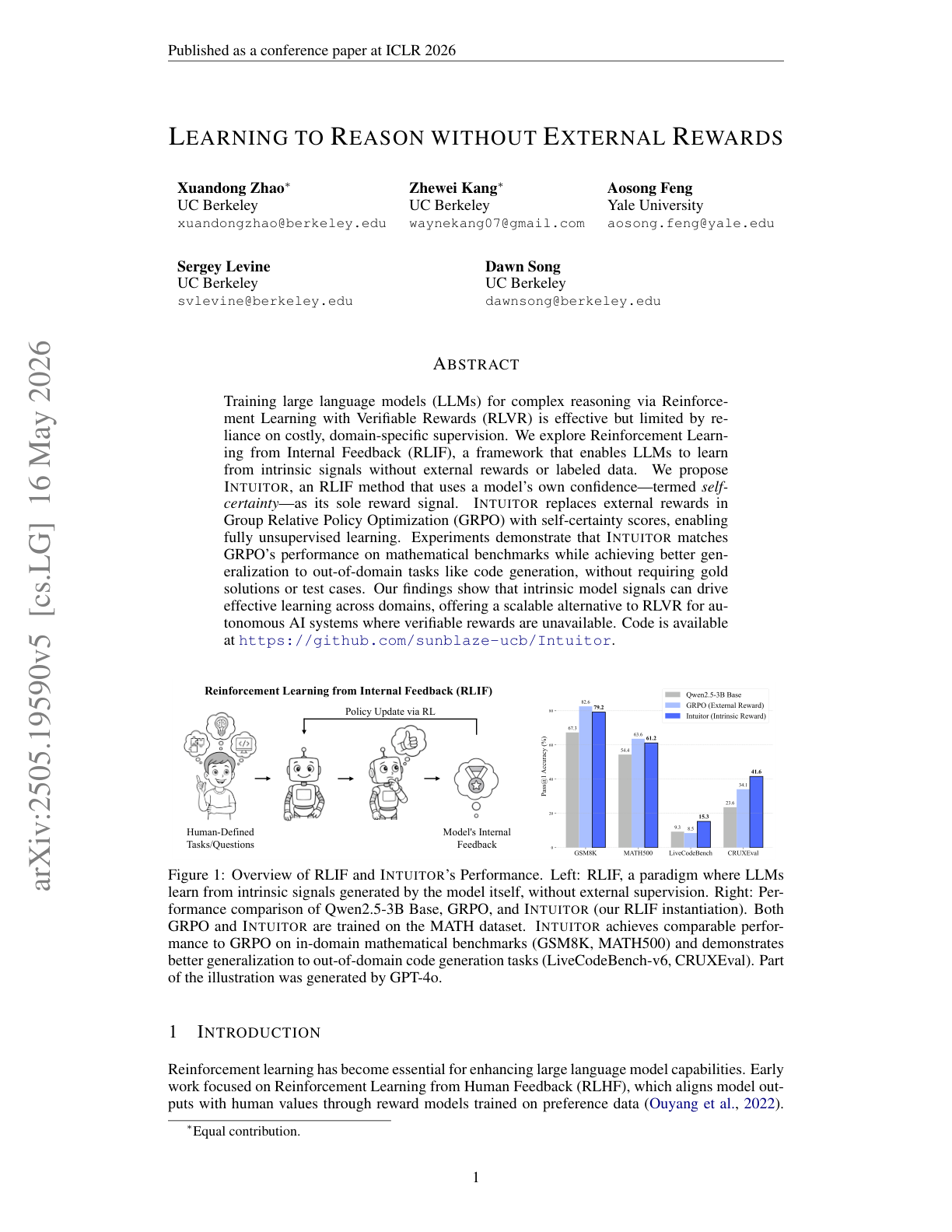
Learn to Reason without External Rewards
Proposes a method for training LLMs via reinforcement learning without any external rewards or labeled data. Instead, it uses the model’s own self-certainty, a confidence measure based on KL divergence from uniform, as the sole intrinsic reward. This self-improvement strategy, part of the broader Reinforcement Learning from Internal Feedback (RLIF) paradigm, bypasses the limitations of Reinforcement Learning with Verifiable Rewards (RLVR), which requires domain-specific verifiers and gold-standard outputs. Key highlights:
Learn to Reason via Mixture-of-Thought
While most prior approaches train with a single modality and only ensemble during inference, this work introduces Mixture-of-Thought (MoT) to jointly train and infer across modalities, resulting in notable gains in logical reasoning performance. Key findings:
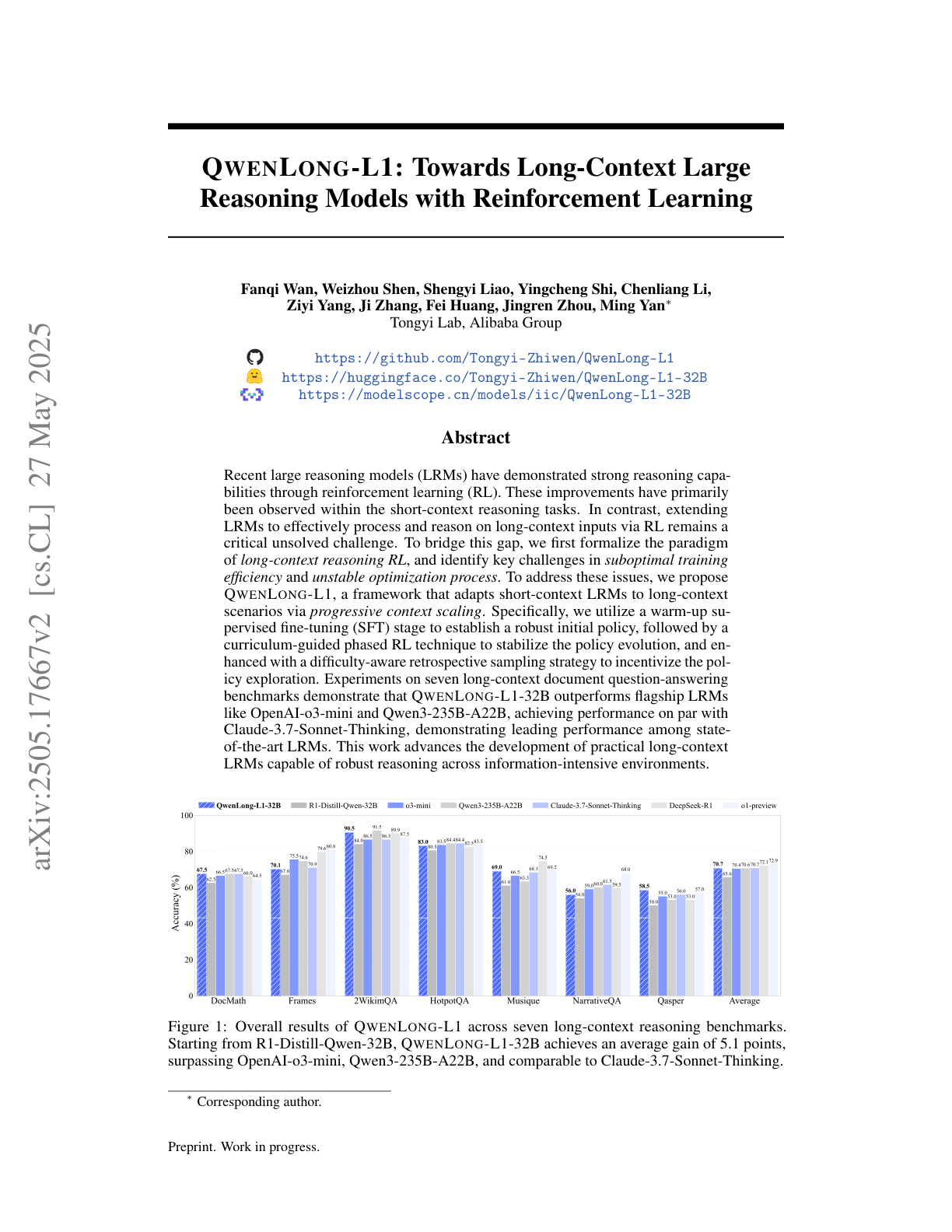
QwenLong-L1
A new reinforcement learning framework that scales large reasoning models (LRMs) from short to long contexts using progressive context scaling and hybrid rewards. It achieves top performance on seven long-context benchmarks, surpassing models like OpenAI-o3-mini and Qwen3-235B-A22B, and matching Claude-3.7-Sonnet-Thinking, demonstrating strong reasoning with up to 120K token inputs.
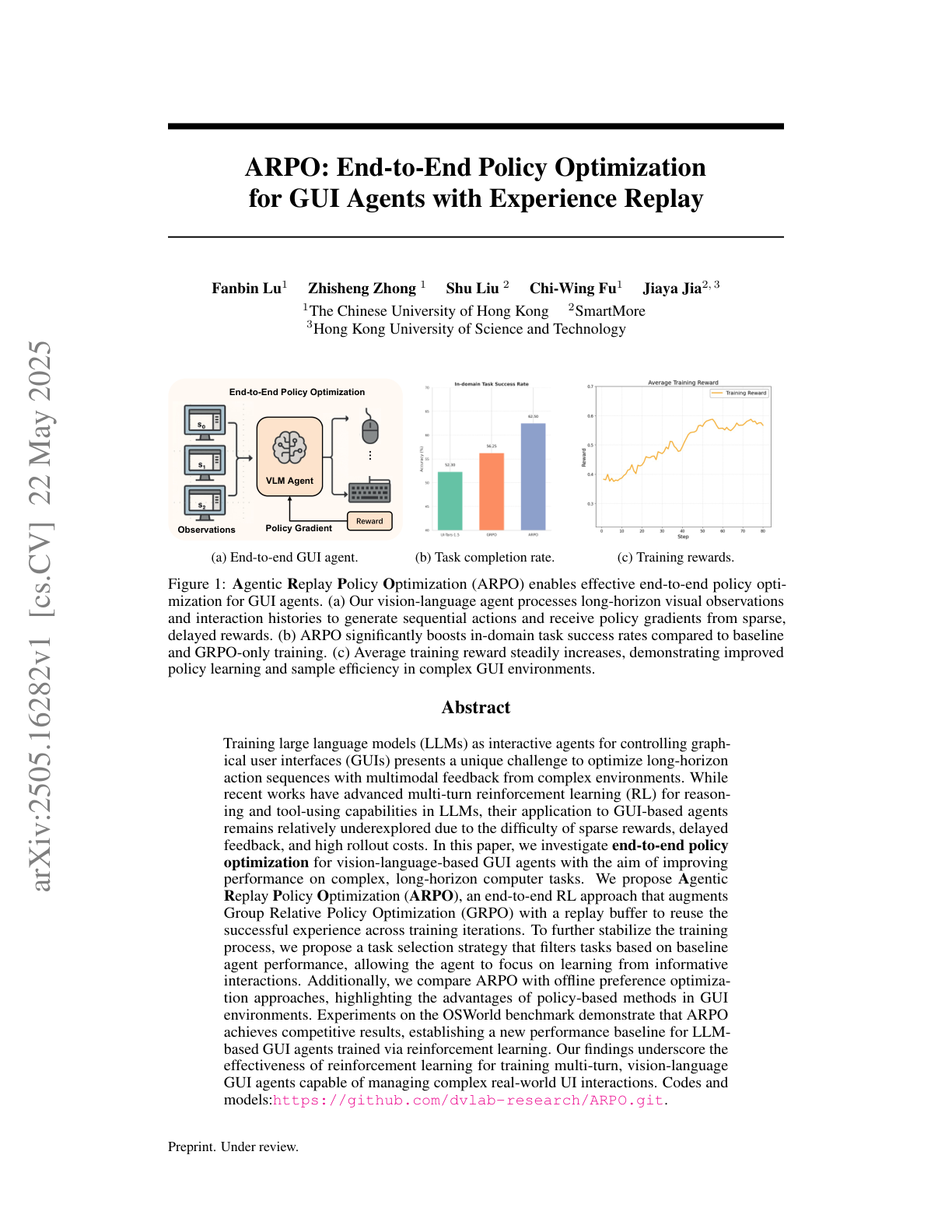
End-to-End Policy Optimization for GUI Agents
ARPO introduces an end-to-end reinforcement learning method for training GUI agents using Group Relative Policy Optimization (GRPO) with experience replay. It significantly improves in-domain performance on the OSWorld benchmark, outperforming baselines by up to 6.7%, while offering modest gains on out-of-domain tasks and enabling self-corrective behaviors through structured reward feedback.
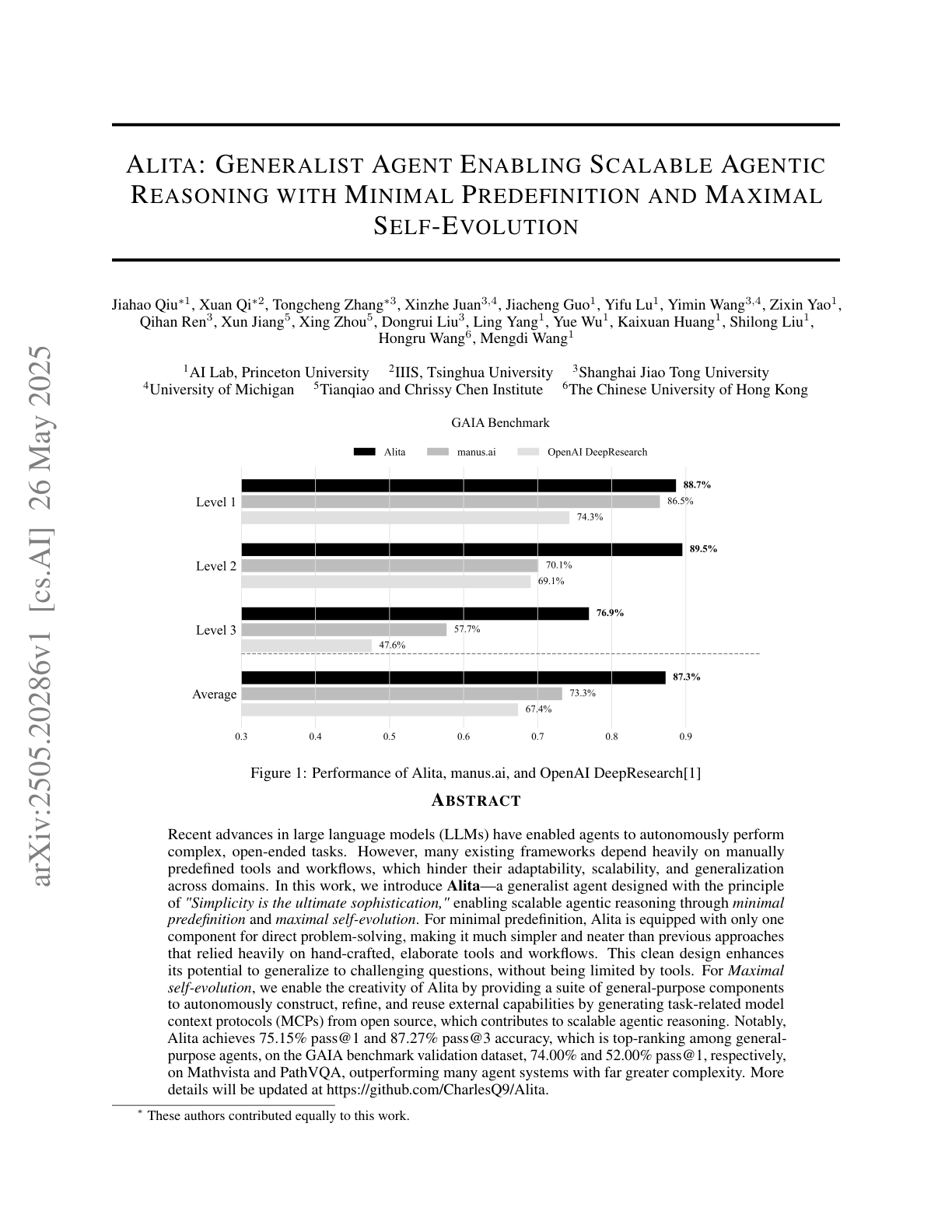
Generalist Agent Enabling Scalable Agentic Reasoning
Proposes Alita, a generalist agent framework that enables scalable agentic reasoning through minimal predefinition and maximal self-evolution. Unlike traditional agents reliant on handcrafted tools, Alita autonomously constructs reusable MCPs (Model Context Protocols) using web search and code synthesis, outperforming more complex systems like OpenAI DeepResearch and OctoTools on GAIA, MathVista, and PathVQA benchmarks.