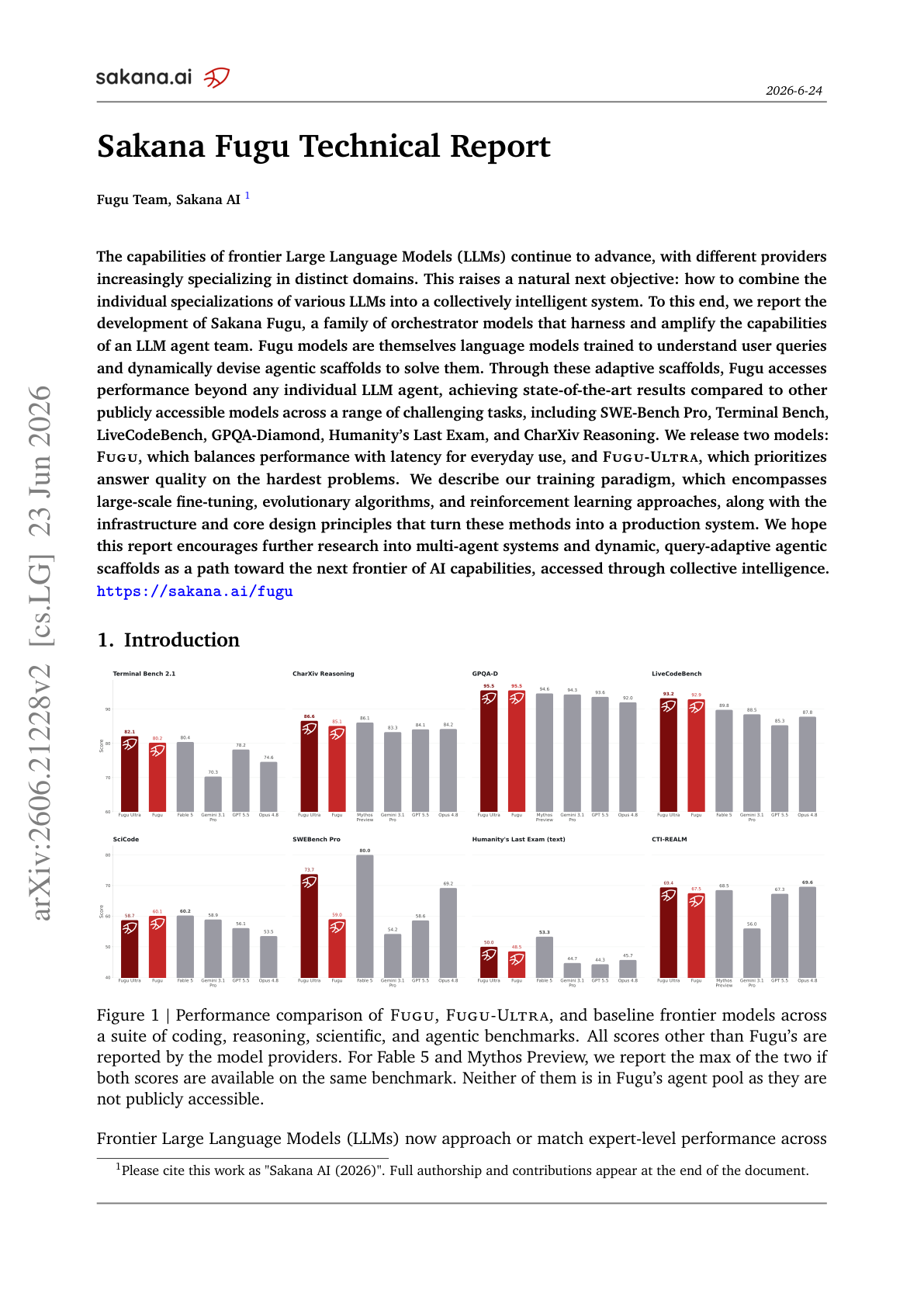
Sakana Fugu
Frontier LLMs keep advancing, and different providers are increasingly specializing in distinct domains, which raises a natural next objective: how do you combine those individual specializations into one collectively intelligent system? Sakana Fugu answers with a family of orchestrator models that are themselves language models trained to read a user query and dynamically devise the agentic scaffold needed to solve it.
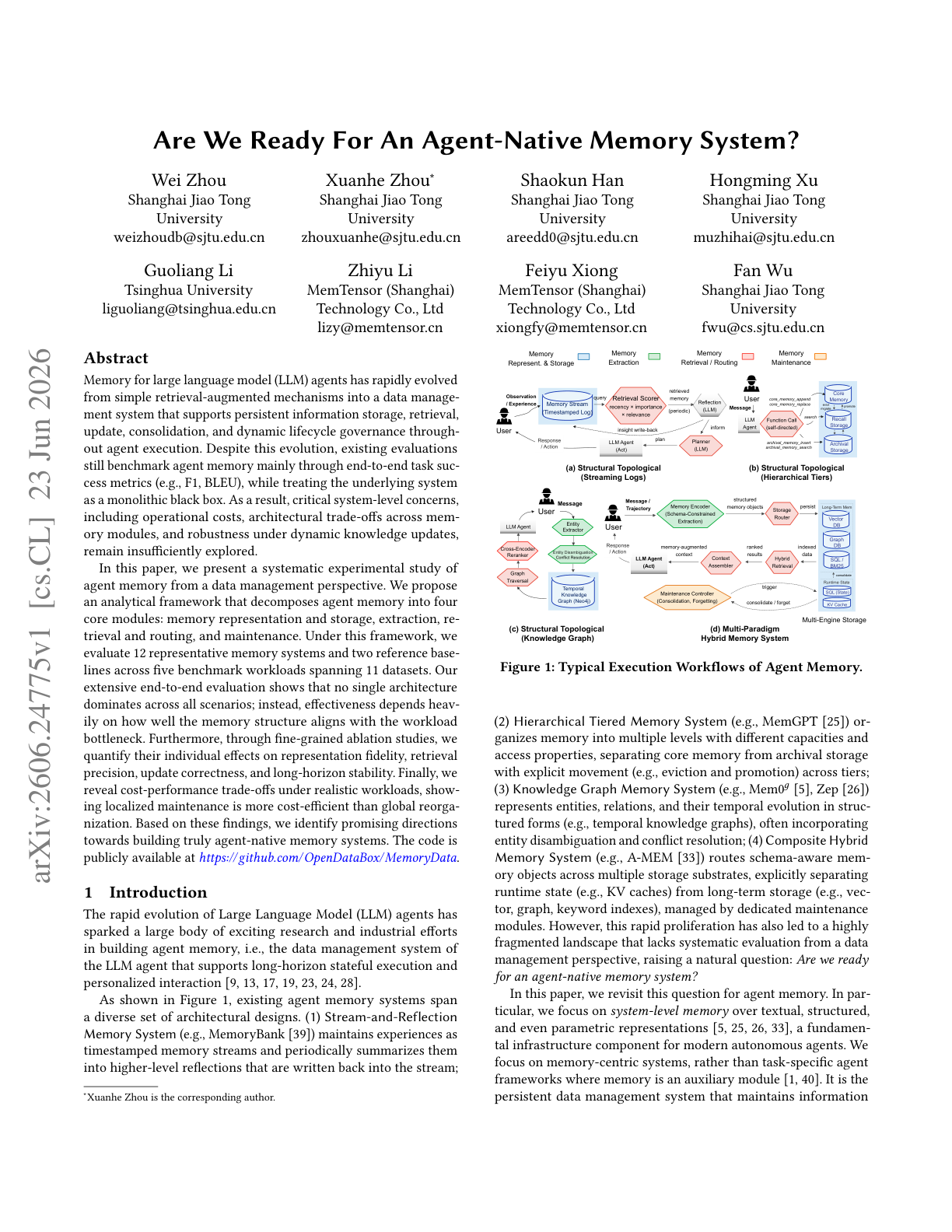
Agent-Native Memory
Memory for LLM agents has quietly grown from a retrieval add-on into a full data system, with persistent storage, retrieval, update, consolidation, and lifecycle governance running throughout an agent's execution. Yet most evaluations still score memory only through end-to-end task metrics like F1 and BLEU, treating the whole stack as a black box. This paper studies agent memory from a data management perspective and asks what we are actually missing when we measure it that way.
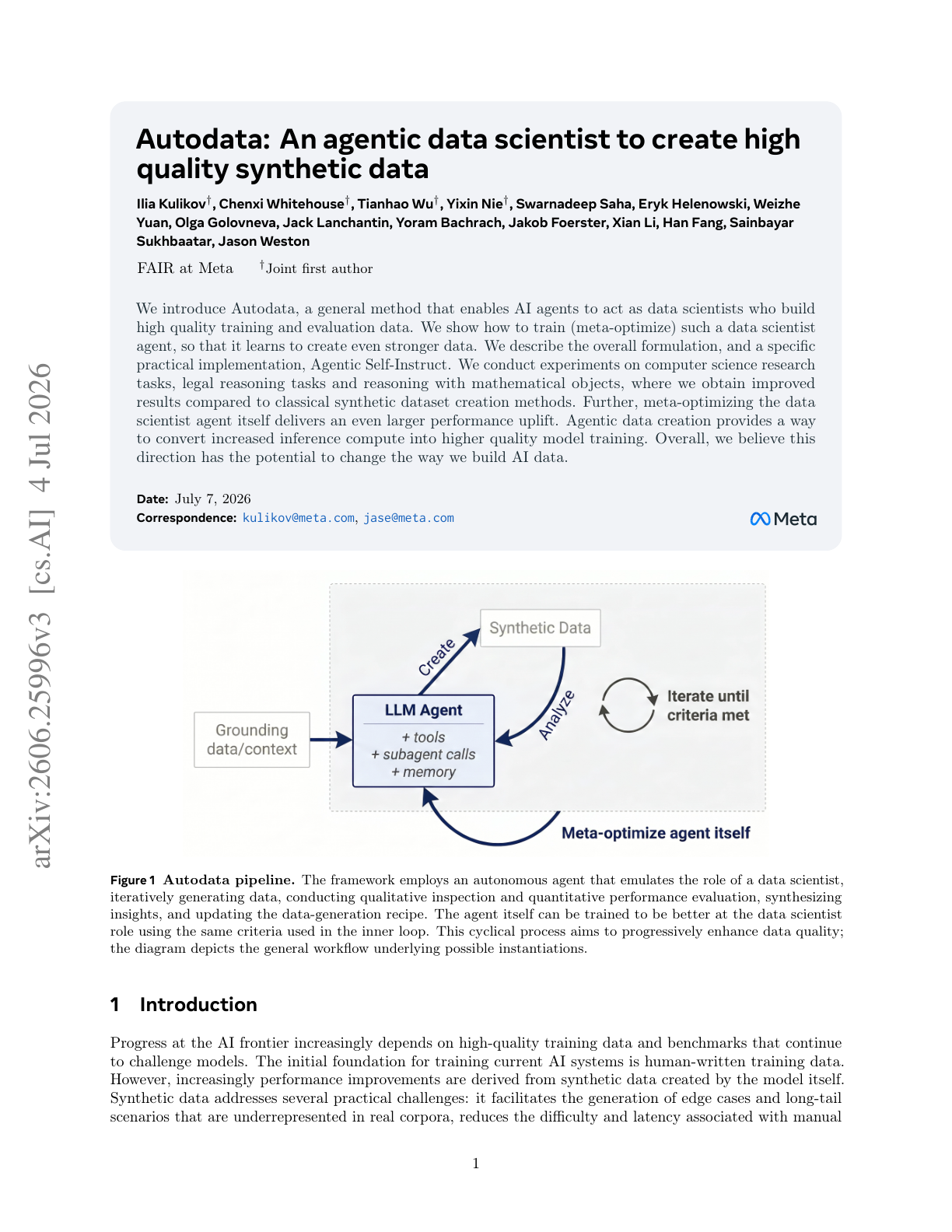
Autodata
Building synthetic training data has mostly stayed a fixed pipeline that you hand-tune once and then freeze. Autodata rethinks that by casting an AI agent as a data scientist that builds high-quality training and evaluation data, then meta-optimizes that agent so it learns to create even stronger data over time.
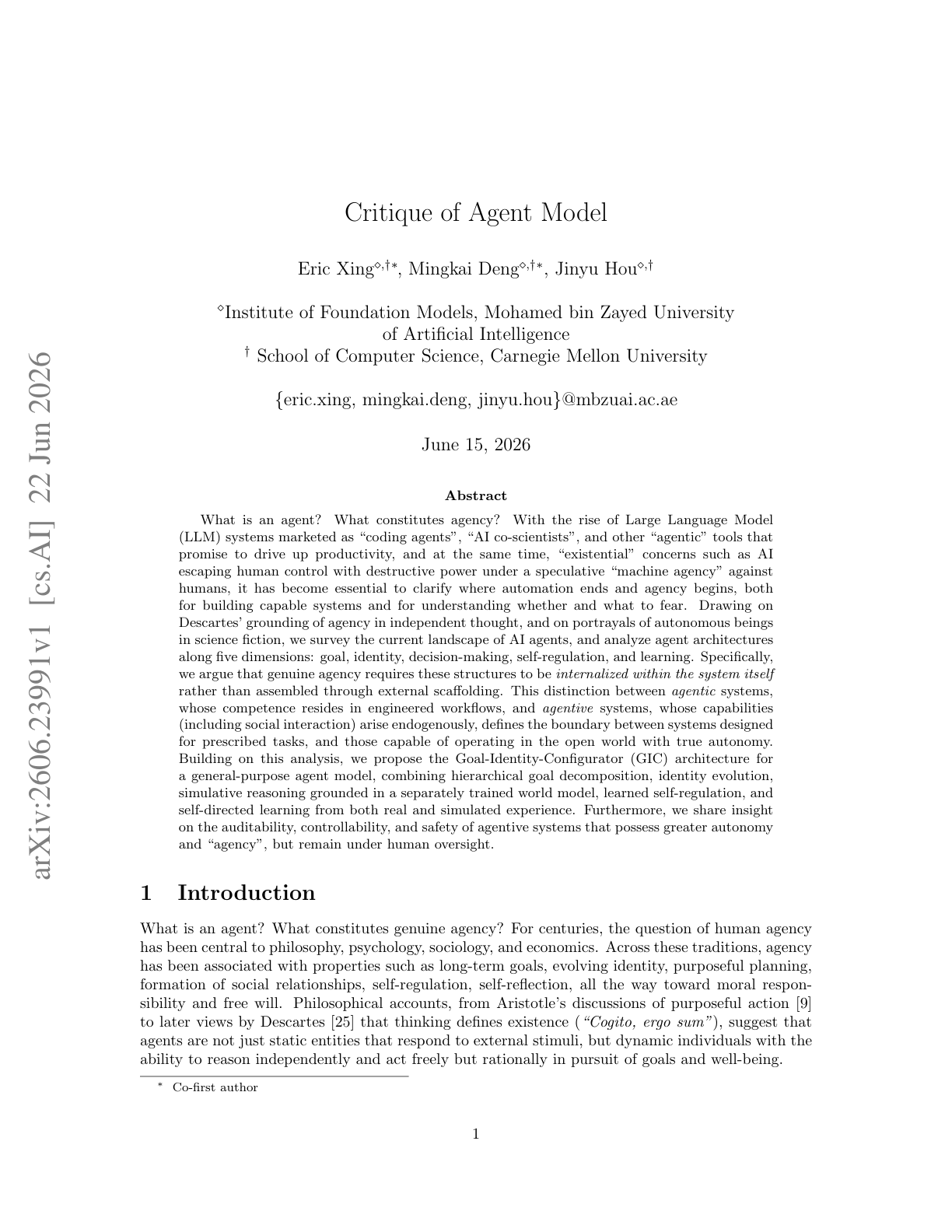
Critique of the Agent Model
The word agent now covers everything from a for-loop with tool calls to speculative machine superintelligence, which makes it nearly useless as a technical term. This position paper from Eric Xing and collaborators tries to fix that by asking what an agent actually is and what agency consists of, drawing on Descartes and on science-fiction portrayals of autonomous beings to ground the discussion.
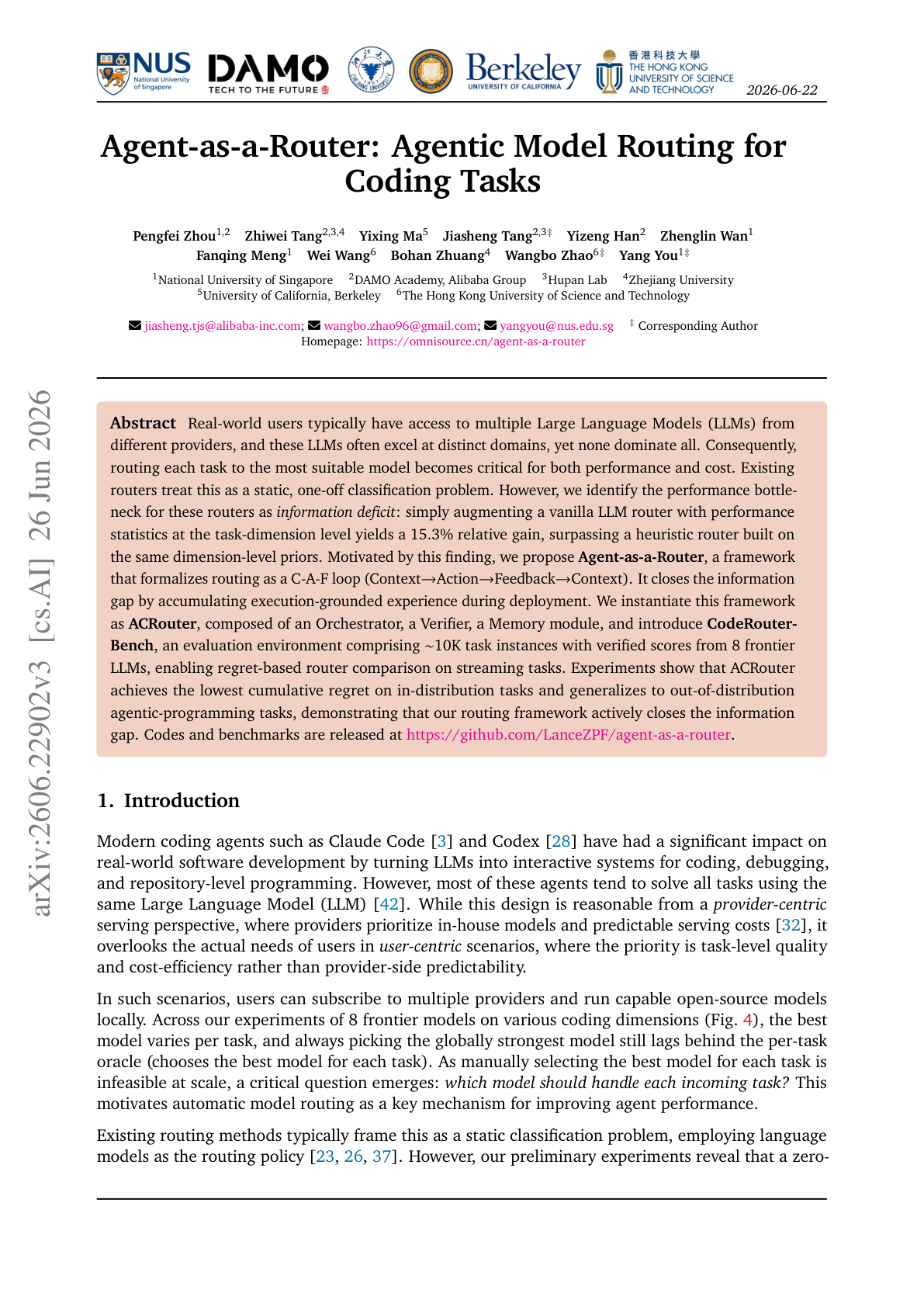
Agent-as-a-Router
Most users now have access to many LLMs that each excel in different domains, so routing each task to the right model matters for both quality and cost. Existing routers treat this as a static, one-off classification problem, and this paper shows that framing is exactly what holds them back.
Agent Communication Protocols
As multi-agent systems try to move past the limits of standalone agents, communication becomes the load-bearing infrastructure, and the protocol landscape for it is a fragmented mess. This study builds a technical taxonomy to classify and compare LLM agent communication protocols and to make the interoperability problem legible.
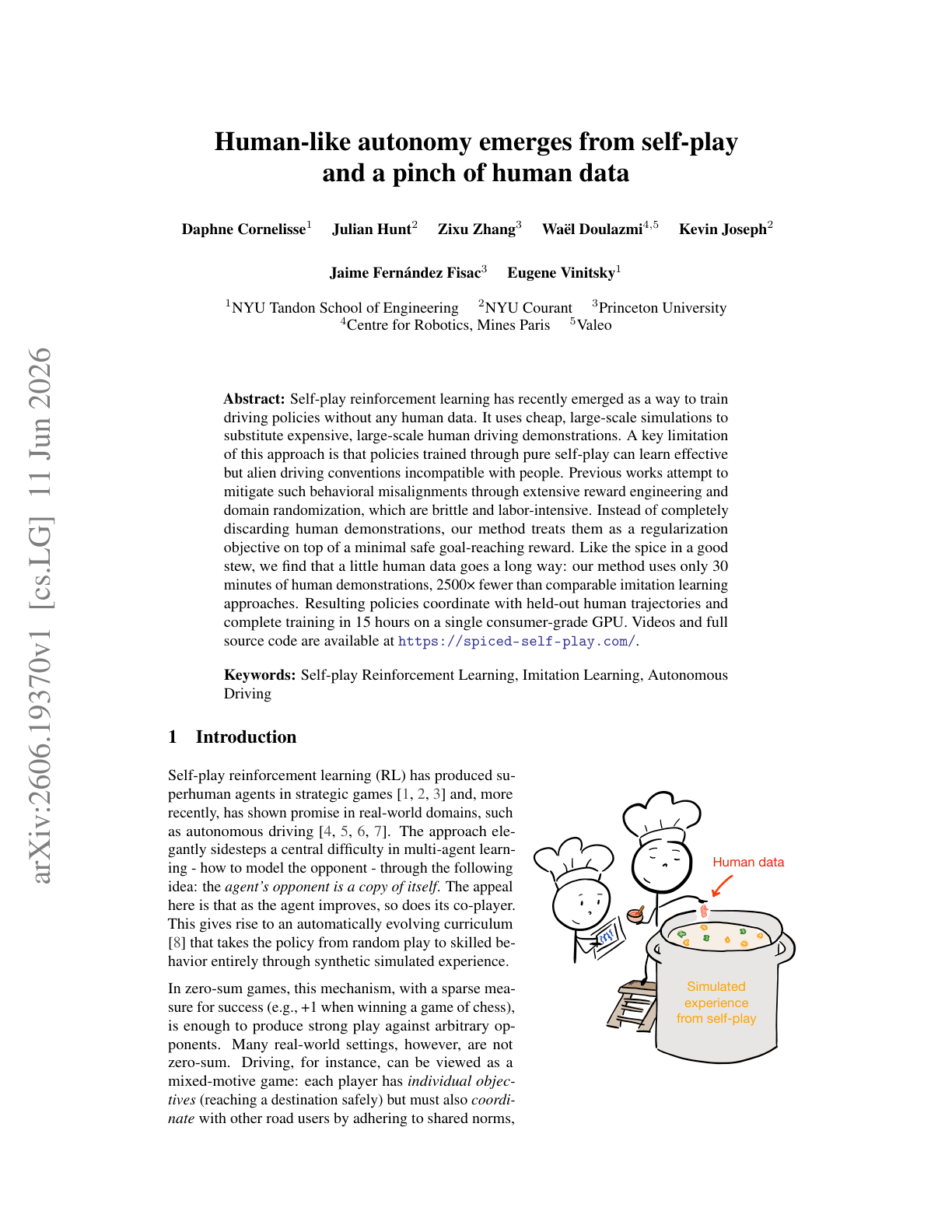
A Pinch of Human Data
Self-play reinforcement learning can train driving policies with no human data at all, swapping expensive human demonstrations for cheap large-scale simulation. The catch is that pure self-play tends to discover effective but alien driving conventions that real people cannot work with, and the usual fixes lean on brittle reward engineering and domain randomization.
Skill-MAS
Automatic generation of multi-agent systems is stuck between inference-time methods that reuse frozen frontier models but never learn, and training-time methods that internalize experience through gradient updates but are capped by the weaker models small enough to fine-tune. Skill-MAS proposes a third path that treats high-level orchestration as an evolvable Meta-Skill, decoupling experience retention from weight updates so frontier models keep getting better at orchestration without any gradient steps. Across four complex benchmarks and four distinct LLMs it delivers strong, transferable gains at a favorable cost-performance trade-off.
Reliability without Validity
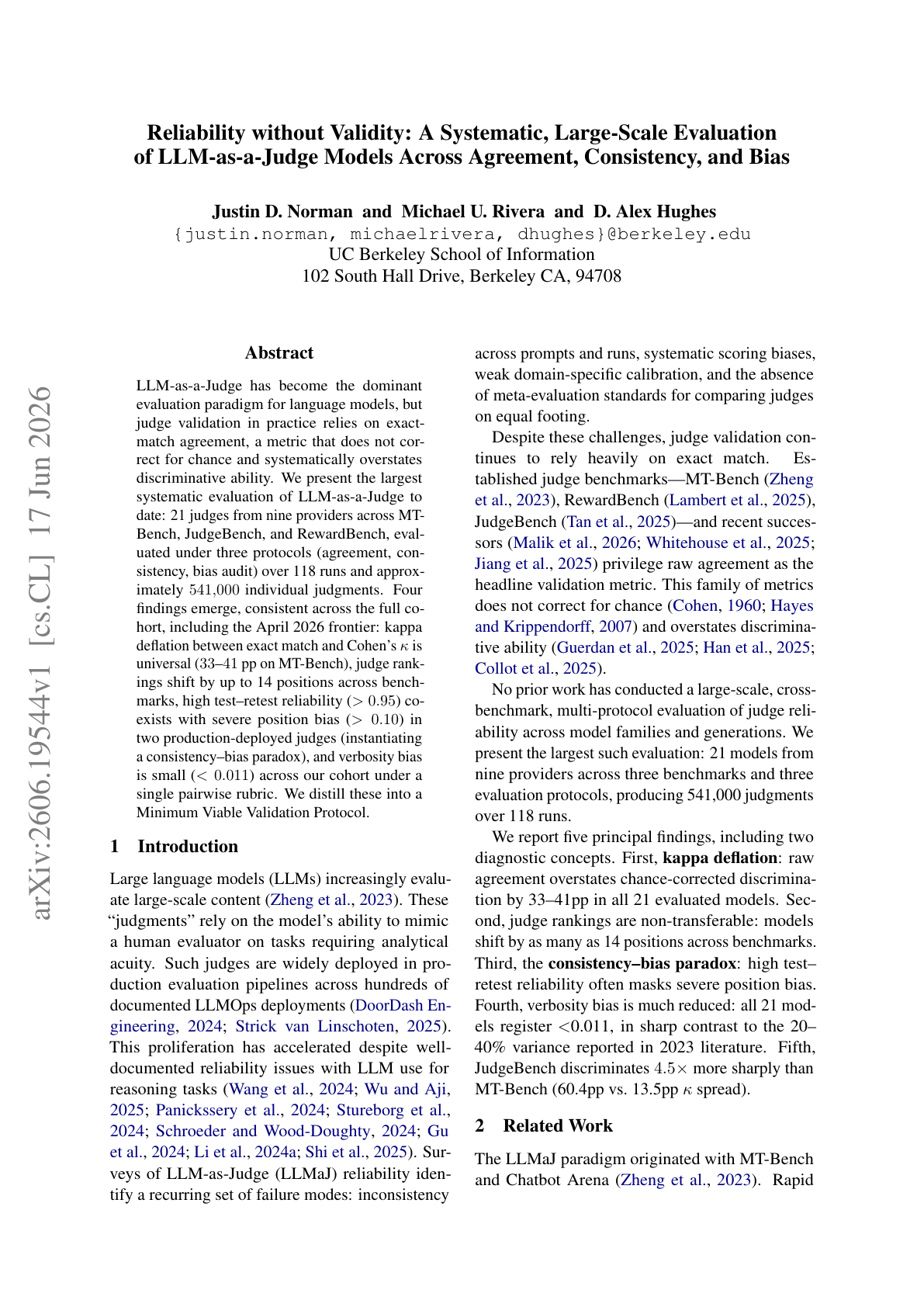
LLM-as-a-Judge is the default way to evaluate language models, but validating those judges with exact-match agreement never corrects for chance and systematically overstates how good they are. In the largest audit to date, spanning 21 judges from nine providers across MT-Bench, JudgeBench, and RewardBench over 118 runs and roughly 541,000 judgments, the gap between raw agreement and chance-corrected Cohen's kappa runs 33 to 41 percentage points, rankings shift by up to 14 positions across benchmarks, and high test-retest reliability coexists with severe position bias. The authors distill their findings into a Minimum Viable Validation Protocol so teams can stress-test judges before trusting them.
NatureBench
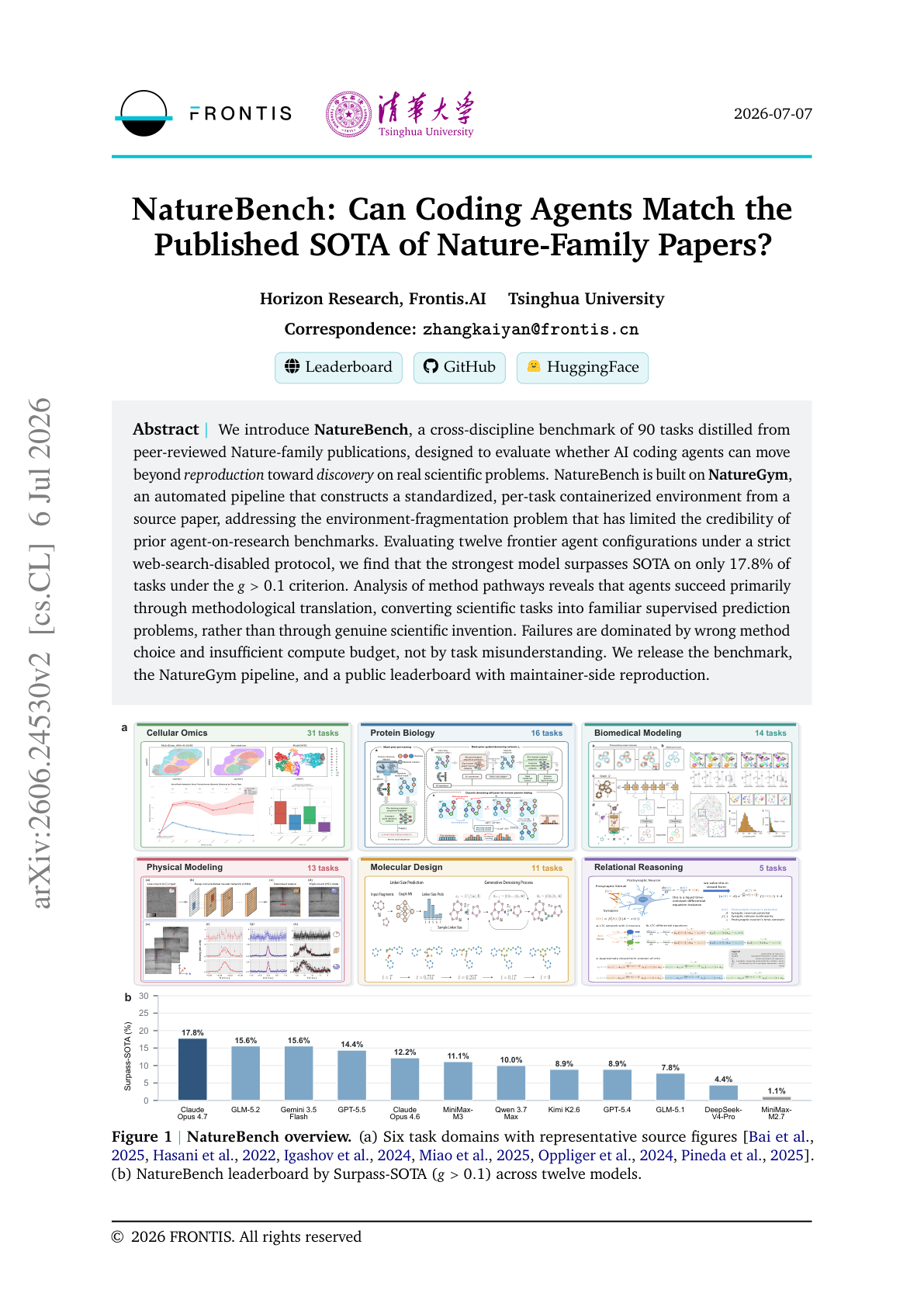
Can coding agents move past reproduction toward actual discovery on real scientific problems? NatureBench distills 90 cross-discipline tasks from peer-reviewed Nature-family papers and runs them in NatureGym, an automated pipeline that builds a standardized containerized environment per task to fix the environment-fragmentation problem. Under a strict web-search-disabled protocol, the strongest of ten frontier agent configurations beats published SOTA on only 17.8% of tasks, and analysis shows agents win mainly by translating problems into familiar supervised prediction rather than through genuine scientific invention.