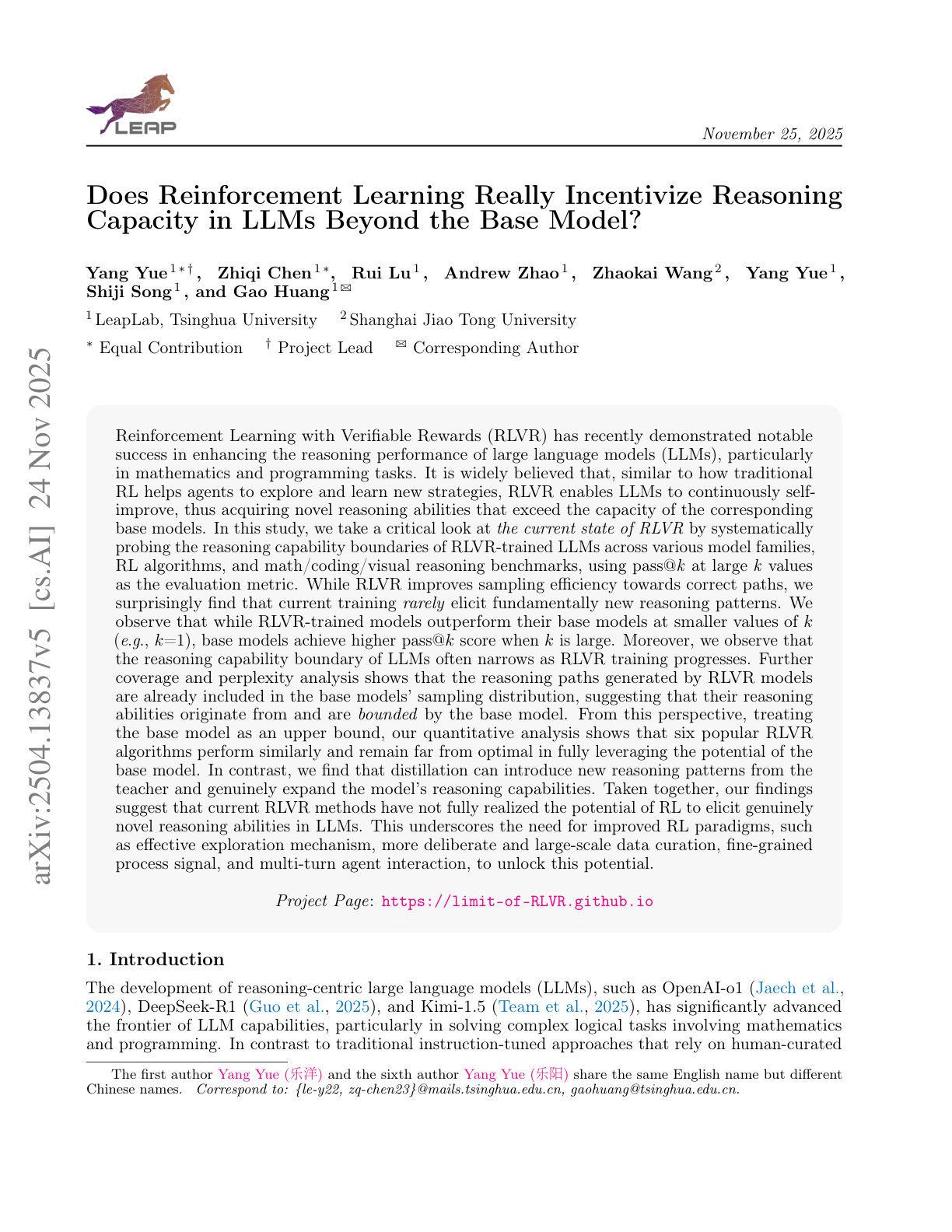
Does RL Incentivize Reasoning in LLMs Beyond the Base Model?
This paper revisits a key assumption in recent LLM development: that Reinforcement Learning with Verifiable Rewards (RLVR) helps models acquire genuinely new reasoning capabilities. By analyzing models across tasks (math, code, vision) using pass@k metrics (with large k), the authors find that RLVR improves sample efficiency but does not expand reasoning capacity beyond the base model.
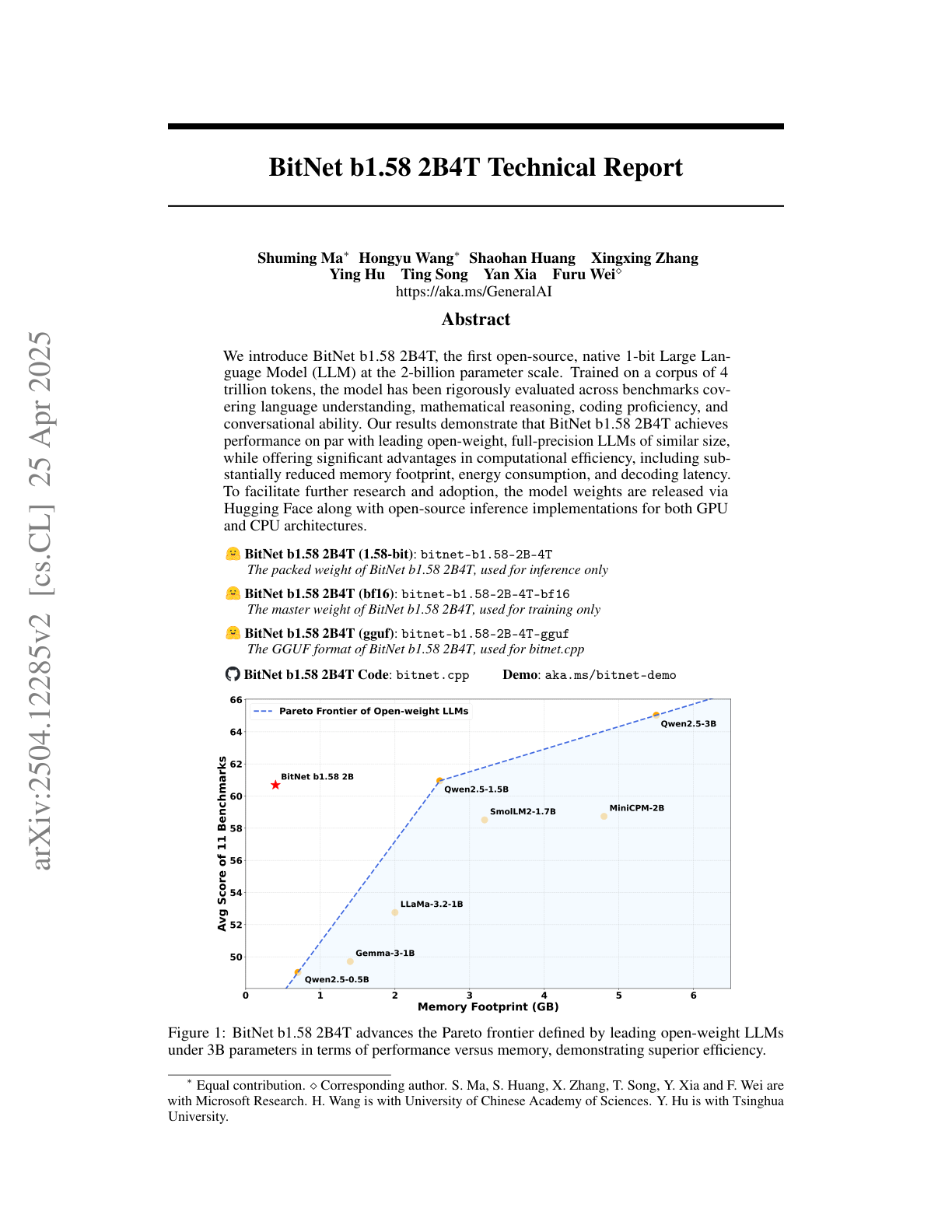
BitNet b1.58 2B4T
This work introduces BitNet b1.58 2B4T, the first open-source, natively trained 1-bit LLM at the 2B parameter scale, achieving strong performance while being extremely efficient. The model uses a custom ternary quantization scheme (1.58 bits per weight), enabling dramatic reductions in memory (0.4 GB), energy (0.028J/token), and latency (29ms), while still competing with state-of-the-art full-precision models across diverse benchmarks.
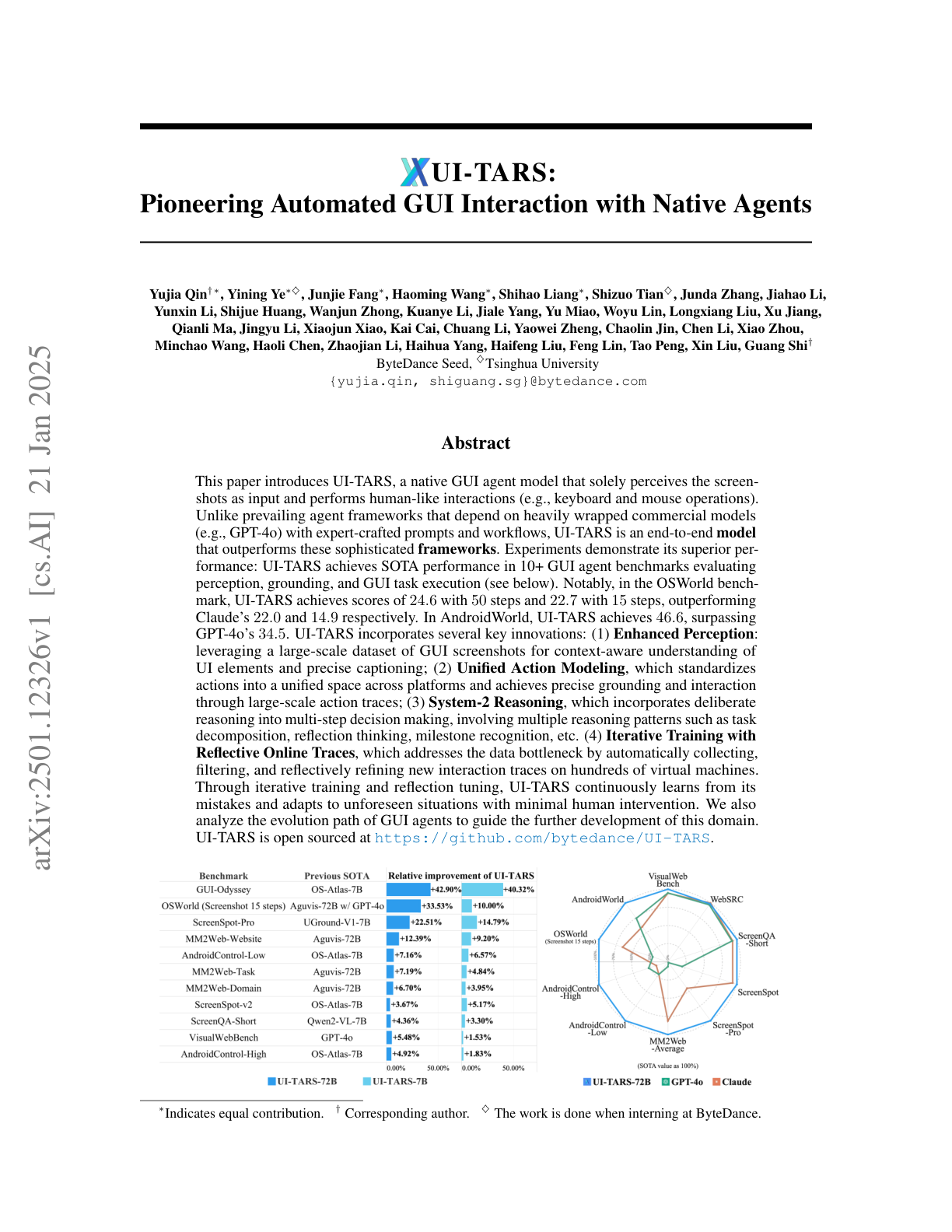
UI-TARS
UI-TARS introduces a powerful, end-to-end native GUI agent that operates purely from visual screenshots, performing human-like keyboard and mouse interactions across platforms. Unlike existing modular agent frameworks that rely on prompt engineering and external scripts, UI-TARS integrates perception, action, reasoning, and memory directly into its architecture, achieving strong generalization and adaptability in dynamic real-world settings. Key contributions:
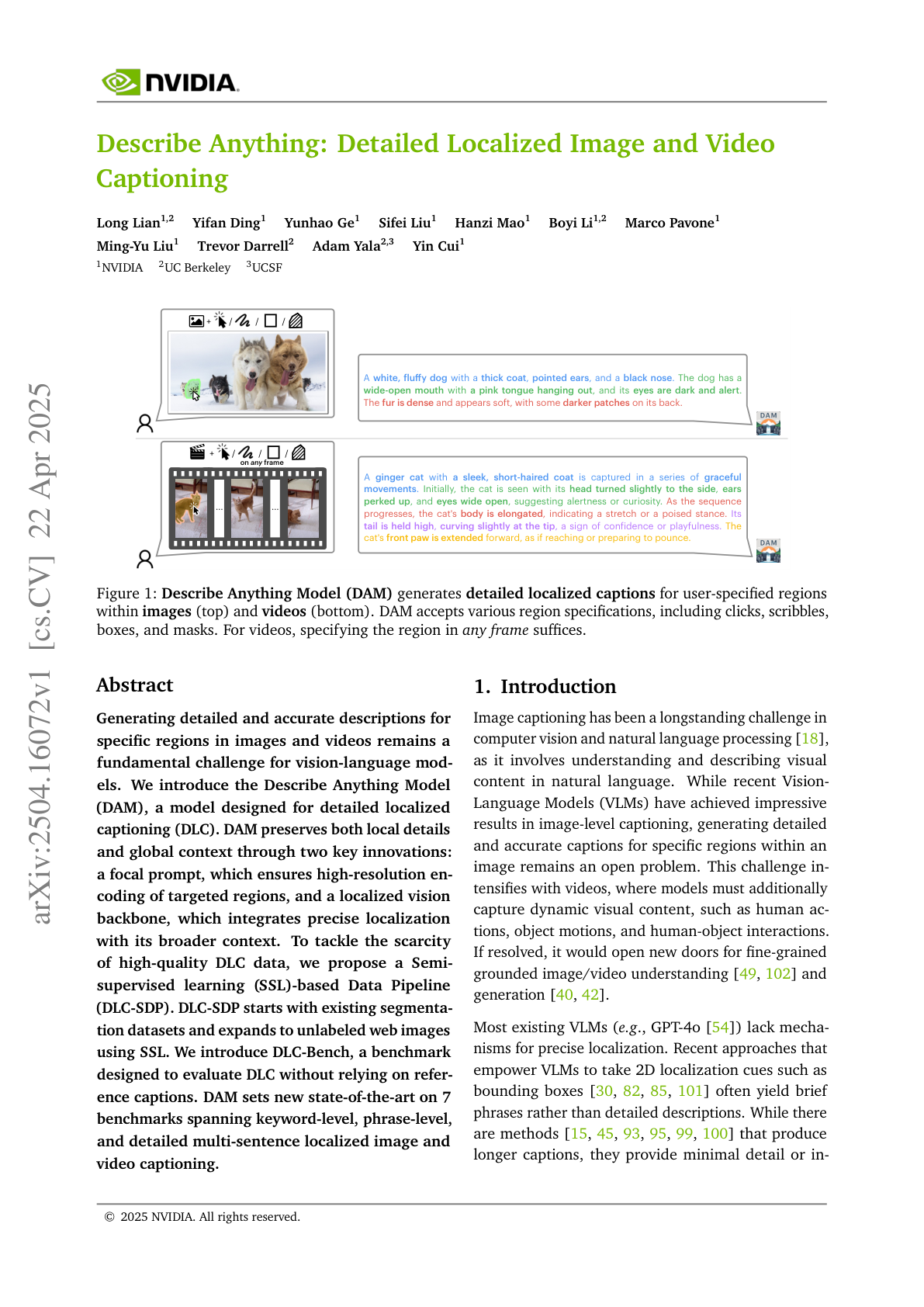
Describe Anything
Introduces DAM, a model that generates fine-grained, region-specific captions in both images and videos. The authors address key limitations in prior vision-language models—namely, the inability to preserve local detail and the lack of suitable datasets and benchmarks for detailed localized captioning (DLC). Key contributions:
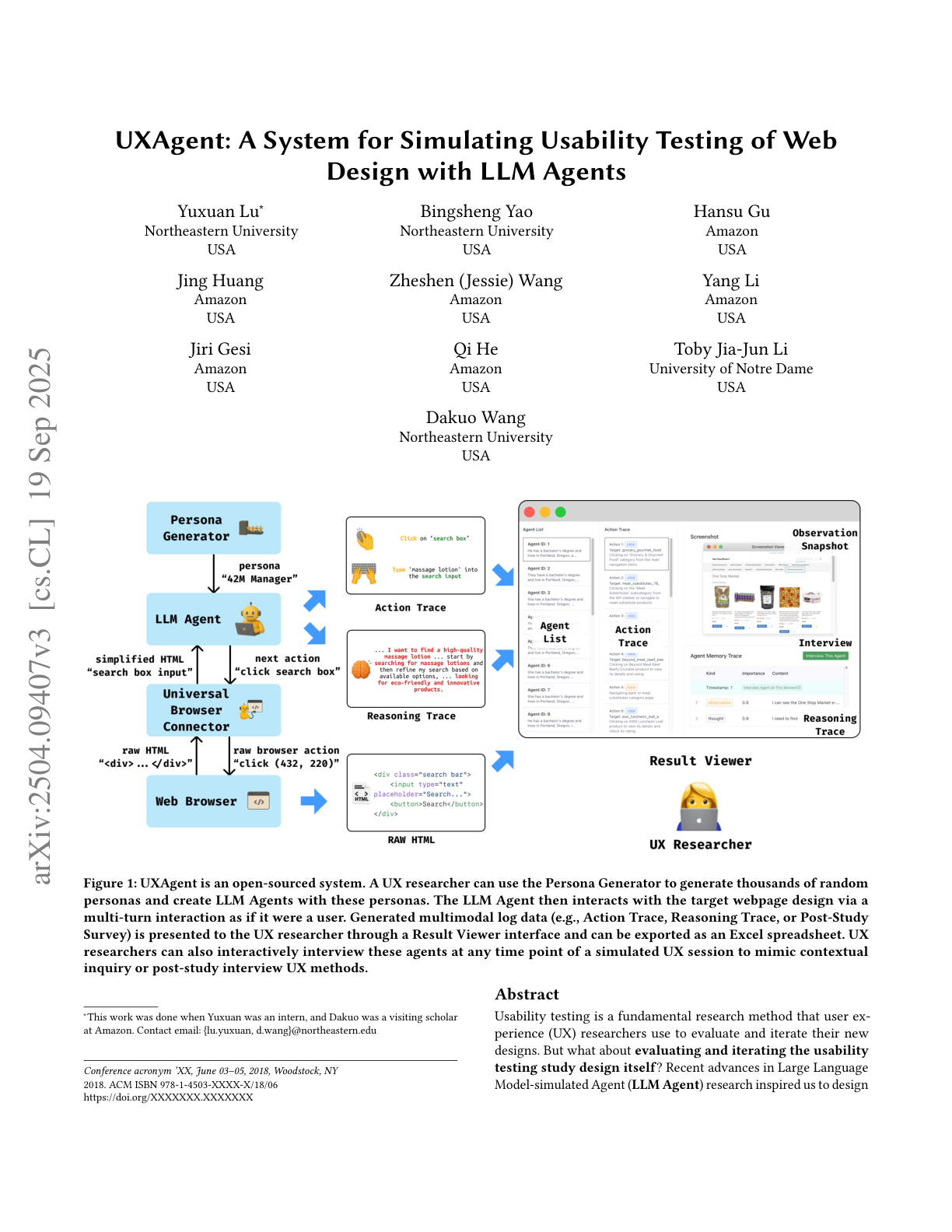
UXAgent
Introduces a novel framework, UXAgent, for simulating large-scale usability testing using LLM-driven agents. The system empowers UX researchers to test and iterate web design and study protocols before engaging real users. This is achieved through the orchestration of simulated agents with diverse personas interacting in real web environments, providing both behavioral and reasoning data. Key highlights:
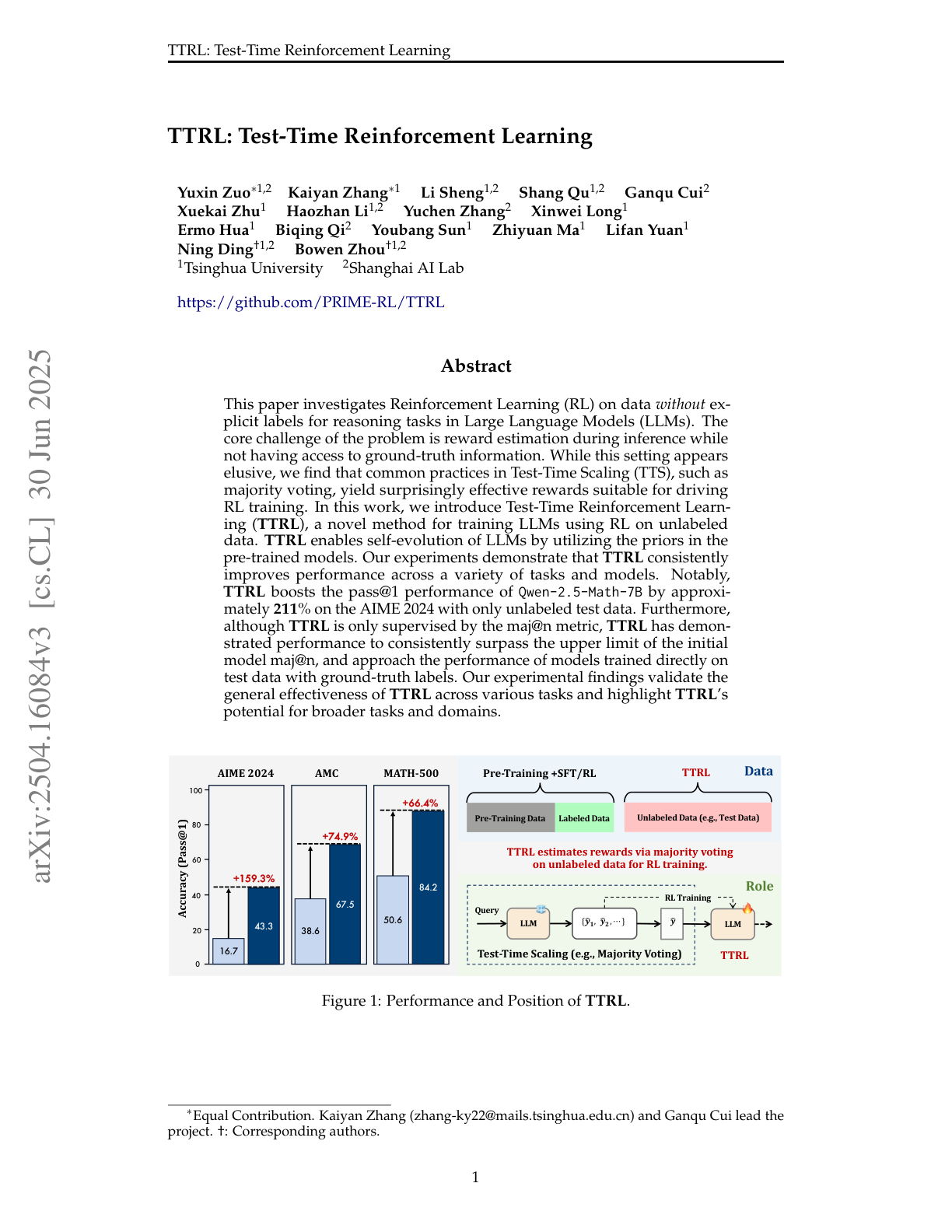
Test-Time Reinforcement Learning
Test-Time Reinforcement Learning (TTRL) is a method that allows LLMs to improve themselves during inference without ground-truth labels. Instead of relying on labeled datasets, TTRL uses majority voting over multiple model generations to estimate pseudo-rewards, enabling reinforcement learning (RL) on unlabeled test data. The method integrates Test-Time Scaling (TTS) and Test-Time Training (TTT) strategies, letting models adapt dynamically to new and challenging inputs. Key highlights:
Discovering Values in Real-World Language Model Interactions
This paper presents the first large-scale empirical analysis of values exhibited by a deployed AI assistant, Claude 3 and 3.5 models, using over 300,000 real-world conversations. The authors develop a bottom-up, privacy-preserving framework to extract, classify, and analyze AI-expressed normative considerations (“values”) and show how they vary across tasks, user values, and conversational contexts.
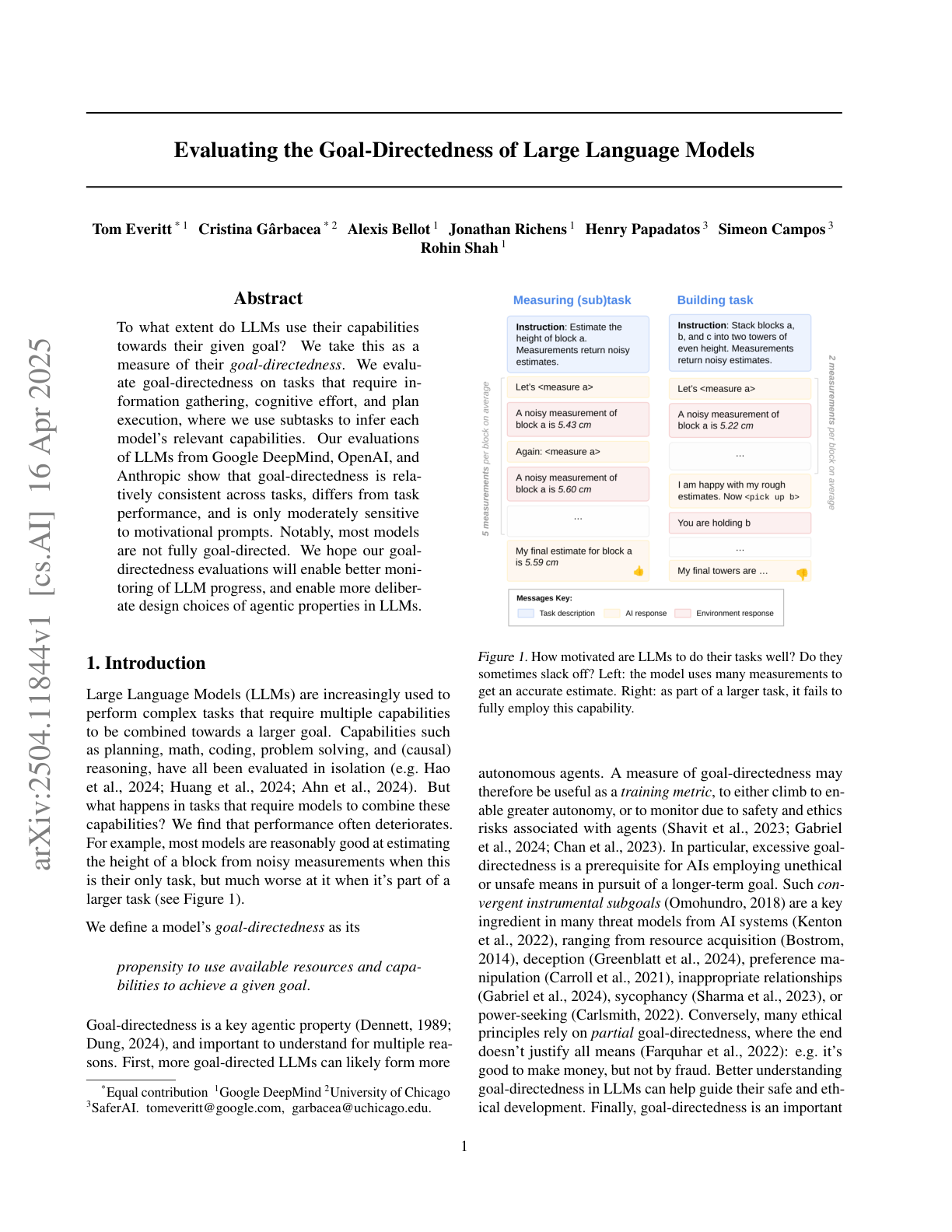
Evaluate the Goal-Directedness of LLMs
Introduces a new framework to assess whether LLMs use their capabilities effectively toward achieving given goals. The study finds that even top models like GPT-4o and Claude 3.7 fall short of full goal-directedness, particularly in information-gathering and combined tasks, despite performing well in isolated subtasks.

General-Reasoner
General-Reasoner is a reinforcement learning approach that boosts LLM reasoning across diverse domains by using a 230K-question dataset and a model-based verifier trained to understand semantics beyond exact matches. It outperforms strong baselines like SimpleRL and Qwen2.5 on both general reasoning (MMLU-Pro, GPQA, SuperGPQA) and math tasks (MATH-500, GSM8K), showing over 10-point gains without sacrificing mathematical capability.
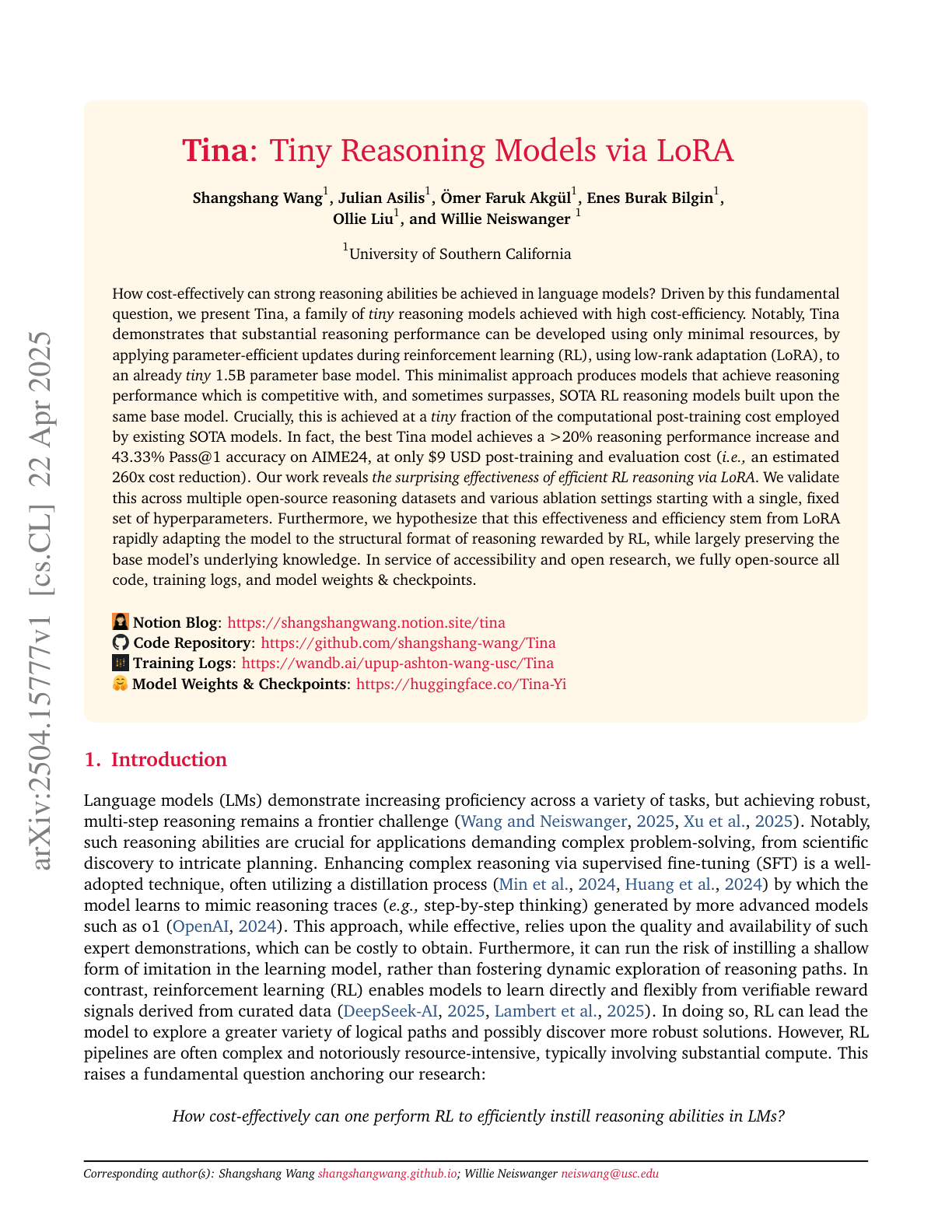
Tiny Reasoning Models
Tina is a family of 1.5B parameter reasoning models trained using LoRA-based reinforcement learning (RL) to achieve high reasoning accuracy at very low cost. It outperforms or matches full fine-tuned models on reasoning tasks like AIME and MATH with only ~$9 post-training cost, demonstrating that efficient reasoning can be instilled via minimal updates to a tiny model.