AI Papers of the Week
Every paper worth reading in AI, hand-picked one week at a time.
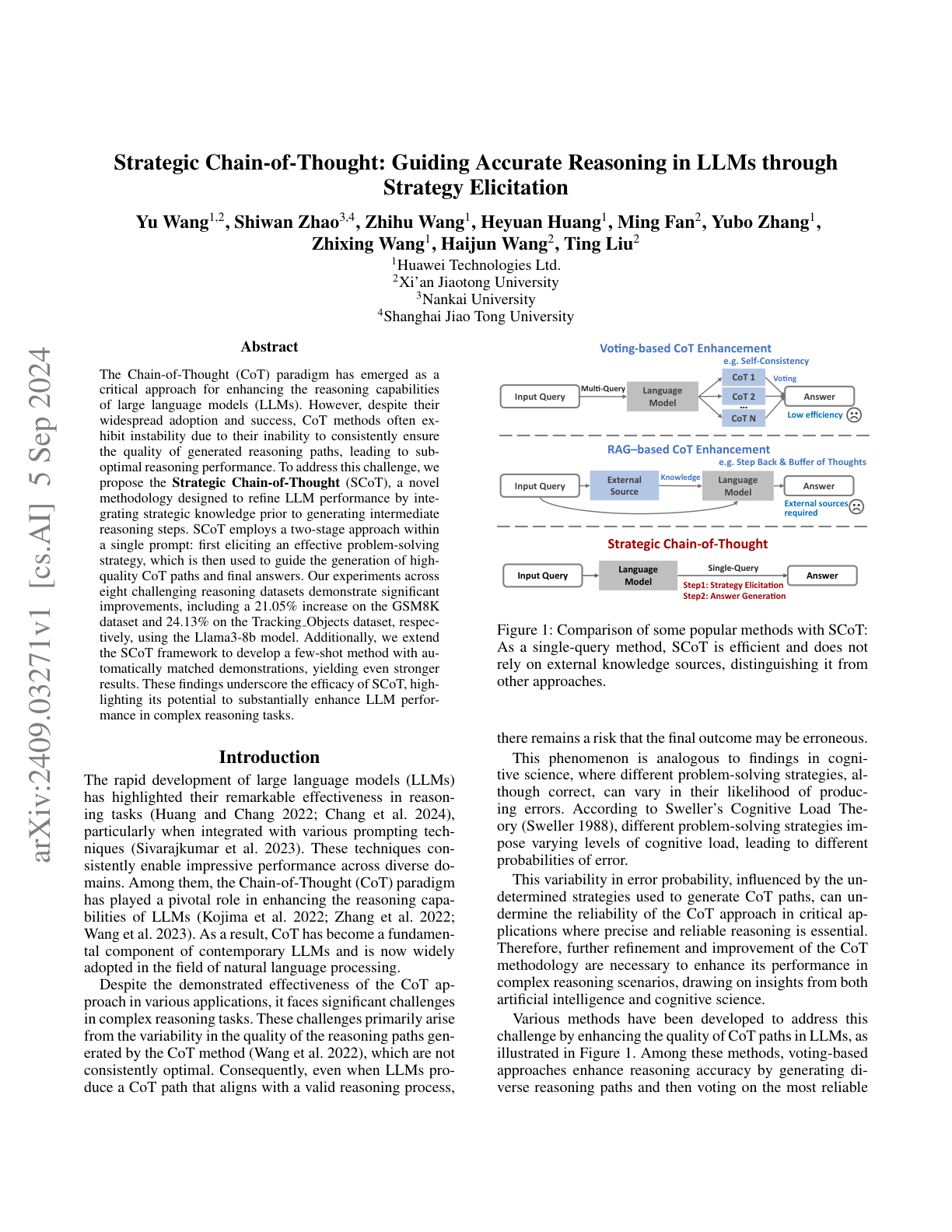
Strategic Chain-of-Thought
a method to refine LLM performance by incorporating strategic knowledge before the intermediate CoT reasoning steps; the problem-solving strategy helps to guide the generation of the CoT paths and final answers; claims to achieve a 21.05% increase on the GSM8K datasets using the Llama3-8b model.
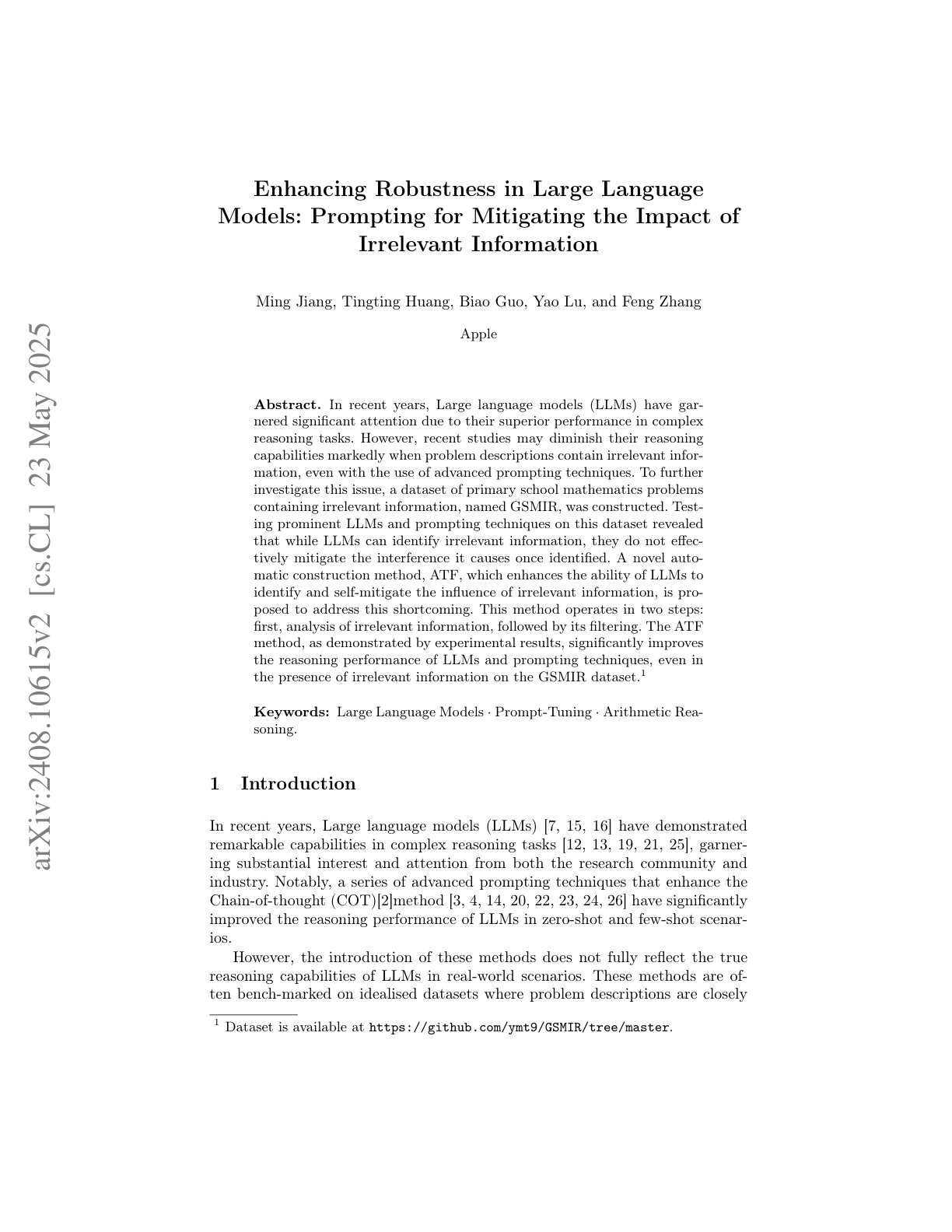
Enhancing Robustness in LLMs
proposes a two-stage prompting technique to remove irrelevant information from context; it serves as a self-mitigation process that first identifies the irrelevant information and then filters it out; this leads to enhancement in robustness of the model and overall better performance on reasoning tasks.
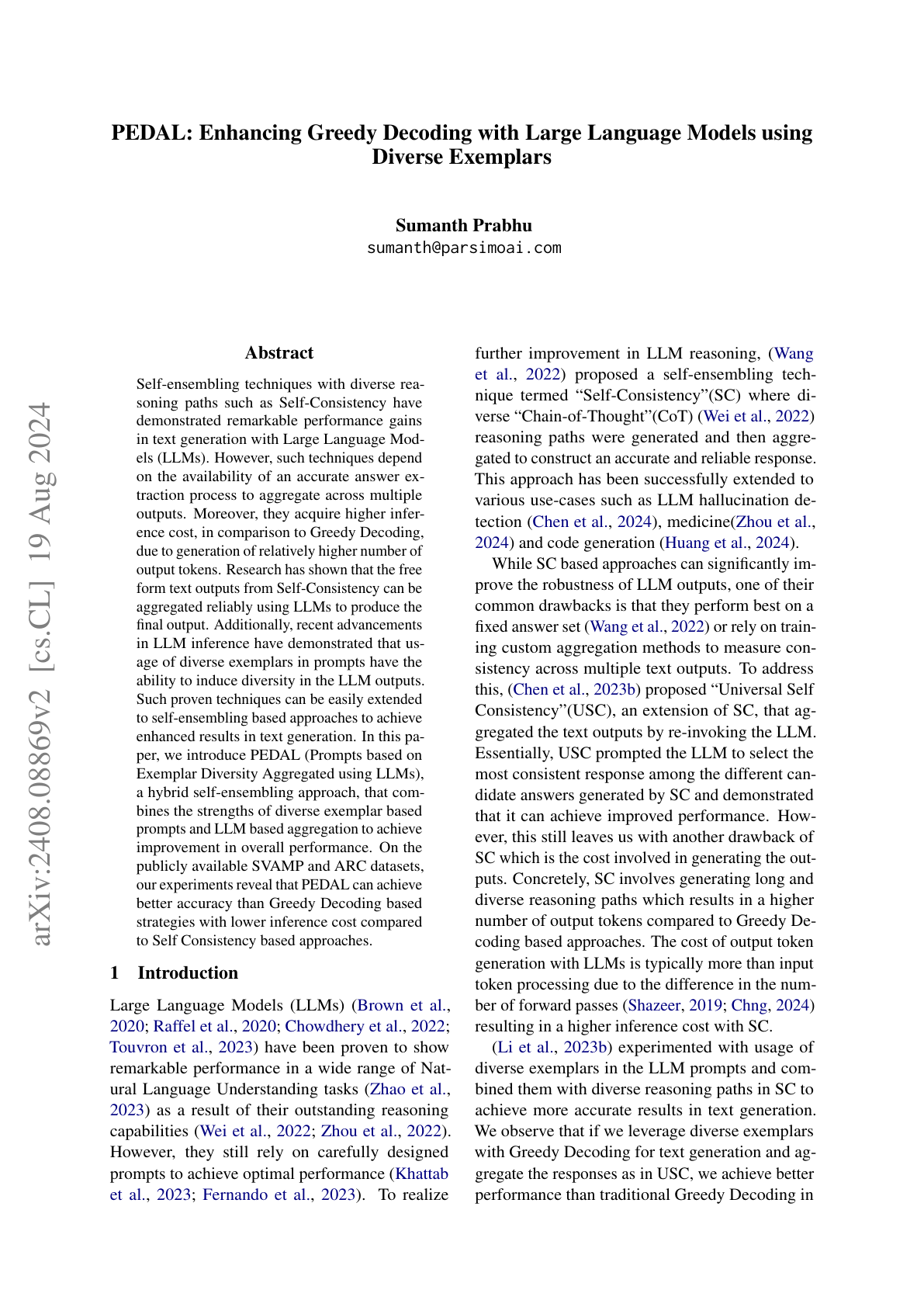
PEDAL
uses a hybrid self-ensembling approach (based on diverse exemplars) to improve the overall performance of LLMs; specifically, it uses diverse exemplars to generate multiple candidate responses and then aggregates them using an LLM to generate a final response; this approach achieves better accuracy compared to greedy decoding and lower cost compared to self-consistency approaches.

Grok-2
a new frontier model with strong code, math, and reasoning capabilities which includes a large and small model; outperforms both Claude 3.5 Sonnet and GPT-4-Turbo on the LMSYS Chatbot Arena; claims to improve capabilities including instruction following, retrieval, tool use, and enhancing factuality; competes with Claude 3.5 Sonnet (June release) and GPT-4o (May release) on MMLU and HumanEval.
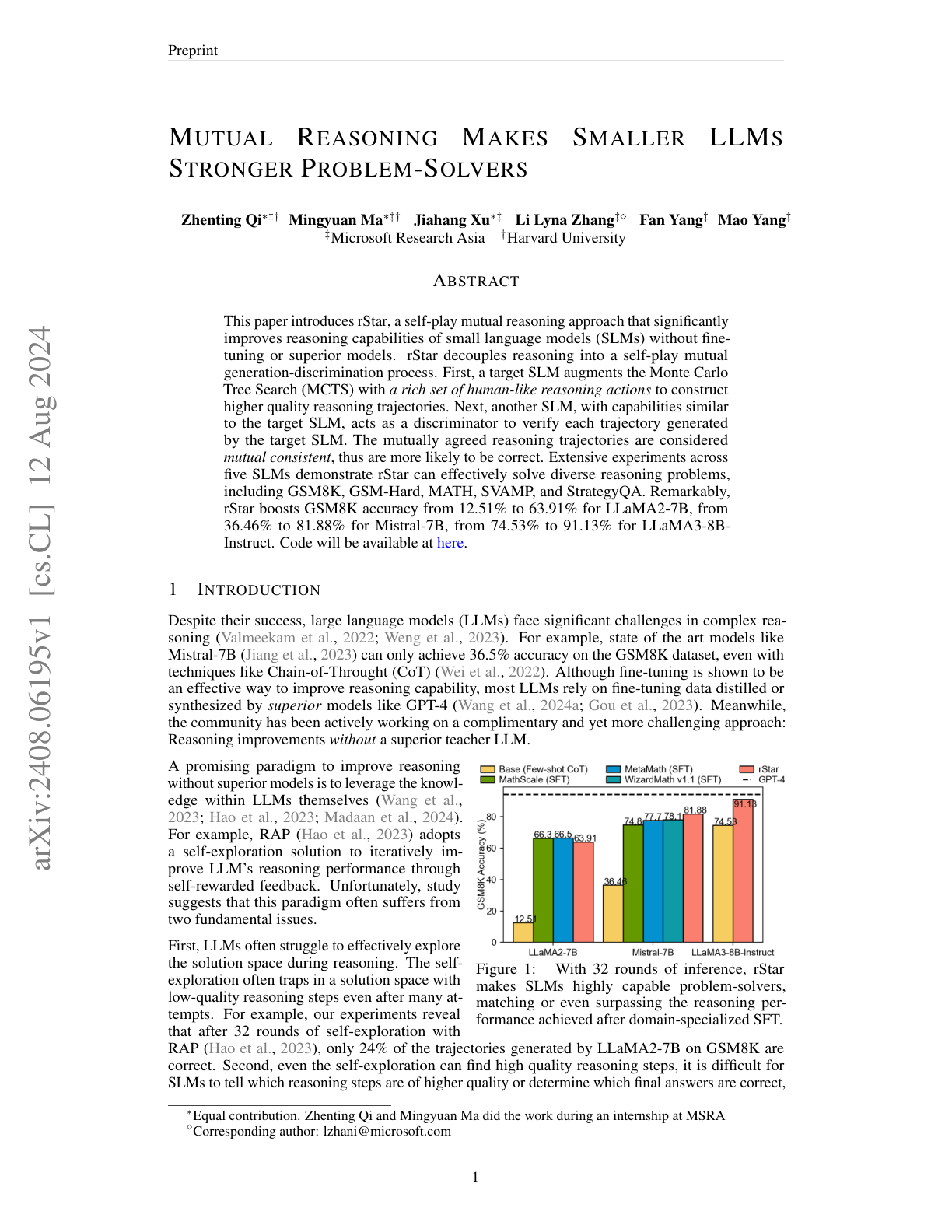
rStar
introduces self-play mutual reasoning to improve the reasoning capabilities of small language models without fine-tuning or superior models; MCTS is augmented with human-like reasoning actions, obtained from SLMs, to build richer reasoning trajectories; a separate SLM provides unsupervised feedback on the trajectories and the target SLM selects the final reasoning trajectory as the answer; rStar boosts GSM8K accuracy from 12.51% to 63.91% for LLaMA2-7B and consistently improves the accuracy of other SLMs.
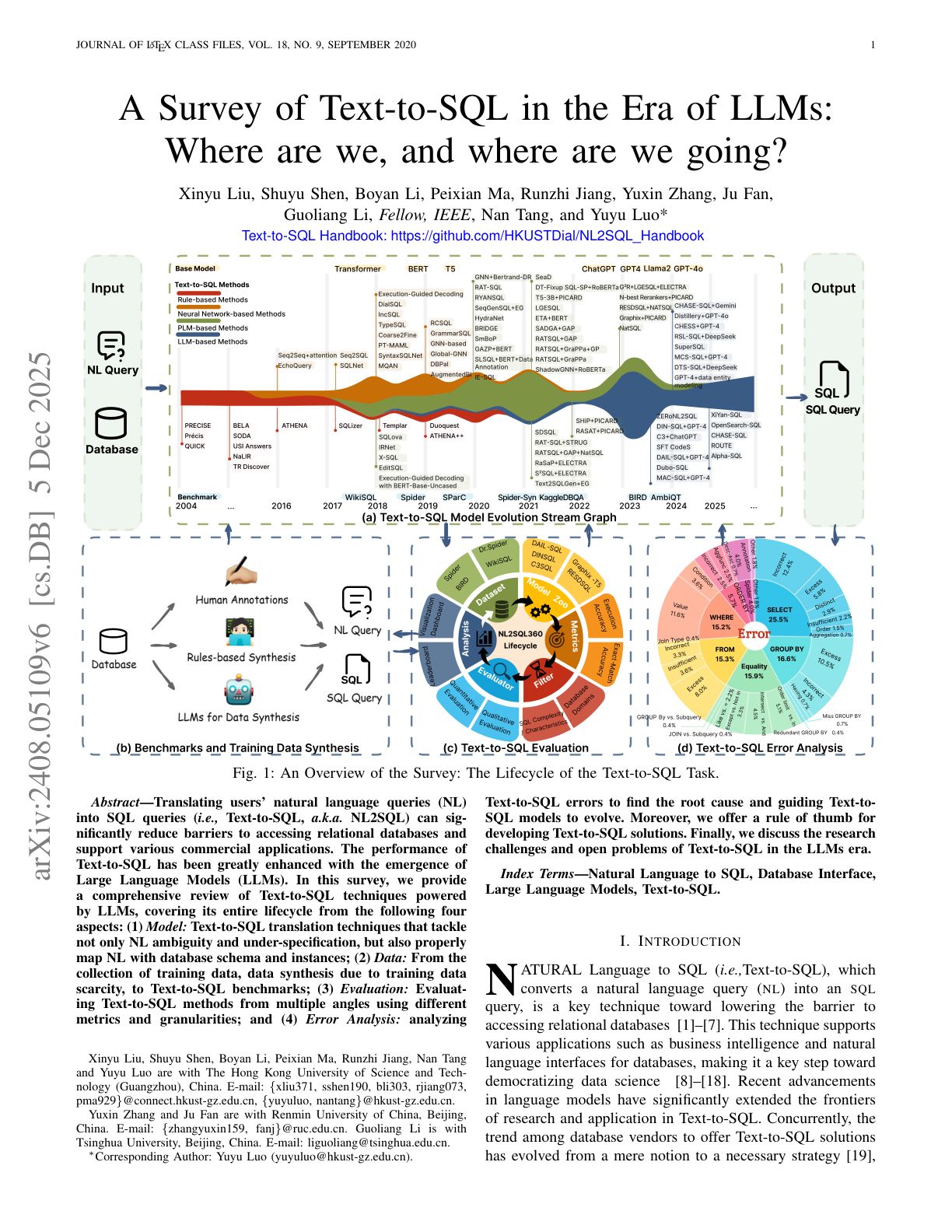
Scaling LLM Test-Time Compute Optimally
investigates the scaling behaviors of inference-time computation in LLMs; in particular, it analyses how much an LLM can be improved provided a fixed amount of inference-time compute; finds that the effectiveness of different scaling approaches varies by difficulty of prompt; it then proposes an adaptive compute-optimal strategy that can improve efficiency by more than 4x compared to a best-of-N baseline; reports that in a FLOPs-matched evaluation, optimally scaling test-time compute can outperform a 14x larger model.
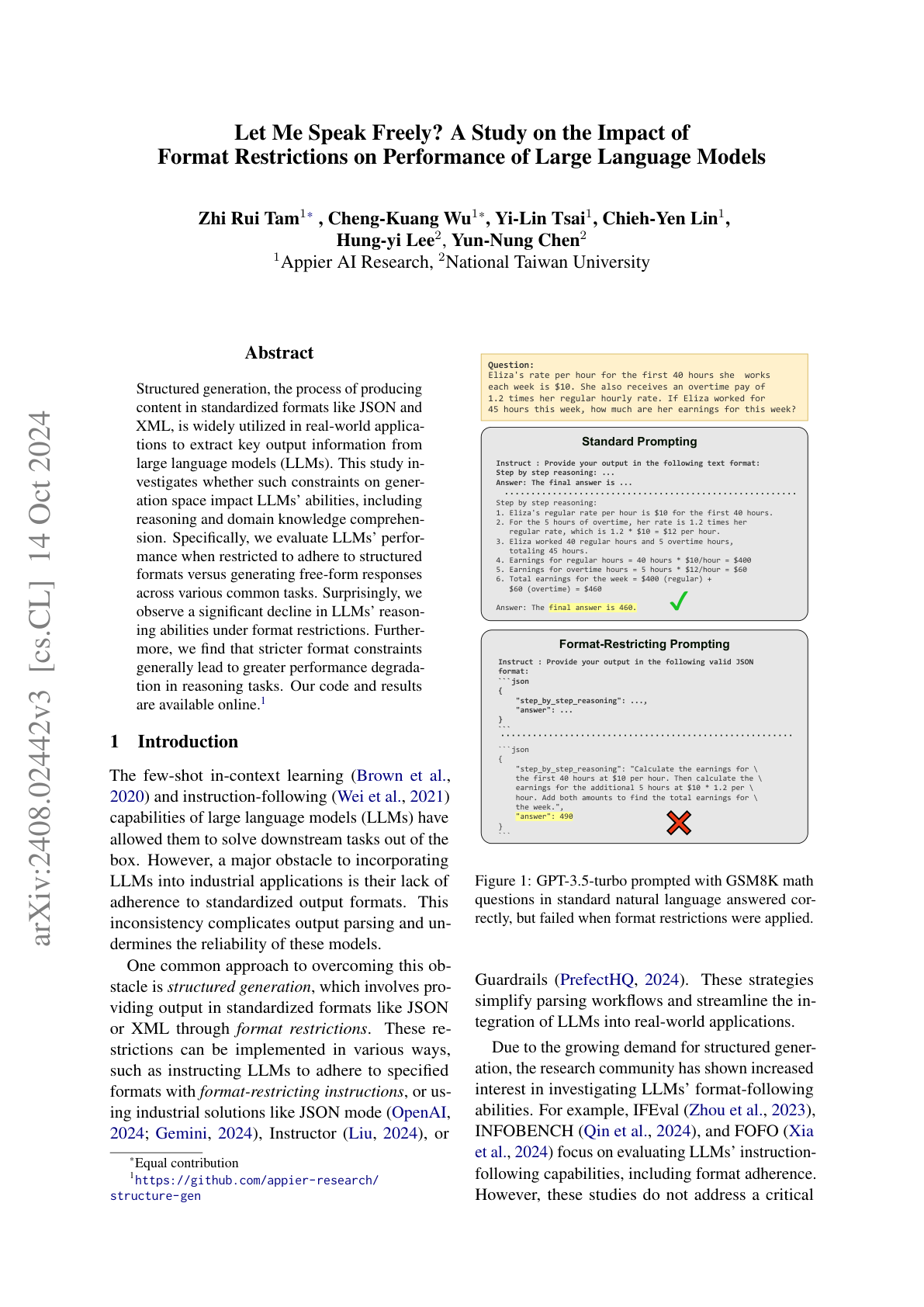
Structured Generation Limits Reasoning
investigates if structured generation can impact an LLM’s reasoning and domain knowledge comprehensive capabilities; observes that there is a significant decline in LLM’s reasoning abilities when applying format restrictions compared to free-form responses; this degradation effect is further amplified when applying stricter format constraints to reasoning tasks.
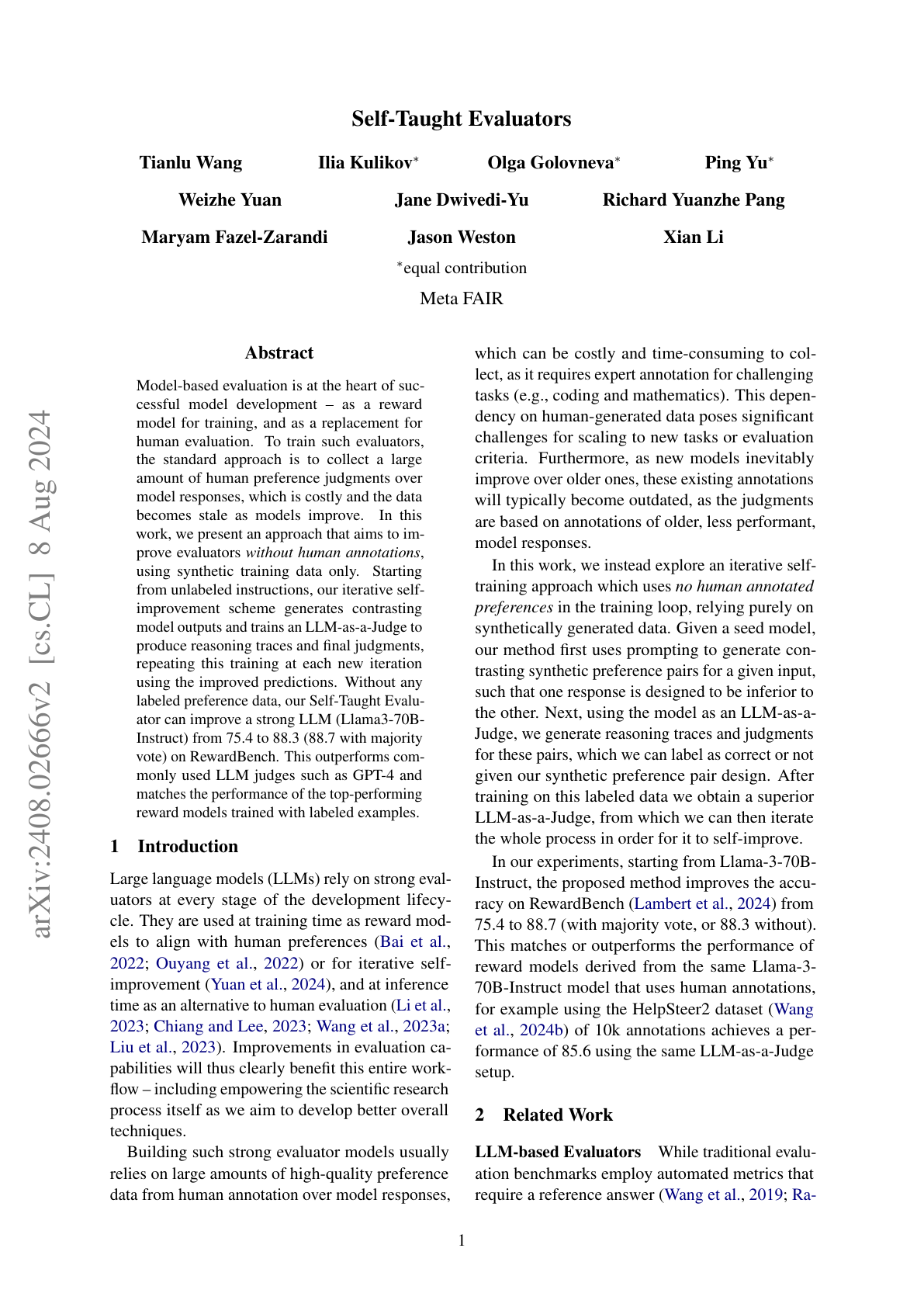
Self-Taught Evaluators
an approach to improve model-based evaluators using synthetic training data only; it first generates contrasting outputs (good and bad model responses) and trains an LLM-as-a-Judge to produce reasoning traces and final judgments; the self-improvement scheme repeats the training process in an iterative way using its improved predictions; claims to outperform LLM-judges such as GPT-4 and match top-performing reward models trained on labeled examples; improves a strong LLM (Llama3-70BInstruct) from 75.4 to 88.3 (88.7 with majority vote) on RewardBench.
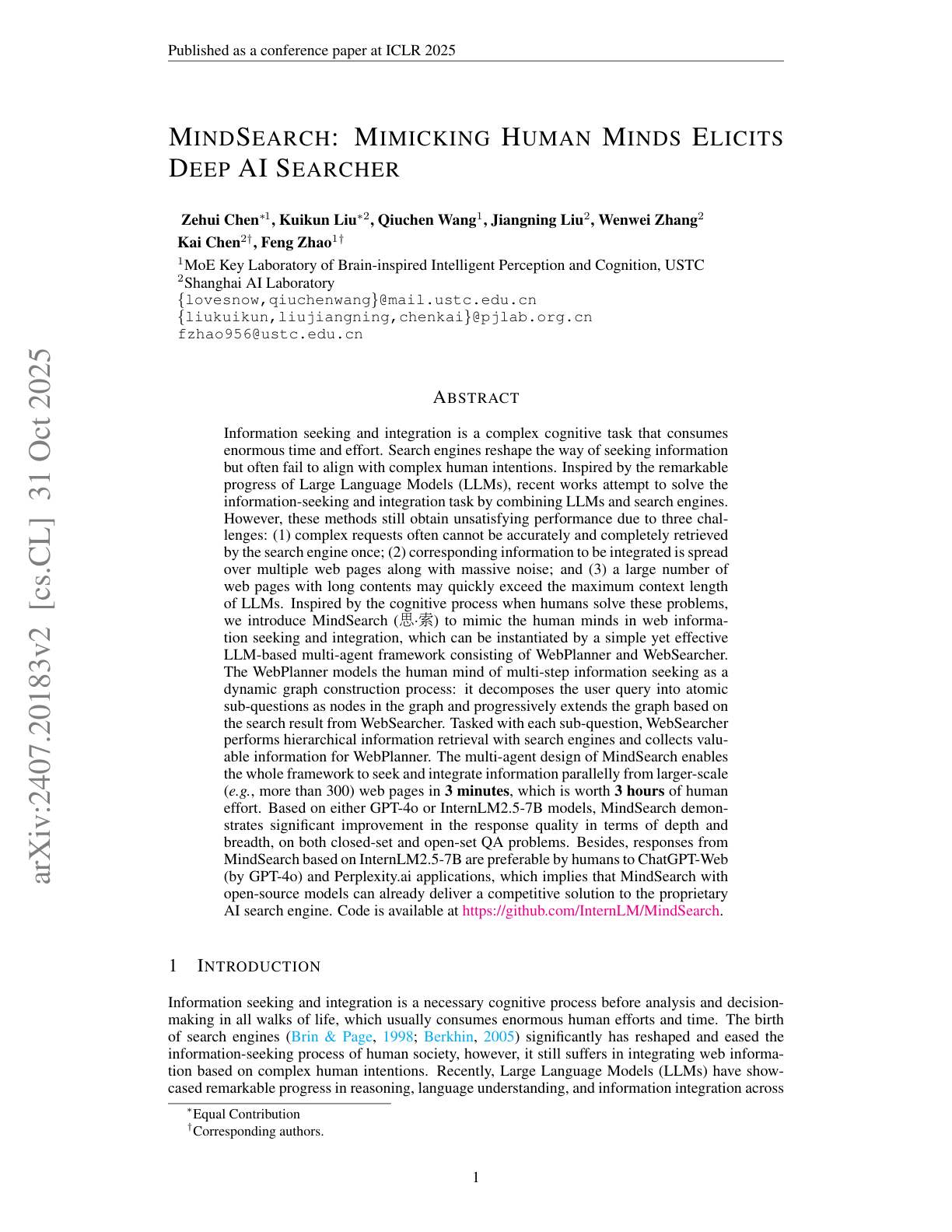
MindSearch
presents an LLM-based multi-agent framework to perform complex web-information seeking and integration tasks; a web planner effectively decomposes complex queries followed by a web searcher that performs hierarchical information retrieval on the Internet to improve the relevancy of the retrieved information; the planning component is powered by an iterative graph construction which is used to better model complex problem-solving processes; the multi-agent framework handles long context problems better by distributing reasoning and retrieval tasks to specialized agents.
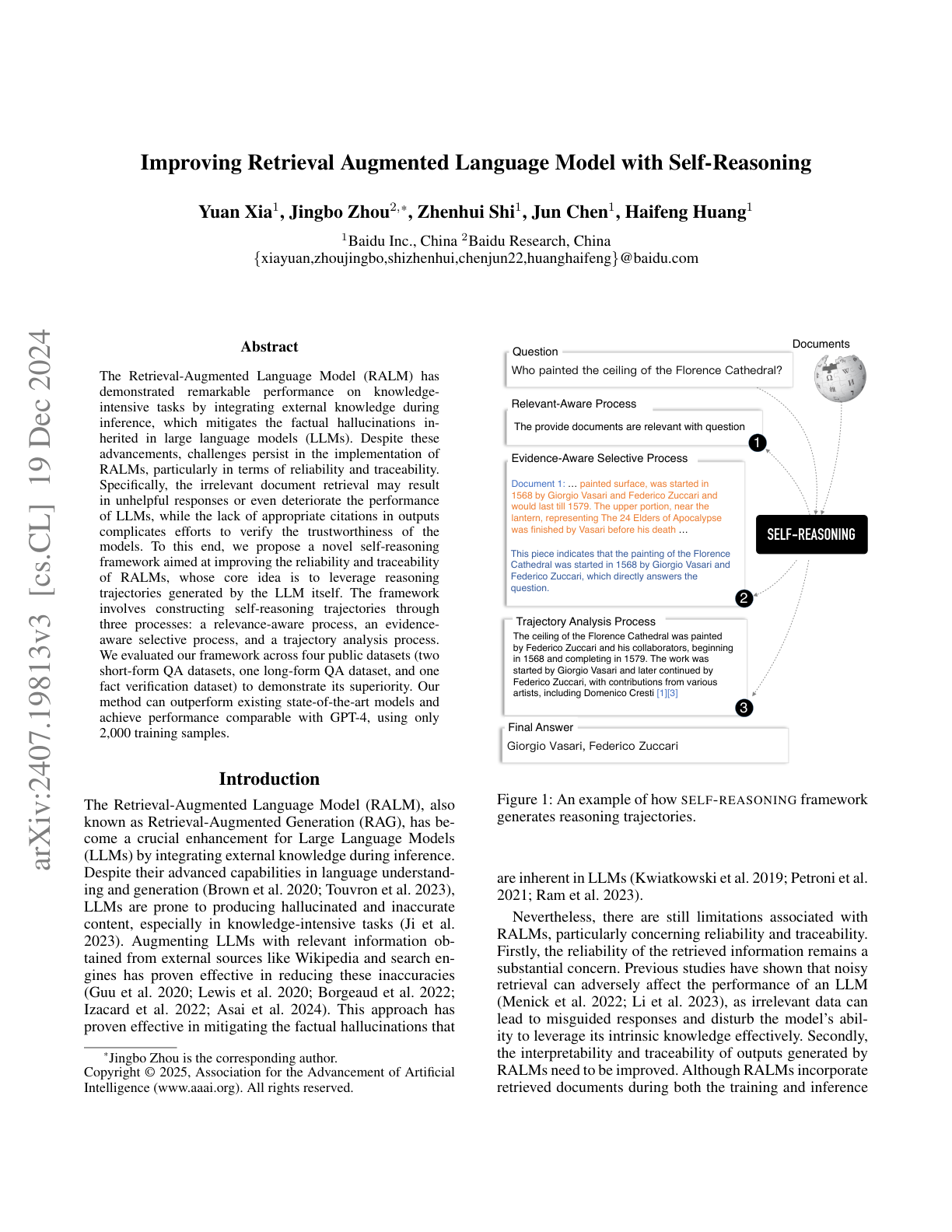
Improved RAG with Self-Reasoning
presents an end-to-end self-reasoning framework to improve the reliability and traceability of RAG systems; leverages the reasoning trajectories generated by the LLM itself; the LLM is used to carry out the following 3 processes: 1) relevance-aware: judges the relevance between the retrieved documents and the question, 2) evidence-aware selective: chooses and cites relevant documents, and then automatically selects snippets of key sentences as evidence from the cited documents, and 3) trajectory analysis: generates a concise analysis based on all gathered self-reasoning trajectories generated by the previous 2 processes and then provides the final inferred answer; this method helps the model to be more selective, reason and distinguish relevant and irrelevant documents, therefore improving the accuracy of the overall RAG system; the framework achieves comparable performance to GPT-4 with only 2K training samples (generated by GPT-4).
Constrained-CoT
limits the model reasoning output length without sacrificing performance; shows that constraining the reasoning of LLaMA2-70b to 100 words improves the accuracy from 36.01% (CoT) to 41.07% (CCoT) on GSM8K, while reducing the average output length by 28 words.

Llama 3.1
a collection of LLMs that include 8B, 70B, and 405B parameters models; supports eight languages and extends the context window to 128K tokens; performs competitively and in some cases outperforms state-of-the-art models across capabilities like general knowledge, math reasoning, and tool use.
Teaching LLM Agents to Self-Improve
claims it is possible to iteratively fine-tune LLMs with the ability to improve their own response over multiple turns with additional environment feedback; the LLM learns to recursively detect and correct its previous mistakes in subsequent iterations; improves the self-improvement abilities of 7B models on reasoning tasks (GSM8K and MATH), attaining an improvement over turns that’s unseen in strong proprietary models.
Improving Legibility of LLM Outputs
iteratively trains small verifiers to predict solution correctness, helpful provers to produce correct solutions accepted by the verifier, and sneaky provers that produce incorrect solutions that fool the verifier; this process helps train models that can produce text that is correct and easy to understand by both humans and AI systems which leads to more trustworthy systems.
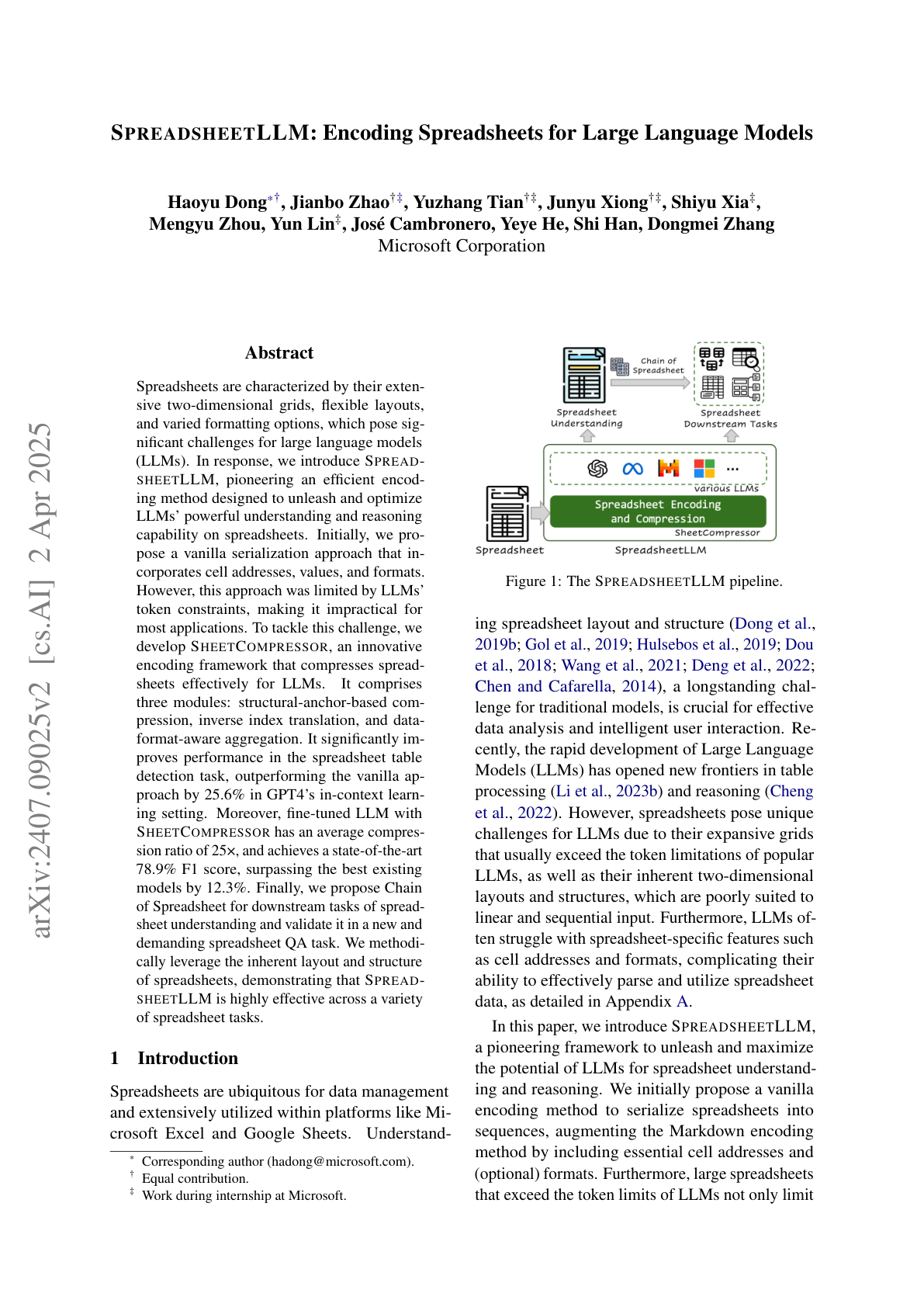
SpreadsheetLLM
presents an efficient encoding method to optimize an LLM’s understanding and reasoning capability on spreadsheets; develops a sheet compressor consisting of structural-anchor-based compression, inverse index translation, and data-format-aware aggregation modules to efficiently compress and encode spreadsheets; in GPT-4’s in-context learning, it improves performance in spreadsheet table detection by 25.6%.
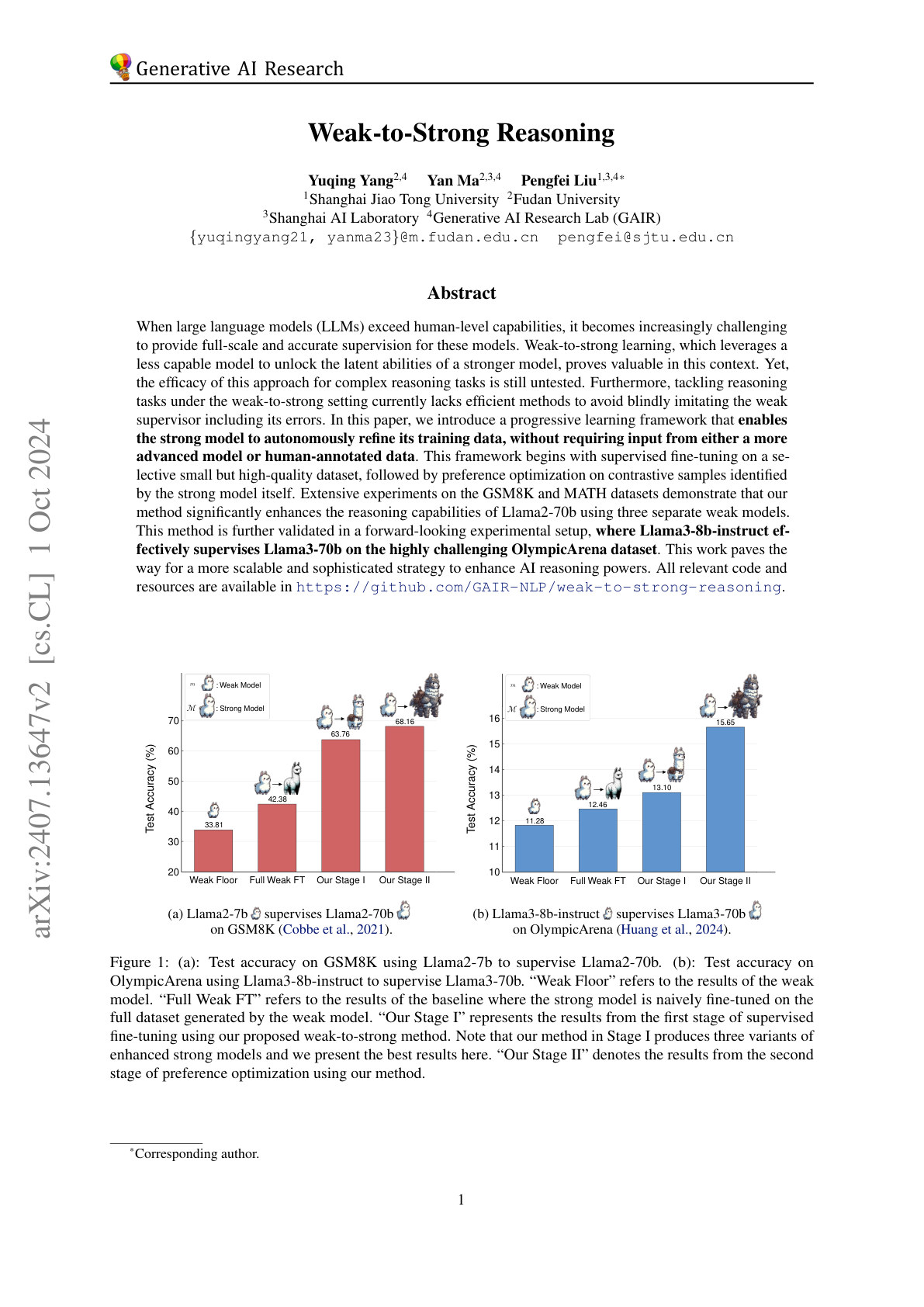
Weak-to-Strong Reasoning
demonstrates the use of weak supervision to elicit strong reasoning capabilities in LLMs without relying on human annotations or advanced models; reports that strong models can automatically refine their training data without explicitly being trained to do so; enables expanding a model's learning scope and scaling performance on reasoning.
Can LLMs Do Retrieval and Reasoning in 1 Million Context Window?
proposes a framework (NeedleBench) of progressively challenging tasks to assess the long-context retrieval and reasoning capabilities of LLMs; they also present the Ancestral Trace Challenge that increases the need for complex logical reasoning which is common in real-world long-context tasks; their findings suggest that current LLMs struggle to handle reasoning tasks with complex logical relationships, even with texts shorter than 2K tokens.
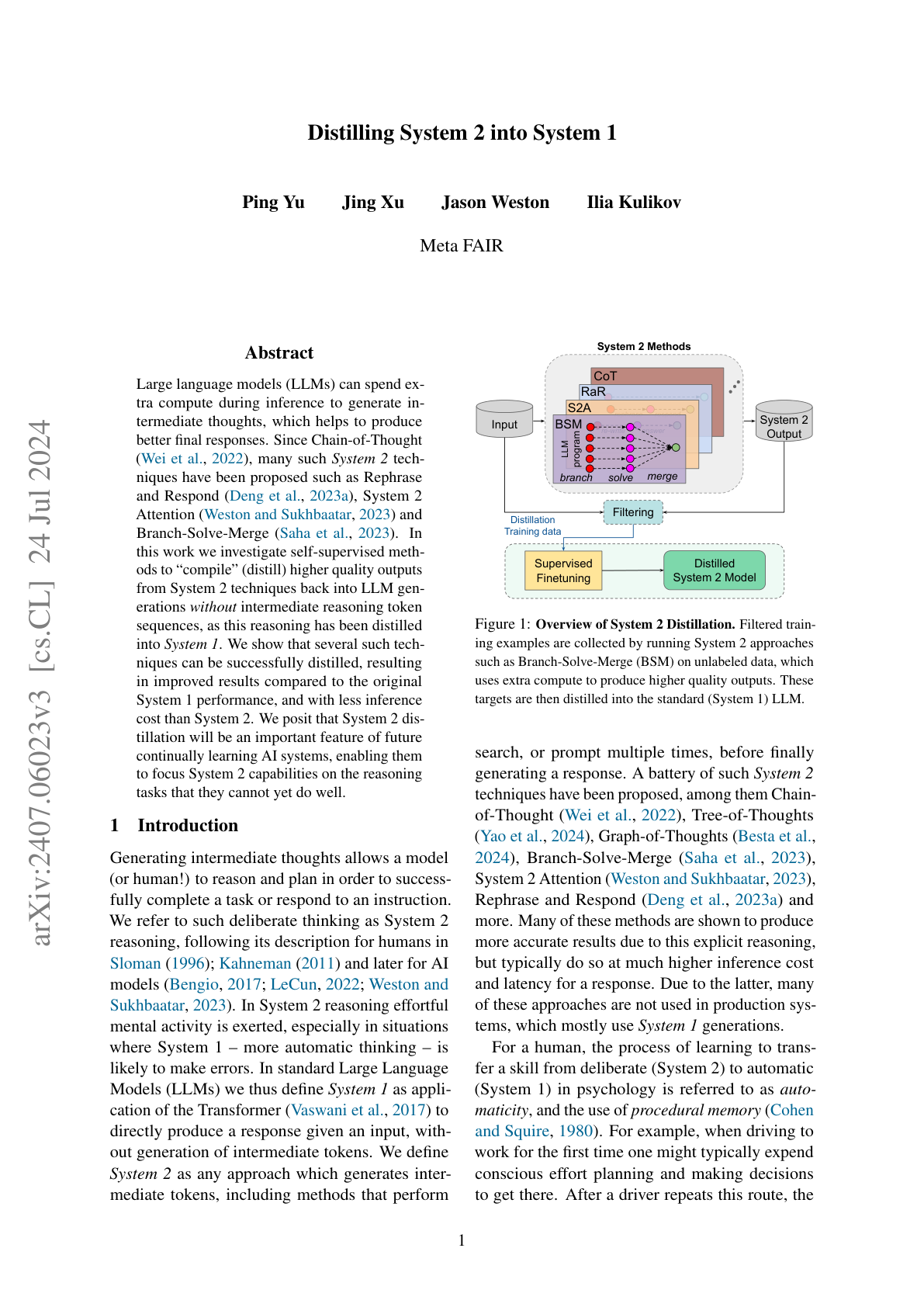
Distilling System 2 into System 1
investigates self-supervised methods to distill high-quality outputs from System 2 techniques and then fine-tune System 1 to match the predictions of the System 2 technique but without generating intermediate steps; the process of distilling reasoning into System 1 results in less inference cost.
Reasoning in LLMs: A Geometric Perspective
explores the reasoning of LLMs from a geometrical perspective; reports that a higher intrinsic dimension implies greater expressive capacity of the LLM; reports that they establish a connection between the expressive power of LLMs and the density of their self-attention graphs; their analysis demonstrates that the density of these graphs defines the intrinsic dimension of the inputs to the MLP blocks.
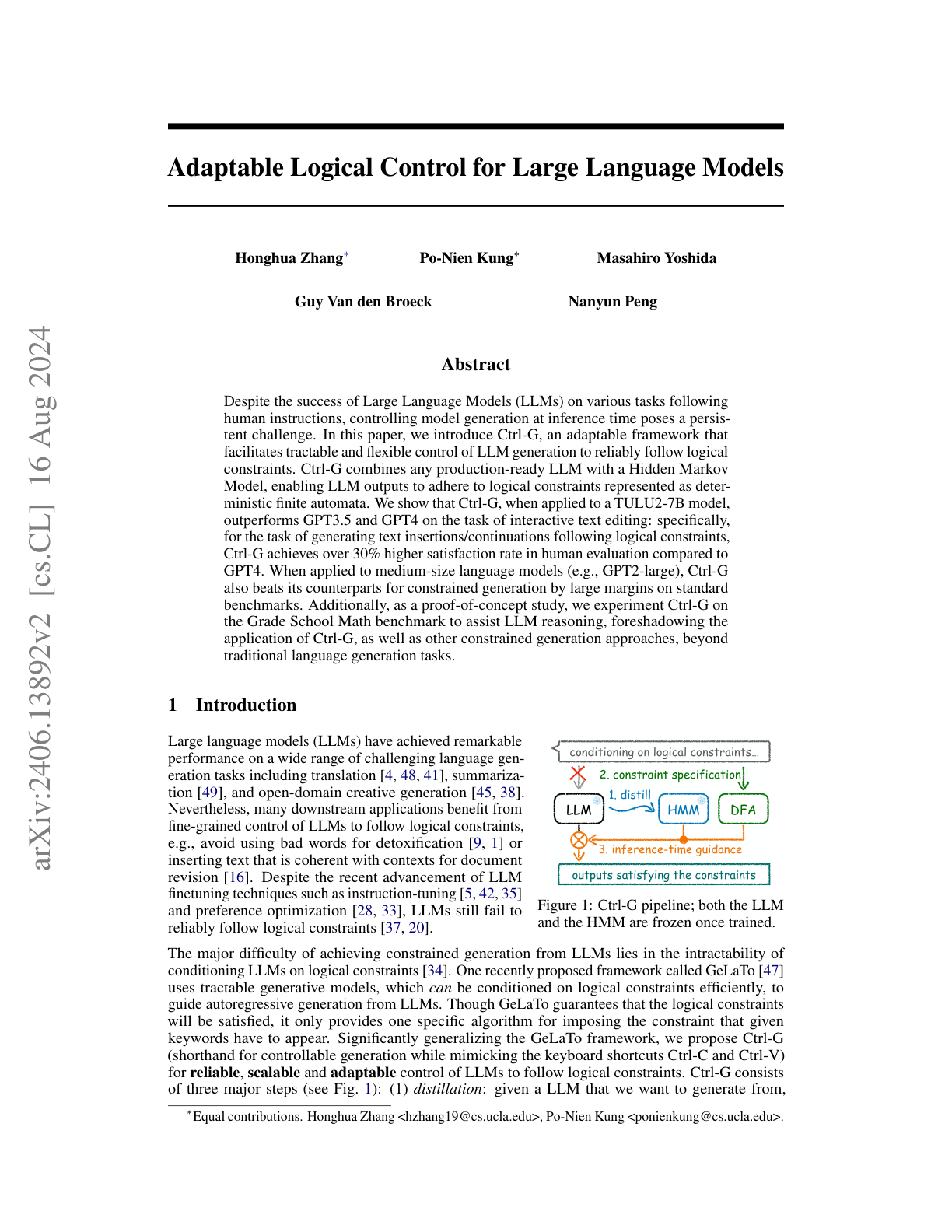
Adaptable Logical Control for LLMs
presents the Ctrl-G framework to facilitate control of LLM generations that reliably follow logical constraints; it combines LLMs and Hidden Markow Models to enable following logical constraints (represented as deterministic finite automata); Ctrl-G achieves over 30% higher satisfaction rate in human evaluation compared to GPT4.

ESM3
a new LLM-based biological model that generates a new green fluorescent protein called esmGFP; builds on a bidirectional transformer, uses masked language models for the objective function, leverages geometric attention to represent atomic coordinates, and applies chain-of-thought prompting to generate fluorescent proteins; estimates that esmGFP represents an equivalent of over 500 million years of natural evolution performed by an evolutionary simulator.
Gemma 2
presents a family of open models ranging between 2B to 27B parameters; demonstrates strong capabilities in reasoning, math, and code generation, outperforming models twice its size.
Improving Retrieval in LLMs through Synthetic Data
proposes a fine-tuning approach to improve the accuracy of retrieving information in LLMs while maintaining reasoning capabilities over long-context inputs; the fine-tuning dataset comprises numerical dictionary key-value retrieval tasks (350 samples); finds that this approach mitigates the "lost-in-the-middle" phenomenon and improves performance on both information retrieval and long-context reasoning.
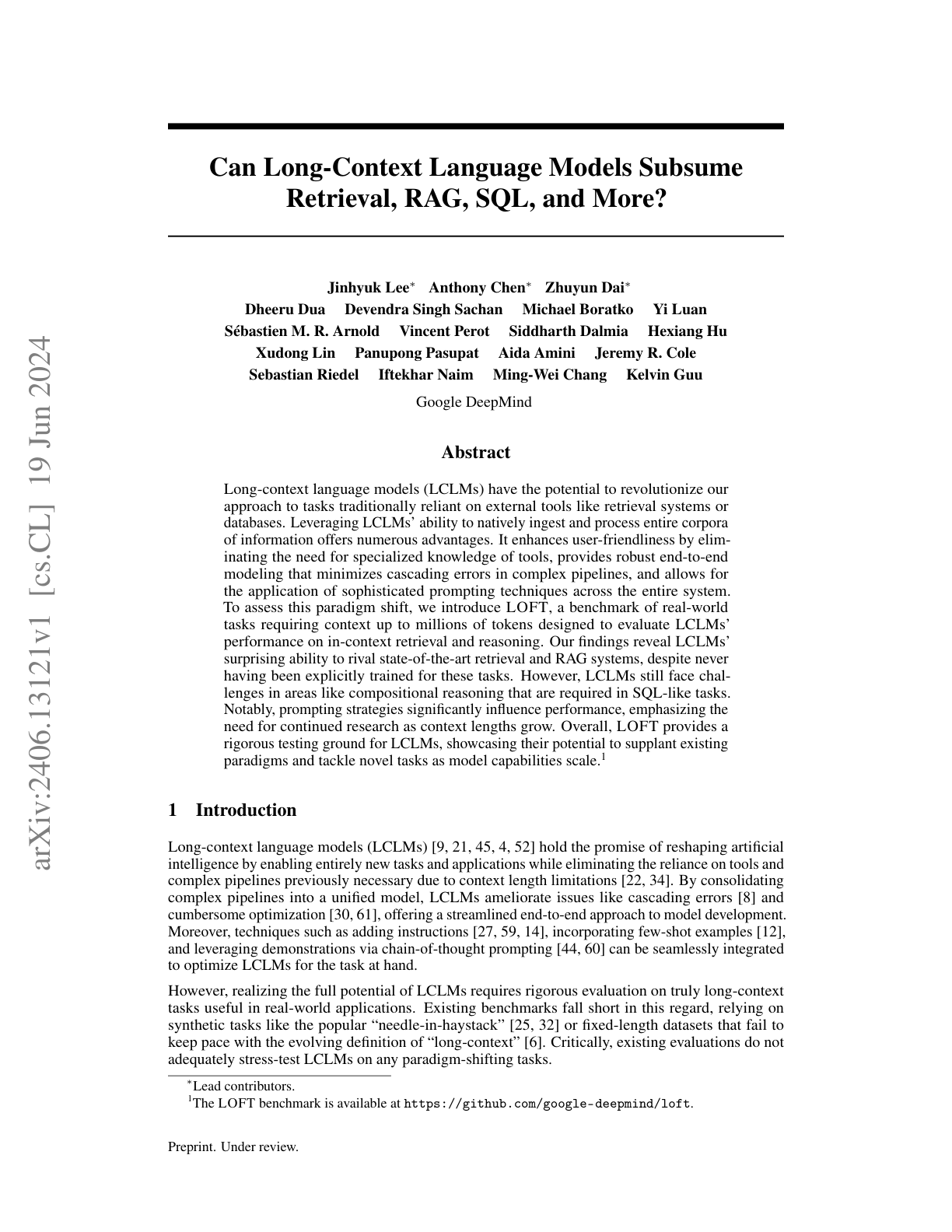
Can Long-Context Language Models Subsume Retrieval, RAG, SQL, and More?
conducts a deep performance analysis of long-context LLMs on in-context retrieval and reasoning; they first present a benchmark with real-world tasks requiring 1M token context; reports that long-context LLMs can rival state-of-the-art retrieval and RAG systems, without any explicit training on the tasks; suggests that compositional reasoning (required in SQL-like tasks) is still challenging for these LLMs; they also encourage the need for continued research on advanced prompting strategies as they noted significant boosts in performance when applying them for long context problems.