AI Papers of the Week
Every paper worth reading in AI, hand-picked one week at a time.
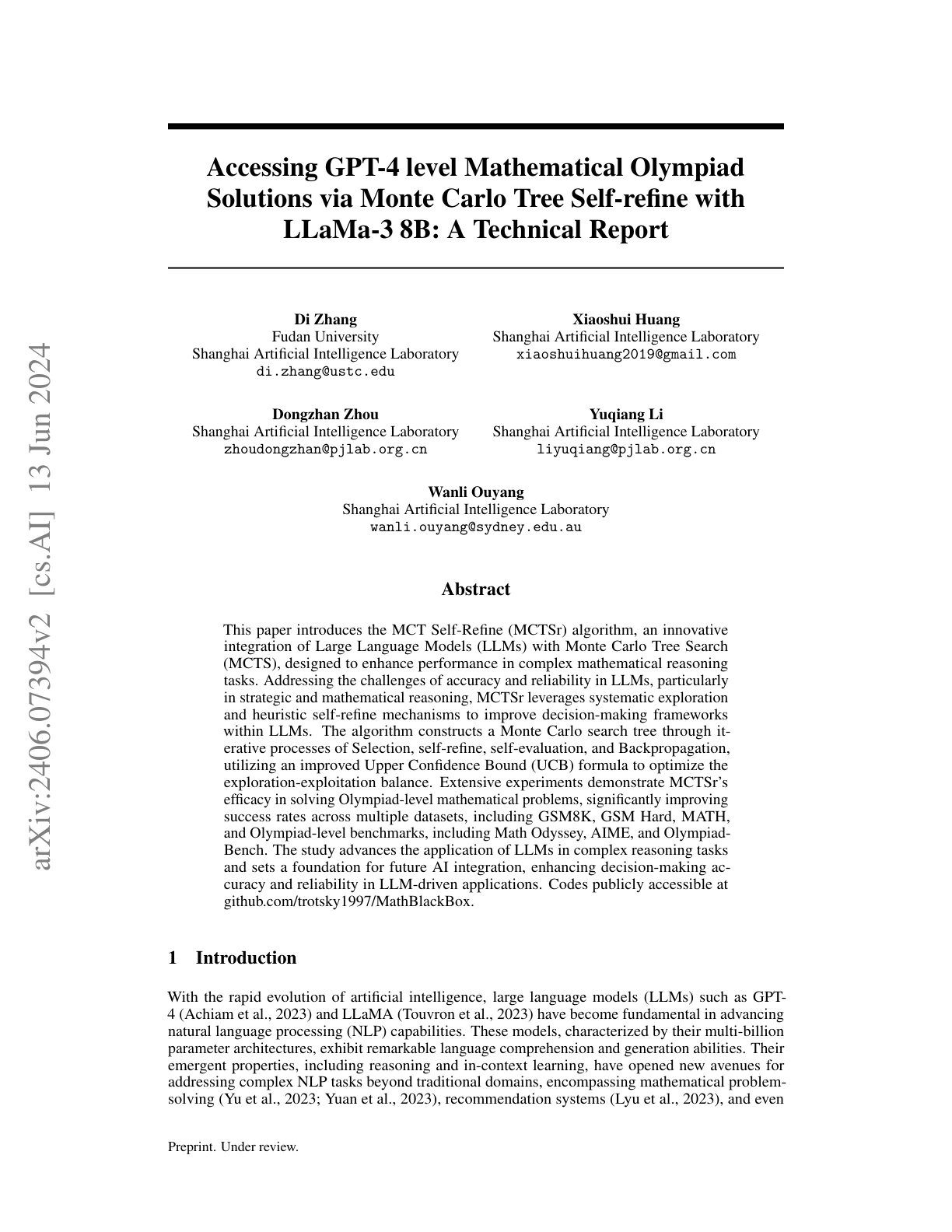
Monte Carlos Tree Self-Refine
report to have achieved GPT-4 level mathematical olympiad solution using an approach that integrates LLMs with Monte Carlo Tree Search; this approach focuses on enhancing the mathematical reasoning performance of the system through capabilities such as systematic exploration, self-refinement, and self-evaluation.
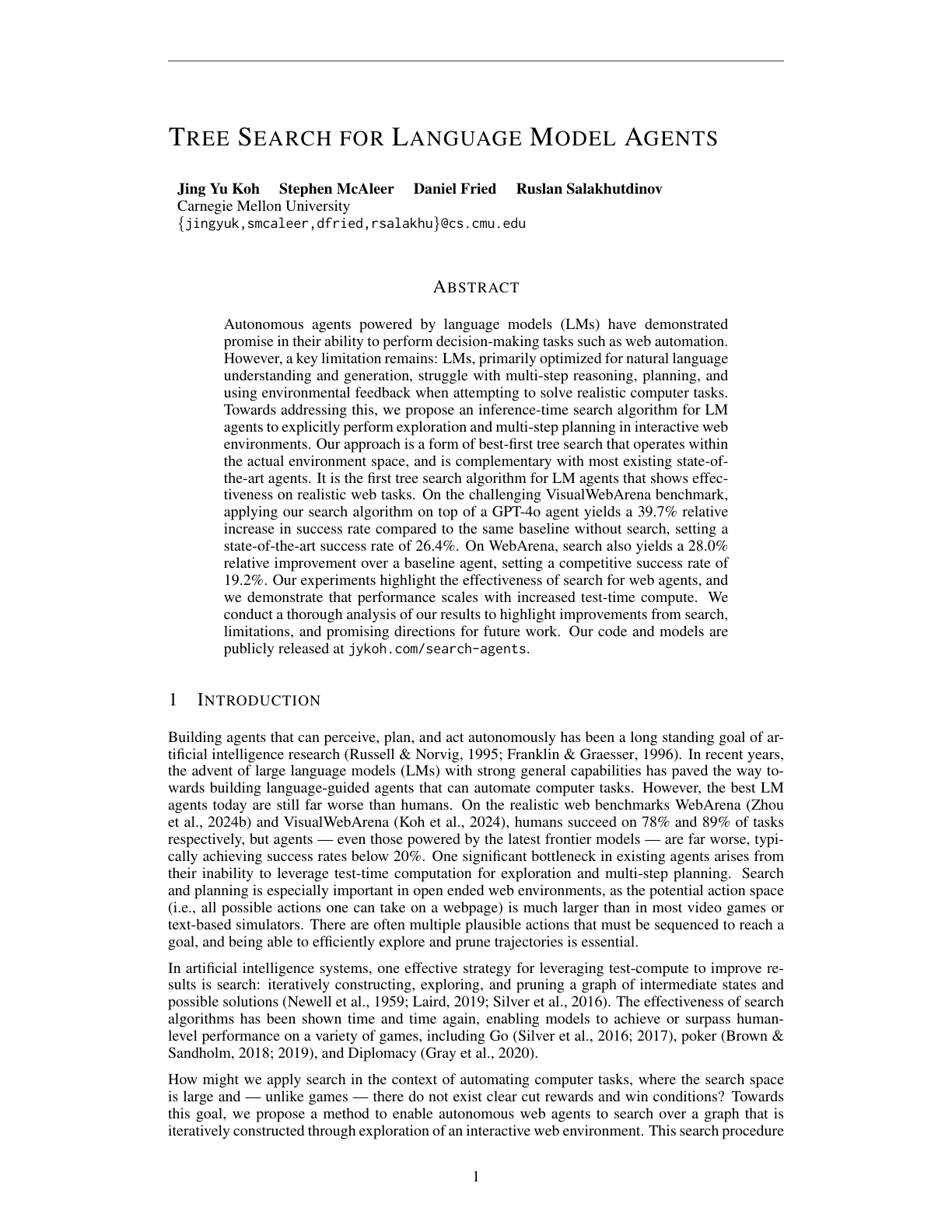
Tree Search for Language Model Agents
proposes an inference-time tree search algorithm for LM agents to perform exploration and enable multi-step reasoning; it’s tested on interactive web environments and applied to GPT-4o to significantly improve performance; demonstrates that performance scales when increasing test-time compute.
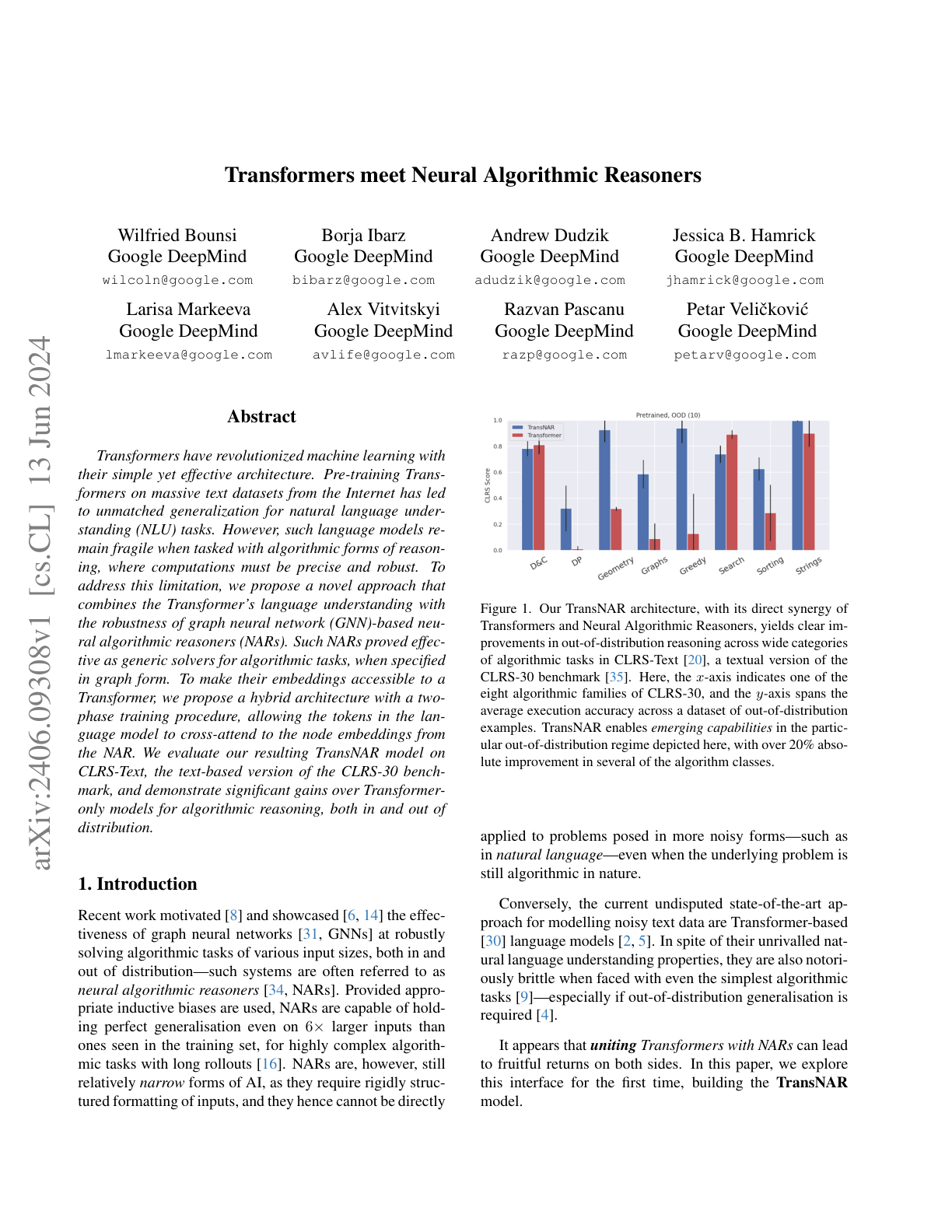
Transformers Meet Neural Algorithmic Reasoners
a new hybrid architecture that enables tokens in the LLM to cross-attend to node embeddings from a GNN-based neural algorithmic reasoner (NAR); the resulting model, called TransNAR, demonstrates improvements in OOD reasoning across algorithmic tasks
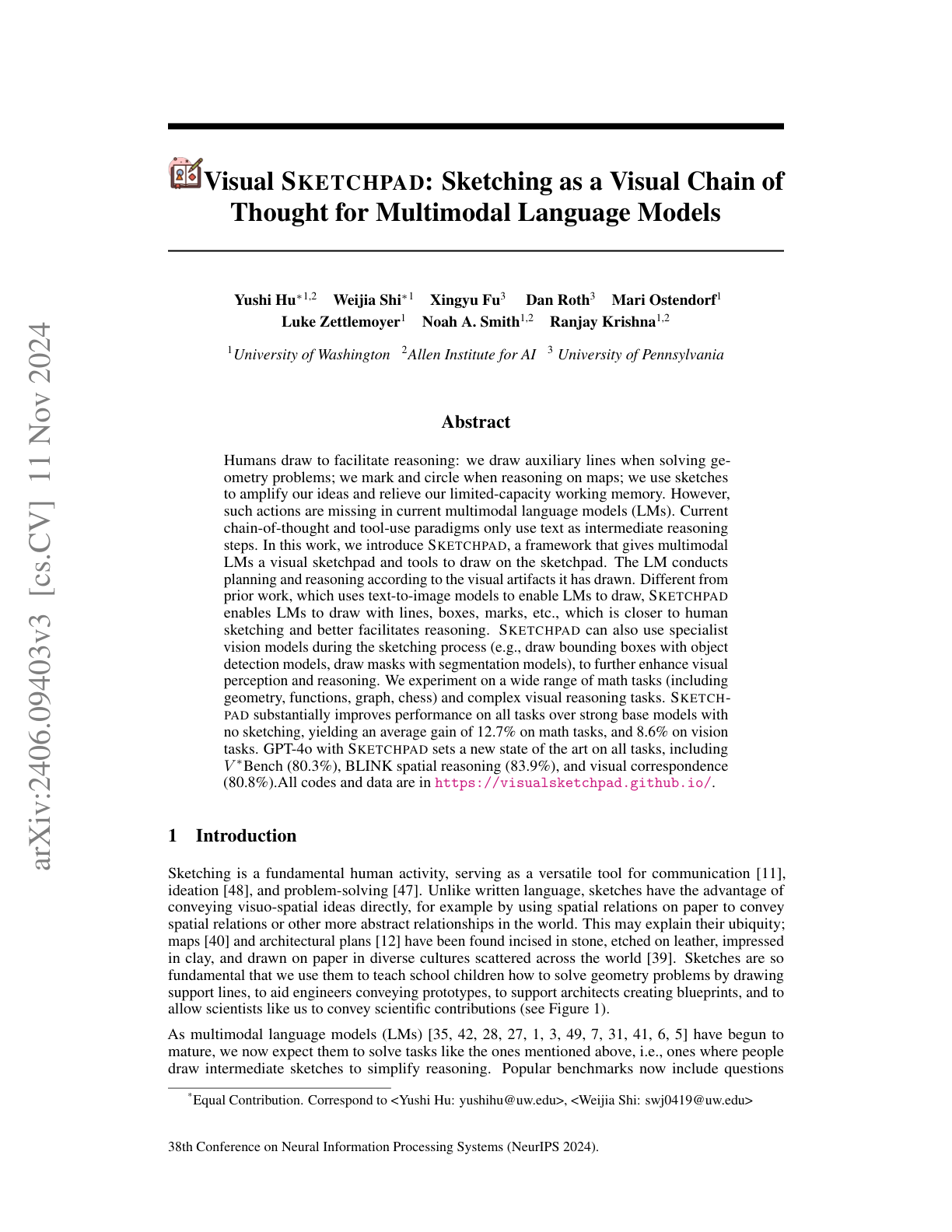
Sketching as a Visual Chain of Thought
a framework that enables a multimodal LLM to access a visual sketchpad and tools to draw on the sketchpad; it can equip a model like GPT-4 with the capability to generate intermediate sketches to reason over complex tasks; improves performance on many tasks over strong base models with no sketching; GPT-4o equipped with SketchPad sets a new state of the art on all the tasks tested.
Buffer of Thoughts
presents a thought-augmented reasoning approach to enhance the accuracy, efficiency, and robustness of LLM-based reasoning; it leverages a meta-buffer containing high-level thoughts (thought templates) distilled from problem-solving processes; the relevant thought template is then retrieved and instantiated with task-specific reasoning structures for the thought-augmented reasoning process; it demonstrates SOTA performance on 10 challenging tasks while requiring 12% of the cost of multi-query prompting methods like Tree-of-Thoughts.
SaySelf
a training framework to teach LLMs to express more accurate fine-grained confidence estimates and self-reflective rationales; it performs supervised finetuning on a dataset that contains summaries of the difference between multiple reasoning chains; reinforcement learning is then applied to calibrate confidence estimates, encouraging the LLM to produce accurate, high-confidence predictions and penalize overconfidence in erroneous outputs.
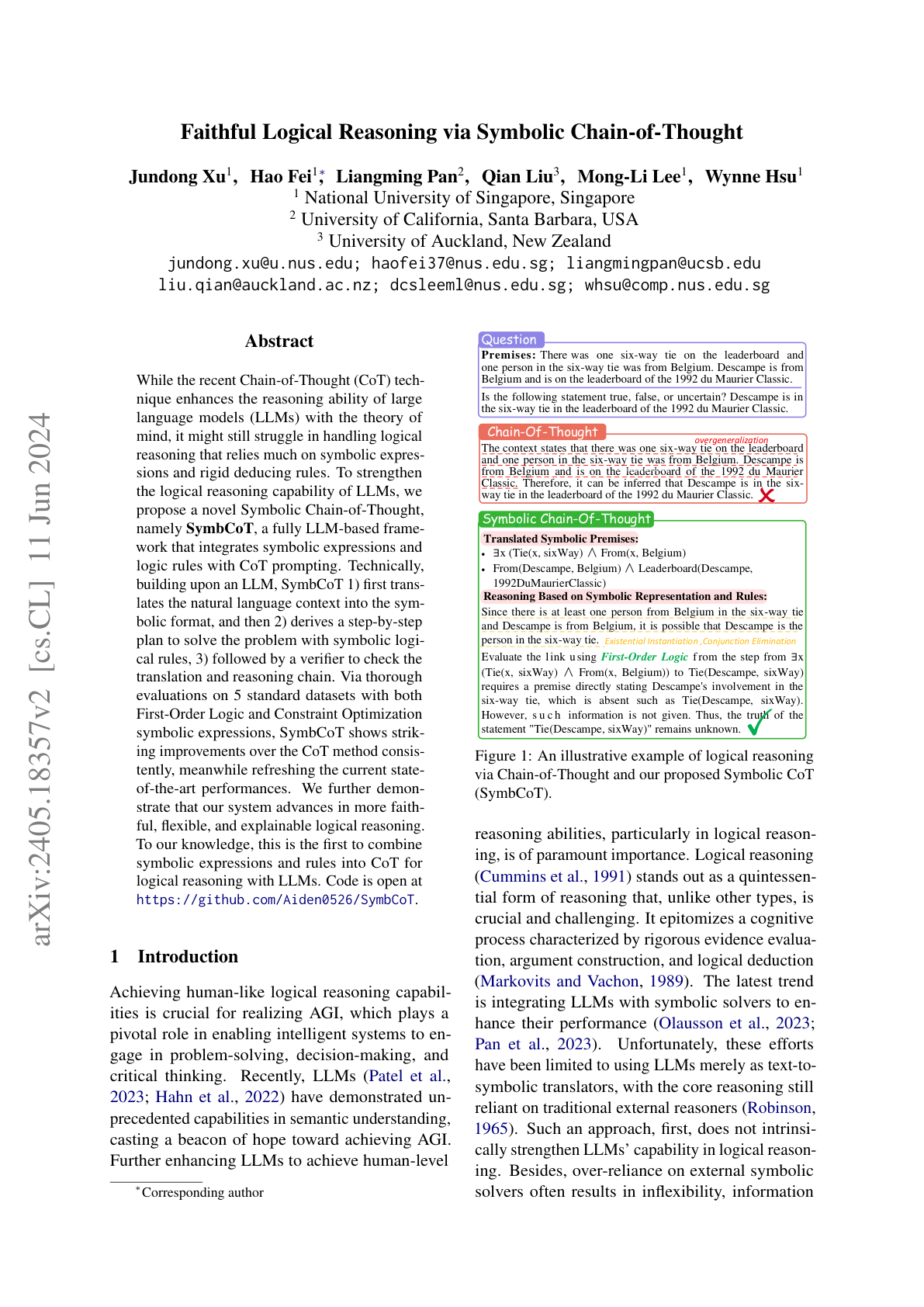
Symbolic Chain-of-Thought
proposes a method that improves the logical reasoning capabilities of LLMs by integrating symbolic expressions and logical rules with chain-of-thought (CoT) prompting; the prompting technique is called Symbolic Chain-of-Thought and it’s a fully LLM-based framework with the following key steps: 1) translates natural language context to symbolic format, 2) derives step-by-step plan to solve problems following symbolic logical rules, and 3) uses a verifier to check the translation and reasoning chain.
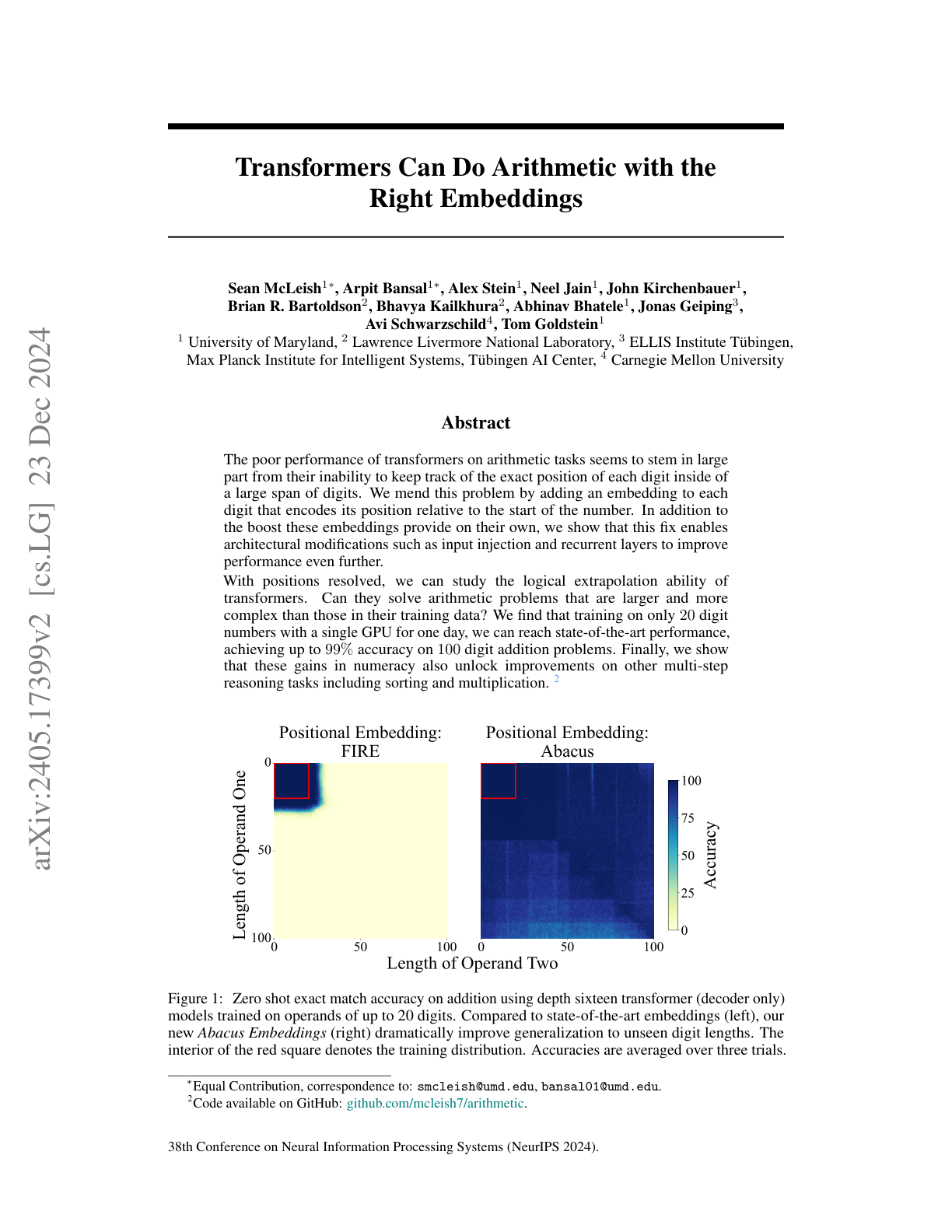
Abacus Embeddings
achieves 99% accuracy on 100-digit addition problems by training on only 20-digit numbers with a single GPU; the main challenge this work addresses is the inability of transformers to track the exact position of digits; they do this by adding an embedding to each digit that encodes its position relative to the start of the number; these gains also transfer to multi-step reasoning tasks that include sorting and multiplication.
GNN-RAG
combines the language understanding abilities of LLMs with the reasoning abilities of GNNs in a RAG style; the GNN extracts useful and relevant graph information while the LLM takes the information and leverages its capabilities to perform question answering over knowledge graphs (KGQA); GNN-RAG improves vanilla LLMs on KGQA and outperforms or matches GPT-4 performance with a 7B tuned LLM.
Are Long-LLMs A Necessity For Long-Context Tasks?
claims that long-LLMs are not a necessity to solve long-context tasks; proposes a reasoning framework to enable short-LLMs to address long-context tasks by adaptively accessing and utilizing the context based on the presented tasks; it decomposes the long context into short contexts and processes them using a decision-making process.
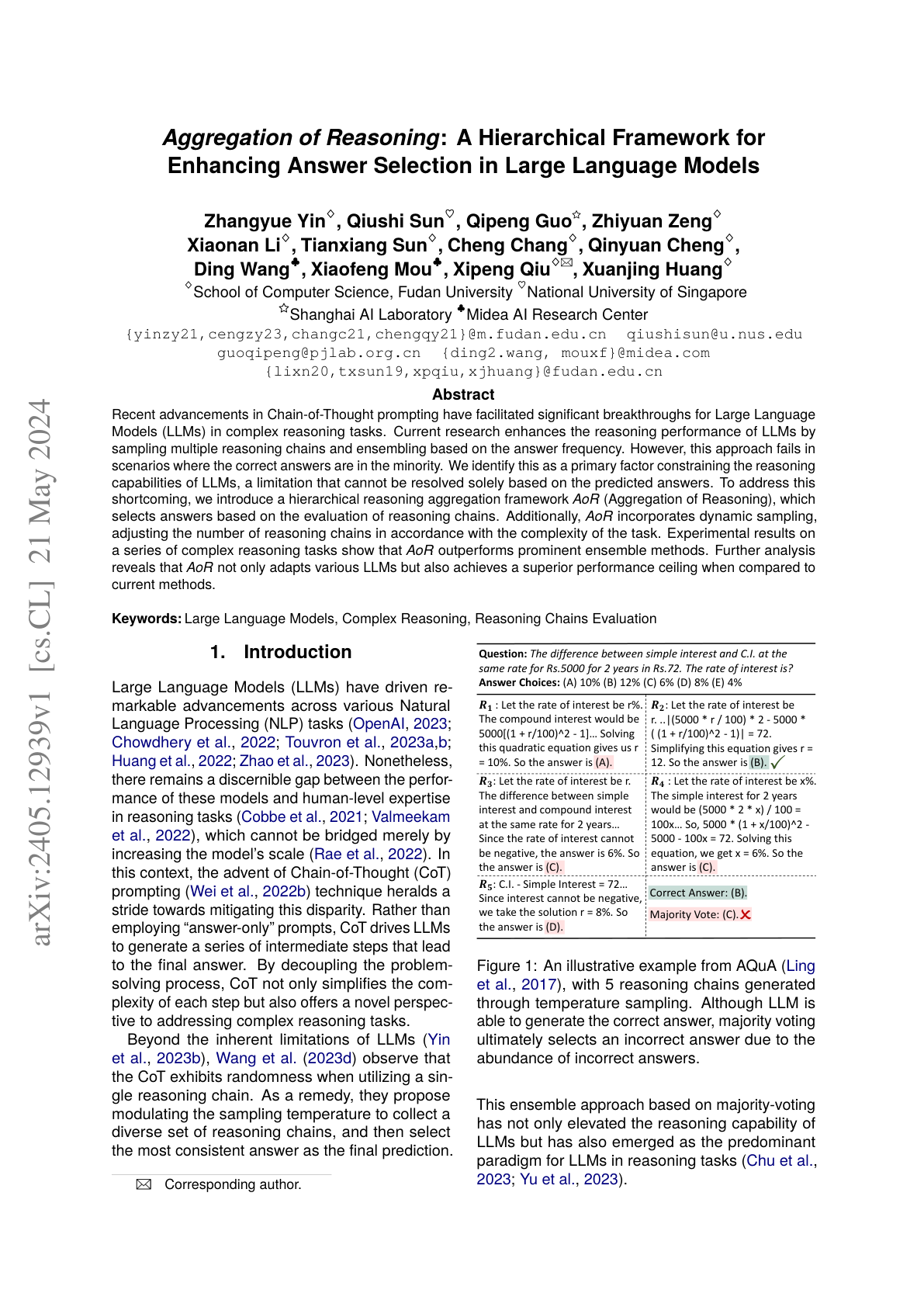
Enhancing Answer Selection in LLMs
proposes a hierarchical reasoning aggregation framework for improving the reasoning capabilities of LLMs; the approach, called Aggregation of Reasoning (AoR), selects answers based on the evaluation of reasoning chains; AoR uses dynamic sampling to adjust the number of reasoning chains with respect to the task complexity; it uses results from the evaluation phase to determine whether to sample additional reasoning chains; a known flaw of majority voting is that it fails in scenarios where the correct answer is in the minority; AoR focuses on evaluating the reasoning chains to improve the selection of the final answer; AoR outperforms various prominent ensemble methods and can be used with various LLMs to improve performance on complex reasoning tasks.
GPT-4o
a new model with multimodal reasoning capabilities with real-time support across audio, vision, and text; it can accept as input any combination of text, audio, image, and video to generate combinations of text, audio, and image outputs; it’s reported to match GPT-4 Turbo performance while being 50% much faster and cheaper via APIs.
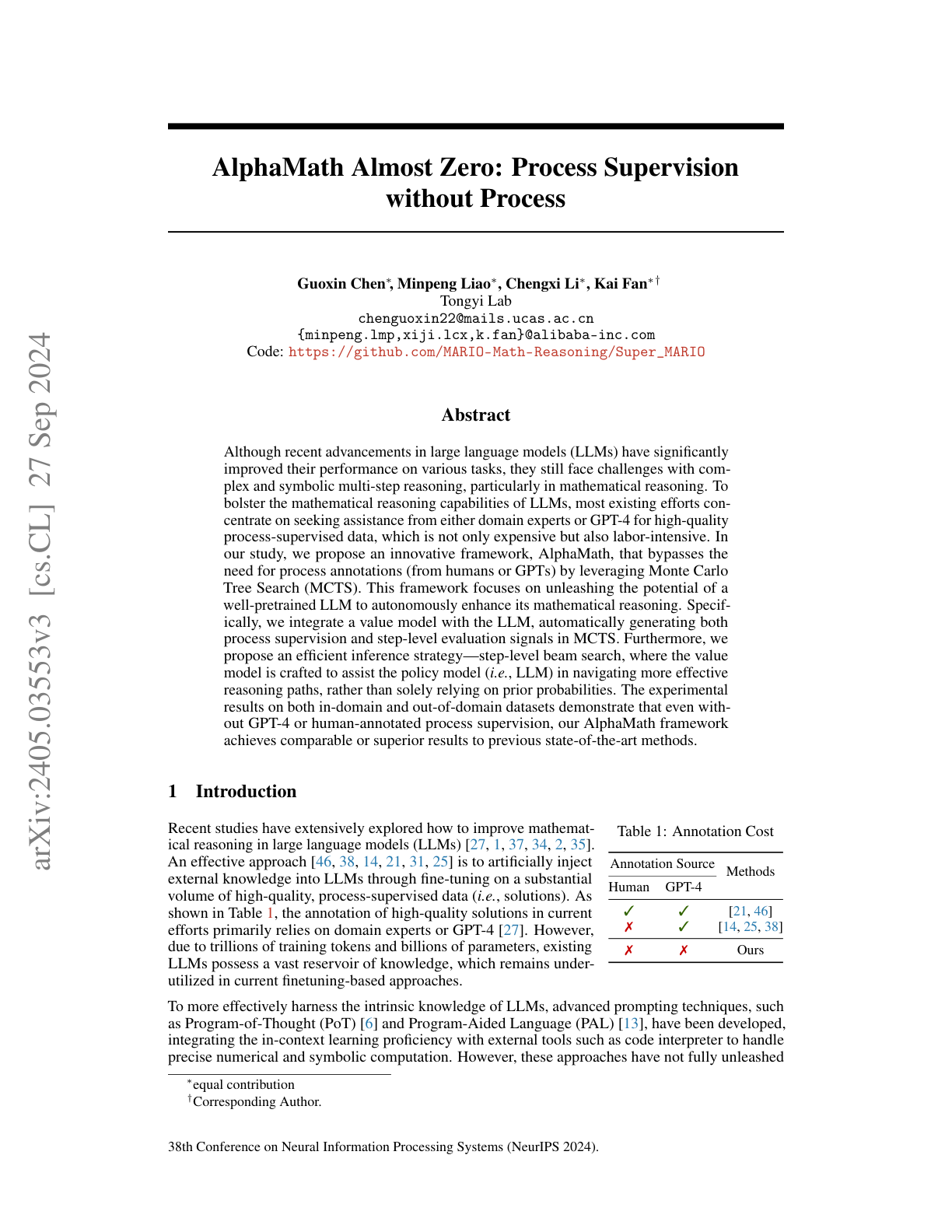
AlphaMath Almost Zero
enhances LLMs with Monte Carlo Tree Search (MCTS) to improve mathematical reasoning capabilities; the MCTS framework extends the LLM to achieve a more effective balance between exploration and exploitation; for this work, the idea is to generate high-quality math reasoning data without professional human annotations; the assumption is that a well pre-trained LLM already possesses mathematical knowledge to generate reasoning steps but needs better stimulation such as an advanced prompting or search strategy; unlike other methods such as Program-of-thought and Chain-of-thought, no solutions are required for the training data, just the math questions and the answers; the integration of LLMs, a value model, and the MCTS framework enables an effective and autonomous process of generating high-quality math reasoning data; the value model also aids the policy model in searching for effective solution paths.
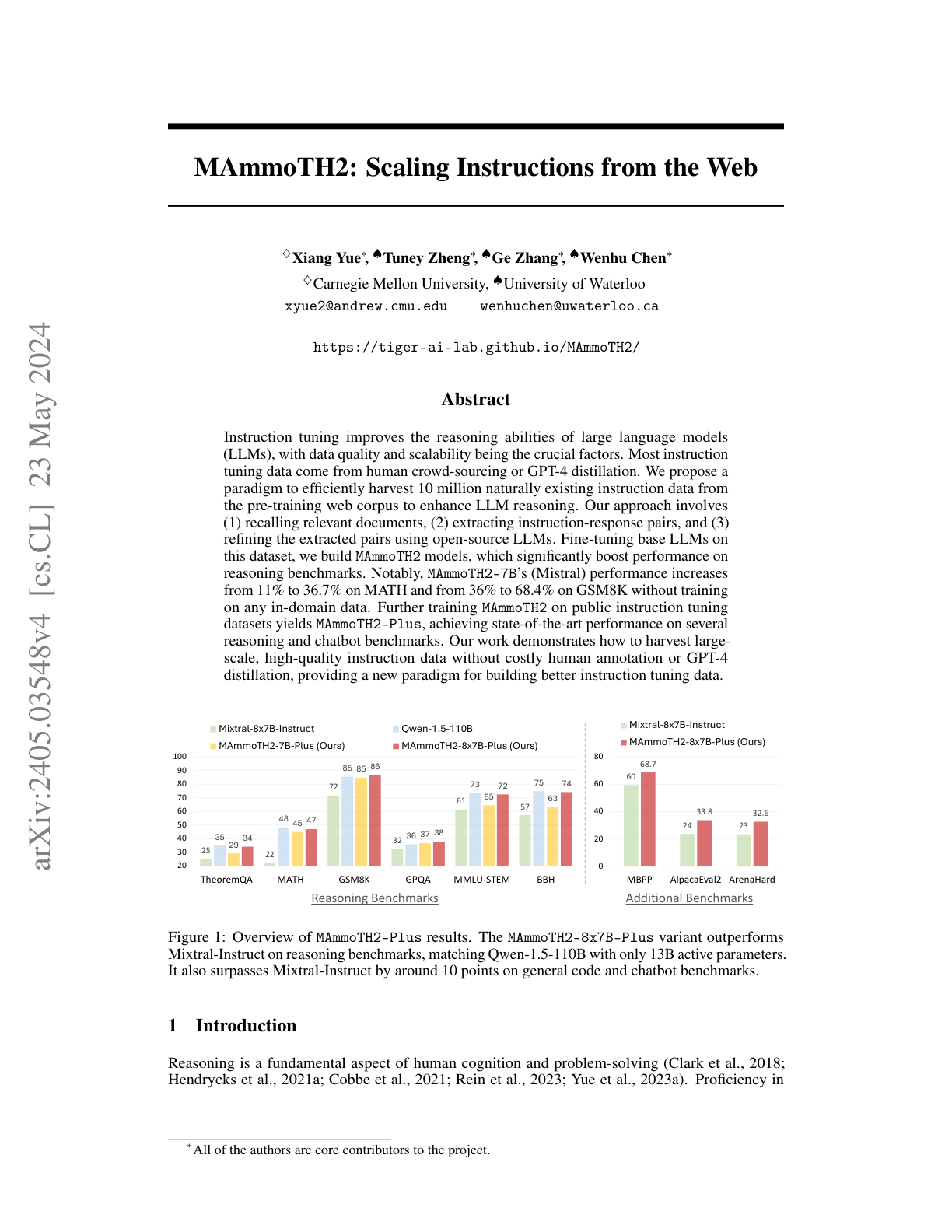
MAmmoTH2
harvest 10 million naturally existing instruction data from the pre-training web corpus to enhance LLM reasoning; the approach first recalls relevant documents, extracts instruction-response pairs, and then refines the extracted pairs using open-source LLMs; MAmmoTH2-7B's (Mistral) performance increases from 11% to 34% on MATH and from 36% to 67% on GSM8K.
Med-Gemini
presents a family of multimodal models specialized in medicines and based on the strong multimodal and long-context reasoning capabilities of Gemini; achieves state-of-the-art performance on 10/14 benchmarks surpassing GPT-4 models; it achieves 91% accuracy on MedQA (USMLE) benchmark using an uncertainty-guided search strategy.

AI-powered Gene Editors
Profluent's OpenCRISPR-1 paper demonstrates that a large protein language model trained on biological diversity at scale can design programmable gene editors from scratch. The AI-designed editors successfully perform precision editing in the human genome.
Naturalized Execution Tuning (NExT)
NExT teaches LLMs to reason about program runtime behavior by generating synthetic chain-of-thought rationales over execution traces. The approach bootstraps training data through self-training rather than manual annotation, and the learned reasoning transfers to scenarios where traces are unavailable at inference.
Emerging AI Agent Architectures
A short survey mapping the current landscape of LLM-based agent architectures, focused on reasoning, planning, and tool calling as the three capability pillars for complex agentic workflows.
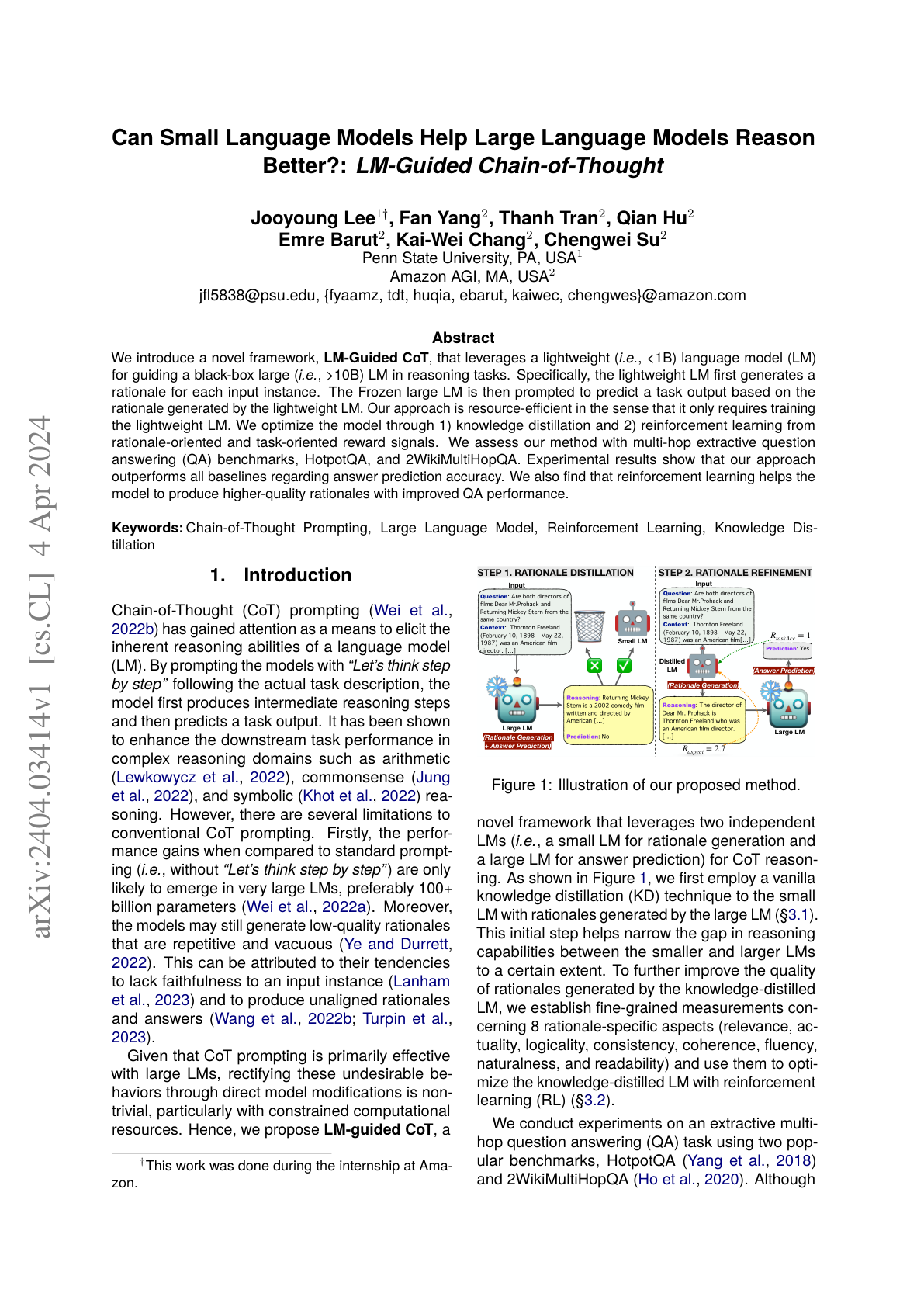
LM-Guided Chain-of-Thought
This paper offloads rationale generation to a small, trained LM while keeping a frozen large LM as the answer predictor. The small model is optimized with knowledge distillation and reinforcement learning so it produces rationales that steer the large model more effectively.
Reasoning with Intermediate Revision and Search (THOUGHTSCULPT)
THOUGHTSCULPT is a graph-based reasoning framework that combines Monte Carlo Tree Search with an explicit revision action, letting an LLM iteratively rewrite earlier thoughts instead of only extending them.
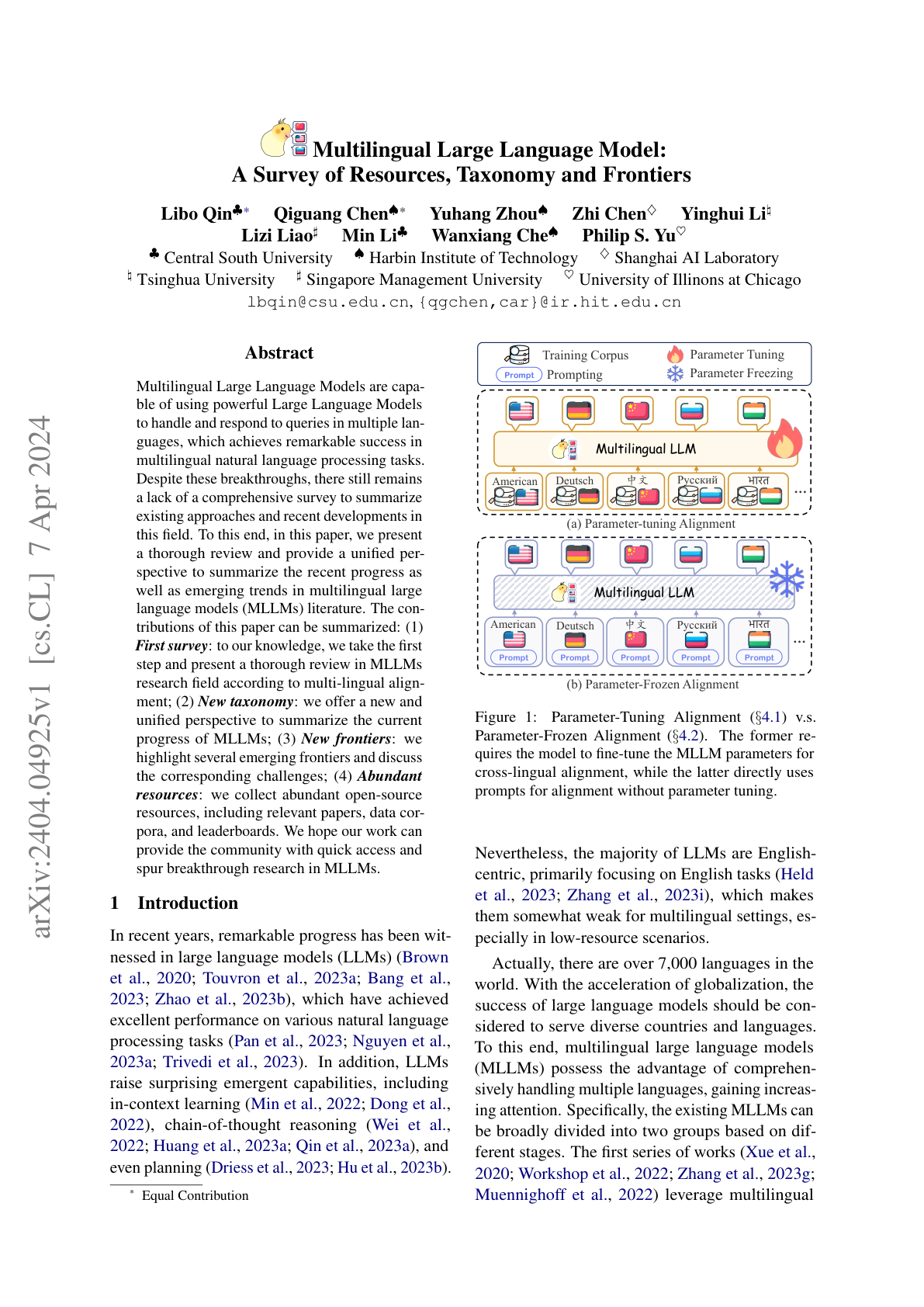
Overview of Multilingual LLMs
A first-of-its-kind survey on multilingual LLMs, organized by multilingual alignment principles rather than model-family hierarchy. The authors propose a unified taxonomy and collect open resources to accelerate future research.
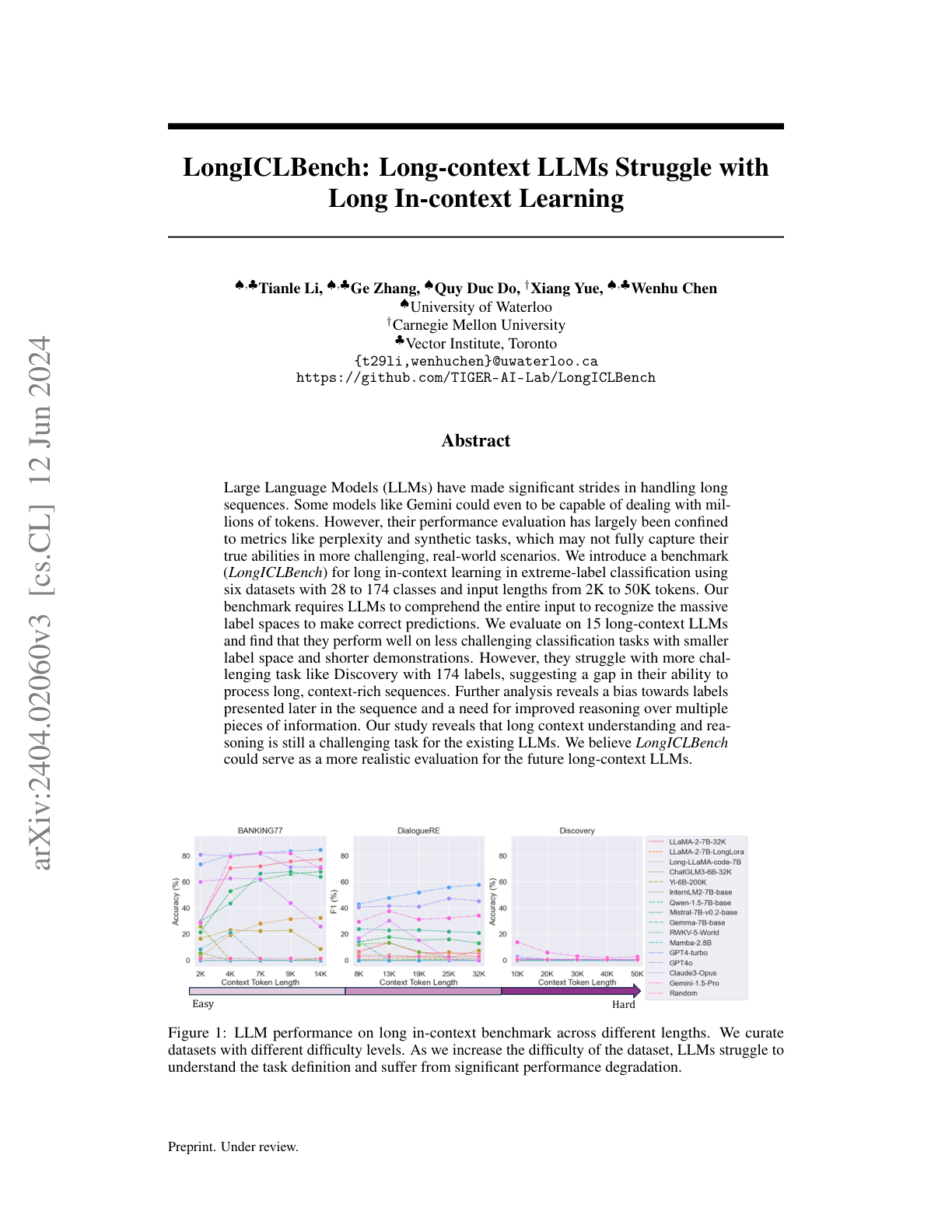
Long-context LLMs Struggle with Long In-Context Learning
LongICLBench stress-tests 13 long-context LLMs on extreme-label classification with up to 174 classes and 50K-token prompts, exposing sharp quality cliffs beyond 20K tokens.
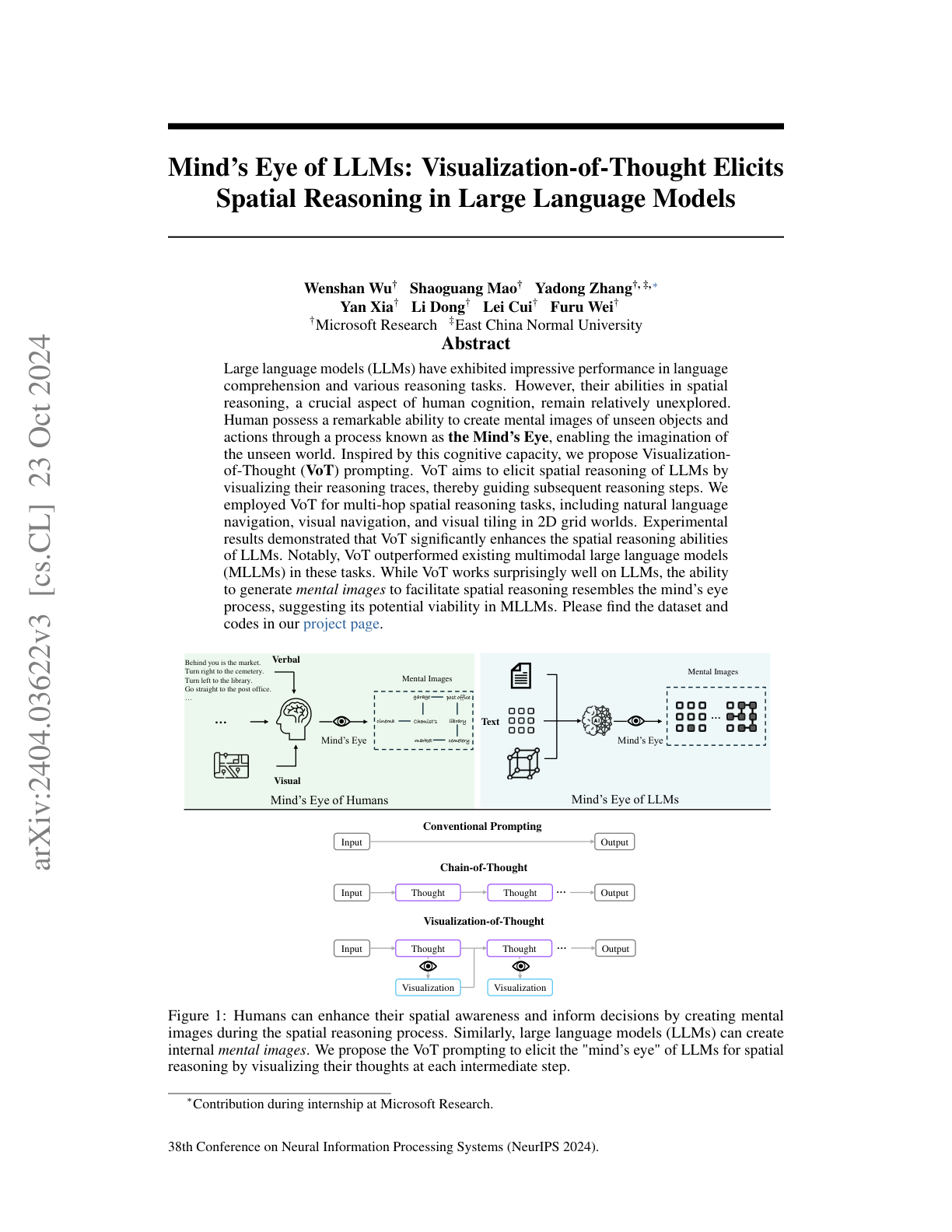
Visualization-of-Thought
Microsoft's Visualization-of-Thought (VoT) prompts LLMs to emit intermediate "mental images" of their reasoning state, lifting spatial-reasoning accuracy on grid-world tasks and beating multimodal baselines that actually see images.
ReFT: Representation Finetuning for LMs
Stanford's ReFT freezes the base model and instead learns small interventions on hidden representations at selected layers, offering a more parameter-efficient alternative to LoRA-style PEFT.