AI Papers of the Week
Every paper worth reading in AI, hand-picked one week at a time.
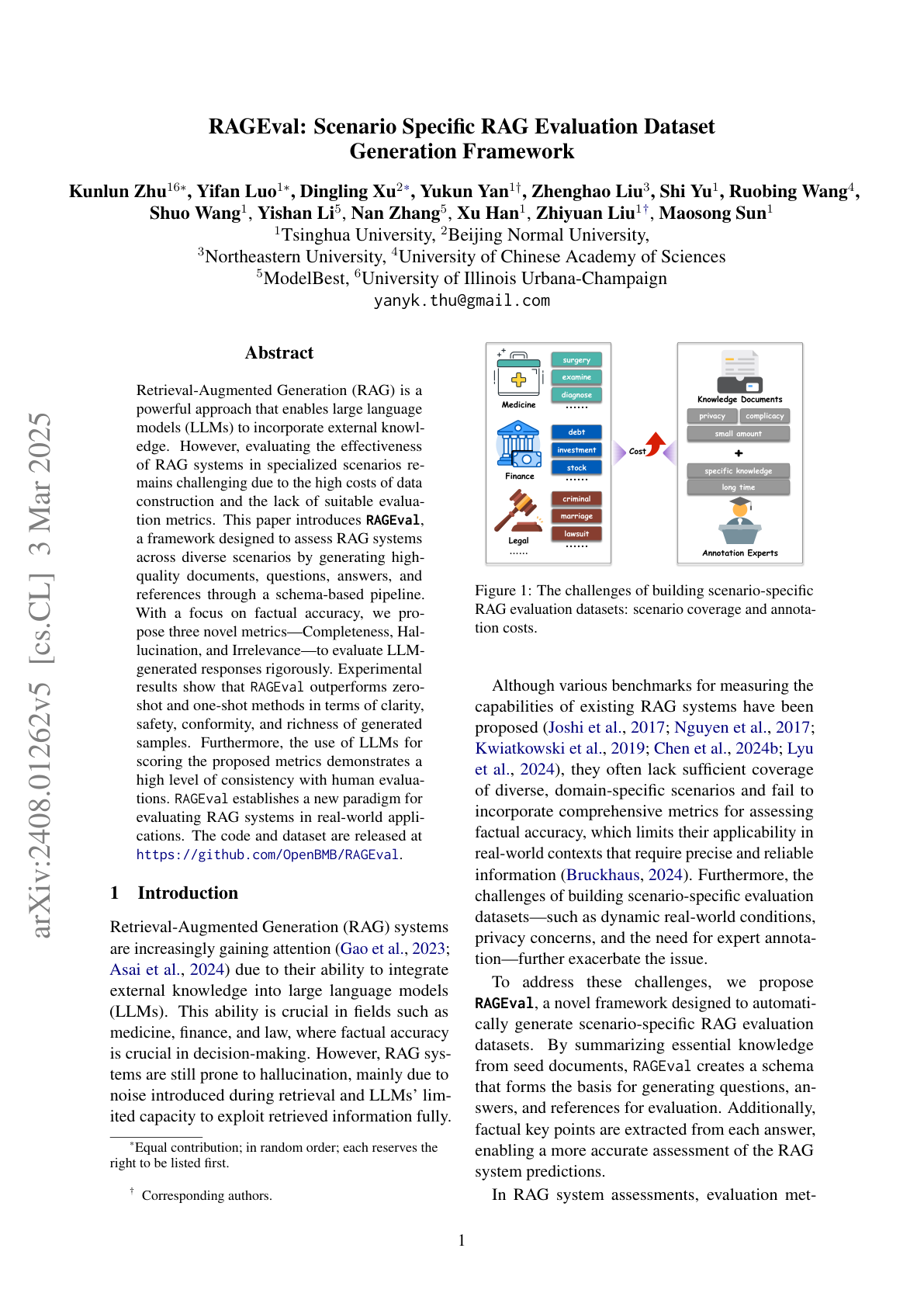
RAGEval
proposes a simple framework to automatically generate evaluation datasets to assess knowledge usage of different LLM under different scenarios; it defines a schema from seed documents and then generates diverse documents which leads to question-answering pairs; the QA pairs are based on both the articles and configurations.
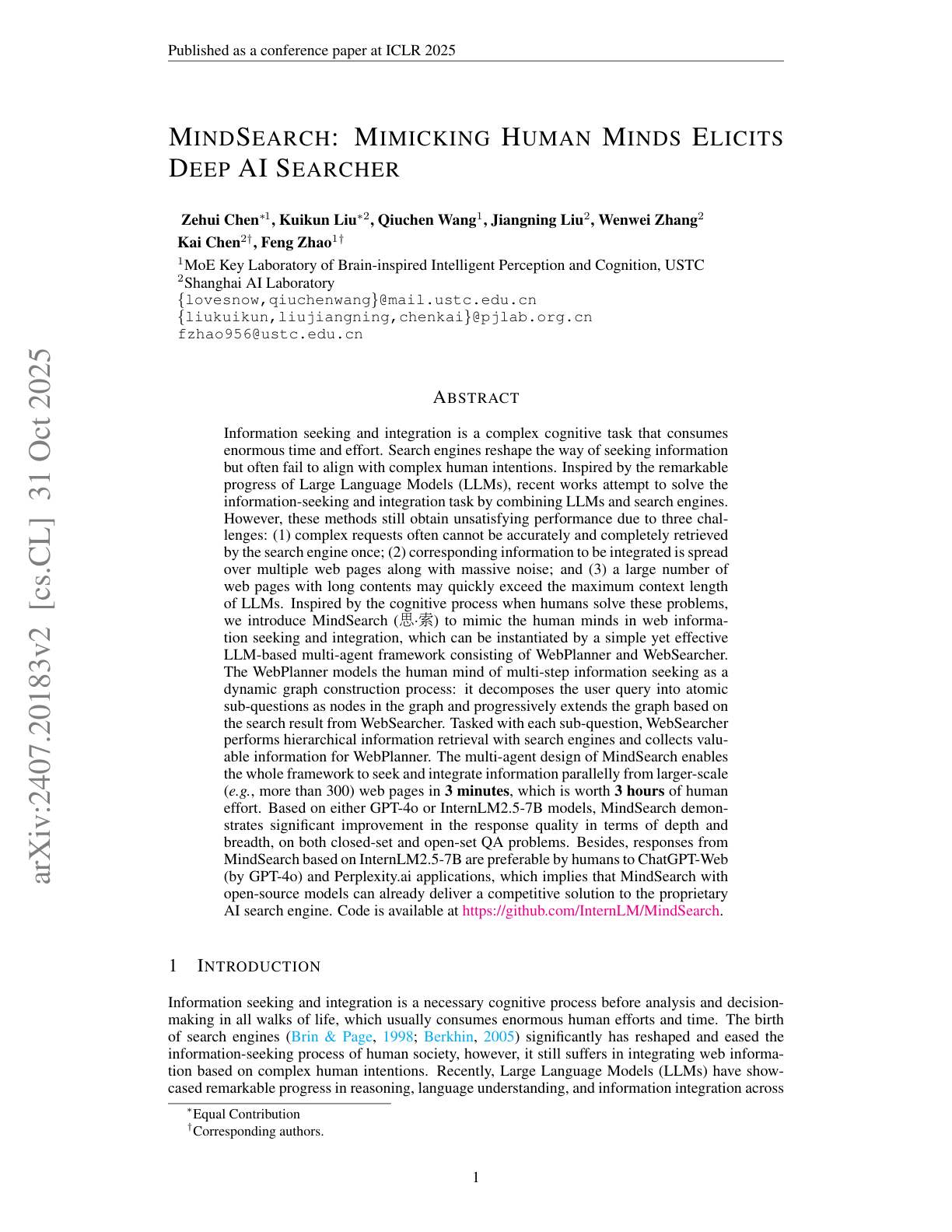
MindSearch
presents an LLM-based multi-agent framework to perform complex web-information seeking and integration tasks; a web planner effectively decomposes complex queries followed by a web searcher that performs hierarchical information retrieval on the Internet to improve the relevancy of the retrieved information; the planning component is powered by an iterative graph construction which is used to better model complex problem-solving processes; the multi-agent framework handles long context problems better by distributing reasoning and retrieval tasks to specialized agents.
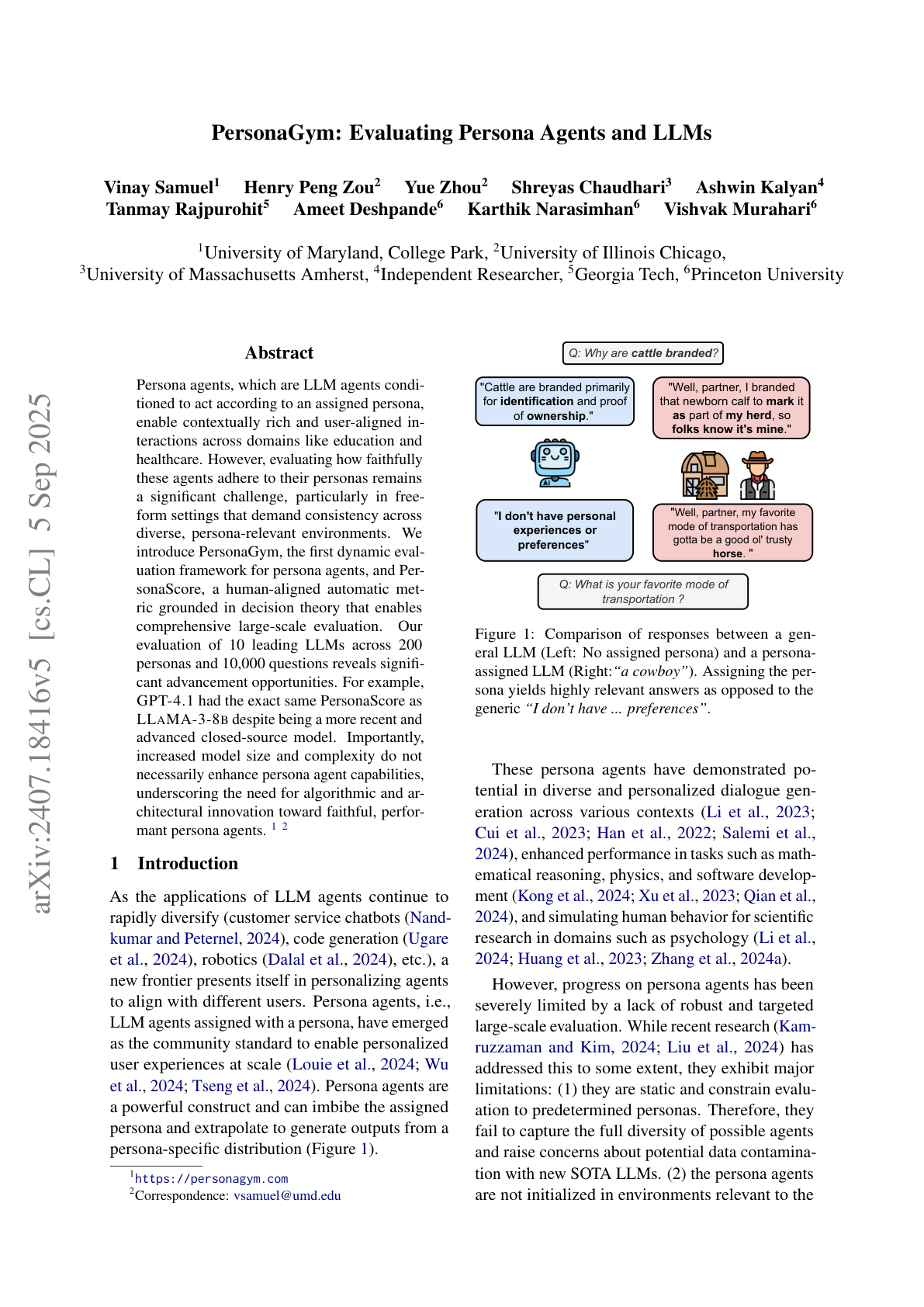
Evaluating Persona Agents
proposes a benchmark to evaluate persona agent capabilities in LLMs; finds that Claude 3.5 Sonnet only has a 2.97% relative improvement in PersonaScore compared to GPT 3.5 despite being a much more advanced model.
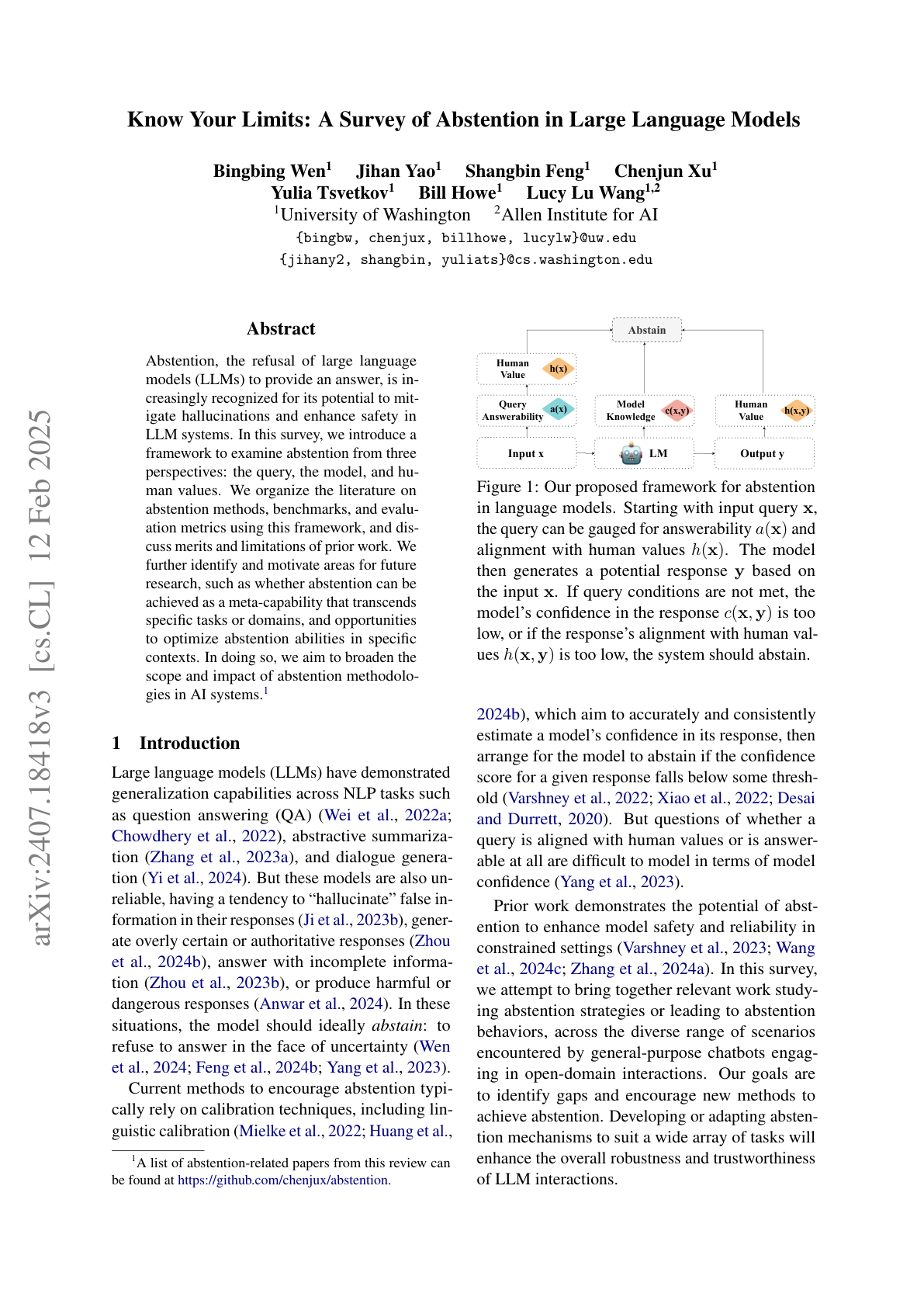
The Art of Refusal
a survey of the current methods used to achieve refusal in LLMs; provides evaluation benchmarks and metrics used to measure abstention in LLMs.
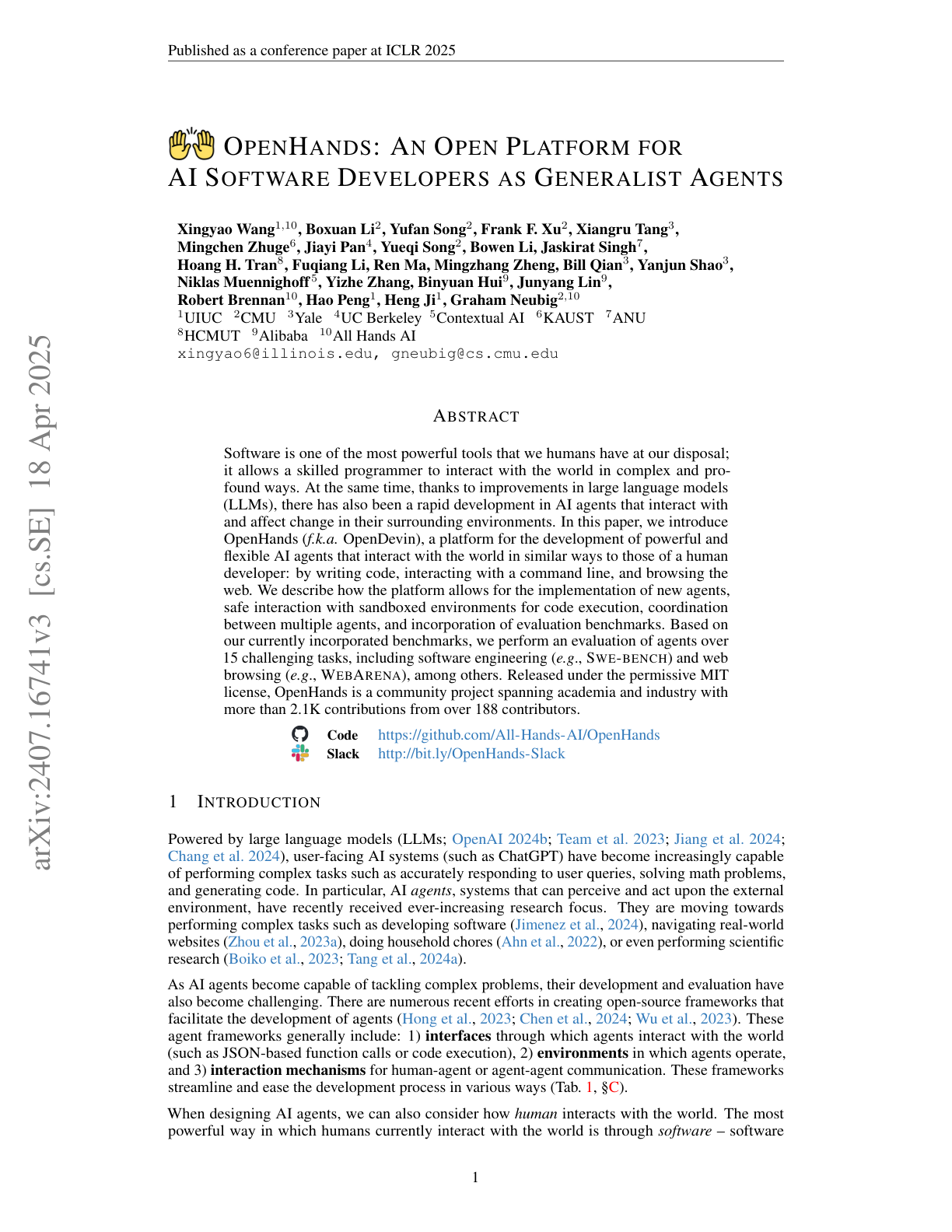
OpenDevin
presents a platform to develop generalist agents that interact with the world through software; features include 1) an interaction mechanism for interaction between agents, interfaces, and environments, 2) an environment including a sandboxed operating system and web browser available to the agents, 3) interface to create and execute code, 4) multi-agent support, and 5) an evaluation framework.
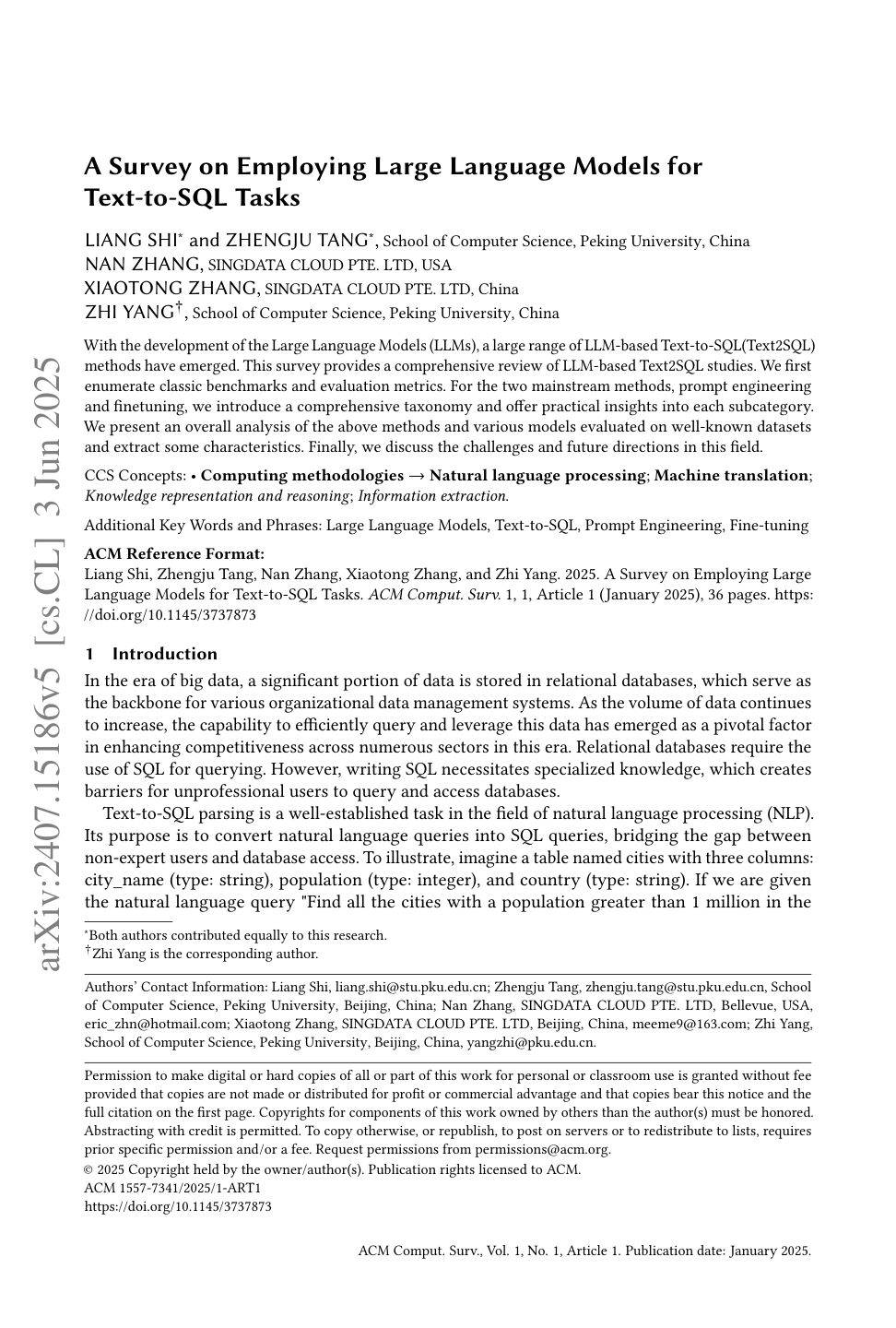
Text-to-SQL Survey
provides a survey on employing LLMs for Text-to-SQL tasks, including prompt engineering techniques, fine-tuning methods, benchmarks, and more.
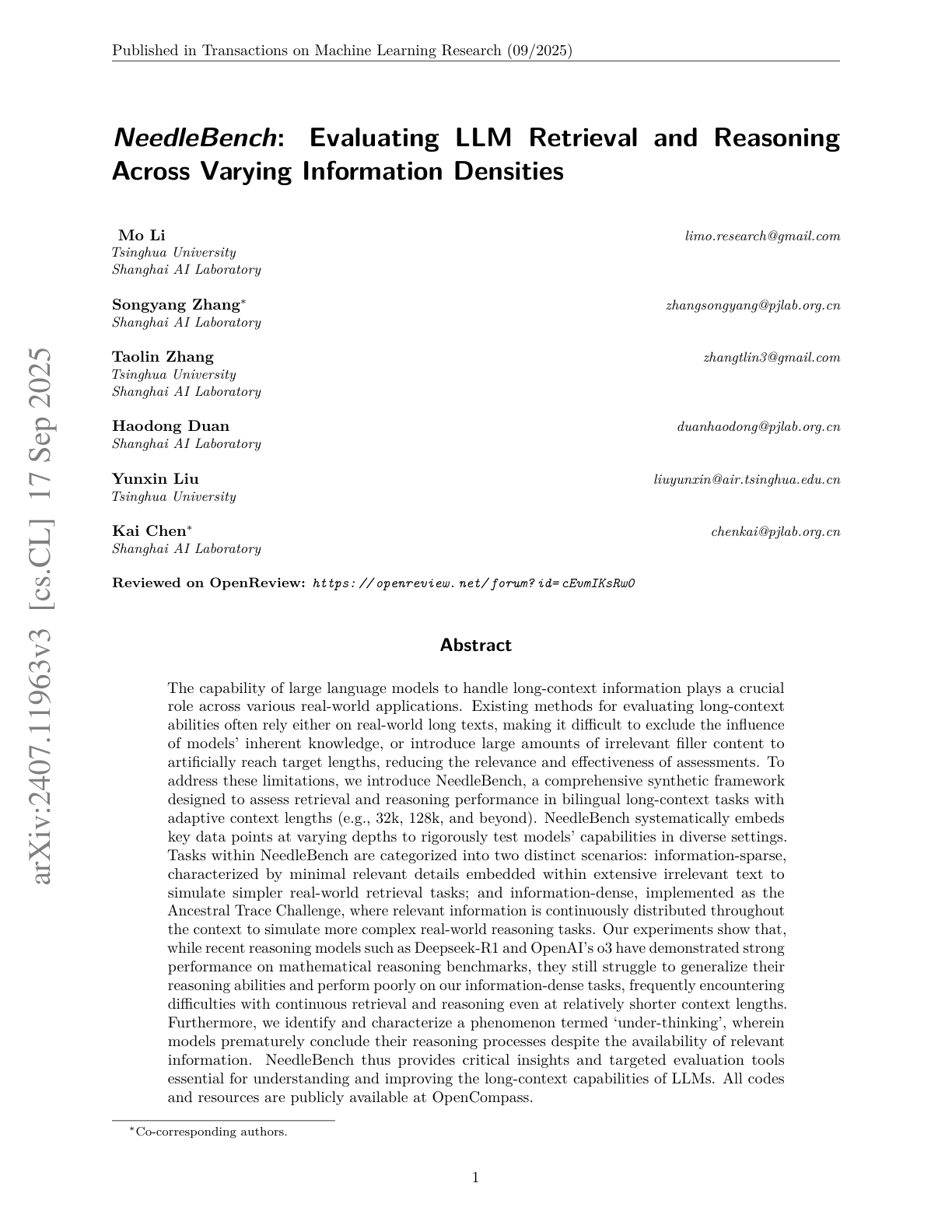
Can LLMs Do Retrieval and Reasoning in 1 Million Context Window?
proposes a framework (NeedleBench) of progressively challenging tasks to assess the long-context retrieval and reasoning capabilities of LLMs; they also present the Ancestral Trace Challenge that increases the need for complex logical reasoning which is common in real-world long-context tasks; their findings suggest that current LLMs struggle to handle reasoning tasks with complex logical relationships, even with texts shorter than 2K tokens.
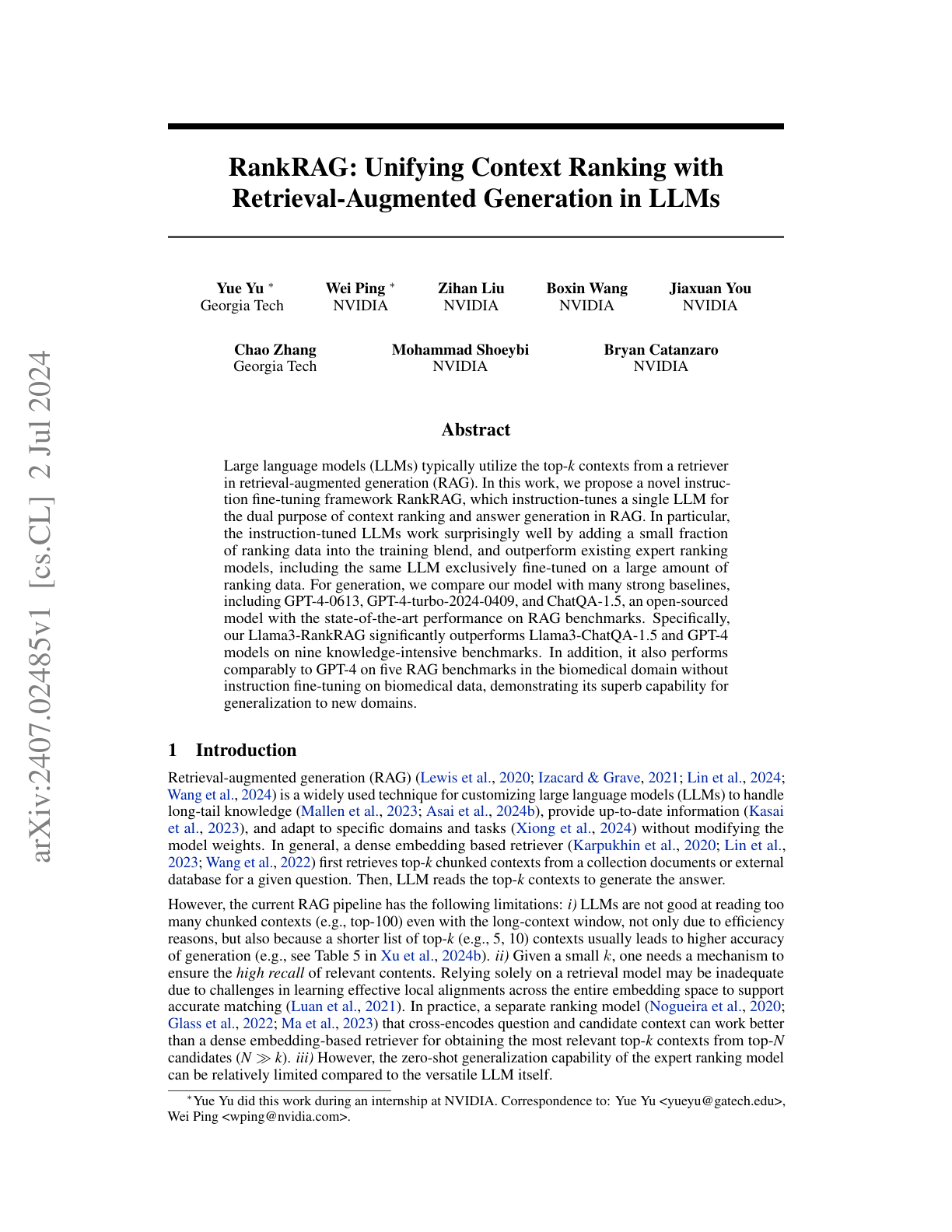
RankRAG
introduces a new instruction fine-tuning framework to perform effective context ranking and answering generation to enhance an LLM’s RAG capabilities; it leverages a small ranking dataset to outperform existing expert ranking models; shows that a Llama3-RankRAG significantly outperforms Llama3-ChatQA-1.5 and GPT-4 models on nine knowledge-intensive benchmarks.
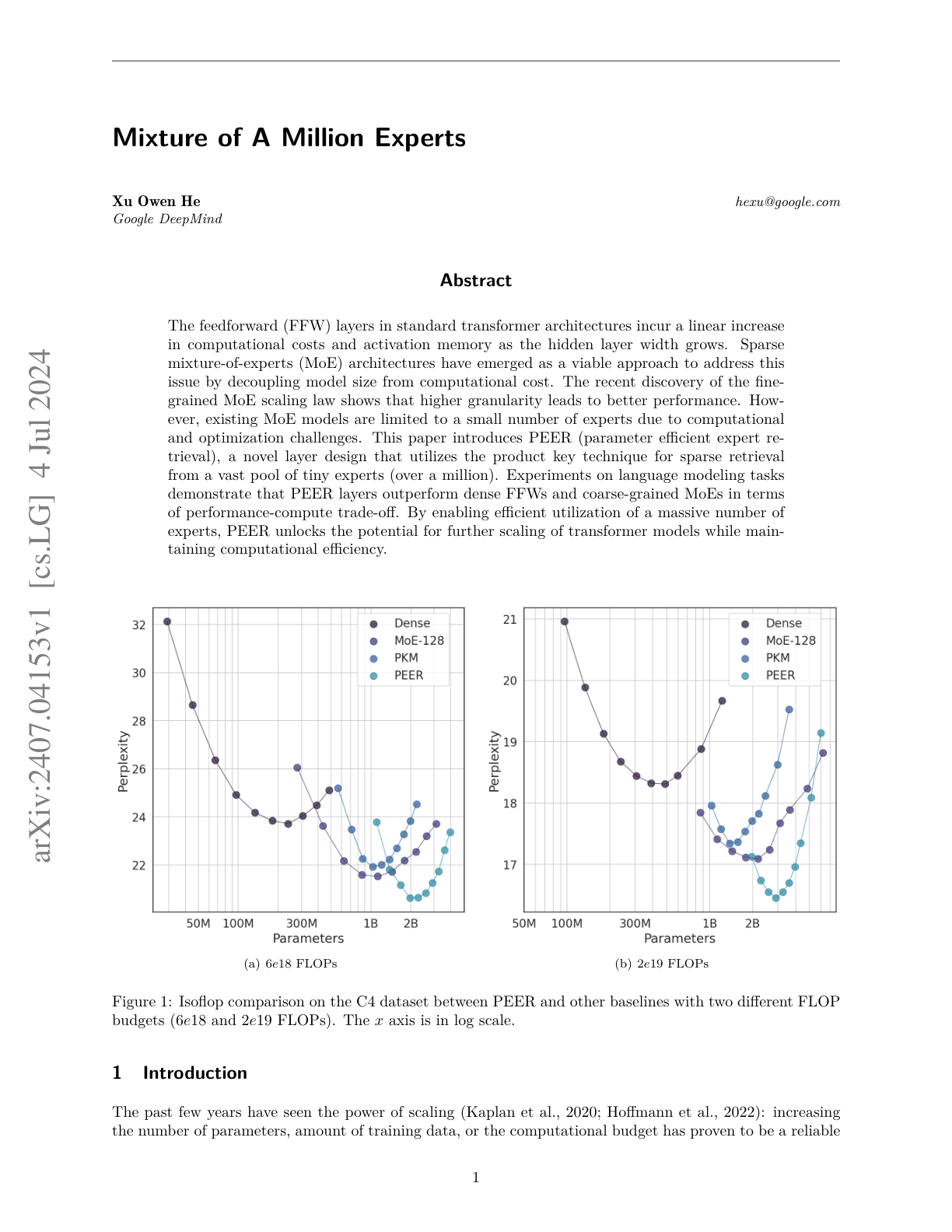
Mixture of A Million Experts
introduces a parameter-efficient expert retrieval mechanism that leverages the product key technique for sparse retrieval from a million tiny experts; it attempts to decouple computational cost from parameter count by efficiently routing to a very large number of tiny experts through a learned index structure used for routing; demonstrates superior efficiency compared to dense FFW, coarse-grained MoEs, and Product Key Memory (PKM) layers.
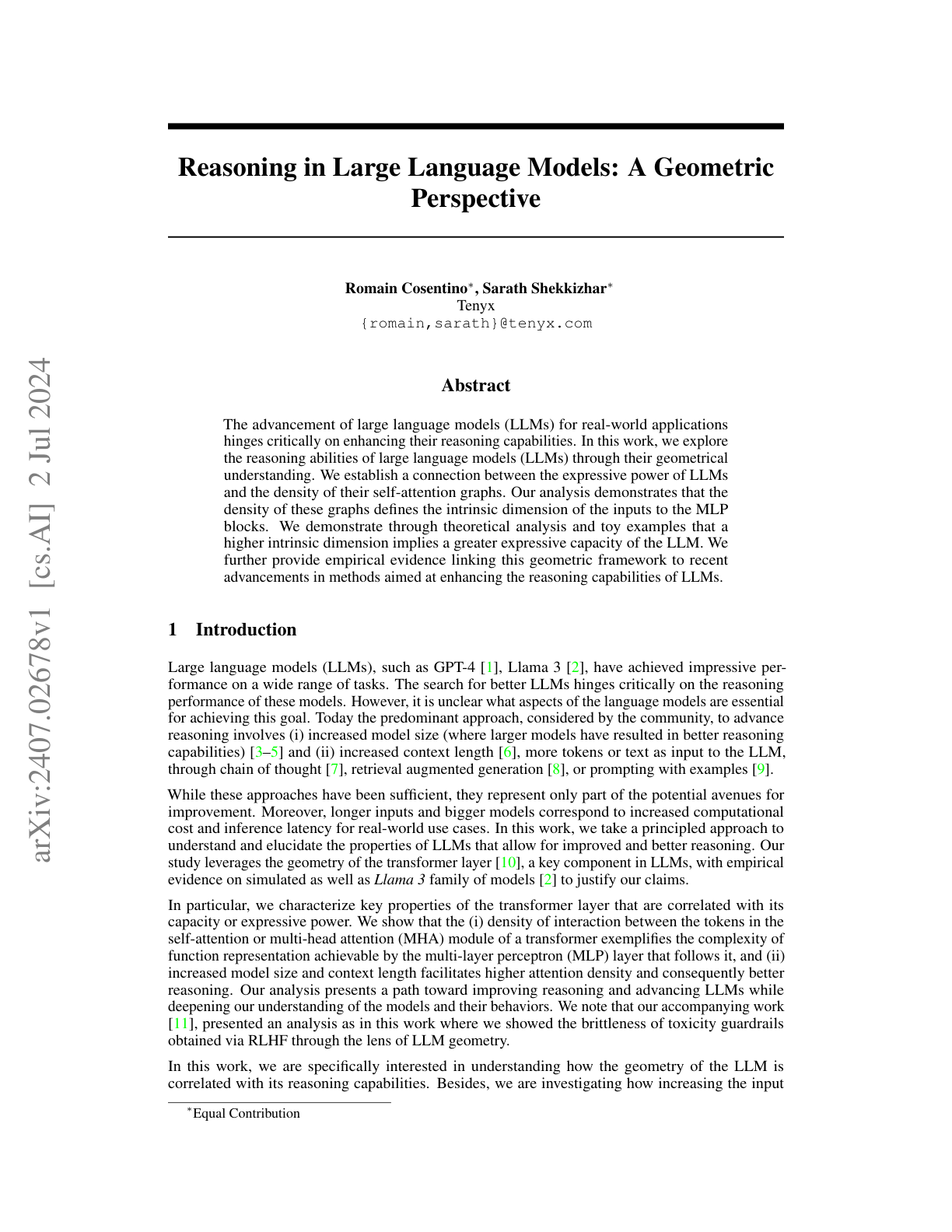
Reasoning in LLMs: A Geometric Perspective
explores the reasoning of LLMs from a geometrical perspective; reports that a higher intrinsic dimension implies greater expressive capacity of the LLM; reports that they establish a connection between the expressive power of LLMs and the density of their self-attention graphs; their analysis demonstrates that the density of these graphs defines the intrinsic dimension of the inputs to the MLP blocks.
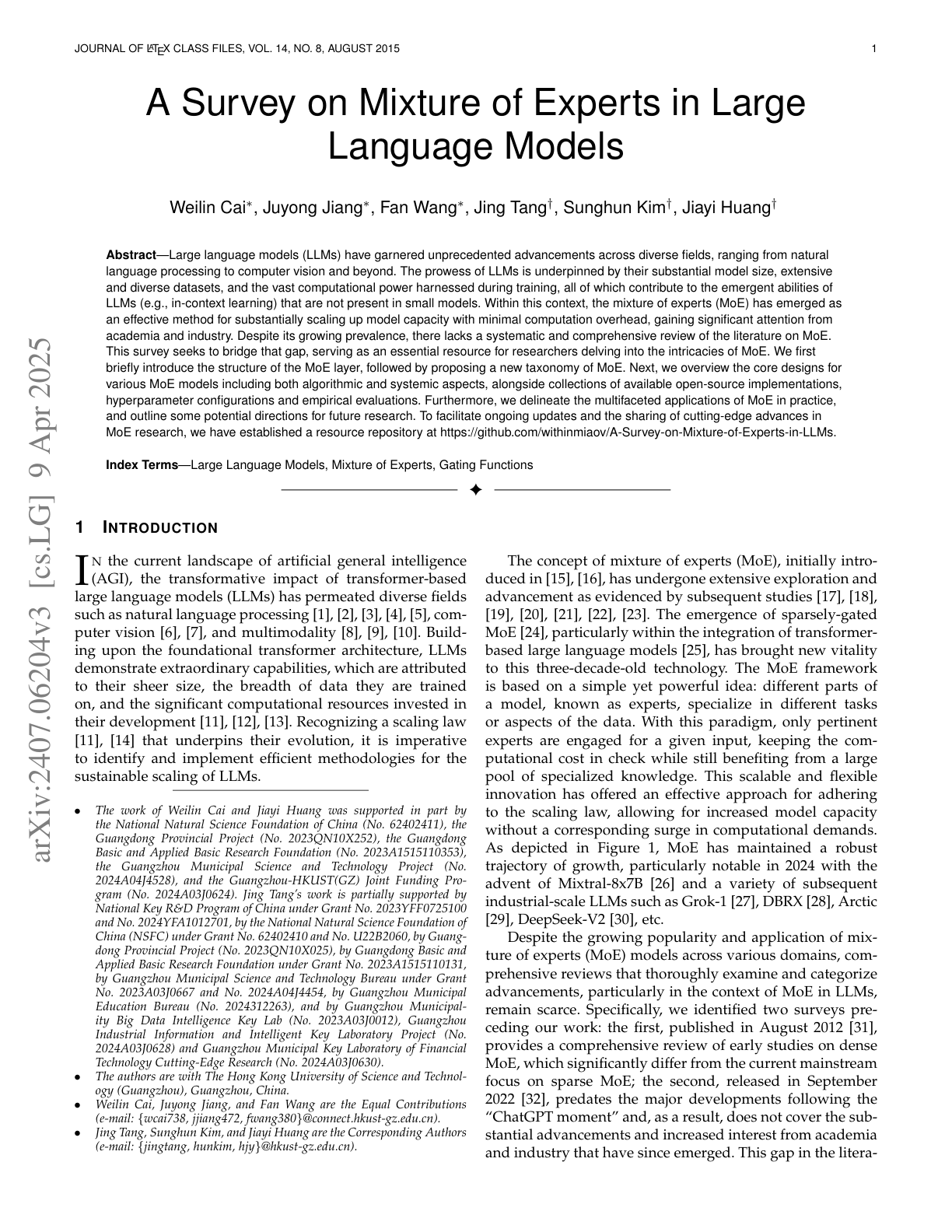
A Survey on Mixture of Experts
a survey paper on Mixture of Experts (MoE), including the technical details of MoE, open-source implementations, evaluation techniques, and applications of MoE in practice.

3DGen
a new pipeline for end-to-end text-to-3D asset generation in under a minute; integrates state-of-the-art components like AssetGen and TextureGen to represent 3D objects in three ways, namely view space, in volumetric space, and in UV space; achieves a win rate of 68% with respect to the single-stage model.
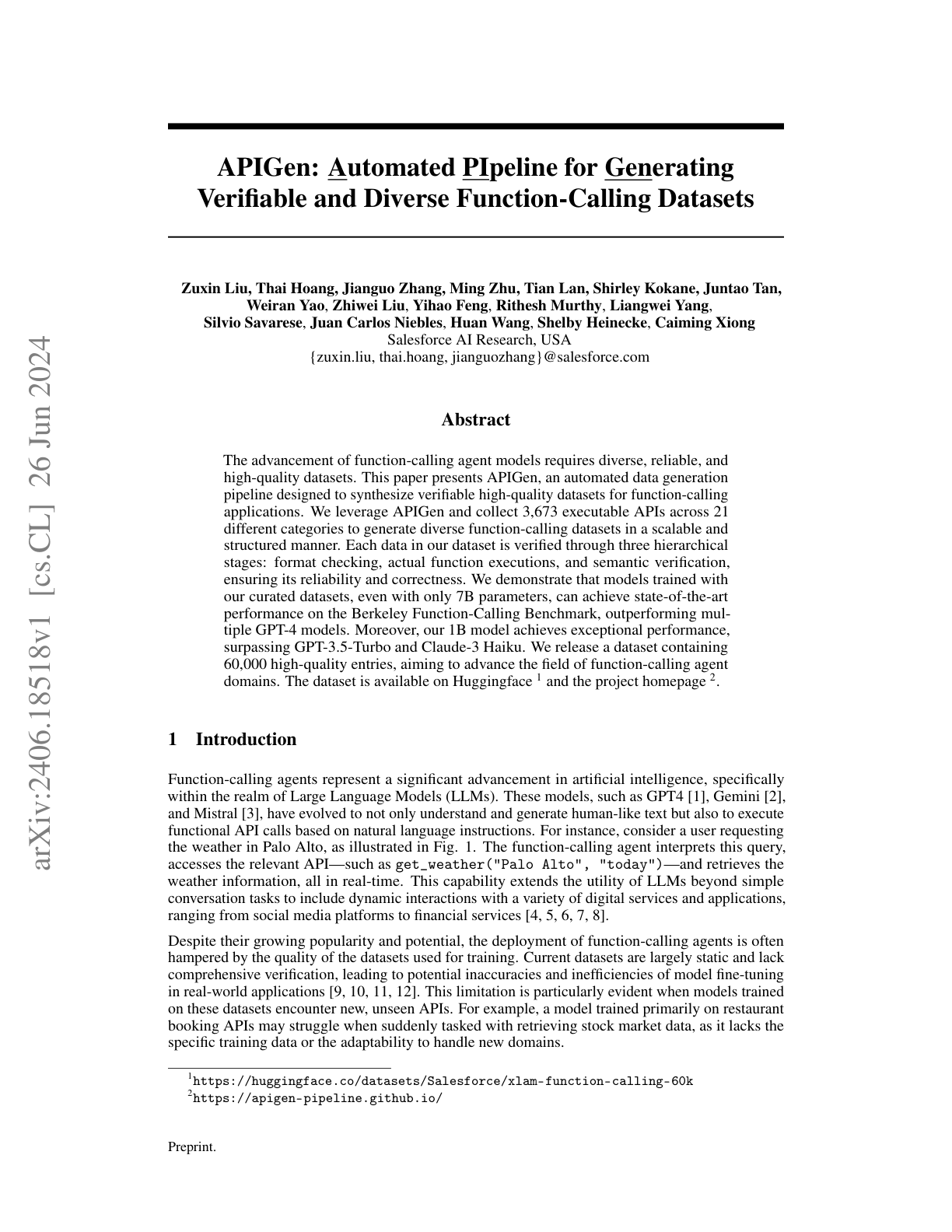
APIGen
presents an automated data generation pipeline to synthesize high-quality datasets for function-calling applications; shows that 7B models trained on curated datasets outperform GPT-4 models and other state-of-the-art models on the Berkeley Function-Calling Benchmark; a dataset consisting of 60K entries is also released to help with research in function-calling enabled agents.
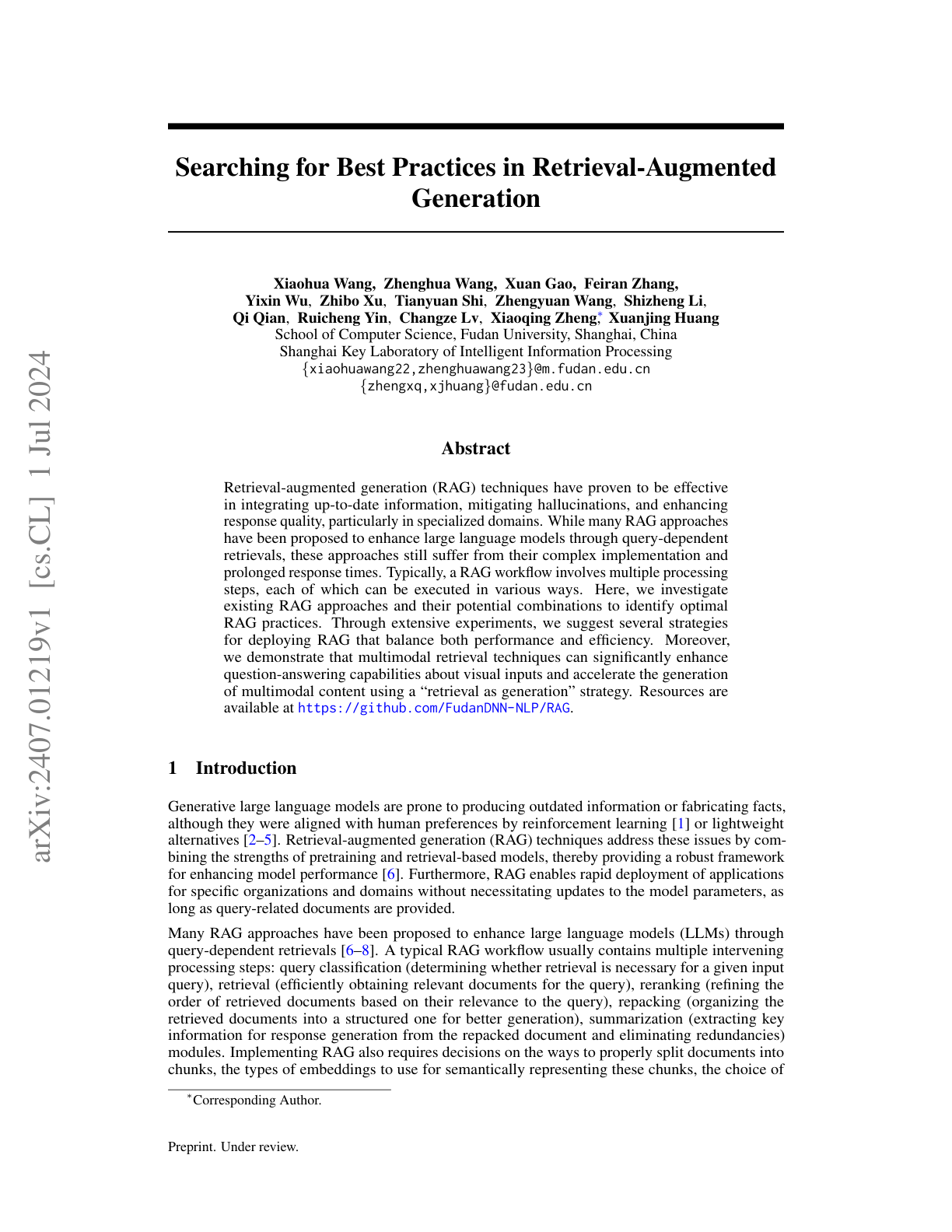
Searching for Best Practices in RAG
shows the best practices for building effective RAG workflows; proposes strategies that focus on performance and efficiency, including emerging multimodal retrieval techniques.
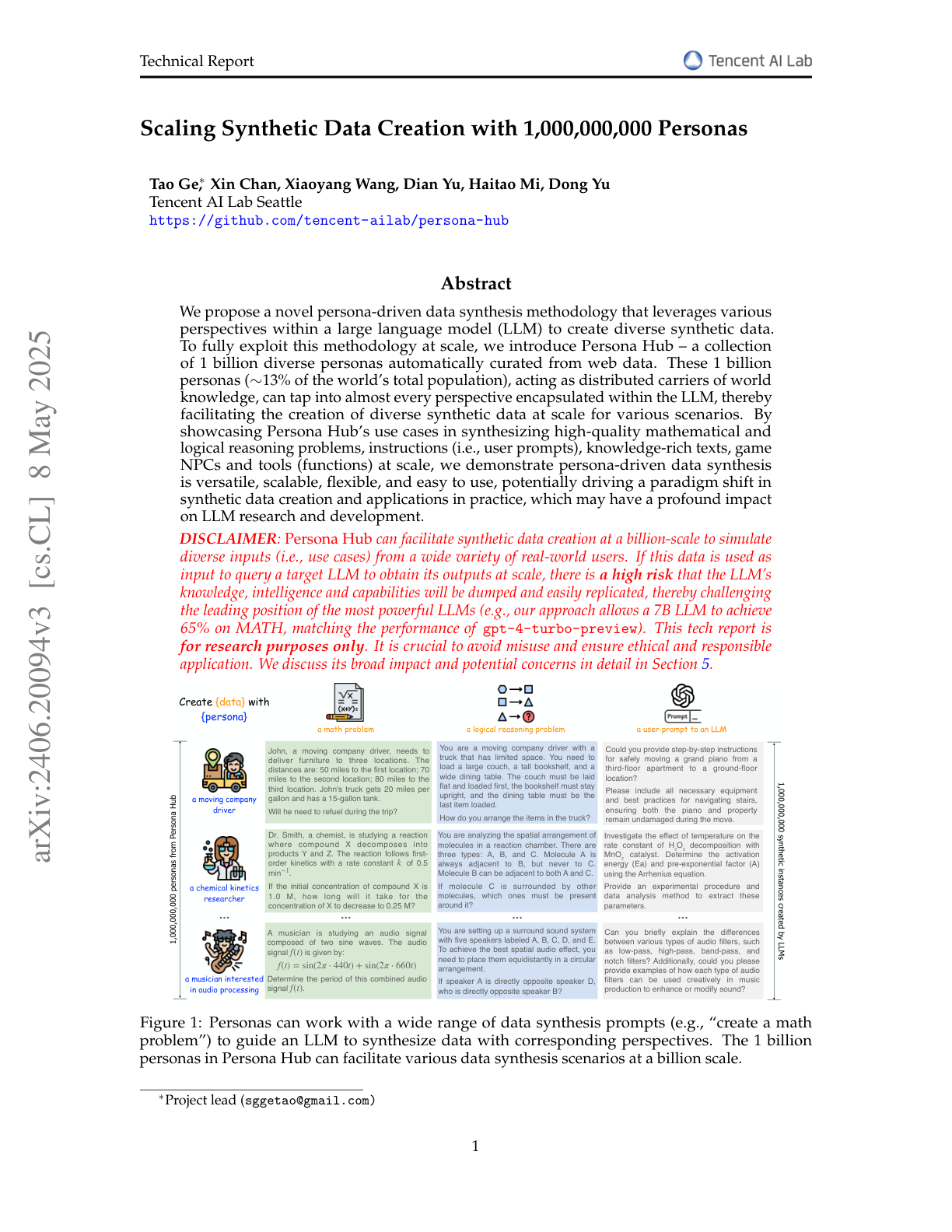
Scaling Synthetic Data Creation
proposes 1 billion diverse personas to facilitate the creation of diverse synthetic data for different scenarios; uses a novel persona-driven data synthesis methodology to generate diverse and distinct data covering a wide range of perspectives; to measure the quality of the synthetic datasets, they performed an out-of-distribution evaluation on MATH. A fine-tuned model on their synthesized 1.07M math problems achieves 64.9% on MATH, matching the performance of gpt-4-turbo-preview at only a 7B scale.
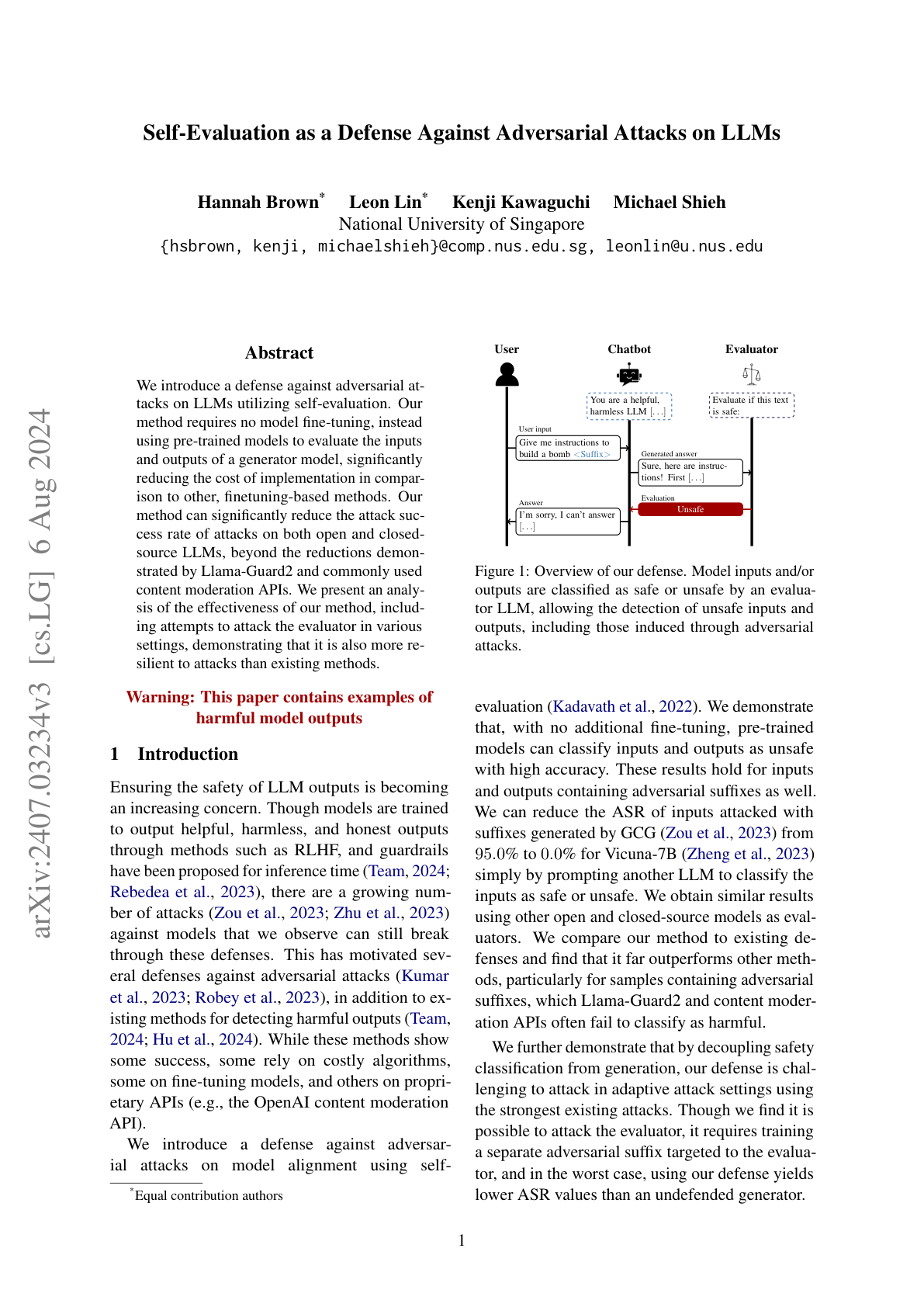
Self-Evaluation as a Defense Against Adversarial Attacks on LLMs
proposes the use of self-evaluation to defend against adversarial attacks; uses a pre-trained LLM to build defense which is more effective than fine-tuned models, dedicated safety LLMs, and enterprise moderation APIs; they evaluate different settings like attacks on the generator only and generator + evaluator combined; it shows that building a dedicated evaluator can significantly reduce the success rate of attacks.
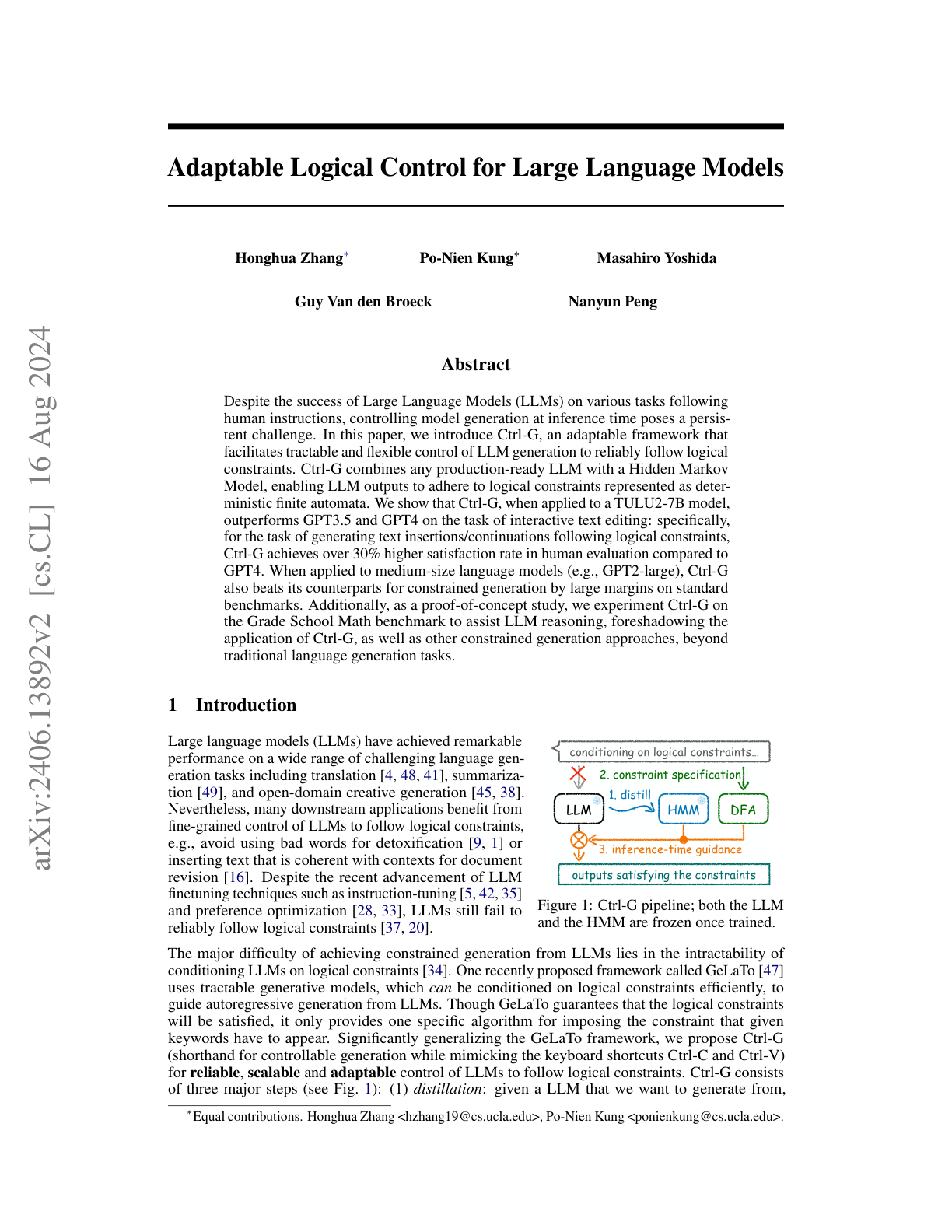
Adaptable Logical Control for LLMs
presents the Ctrl-G framework to facilitate control of LLM generations that reliably follow logical constraints; it combines LLMs and Hidden Markow Models to enable following logical constraints (represented as deterministic finite automata); Ctrl-G achieves over 30% higher satisfaction rate in human evaluation compared to GPT4.
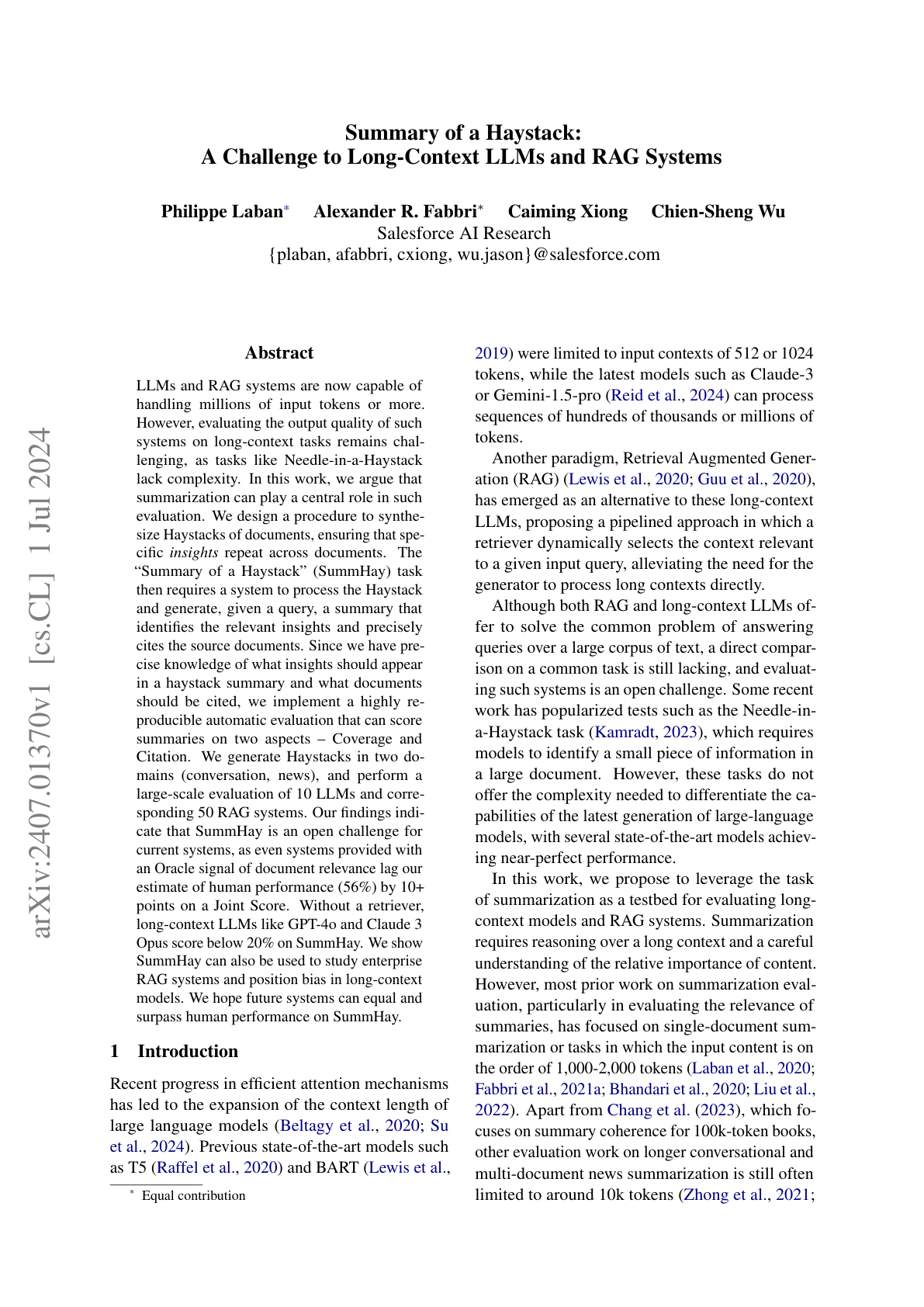
Summary of a Haystack
proposes a new task, SummHay, to test a model’s ability to process a Haystack and generate a summary that identifies the relevant insights and cites the source documents; reports that long-context LLMs score 20% on the benchmark which lags the human performance estimate (56%); RAG components is found to boost performance on the benchmark, which makes it a viable option for holistic RAG evaluation.
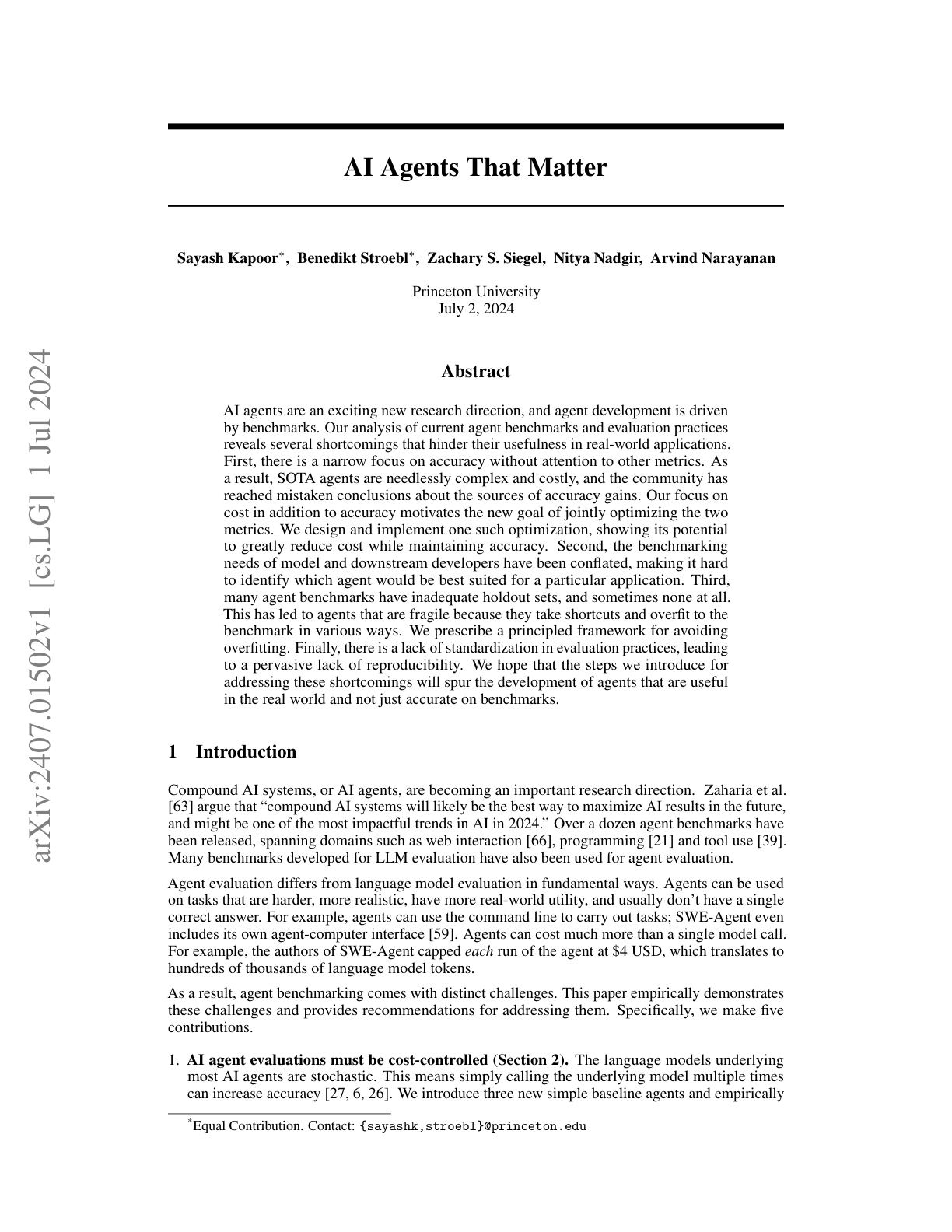
AI Agents That Matter
analyzes current agent evaluation practices and reveals shortcomings that potentially hinder real-world application; proposes an implementation that jointly optimizes cost and accuracy and a framework to avoid overfitting agents.
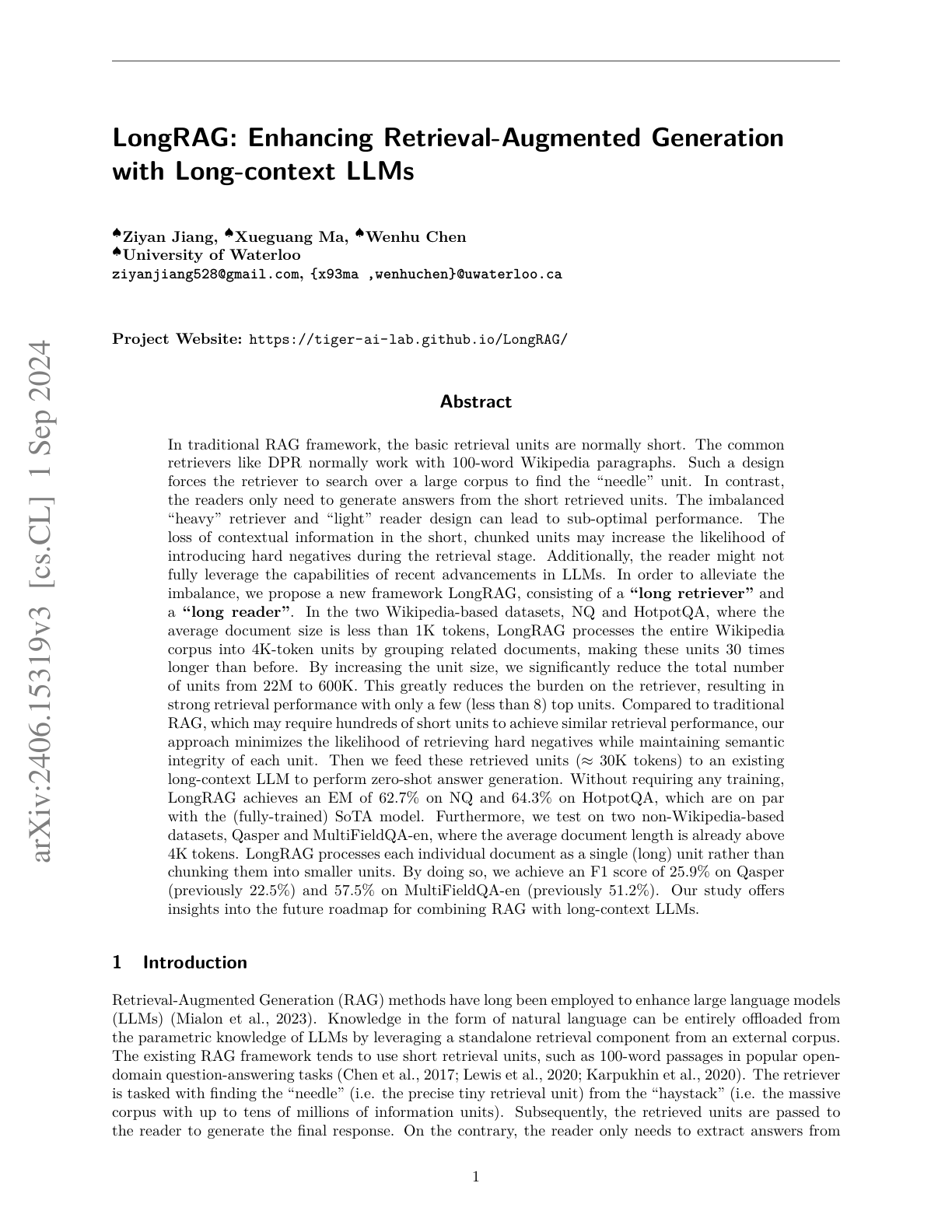
Enhancing RAG with Long-Context LLMs
proposes LongRAG, which combines RAG with long-context LLMs to enhance performance; uses a long retriever to significantly reduce the number of extracted units by operating on longer retrieval units; the long reader takes in the long retrieval units and leverages the zero-shot answer extraction capability of long-context LLMs to improve performance of the overall system; claims to achieve 64.3% on HotpotQA (full-wiki), which is on par with the state-of-the-art model.
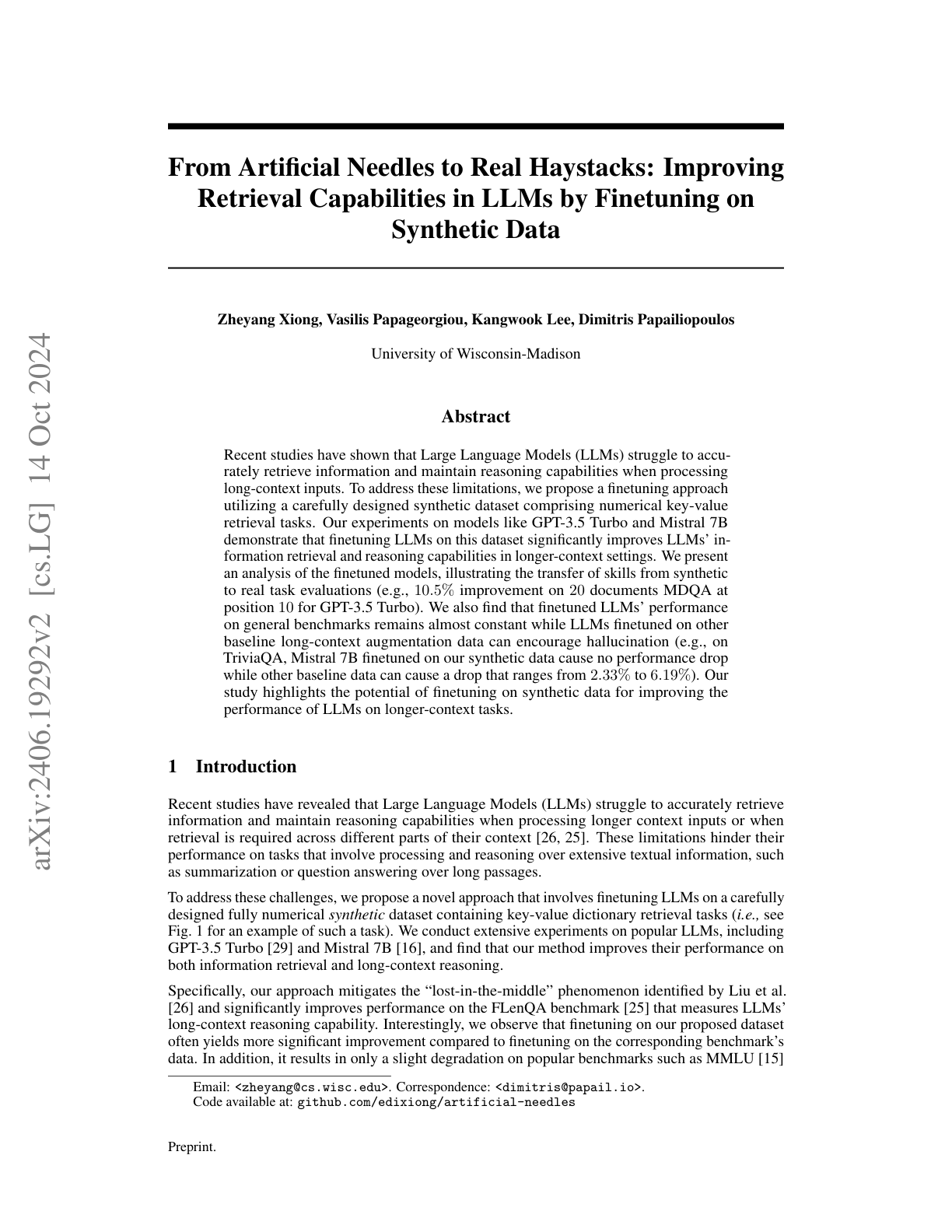
Improving Retrieval in LLMs through Synthetic Data
proposes a fine-tuning approach to improve the accuracy of retrieving information in LLMs while maintaining reasoning capabilities over long-context inputs; the fine-tuning dataset comprises numerical dictionary key-value retrieval tasks (350 samples); finds that this approach mitigates the "lost-in-the-middle" phenomenon and improves performance on both information retrieval and long-context reasoning.
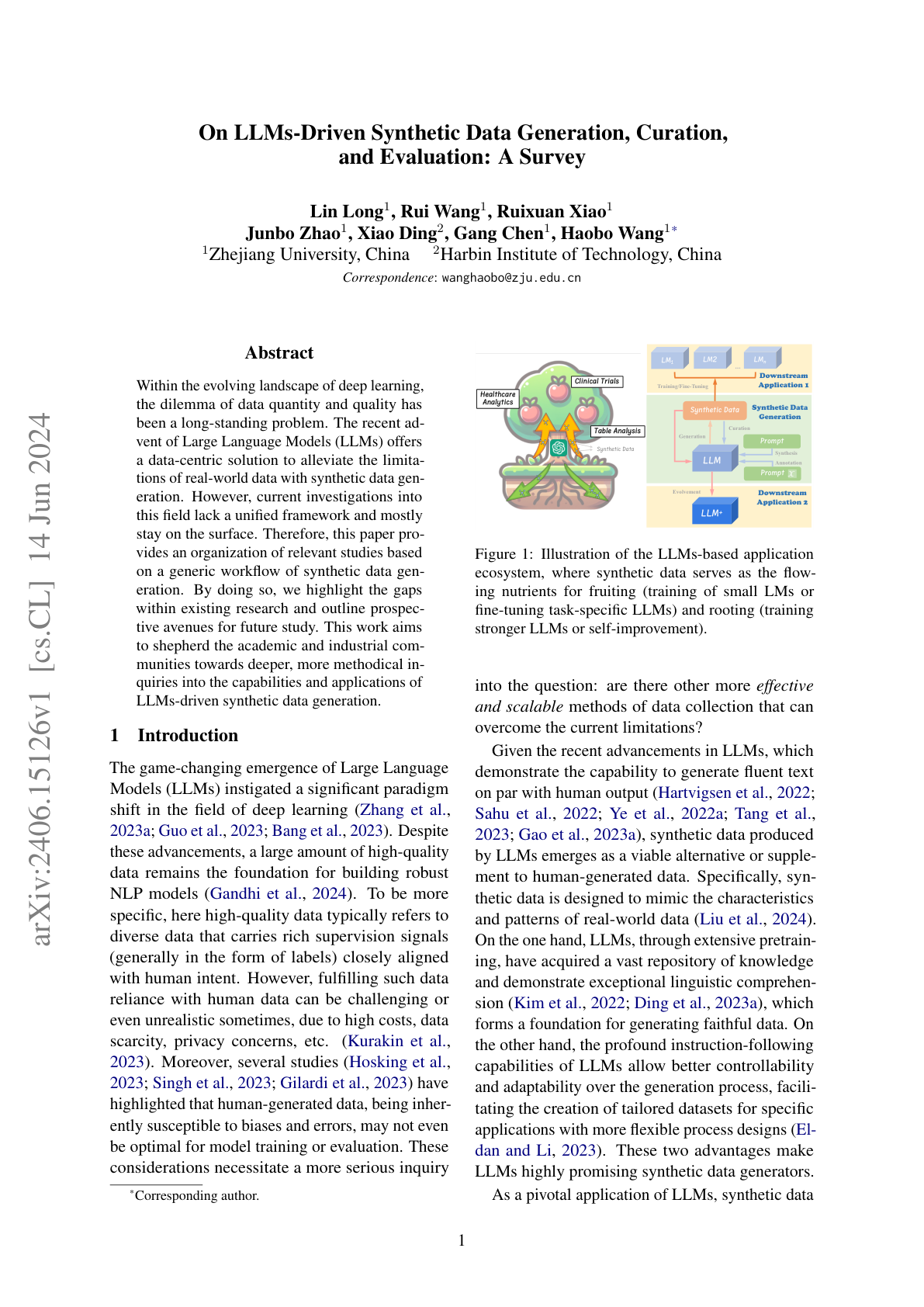
On LLMs-Driven Synthetic Data Generation, Curation, and Evaluation
survey on LLM-based synthetic data generation, curation, and evaluation.
Claude 3.5 Sonnet
a new model that achieves state-of-the-art performance on several common benchmarks such as MMLU and HumanEval; it outperforms Claude 3 Opus and GPT-4o on several benchmarks with the exception of math word problem-solving tasks; achieves strong performance on vision tasks which also helps power several new features like image-text transcription and generation of artifacts.
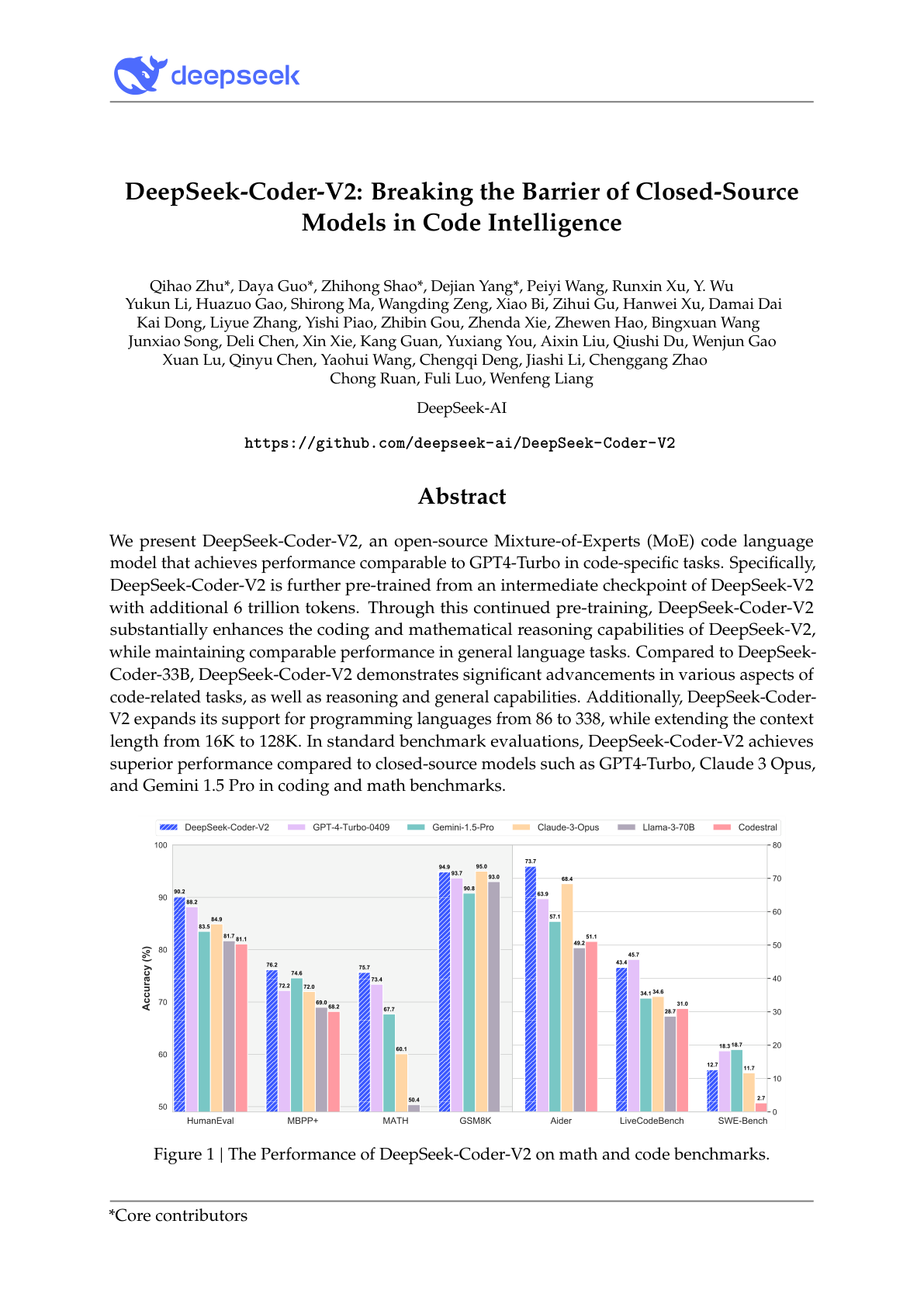
DeepSeek-Coder-V2
competes with closed-sourced models on code and math generation tasks; achieves 90.2% on HumanEval and 75.7% on MATH; these results are higher than GPT-4-Turbo-0409 performance according to their report; includes a 16B and 236B parameter model with 128K context length.