AI Papers of the Week
Every paper worth reading in AI, hand-picked one week at a time.
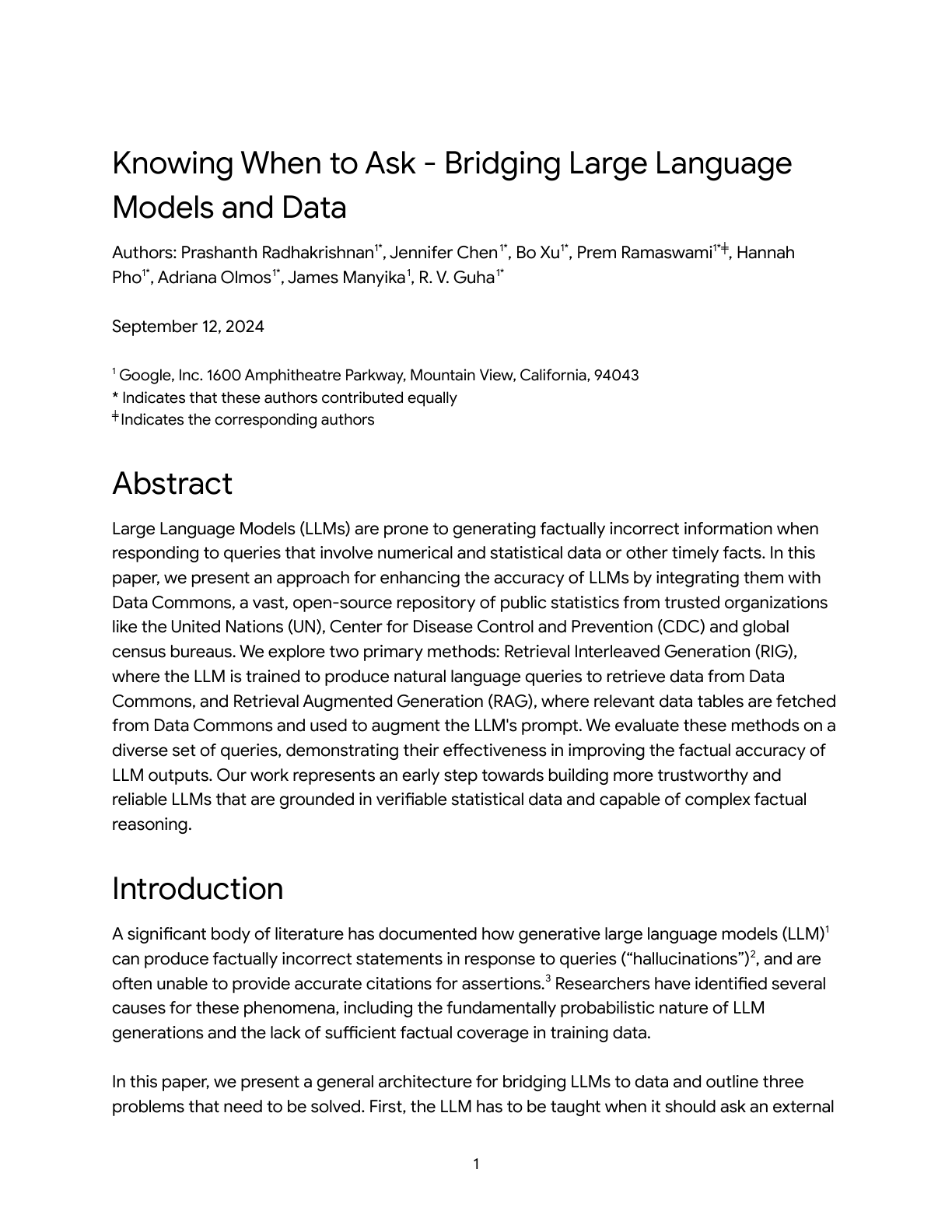
DataGemma
includes a series of fine-tuned Gemma 2 models to help LLMs access and incorporate numerical and statistical data; proposes a new approach called Retrieval Interleaved Generation (RIG) which can reliably incorporate public statistical data from Data Commons into LLM responses; RIG is a tool-inspired approach, can interleave statistical tokens with natural language questions suitable for retrieval from Data Commons; to attain such capability, they fine-tune the LLM on an instruction-response dataset generated with the help of Gemini 1.5; the RIG approach improves factuality from 5-7% to about 58%.
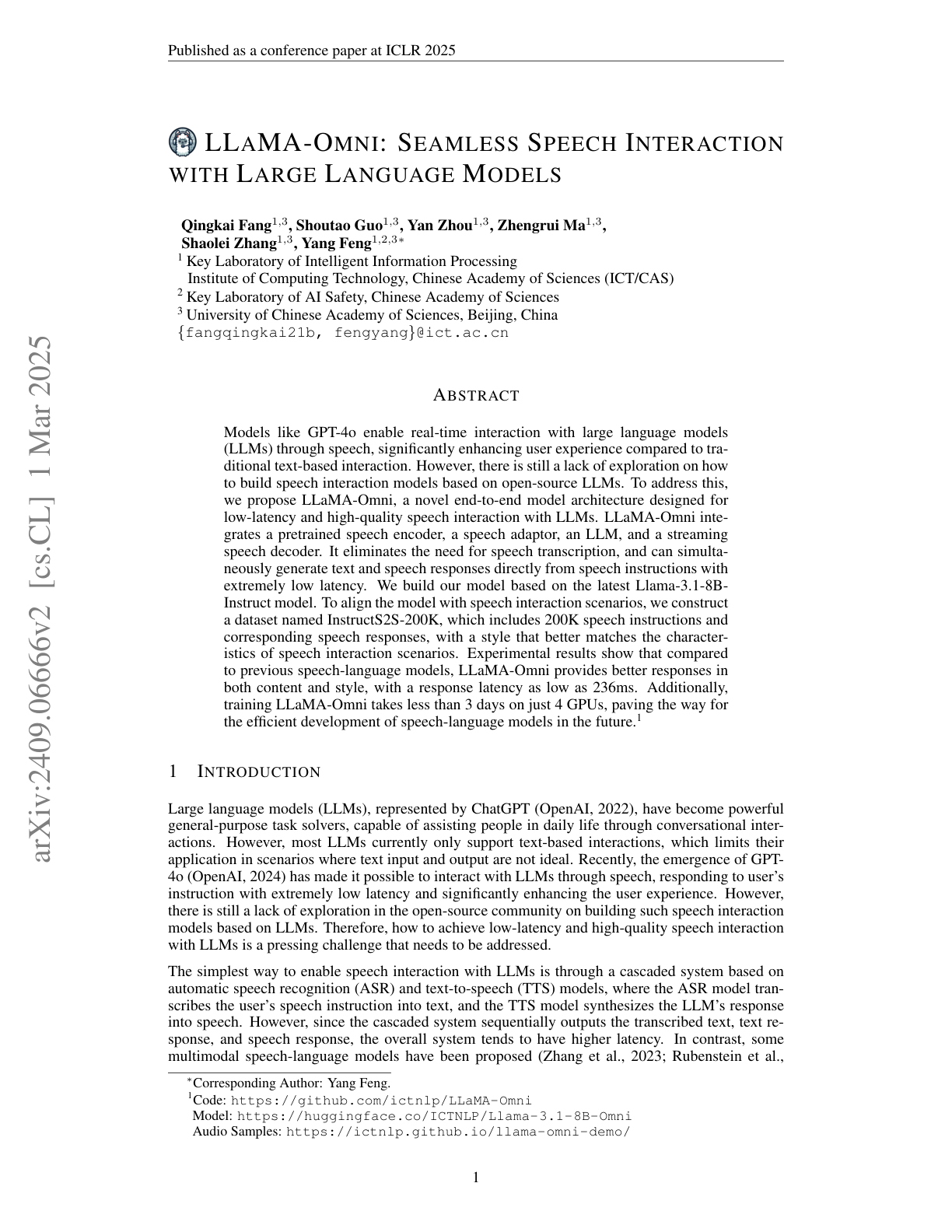
LLaMa-Omni
a model architecture for low-latency speech interaction with LLMs; it is based on Llama-3.1-8B-Instruct and can simultaneously generate both text and speech responses given speech instructions; responses can be generated with a response latency as low as 226ms; architecture-wise, it involves a speech encoder (Whispter-large-v3), a speech adaptor, an LLM, and a speech decoder; they also created a dataset of 200K speech interactions and responses.
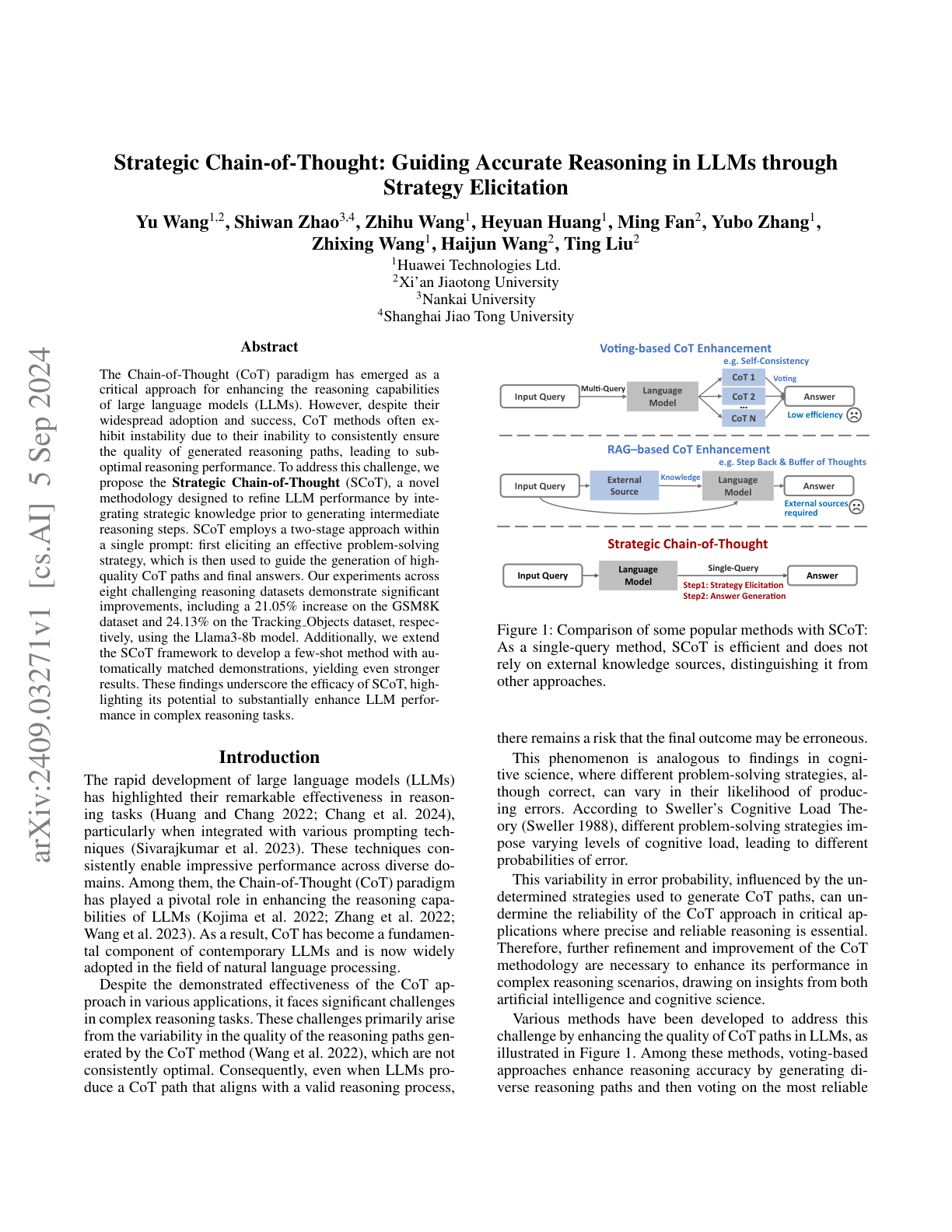
Strategic Chain-of-Thought
a method to refine LLM performance by incorporating strategic knowledge before the intermediate CoT reasoning steps; the problem-solving strategy helps to guide the generation of the CoT paths and final answers; claims to achieve a 21.05% increase on the GSM8K datasets using the Llama3-8b model.
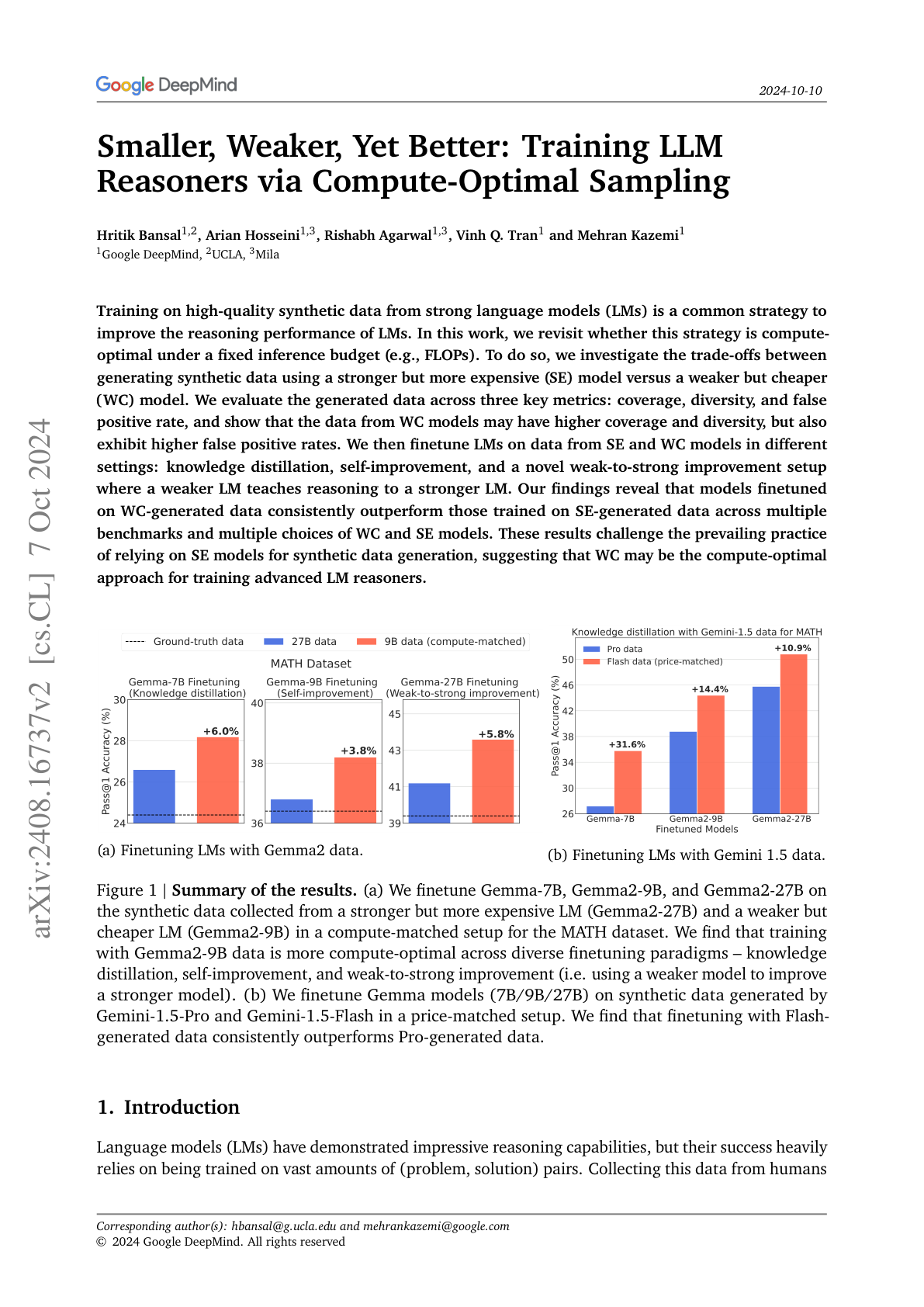
Smaller, Weaker, Yet Better
finds that weaker + cheaper (WC) models can generate better synthetic data for fine-tuning models compared to data generated with stronger but more expensive models; overall, results suggest that WC models may be a compute-optimal approach for training advanced LLM reasoners.
Language Modeling on Tabular Data
presents a comprehensive survey of language modeling techniques for tabular data; includes topics such as categorization of tabular data structures and data types, datasets used for model training and evaluation, modeling techniques and training objectives, data processing methods, popular architectures, and challenges and future research directions.
LongWriter
proposes AgentWrite to enable off-the-shelf LLMs to generate coherent outputs beyond 20K words; AgentWrite breaks down the long generation task into subtasks and in a divide-and-conquer approach generates; the agent breaks the task into multiple writing subtasks and concatenates the outputs to get a final output (i.e., plan + write); the approach is then used to build SFT datasets that are used to tune LLMs to generate coherent longer outputs automatically; a 9B parameter model, further improved through DPO, achieves state-of-the-art performance on their benchmark, and surpasses proprietary models.
EfficientRAG
trains an auto-encoder LM to label and tag chunks; it retrieves relevant chunks, tags them as either <Terminate> or <Continue>, and annotates <Continue> chunks for continuous processing; then a filter model is trained to formulate the next-hop query based on the original question and previous annotations; this is done iteratively until all chunks are tagged as <Terminate> or the maximum # of iterations is reached; after the process above has gathered enough information to answer the initial question, the final generator (an LLM) generates the final answer.

SAM 2
an open unified model for real-time, promptable object segmentation in images and videos; can be applied to unseen visual content without the need for custom adaptation; to enable accurate mask prediction in videos, a memory mechanism is introduced to store information on the object and previous interactions; the memory module also allows real-time processing of arbitrarily long videos; SAM2 significantly outperforms previous approaches on interactive video segmentation across 17 zero-shot video datasets while requiring three times fewer human-in-the-loop interactions.
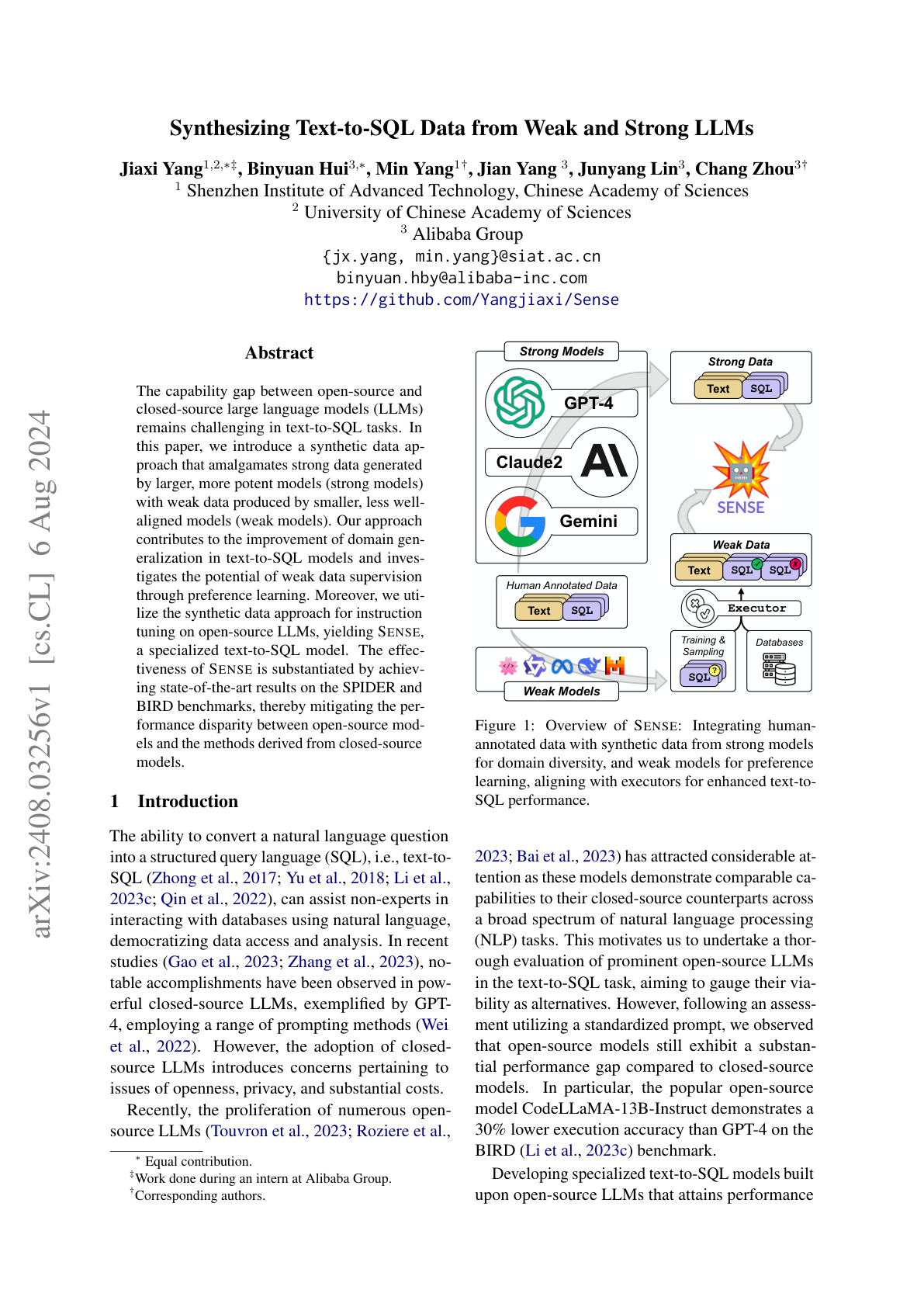
Synthesizing Text-to-SQL Data from Weak and Strong LLMs
proposes integrated synthetic data to build a highly specialized SoTA text-to-SQL model called SENSE; the synthetic data from strong models enhances data diversity while valuable erroneous data from weaker models combined with an executor to learn from execution feedback; preference learning is used to instruction-tune LLMs to learn from both correct and incorrect samples; SENSE achieves state-of-the-art results on the SPIDER and BIRD benchmarks, which bridges the performance gap between open-source models and methods that use closed-source models.
RAGEval
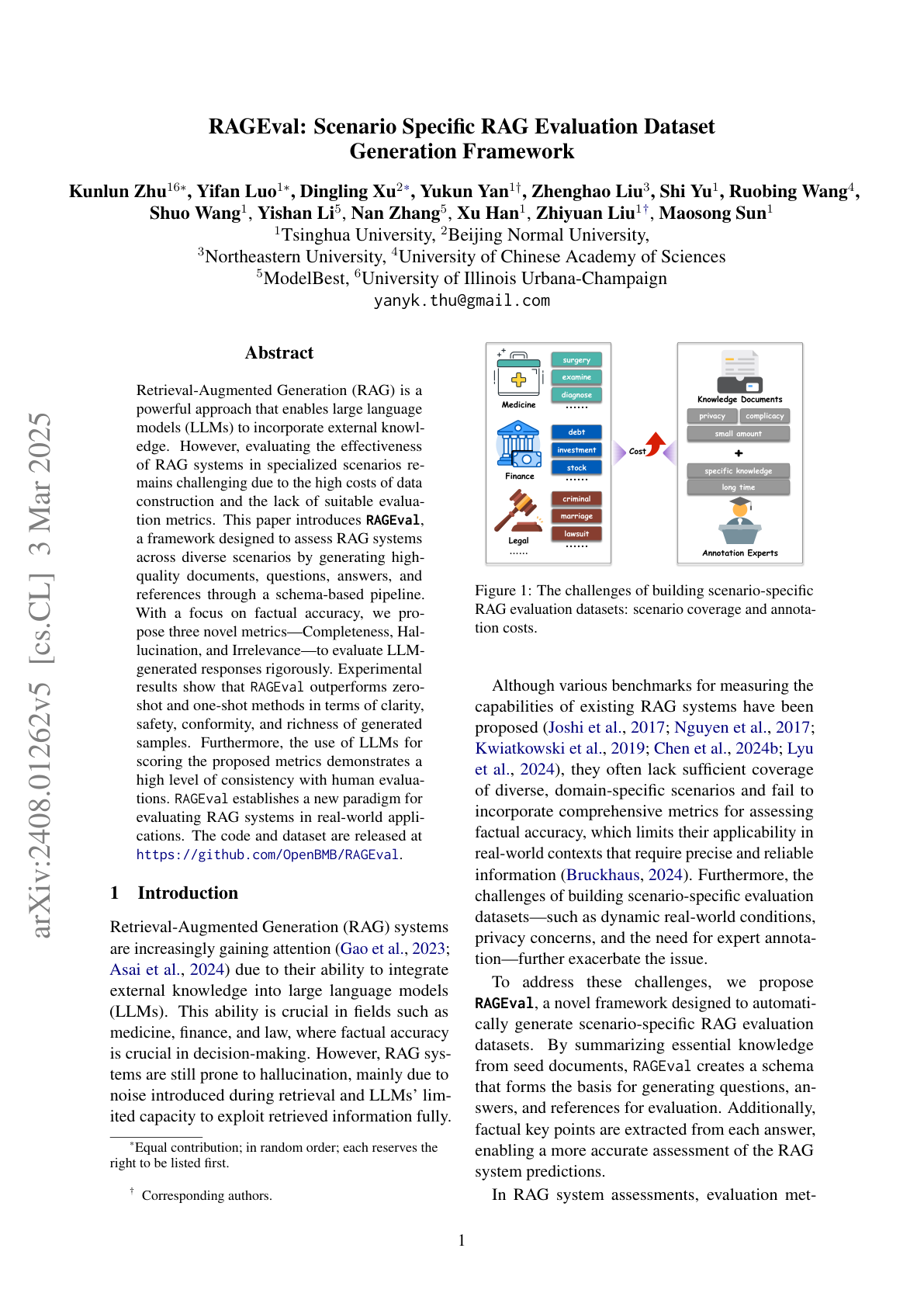
proposes a simple framework to automatically generate evaluation datasets to assess knowledge usage of different LLM under different scenarios; it defines a schema from seed documents and then generates diverse documents which leads to question-answering pairs; the QA pairs are based on both the articles and configurations.

AlphaProof & Alpha Geometry 2
solved 4 out of 6 problems in this year’s IMO which is the equivalent of a silver-medal score; AlphaProof consists of a Gemini model that automatically translates natural language problem statements into formal statements (i.e., formalizer network); then a solver network searches for proofs/disproofs and progressively trains itself using AlphaZero to learn to solve even more complex problems; AlphaGeometry 2, a neuro symbolic hybrid system, proved the geometry problem; based on the Gemini model and trained from scratch on large amounts of synthetic data.
MINT-1T
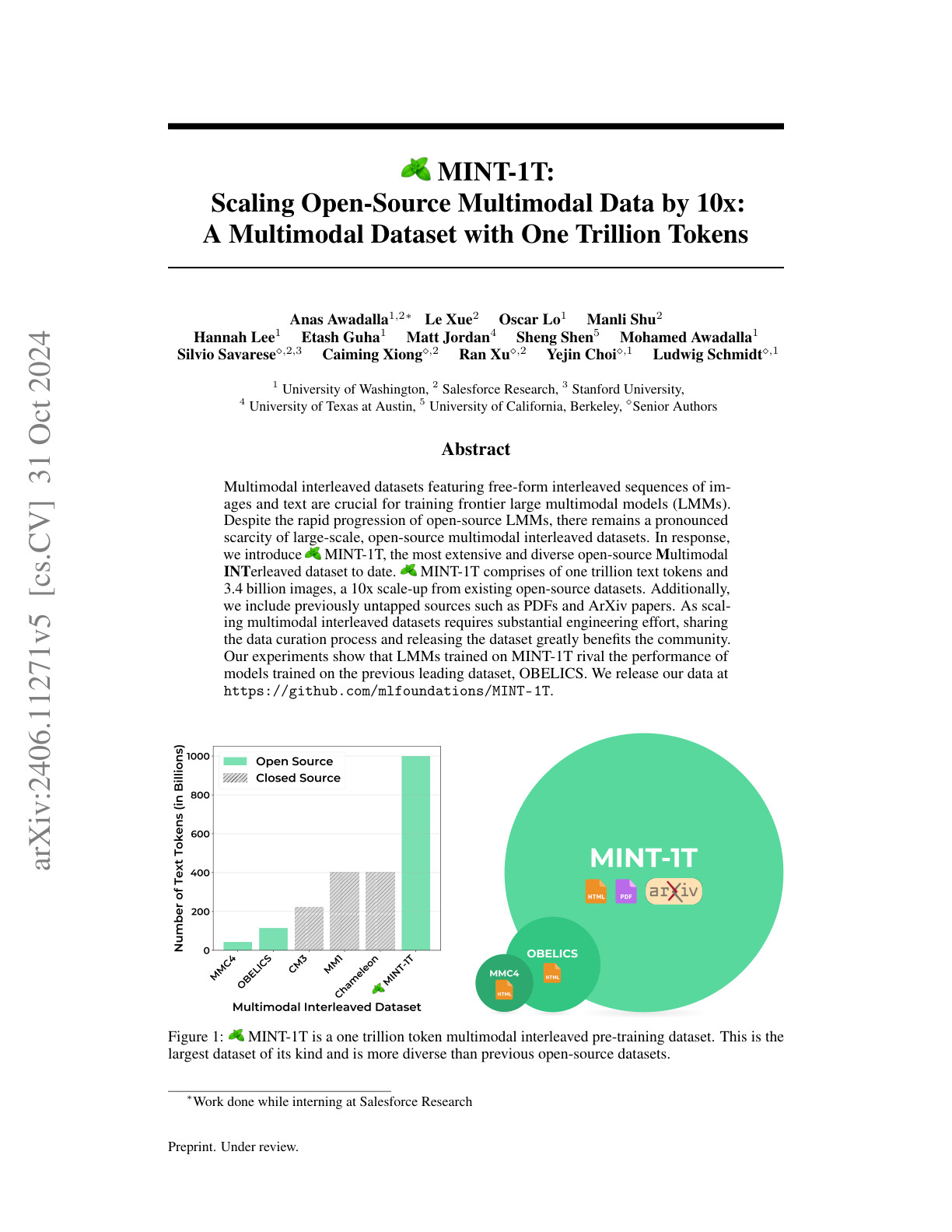
open-sources a large-scale multimodal interleaved dataset consisting of 1 trillion tokens which has 3.4 billion images; it also includes new sources such as PDFs and ArXiv papers.
Model Collapse on Synthetic Data
investigates the effects of training models on recursively generated data; finds that training on model-generated content can cause irreversible defects where the original content distribution disappears; shows that the effect, referred to as model collapse, occurs in LLMs, VAEs, and GMMs; while tested on smaller scale models (~100M params), the authors suggest this effect is highly likely to transfer to larger models over time.
RankRAG
introduces a new instruction fine-tuning framework to perform effective context ranking and answering generation to enhance an LLM’s RAG capabilities; it leverages a small ranking dataset to outperform existing expert ranking models; shows that a Llama3-RankRAG significantly outperforms Llama3-ChatQA-1.5 and GPT-4 models on nine knowledge-intensive benchmarks.
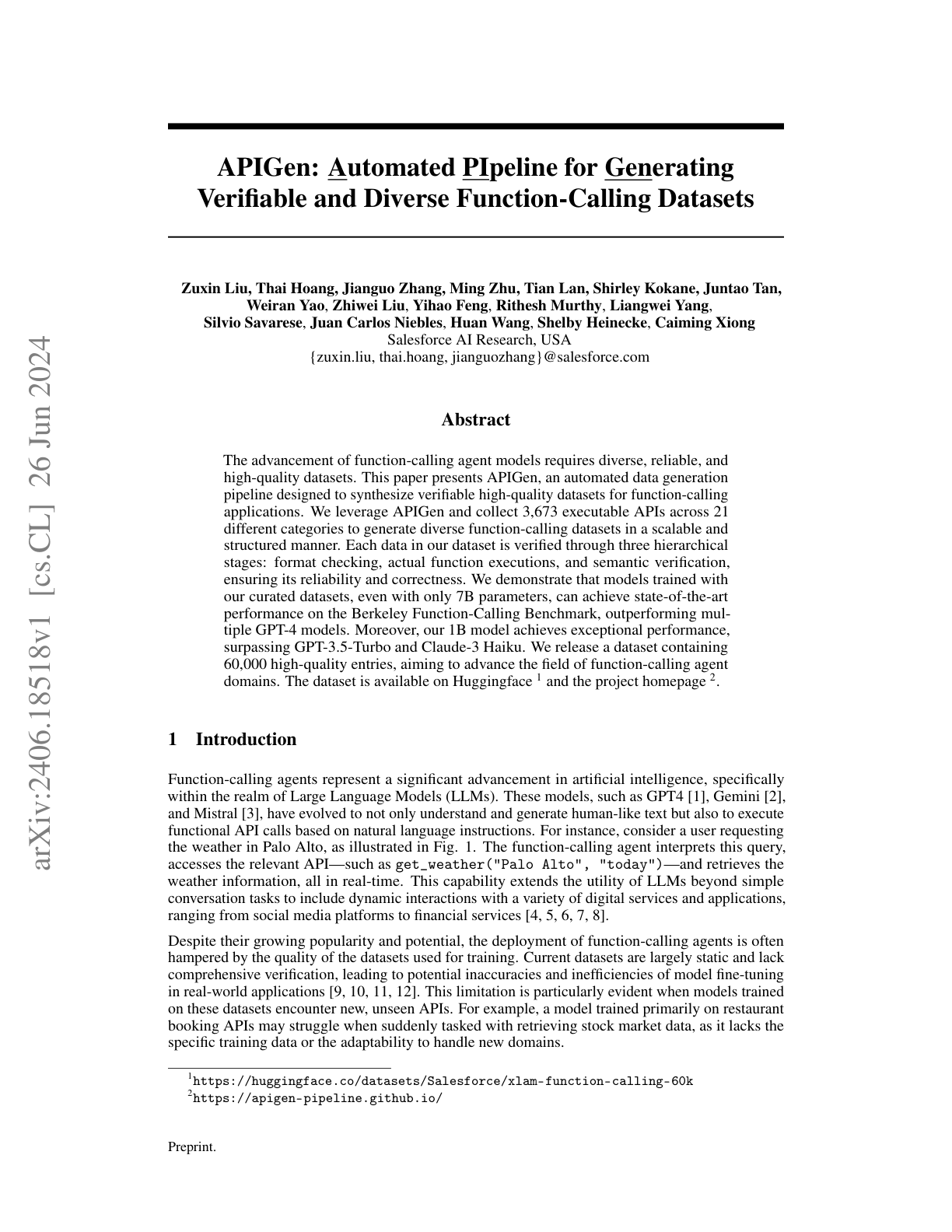
APIGen
presents an automated data generation pipeline to synthesize high-quality datasets for function-calling applications; shows that 7B models trained on curated datasets outperform GPT-4 models and other state-of-the-art models on the Berkeley Function-Calling Benchmark; a dataset consisting of 60K entries is also released to help with research in function-calling enabled agents.
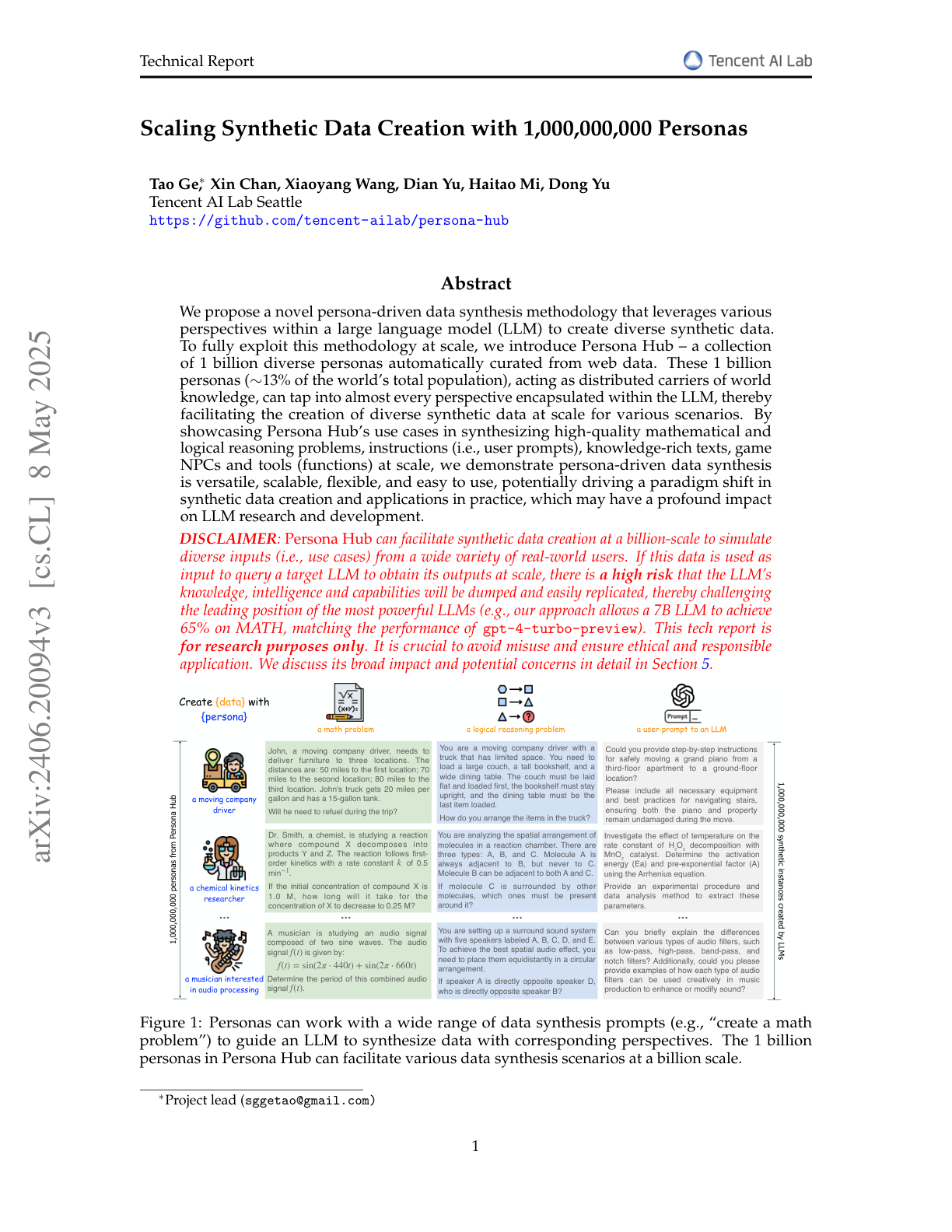
Scaling Synthetic Data Creation
proposes 1 billion diverse personas to facilitate the creation of diverse synthetic data for different scenarios; uses a novel persona-driven data synthesis methodology to generate diverse and distinct data covering a wide range of perspectives; to measure the quality of the synthetic datasets, they performed an out-of-distribution evaluation on MATH. A fine-tuned model on their synthesized 1.07M math problems achieves 64.9% on MATH, matching the performance of gpt-4-turbo-preview at only a 7B scale.
LLM See, LLM Do
closely investigates the effects and effectiveness of synthetic data and how it shapes a model’s internal biases, calibration, attributes, and preferences; finds that LLMs are sensitive towards certain attributes even when the synthetic data prompts appear neutral; demonstrates that it’s possible to steer the generation profiles of models towards desirable attributes.
Improving Retrieval in LLMs through Synthetic Data
proposes a fine-tuning approach to improve the accuracy of retrieving information in LLMs while maintaining reasoning capabilities over long-context inputs; the fine-tuning dataset comprises numerical dictionary key-value retrieval tasks (350 samples); finds that this approach mitigates the "lost-in-the-middle" phenomenon and improves performance on both information retrieval and long-context reasoning.
Following Length Constraints in Instructions
presents an approach for how to deal with length bias and train instruction following language models that better follow length constraint instructions; fine-tunes a model using DPO with a length instruction augmented dataset and shows less length constraint violations and while keeping a high response quality.
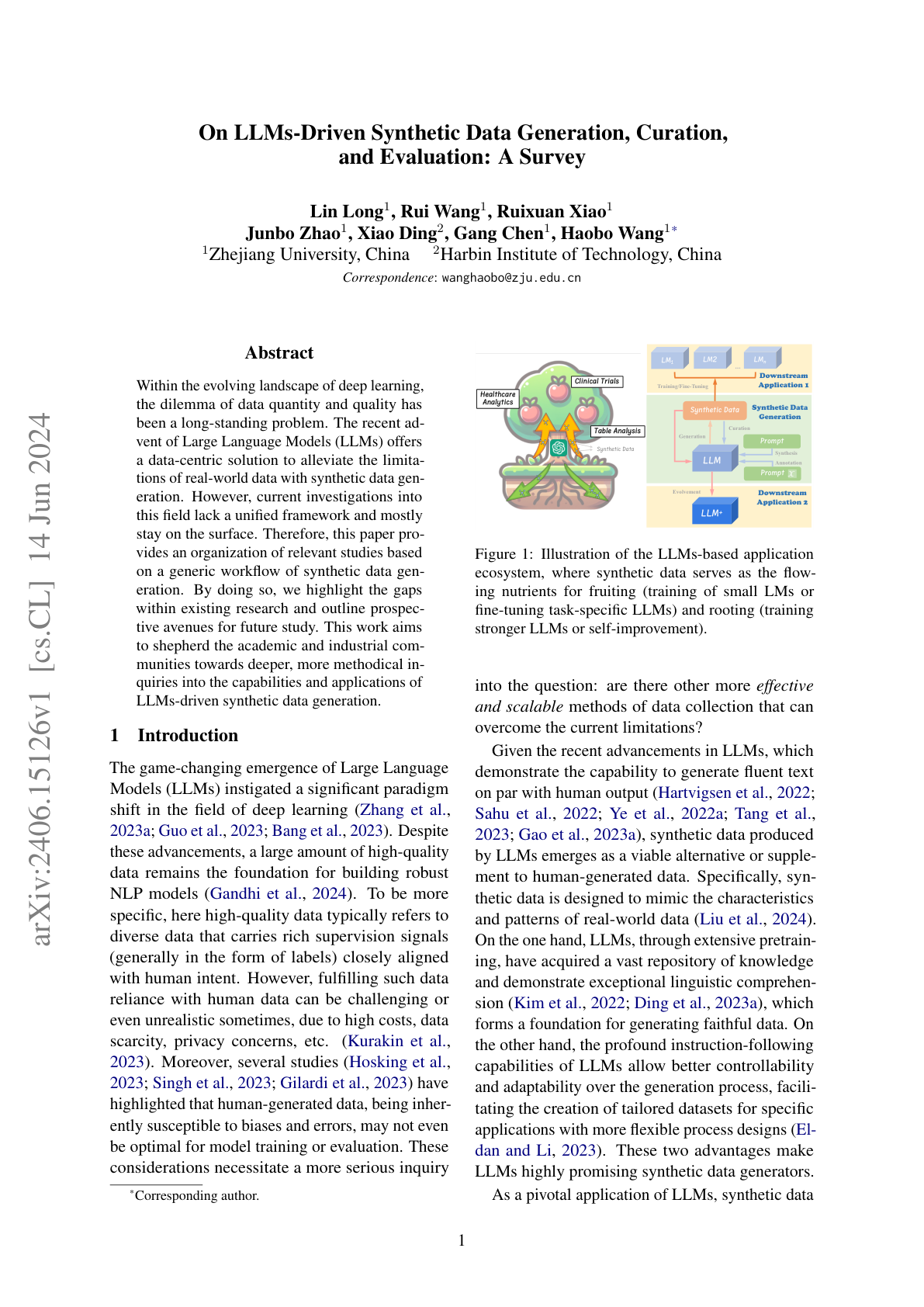
On LLMs-Driven Synthetic Data Generation, Curation, and Evaluation
survey on LLM-based synthetic data generation, curation, and evaluation.
Mitigating Memorization in LLMs
presents a modification of the next-token prediction objective called goldfish loss to help mitigate the verbatim generation of memorized training data; it uses a simple technique that excludes a pseudorandom subset of training tokens at training time; they show that the goldfish loss resists memorization and keeps the model useful; however, it may need to train for longer to more effectively learn from the training data.
SaySelf
a training framework to teach LLMs to express more accurate fine-grained confidence estimates and self-reflective rationales; it performs supervised finetuning on a dataset that contains summaries of the difference between multiple reasoning chains; reinforcement learning is then applied to calibrate confidence estimates, encouraging the LLM to produce accurate, high-confidence predictions and penalize overconfidence in erroneous outputs.
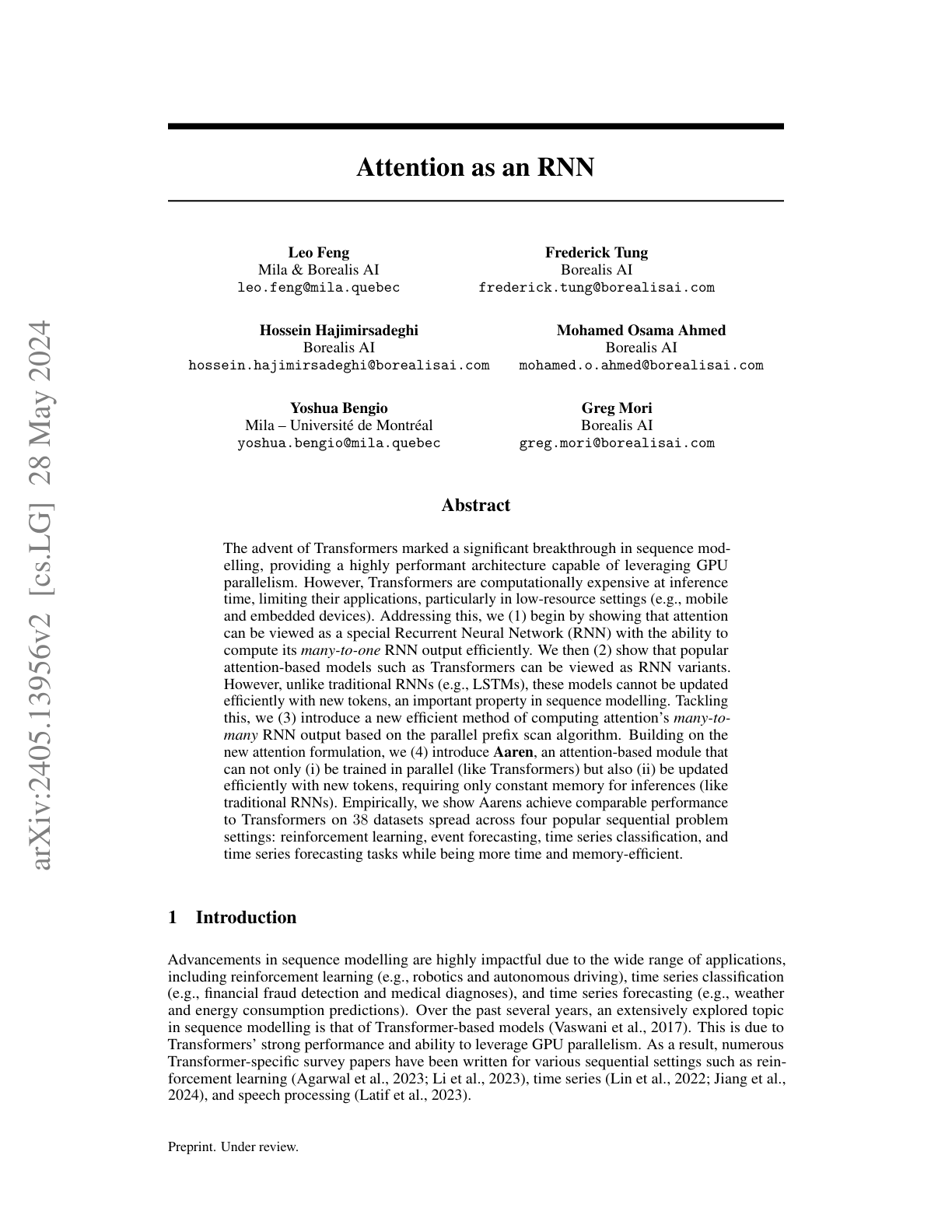
Attention as an RNN
presents a new attention mechanism that can be trained in parallel (like Transformers) and be updated efficiently with new tokens requiring constant memory usage for inferences (like RNNs); the attention formulation is based on the parallel prefix scan algorithm which enables efficient computation of attention’s many-to-many RNN output; achieves comparable performance to Transformers on 38 datasets while being more time and memory-efficient.
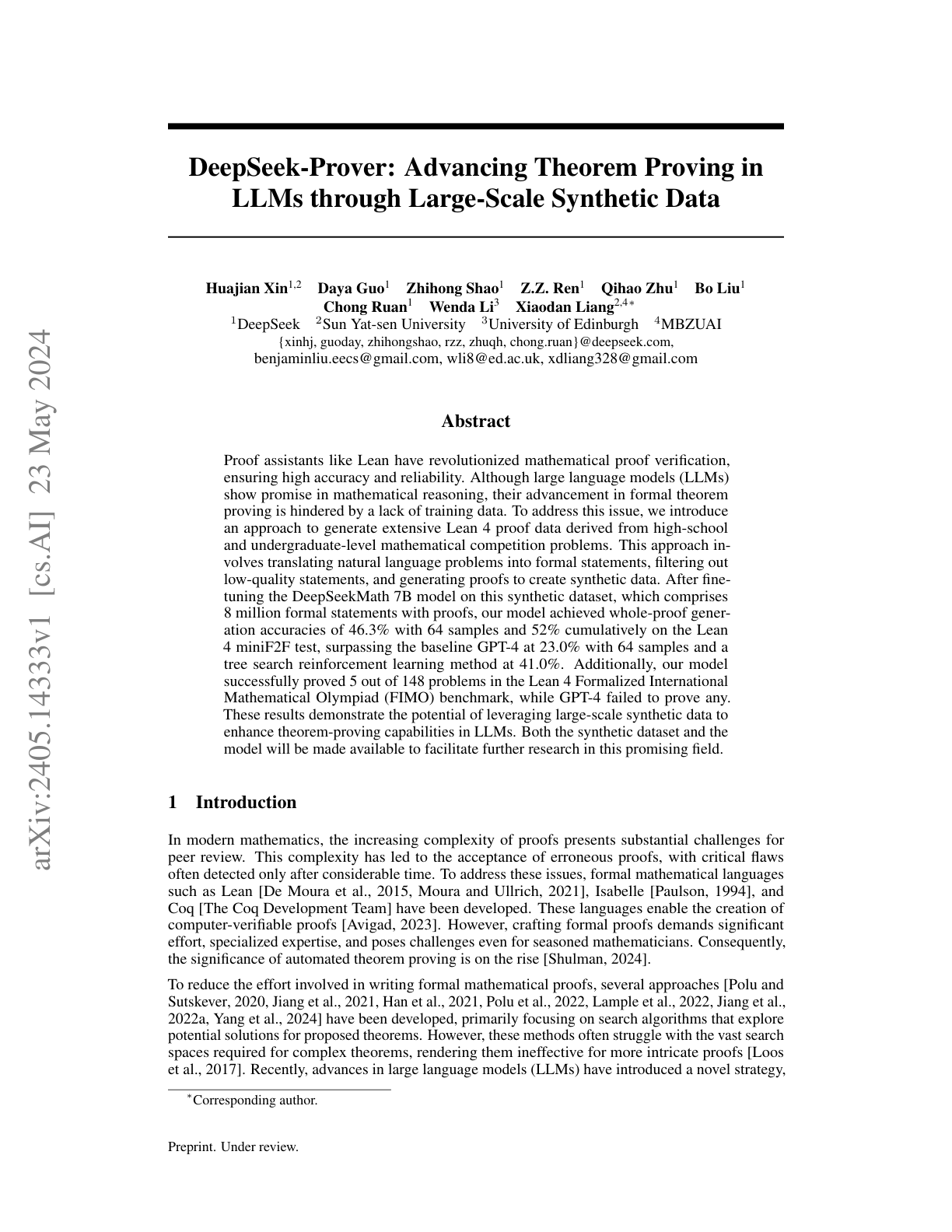
DeepSeek-Prover
introduces an approach to generate Lean 4 proof data from high-school and undergraduate-level mathematical competition problems; it uses the synthetic data, comprising of 8 million formal statements and proofs, to fine-tune a DeepSeekMath 7B model; achieves whole-proof generation accuracies of 46.3% with 64 samples and 52% cumulatively on the Lean 4 miniF2F test; this surpasses the baseline GPT-4 (23.0%) with 64 samples and a tree search RL method (41.0%).