AI Papers of the Week
Every paper worth reading in AI, hand-picked one week at a time.
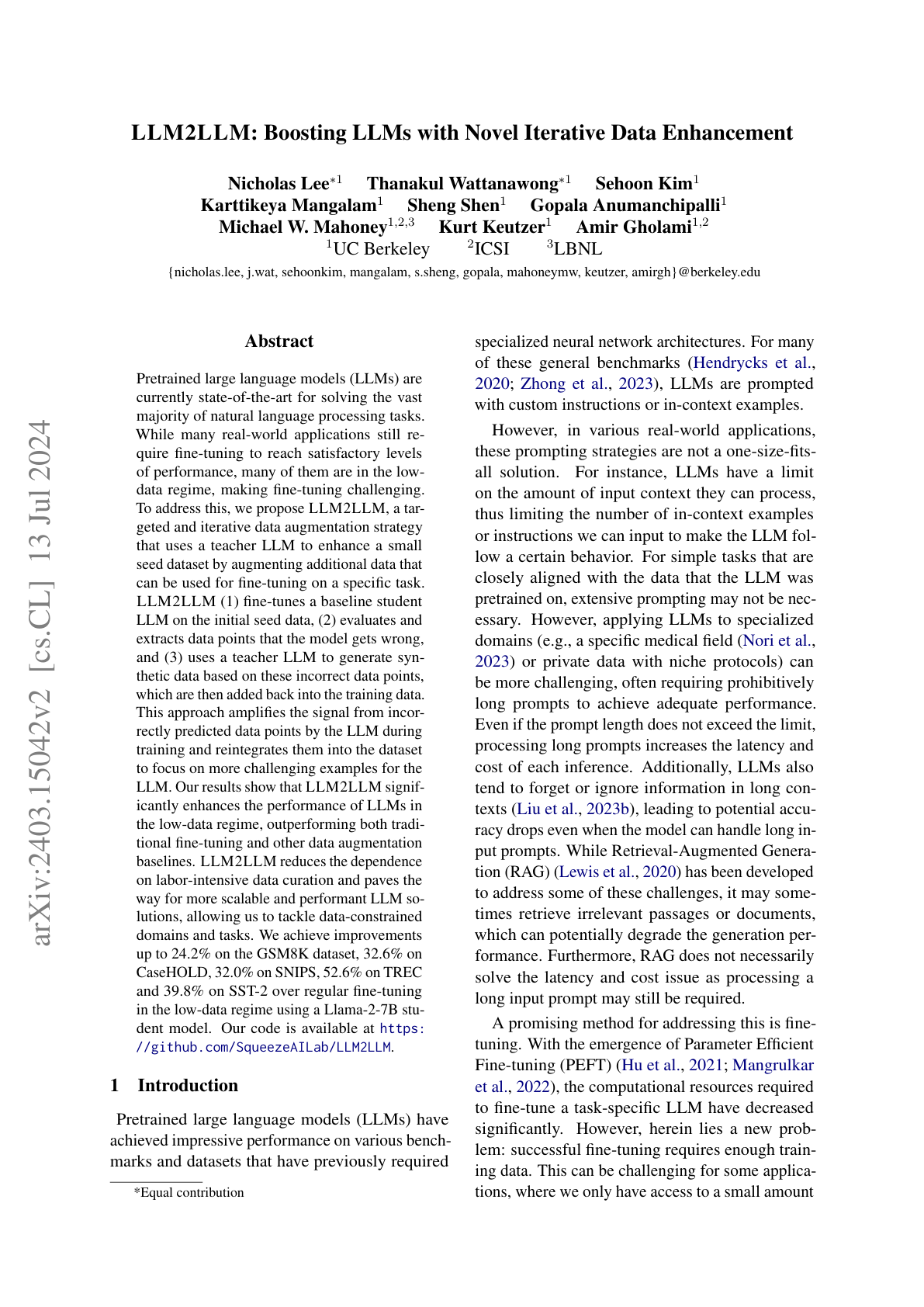
LLM2LLM
LLM2LLM is an iterative data augmentation scheme where a strong teacher LLM generates new training examples targeted at the specific mistakes a student model makes during fine-tuning.
Grok-1
xAI open-sources Grok-1, a 314B-parameter Mixture-of-Experts base model, making it the largest openly released LLM at the time of publication.
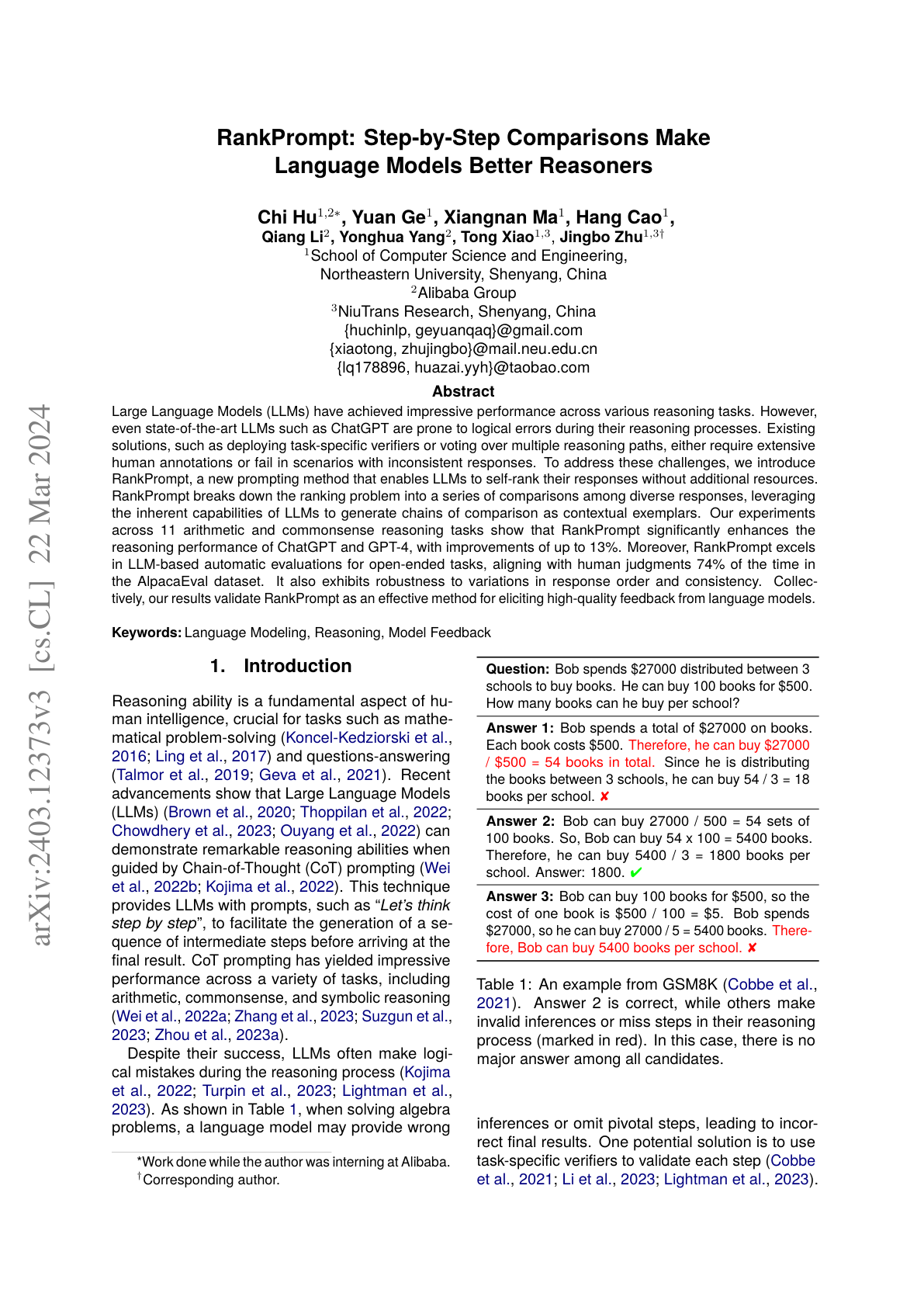
RankPrompt: Step-by-Step Comparisons Make LLMs Better Reasoners
RankPrompt is a prompting method that lets an LLM self-rank its own candidate answers via chains of pairwise comparisons, without needing an external verifier or additional fine-tuning.
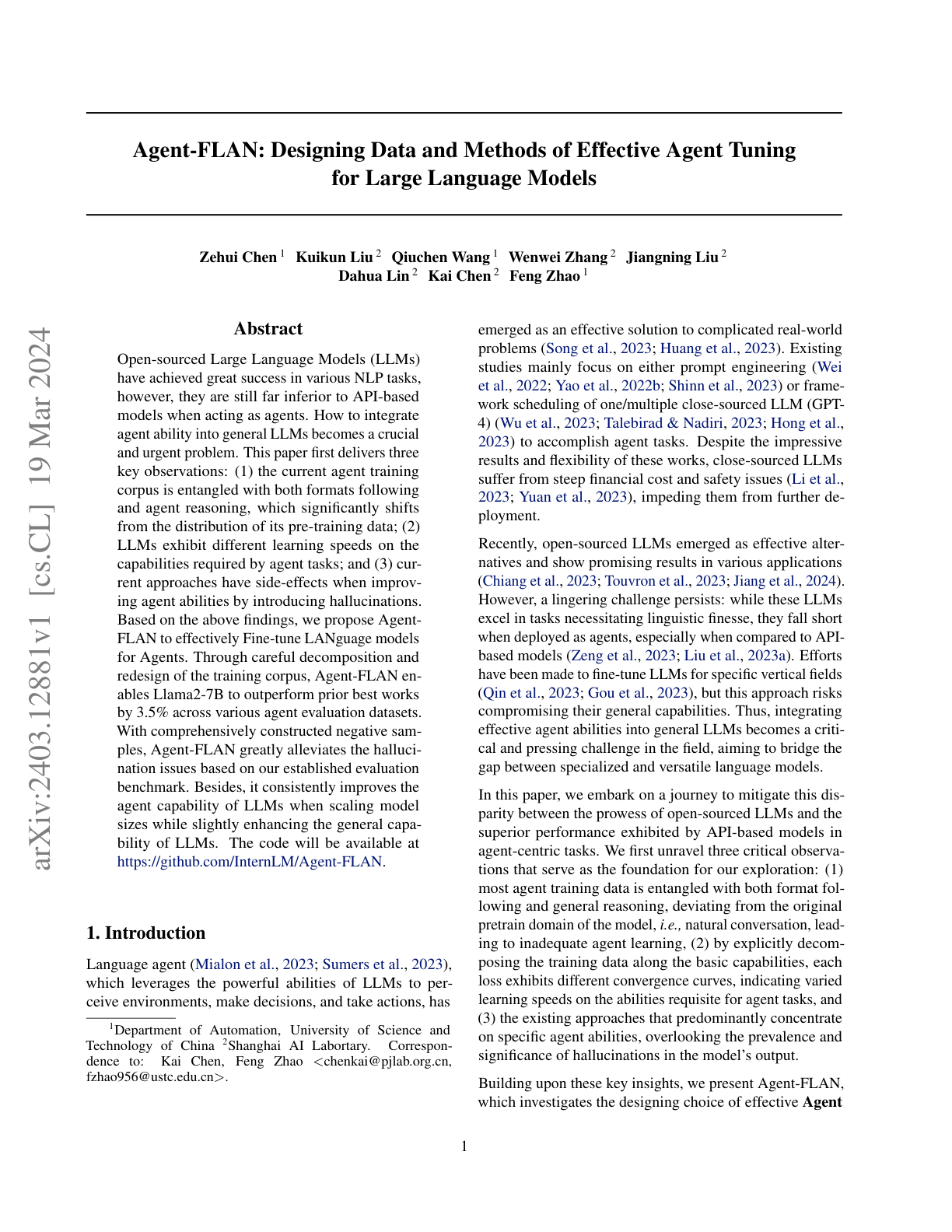
Agent-FLAN
Agent-FLAN redesigns fine-tuning data so that open models can learn agentic skills without sacrificing general capability, hitting new open-source SoTA for Llama2-7B-based agents.
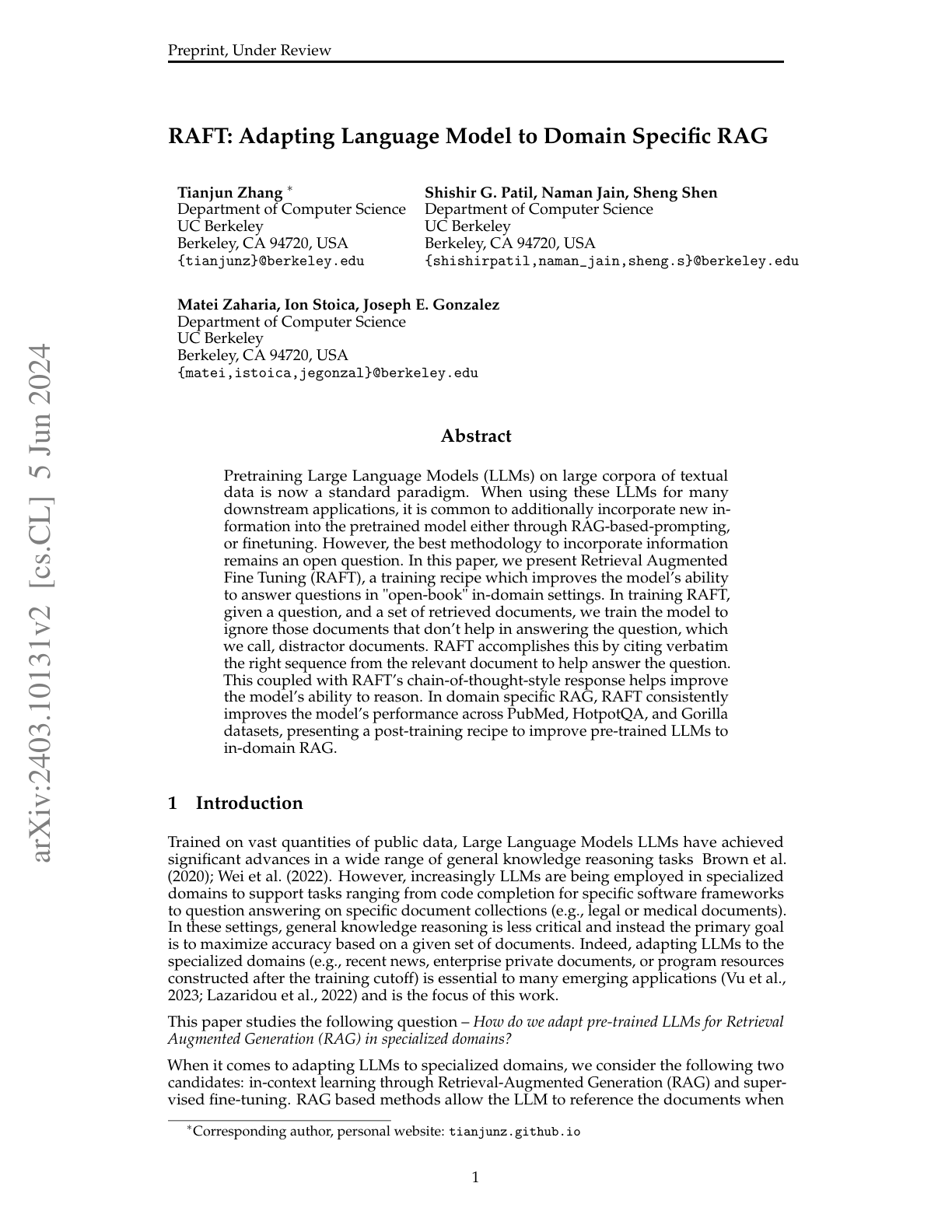
RAFT: Retrieval-Augmented Fine-Tuning
RAFT is a fine-tuning recipe that teaches LLMs to handle distractor documents during RAG and to answer with CoT-style citations to retrieved passages.
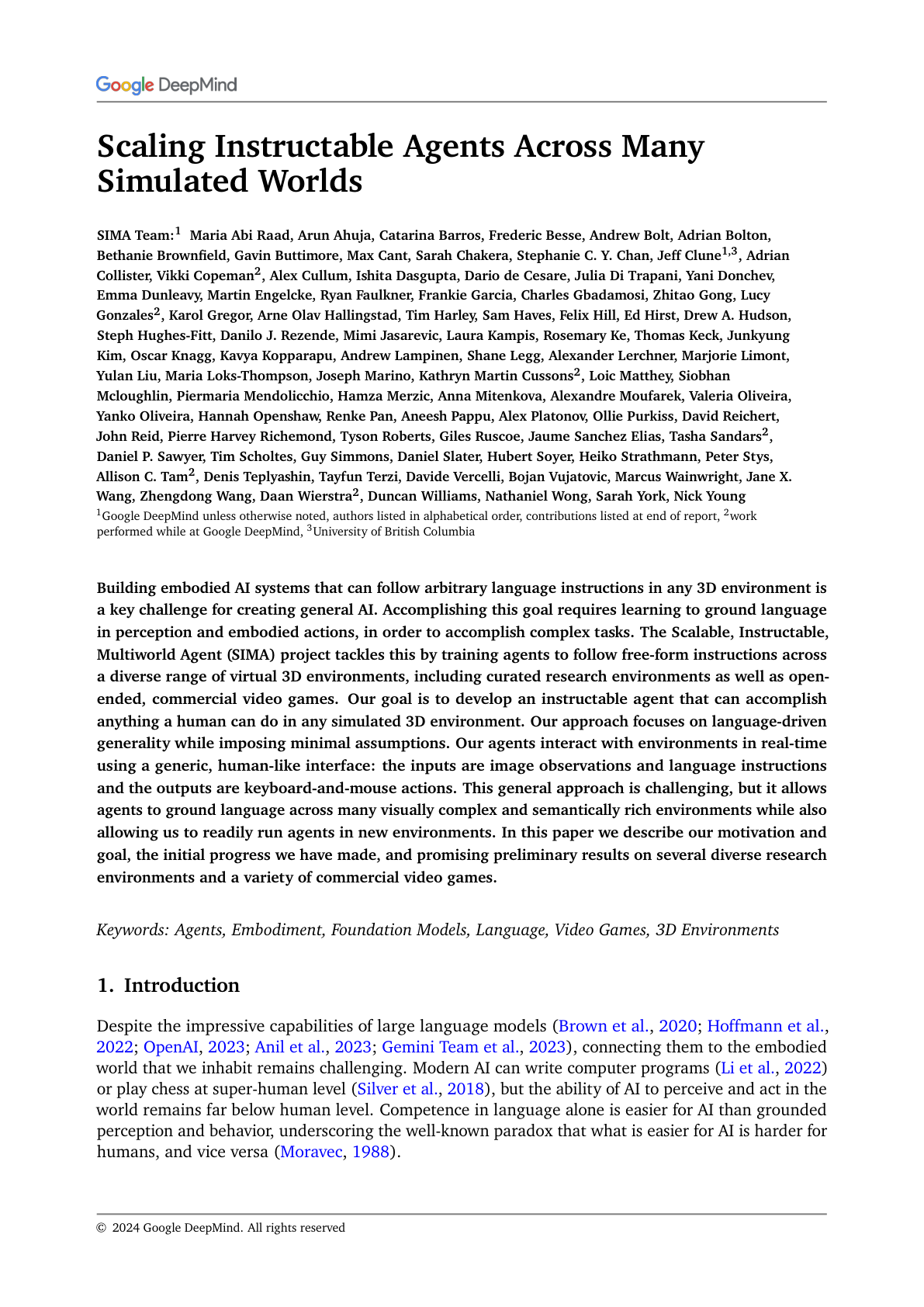
SIMA
DeepMind's Scalable Instructable Multiworld Agent (SIMA) is a generalist AI agent that follows natural-language instructions across nine commercial 3D video games like No Man's Sky, Teardown, Valheim, and Space Engineers.
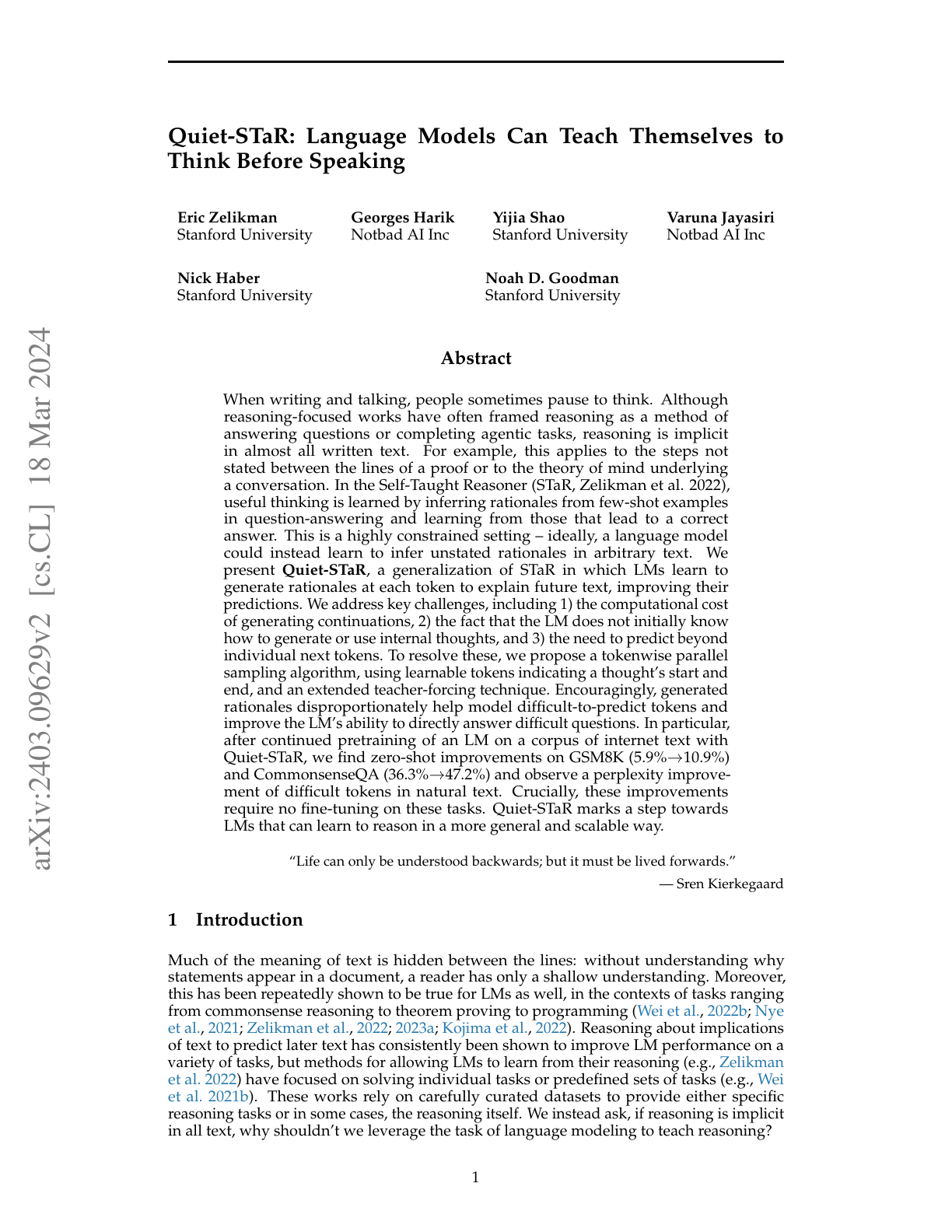
Quiet-STaR
Quiet-STaR generalizes the Self-Taught Reasoner (STaR) so that a language model learns to generate internal rationales between every token, not just for explicit QA problems.
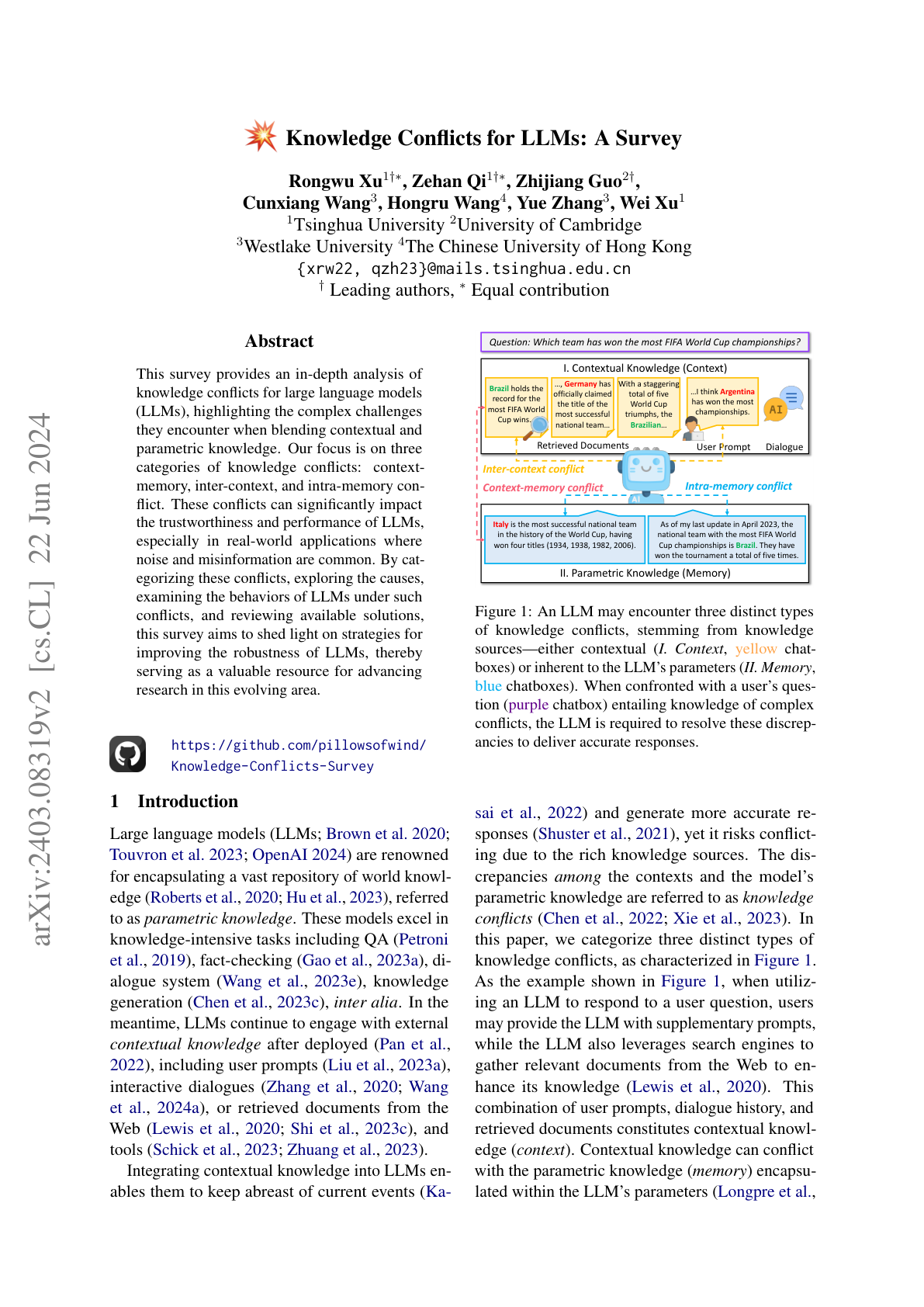
Knowledge Conflicts for LLMs
A survey that maps the landscape of knowledge conflicts in LLMs, covering how they arise, how models behave under them, and how to mitigate them.
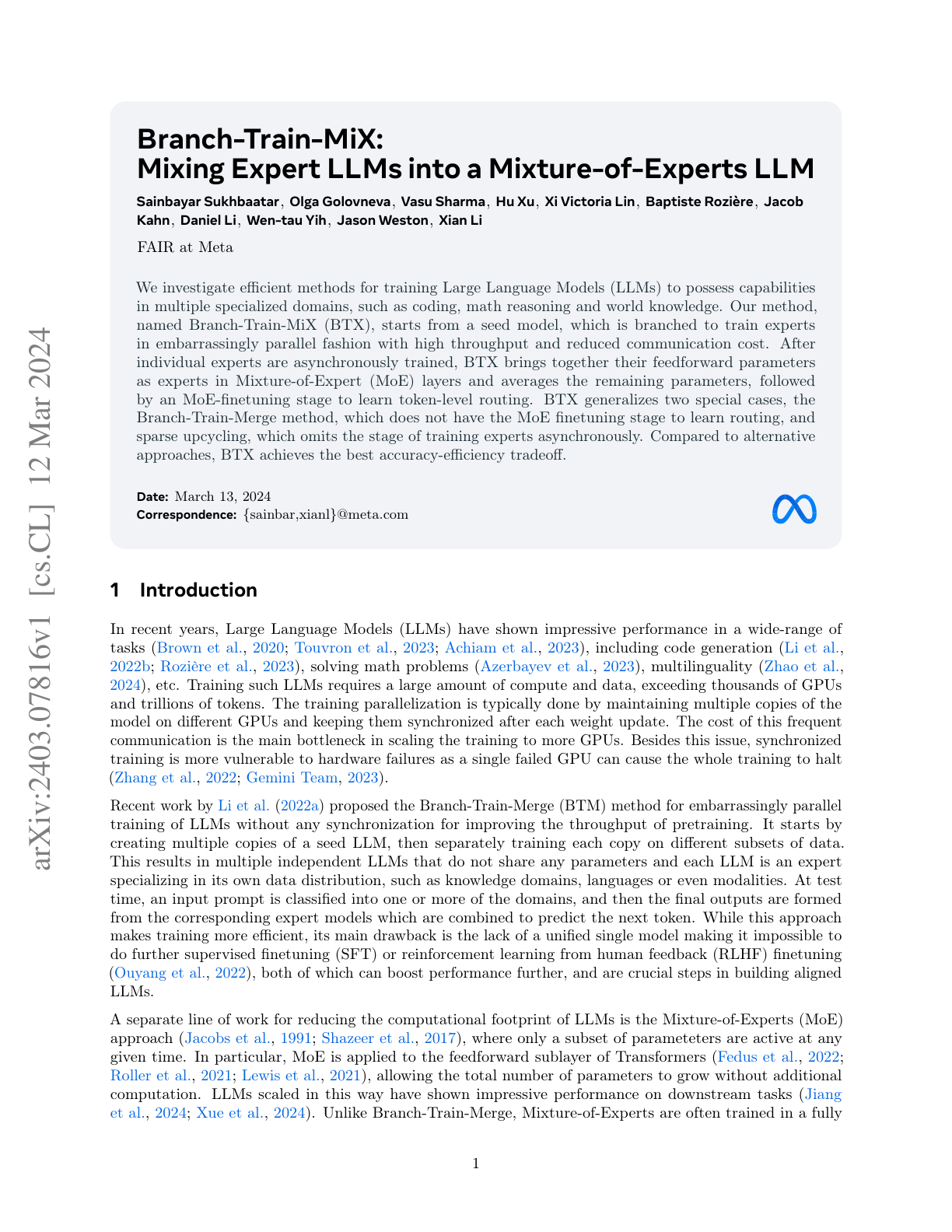
Branch-Train-MiX (BTX)
Meta's BTX produces a single Mixture-of-Experts LLM by first training specialized experts in parallel and then mixing them, sidestepping the high cost of training one big generalist.
LLMs Predict Neuroscience Results (BrainBench)
BrainBench asks both LLMs and human experts to predict the outcomes of neuroscience experiments from their abstracts, and finds LLMs outperform experts.
MM1: Multimodal LLM Pre-training
Apple's MM1 paper runs extensive ablations on multimodal LLM pretraining choices and releases a family of models up to 30B parameters that set competitive MLLM pretraining benchmarks.
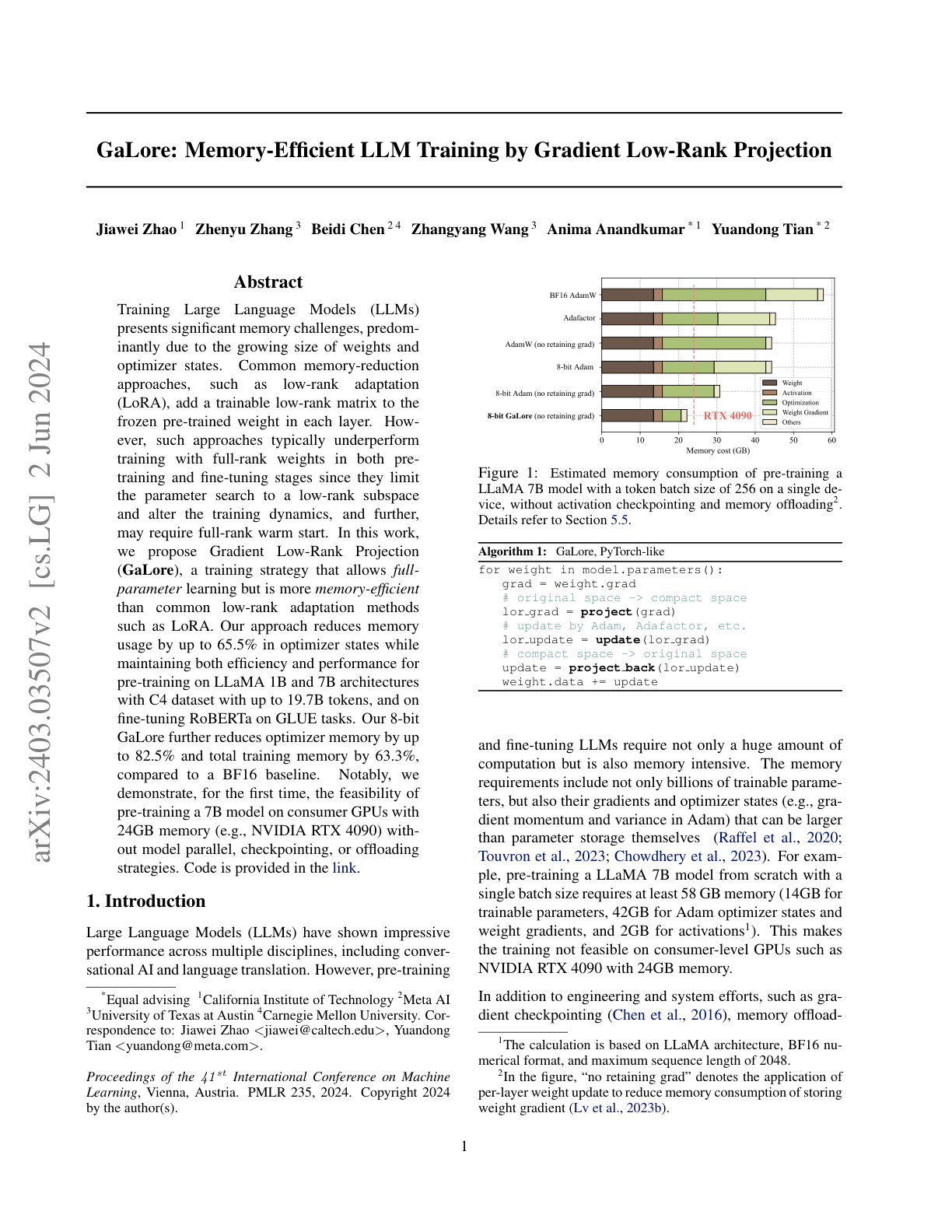
GaLore
GaLore (Gradient Low-Rank Projection) reduces optimizer-state memory during LLM training while still permitting full-parameter updates, unlike LoRA-style adapters that restrict learning to a low-rank subspace.
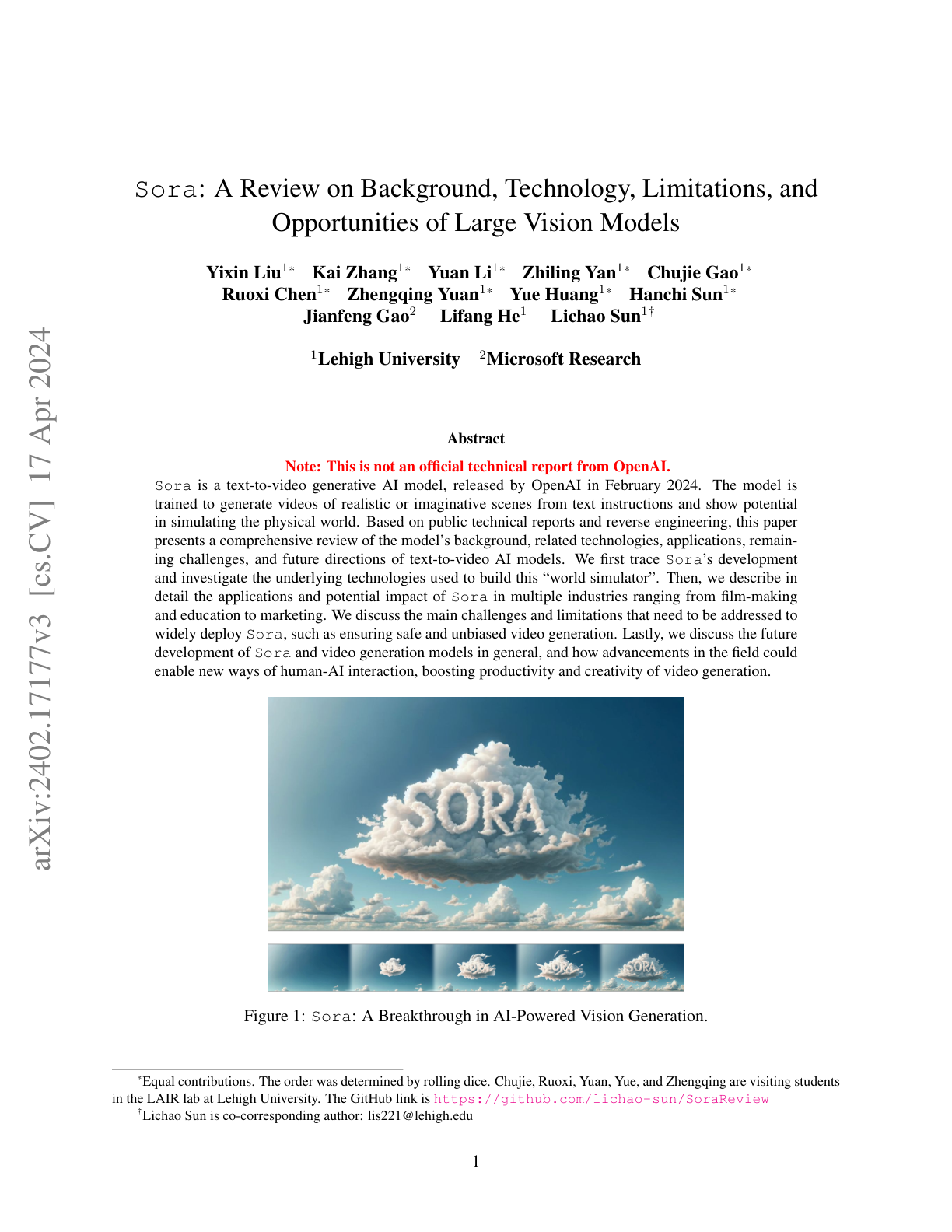
Sora Overview
A comprehensive academic review of OpenAI's Sora, tracing the technical ingredients behind the text-to-video "world simulator" and the opportunities/limitations for the next wave of large vision models.
SaulLM-7B: LLM for Law
SaulLM-7B is an open legal-domain LLM built on Mistral 7B and continually pretrained on 30B+ tokens of English legal text, with a companion instruction-tuning recipe.
Design2Code
Design2Code tackles the front-end engineering problem of turning a visual design into working HTML/CSS and gives the community both a benchmark and strong MLLM baselines.
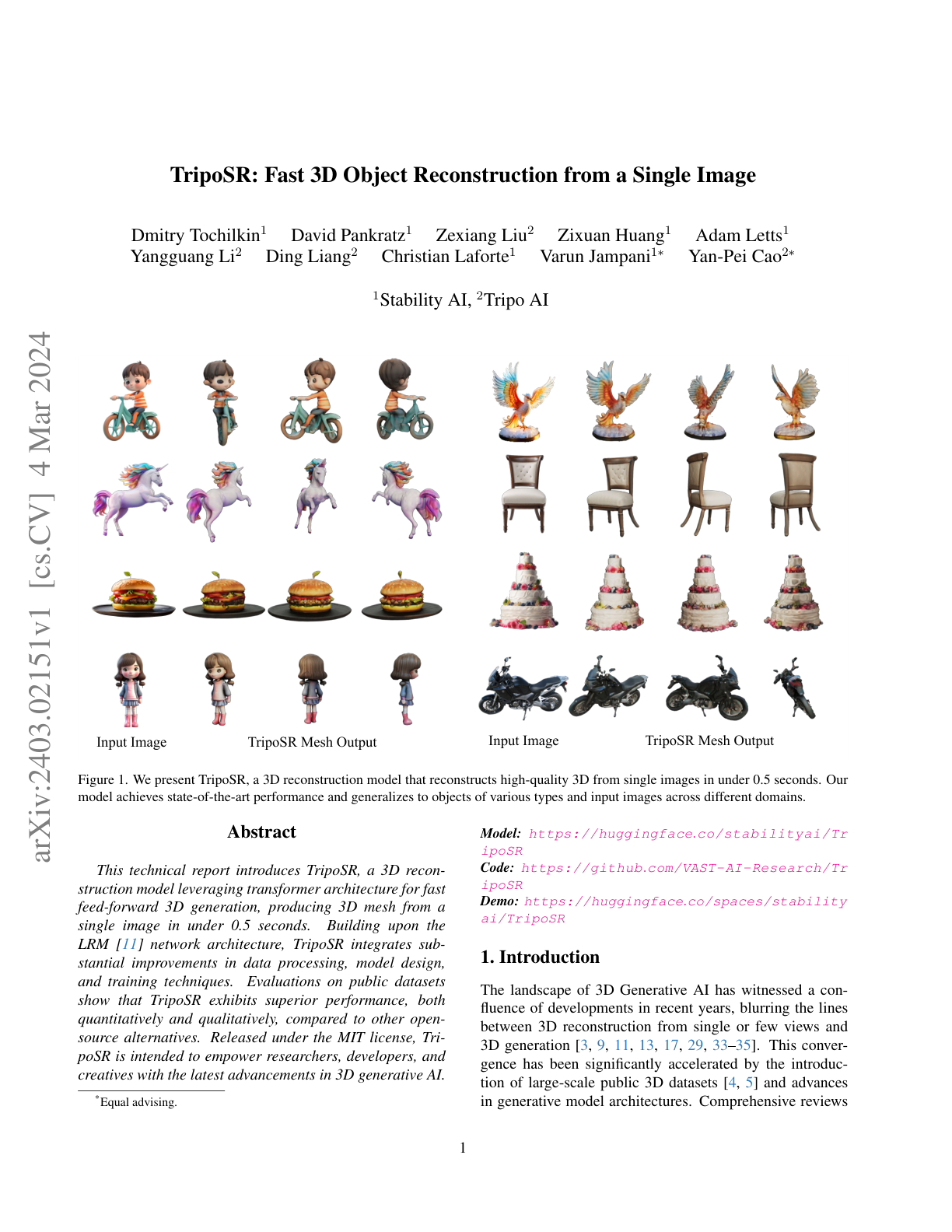
TripoSR
TripoSR is a transformer-based single-image 3D reconstruction model that returns a textured mesh in under 0.5 seconds, building on the LRM architecture with a stronger data and training pipeline.
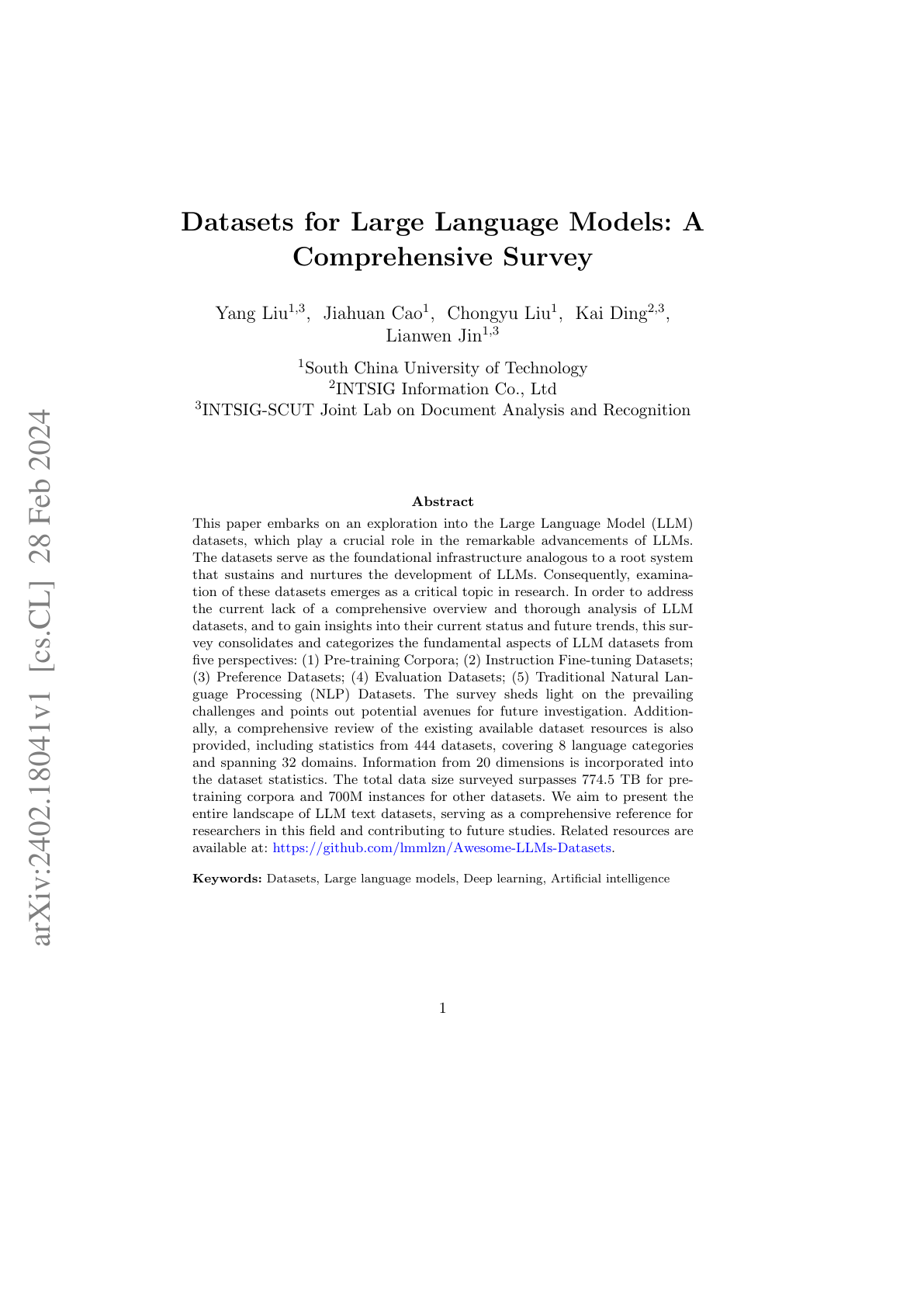
Datasets for LLMs: A Comprehensive Survey
A 180+-page survey that catalogs and analyzes the datasets that underpin modern LLM training and evaluation.
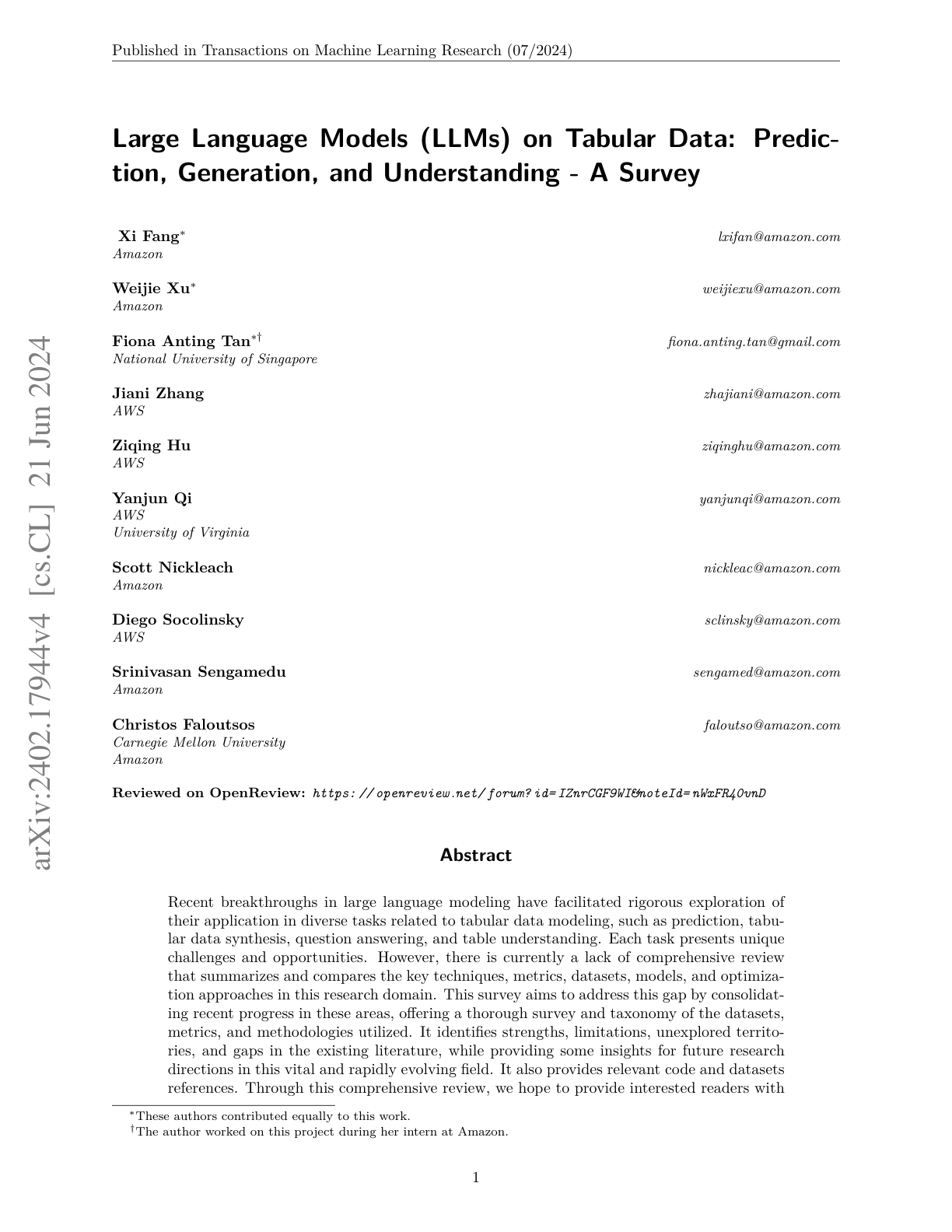
LLMs on Tabular Data: A Survey
A survey that maps how LLMs are being applied to tabular data tasks - a domain historically dominated by gradient-boosted trees and specialized architectures.
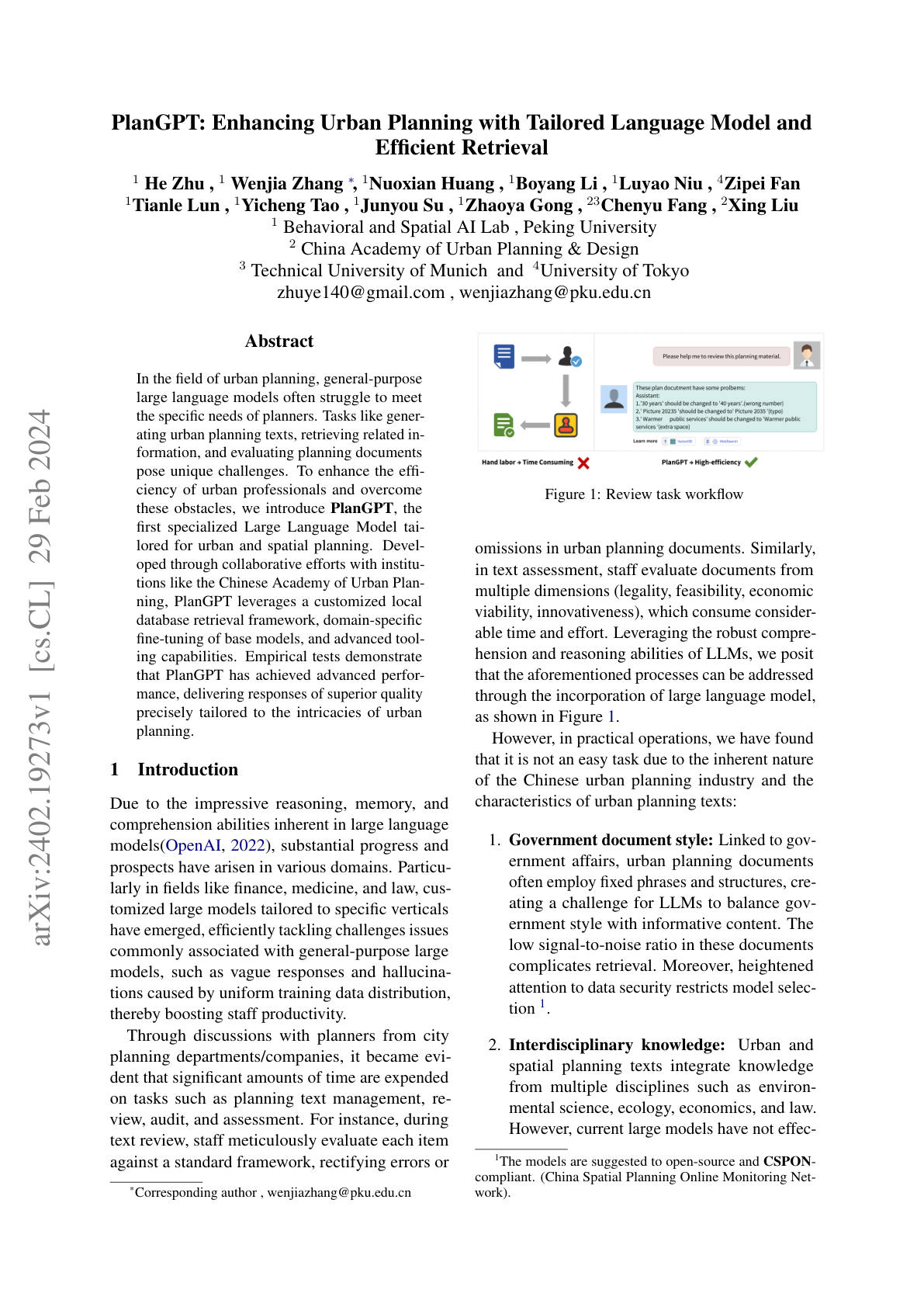
PlanGPT
PlanGPT is a domain-specialized LLM framework for urban and spatial planning, built in collaboration with the Chinese Academy of Urban Planning.

Stable Diffusion 3
Stability AI previews Stable Diffusion 3, a suite of image-generation models from 800M to 8B parameters that shifts to a diffusion-transformer backbone with flow matching.
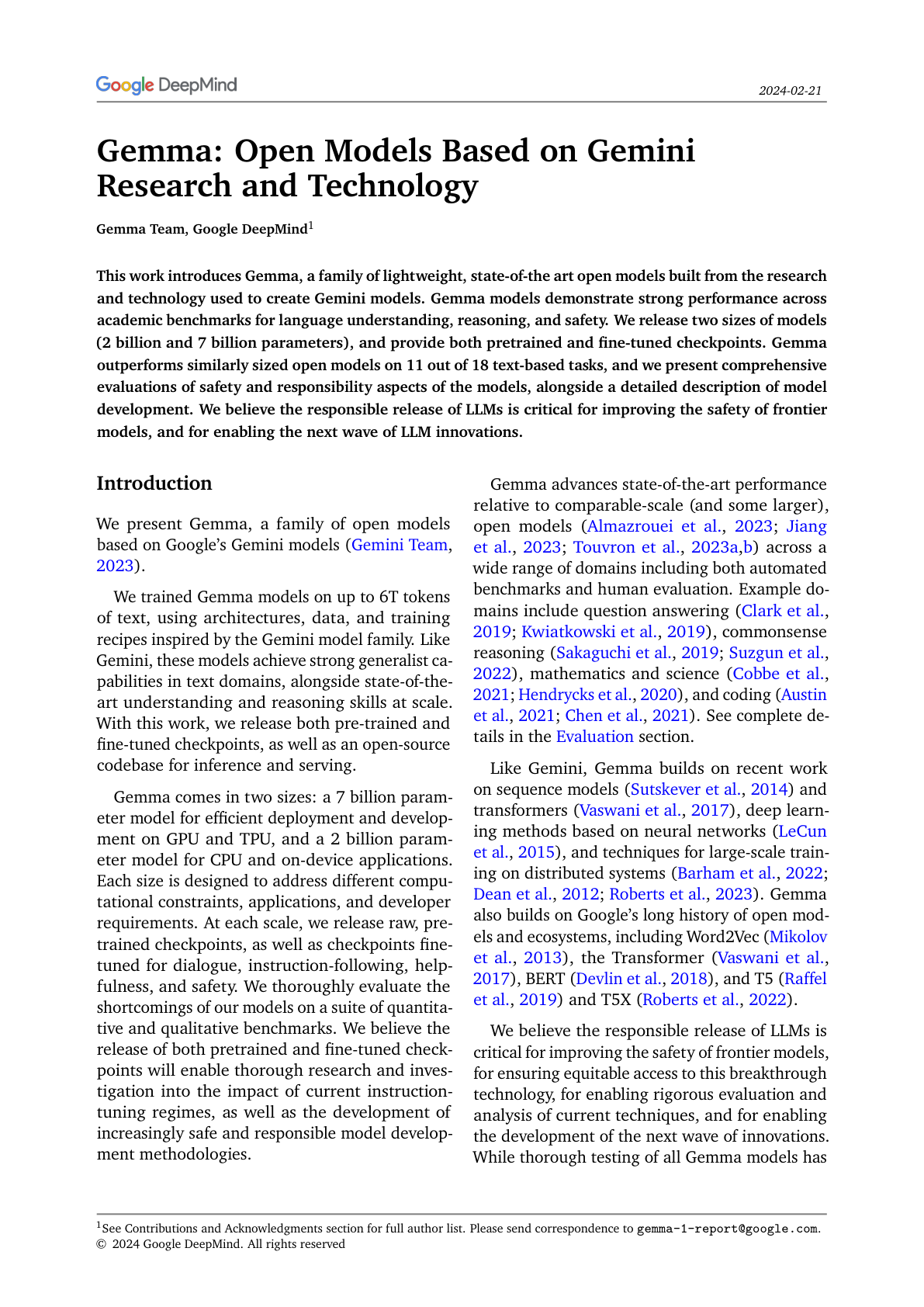
Gemma
Google DeepMind releases Gemma, a family of open models (2B and 7B) built from the same research stack as Gemini and shipped with both base and instruction-tuned variants.
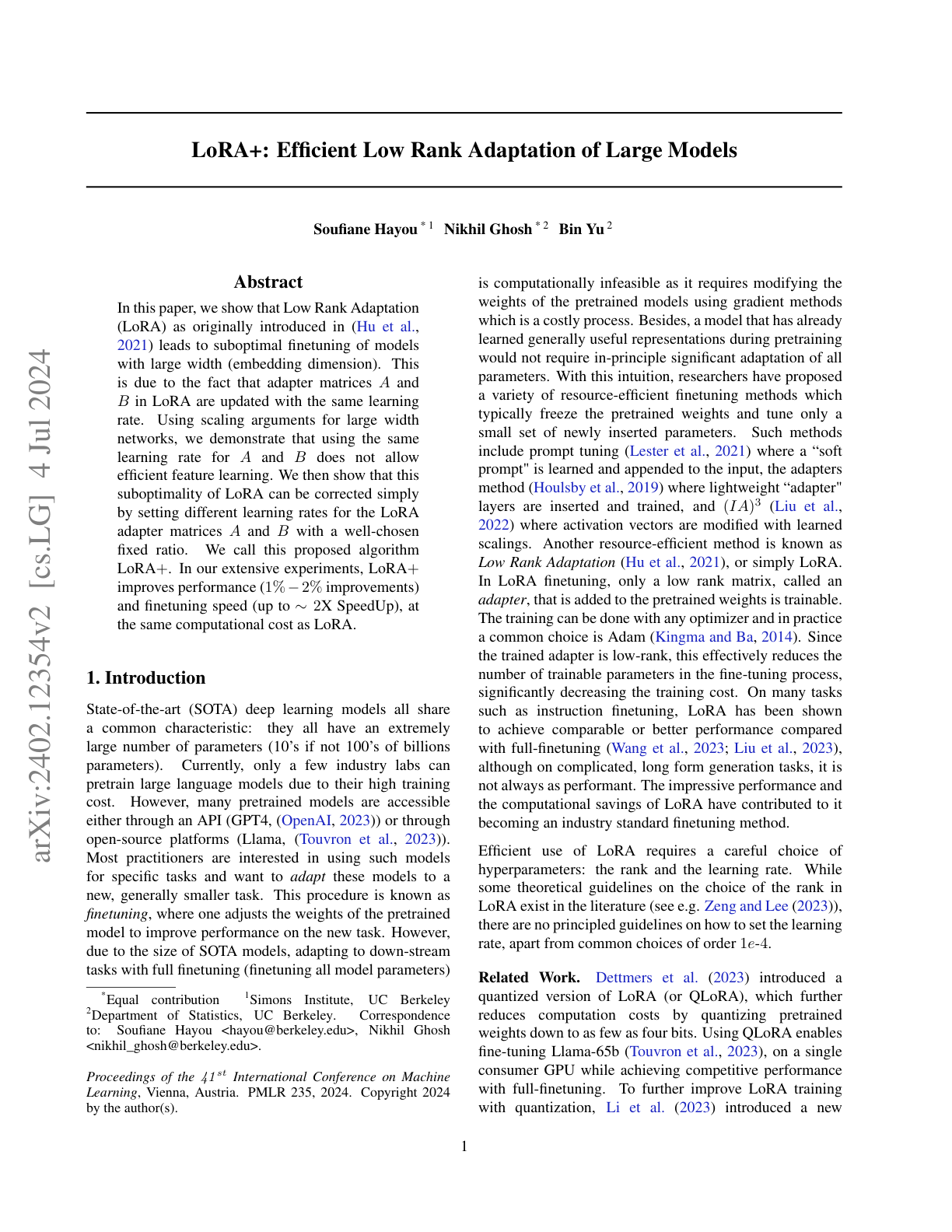
LoRA+
LoRA+ is a minimal one-line change to LoRA: use different learning rates for the down-projection (A) and up-projection (B) matrices to restore feature learning at large width.
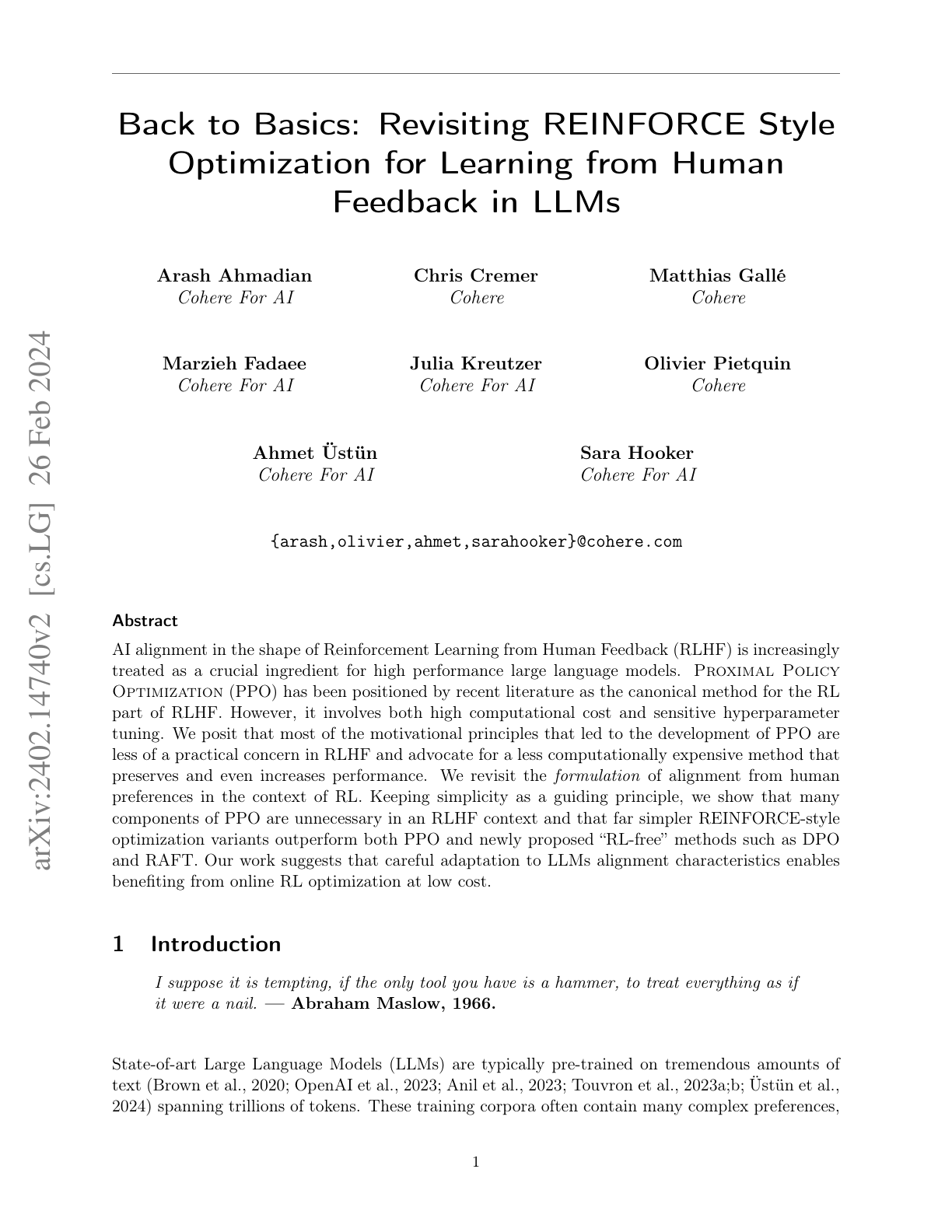
Back to Basics: Revisiting REINFORCE in RLHF
Cohere researchers argue that PPO is overkill for RLHF and that a simpler REINFORCE-style estimator works better in practice.
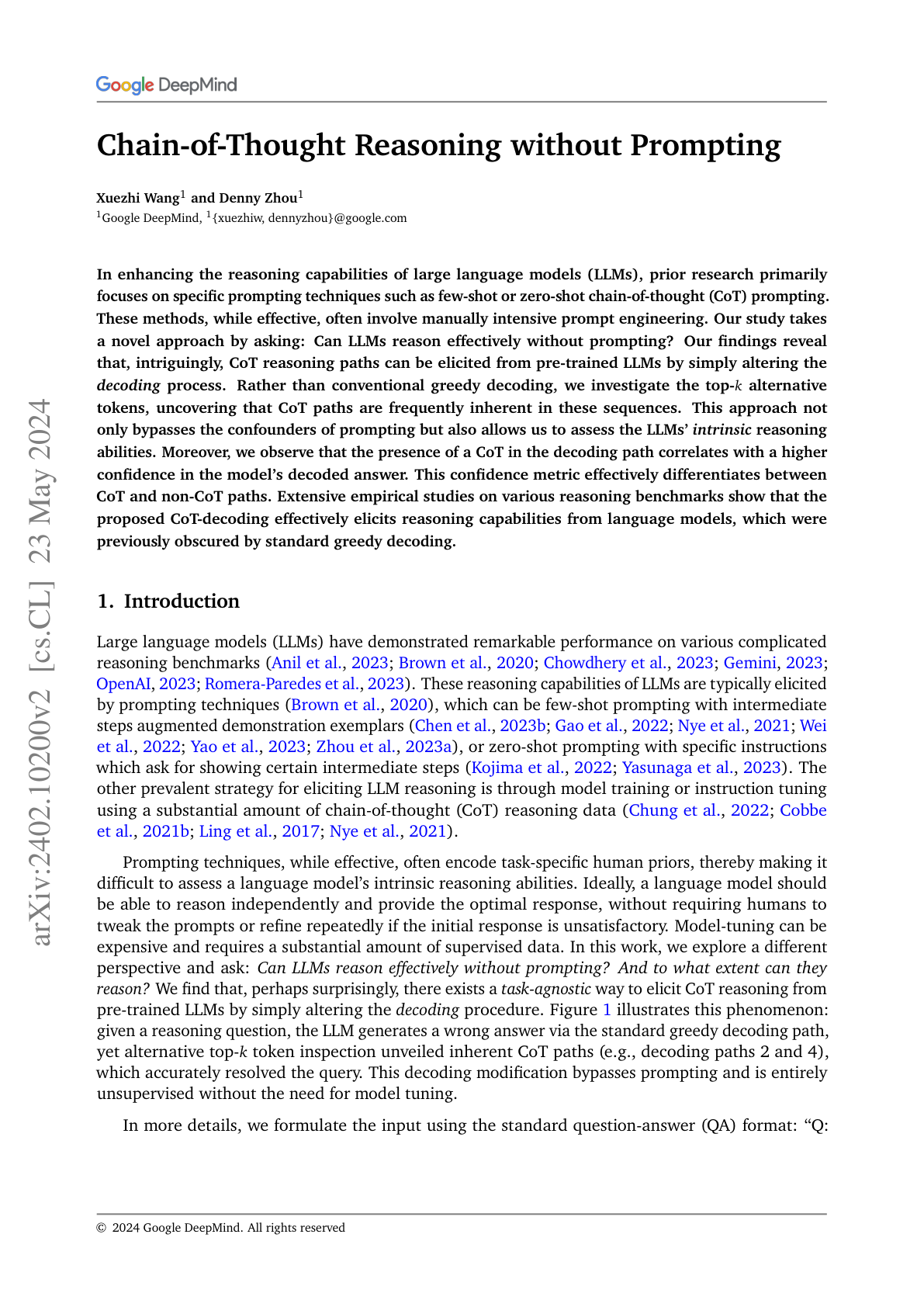
Chain-of-Thought Reasoning Without Prompting
DeepMind shows that LLMs often *already* emit chain-of-thought reasoning in alternative decoding paths, and that selecting those paths via confidence lifts reasoning accuracy with no prompt engineering.