AI Papers of the Week
Every paper worth reading in AI, hand-picked one week at a time.
PlanGPT
PlanGPT is a domain-specialized LLM framework for urban and spatial planning, built in collaboration with the Chinese Academy of Urban Planning.
Gemma
Google DeepMind releases Gemma, a family of open models (2B and 7B) built from the same research stack as Gemini and shipped with both base and instruction-tuned variants.
GRIT
GRIT (Generative Representational Instruction Tuning) trains a single LLM to handle both generative and embedding tasks, switching behavior based on instructions.
Back to Basics: Revisiting REINFORCE in RLHF
Cohere researchers argue that PPO is overkill for RLHF and that a simpler REINFORCE-style estimator works better in practice.
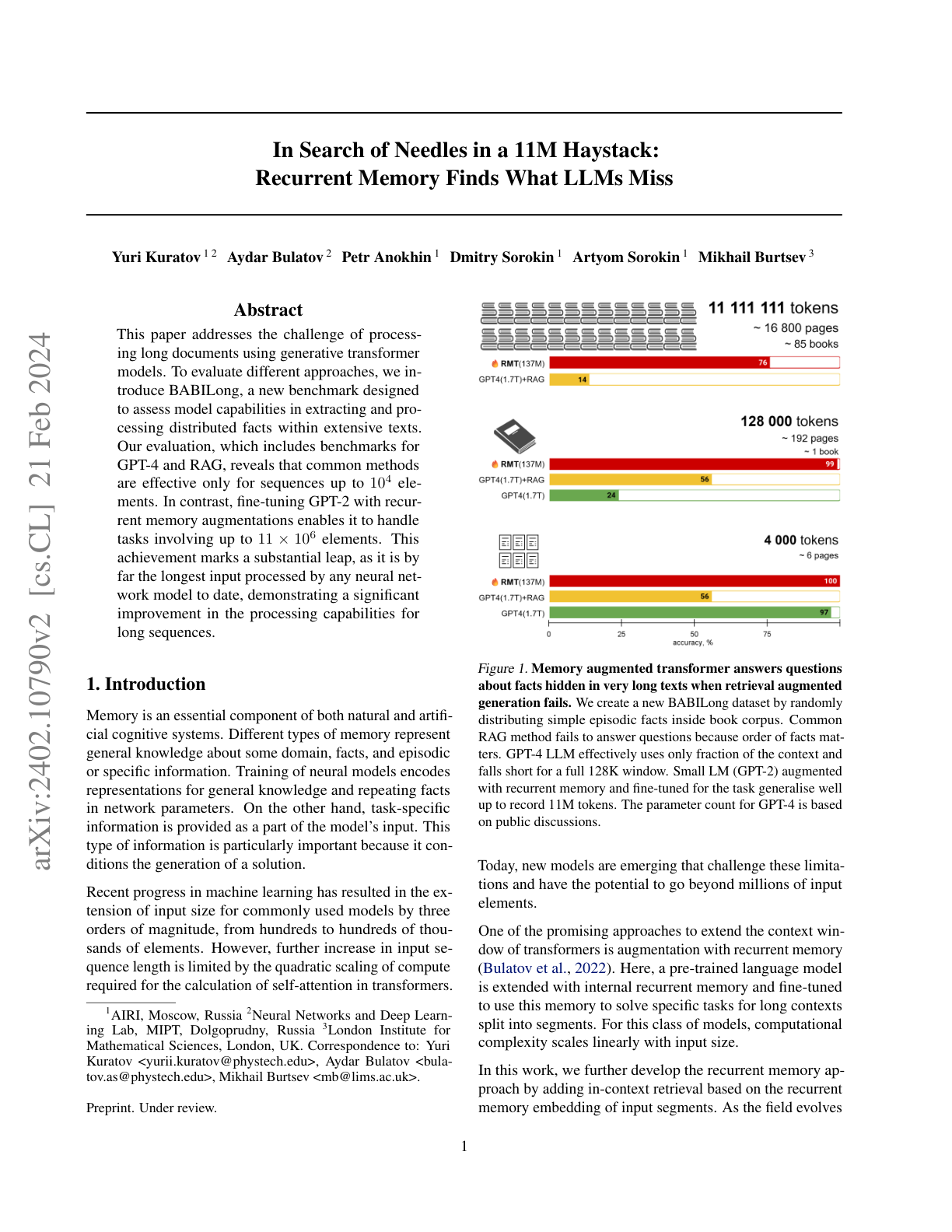
Recurrent Memory Finds What LLMs Miss
Introduces BABILong, a new long-context benchmark, and shows that transformers with recurrent memory can handle sequences far beyond vanilla LLMs.
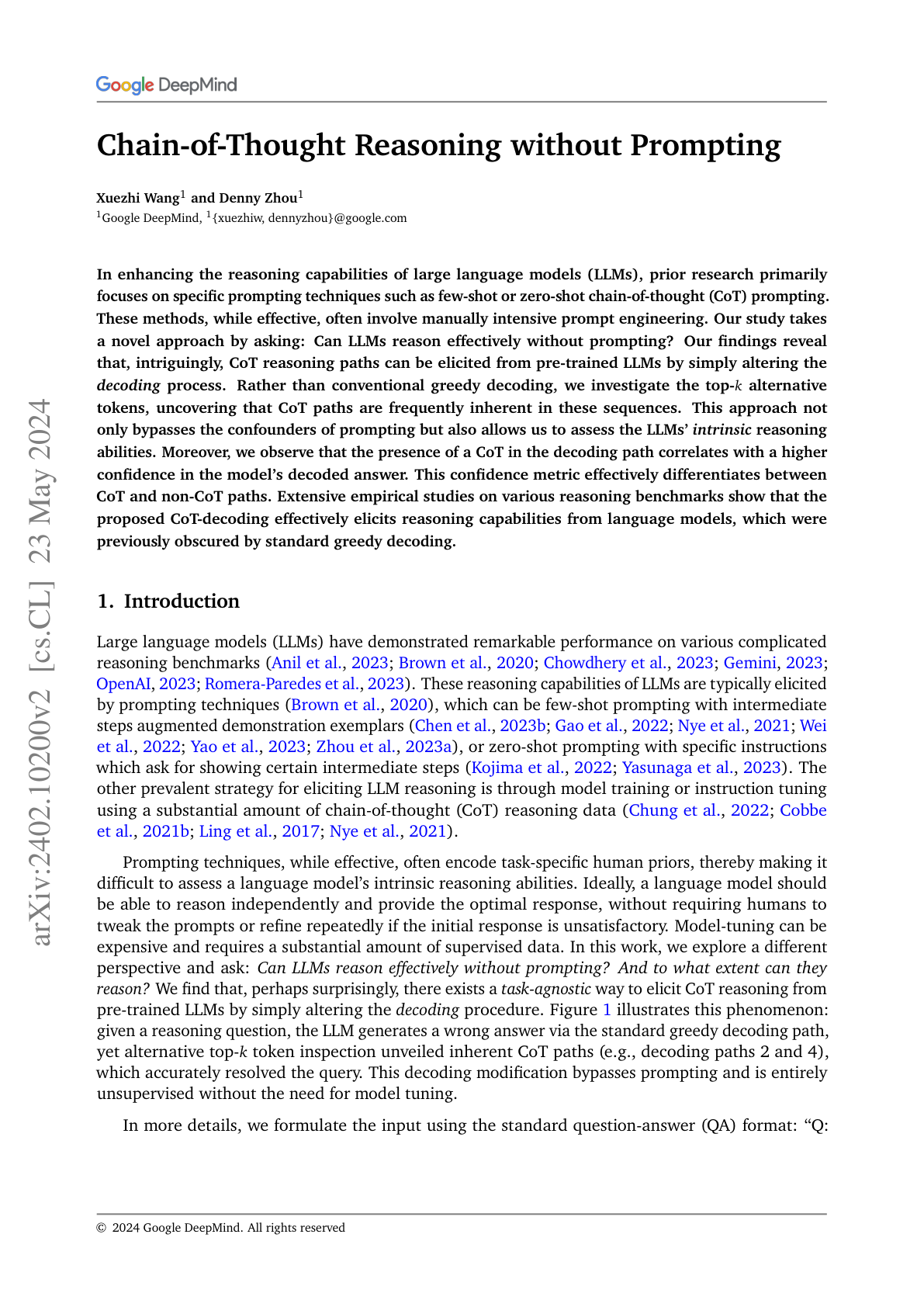
Chain-of-Thought Reasoning Without Prompting
DeepMind shows that LLMs often *already* emit chain-of-thought reasoning in alternative decoding paths, and that selecting those paths via confidence lifts reasoning accuracy with no prompt engineering.
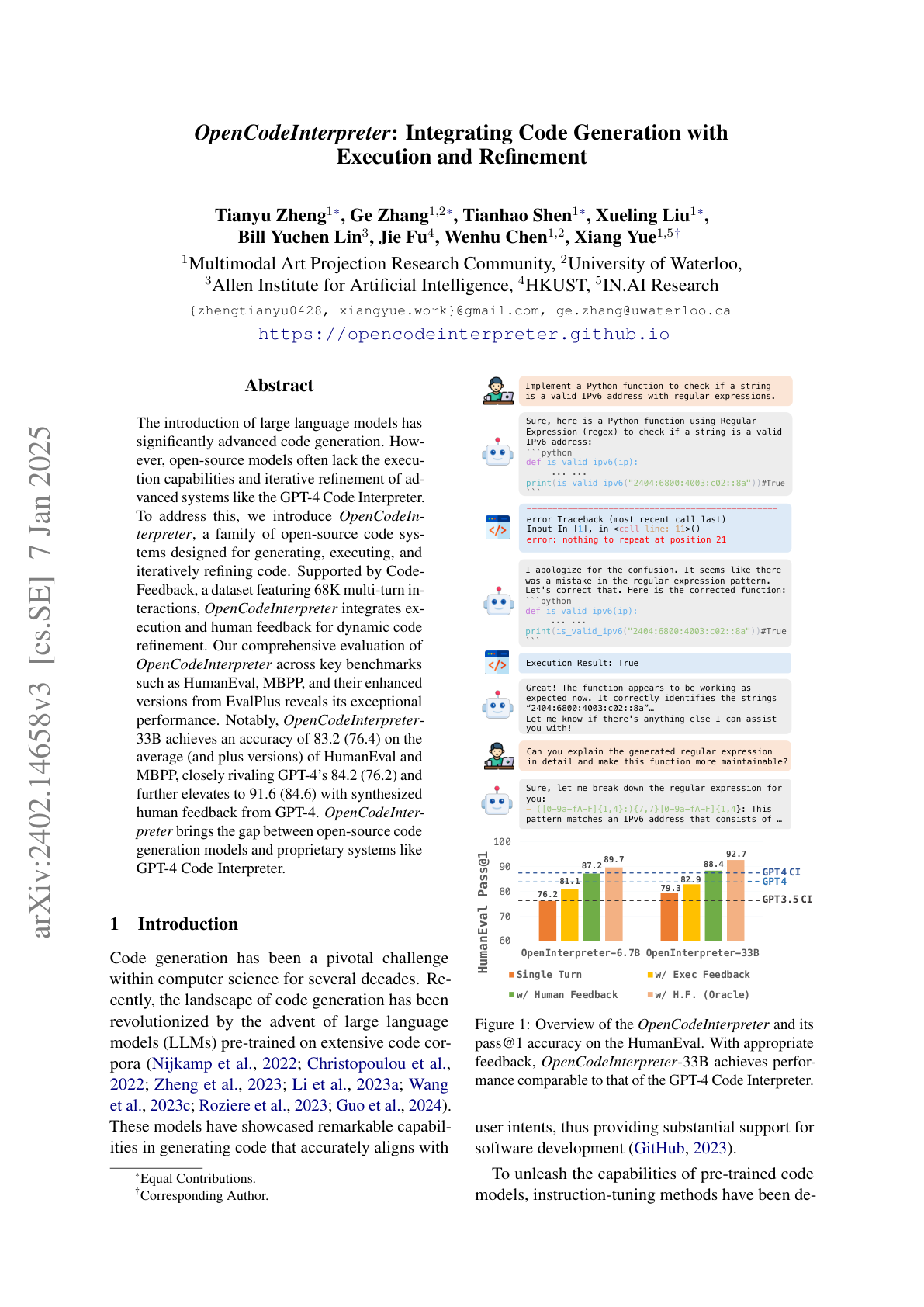
OpenCodeInterpreter
OpenCodeInterpreter is an open-source family of code-execution LLM systems that iteratively refine code using runtime feedback, closing the gap with GPT-4's proprietary Code Interpreter.
Gemini 1.5
Google DeepMind's Gemini 1.5 is a multimodal MoE LLM that scales context to 1M tokens (10M in research settings) while matching or surpassing Gemini 1.0 Ultra on standard benchmarks.
V-JEPA
Meta's V-JEPA learns visual representations by predicting features in masked video regions, without pretrained image encoders, text, negatives, or reconstruction.
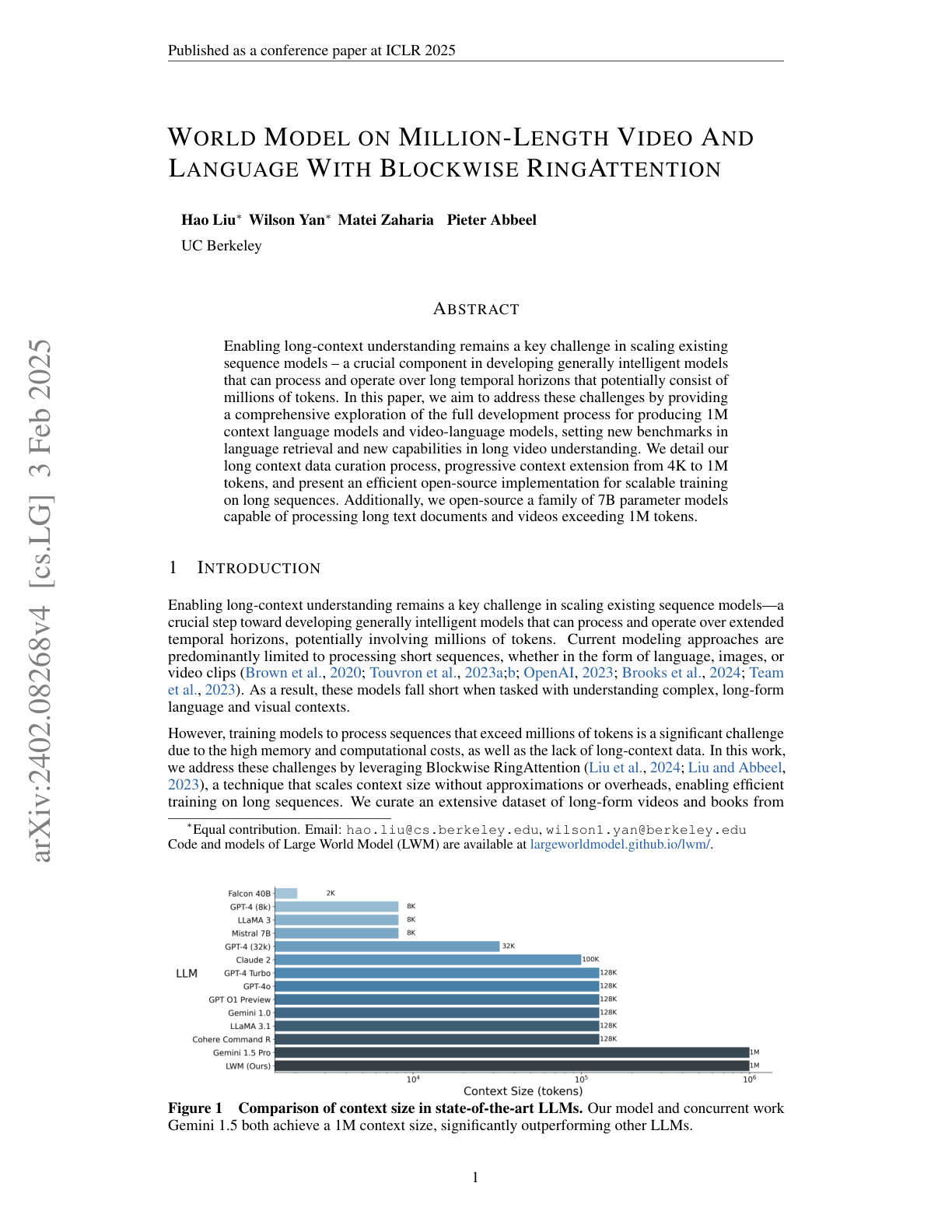
Large World Model (LWM)
UC Berkeley's LWM is an open 7B multimodal model trained on long videos and books that handles context windows up to 1M tokens via RingAttention.
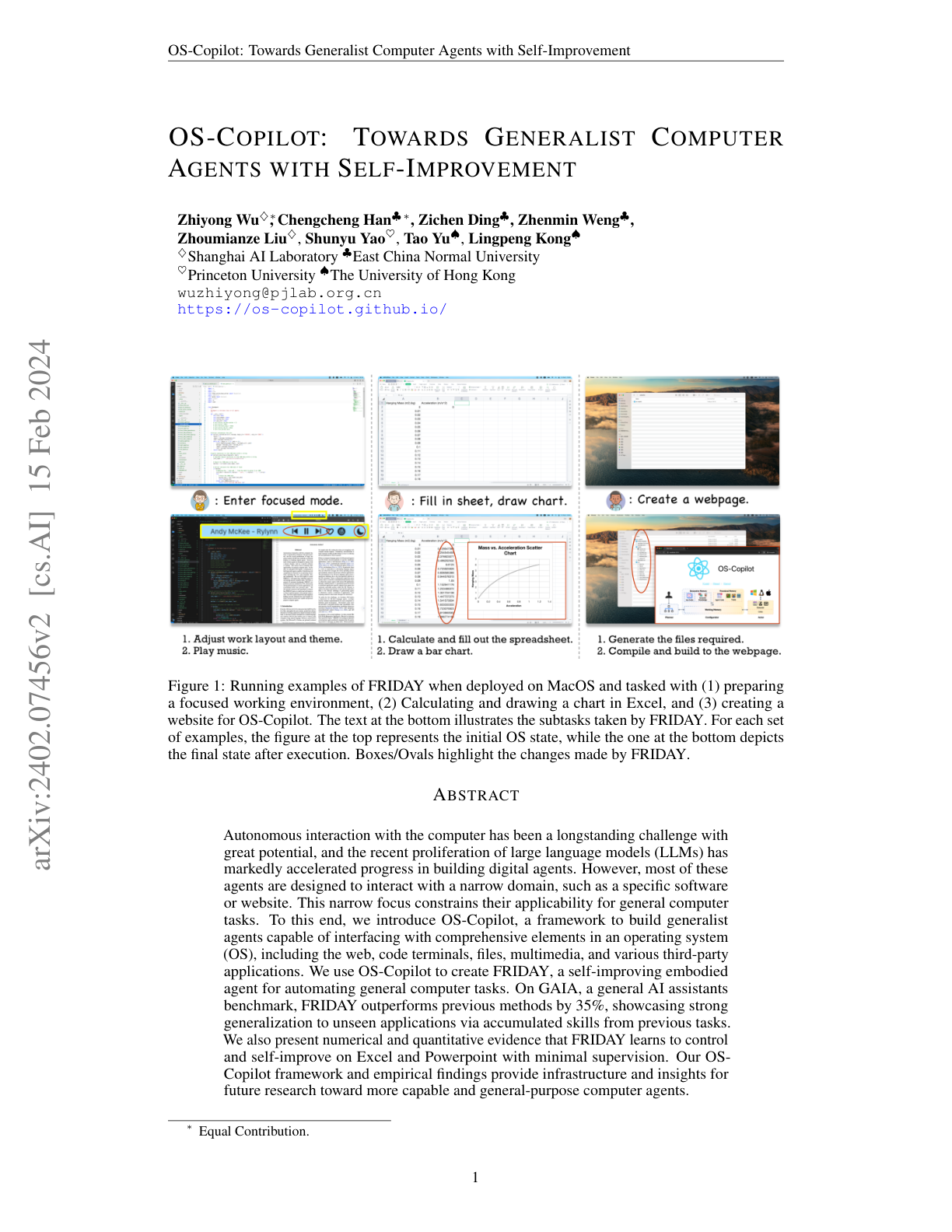
OS-Copilot
OS-Copilot is a framework for building generalist computer agents that use full OS primitives (browser, terminal, files, multimedia, third-party apps) rather than just web DOMs.
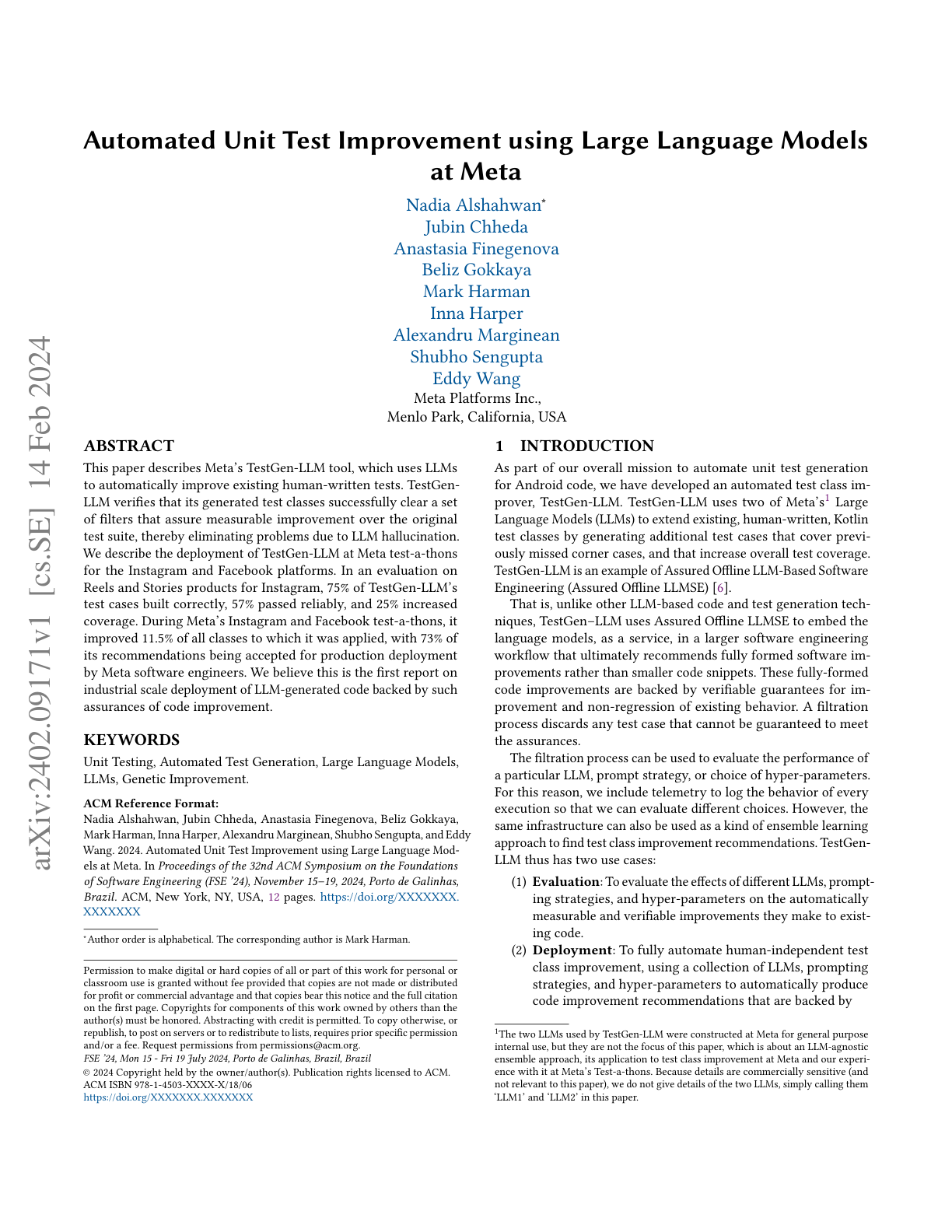
TestGen-LLM
Meta's TestGen-LLM uses LLMs to improve existing human-written tests - augmenting coverage rather than generating tests from scratch - while rigorously filtering LLM output for quality.
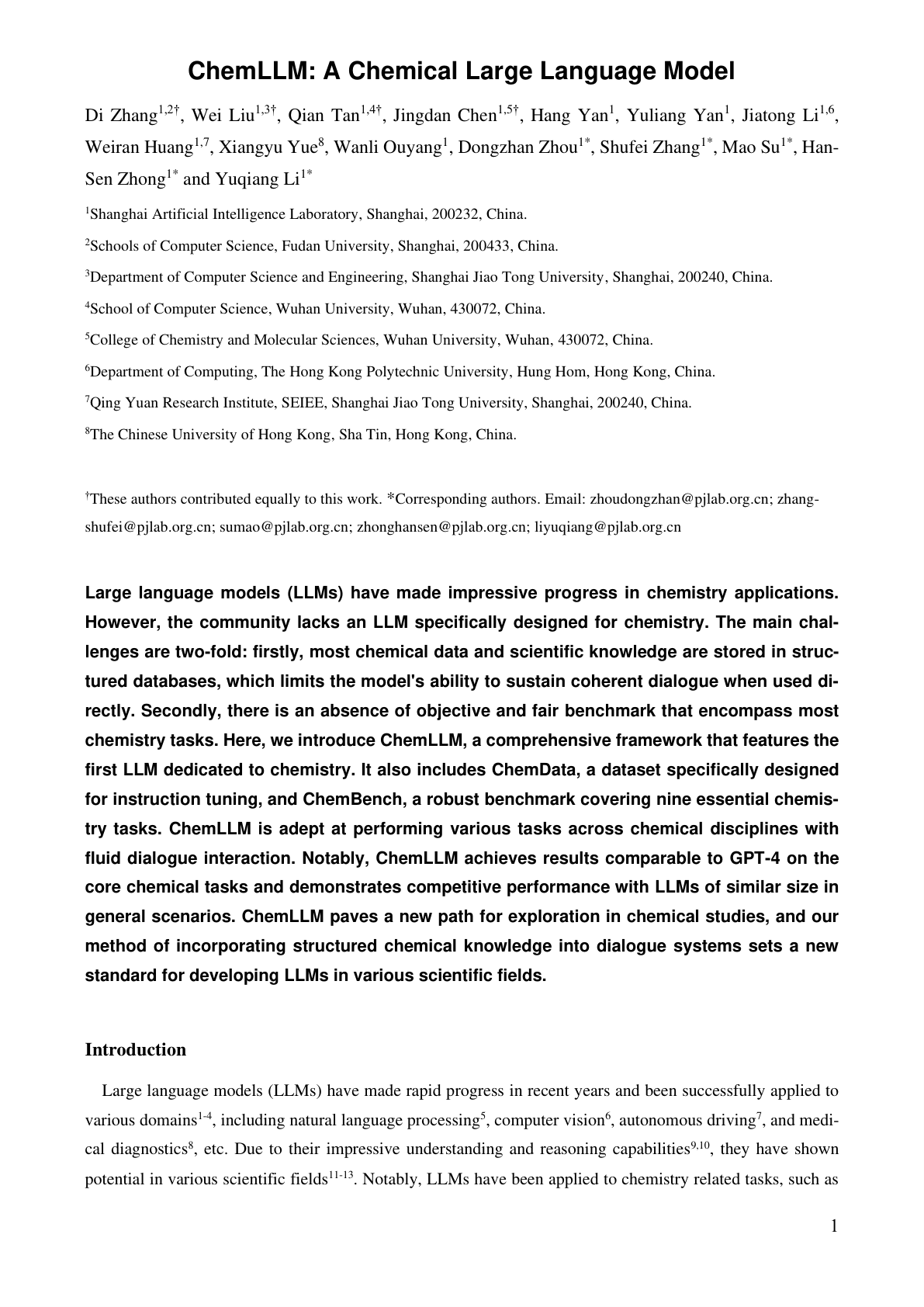
ChemLLM
ChemLLM is a chemistry-specialized LLM with a matched dataset (ChemData) and benchmark (ChemBench) for evaluating chemistry-specific capability.
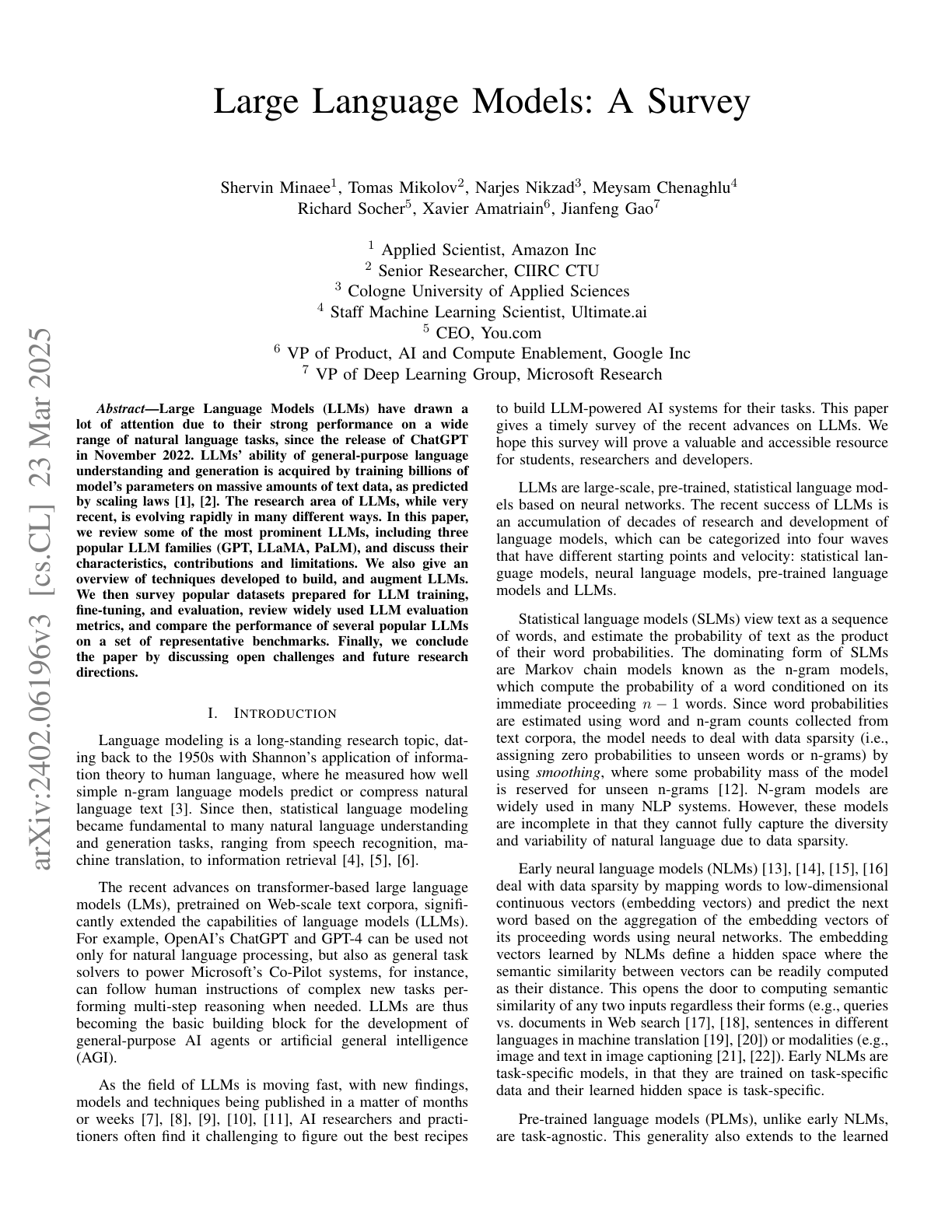
Survey of LLMs
A survey that maps the landscape of the three dominant LLM families - GPT, Llama, and PaLM - and the shared toolbox used to build and augment them.
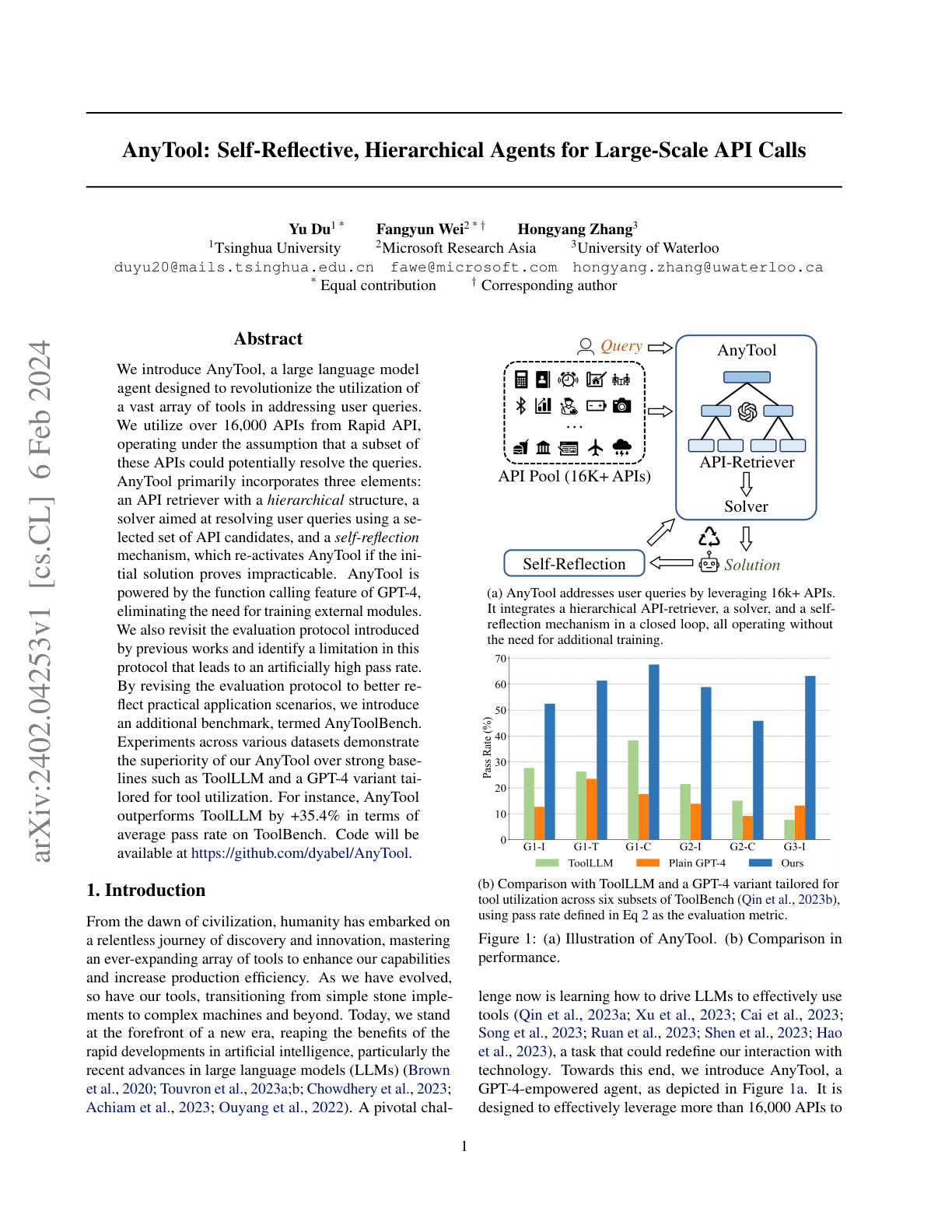
AnyTool
AnyTool is a training-free LLM agent that scales tool-use to 16K+ Rapid APIs through a hierarchical retriever and a self-reflective solver.
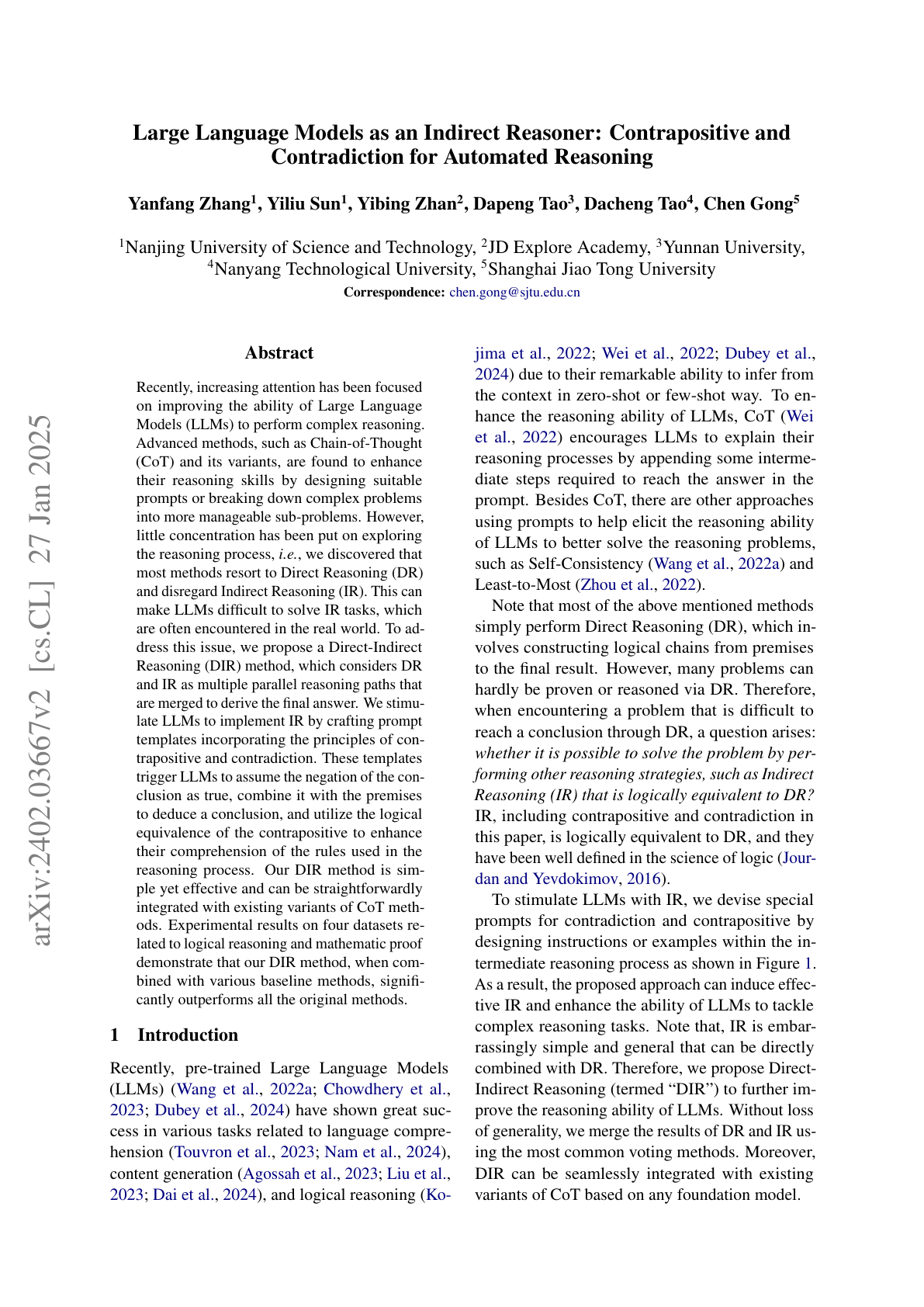
Indirect Reasoning with LLMs (DIR)
Direct-Indirect Reasoning augments standard CoT with contrapositive and proof-by-contradiction templates, giving LLMs an explicit way to attack problems they can't solve forward.
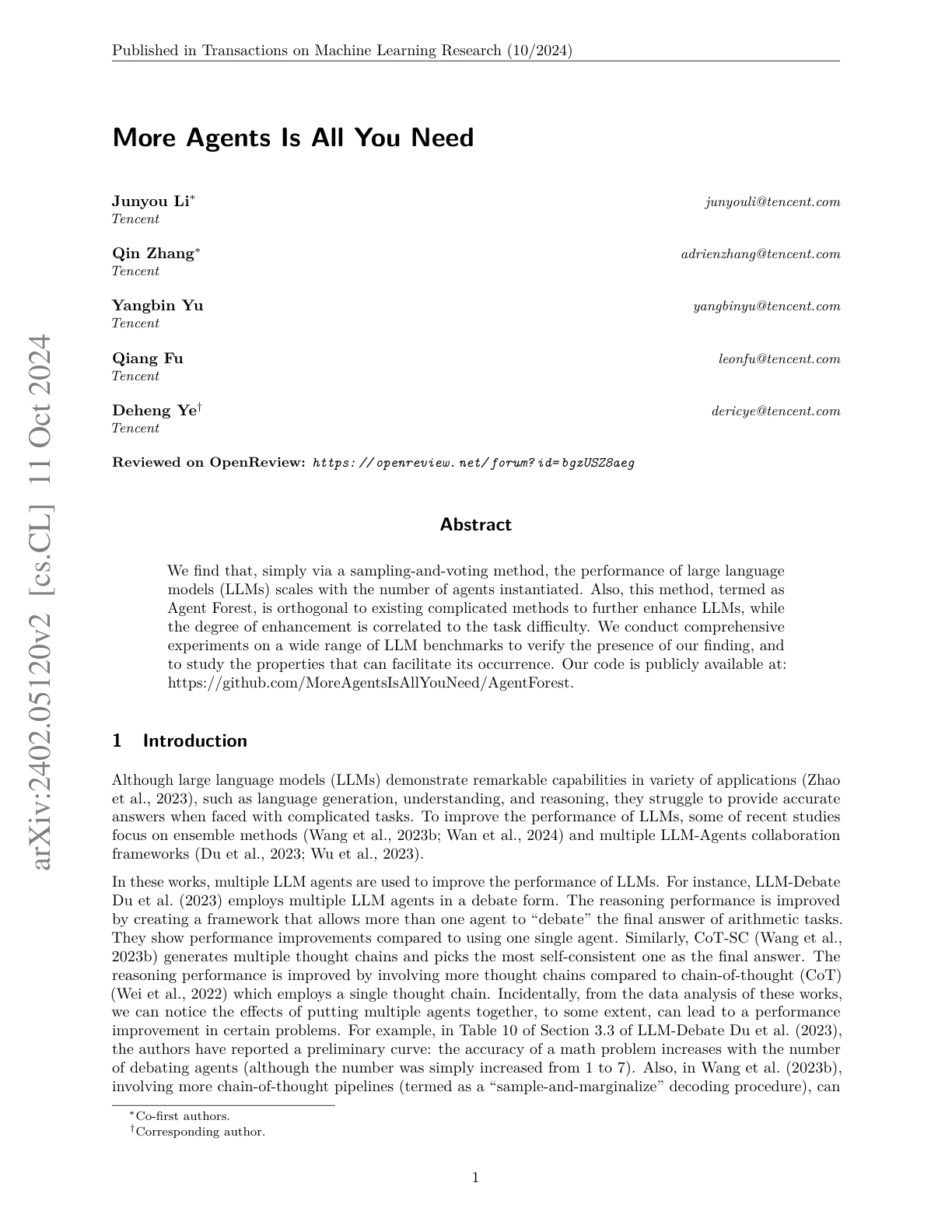
More Agents Is All You Need
The paper shows that simply running more independent LLM agents and voting produces reliable scaling gains across tasks, without any method changes.
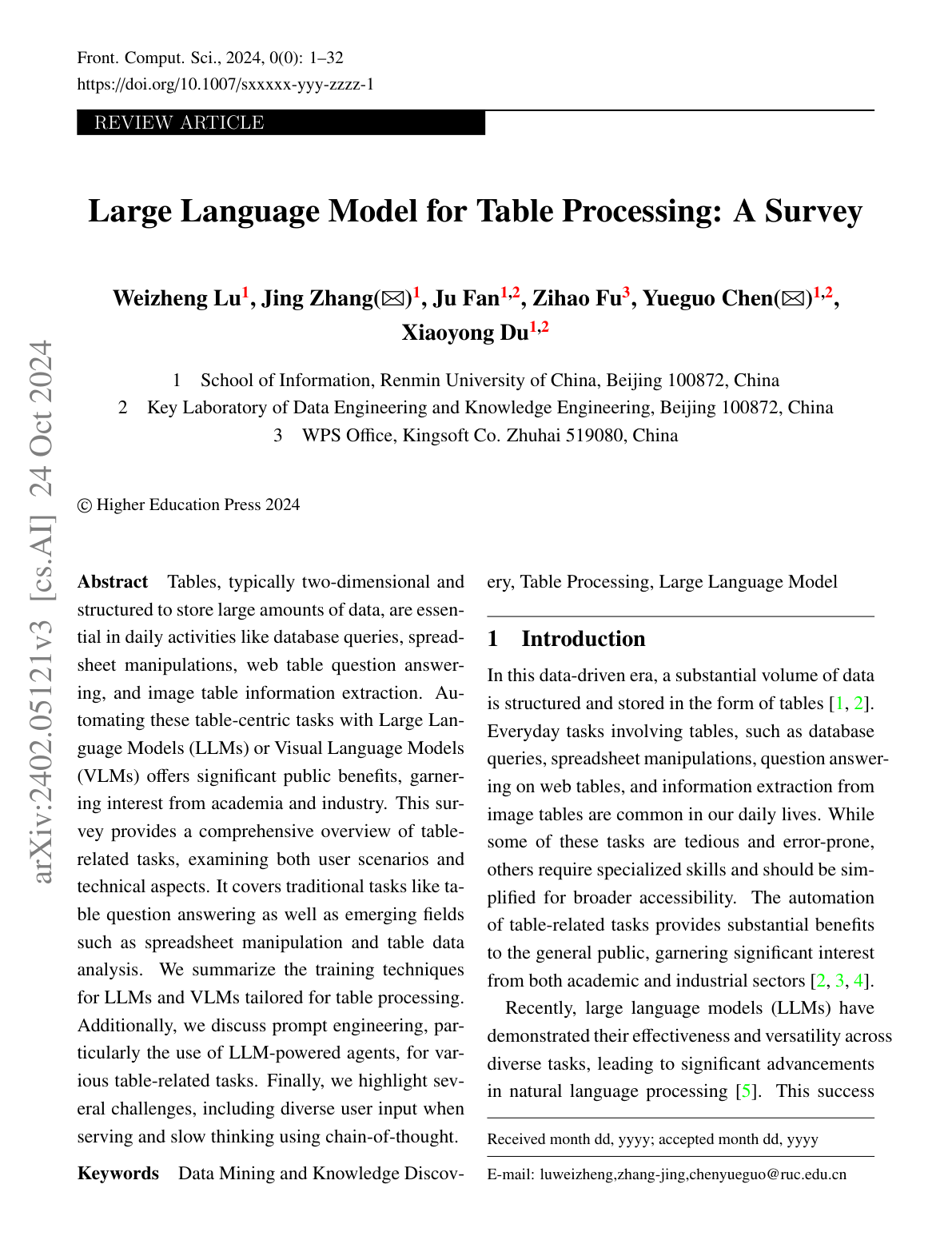
LLMs for Table Processing: A Survey
A survey covering how LLMs and VLMs are used across the full spectrum of table-processing tasks, from classic TableQA to spreadsheet manipulation.
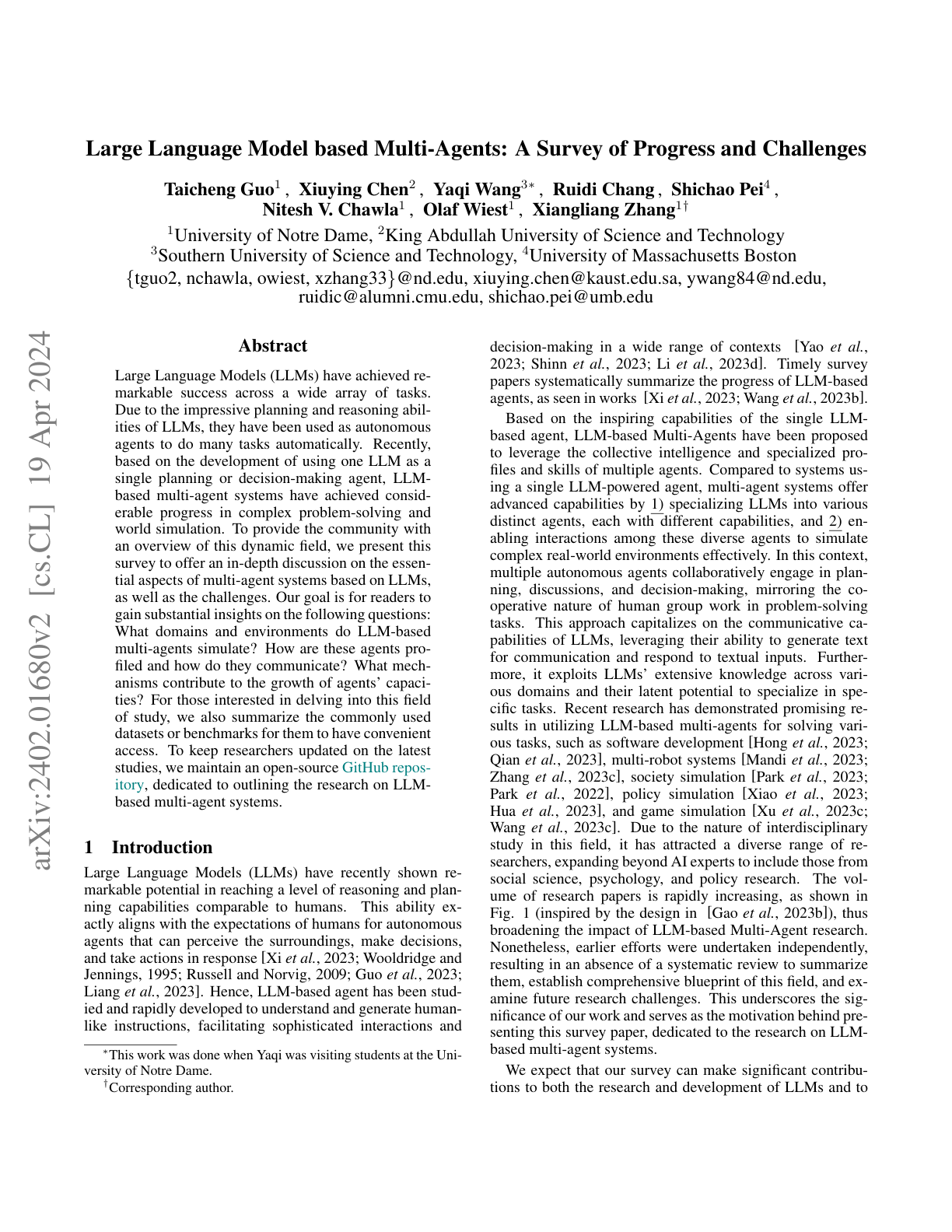
LLM-based Multi-Agent Systems Survey
A survey of the fast-growing LLM-based multi-agent systems space, covering both problem-solving applications and "world simulation" research.
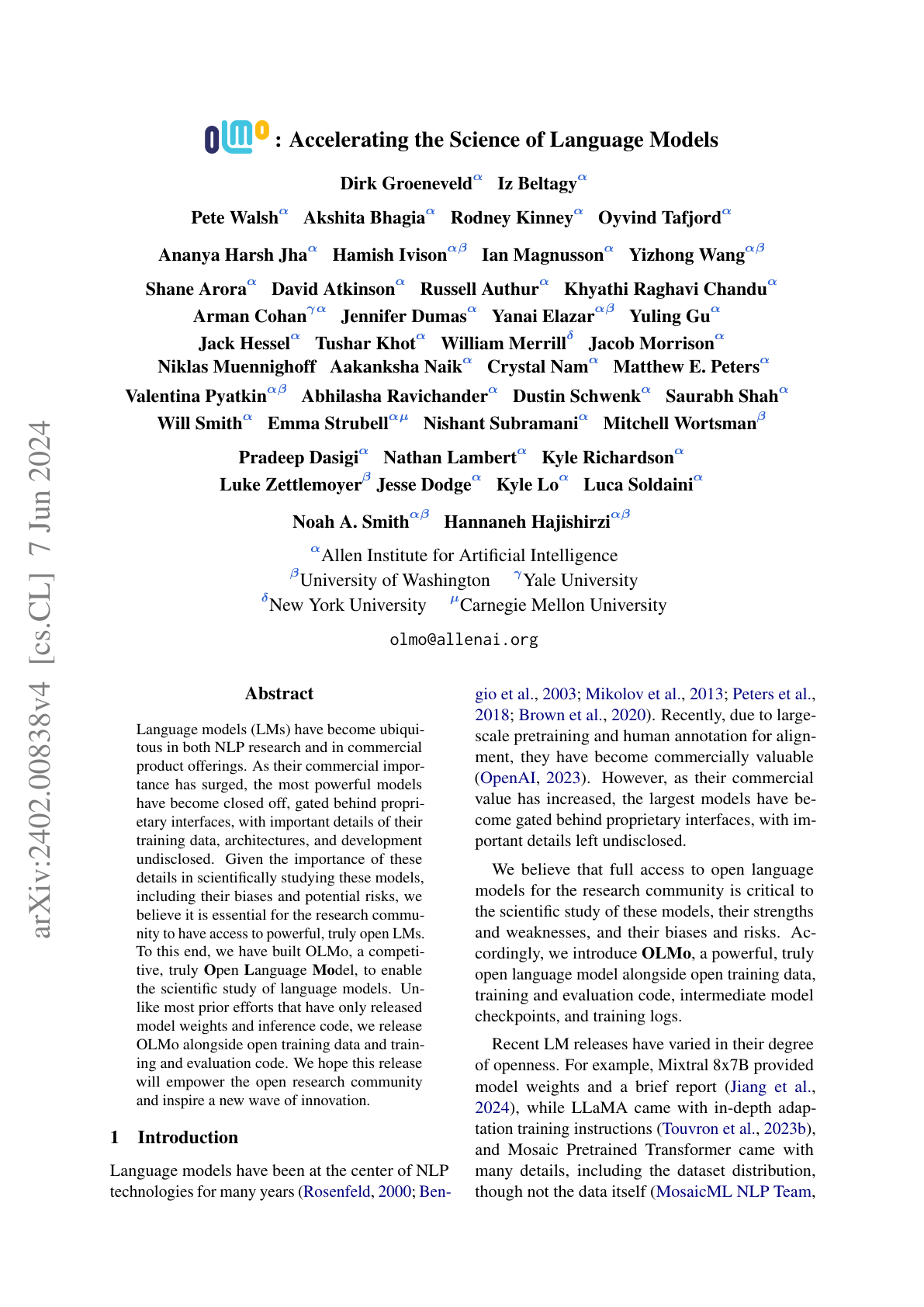
OLMo
Allen AI releases OLMo, a truly open 7B-parameter LLM shipped with training code, pretraining data, full weights, evaluation tooling, and fine-tuning recipes - an answer to the "open-weights but closed-pipeline" releases dominating the space.
Advances in Multimodal LLMs
A comprehensive survey mapping design choices for architecture and training pipeline around multimodal large language models (MLLMs).
Corrective RAG (CRAG)
CRAG adds a self-correcting loop around retrieval so a RAG system can detect and repair bad retrievals instead of feeding them straight into generation.
LLMs for Mathematical Reasoning
A survey of the fast-growing literature on using LLMs for mathematical reasoning, from arithmetic word problems to theorem proving.
MoE-LLaVA
MoE-LLaVA applies Mixture-of-Experts tuning to the LLaVA vision-language architecture, getting a sparse model with dramatically fewer active parameters at the same compute cost.