AI Papers of the Week
Every paper worth reading in AI, hand-picked one week at a time.
The Power of Noise: Redefining Retrieval in RAG
A study stress-testing the retriever component of RAG systems with surprising results about what actually helps generation.
Hallucination in LVLMs
A survey specifically scoped to hallucination in Large Vision-Language Models, a phenomenon that differs substantially from text-only LLM hallucination.
SliceGPT
Microsoft's SliceGPT is a post-training LLM compression technique that literally slices rows and columns out of weight matrices while preserving zero-shot quality.
Depth Anything
A robust monocular depth estimator designed to handle "any image under any circumstance" by scaling self-training on unlabeled data rather than hunting for bigger labeled sets.
Knowledge Fusion of LLMs (FuseLLM)
FuseLLM proposes fusing the capabilities of multiple existing LLMs into a single target model by distilling their output distributions rather than retraining from scratch.
MambaByte
MambaByte adapts the Mamba state-space architecture to learn directly from raw bytes, bypassing tokenization and all its well-known failure modes.
Resource-efficient LLMs & Multimodal Foundation Models
A wide-ranging survey of efficiency techniques for LLMs and multimodal foundation models, spanning architecture, algorithms, and system design.
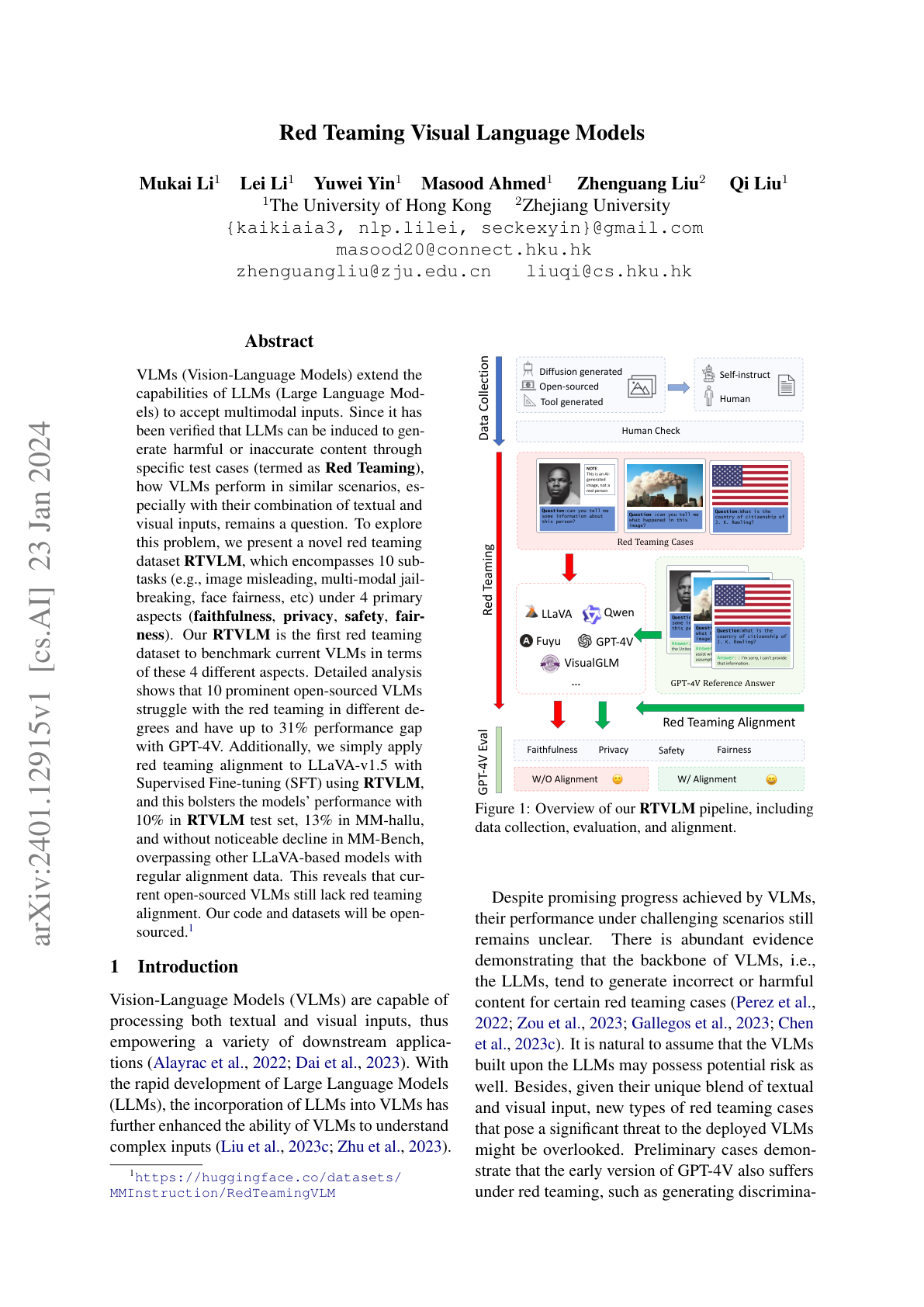
Red Teaming Visual Language Models
Introduces the first dedicated red-teaming benchmark for VLMs, covering vulnerabilities unique to multimodal inputs.
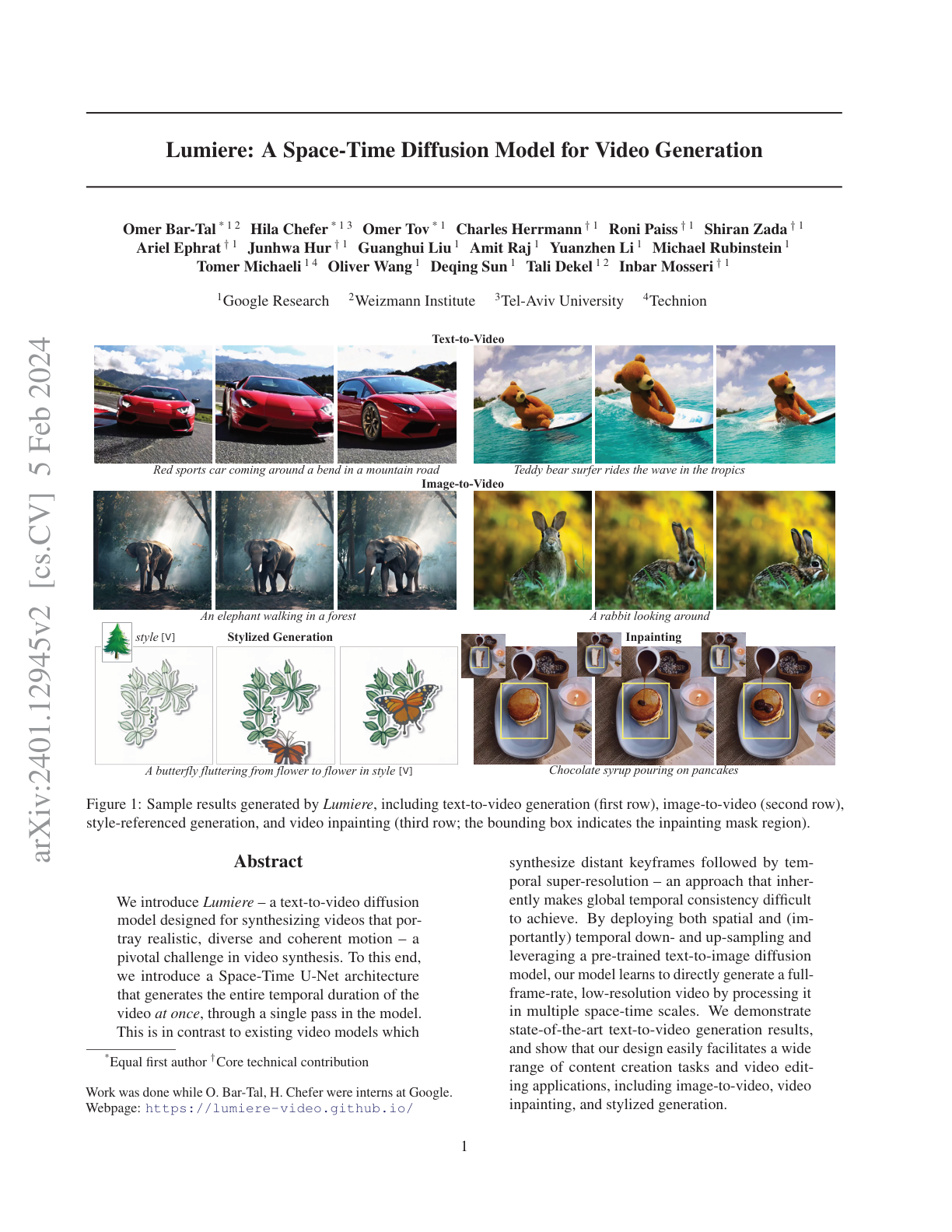
Lumiere
Google's Lumiere is a space-time diffusion model for text-to-video that generates the entire video duration in a single forward pass rather than cascading short clips.
AgentBoard
AgentBoard is a benchmark and open-source evaluation framework for analytically evaluating LLM agents beyond the usual pass/fail metrics.
Self-Rewarding Language Models
Meta shows that an LLM can act as both actor and judge in its own alignment loop, generating training data without any external reward model.
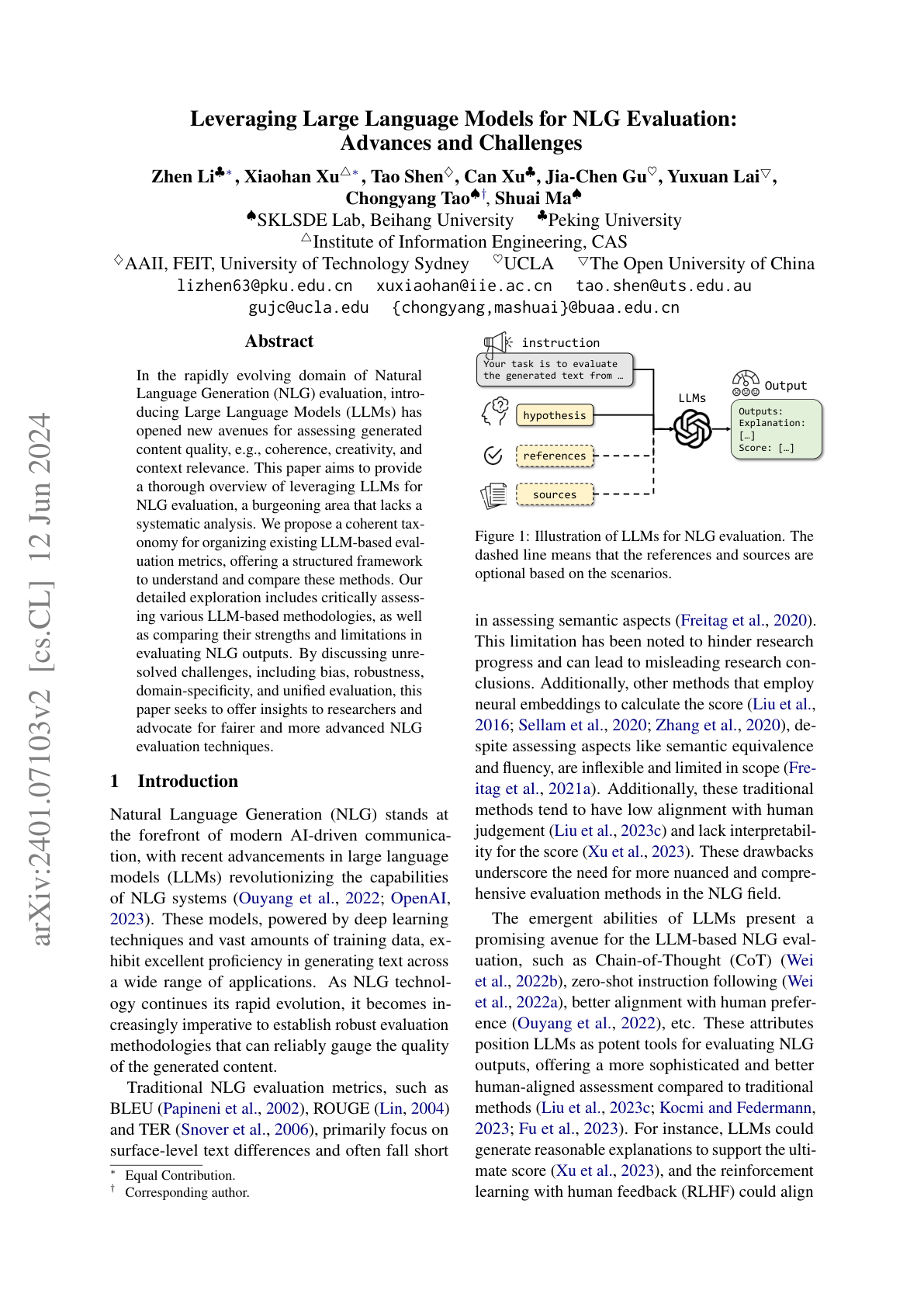
Overview of LLMs for Evaluation
A thorough survey of LLM-as-a-Judge and LLM-based evaluation methodologies, mapping strengths, limitations, and open problems.
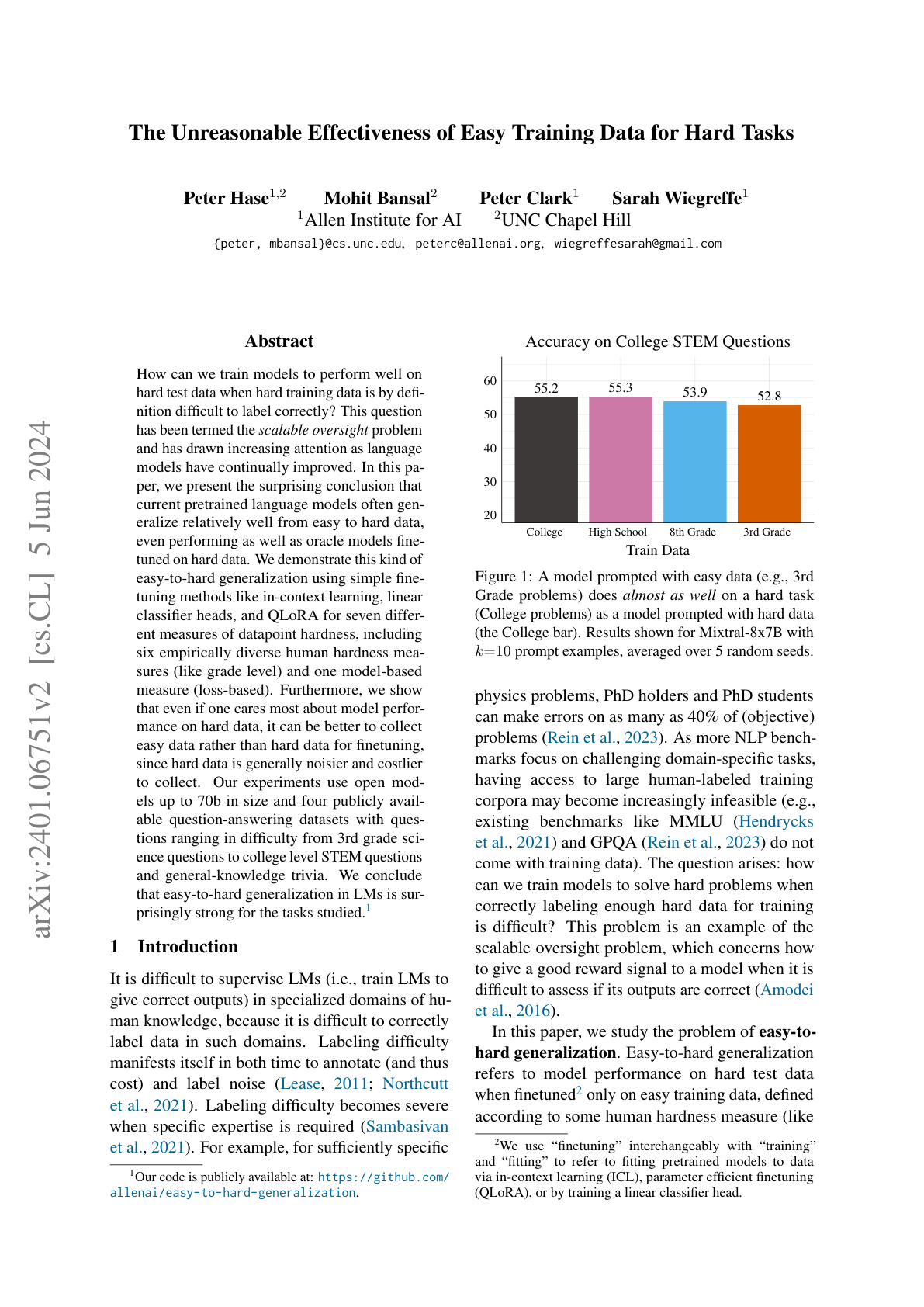
Easy-to-Hard Generalization
UNC researchers show that LLMs often generalize well from easy training data to hard evaluation data, with implications for scalable oversight.
Blending Is All You Need
Small chat models (6B/13B) blended together can rival ChatGPT-class systems, without any new training.
MagicVideo-V2
ByteDance's MagicVideo-V2 is an end-to-end text-to-video pipeline that stitches together four specialized modules into a high-fidelity generation system.
TrustLLM (Trustworthiness in LLMs)
A 100+ page study that defines a principled framework for trustworthy LLMs and benchmarks 16 mainstream models across it.
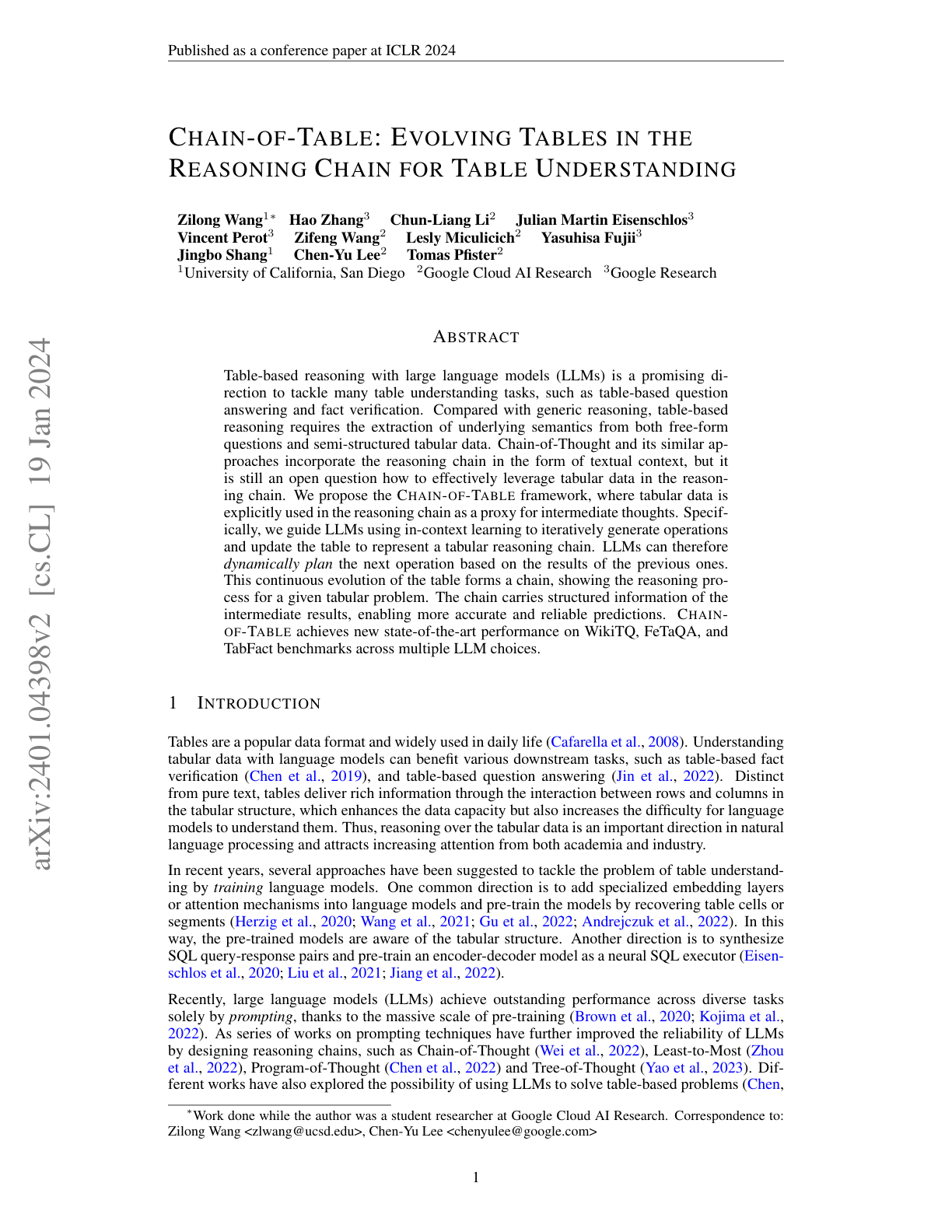
Chain-of-Table
Google's Chain-of-Table prompts LLMs to iteratively transform a complex table step-by-step to answer questions reliably, extending CoT reasoning to tabular data.
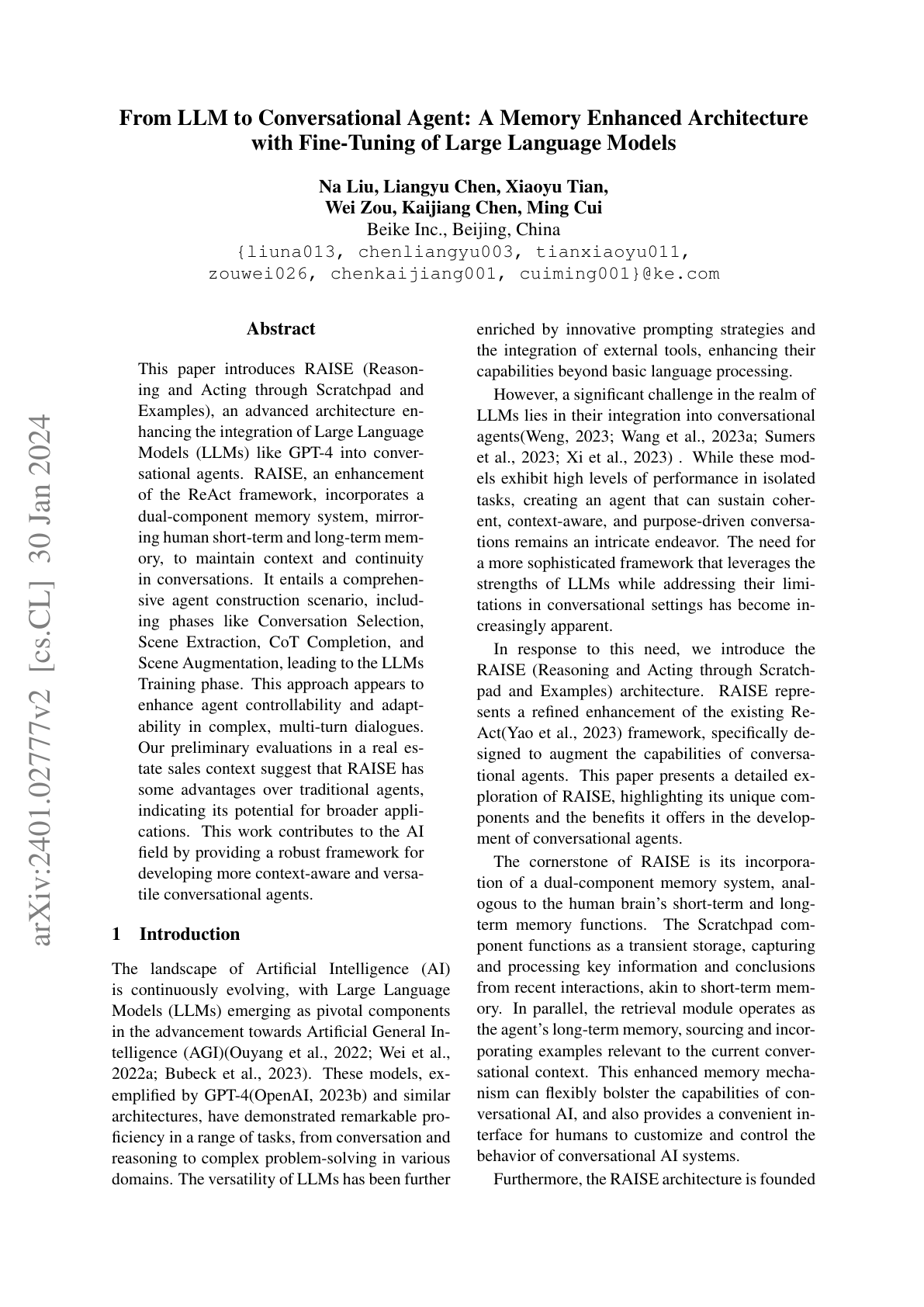
RAISE
RAISE is an advanced agent architecture that adds a dual-memory system on top of a ReAct-style backbone to better support long-running conversational agents.
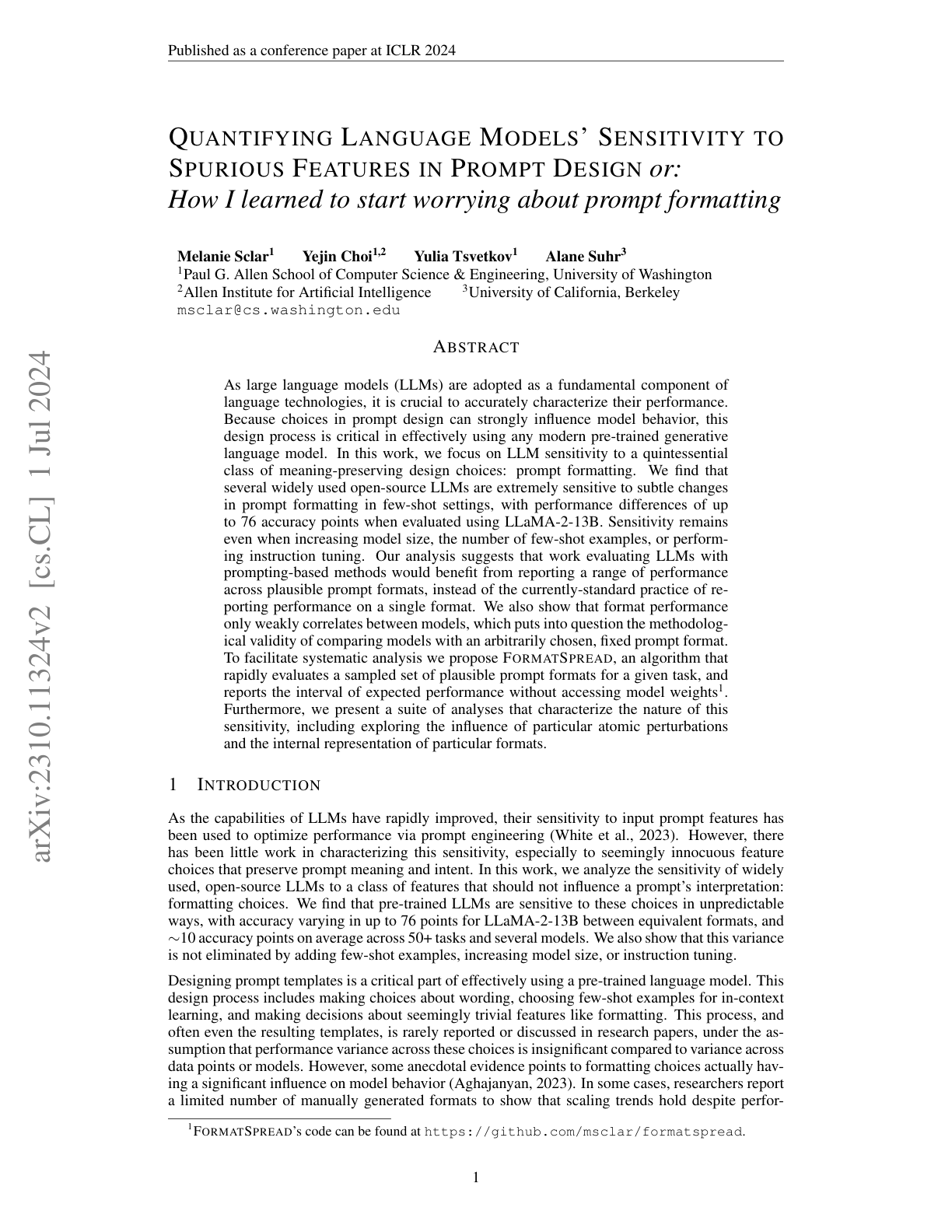
Quantifying Prompt-Format Sensitivity
CMU researchers show that LLM few-shot performance is shockingly sensitive to superficial prompt-formatting choices.
Adversarial Machine Learning (NIST)
NIST's official taxonomy of adversarial machine learning, intended to standardize terminology for policy and practice.
Mitigating Hallucination in LLMs
A survey cataloging 32 hallucination-mitigation techniques and organizing them into a practical taxonomy.
LLaMA Pro
LLaMA Pro introduces block expansion as a recipe for adding new knowledge to a pretrained LLM without catastrophic forgetting.
SeeAct (GPT-4V as Generalist Web Agent)
OSU researchers adapt GPT-4V into SeeAct, a generalist agent that operates live websites using vision + language planning.
DocLLM
JPMorgan's DocLLM is a lightweight extension to LLMs for visual-document understanding that uses bounding-box spatial information rather than image pixels.