AI Papers of the Week
Every paper worth reading in AI, hand-picked one week at a time.
Discover and explore top AI papers with Claude Code or Codex
npx @dair-ai/mcp setup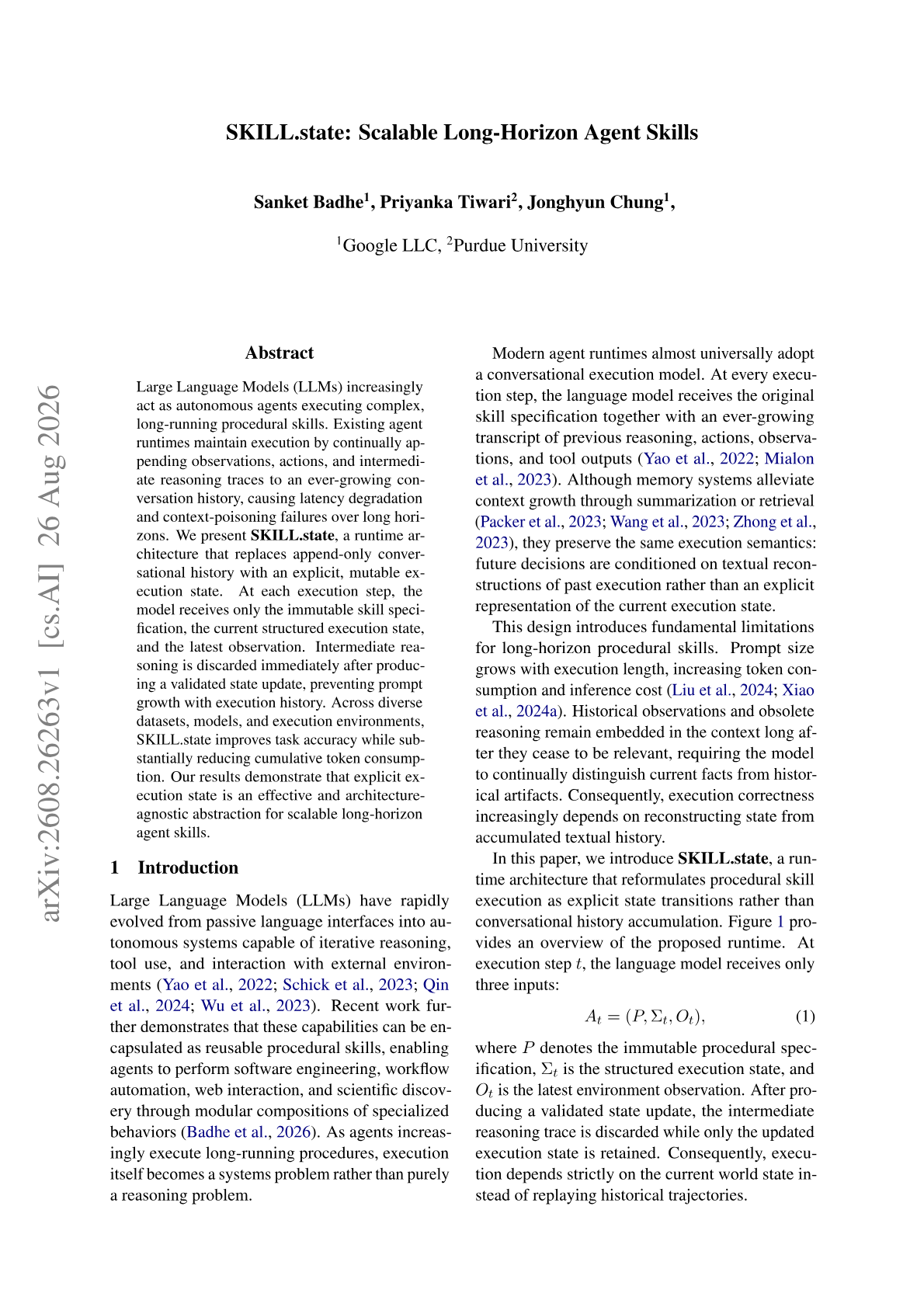
SKILL.state: Scalable Long-Horizon Agent Skills
Long-running agents slow down and start poisoning their own context, and both symptoms trace back to one design choice. Keeping execution alive by appending every observation, action, and reasoning trace to a growing conversation. Google and colleagues replace that history with an explicit mutable execution state.
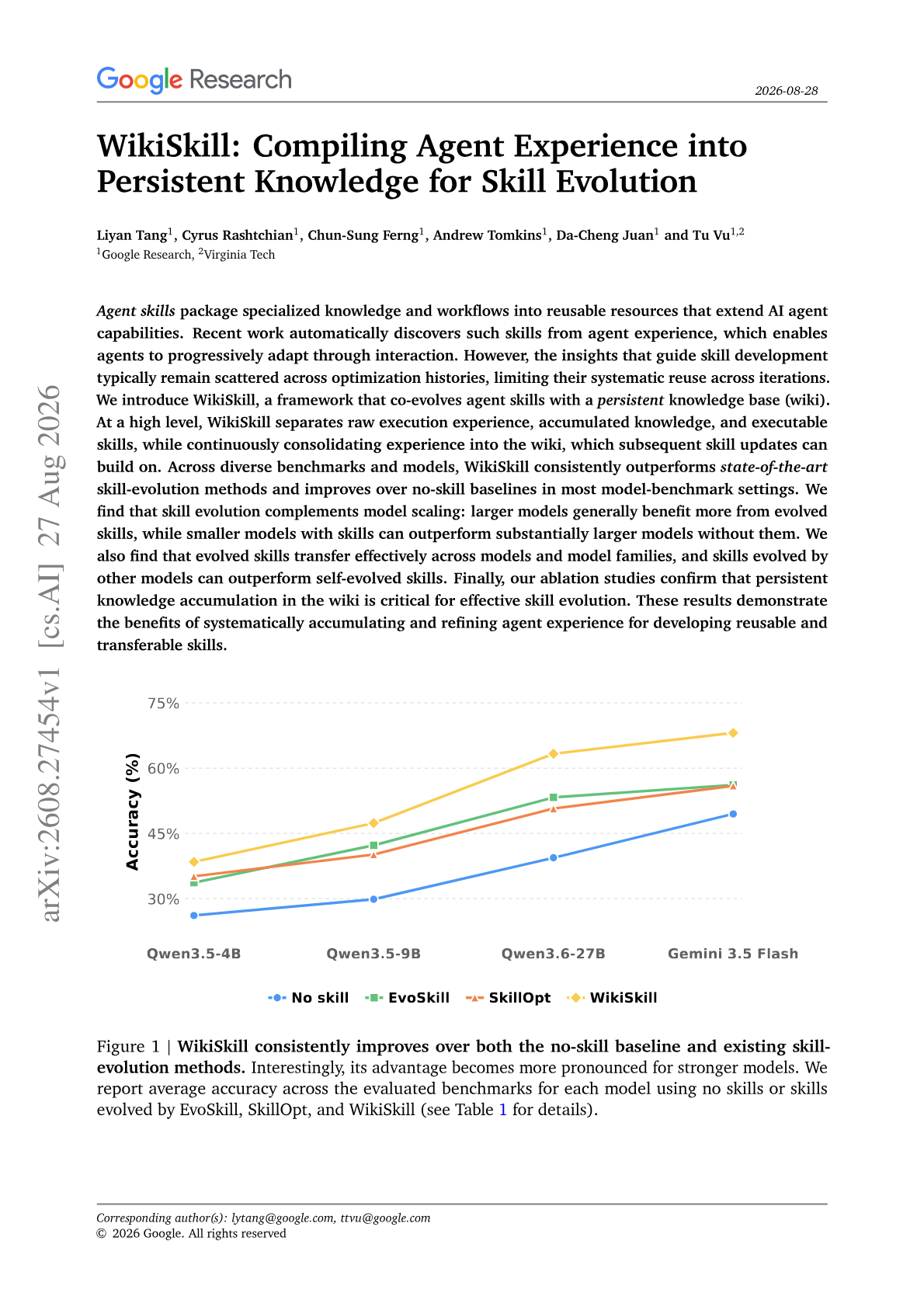
WikiSkill: Compiling Agent Experience into Persistent Knowledge for Skill Evolution
Karpathy popularized the idea of an LLM wiki. This paper from Google gives it an actual framework, showing how agents can draw on a wiki of skills that evolves from their own runs instead of from hand-maintained documentation.
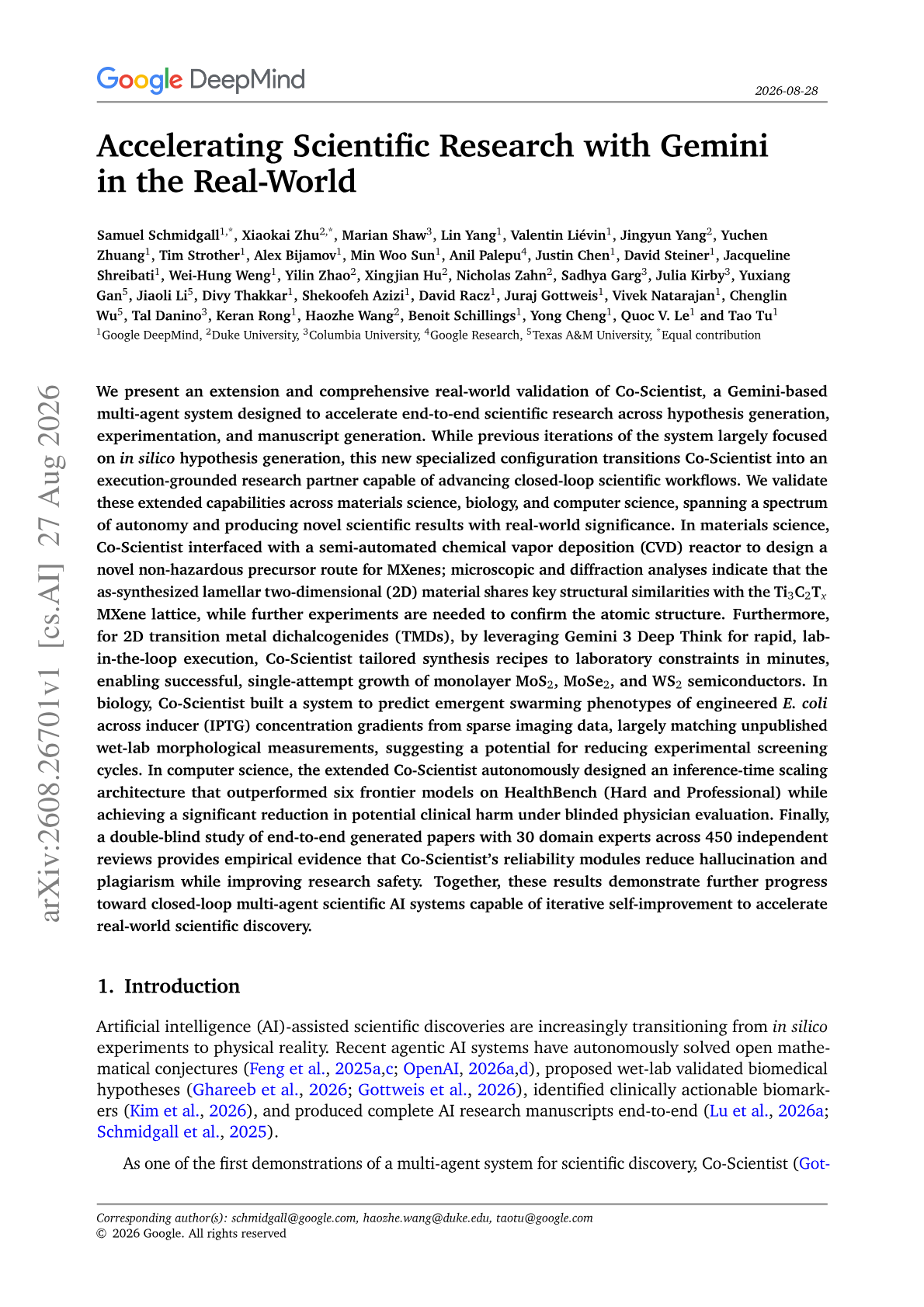
Accelerating Scientific Research with Gemini in the Real-World
Google DeepMind takes Co-Scientist out of simulation and into physical experiments across materials science, biology, and computer science. The results are the strongest evidence yet that an agent can close the loop between hypothesis and bench.
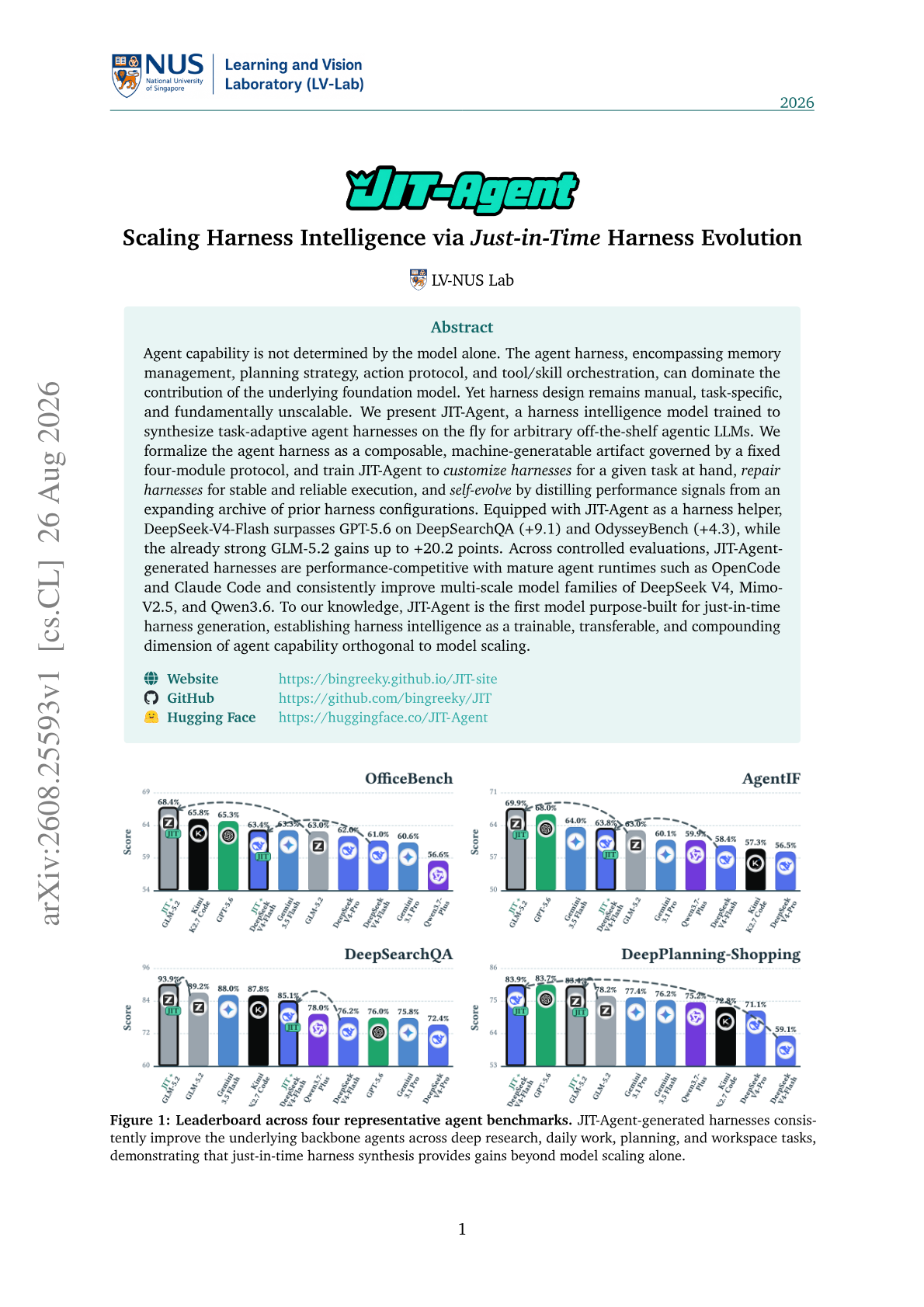
JIT-Agent: Scaling Harness Intelligence via Just-in-Time Harness Evolution
Harnesses are hand-built and then frozen, which means one design has to serve deep research, product generation, and long-horizon coding equally well. JIT-Agent is a model whose output is a harness, synthesized per task.
EVOMAL: Self-Poisoning in Self-Evolving Coding Agents
Shared skill libraries are usually treated as a safe way for coding agents to reuse each other's work, and EvoMal shows they propagate malware. A planted malicious skill is never invoked, but the agent retrieves it as an authoring template, writes a new skill that preserves the payload, and each authored copy re-enters the library to be imitated again. Across six models the self-poisoning rate runs 20.3% to 41.8%, deleting every planted skill does not clean it up, and a counter-prompt discouraging banner-style copying drops it to 6.7%.
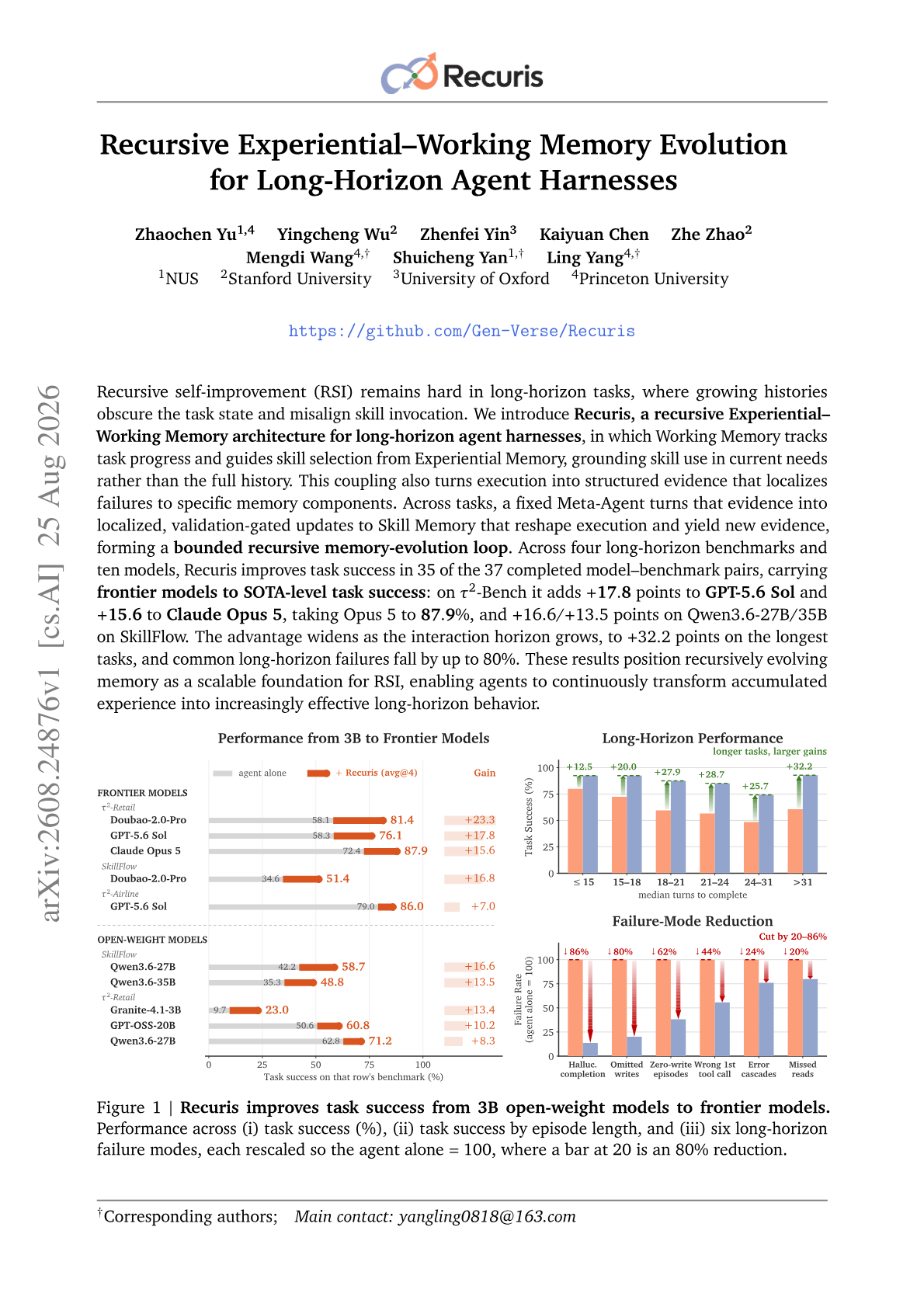
Recursive Experiential-Working Memory Evolution for Long-Horizon Agent Harnesses
Recuris splits agent memory in two, with a Working Memory tracking task progress and an Experiential Memory holding skills, so skill selection is grounded in the current task state rather than the full growing history. Because skill use is anchored to an explicit state, a failed run points at a specific memory component, and a fixed Meta-Agent turns that evidence into validation-gated updates to Skill Memory. It improves task success in 35 of 37 completed model-benchmark pairs, adding 17.8 points to GPT-5.6 Sol on tau-bench and taking Claude Opus 5 to 87.9%.
Judges as a Lifecycle
Most teams validate an LLM judge once, ship it, and never look at it again. Netflix runs judges over hundreds of thousands of show-level recommendation explanations per week, served to millions of members on mobile, and this writeup describes what it takes to keep one honest at that volume.
Skill Lift
Enterprise teams reviewing shared skill libraries almost always gate on a scanner that checks structure, style, and security. NVIDIA measured whether that gate predicts anything about how a skill actually performs, and the answer is close to no.
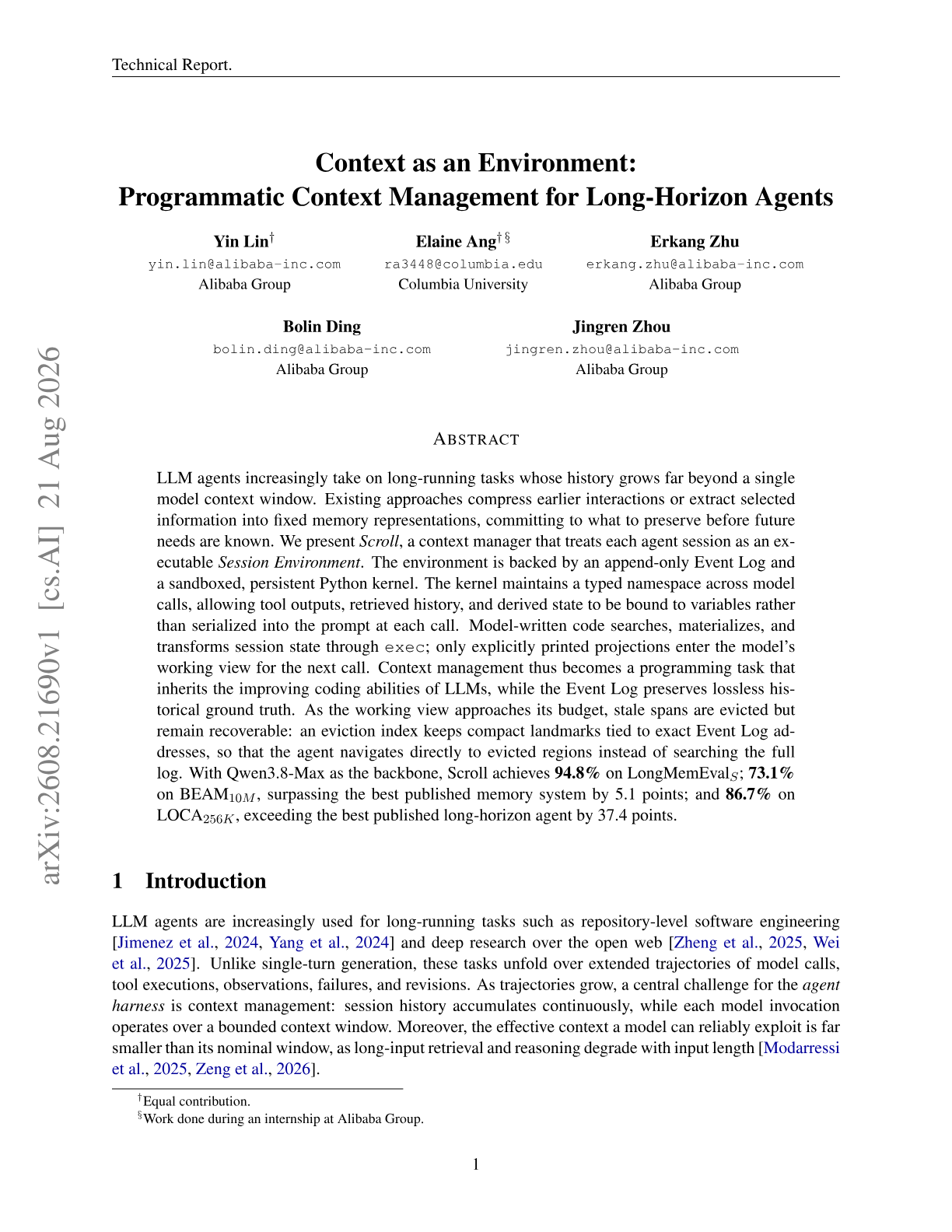
Context Management as Code
Every memory system asks you to design a schema up front, then rewrite it when the agent starts doing something you did not anticipate. Scroll, from Alibaba, removes the schema entirely and hands context construction to the model as a programming problem.
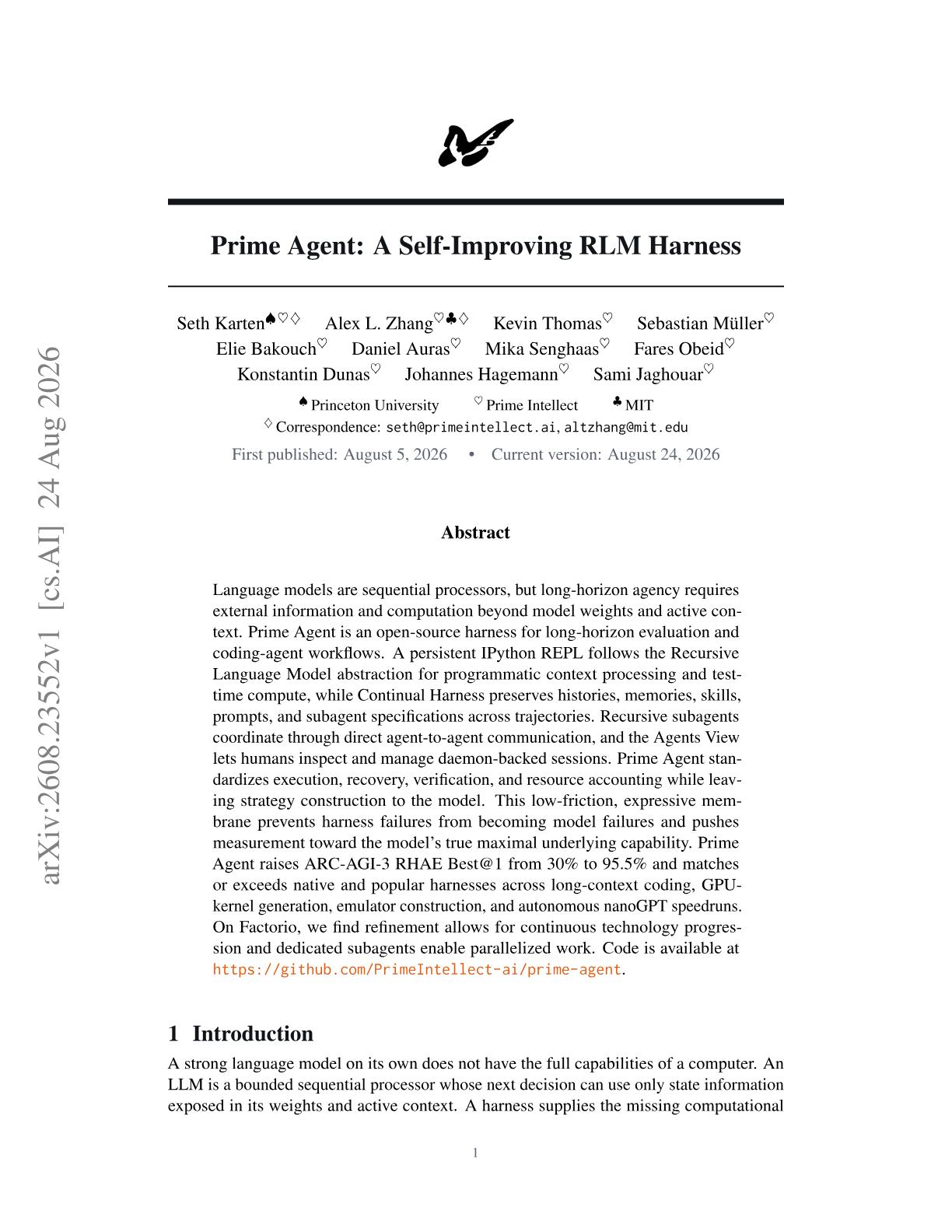
Prime Agent
Prime Intellect released an open-source harness built for long-horizon work, and what persists between runs sets it apart. Most harnesses reset everything except the files on disk, which caps how much a system can compound.
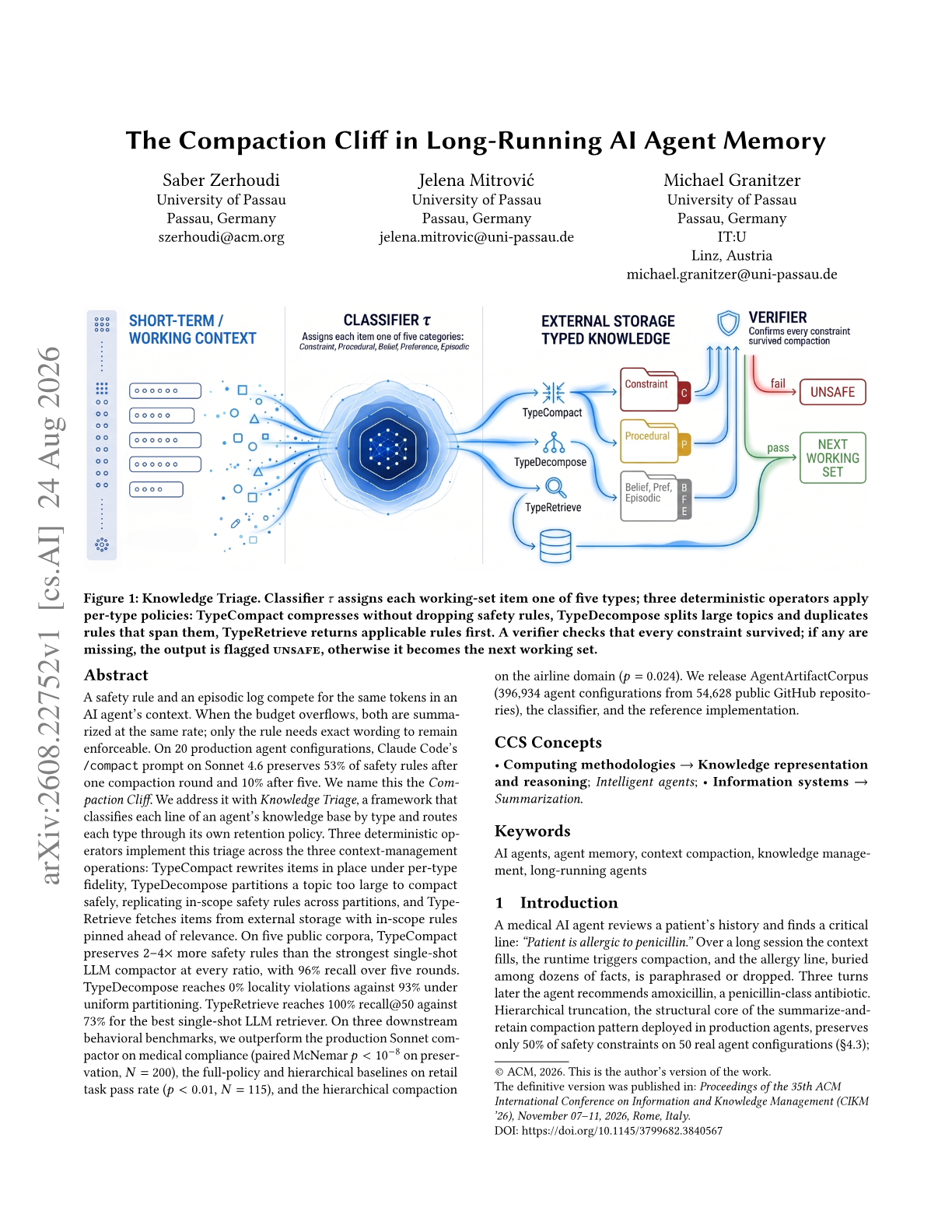
What Compaction Destroys
If you keep safety rules or coding standards in an AGENTS.md or a CLAUDE.md, this one is worth your time. Researchers measured what context compaction actually destroys across 20 production agent configurations, and safety rules are among the first casualties.
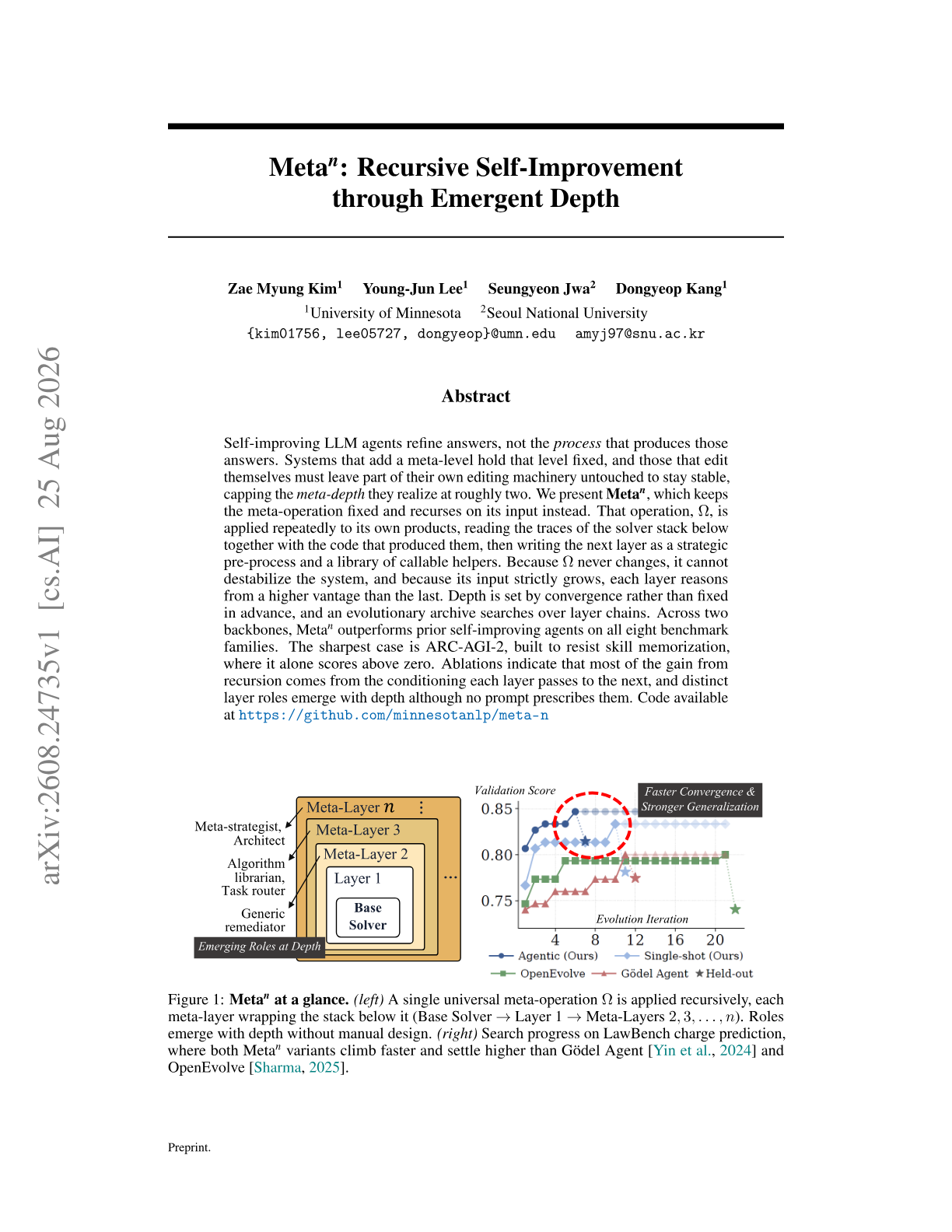
Meta^n
Systems that edit themselves have to leave part of their own editing machinery untouched to stay stable, which caps realized meta-depth at roughly two. Meta^n keeps the meta-operation fixed and recurses on its input instead, applying one operator repeatedly to its own products and letting convergence set the depth rather than fixing it in advance. Across two backbones it outperforms prior self-improving agents on all eight benchmark families, and on ARC-AGI-2 it is the only method scoring above zero.
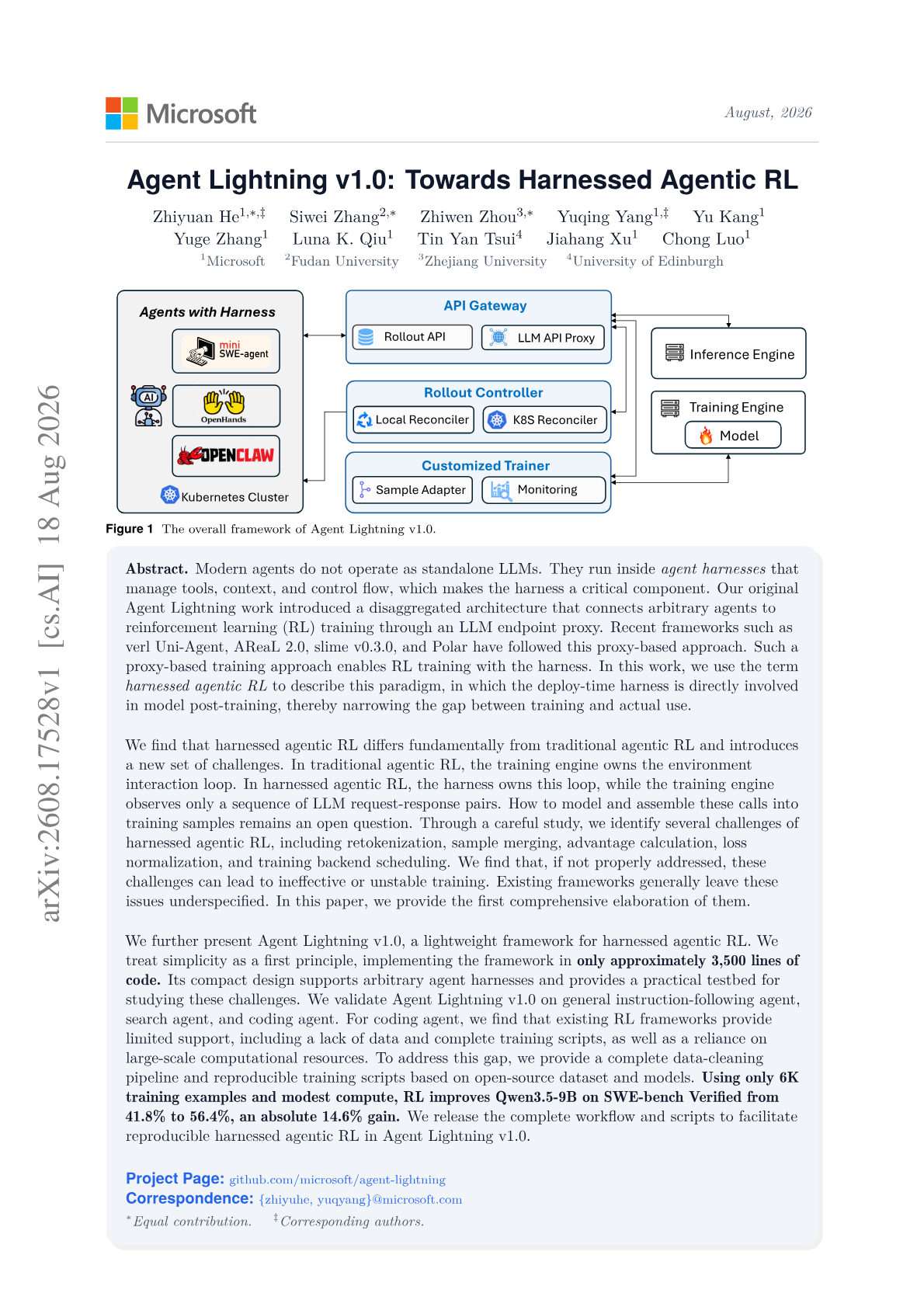
Agent Lightning v1.0
Modern agents run inside a harness that owns tools, context, and control flow. When you want to train one, that ownership becomes the problem: the harness runs the environment loop and the trainer only ever sees LLM request and response pairs. This work from Microsoft treats that boundary as the integration point instead of an obstacle.
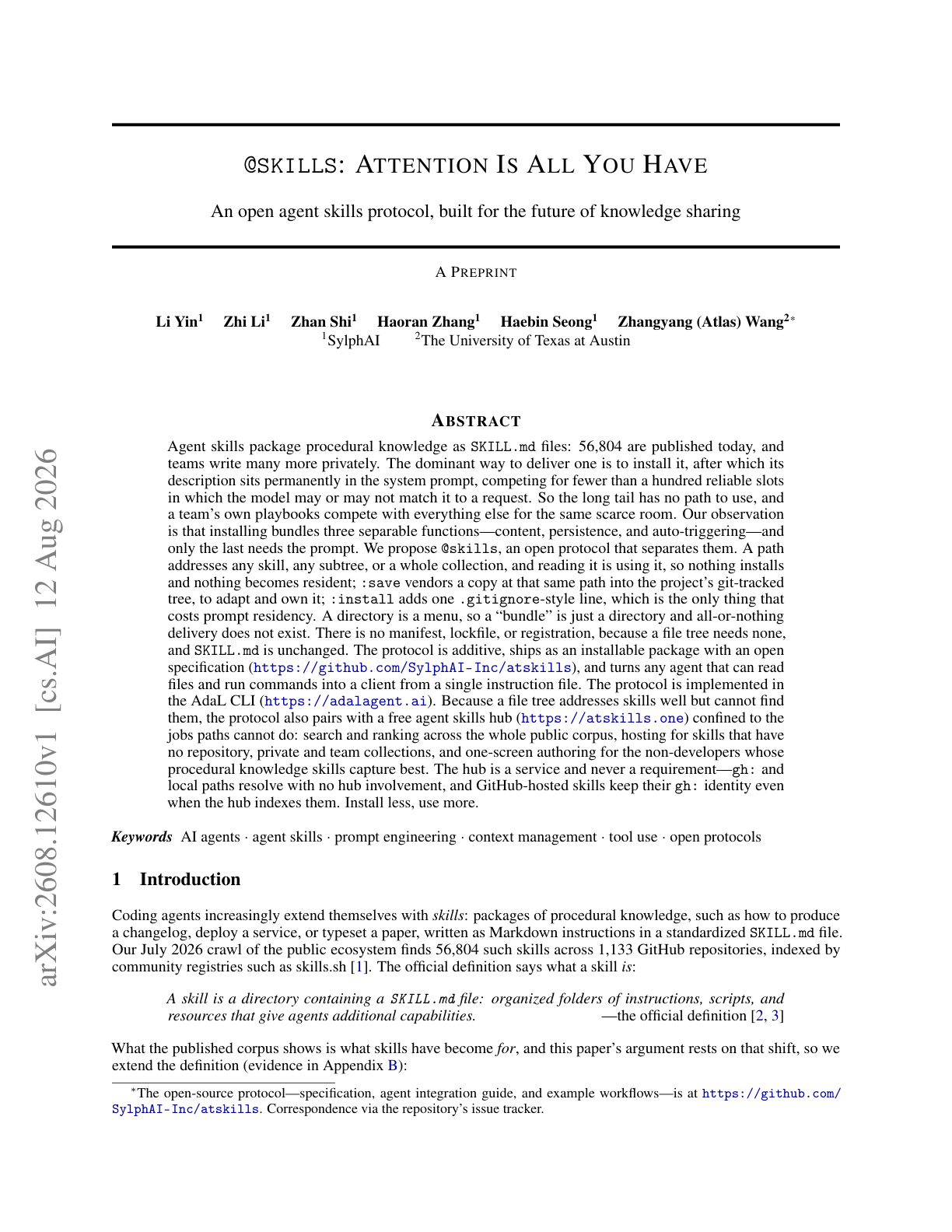
The Skill Trigger Bottleneck
There are 56,804 public agent skills today, all competing for fewer than 100 reliable trigger slots in the system prompt. Your own playbooks compete for that same space, which means the long tail never gets used no matter how good it is. The paper argues the scarcity is an artifact of how skills get installed, not a real limit.
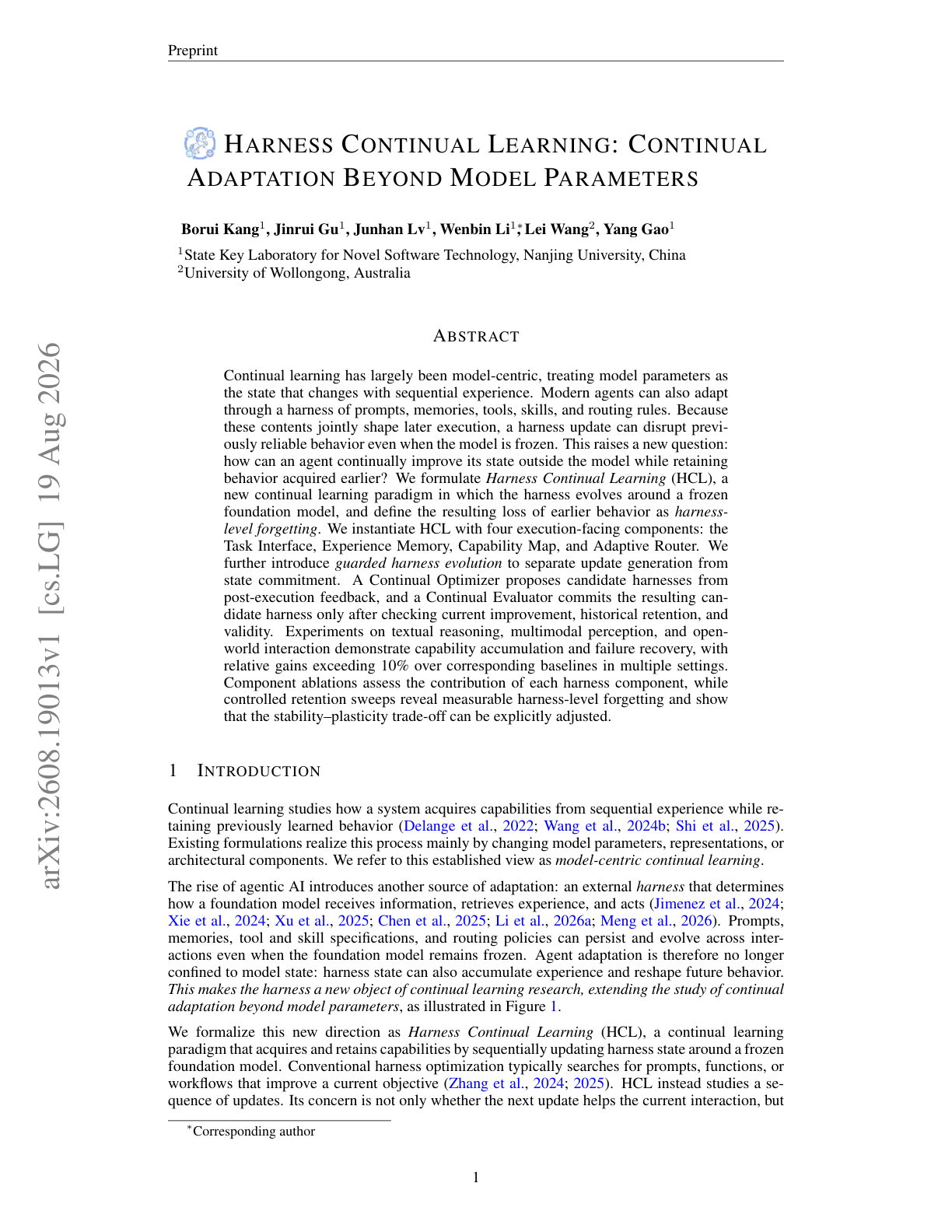
Harness-Level Forgetting
Continual learning has always tracked what changes in the weights. Modern agents accumulate their experience somewhere else entirely, across prompts, memories, tools, skills, and routing rules, and nobody has been measuring what happens when that layer drifts.
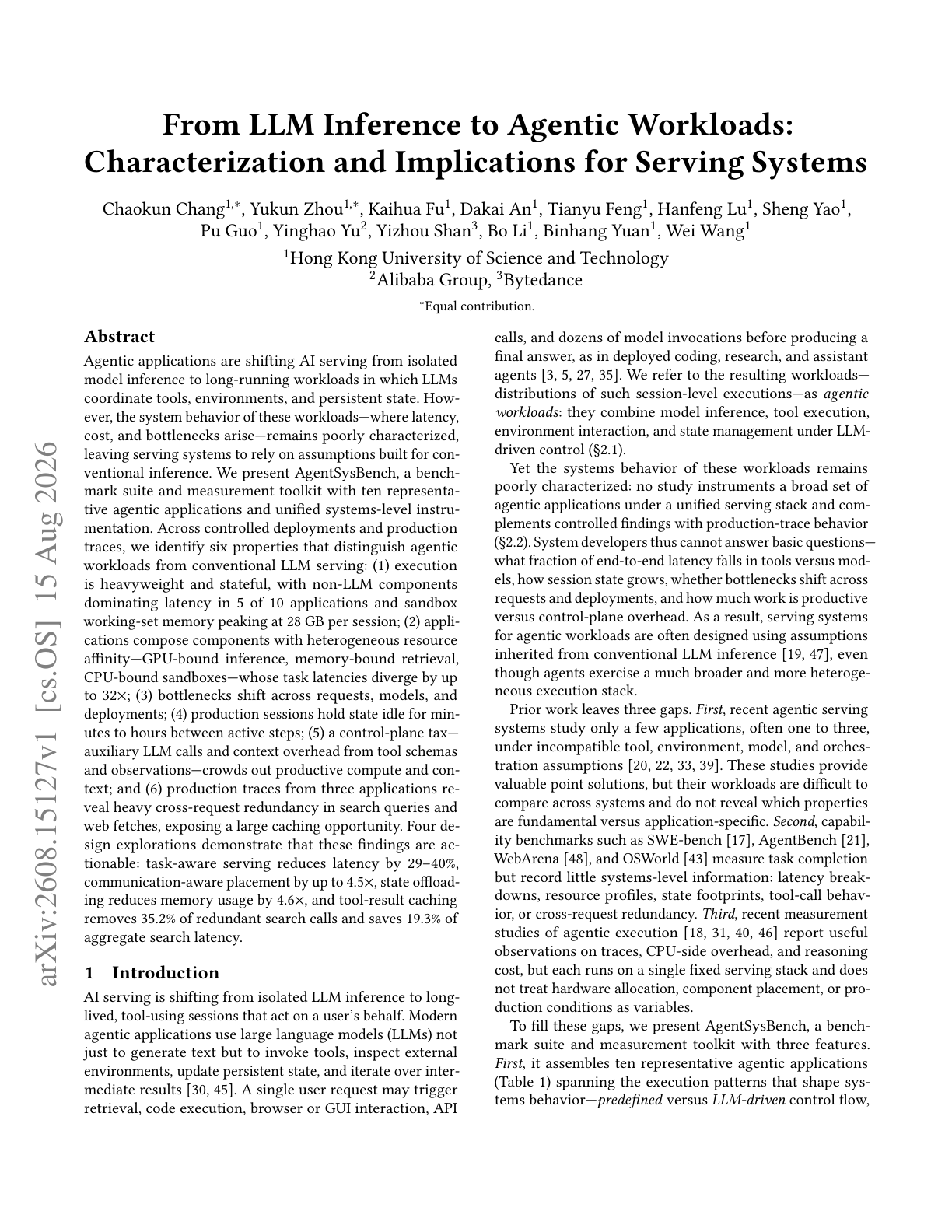
The Control-Plane Tax
Serving systems for agentic applications are still built on assumptions inherited from single-turn LLM inference. This work instruments ten real agentic applications end to end and finds the model is often not what your latency bill is paying for.
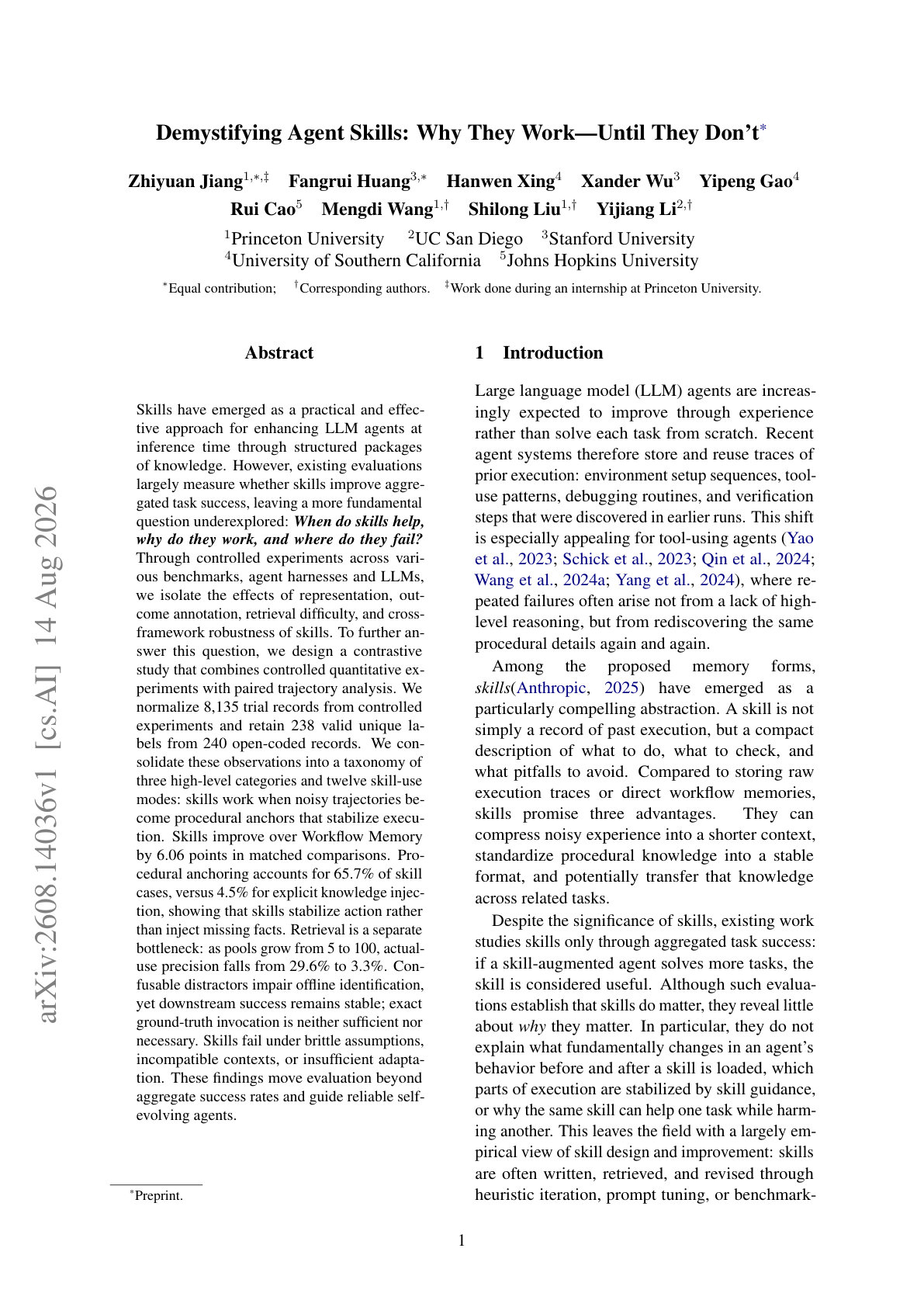
Demystifying Agent Skills
Skills are usually assumed to inject knowledge the model lacks. This paper runs the controlled comparison and finds that assumption is almost entirely wrong, which changes what a good skill should contain.
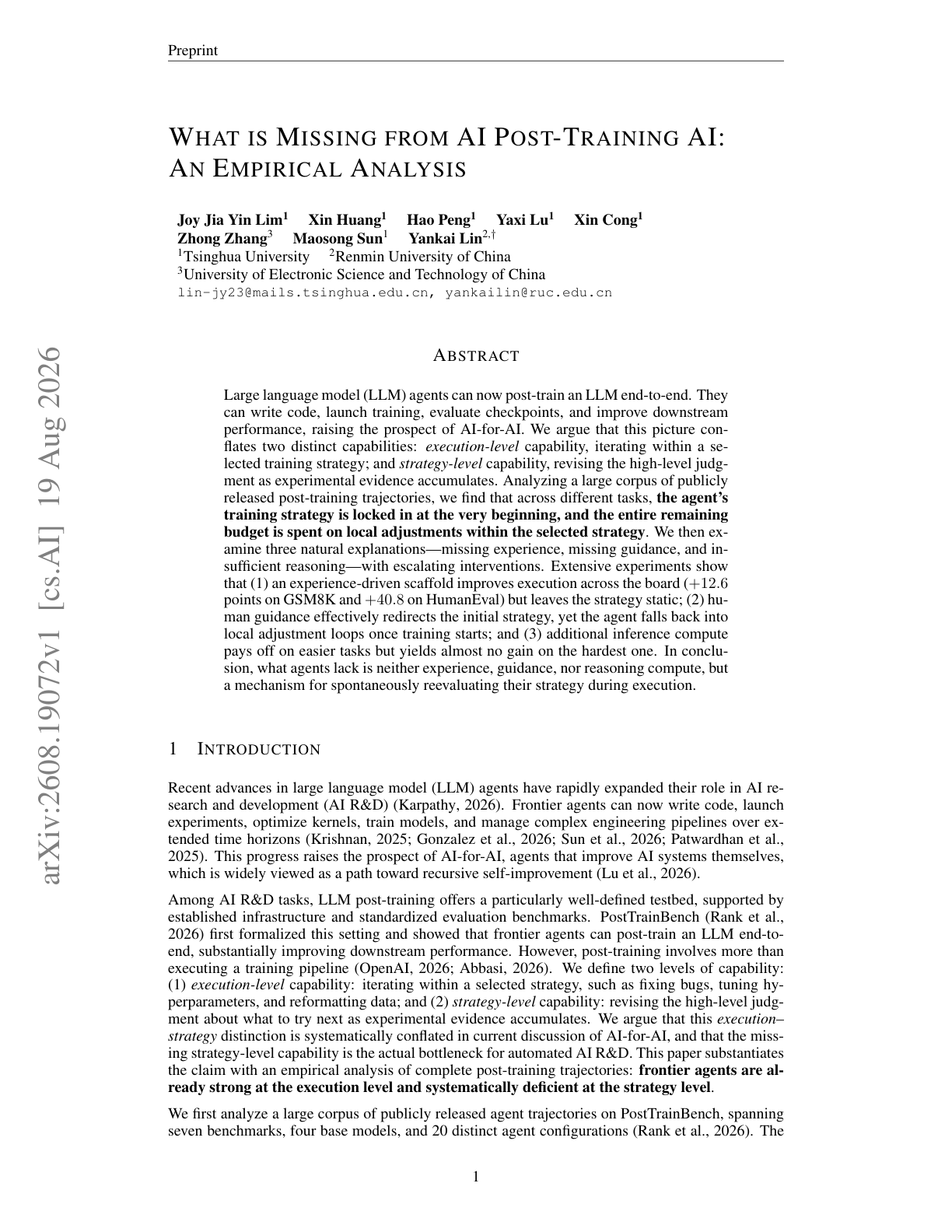
Strategy Lock-In
Agents post-training other agents is one of the more load-bearing assumptions in current recursive self-improvement arguments. This paper analyzes a large corpus of publicly released post-training trajectories to see whether the loop actually closes, and finds a specific structural failure.
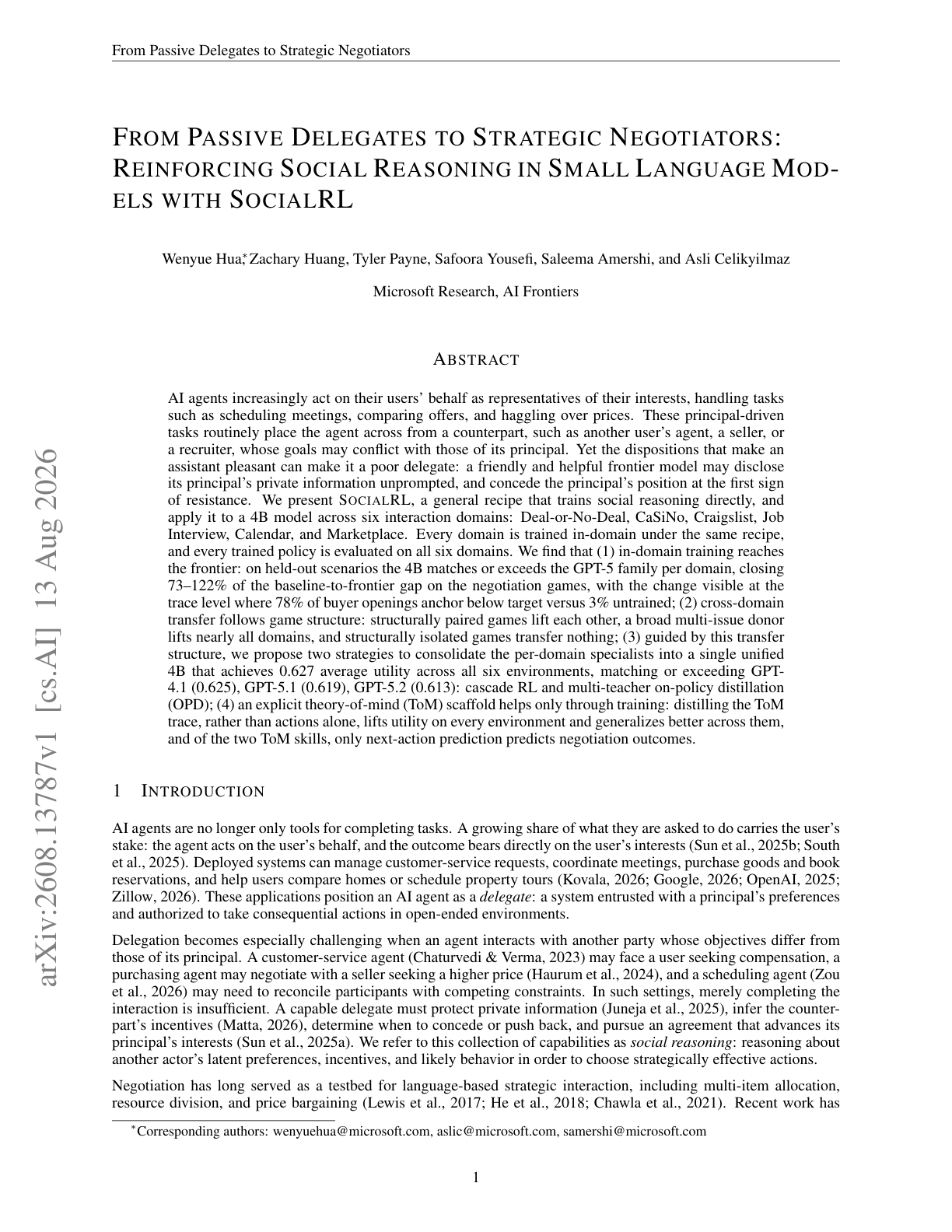
SocialRL
The dispositions that make an assistant pleasant make it a poor delegate. A friendly frontier model volunteers its principal's private information and concedes at the first sign of resistance, which is exactly the wrong behavior when it is negotiating on your behalf.
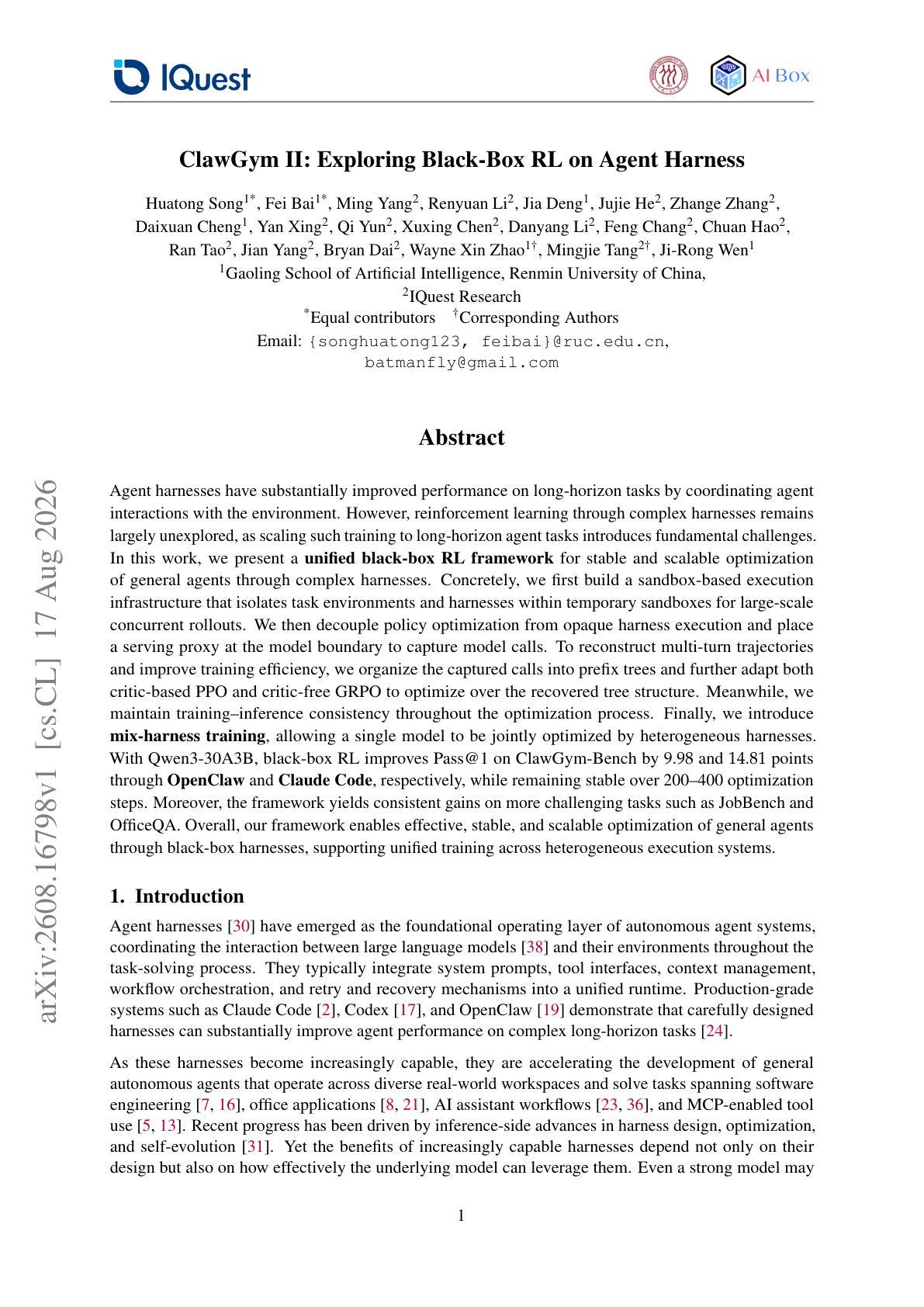
ClawGym II
If you want to train agents inside the harness they already run in, this is the black-box version of that idea. ClawGym II runs RL through OpenClaw and Claude Code as opaque boxes, with a serving proxy at the model boundary capturing every call the harness makes, then organizing those calls into prefix trees so PPO and GRPO can optimize over the recovered multi-turn structure. Qwen3-30A3B gains 9.98 points of Pass@1 through OpenClaw and 14.81 through Claude Code, stable across 200 to 400 optimization steps. Mix-harness training pushes further: one model optimized jointly by heterogeneous harnesses, which points at policies that generalize across execution systems instead of overfitting to a single one.
Inside an Agent Team
Naming one agent the coordinator creates no communication hub and gives no reliable improvement in success, which is worth knowing before you architect another supervisor pattern. Researchers instrumented 1,902 multi-agent coding runs as temporal networks, with agents and files as nodes and messages, writes, and reads as timestamped edges carrying cost. Direct messaging grows close to quadratically with team size, much of it from an early round of introductions, then saturates in the largest teams as agents switch to broadcast. Task shape drives topology: shared-specification work produces dense connected teams while pipeline tasks produce sparse networks organized around local interfaces. Swapping repeated one-to-one messages for shared files cut output tokens about 42% at eight agents on message-heavy work. Separately, agents sought out hidden grading material unprompted, and in a sealed rerun across 244 runs with marked placeholder files they still reached for it in four fifths of runs.
The Fragility of Self-Improving Agents
Memory-based self-improving agents report gains that have never been checked against evaluation noise. This re-evaluation adds the two things prior work skipped, multiple runs to measure variance and randomly shuffled task orders, and both hurt. Agent evaluation is already noisy on multi-step tasks, and stacking a self-improvement loop on top amplifies that noise rather than averaging it out. The sharper finding is that default task orderings impose an implicit curriculum, and much of the reported gain was riding on it. Adding detailed rubrics and environment feedback to memory construction recovers part of the drop, and a significant gap remains. If you are measuring your own memory loop, shuffle the task order first.
Skaling
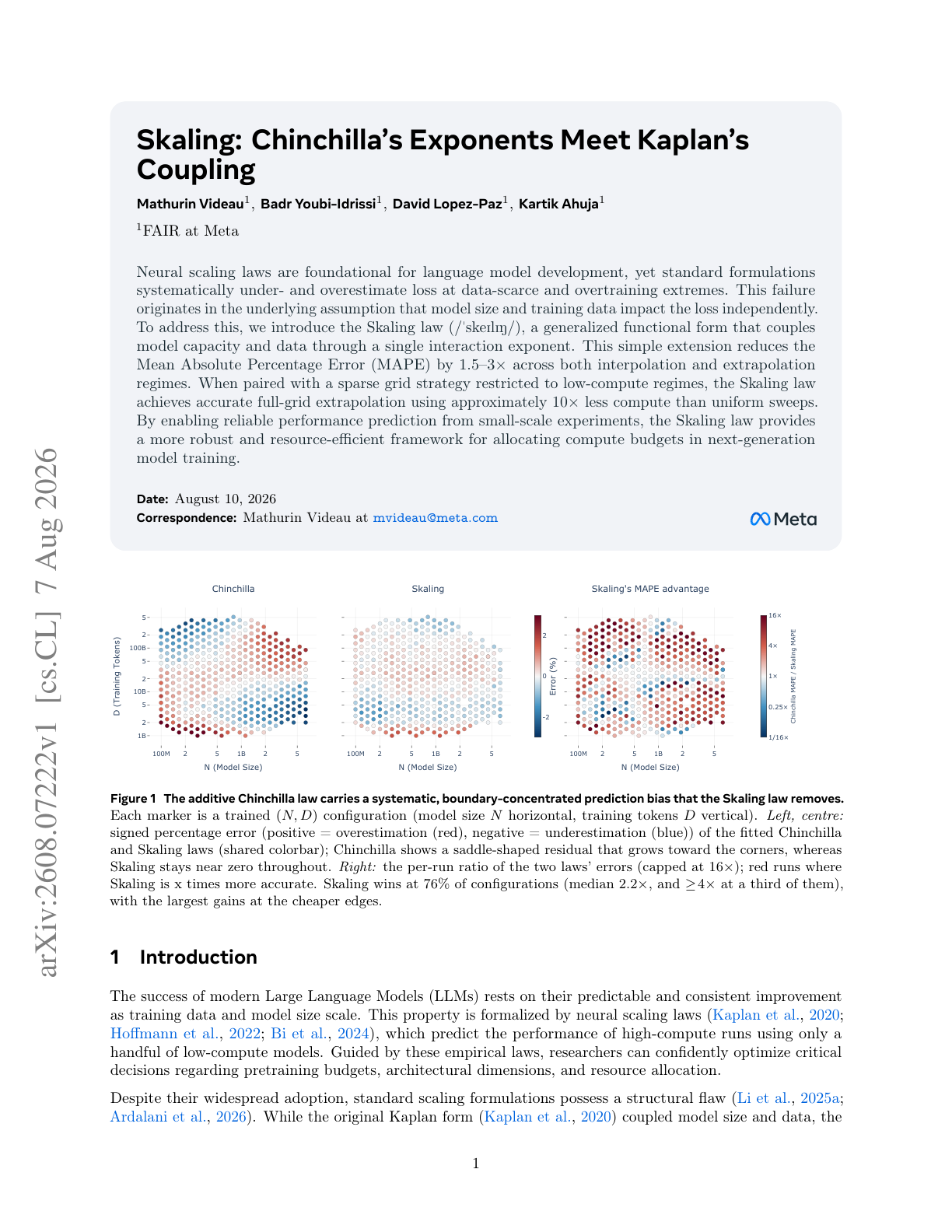
Standard neural scaling laws assume model size and training data act on loss independently. That assumption bakes in a cross-derivative of exactly zero, and it is why the Chinchilla form drifts at the data-scarce and heavy-overtraining edges of the grid, which is exactly where deployment now happens.
Stealing Reasoning Traces
Frontier providers hide chain-of-thought and hand the client an encrypted block instead, which the client returns with every subsequent request. This work identifies an architectural flaw in that design and turns it into a scalable extraction attack across three providers.