AI Papers of the Week
Every paper worth reading in AI, hand-picked one week at a time.
Discover and explore top AI papers with Claude Code or Codex
npx @dair-ai/mcp setup
Sample More Reflect Less
Methods that make a model criticize and rewrite its own answer nearly all generate far more text than a single chain of thought. Since generating more text raises accuracy on its own, a reported gain leaves open whether the method's idea is what helped. This paper reruns the comparison as a designed experiment.
DataSpace
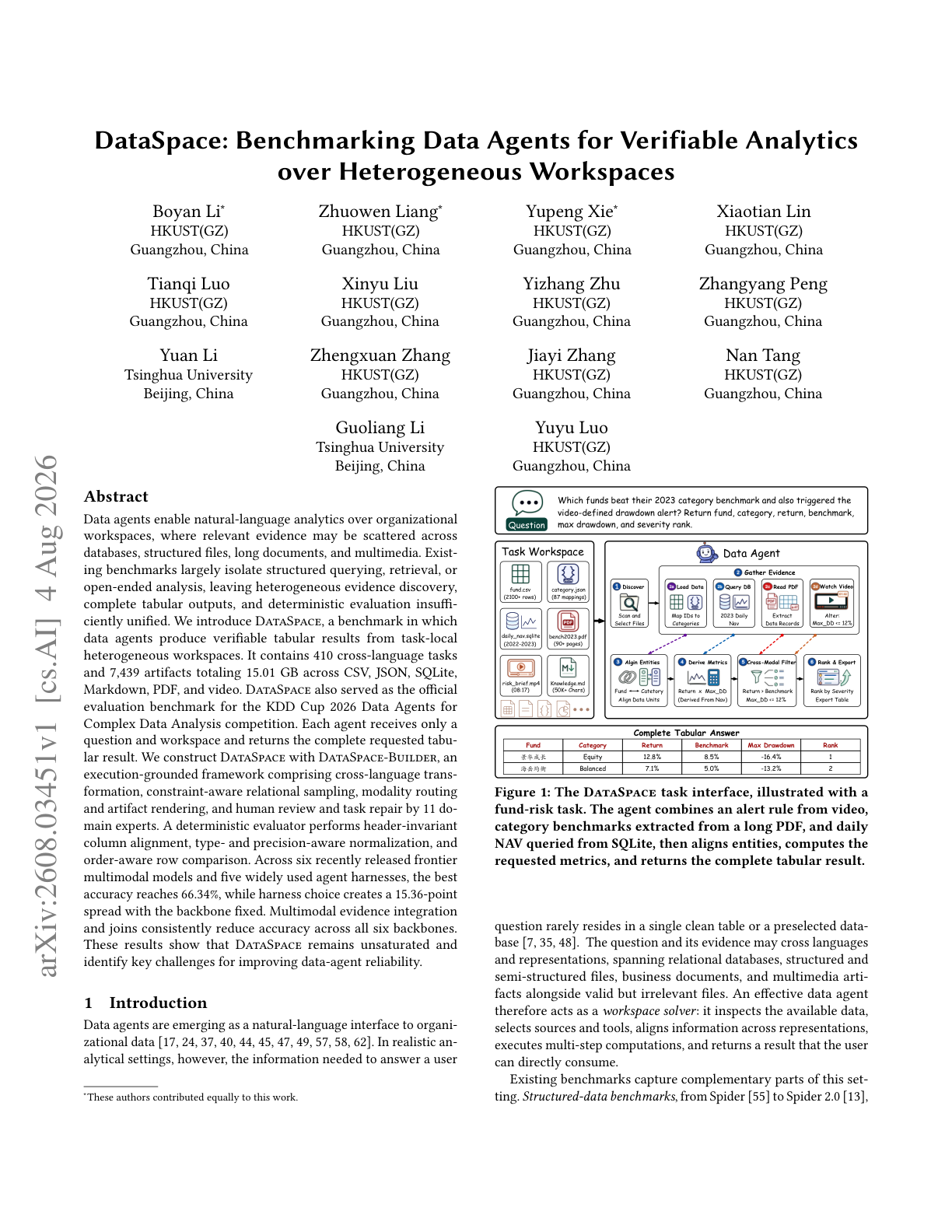
Real organizational analytics scatters evidence across databases, structured files, long documents, and video. Existing benchmarks isolate structured querying, retrieval, or open-ended analysis, leaving heterogeneous evidence discovery, complete tabular outputs, and deterministic scoring untested together.
Rehearse
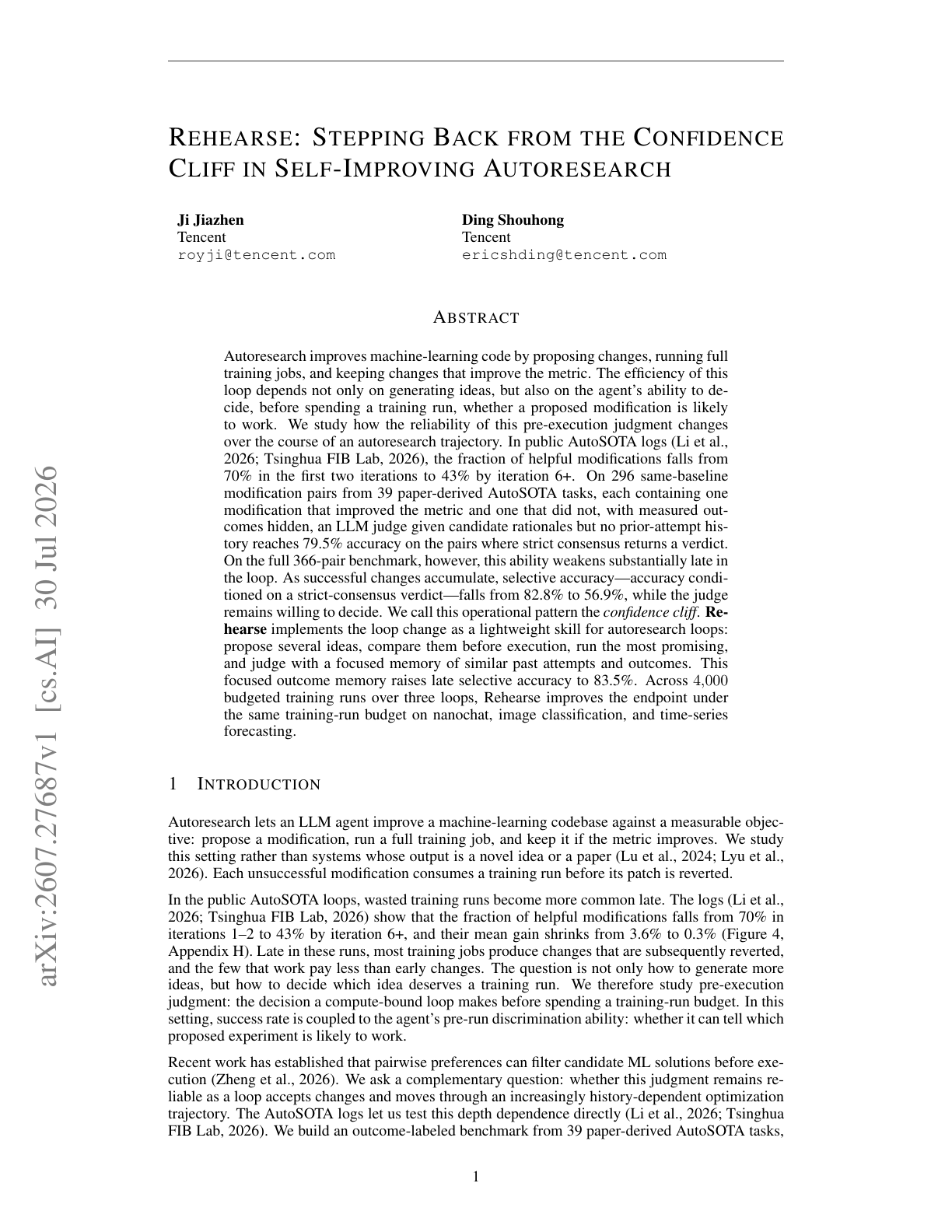
Autoresearch loops propose changes, run full training jobs, and keep whatever improves the metric. Their efficiency depends on judging, before spending a run, whether a proposed modification is likely to work, and this paper studies how that judgment holds up over a trajectory.
ContinualSkillBench
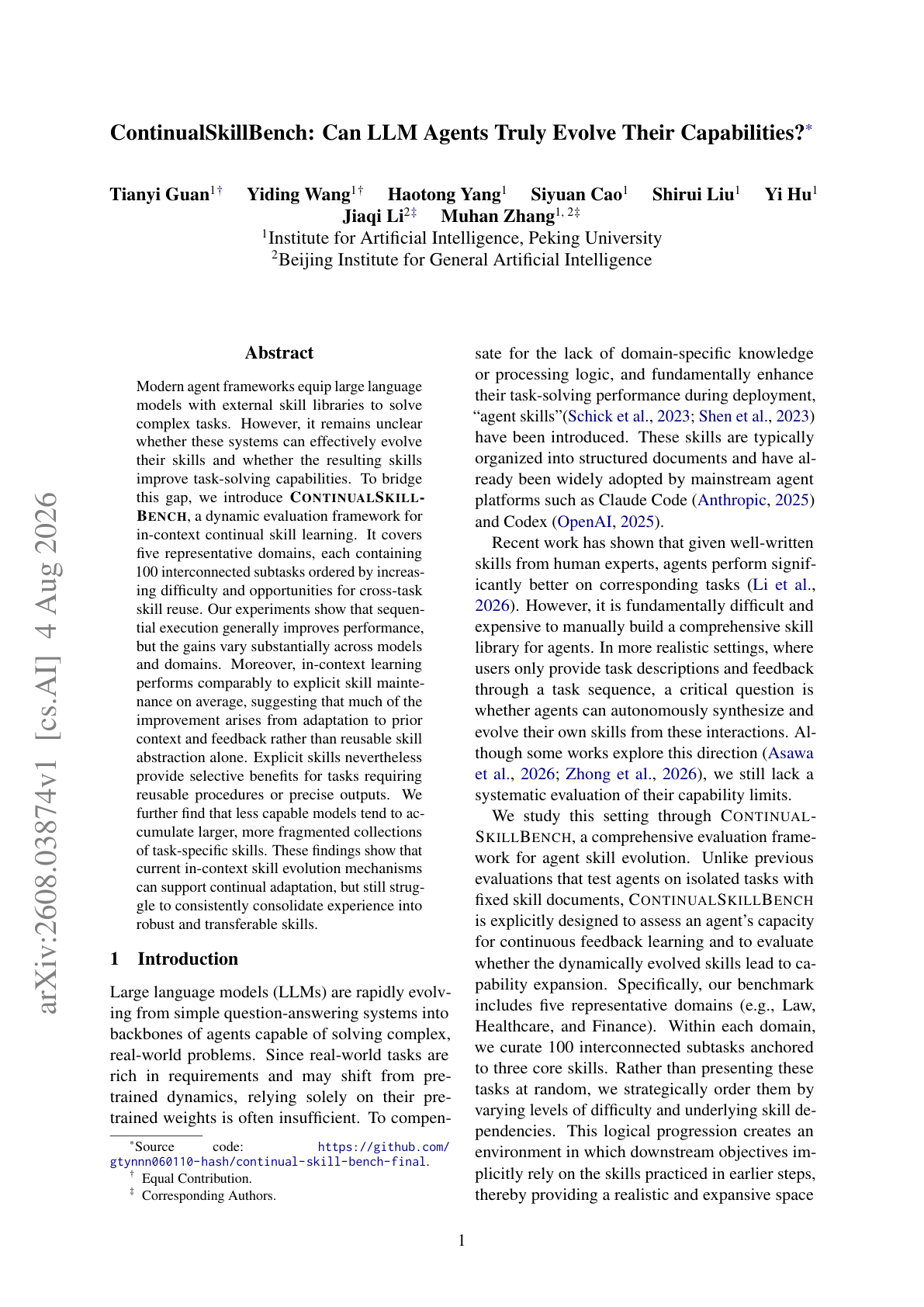
Skill libraries are shipping in agent harnesses on the assumption that writing skills down compounds, and this benchmark tests that assumption directly. ContinualSkillBench covers five domains, each with 100 interconnected subtasks ordered by increasing difficulty and built with deliberate opportunities for cross-task skill reuse. Sequential execution generally improves performance, though the gains vary substantially across models and domains, and maintaining an explicit skill library performs comparably to plain in-context learning on average. Much of the improvement comes from adapting to prior context and feedback rather than from reusable skill abstraction, though explicit skills still pay off selectively on tasks needing reusable procedures or precise outputs. There is a useful diagnostic buried in the results. Less capable models accumulate larger, more fragmented collections of task-specific skills, which is what failed abstraction looks like from the outside.
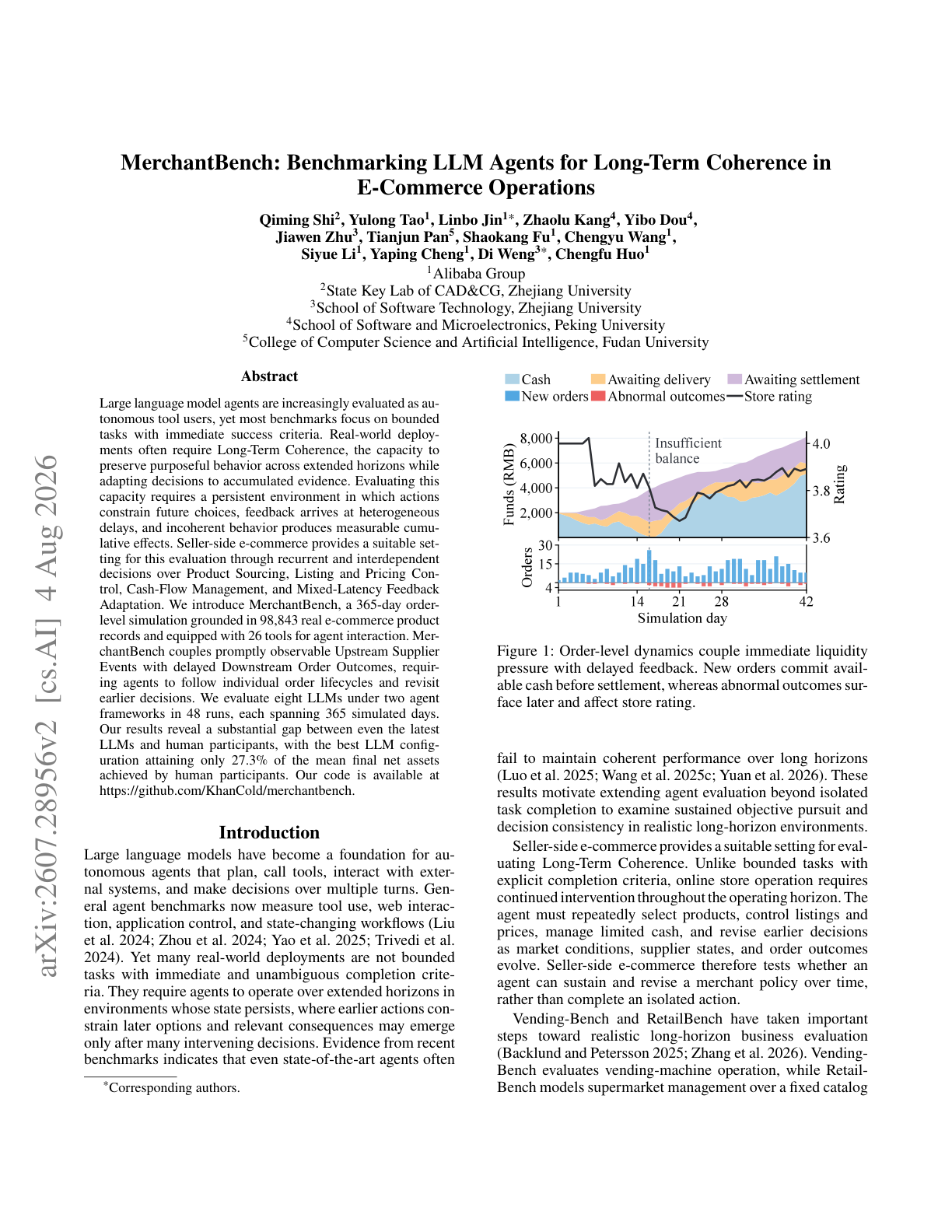
MerchantBench
Agent benchmarks tend to focus on bounded tasks with immediate success criteria, which flatters systems that cannot hold a plan for a month. MerchantBench targets long-term coherence instead, running a 365-day order-level e-commerce simulation grounded in 98,843 real product records with 26 tools for agent interaction. Agents handle product sourcing, listing and pricing control, cash-flow management, and feedback arriving at wildly different delays, with promptly observable supplier events coupled to delayed downstream order outcomes so earlier decisions must be revisited. Scoring runs on cumulative net assets, so incoherence compounds rather than averaging out. Across eight LLMs under two agent frameworks and 48 runs of 365 simulated days each, the best configuration reaches only 27.3% of the mean final net assets achieved by human participants.
Invisible Reasoning
Chain-of-thought monitoring rests on the assumption that a model expresses its reasoning in its output tokens. This work demonstrates a concrete failure of that assumption in models shipping today.
JAXBench
GPU kernel optimization has KernelBench to hillclimb on. TPUs had nothing, and the Pallas DSL is documented thinly enough that models mostly guess. Google, with Harvard and UC Berkeley, closes that gap and finds a clean lesson about context along the way.
Filesystem Memory Audited
Deployed agents increasingly keep long-term memory as a directory tree of markdown files they read, write, and reorganize with ordinary file tools. Research had mostly designed bespoke memory representations instead, leaving the default's two working assumptions untested.
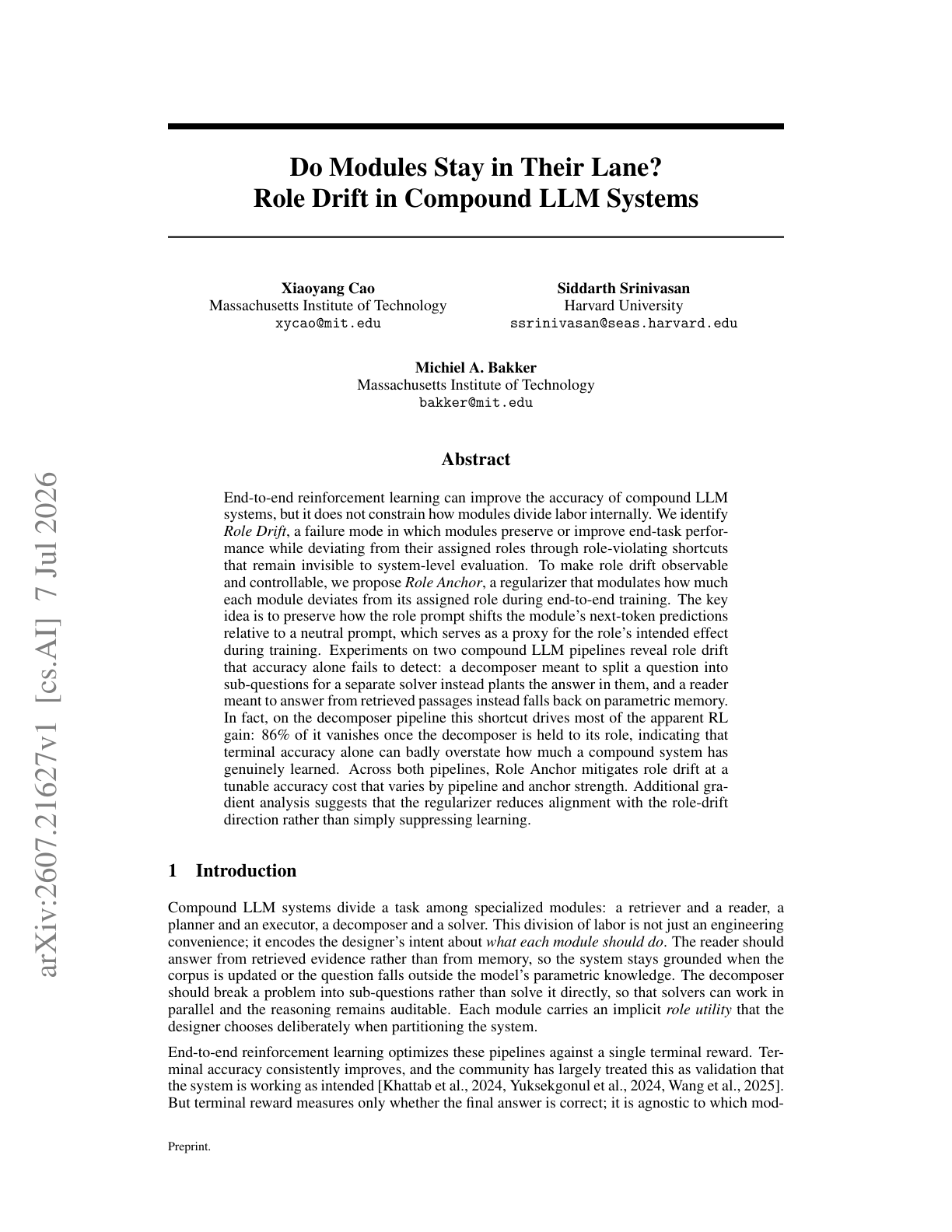
Role Drift
End-to-end RL improves the accuracy of a multi-module LLM pipeline without constraining how the modules divide labor internally. Harvard and MIT name the resulting failure mode, Role Drift, where a module preserves or improves end-task performance while abandoning its assigned role through shortcuts that system-level evaluation cannot see. Two instances showed up. A decomposer meant to split a question into sub-questions for a separate solver instead plants the answer inside them, and a reader meant to answer from retrieved passages instead falls back on parametric memory. Hold the decomposer to its role and 86% of the apparent RL gain disappears. Role Anchor, the proposed regularizer, preserves how the role prompt shifts a module's next-token predictions relative to a neutral prompt, and gradient analysis suggests it reduces alignment with the drift direction rather than simply suppressing learning.
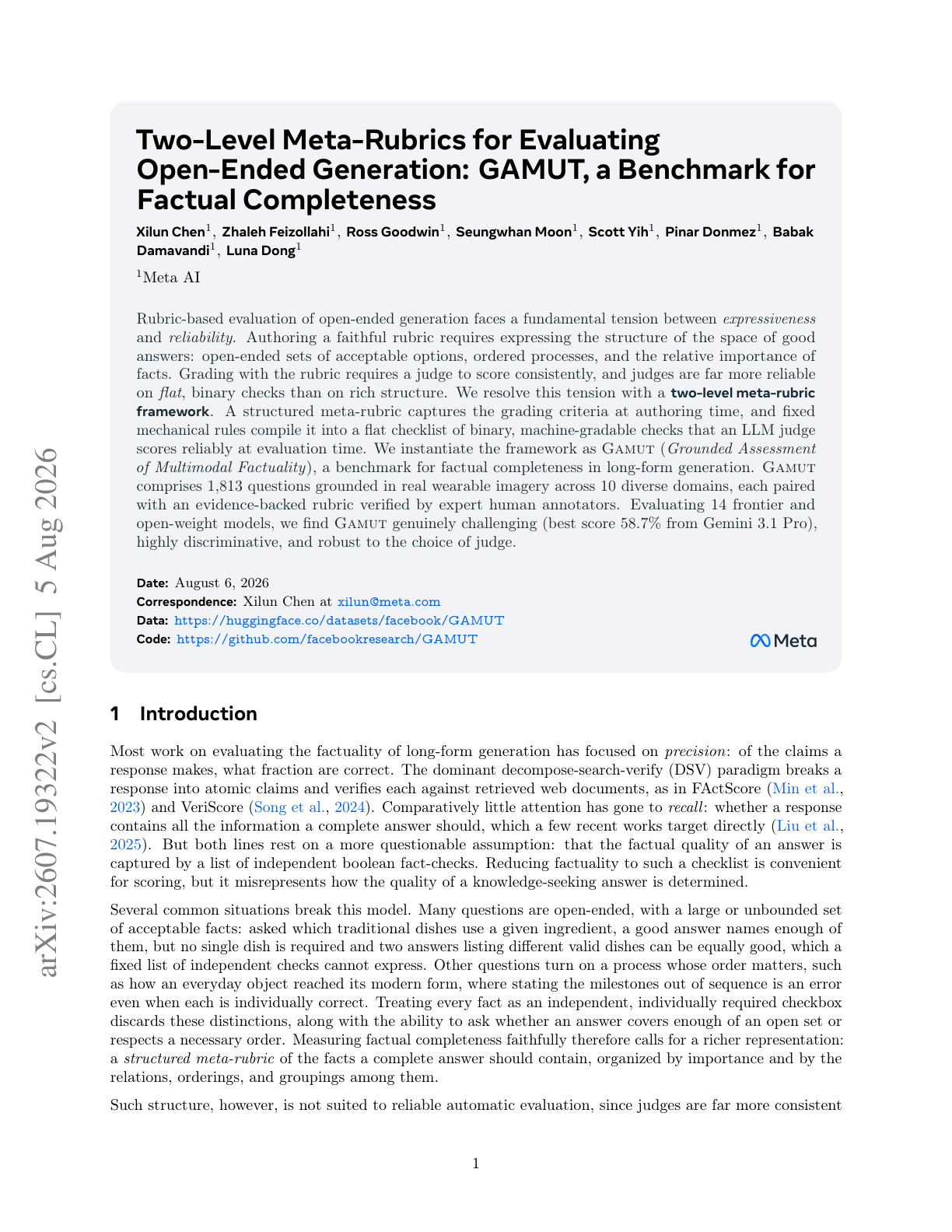
GAMUT
Most factuality evaluation measures precision, whether the claims in an answer are correct. This Meta AI work targets the harder and mostly ignored half, completeness, meaning whether an answer covers everything it should, and packages it as the GAMUT benchmark.
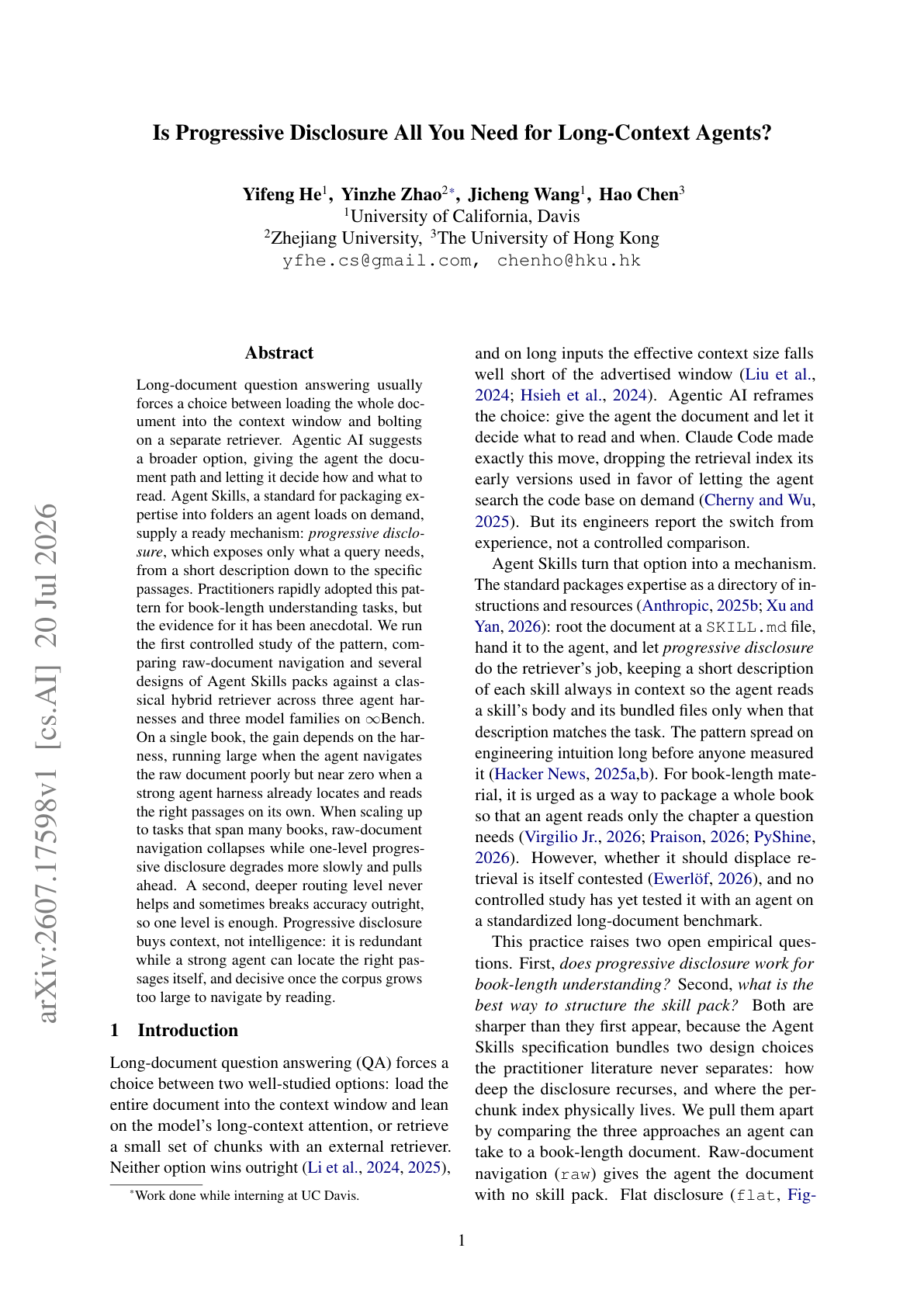
Progressive Disclosure, Measured
Agent Skills package expertise into folders an agent loads on demand, and progressive disclosure exposes only what a query needs, from a short description down to specific passages. Practitioners adopted this pattern fast for book-length tasks, but the supporting evidence was anecdotal until now.
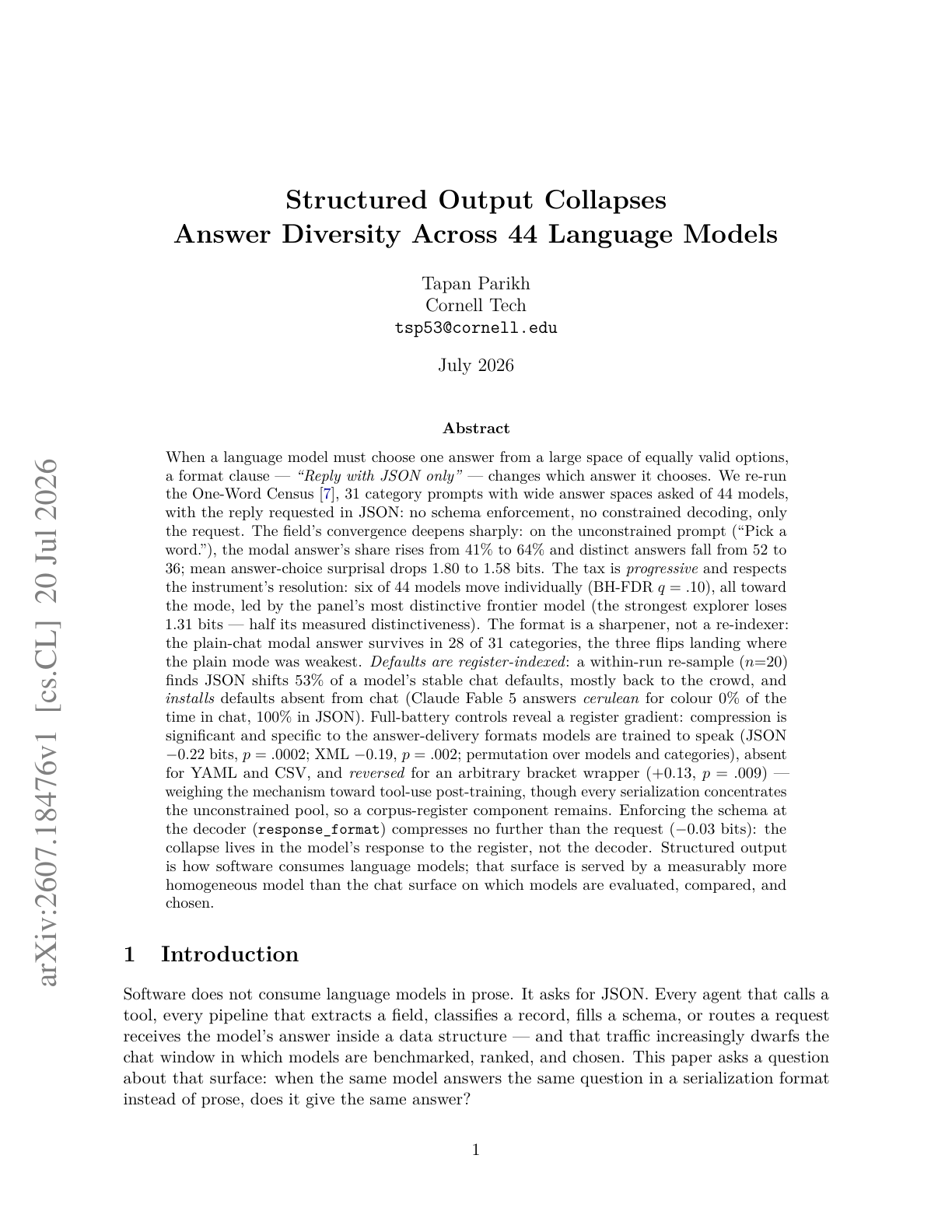
Structured Output Collapses Diversity
Teams benchmark models in chat, then ship them behind JSON schemas for tools, extraction, and routing. This study of 44 language models shows that the structured surface you deploy is measurably more homogeneous than the chat surface you evaluated on.
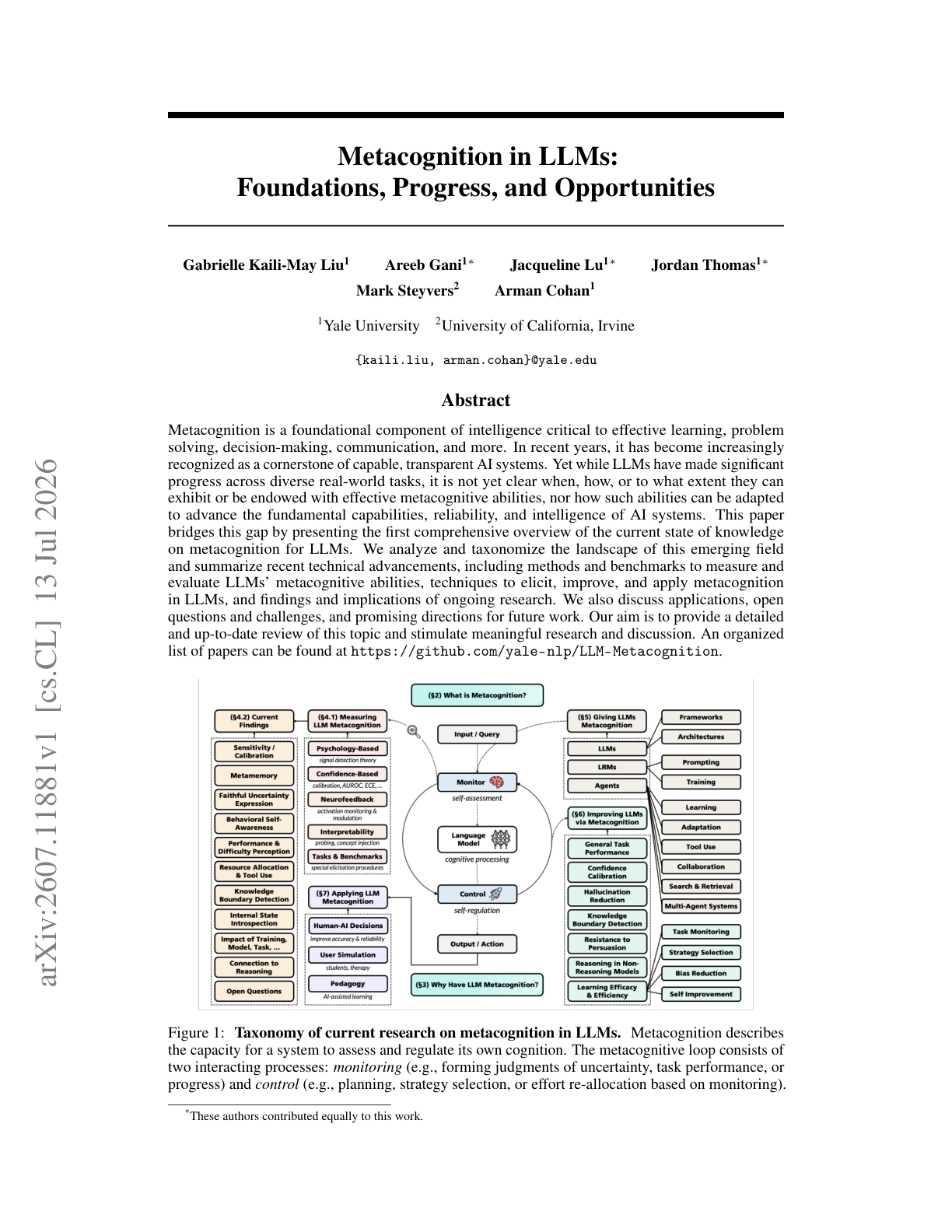
Metacognition in LLMs
Confidence calibration, self-verification, knowing when to stop, and knowing what you do not know have mostly been studied in isolation. This survey from Yale and UC Irvine argues they are facets of one capability, metacognition, and organizes the field around a monitor and control loop wrapped around the language model.
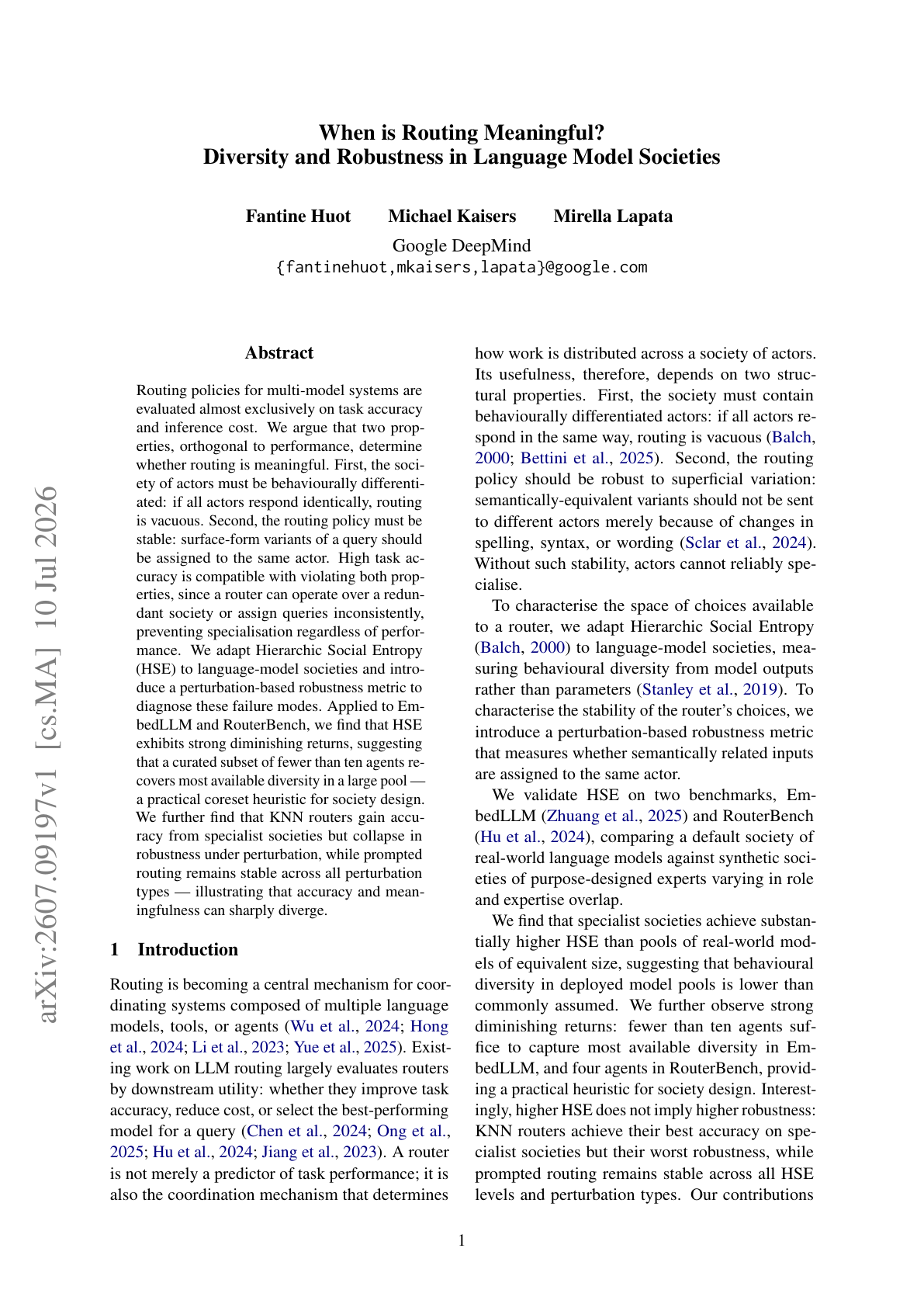
When Is Routing Meaningful
LLM routers and mixture-of-agents systems get judged on accuracy and cost, both of which can look great while the router is doing nothing. This DeepMind-affiliated work argues that whether routing means anything depends on two properties that are orthogonal to accuracy.
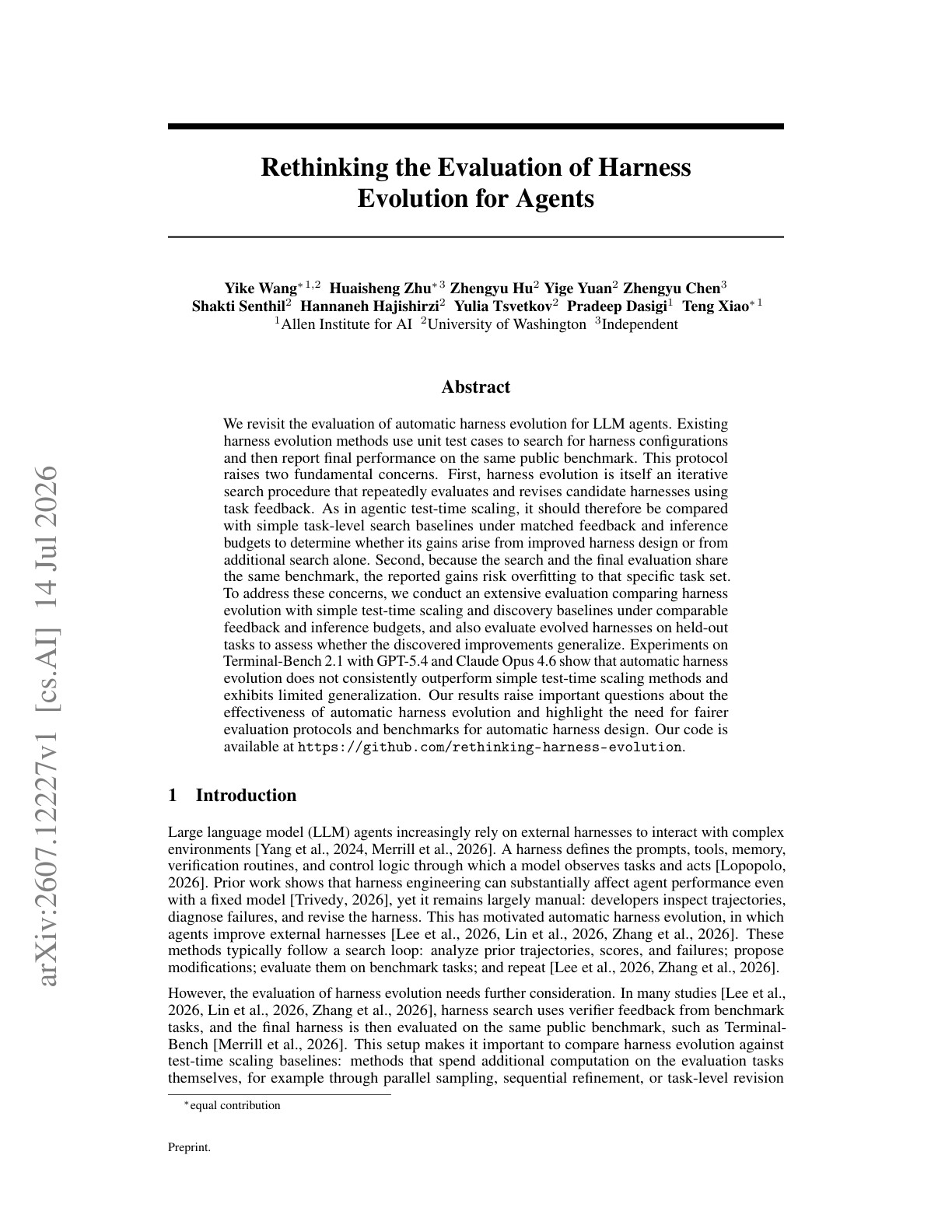
Harness Evolution, Rethought
Automatic harness evolution is what many teams now use to squeeze more out of agents, but the reported gains might not be coming from the harness at all. This paper argues that harness evolution is itself a search procedure and must be compared against simple search baselines under matched budgets.
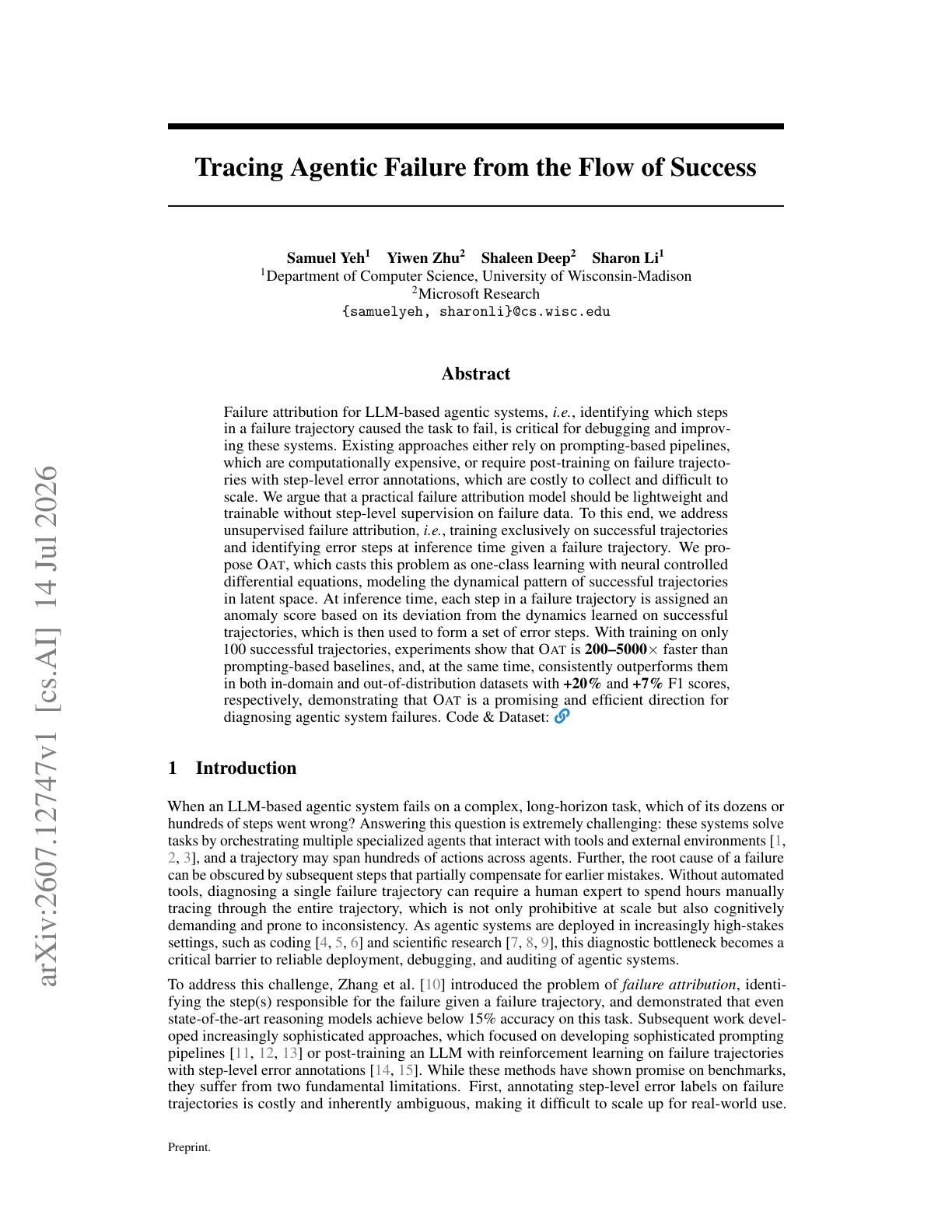
Tracing Agentic Failure
Finding which step in a failed agent run actually caused the failure usually means either labeling failure data or running expensive per-step prompting. This Microsoft and UW-Madison work skips both by learning what success looks like and flagging deviations from it.
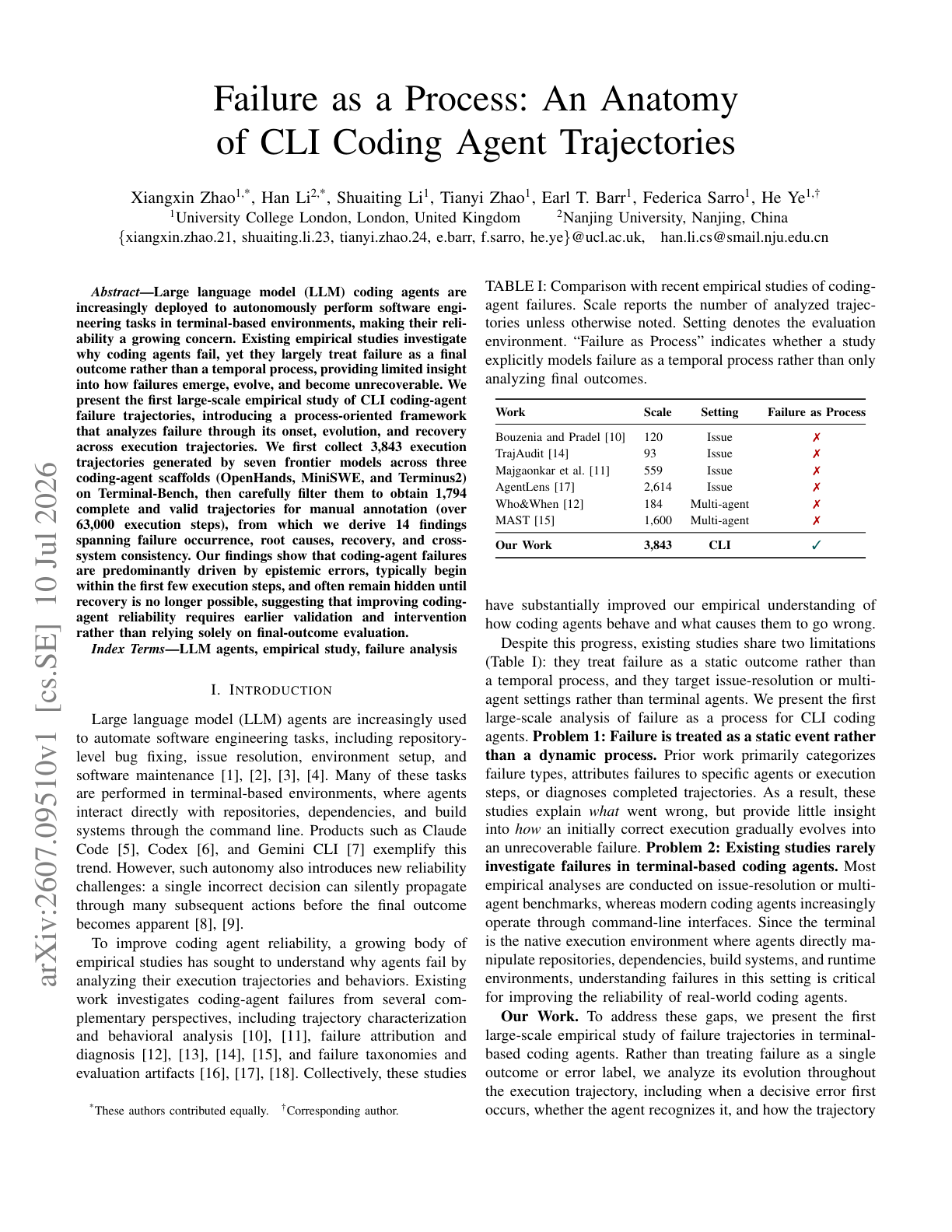
Failure as a Process
When a coding agent fails a task, the final pass or fail label hides when the run actually went wrong. This large-scale study treats failure as a timeline and annotates over 63,000 execution steps to see how coding-agent runs break down.
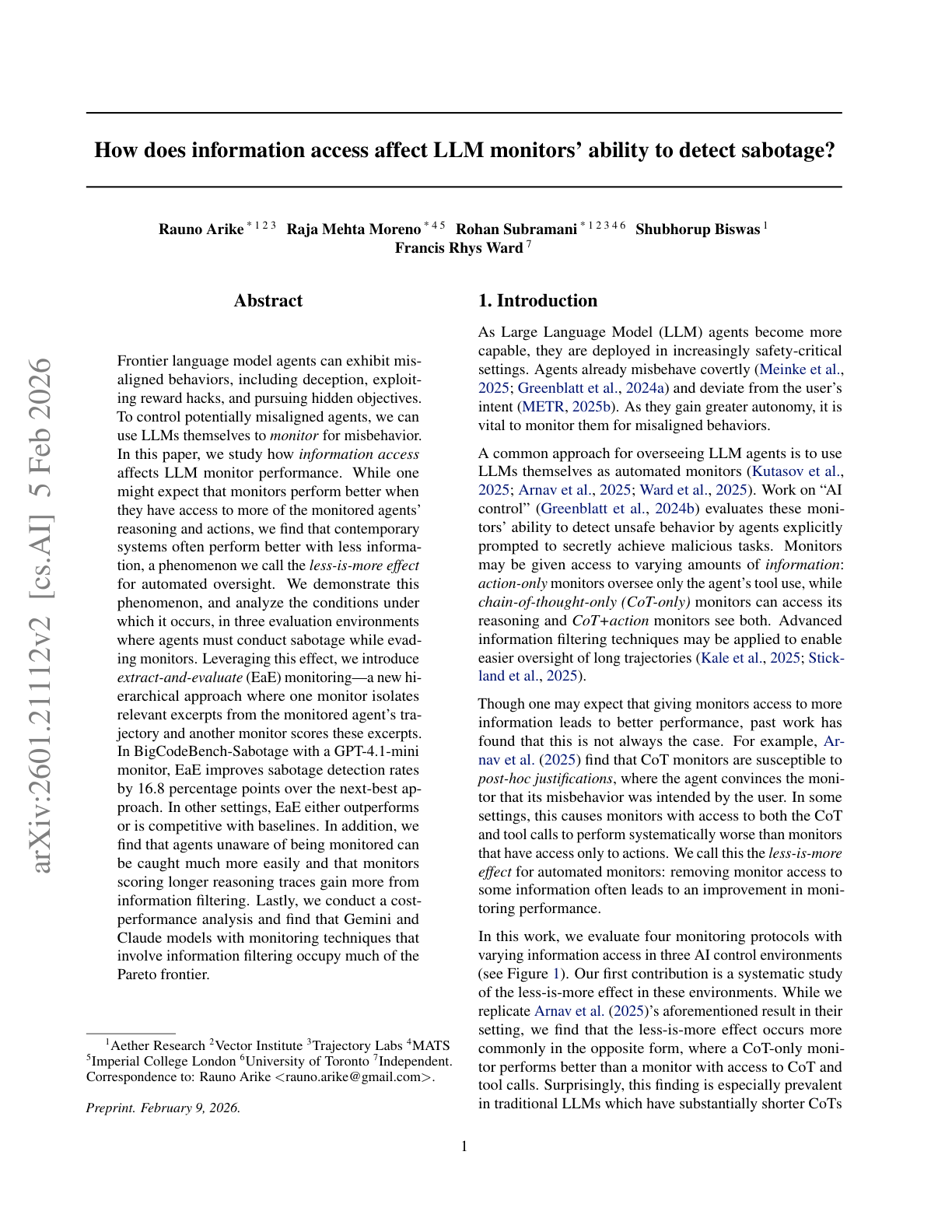
Less Is More for Monitors
Chain-of-thought monitoring is treated as a reliable safety layer, but this study shows monitors often detect sabotage better with less access, not more. Giving a monitor the full agent reasoning trace can bury the signal, and the authors introduce extract-and-evaluate monitoring, where one monitor isolates the relevant excerpts and another scores them, lifting sabotage detection by 16.8 points on BigCodeBench-Sabotage with a GPT-4.1-mini monitor. Agents unaware they are watched are far easier to catch, and monitors reading long traces gain the most from filtering.
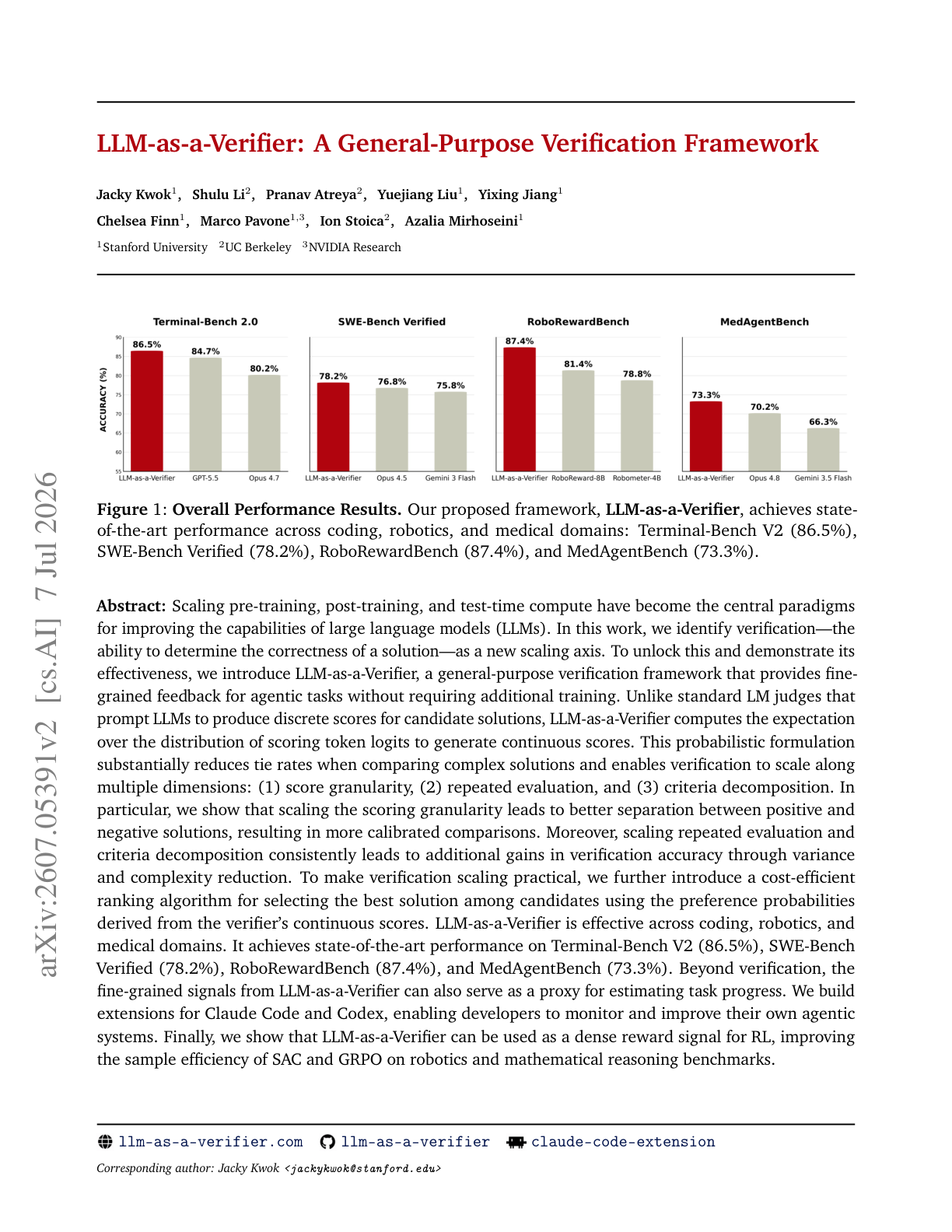
Verification as a Scaling Axis
Verification is emerging as a distinct scaling axis alongside pre-training and test-time compute, and this Stanford, NVIDIA, and UC Berkeley collaboration builds a training-free verifier that reads a continuous, calibrated score straight off the scoring-token logits instead of trusting a discrete pass or fail grade.
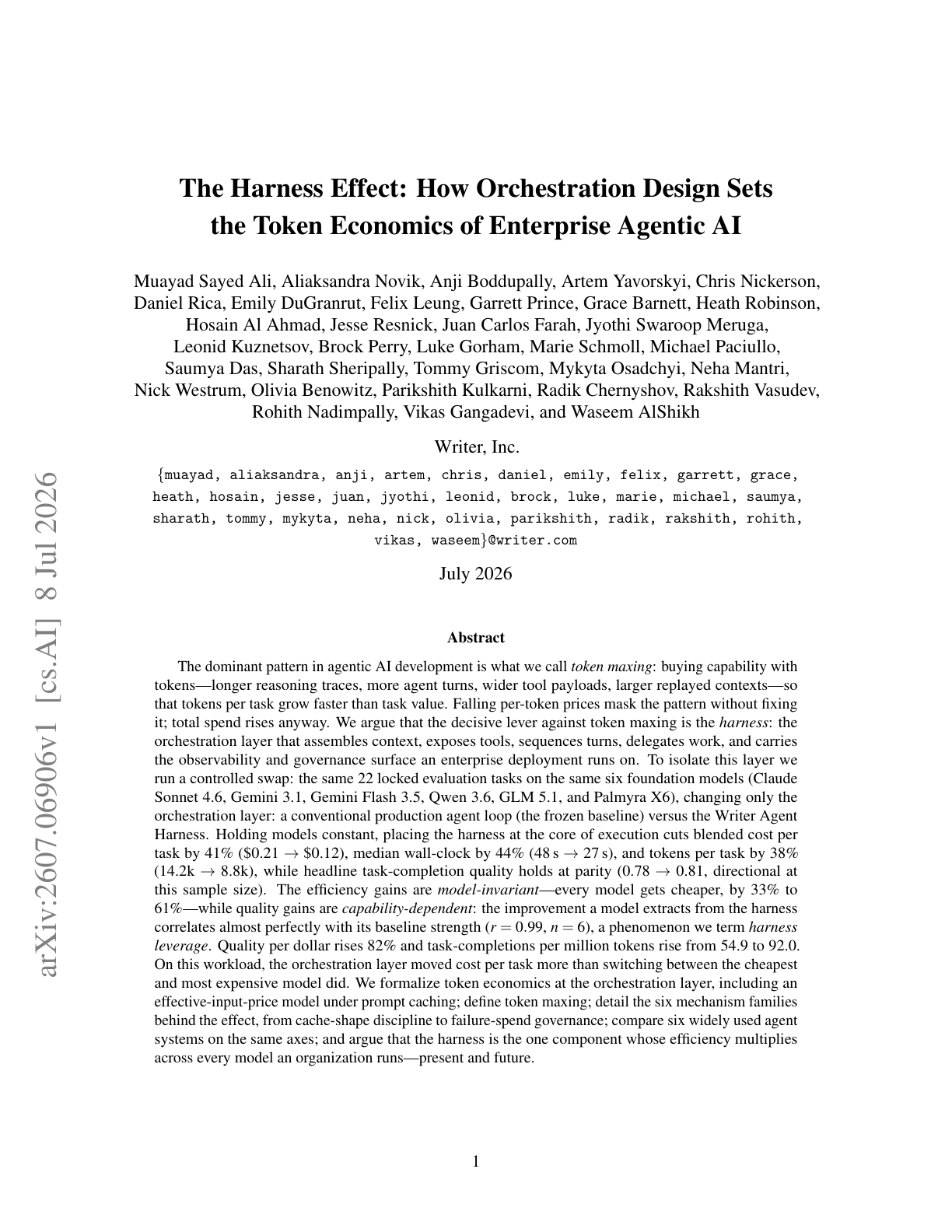
The Harness Effect
As orchestration harnesses mediate every model call, this study asks how much the harness alone moves cost and performance. It ran 22 evaluation tasks across six foundation models, then changed only the orchestration layer while holding the models constant.
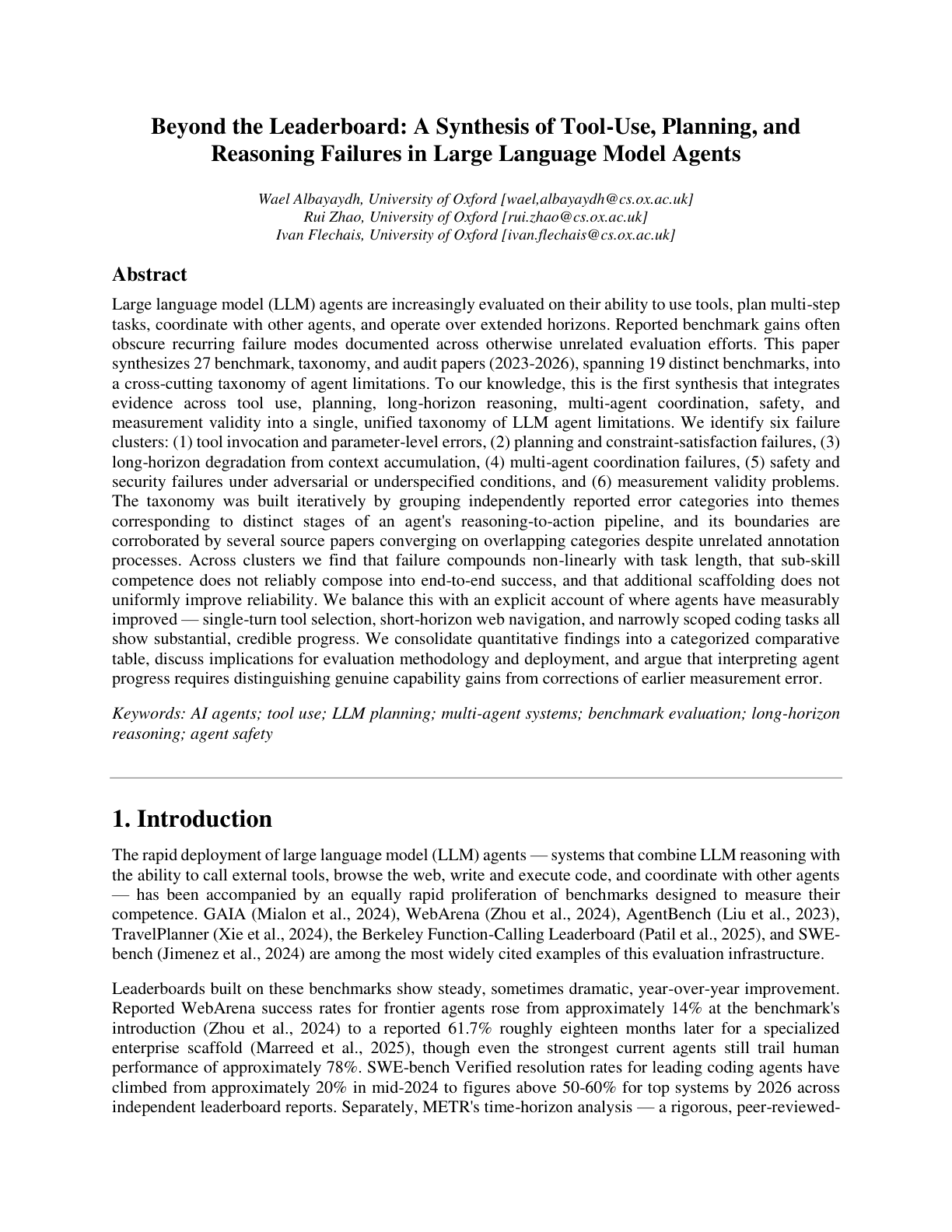
Agent Limitations Taxonomy
Benchmark scores keep climbing, yet the same agent failures resurface across otherwise unrelated evaluations, hidden behind the leaderboard. This University of Oxford work synthesizes 27 benchmark, taxonomy, and audit papers spanning 19 benchmarks into the first cross-cutting taxonomy of LLM-agent limitations.
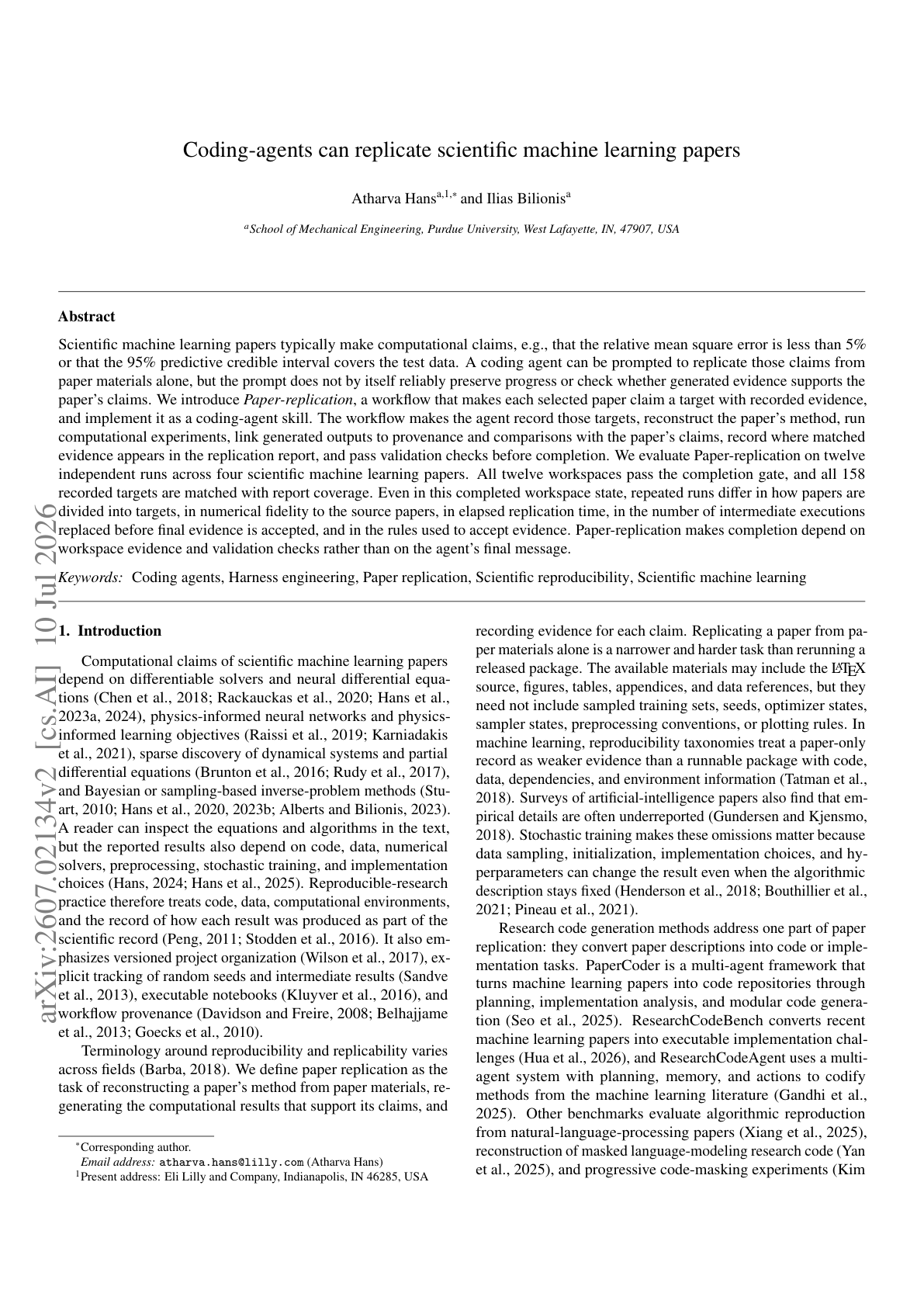
Replicating ML Papers with Agents
This work tests whether a coding agent can replicate a scientific ML paper from its materials alone, using a skill that turns each paper claim into a target with recorded evidence and gating completion on workspace evidence rather than the agent's final message. Across twelve runs over four papers, all twelve workspaces pass the completion gate and all 158 recorded targets are matched with report coverage. Yet repeated runs still differ in how papers are split into targets and in numerical fidelity, so completion becomes reproducible even when the path is not.
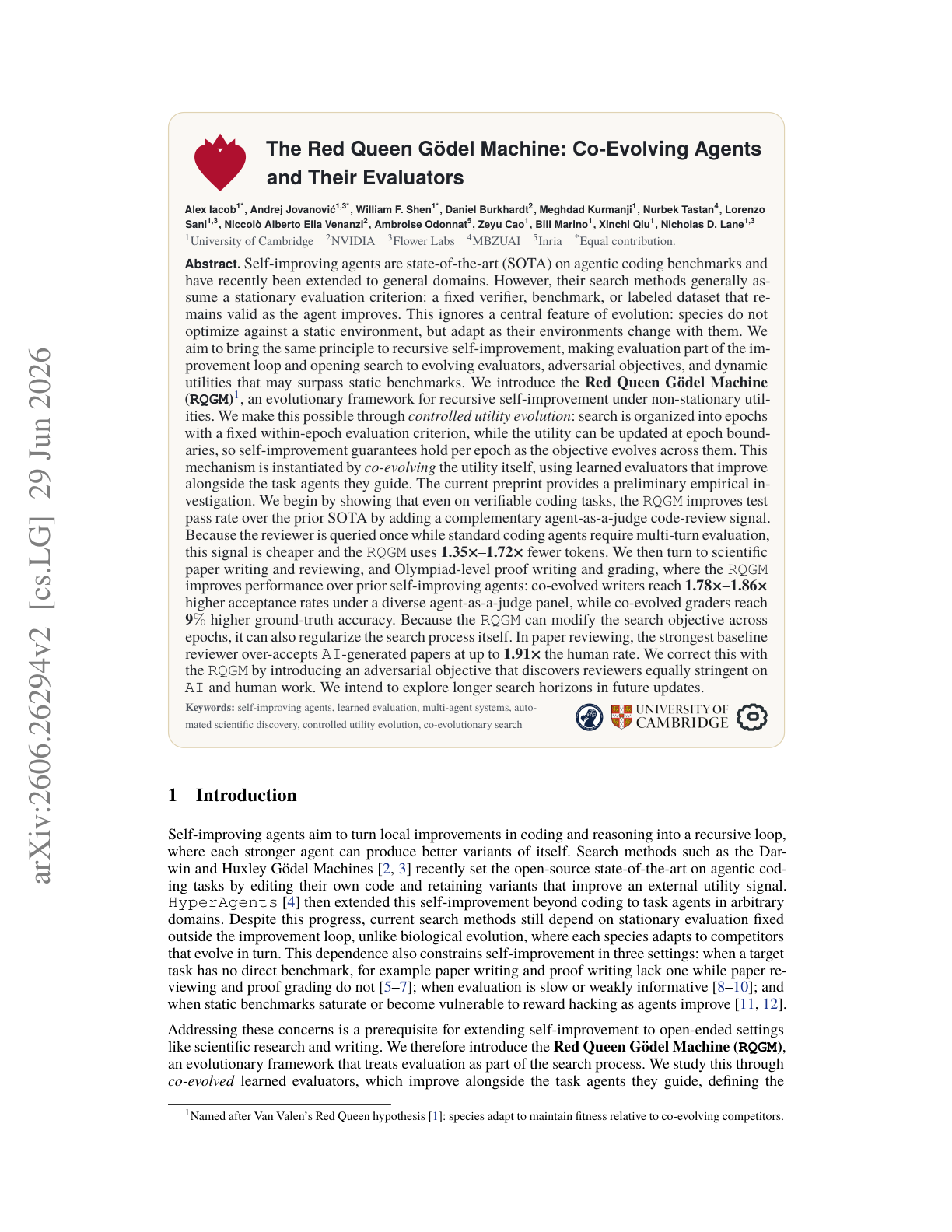
Red Queen Gödel Machine
Self-improving agents are only as strong as the evaluator scoring them, and most systems freeze that evaluator in place, so improvement stalls the moment the judge stops getting harder. The Red Queen Gödel Machine makes the evaluator part of the search itself, letting agents and the criteria that judge them co-evolve. --- ---
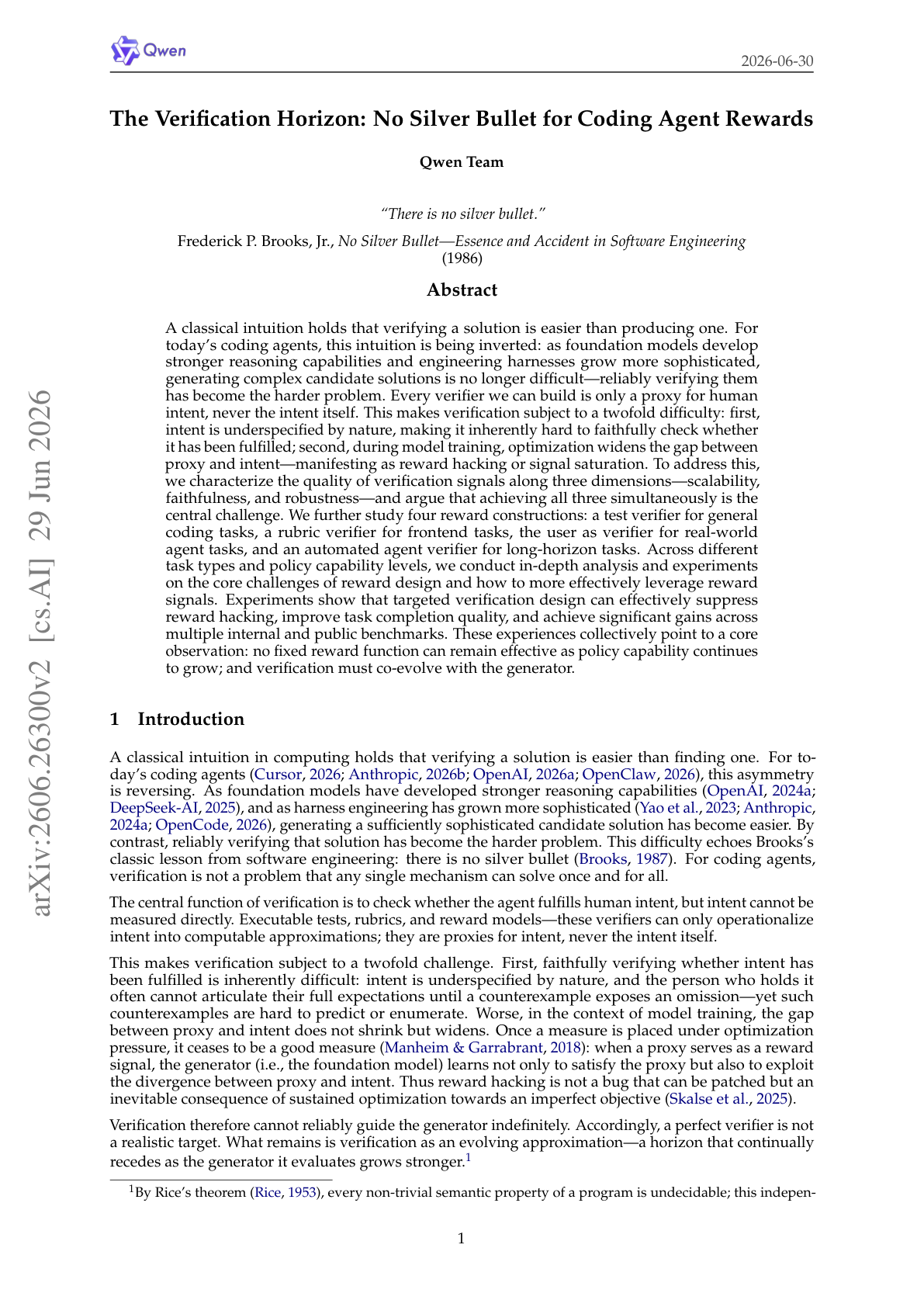
The Verification Horizon
Reinforcement learning for coding agents lives or dies on the reward signal, and this Qwen work argues there is no silver bullet. As policy capability grows, any fixed reward function eventually gets gamed, so verification has to co-evolve with the generator it scores. ---