AI Papers of the Week
Every paper worth reading in AI, hand-picked one week at a time.
Discover and explore top AI papers with Claude Code or Codex
npx @dair-ai/mcp setup
Impacts of AI on Innovation
suggests that top scientists leverage their domain knowledge to prioritize promising AI suggestions, while others waste significant resources testing false positives; finds that implementing AI materials discovery technology leads to substantial increases in productivity, with 44% more materials discovered, 39% more patent filings, and 17% more product innovation; reports that these gains came with concerning tradeoffs, as 82% of scientists reported reduced job satisfaction due to decreased creativity and skill underutilization.
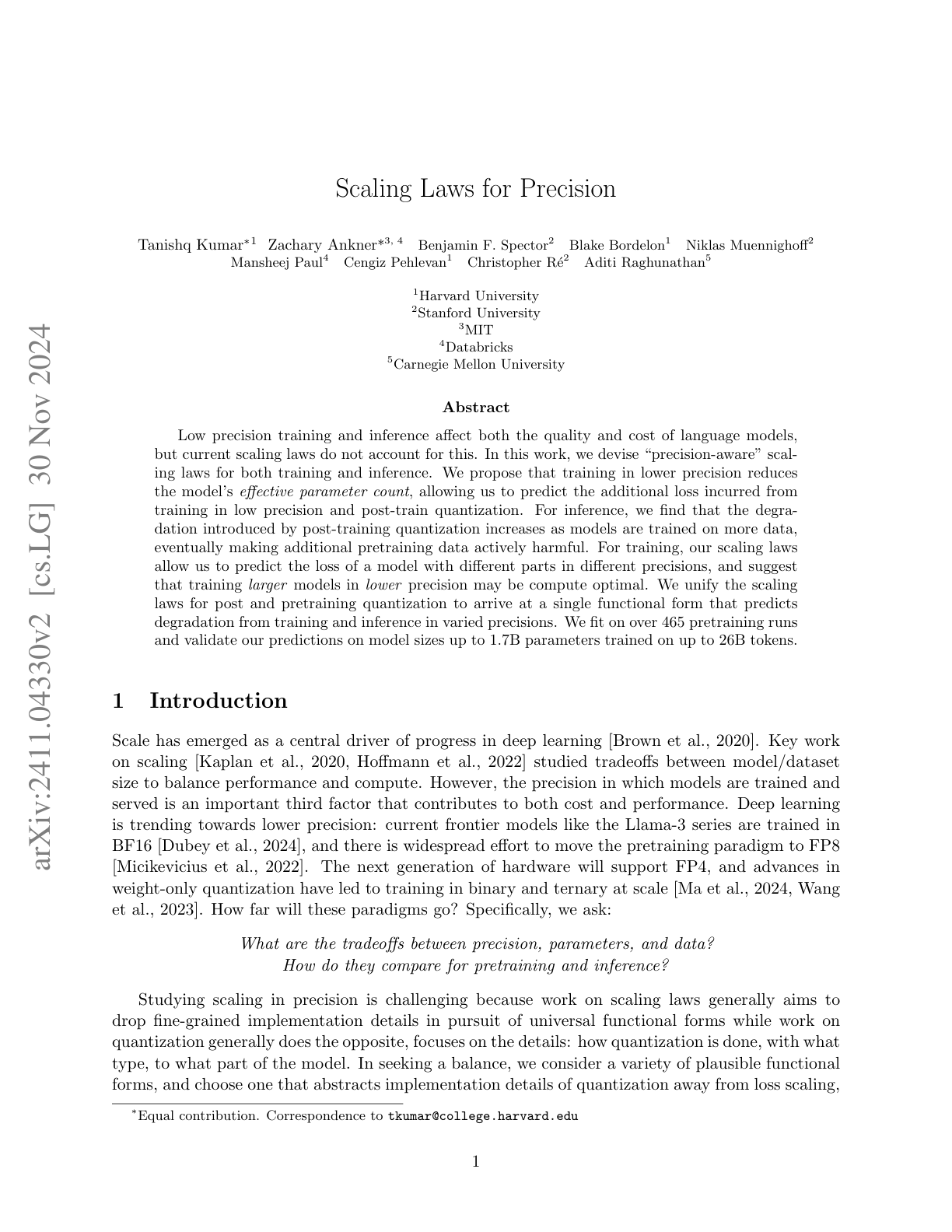
Scaling Laws for Precision
introduces "precision-aware" scaling laws that predict how model performance is affected by both training and inference precision in LLMs; key findings include: 1) post-training quantization becomes more harmful as models are trained on more data, eventually making additional pretraining actively detrimental, 2) training in lower precision requires increasing model size to maintain performance, and 3) when jointly optimizing model size, data, and precision, the compute-optimal training precision is around 7-8 bits and independent of compute; also reports that when the model size is fixed, compute-optimal precision increases approximately logarithmically with data; the authors validate their predictions on models up to 1.7B parameters trained on up to 26B tokens, showing that both very high (16-bit) and very low (sub 4-bit) training precisions may be suboptimal.
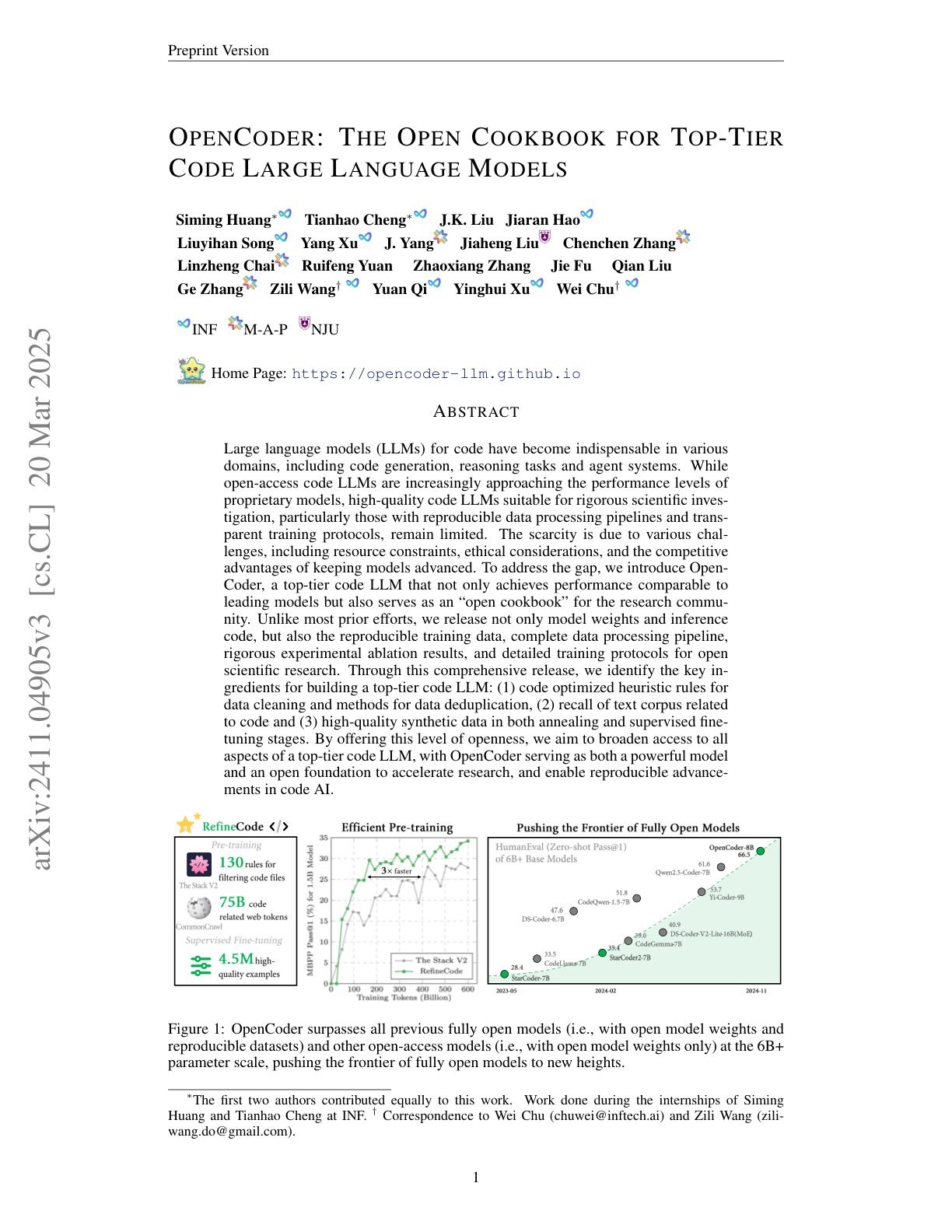
OpenCoder
introduces OpenCoder, a fully open-source LLM specialized for code generation and understanding; the authors identify several critical factors for building high-performing code LLMs: (1) effective data cleaning with code-optimized heuristic rules for deduplication, (2) recall of relevant text corpus related to code, and (3) high-quality synthetic in both annealing and supervised fine-tuning stages; OpenCoder surpasses previous fully open models at the 6B+ parameter scale and releases not just the model weights but also the complete training pipeline, datasets, and protocols to enable reproducible research.
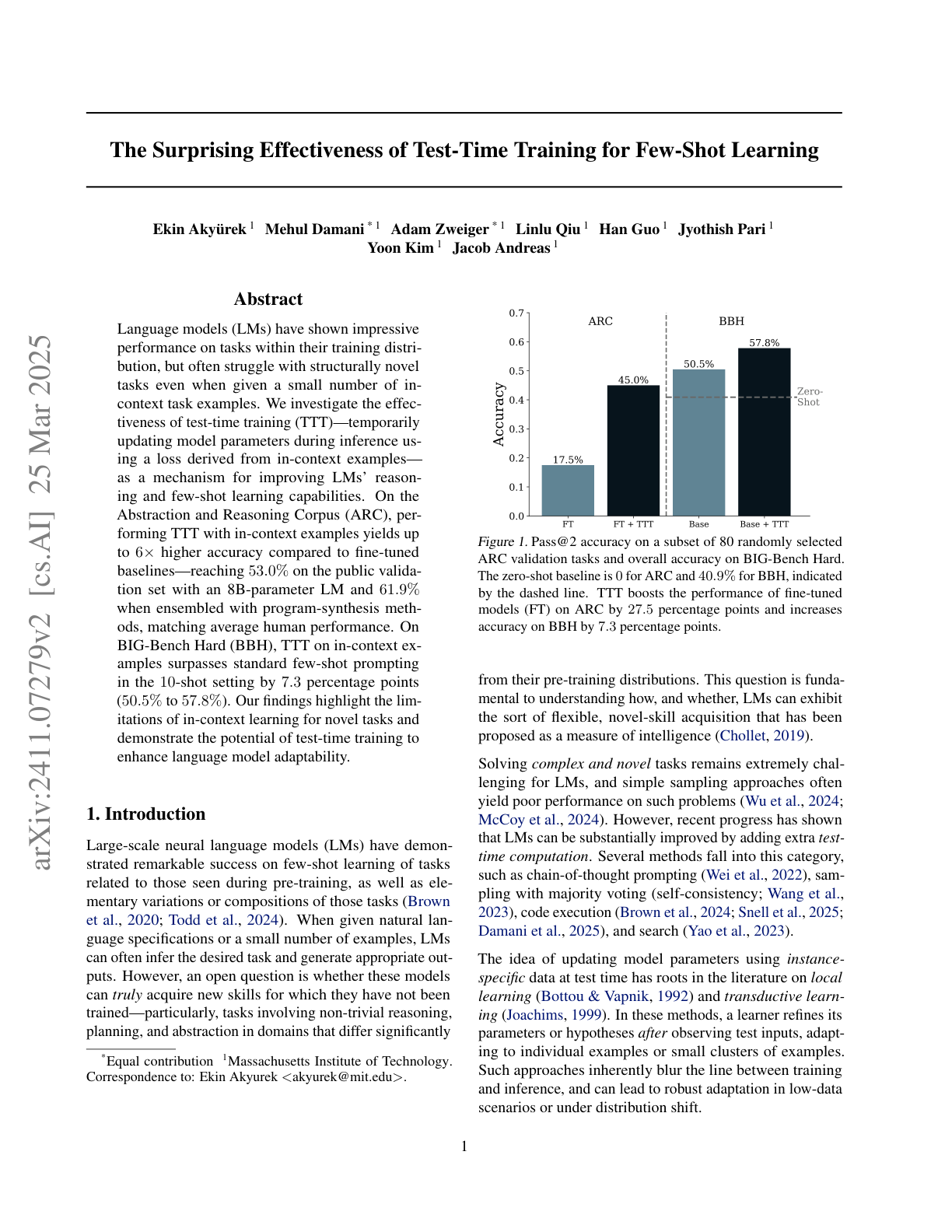
The Surprising Effectiveness of Test-Time Training for Abstract Reasoning
explores test-time training (TTT) - updating model parameters temporarily during inference - for improving an LLM's abstract reasoning capabilities using the ARC benchmark; identifies three crucial components: initial fine-tuning on similar tasks, auxiliary task format and augmentations, and per-instance training; TTT significantly improves performance, achieving up to 6x improvement in accuracy compared to base fine-tuned models; when applying TTT to an 8B LLM, they achieve 53% accuracy on ARC's public validation set, improving the state-of-the-art for neural approaches by nearly 25%; by ensembling their method with program generation approaches, they achieve state-of-the-art public validation accuracy of 61.9%, matching average human performance; the findings suggest that explicit symbolic search is not the only path to improved abstract reasoning in LLMs; test-time training applied to continued training on few-shot examples can be highly effective.
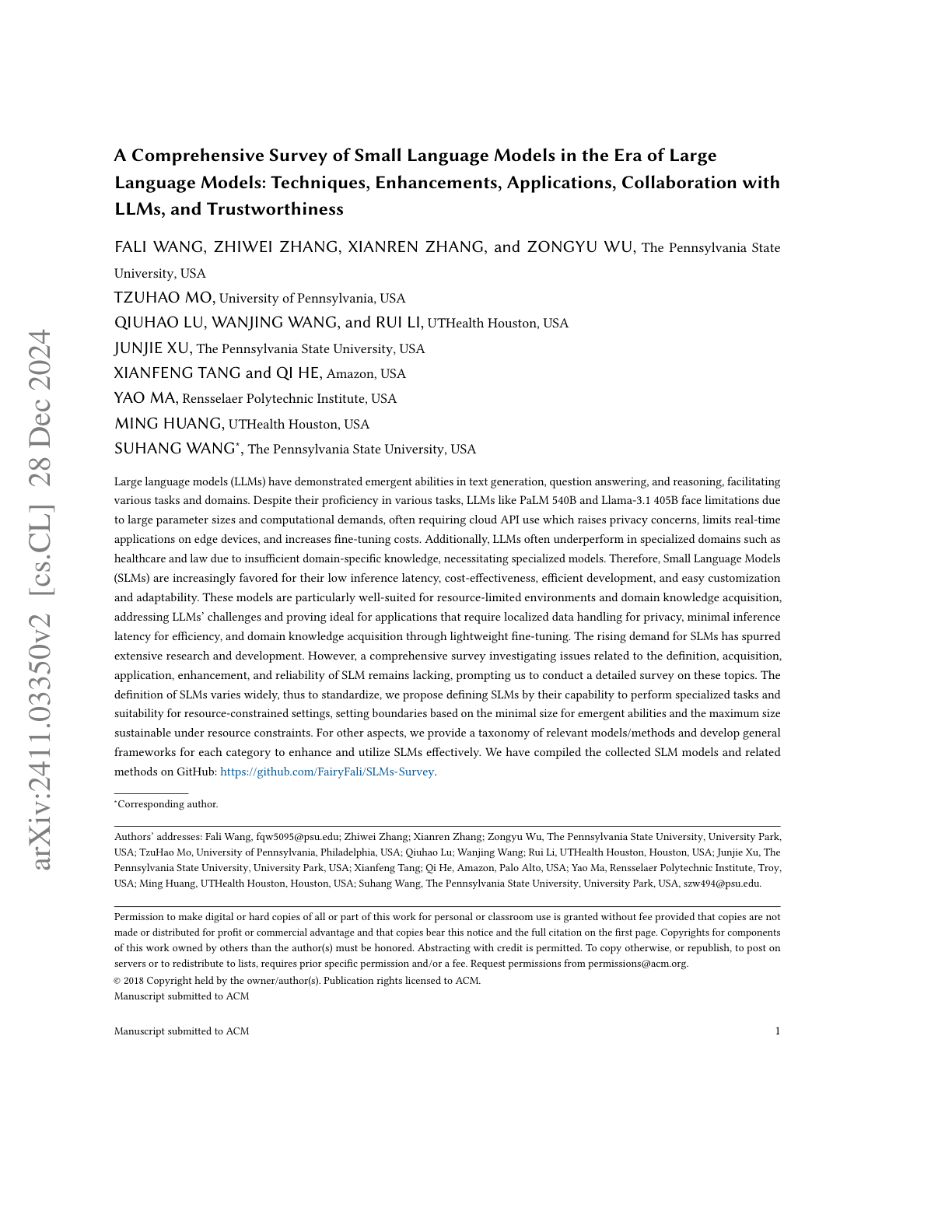
A Comprehensive Survey of Small Language Models
a survey on small language models (SLMs) and discussion on issues related to definitions, applications, enhancements, reliability, and more.
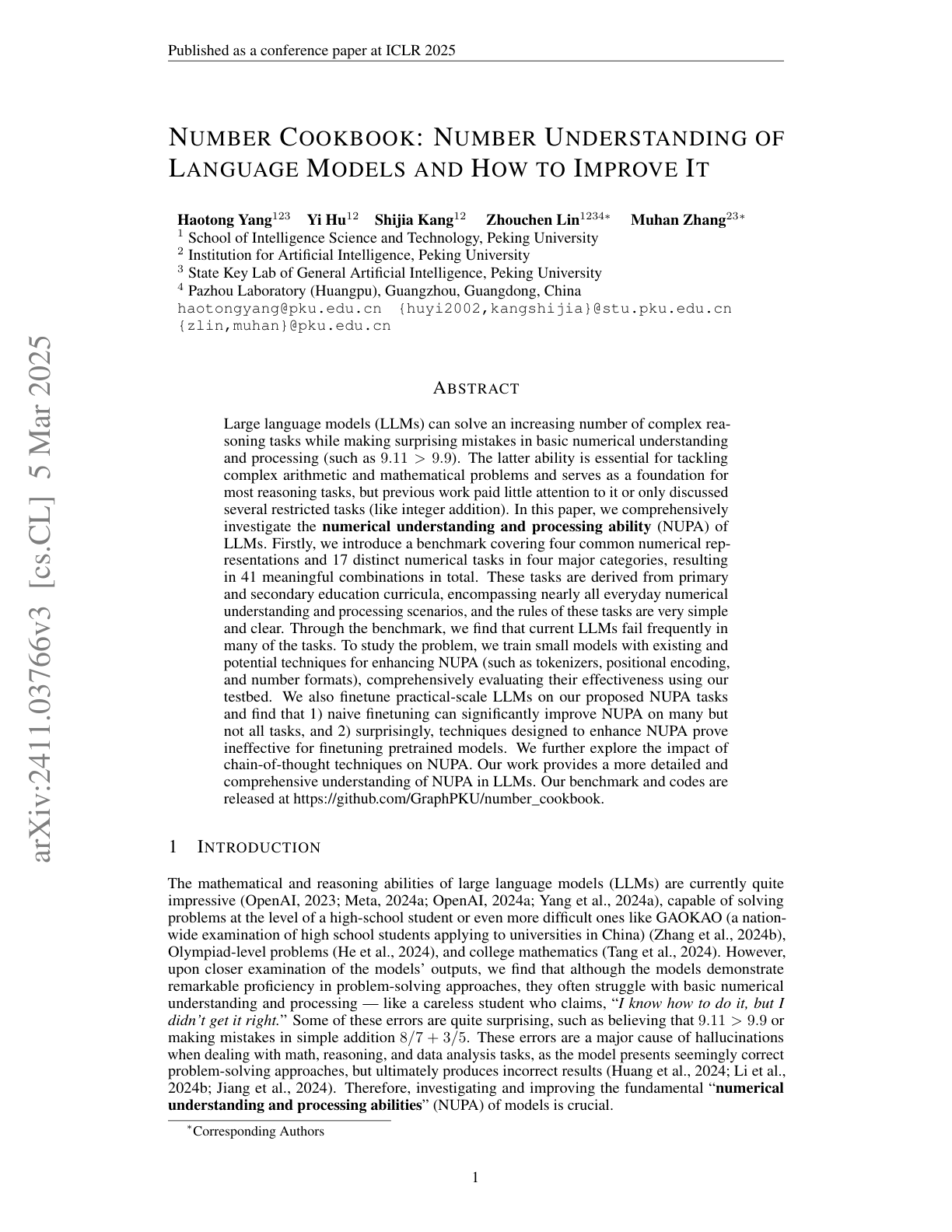
Number Understanding of LLMs
provides a comprehensive analysis of the numerical understanding and processing ability (NUPA) of LLMs; finds that naive finetuning can improve NUPA a lot on many but not all tasks; it also reports that techniques designed to enhance NUPA prove ineffective for finetuning pretrained models; explores chain-of-thought techniques applied to NUPA and suggests that chain-of-thought methods face scalability challenges, making them difficult to apply in practical scenarios.
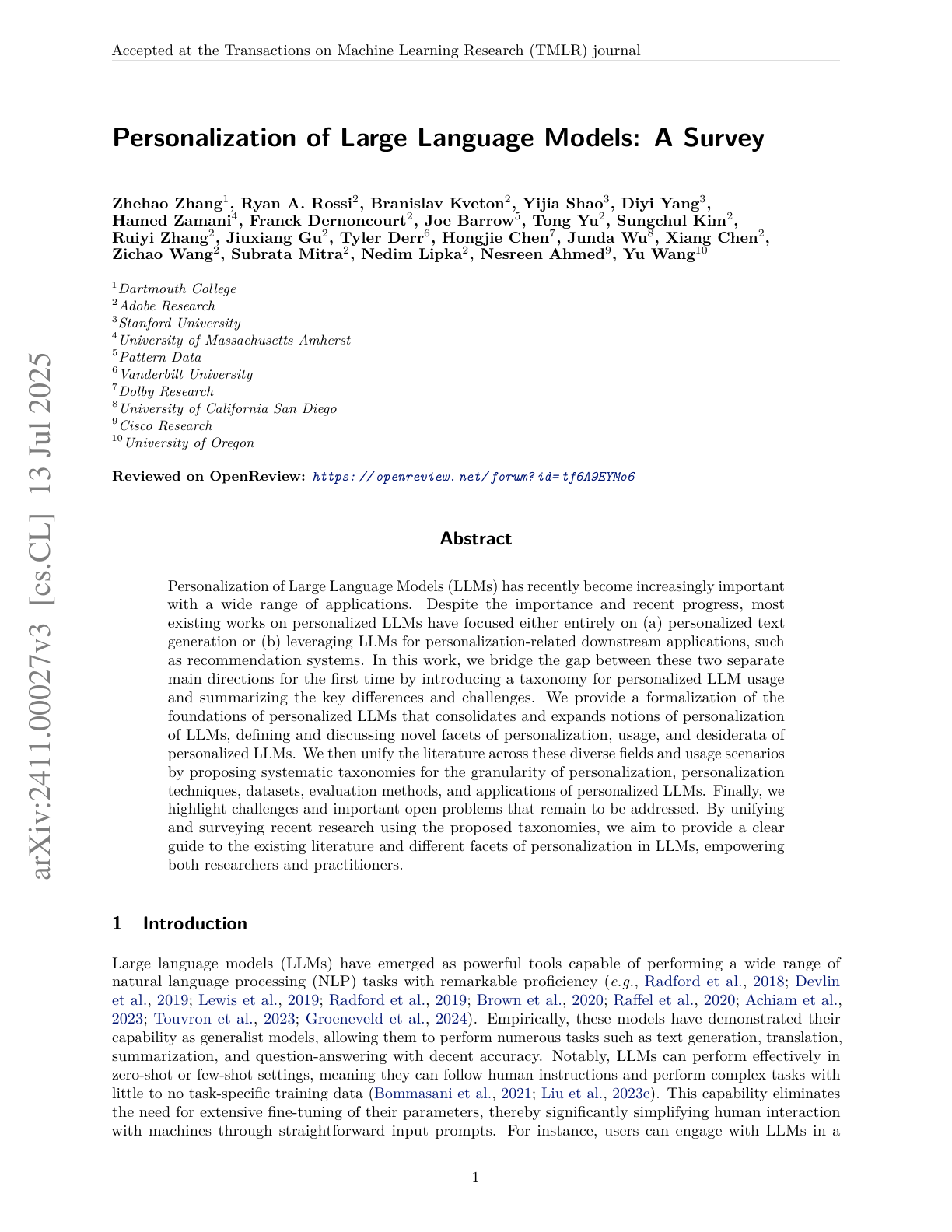
Personalization of LLMs
presents a comprehensive framework for understanding personalized LLMs; introduces taxonomies for different aspects of personalization and unifying existing research across personalized text generation and downstream applications.
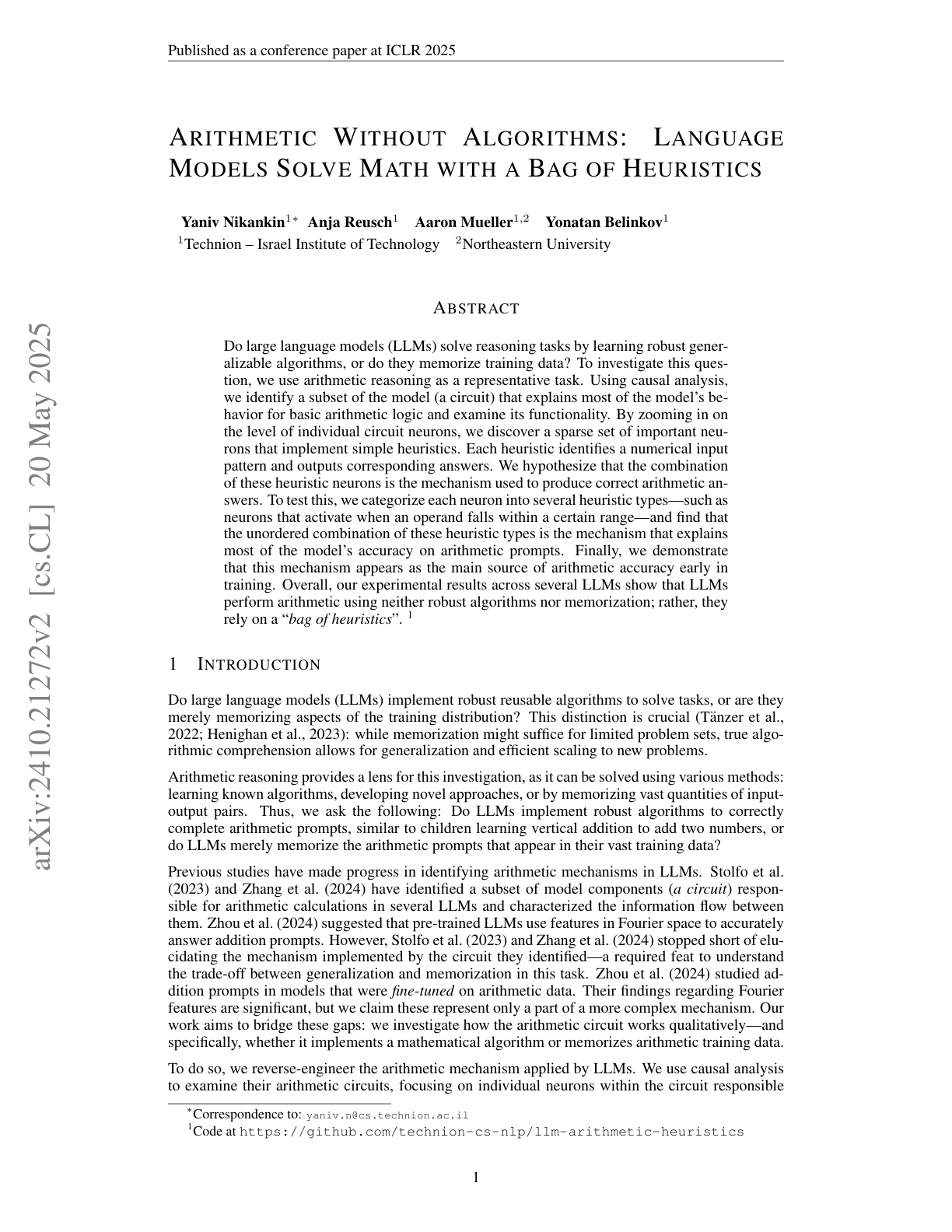
LLMs Solve Math with a Bag of Heuristics
uses causal analysis to find neurons that explain an LLM's behavior when doing basic arithmetic logic; discovers and hypothesizes that the combination of heuristic neurons is the mechanism used to produce correct arithmetic answers; finds that the unordered combination of different heuristic types is the mechanism that explains most of the model’s accuracy on arithmetic prompts.
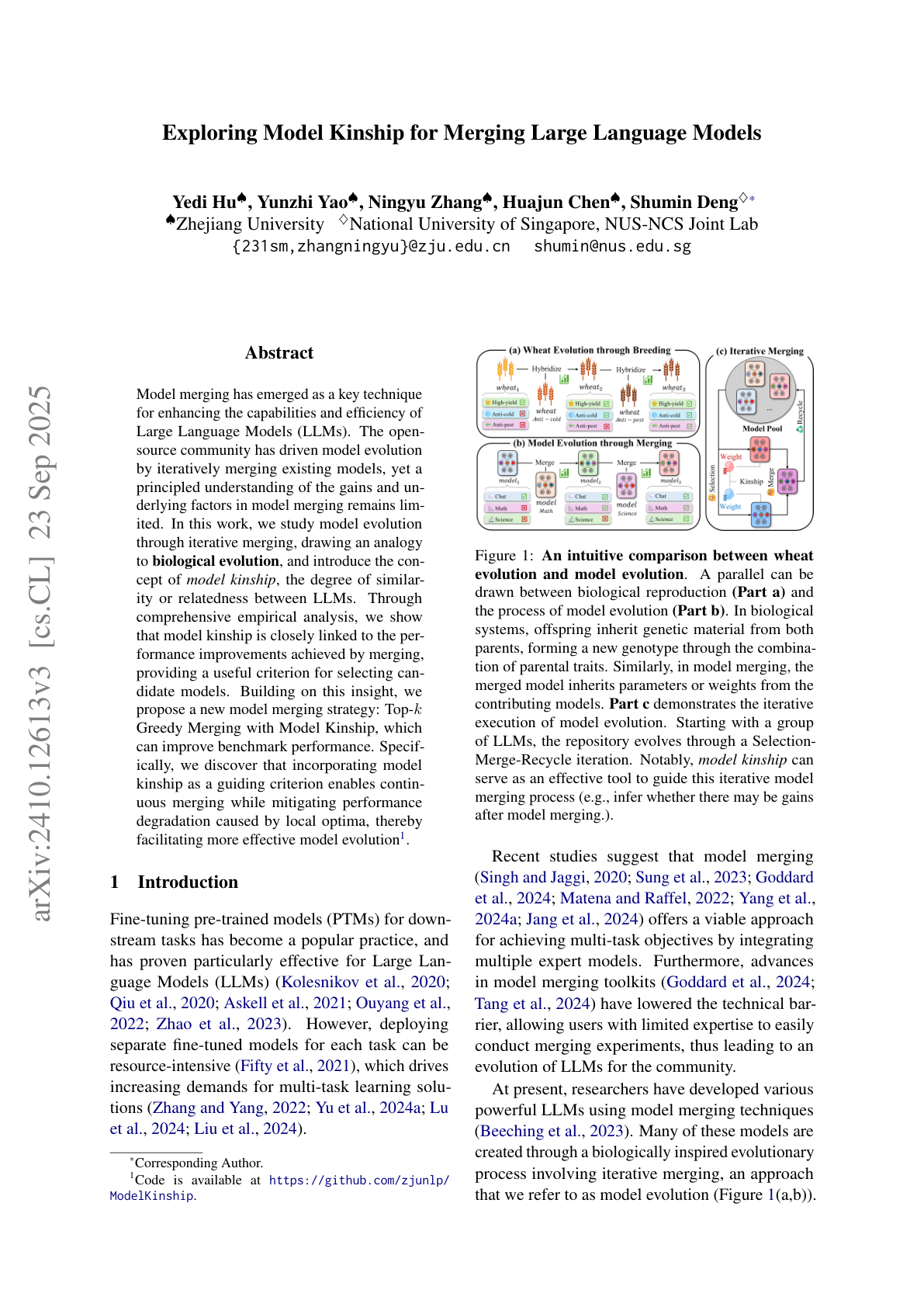
Model Kinship for Merging LLMs
proposes model kinship to measure the degree of similarity between LLMs; model kinship is used to build a model merging strategy (Top-k Greedy Merging with Model Kinship) which yields better performance; the authors find that this new criterion can be used to effectively and continuously perform model merging.
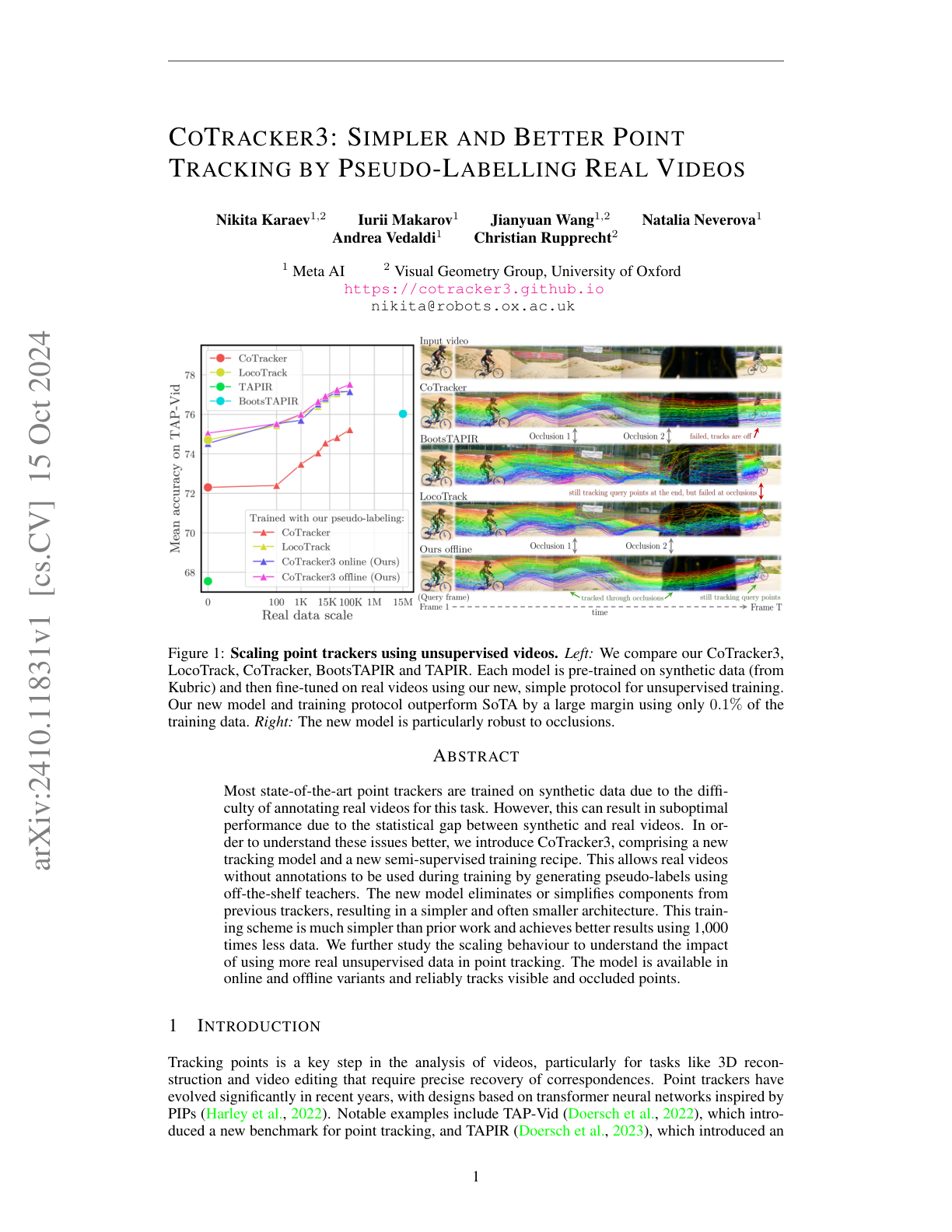
CoTracker3
proposes a new point tracking model and a new semi-supervised training recipe; enables usage of real videos without annotations during training by generating pseudo-labels using off-the-shelf teachers; the approach is simpler in architecture and training scheme leading to better results while using 1000x less data.
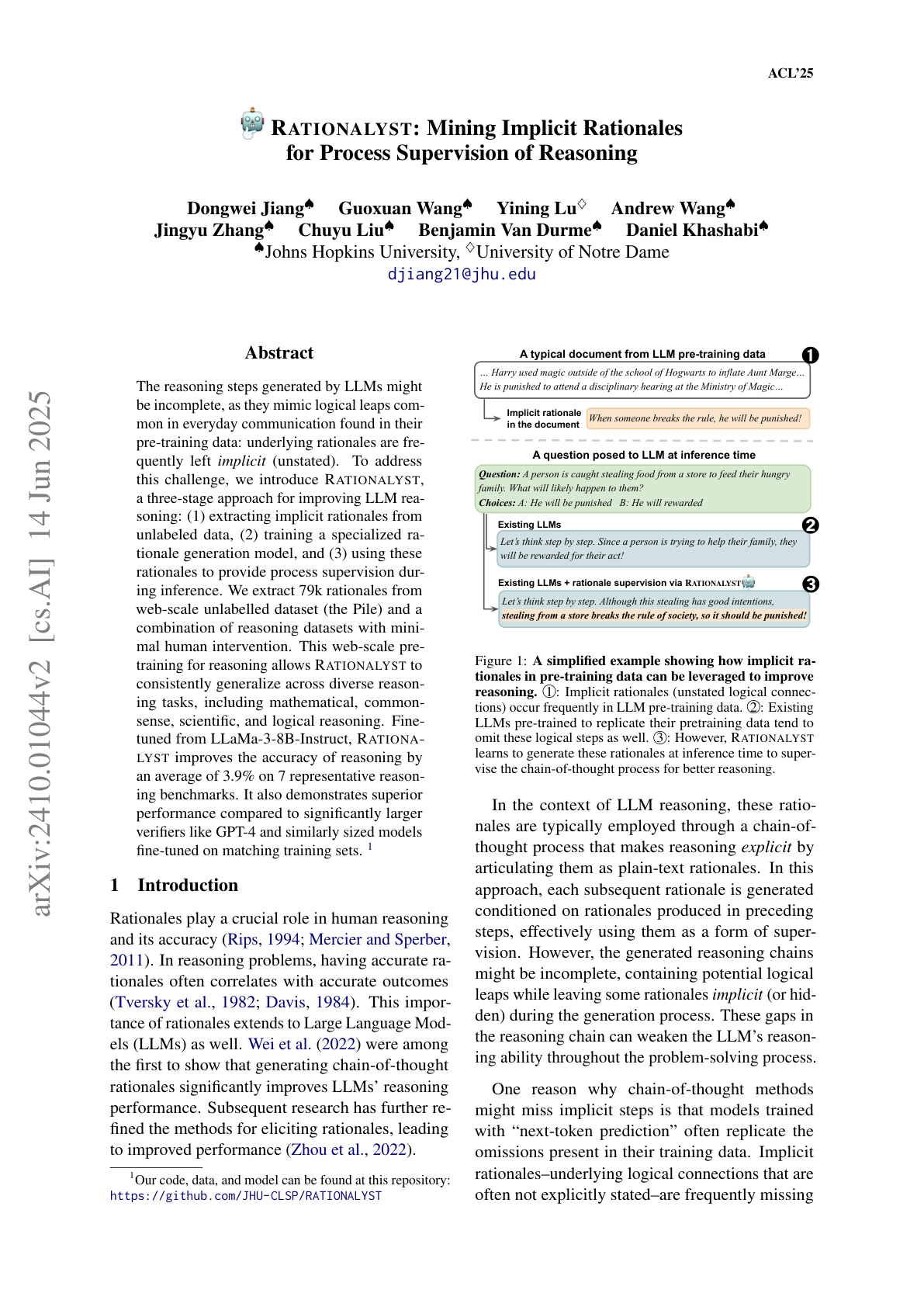
RATIONALYST
a model for process-supervision of reasoning that enables generalization across diverse reasoning tasks; this process is achieved with pre-training on a collection of 79k rationales from the Pile and a combination of reasoning datasets with minimal human intervention; fine-tuned from LLaMa-3-8B, the proposed model improves the accuracy of reasoning by an average of 3.9% on 7 reasoning benchmarks.

AlphaChip
a reinforcement learning-based method trained to design the physical layout of chips; AlphaChip is reportedly used in three additional generations of Google’s TPU; this release includes an open-source implementation of the method to help pre-train on a variety of chip blocks to apply to new blocks; also releases a model checkpoint pre-trained on 20 TPU blocks.
Scaled-up Instructable Model Become Less Reliable
suggests that larger and more instructable LLMs may become less reliable; investigates LLMs across three elements: difficulty concordance, task avoidance, and prompting stability; finds that early models often avoid user questions but scaled-up, shaped-up models tend to give an apparently sensible yet wrong answer much more often, including errors on difficult questions that human supervisors frequently overlook.
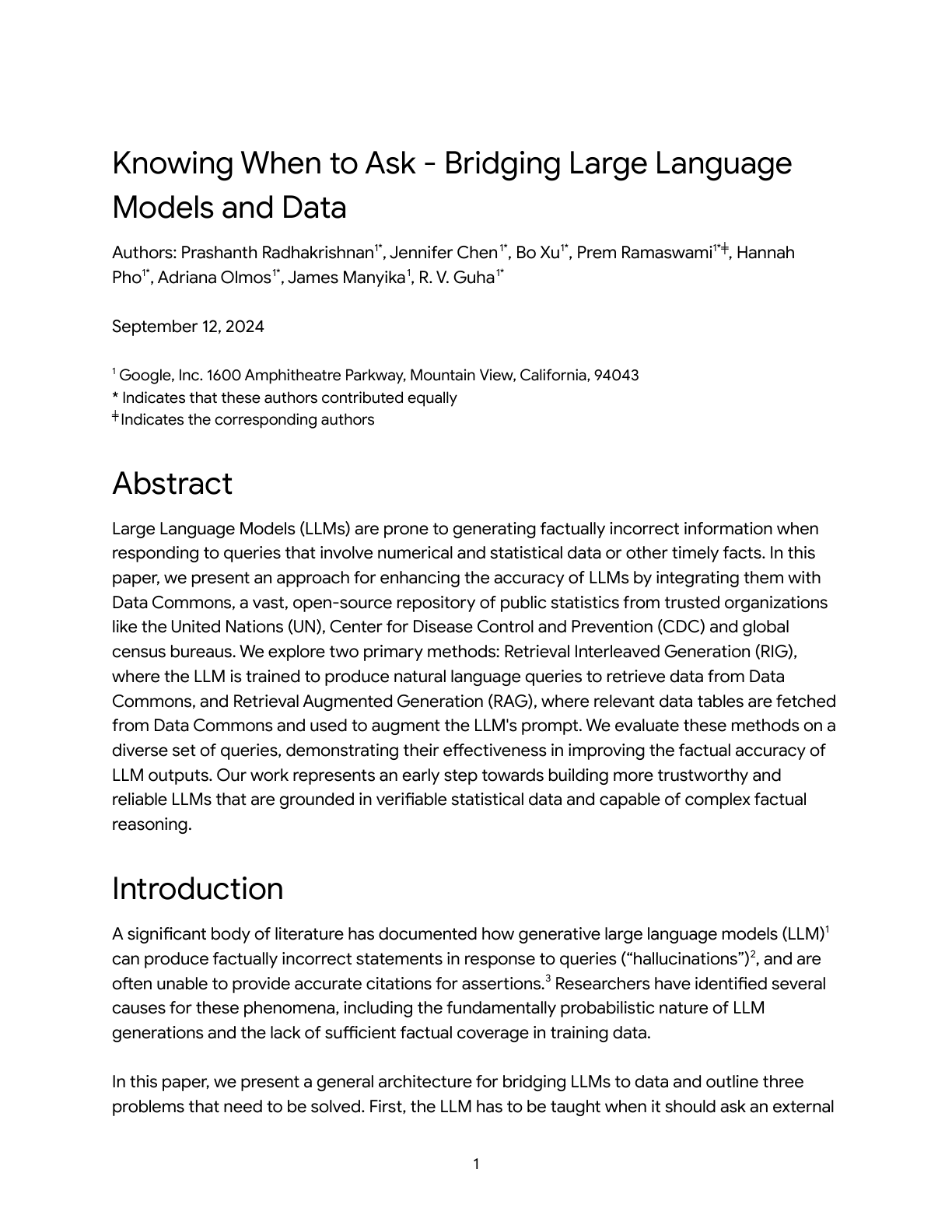
DataGemma
includes a series of fine-tuned Gemma 2 models to help LLMs access and incorporate numerical and statistical data; proposes a new approach called Retrieval Interleaved Generation (RIG) which can reliably incorporate public statistical data from Data Commons into LLM responses; RIG is a tool-inspired approach, can interleave statistical tokens with natural language questions suitable for retrieval from Data Commons; to attain such capability, they fine-tune the LLM on an instruction-response dataset generated with the help of Gemini 1.5; the RIG approach improves factuality from 5-7% to about 58%.
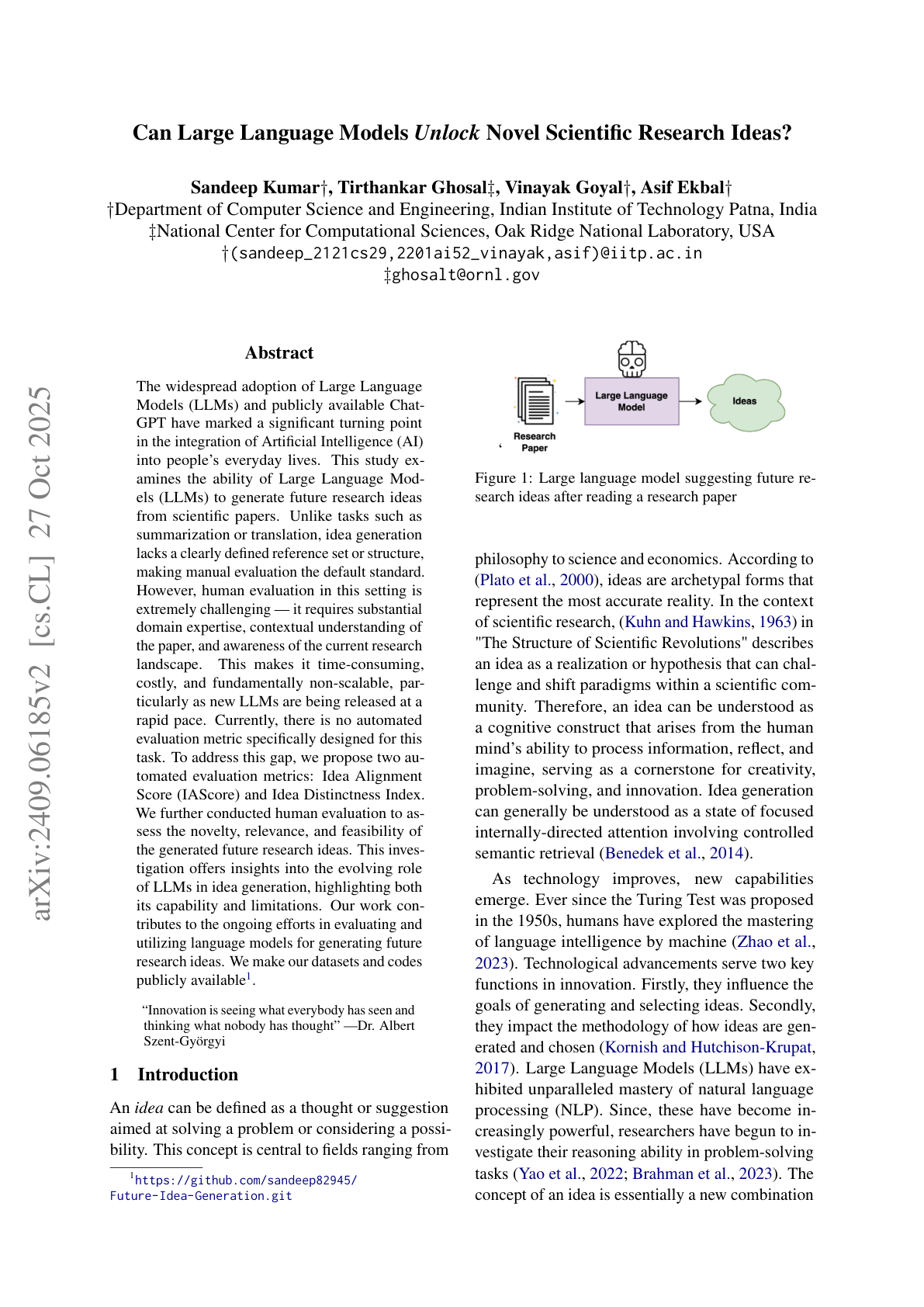
Can LLMs Unlock Novel Scientific Research Ideas
investigates whether LLM can generate novel scientific research ideas; reports that Claude and GPT models tend to align more with the author's perspectives on future research ideas; this is measured across different domains like science, economics, and medicine.
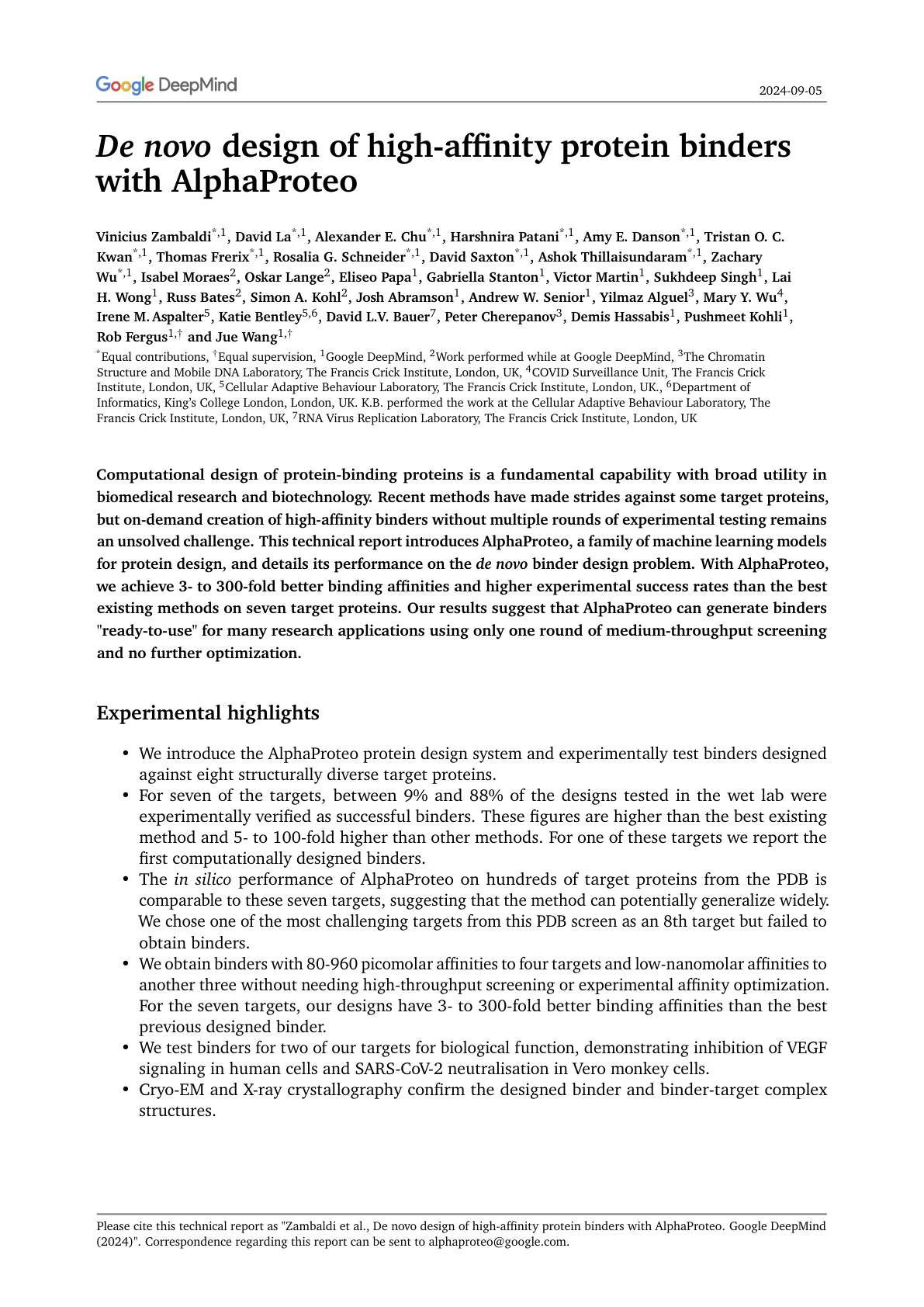
AlphaProteo
presents a family of ML models trained for protein design; reports a 3-to 300-fold better binding affinities and higher experimental success rates compared to other existing methods on seven target proteins; shows that AlphaProteo’s performance on hundreds of target proteins from the PDB is comparable to the seven targets.
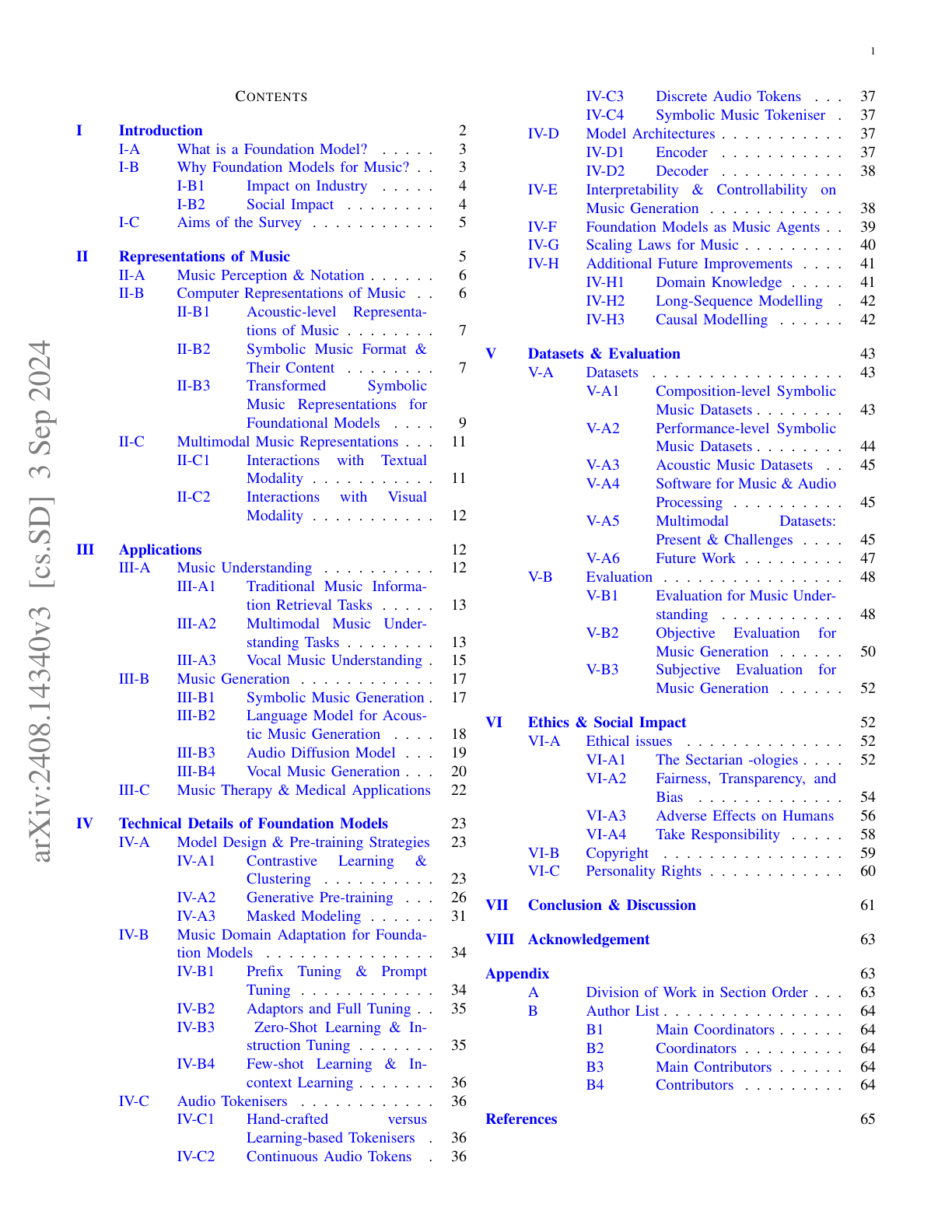
Foundation Models for Music
provides a comprehensive overview of state-of-the-art pre-trained models and foundation models in music.
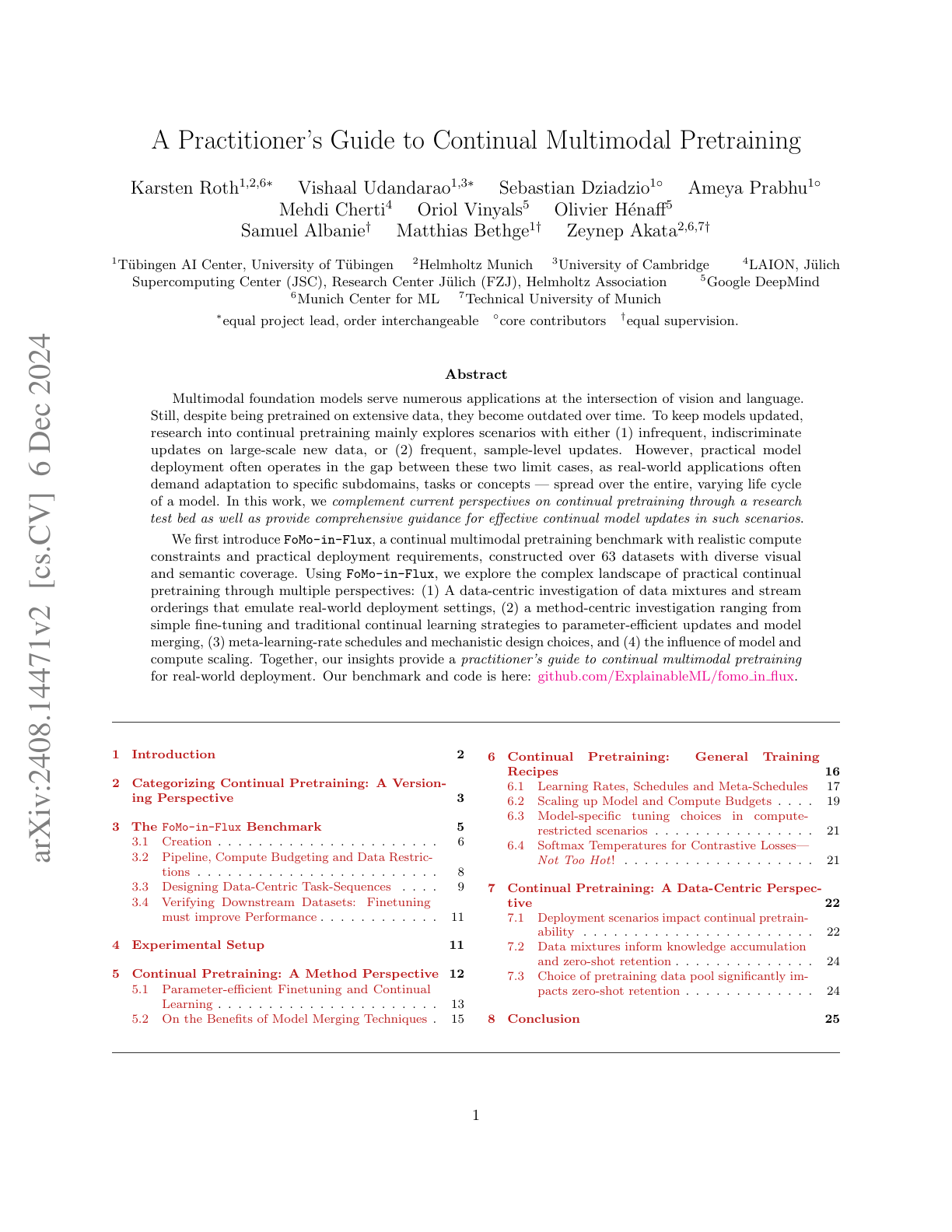
Guide to Continual Multimodal Pretraining
a comprehensive guide on continual multimodal pertaining; introduces FoMo-In-Flux, a large-scale fine-grained and long horizon continual pretraining benchmark.
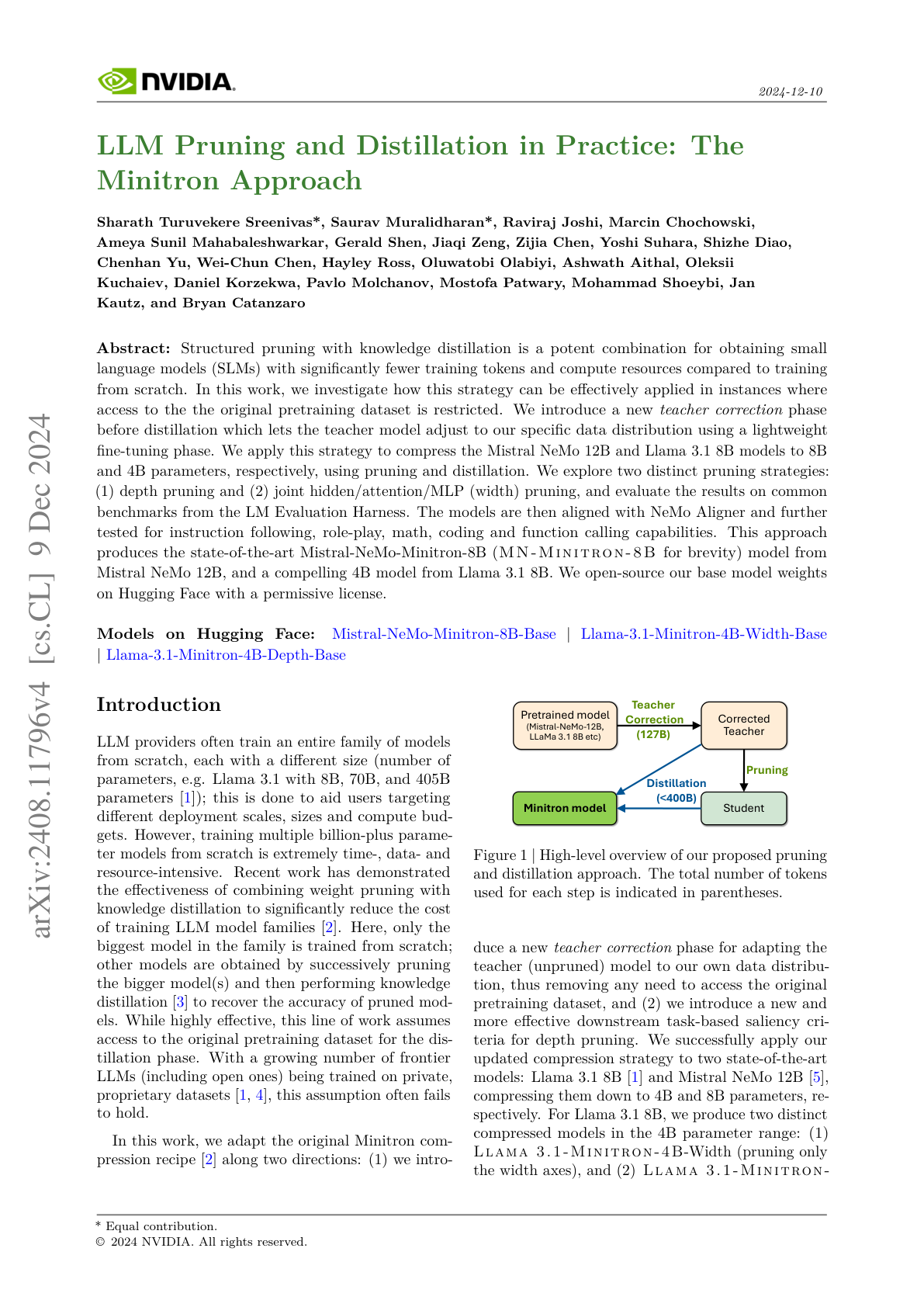
LLM Pruning and Distillation in Practice
provides a comprehensive report on effective methods for compressing Llama 3.1 and Mistral NeMo models; it presents pruning and distillation approaches applied to the original models to produce 4B and 8B parameter models, respectively; before pruning, they also fine-tune the teacher model on their datasets leading to better distillation; their compression strategy yields a state-of-the-art 8B model (MN-Minitron-8B) which outperforms all similarly-sized models on common language modeling benchmarks.
Challenges and Responses in the Practice of LLMs
curates a set of important questions with insightful answers; questions are categorized across topics such as infrastructure, software architecture, data, application, and brain science.
Conversational Prompt Engineering
proposes an approach to help users create personalized prompts by articulating the preferred outputs via interactions; it involves two stages: 1) an initial instruction shaped by the model based on user-provided unlabeled data, and 2) the model shares the output and the user provides feedback with refinements on outputs and instruction; this iterative process results in a personalized few-shot prompt that performs better and more optimally on the desired task.
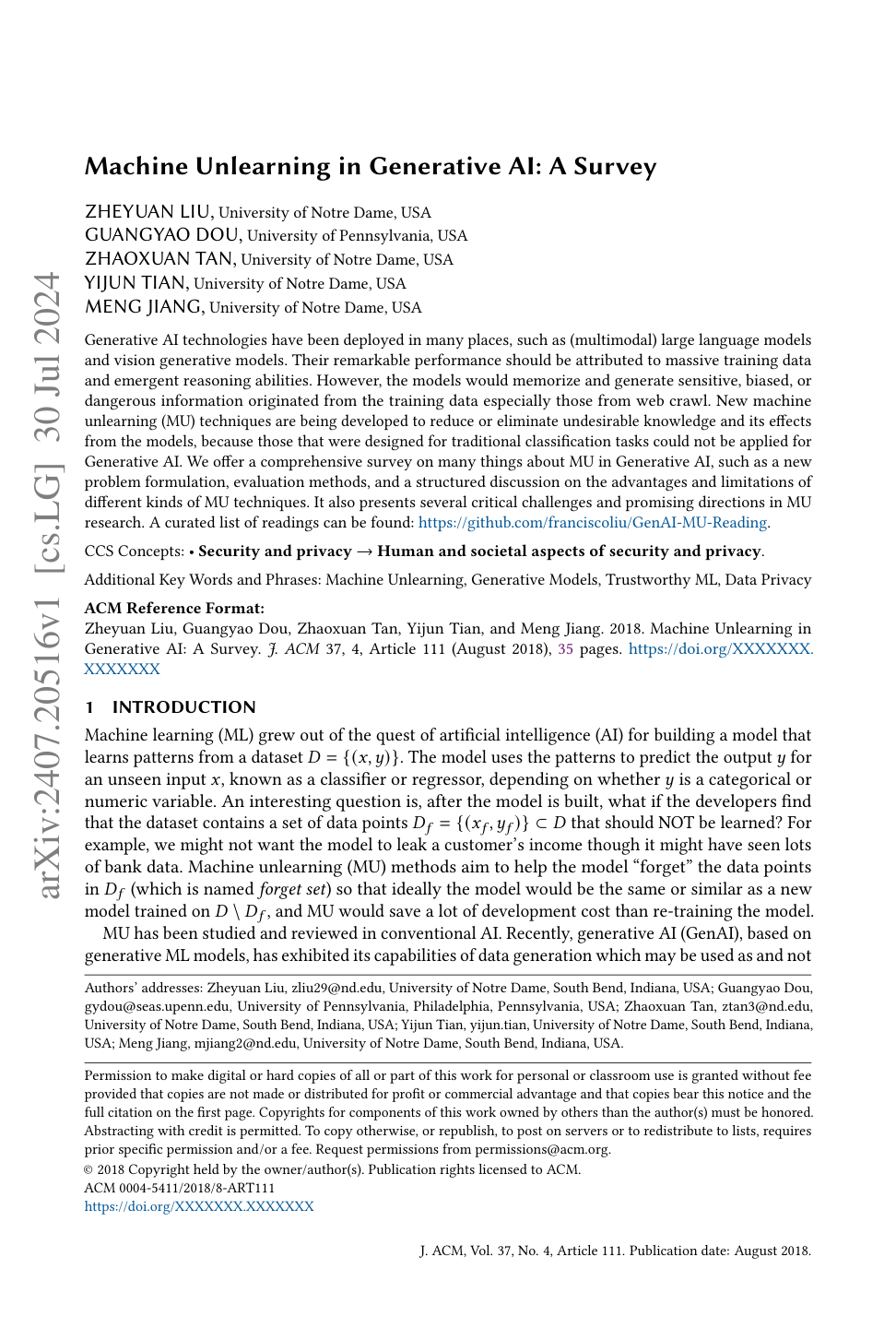
Machine Unlearning Survey
provides a comprehensive survey on machine unlearning in generative AI.
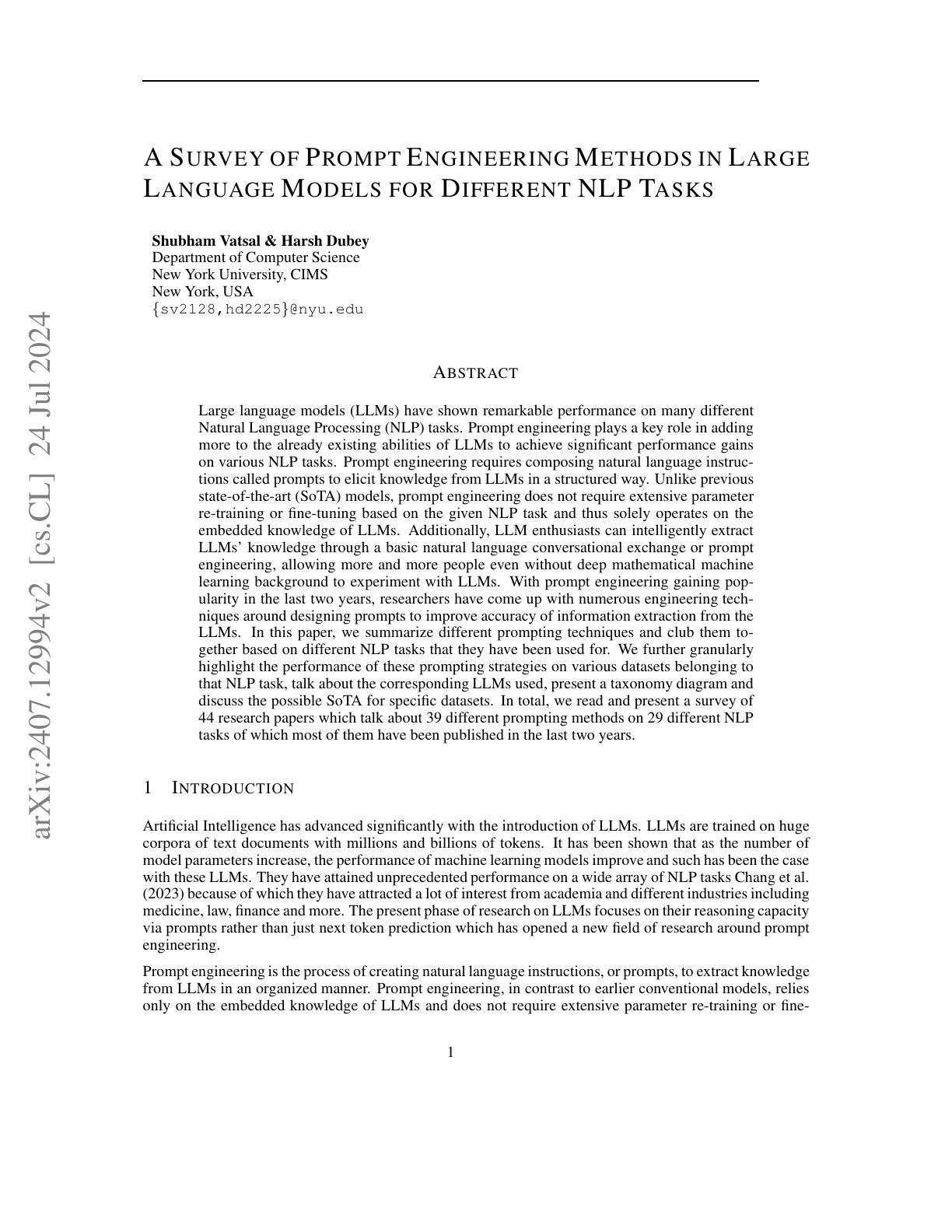
A Survey of Prompt Engineering Methods in LLMs
a collection of prompt engineering methods for a variety of NLP tasks.
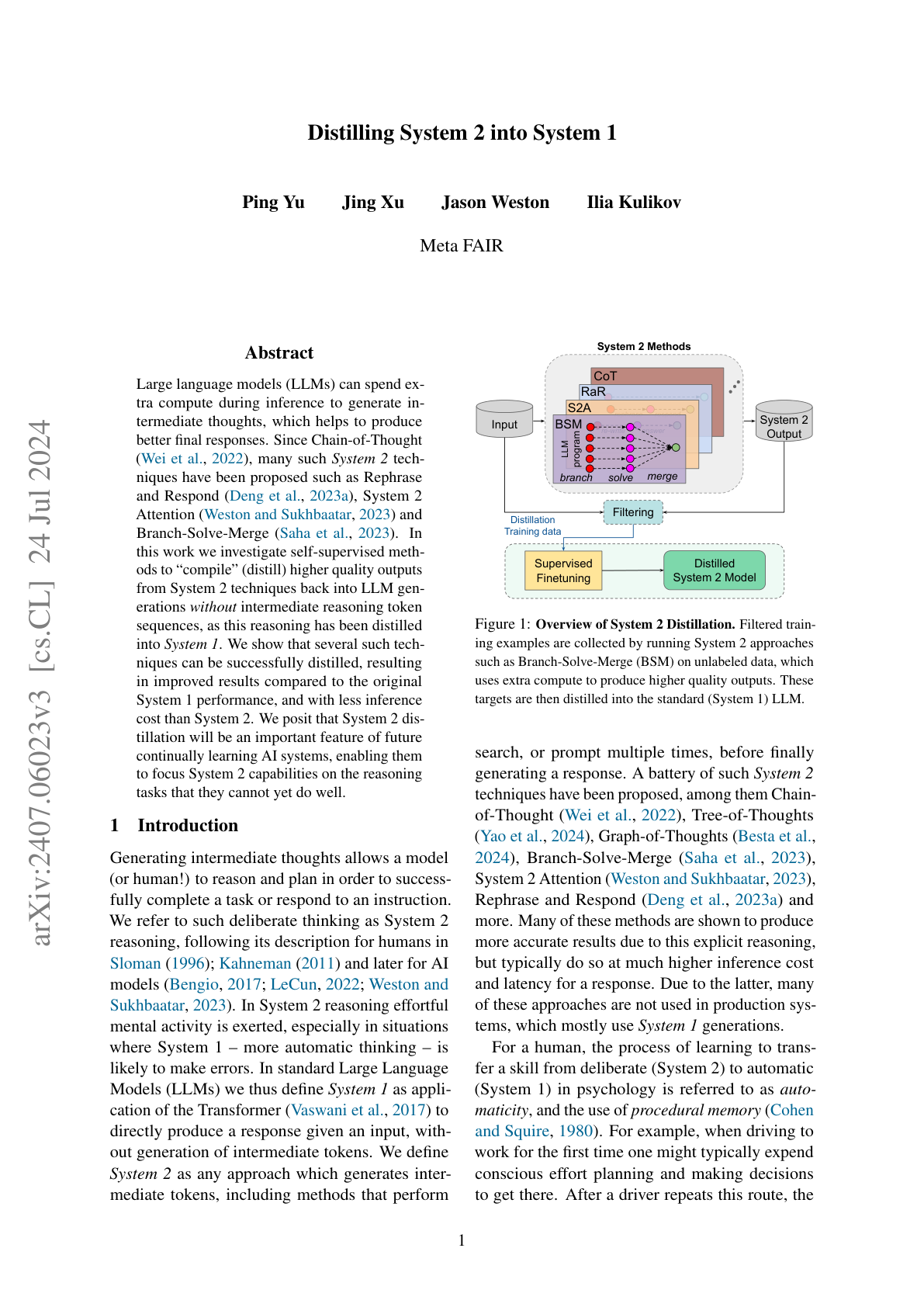
Distilling System 2 into System 1
investigates self-supervised methods to distill high-quality outputs from System 2 techniques and then fine-tune System 1 to match the predictions of the System 2 technique but without generating intermediate steps; the process of distilling reasoning into System 1 results in less inference cost.