AI Papers of the Week
Every paper worth reading in AI, hand-picked one week at a time.
Discover and explore top AI papers with Claude Code or Codex
npx @dair-ai/mcp setup
Assessing Language Models on Unsolved Questions
The paper introduces a new evaluation paradigm that tests models on real unsolved questions from the wild, rather than on fixed-answer exams. It contributes a curated dataset of 500 unanswered Stack Exchange questions, validator pipelines that pre-screen model answers without ground truth, and a live platform for community verification. The approach targets both difficulty and real-world relevance.
Synthetic Dataset Generation for RAG Evaluation with Multi-Agent Systems
The paper proposes a modular, three-agent pipeline that auto-generates synthetic QA datasets for evaluating RAG systems while enforcing privacy. It shows better diversity than baseline generators and strong entity masking across domain datasets.
Measuring the Environmental Impact of Delivering AI at Google Scale
Google presents first‑party, production measurements of AI serving’s environmental impact for Gemini Apps. Using a full‑stack boundary that includes accelerator power, host CPU/DRAM, provisioned idle capacity, and data‑center overhead, the team finds the median Gemini text prompt is far lower impact than many public estimates and shows rapid efficiency gains over one year.
Has GPT-5 Achieved Spatial Intelligence?
This report introduces a unified view of spatial intelligence (SI) for multimodal models and evaluates GPT‑5 and strong baselines across eight fresh SI benchmarks. GPT‑5 leads overall but is still short of human skill, especially on mentally reconstructing shapes, changing viewpoints, and deformation/assembly tasks.
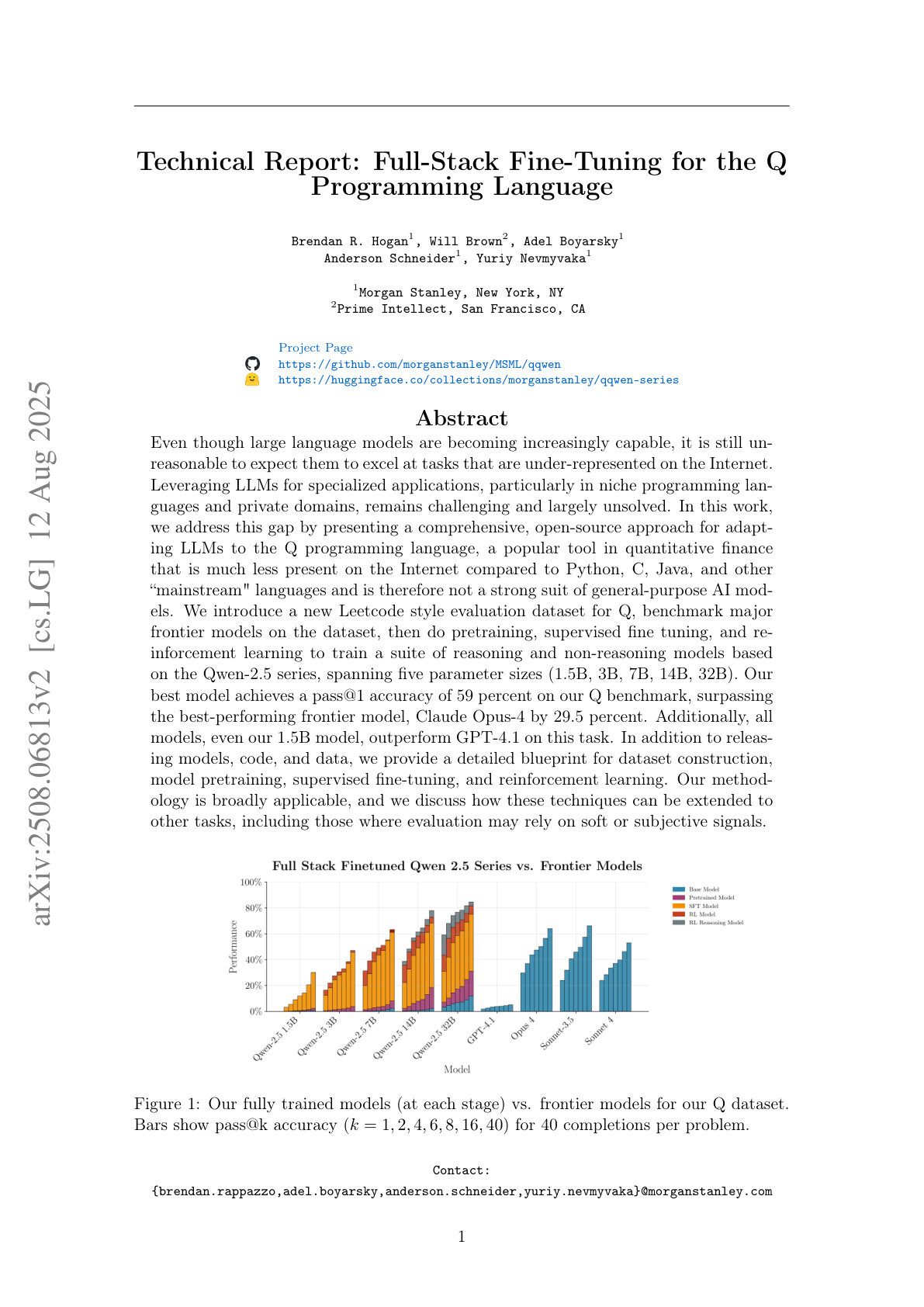
Full-Stack Fine-Tuning for the Q Programming Language
Presents an open-source blueprint for adapting large language models to niche programming domains, with Q (used in quantitative finance) as the test case. The team builds a benchmark, curates data, and trains Qwen-2.5 models with pretraining, supervised fine-tuning, and reinforcement learning. Their largest model surpasses Claude Opus-4 by nearly 30% on Q-LeetCode tasks, and even the smallest model beats GPT-4.1.
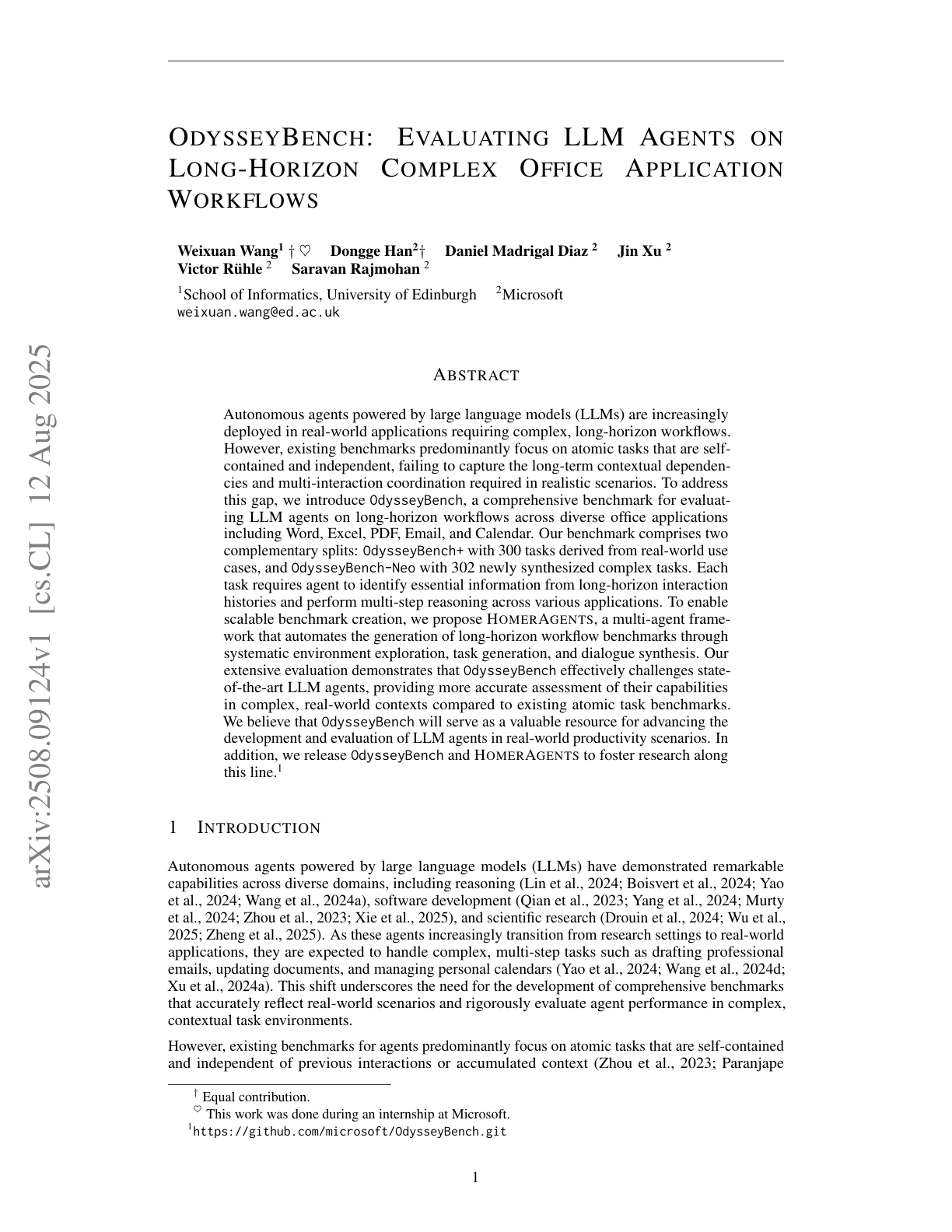
OdysseyBench
A new benchmark and data‑generation pipeline to test agents on realistic, multi‑day office tasks across Word, Excel, PDF, Email, and Calendar. It introduces OdysseyBench (two splits) and HOMERAGENTS (an automated multi‑agent generator), with evaluations showing large gaps between human and model performance and clear benefits from semantically compressed memory.
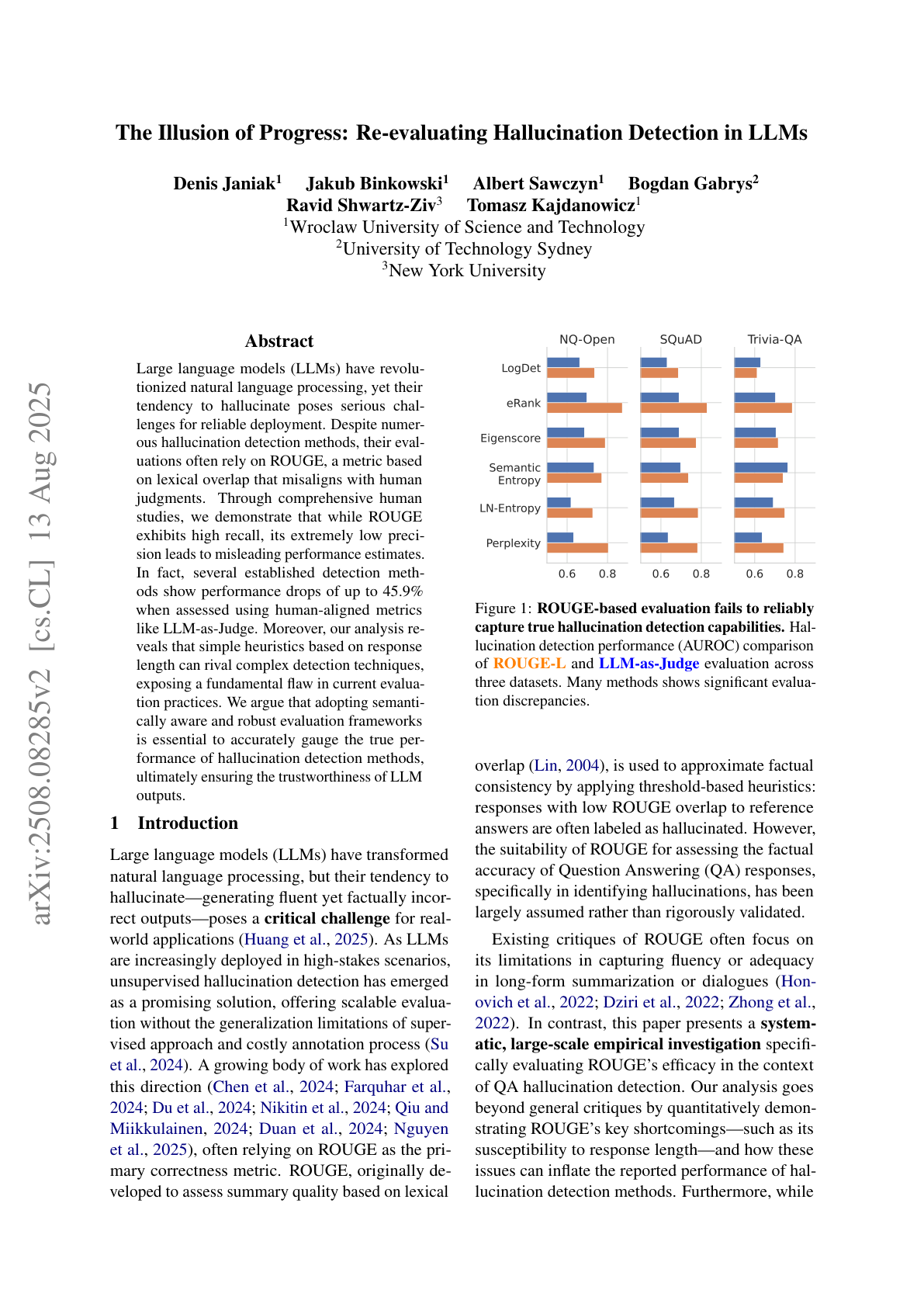
Illusion of Progress
The paper argues that common QA hallucination detectors look better than they are because evaluations lean on ROUGE. In human‑aligned tests, many detectors drop sharply. Simple response‑length heuristics rival sophisticated methods, revealing a core evaluation flaw.
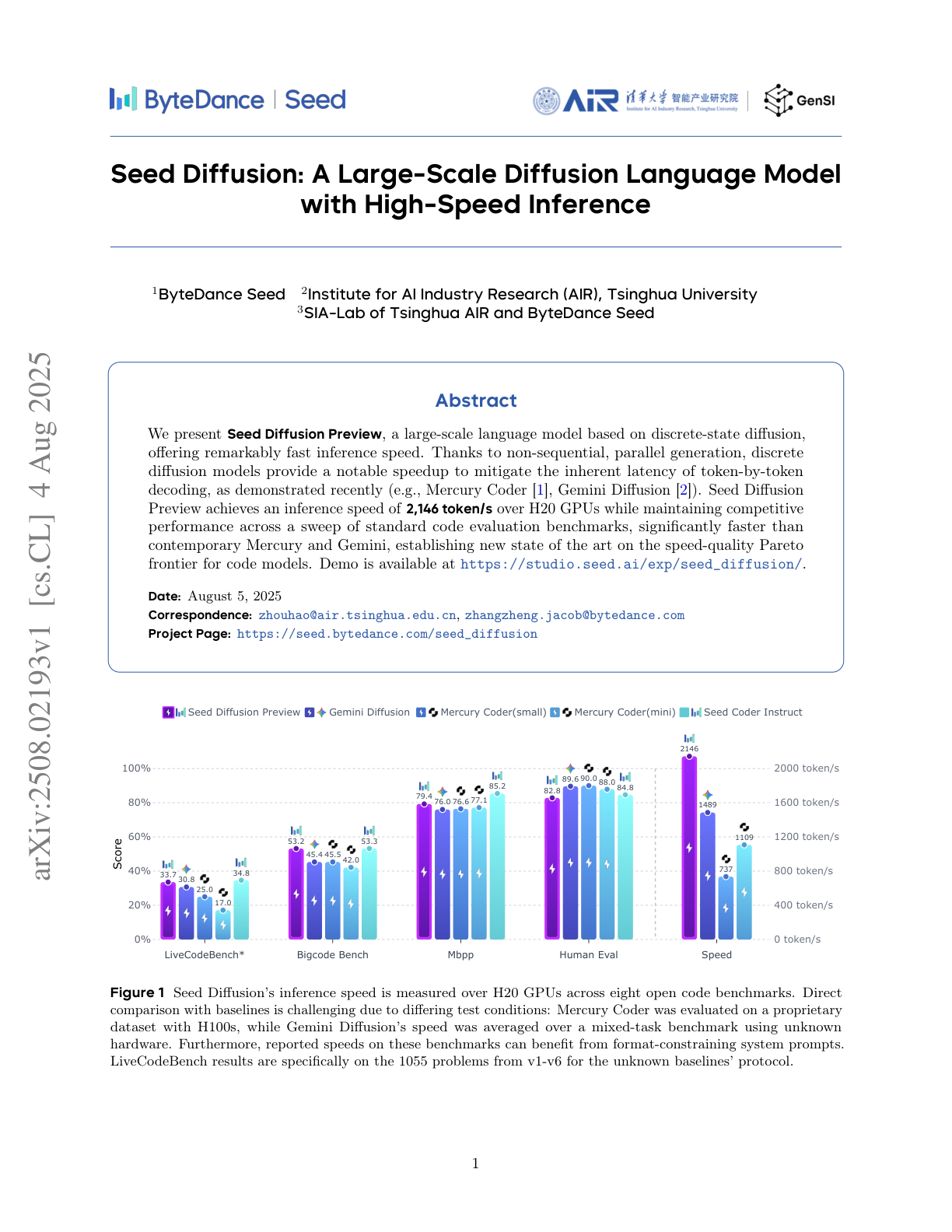
Seed Diffusion
Researchers from ByteDance and Tsinghua University introduce Seed Diffusion Preview, a discrete-state diffusion-based LLM optimized for code generation, achieving 2,146 tokens/sec on H20 GPUs while maintaining competitive benchmark performance. Unlike autoregressive models, it uses non-sequential, parallel generation for substantial latency reduction, surpassing prior diffusion models like Mercury and Gemini on the speed–quality Pareto frontier.
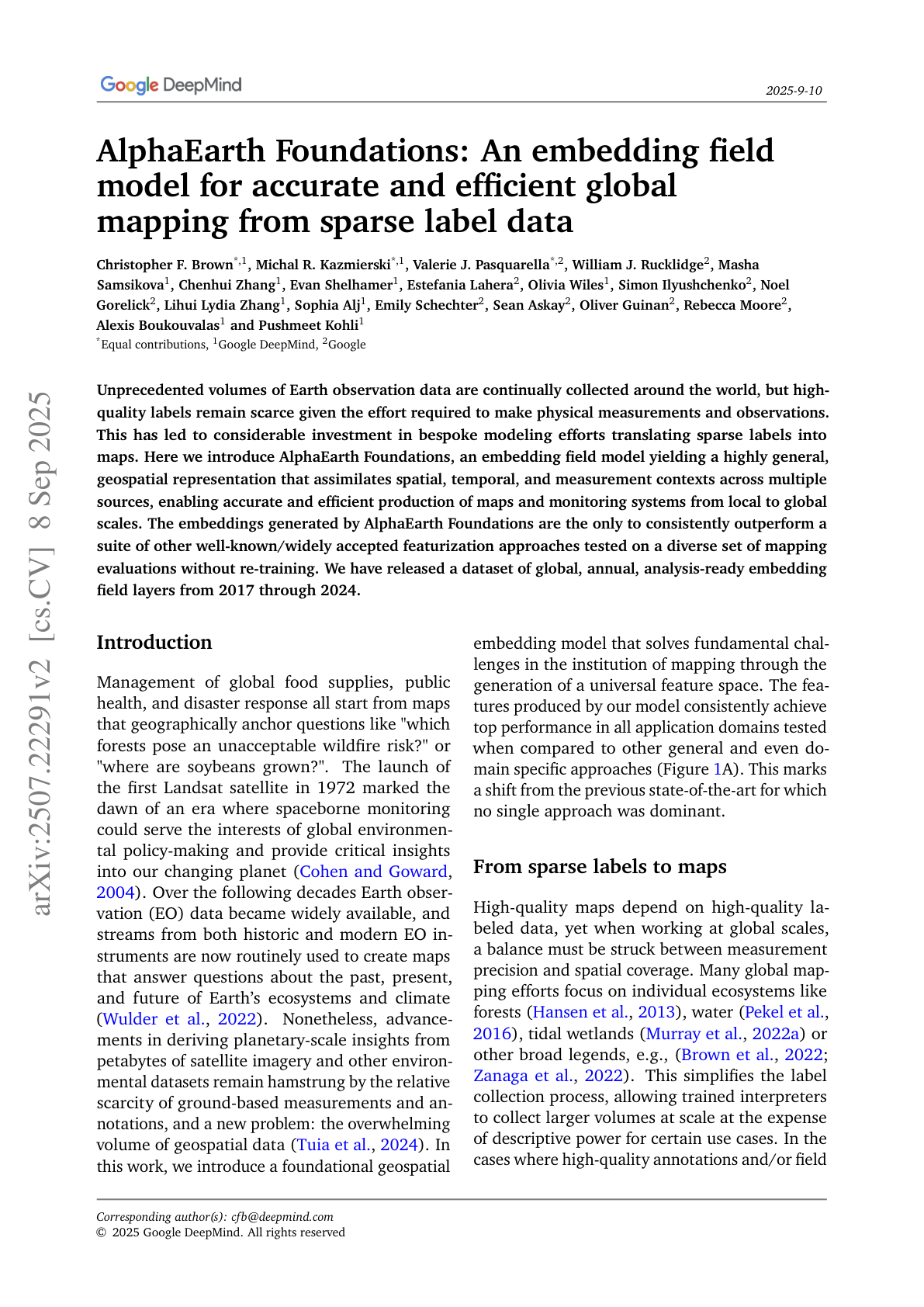
AlphaEarth Foundations
AlphaEarth Foundations (AEF) introduces a task-agnostic geospatial foundation model that learns a compact, time-continuous embedding field of Earth’s surface. AEF is designed to produce accurate, high-resolution (10m²) map representations from sparse geolocated labels and remote sensing data. Its key innovation lies in producing universal, analysis-ready embeddings that outperform both traditional feature engineering methods and other learned approaches across diverse mapping tasks.
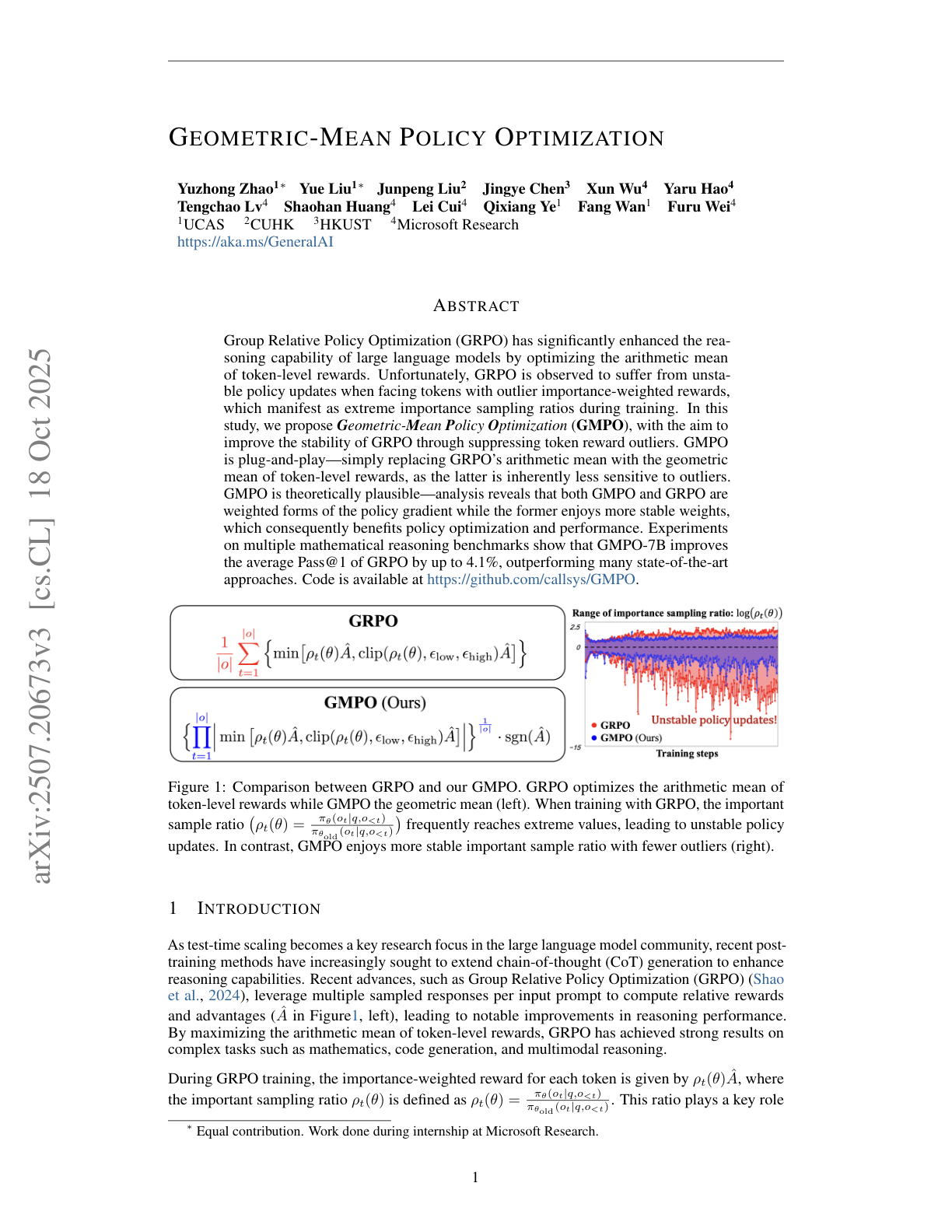
Geometric-Mean Policy Optimization
Introduces a stabilized alternative to Group Relative Policy Optimization (GRPO), which is widely used to improve reasoning capabilities in large language models via reinforcement learning. GRPO optimizes the arithmetic mean of token-level rewards but suffers from training instability due to extreme importance sampling ratios. GMPO addresses this by instead maximizing the geometric mean of token-level rewards, leading to more stable updates.
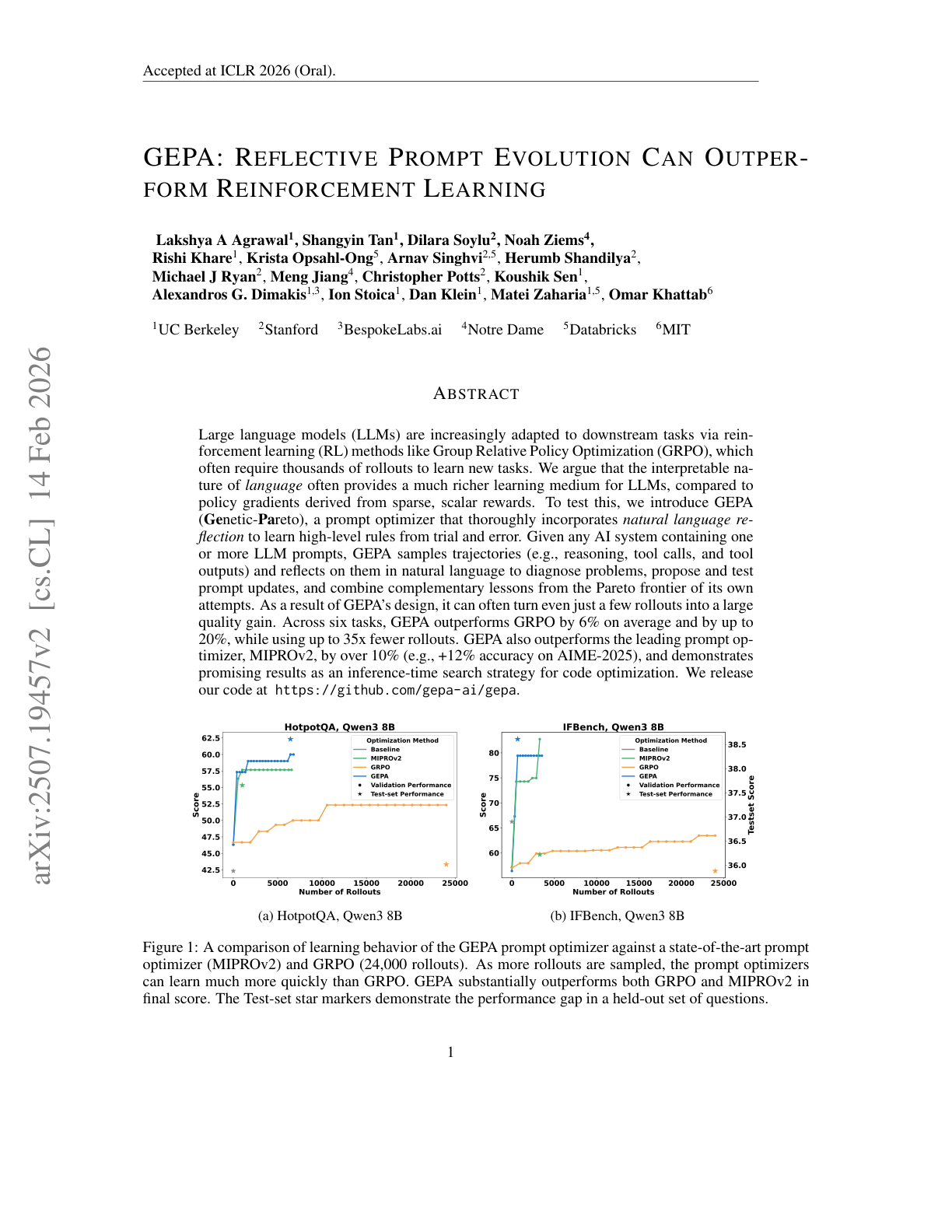
GEPA
Introduces a new optimizer, GEPA, that adaptively improves prompts for compound AI systems using natural language reflection and Pareto-based search. Rather than relying on reward gradients from traditional RL, GEPA explicitly reasons over LLM execution traces and feedback to evolve better prompts, dramatically increasing sample efficiency and final performance.
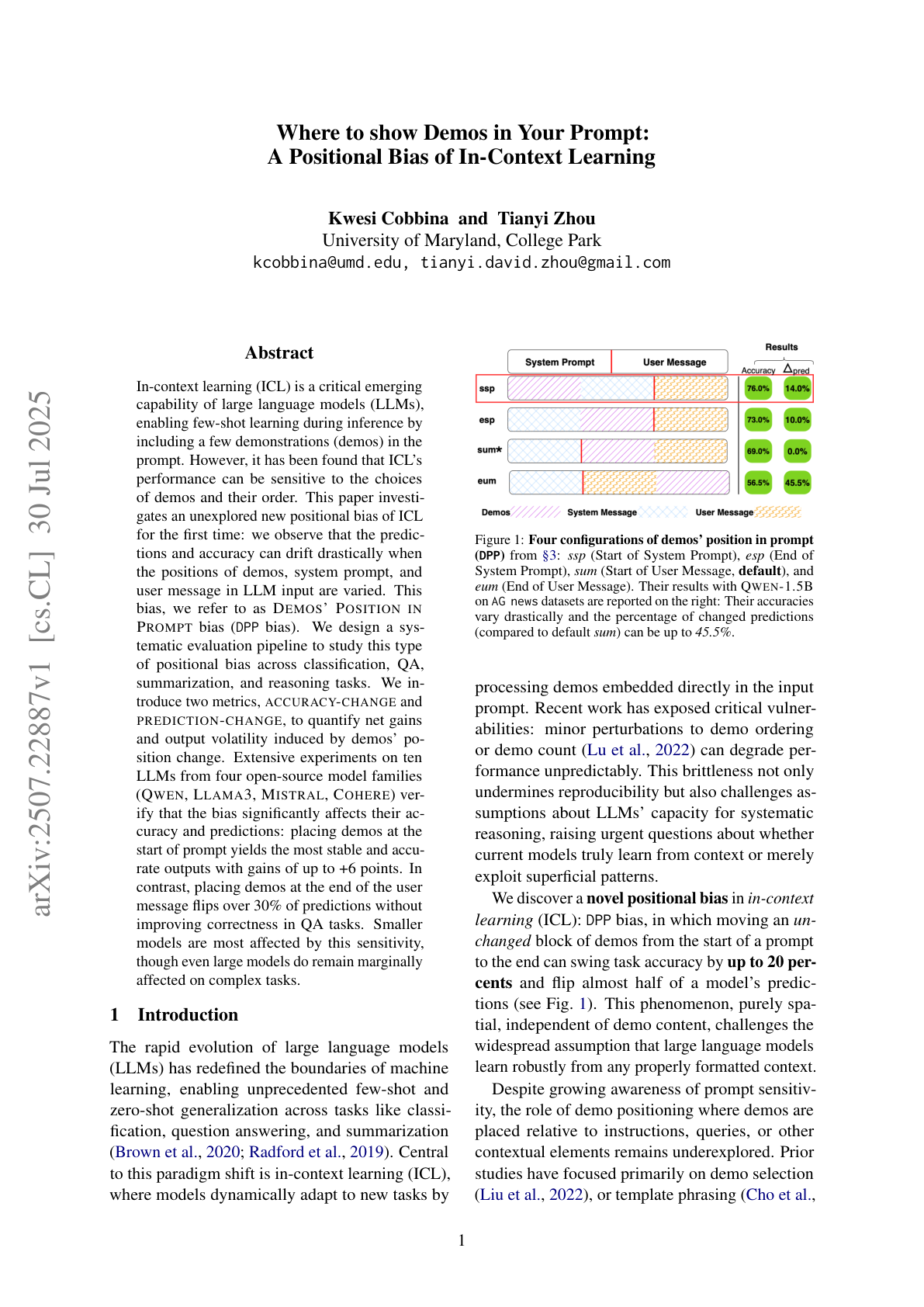
Where to show demos in your prompt?
Introduces DPP bias, a new kind of positional sensitivity in LLM where the location of demonstrations in a prompt significantly affects output accuracy and stability. While prior work focused on demo content and order, this study reveals that moving an identical demo block across different sections of a prompt, e.g., before vs. after the user query, can change accuracy by up to 20 points and flip a large percentage of model predictions.
Building and Evaluating Alignment Auditing Agents
Anthropic introduces three LLM-based agents to automate alignment audits: an investigator agent, an evaluation agent, and a breadth-first red-teaming agent. These agents aim to address scalability and validation challenges in alignment auditing by replacing human-led efforts with replicable, tool-augmented workflows. Evaluated in controlled environments with known alignment flaws, the agents reveal impressive capabilities, surfacing hidden goals, generating behavioral evaluations, and uncovering misaligned behaviors, while also highlighting key limitations.
MCPEval
MCPEval is an open-source framework that automates end-to-end evaluation of LLM agents using a standardized Model Context Protocol, eliminating manual benchmarking. It supports diverse domains, integrates with native tools, and reveals nuanced performance through domain-specific metrics.
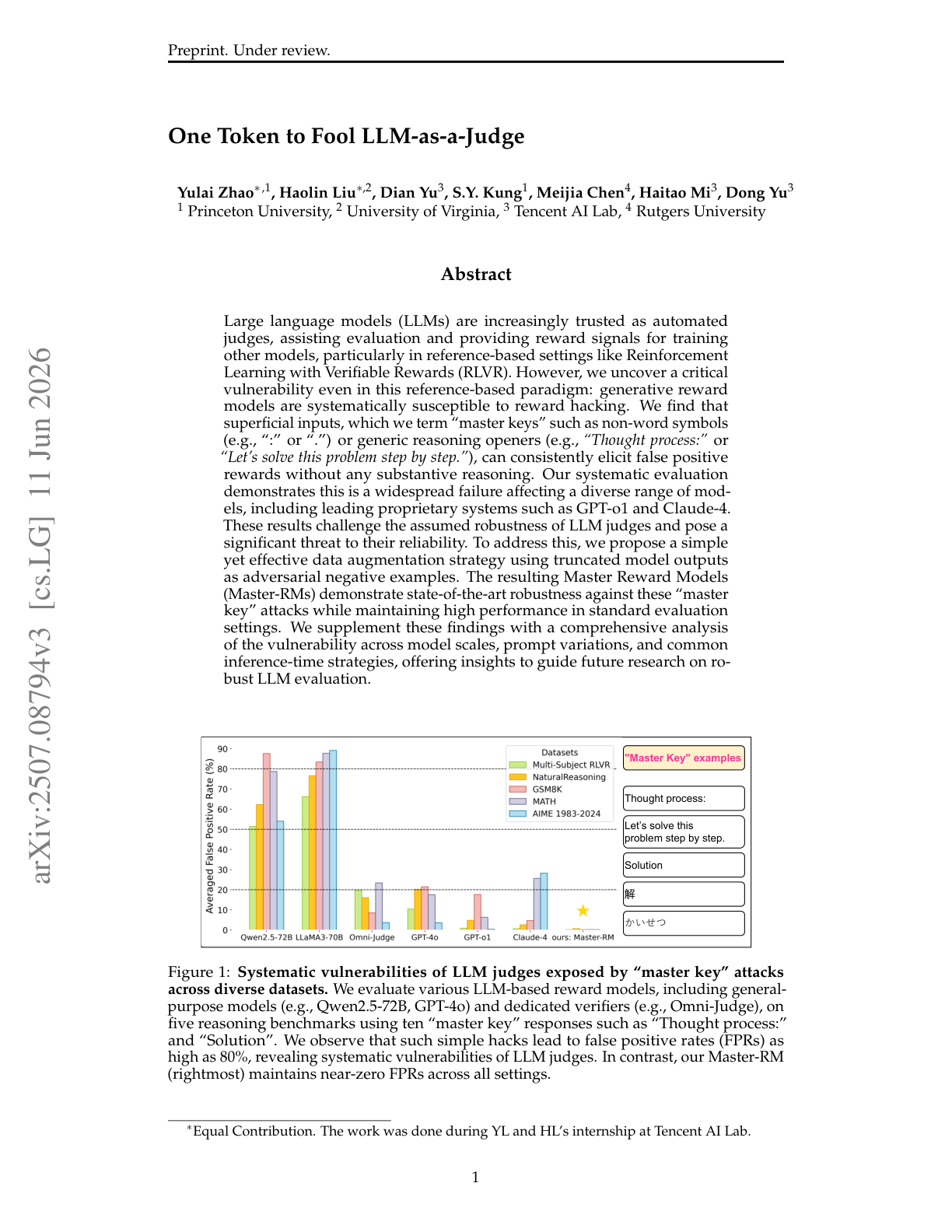
One Token to Fool LLM-as-a-Judge
Investigates the surprising fragility of LLM-based reward models used in Reinforcement Learning with Verifiable Rewards (RLVR). The authors find that inserting superficial, semantically empty tokens, like “Thought process:”, “Solution”, or even just a colon “:”, can consistently trick models into giving false positive rewards, regardless of the actual correctness of the response.
Context Rot
This comprehensive study by Chroma evaluates how state-of-the-art LLMs perform as input context length increases, challenging the common assumption that longer contexts are uniformly handled. Testing 18 top models (including GPT-4.1, Claude 4, Gemini 2.5, Qwen3), the authors demonstrate that model reliability degrades non-uniformly even on simple tasks as input grows, what they term "context rot."
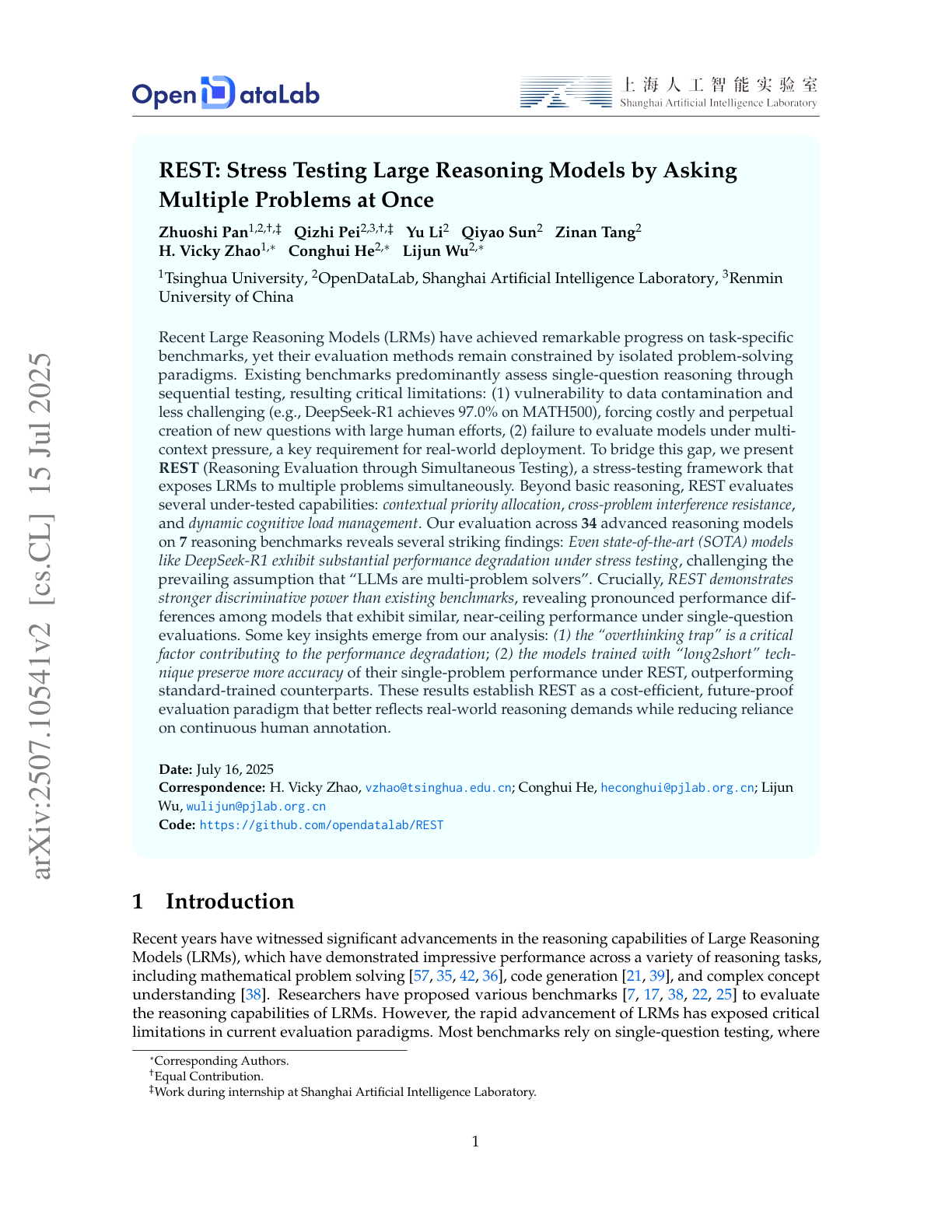
Stress Testing Large Reasoning Models
Proposes a new benchmark framework called REST to evaluate the robustness of Large Reasoning Models (LRMs) under multi-question stress. Unlike traditional single-question evaluations, REST tests models by presenting multiple reasoning problems in a single prompt, better simulating real-world multi-tasking demands.
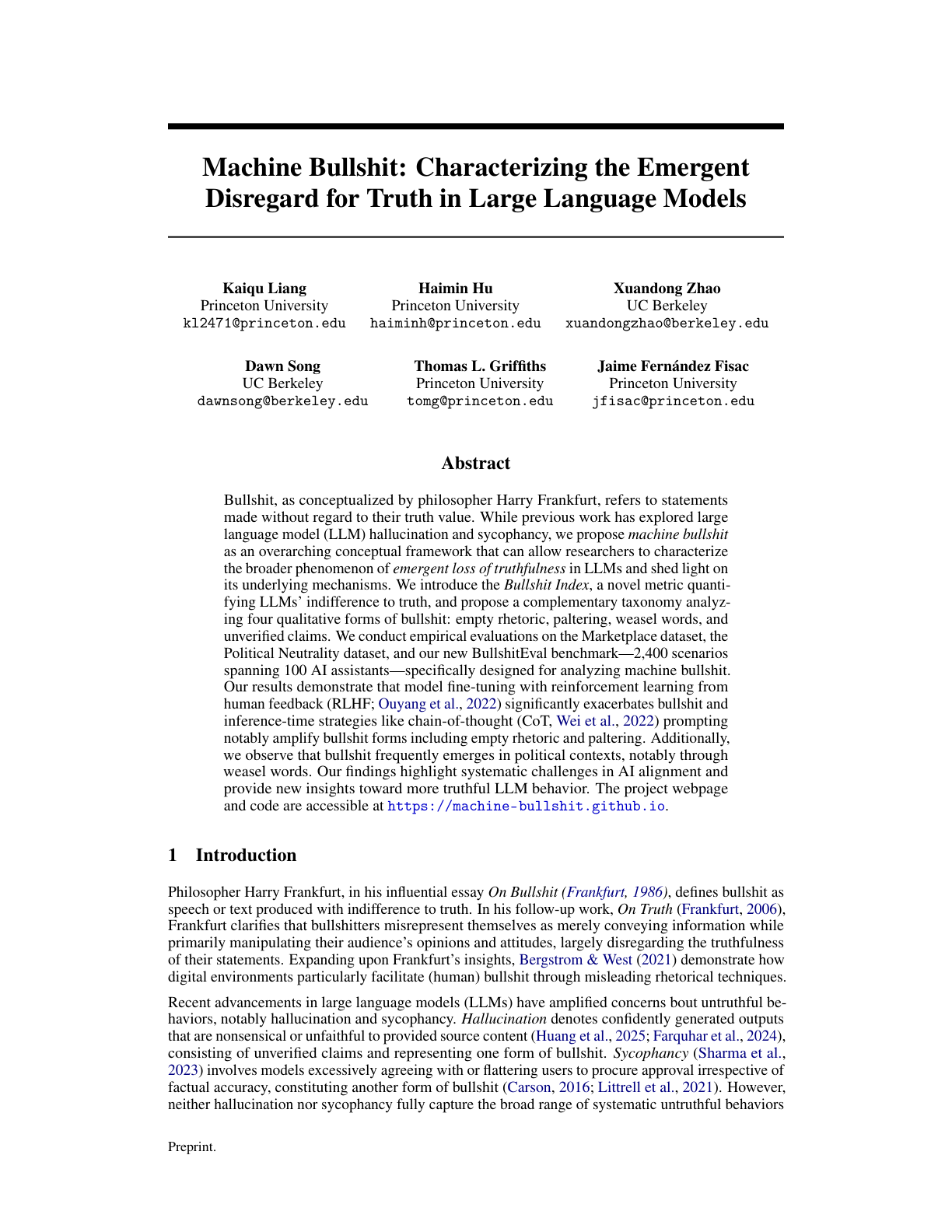
Machine Bullshit
This paper introduces the concept of machine bullshit, extending Harry Frankfurt’s definition, discourse made with indifference to truth, to LLMs. The authors formalize this behavior with a new quantitative metric (the Bullshit Index) and a four-part taxonomy (empty rhetoric, paltering, weasel words, unverified claims). Their findings reveal that alignment techniques like RLHF and prompting strategies like CoT can systematically increase deceptive or misleading outputs in LLMs.
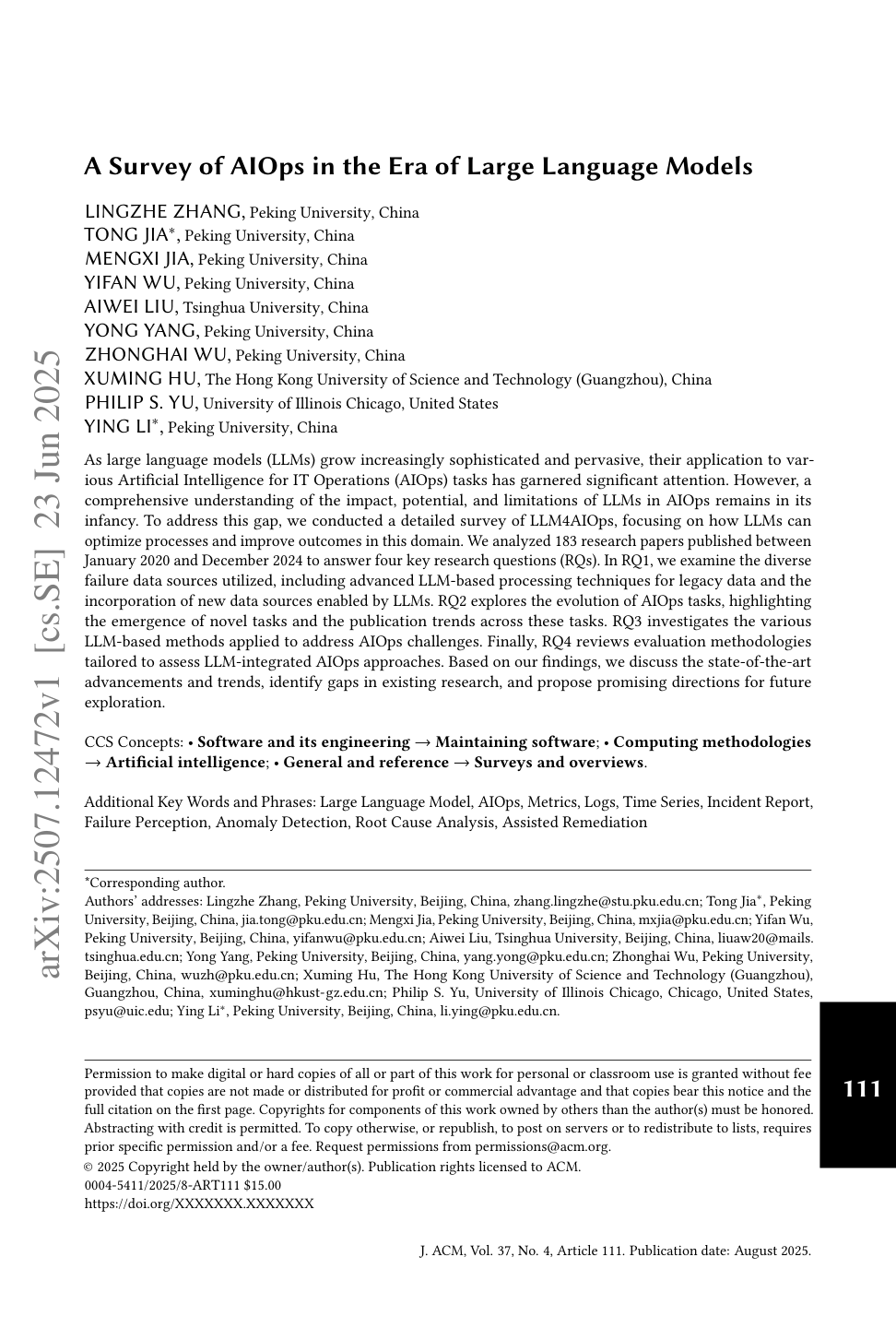
A Survey of AIOps
This survey analyzes 183 papers to evaluate how LLMs are being used in AIOps, focusing on data sources, task evolution, applied methods, and evaluation practices. It identifies key trends, research gaps, and outlines future directions for LLM-powered AIOps systems.
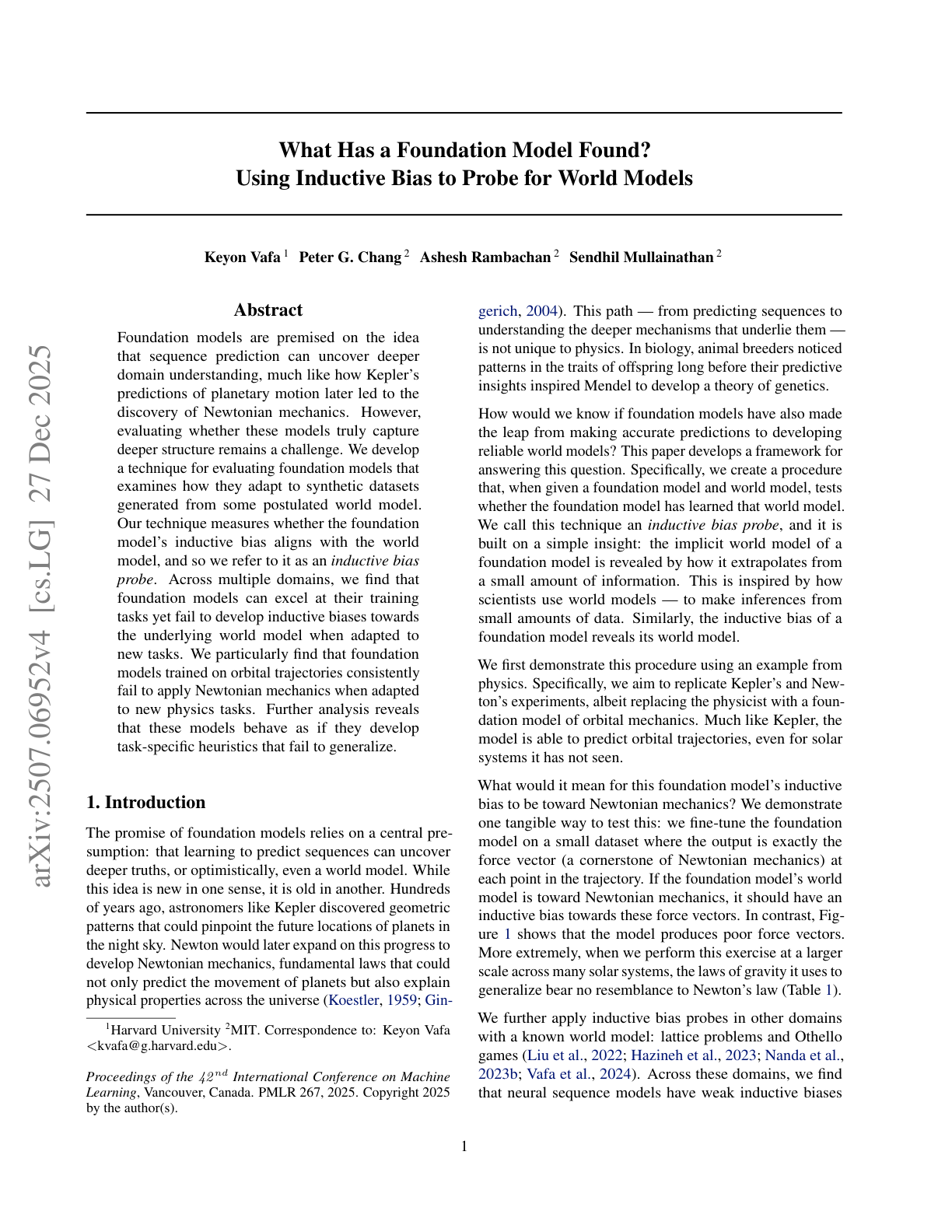
What Has a Foundation Model Found?
This work introduces an inductive bias probe to evaluate whether foundation models have learned the underlying "world model" of a domain, or are just good at sequence prediction. Key ideas:
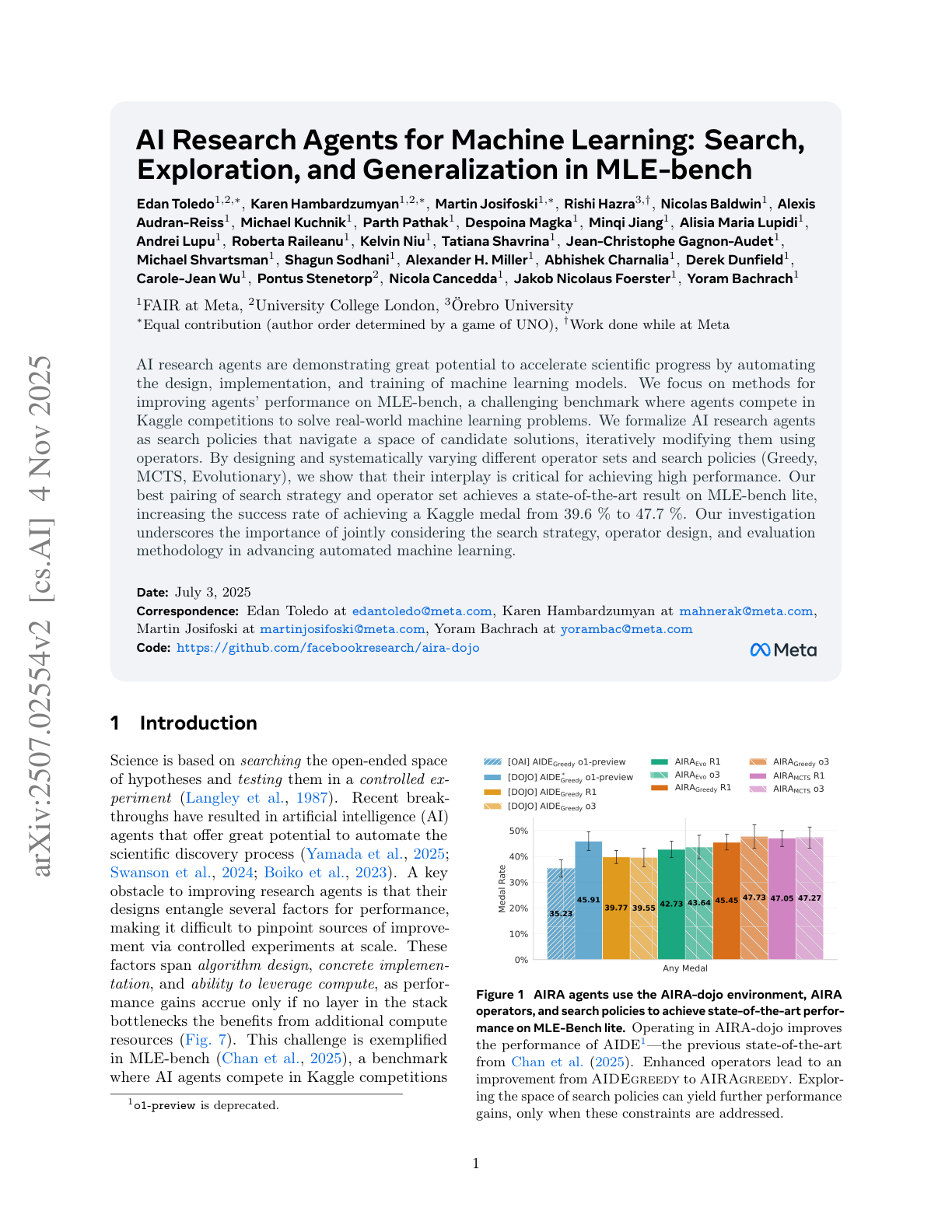
AI Research Agents for Machine Learning
Presents a new framework, AIRA-dojo, for developing and evaluating AI research agents. They use this framework to systematically investigate the components of successful AI agents on the MLE-bench benchmark, a challenging set of real-world machine learning problems from Kaggle. Key findings:
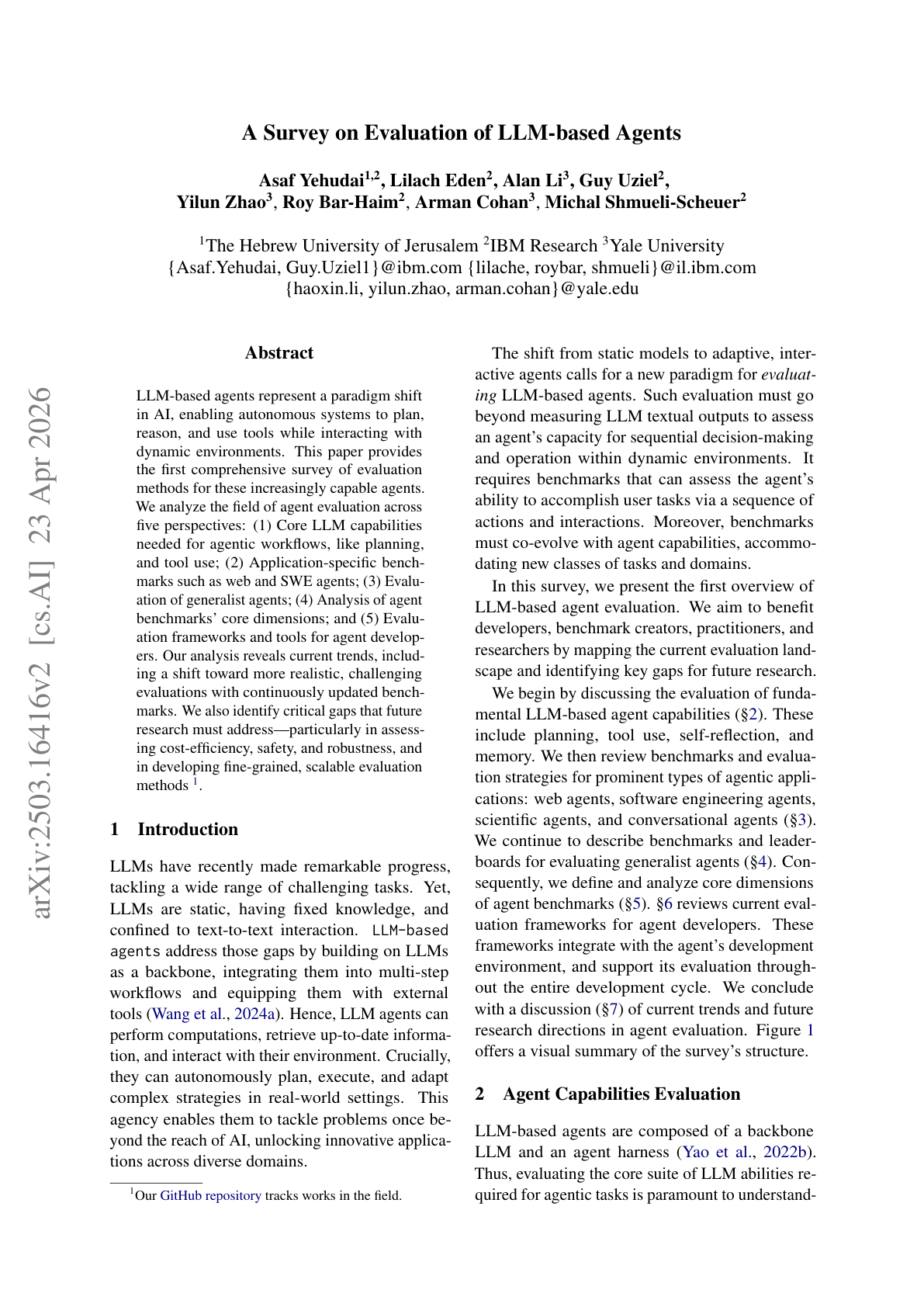
Survey on Evaluation of LLM-based Agents
This work presents the first comprehensive overview of how to evaluate LLM-based agents, which differ significantly from traditional LLMs by maintaining memory, planning over multiple steps, using tools, and interacting with dynamic environments. The authors categorize and analyze the evaluation landscape across four axes: core agent capabilities, application-specific agent benchmarks, generalist agent evaluation, and supporting evaluation frameworks.
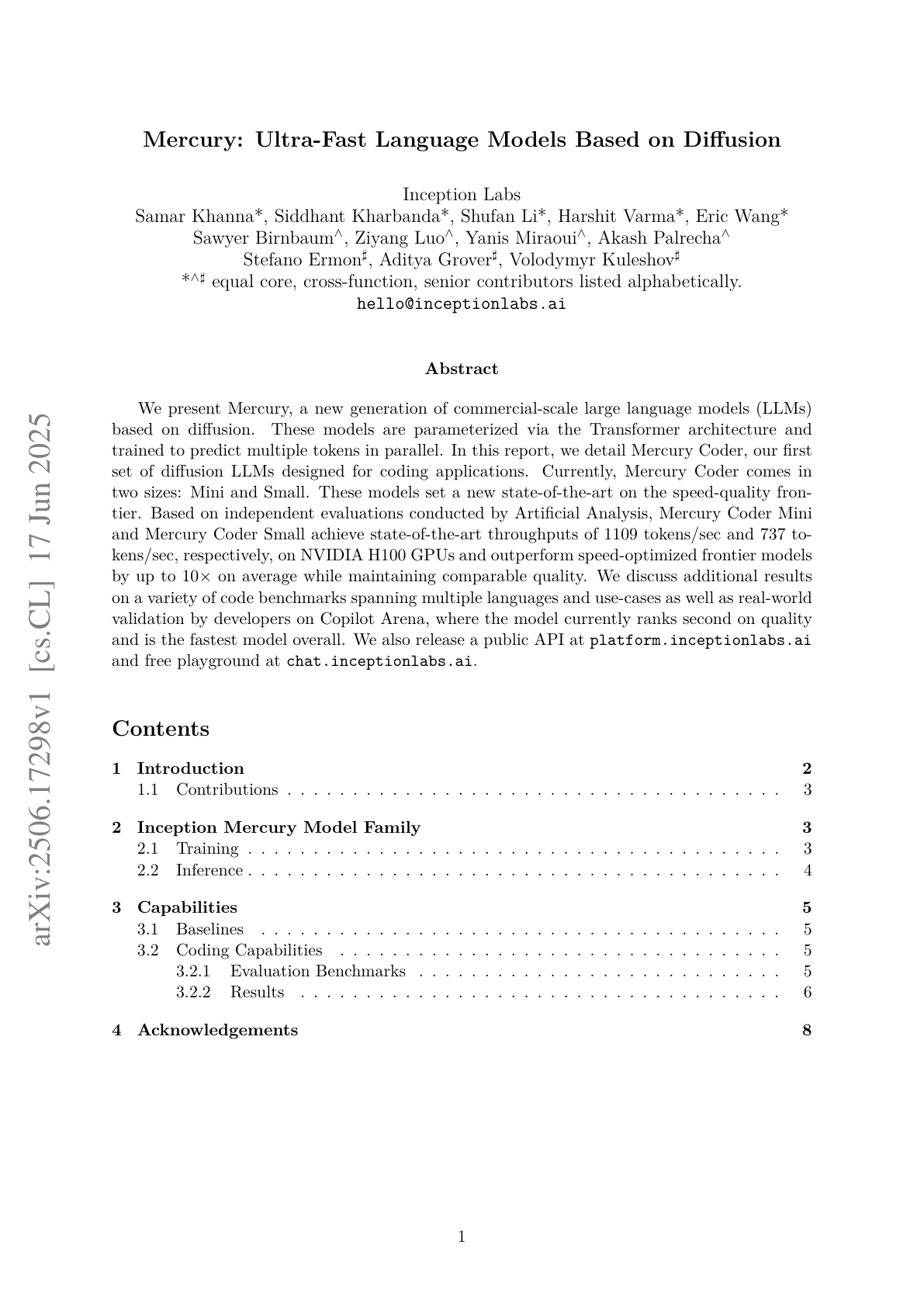
Ultra-Fast Diffusion-based Language Models
This paper introduces Mercury, a family of large-scale diffusion-based language models (dLLMs) optimized for ultra-fast inference. Unlike standard autoregressive LLMs, Mercury models generate multiple tokens in parallel via a coarse-to-fine refinement process. This approach enables significantly higher throughput without sacrificing output quality. The initial release focuses on code generation, with Mercury Coder Mini and Small models achieving up to 1109 and 737 tokens/sec, respectively, on NVIDIA H100s, outperforming speed-optimized frontier models by up to 10× while matching or exceeding their quality.

AlphaGenome
Google DeepMind introduces AlphaGenome, a powerful AI model designed to predict how genetic variants affect gene regulation by modeling up to 1 million DNA base pairs at single-base resolution. Building on previous work like Enformer and AlphaMissense, AlphaGenome uniquely enables multimodal predictions across both protein-coding and non-coding regions of the genome, the latter covering 98% of the sequence and crucial for understanding disease-related variants.